Can You Use Water for Wiper Fluid? Best Washer Fluids to Buy
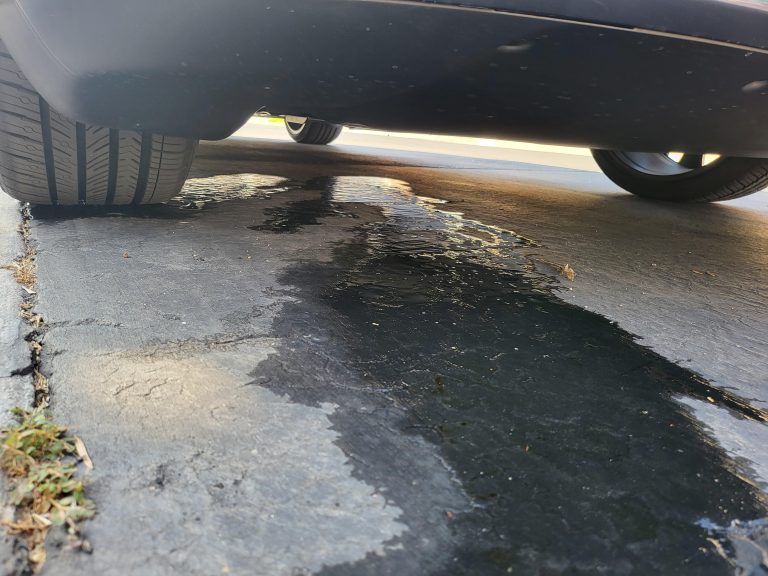
Yes, you can use water briefly in warm weather, but only as a temporary fill. For regular use, choose washer fluid, and in freezing weather pick a winter-rated formula that covers your coldest overnight low. Plain water can leave glass dirty, freeze in the system, and crack the reservoir or lines. This guide helps you choose by climate, driving conditions, and refill value.
Washer fluid decision table

Use the coldest overnight low you expect, not the daytime high. If your route sees bugs, salt, or steady rain, match the fluid to that job instead of buying the cheapest bottle on the shelf.
| Climate | Typical overnight low | Recommended washer-fluid type | Minimum freeze rating to target | Best use case |
|---|---|---|---|---|
| Warm weather | Above 32°F / 0°C | Regular premixed washer fluid | No freeze rating needed for warmth alone | Daily commuting and light road film |
| Mixed seasons | Near freezing but not hard freeze | All-season washer fluid | Choose a rating below your coldest expected low | Drivers who see both rain and occasional cold snaps |
| Freezing weather | Below 32°F / 0°C | Winter washer fluid | Choose a formula rated below the coldest overnight low | Protecting the reservoir, hoses, pump, and nozzles |
| Highway bug season | Warm nights | Bug-remover washer fluid | No freeze rating needed in warm weather | Insects, tar, and heavy summer grime |
| Emergency only | Above freezing, short-term use | Distilled water | None | Temporary fill when washer fluid is unavailable |
| Emergency only | Above freezing, short-term use | Tap water | None | Last resort if nothing else is available |
Can you use water instead of washer fluid?
Water can work as a short emergency fill in warm weather, but it is not a true substitute for washer fluid. It is not very effective at cleaning bugs, grease, road film, salt, oil residue, or winter grime, and it has no freeze protection. Use it only until you can refill with real washer fluid.
Why plain water falls short
Windshield washer fluid typically includes detergents that help lift bug residue, tar, and oily film. Many formulas also use methanol or ethylene glycol for freeze protection. Plain water lacks those additives, so it tends to smear dirt around instead of clearing the glass.
Say your windshield picks up bug splatter after a 200-mile highway run in July. Plain water may wet the glass, but it will not carry off the sticky residue the way a bug-remover formula can. The cleaner is the washer fluid, not the water itself.
Quick picks for different driving needs
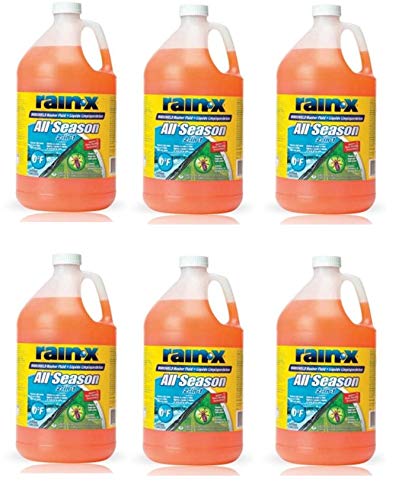
The overall top pick here is Rain-X 2-in-1 All Season because its -25°F rating makes it a strong all-around choice for drivers who need one bottle for mixed weather and cold snaps.
| Pick | Best for | Key detail | Honest drawback |
|---|---|---|---|
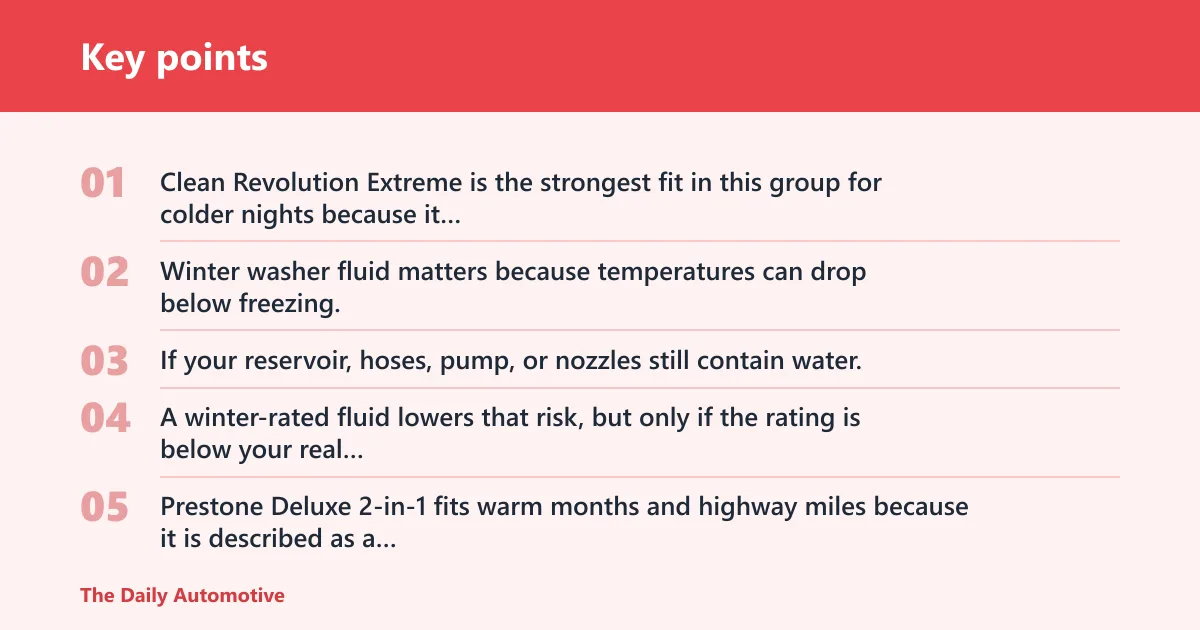
| Rain-X 2-in-1 All Season | Year-round use in colder climates | Rated down to -25°F | Still a general-purpose formula, not a dedicated bug-only mix |
| Prestone Deluxe 2-in-1 | Drivers who want one bottle for winter and summer | Described as a winter de-icer and summer bug wash | Check the label for your local low before relying on it alone |
| Clean Revolution Extreme | Colder winter exposure | Rated to -27°F | Freeze rating helps in cold weather, but it is not a substitute for checking your forecast |
| HOANK Power Blast | Drivers looking for a stated freeze threshold | Claims 0°F protection | 0°F is not enough for colder overnight lows |
Best for freezing weather
Clean Revolution Extreme is the strongest fit in this group for colder nights because it is rated to -27°F. Winter washer fluid matters because temperatures can drop below freezing, and the whole washer system can be affected, not just the spray pattern.
If your reservoir, hoses, pump, or nozzles still contain water, that leftover liquid can freeze and cause damage. A winter-rated fluid lowers that risk, but only if the rating is below your real overnight low.
Best for bug-heavy highway driving
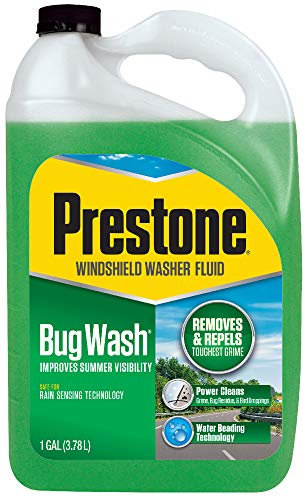
Prestone Deluxe 2-in-1 fits warm months and highway miles because it is described as a winter de-icer and summer bug wash. Bug-remover washer fluid is useful when insects, tar, and road grime build up faster than ordinary road film.
Look for a label that specifically mentions bug removal or summer grime. That matters more than a flashy bottle shape, because the problem on a summer freeway is sticky residue, not freezing.
Best for rain and year-round use
Rain-X 2-in-1 All Season is the practical pick for drivers who see frequent rain and want one bottle that covers a broad range of weather. Water-beading washer fluid can help visibility at speed because it helps water sheet away from the glass.
That extra water repellency is most useful in steady rain, on busy highways, or on vehicles with rain-sensing windshields that spend a lot of time clearing spray and road mist.
Best compact refill option
Washer fluid tablets are the compact option when storage space matters. They can work well if mixed correctly, but freeze protection varies by product, so do not assume a tablet mix is winter-safe just because it fits in a glove box.
If you choose tablets, check the mixing directions closely and confirm whether the finished solution has any freeze rating at all. A compact refill that freezes in the lines is cheap only until it stops spraying.
What is the best washer fluid for winter driving?
The best winter washer fluid is a winter-rated formula that stays liquid below your coldest overnight low and protects the reservoir, hoses, pump, and nozzles. In cold climates, target a freeze rating below the temperatures you actually park in, not the mildest part of the day.
How to match the rating to your weather
If your overnight low is near freezing, an all-season fluid may be enough. If your area regularly dips well below 32°F / 0°C, choose a dedicated winter formula. The closer your local low gets to the bottle’s limit, the less margin you have for slush, wind chill, and parked-car cooling.
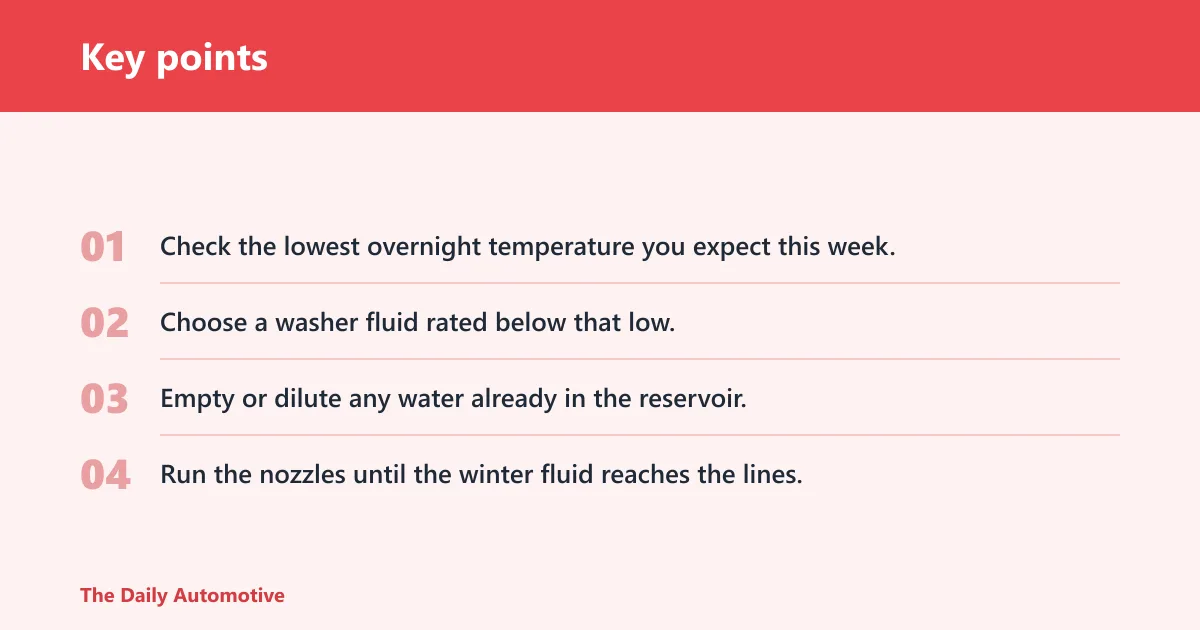
- Check the lowest overnight temperature you expect this week.
- Choose a washer fluid rated below that low.
- Empty or dilute any water already in the reservoir.
- Run the nozzles until the winter fluid reaches the lines.
Can you make your own windshield washer fluid?
You can make a basic mix for warm-weather emergency use, but homemade fluid is not the same as a commercial washer fluid. It will not reliably match the detergent package, bug removal, or freeze protection found in a labeled product, so it is a stopgap, not a year-round plan.
Why DIY mixes have limits
Homemade mixes can leave you guessing on concentration, streaking, and freezing point. That matters because washer fluid has to work in the reservoir, hoses, pump, and nozzles, not just on the glass. If freezing weather is possible, a labeled winter fluid is the safer choice.
Washer fluid tablets versus premixed fluid
Premixed fluid is easier because it is ready to pour. Tablets save storage space and can be useful for drivers who want a compact refill, but they only work well if mixed at the correct concentration and only if the product includes the protection you need.
When tablets make sense
Tablets fit drivers who keep limited cargo space or want fewer bulky jugs at home. They are less attractive if you need a guaranteed winter rating right away, because freeze protection varies by product and by how carefully you mix it.
A common first-timer mistake is treating a tablet like a universal refill. If the bottle does not say how the finished mix performs in freezing weather, assume you need to verify that before winter use.
How should you choose washer fluid?

Start with your coldest overnight low, then match the bottle to your commute. If you drive through bugs, salt, slush, or steady rain, pick the formula built for that job. Refill value matters too, because gallon jugs, concentrates, and tablets spread their cost differently.
Match the fluid to the coldest low
Use a winter formula when temperatures can drop below freezing. If your area sees only mild nights, an all-season or bug-focused fluid may be enough. The point is to protect the system before the liquid in the reservoir becomes a problem.
Choose by commute pattern
Highway commuters usually need stronger cleaning for bugs and oily grime. City drivers often need more general cleaning for dust and road film. Drivers in rainy areas can benefit from water-beading formulas that help visibility when spray is constant.
Compare refill value, not bottle size alone
Gallon jugs are simple and predictable. Concentrates and tablets can take up less space, but only if the mix ratio is right and the final fluid still matches your climate. The cheapest bottle is not a bargain if you need to empty it and refill with something colder-rated a week later.
If the reservoir already has water in it
If the forecast stays above freezing, top off with washer fluid and use it up soon. If freezing weather is coming, dilute the water as little as possible and switch to a winter-rated fluid before the temperature drops. Frozen washer-system water can damage the reservoir, pump, or nozzles.
Distilled water is a better emergency fill than tap water because it has fewer minerals, so it is less likely to leave deposits in the reservoir, hoses, and nozzles. Even so, distilled water still lacks detergents and freeze protection, so it remains an emergency-only substitute.
Frequently asked questions
Can you use water instead of windshield washer fluid?
Only briefly, and only in warm weather. Water is a temporary emergency fill, not a true replacement. It does not clean bugs, grease, or winter grime well, and it can freeze in the reservoir, hoses, or nozzles when temperatures drop.
Is tap water OK in windshield washer fluid reservoir?
Tap water is not a good long-term refill. It can leave mineral deposits in the reservoir, hoses, and nozzles, and it has no freeze protection. If it is your only emergency option, plan to replace it with real washer fluid as soon as you can.
Is distilled water better than tap water for washer fluid?
Yes, distilled water is better than tap water for emergency use because it has fewer minerals. That lowers the chance of deposits and nozzle clogging. It still is not washer fluid, though, because it has no detergents and no freeze protection.
What happens if you use water in windshield wiper fluid in winter?
It can freeze in the system. Frozen washer-system water can damage the reservoir, pump, or nozzles, and it may leave you without spray exactly when you need to clear salt and slush. Winter washer fluid is the safer choice once freezing is possible.
What should you do if you already put water in the reservoir?
If temperatures will stay above freezing, top off with washer fluid and run the system until the mix is mostly replaced. If a hard freeze is coming, drain or dilute the water as much as practical and refill with a winter-rated formula before the car sits overnight.
Do washer fluid tablets work as well as premixed fluid?
They can work well if mixed correctly, but they are less foolproof than premixed fluid. The key question is freeze protection, because that varies by product. Tablets are compact and convenient, but they are only a good choice if you follow the mix instructions exactly.
Products related to this article
Sponsored / affiliate links. As an Amazon Associate I earn from qualifying purchases. I may earn additional commission from eligible campaigns.