Remote Start vs Engine Idling: Which Is Better for Winter?
Remote start makes sense when you want cabin heat, a clear windshield, or a little extra warm-up before driving. If you only need the engine running for a minute or two, plain idling is often the cheaper, lower-risk move, especially on very short winter trips. Used poorly, idling wastes fuel, can wear down an old battery, and may add stress if the engine never reaches full operating temperature. This guide compares fuel use, battery load, cabin comfort, and wear so you can pick the better winter habit.
This guide is part of our Winter car care series.
Remote start vs engine idling: the winter trade-off in one sentence


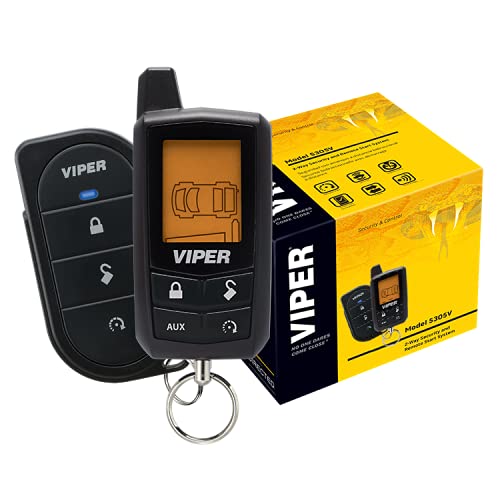
Remote start and plain idling do the same basic job: they let the engine run while the car sits still. The difference is convenience and control. Remote start adds a preset timer and cabin prep, while engine idling is the simpler, cheaper habit when you only need a short warm-up before driving off.
The right answer depends on temperature, trip length, and battery health. In a mild winter with a healthy battery, either habit can stay low-risk if you keep it brief. In extreme cold, or when visibility and comfort matter, remote start can be the better tool because it buys time for glass clearing and steadier cabin temperature.
Below is the practical split: engine wear, electrical load, fuel use, and comfort. Those are the factors that matter on real winter mornings, not the badge on the key fob.
| Decision factor | Remote Start | Engine Idling | Winner |
|---|---|---|---|
| Engine wear | Low when used briefly on a healthy modern gasoline engine | Low for short periods, higher if the engine sits too long cold | Tie |
| Battery load | Extra HVAC draw plus a startup event, but usually minor on a healthy battery | Startup load only, with less accessory demand if climate settings are low | Engine Idling |
| Fuel cost | Uses fuel while idling, plus more if the system runs the cabin fan and defroster | Uses fuel while idling, usually with fewer accessories running | Engine Idling |
| Comfort and windshield clearing | Strong advantage for pre-heating, defogging, and scraping less glass | Poorer comfort if the driver has to sit in the car and wait | Remote Start |
| Best winter use case | Short commutes, heavy frost, and extreme-cold mornings | Quick departures, warm garages, and drivers who do not need cabin prep | Depends on use case |
Engine wear and cold-start stress
Remote start is not harmful by default, and short remote-start idles cause little engine wear. The biggest wear event is the first cold start itself, when oil is thick and parts are dry for a moment before full circulation. A modern gasoline engine with synthetic oil is generally better suited to that than older designs.
Engine idling alone does not remove cold-start stress. It just stretches the warm-up time. A brief idle helps oil move, but sitting too long at low temperature can leave the engine in a half-warm state where combustion is dirtier and parts do not reach normal temperature quickly.
Battery load and electrical demand
Remote start adds electrical activity because the battery handles the initial cranking load and then supports accessories such as HVAC, blowers, heated glass, and electronics. Battery drain from remote start is usually minor on a healthy vehicle, but that changes when the battery is weak, old, or already struggling in cold weather.
Plain idling keeps the same basic startup load but often with less accessory demand if the driver leaves climate settings low. The alternator will recharge the battery once the engine is running, yet cold batteries recharge more slowly, so repeated short starts can stack up on short-trip cars.
Fuel cost during idle time
Excessive idling hurts fuel economy. A typical sedan might consume around 0.2 to 0.4 gallons per hour while idling, so a few extra minutes every winter morning does add up over a season. Remote start can use a little more fuel than a bare idle because the cabin system usually runs harder.
That does not make remote start a fuel disaster. It does mean the cheapest habit is the one you use least. If the cabin is already comfortable and the glass is clear, more idle time buys very little and still burns fuel.
Comfort, windshield clearing, and cabin heat
Remote start wins when comfort is part of the job. It lets the cabin warm before the driver gets in, and it can help defrost windows faster, which matters on dark, icy mornings when visibility is poor. For many drivers, that convenience is the main reason to use it.
Engine idling works too, but the driver stays in the cold while waiting. If the goal is simply to get moving, that may be fine. If the goal is to leave with clear glass and a tolerable cabin, remote start is the better winter habit.
According to Is remote start bad for your engine? – Park(ing) Day — After a brief idling period of 30 seconds to a minute, driving moderately is generally better.
Is remote start bad for your car?
Remote start is usually fine when used correctly on a healthy vehicle. The risk comes from overuse, a weak battery, or a bad installation, not from the feature itself. Short runs are generally low-risk for a modern gasoline engine, especially when the vehicle is driven gently afterward.
Factory-installed remote start is normally the safer path because it is tied into the vehicle’s electronics and follows the manufacturer’s logic. A poorly installed aftermarket system could damage the electrical system or create compatibility problems, especially on cars with more sensitive body modules and security systems.
One more point matters in winter: the HVAC load. If the cabin fan, rear defogger, and heated glass run hard, the battery and alternator work more than they do during a bare idle. On a healthy car, that is still usually manageable. On an old battery, it can become the weak link.
How long should you let a car idle in cold weather?
A generally sufficient cold-weather idle is 5-10 minutes in most conditions. In extremely low temperatures, the warm-up might be extended to a maximum of 15 minutes. After a brief idle of 30 seconds to a minute, driving moderately is generally better than sitting parked and waiting longer.
That guidance fits modern gasoline engines with synthetic oil far better than it fits older vehicles with thicker oils and looser tolerances. The engine warms more quickly under light load than it does at a standstill. Gentle driving after start also helps the transmission, brakes, and cabin reach working temperature faster.
Remote start systems are built to shut off automatically after a set period, usually 10-15 minutes. That timer keeps the habit from turning into an all-morning idle session. The timer is useful because it puts a practical cap on waste.
What happens when a car idles too long in winter?
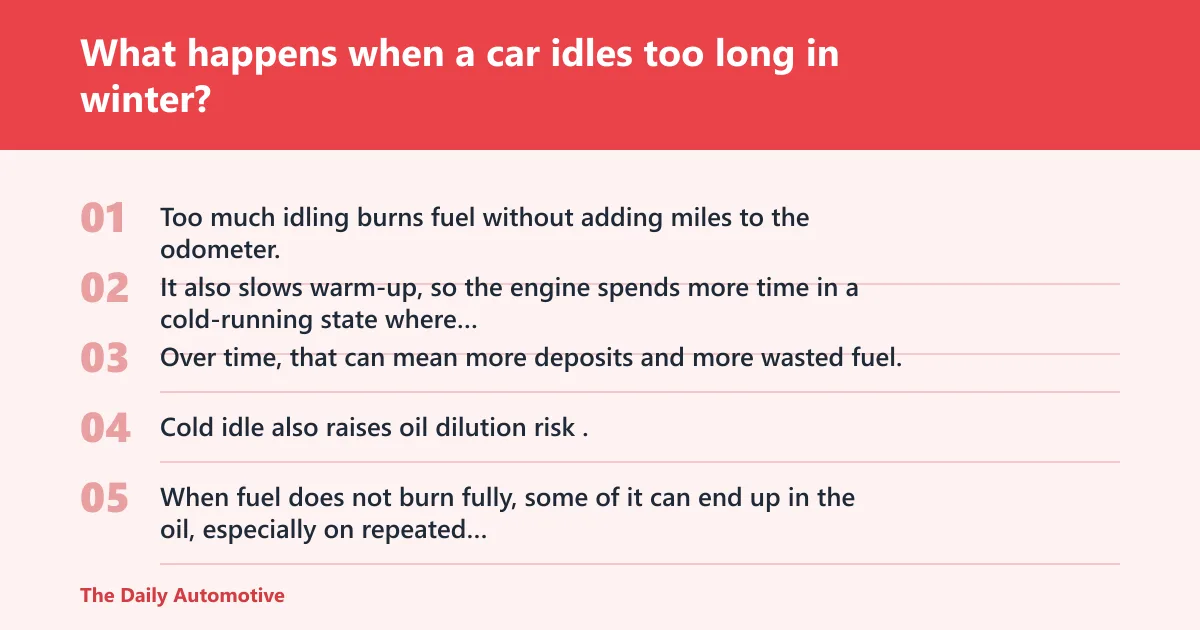
Too much idling burns fuel without adding miles to the odometer. It also slows warm-up, so the engine spends more time in a cold-running state where combustion is less complete and the oil does not reach ideal temperature. Over time, that can mean more deposits and more wasted fuel.
Cold idle also raises oil dilution risk. When fuel does not burn fully, some of it can end up in the oil, especially on repeated short winter starts and long idle periods. That risk is worse for short-trip commuters who never let the engine reach full operating temperature.
The catalytic converter also wants heat. Prolonged idle keeps it cooler than normal driving does, which delays emissions cleanup. That is one reason a brief idle followed by gentle driving is usually cleaner than sitting still until the engine feels warm enough by sound alone.
Fuel burn and wasted cost over a season
Idle fuel burn sounds small on one morning and becomes obvious across a winter. At 0.2 to 0.4 gallons per hour, ten extra minutes a day adds a real seasonal bill. If the vehicle is only idling to make the cabin feel nicer than necessary, that fuel is doing comfort work, not transport work.
Oil dilution, incomplete combustion, and carbon buildup risk
Long idle time keeps combustion cooler and less complete. That can leave more soot and unburned fuel residue in the system, which is where carbon buildup risk starts to matter. Short idles are not the problem; repeated long, cold idles are.
Catalytic converter warm-up and emissions impact
The catalytic converter needs temperature to work well. Idling delays that warm-up, so emissions remain worse for longer than they would during a gentle drive. If the goal is clean operation, moving the car lightly after a short idle is the better path.
When remote start is the smarter choice
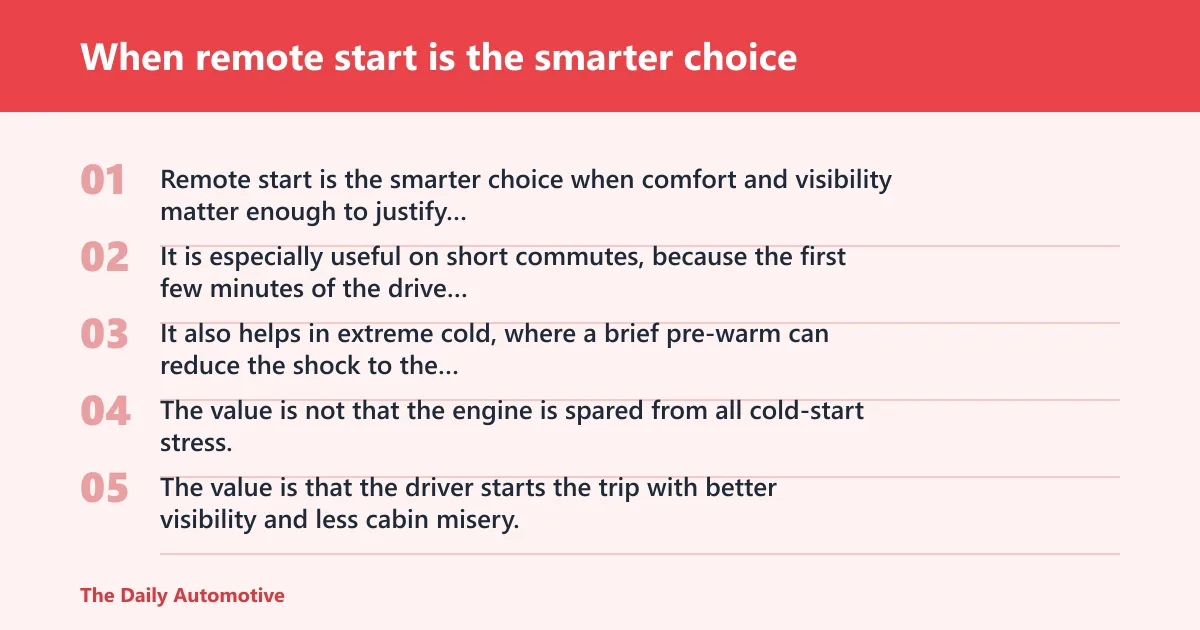
Remote start is the smarter choice when comfort and visibility matter enough to justify the extra fuel and accessory load. It is especially useful on short commutes, because the first few minutes of the drive may be the only chance to clear frost and make the cabin tolerable before arrival.
It also helps in extreme cold, where a brief pre-warm can reduce the shock to the battery and make defrosting more effective. The value is not that the engine is spared from all cold-start stress. The value is that the driver starts the trip with better visibility and less cabin misery.
Factory-installed remote start has the edge here because manufacturer instructions, timing logic, and electrical integration are built in from the start. INFINITI’s remote engine start feature is part of its connected services, and INFINITI lists remote services within INFINITI InTouch. That kind of OEM integration is usually cleaner than a rushed add-on.
Factory-installed vs aftermarket remote start in winter
Factory-installed remote start generally fits the vehicle better and is less likely to create strange electrical behavior. It will not void the warranty when used per instructions. Aftermarket remote start can still work well, but professional installation matters because a poor install can cause electrical trouble or compatibility issues.
Choose Remote Start if… / Choose Engine Idling if…
Choose Remote Start if you want cabin heat and defrosting before you step outside, you face frequent frost or snow, your battery is healthy, and your vehicle has factory integration or a properly installed aftermarket system. It is also the better choice for extreme-cold mornings where a short pre-warm improves comfort and visibility.
Choose Engine Idling if you only need a quick start before driving, your trip is short, the weather is not severe, or you are trying to reduce accessory load on an aging battery. It also makes sense when the vehicle is older, has high mileage, or has a history of weak winter starts and you want the simplest possible routine.
For short-trip commuters, the best answer is usually brief idle, then drive gently. For drivers facing deep cold, remote start earns its keep because it adds comfort without needing a long warm-up. For weak batteries and older vehicles, less idle time is usually safer than more.
Choose remote start if…
Choose remote start if you need a clear windshield before departure, if you park outside in freezing weather, or if you want the cabin pre-warmed for a child seat or a long early-morning drive. Use it as a convenience tool, not as a reason to let the car sit and run far longer than needed.
Choose engine idling if…
Choose engine idling if you are stepping out for only a moment, if the car will be driven almost immediately, or if you are keeping the electrical load as low as possible on an old battery. In that narrow use case, a short idle is simpler and costs less.
Frequently asked questions
Is remote start bad for your car?
Remote start is usually fine for your car when it is used correctly. The short idle period causes minimal engine wear, and battery drain is typically minor on a healthy vehicle. The real risks come from excessive idling, weak batteries, or a poor aftermarket installation.
Does remote start use a lot of gas?
Remote start uses the same fuel as idling because the engine is running while the car sits still. A typical sedan might consume around 0.2 to 0.4 gallons per hour while idling, and the remote-start cabin load can push that higher. Used briefly, the fuel cost stays modest.
How long should I let my car idle in cold weather?
A generally sufficient cold-weather idle is 5-10 minutes in most conditions. In extremely low temperatures, up to 15 minutes can be reasonable. After that, driving gently is usually better than waiting longer in place, because the engine warms faster under light load than at rest.
Can remote start drain the battery?
It can, but battery drain from remote start is typically minor on a healthy vehicle. The bigger concern is a weak or aging battery, especially in very cold weather when starting load rises and recharge slows. Heavy HVAC use also adds demand, so battery health matters.
Does remote start void the warranty?
Factory-installed remote start will not void the warranty when used per instructions. Aftermarket systems are a different story: the feature itself does not automatically void coverage, but a bad installation can create electrical problems that may lead to warranty disputes over the damaged parts.
What happens if I idle too long in winter?
Too much idling wastes fuel, delays full warm-up, and can increase oil dilution and carbon buildup risk. It also keeps the catalytic converter cooler for longer, which hurts emissions performance. A short idle is fine; long, repeated idling is where the problems start.
Products related to this article
Sponsored / affiliate links. As an Amazon Associate I earn from qualifying purchases. I may earn additional commission from eligible campaigns.