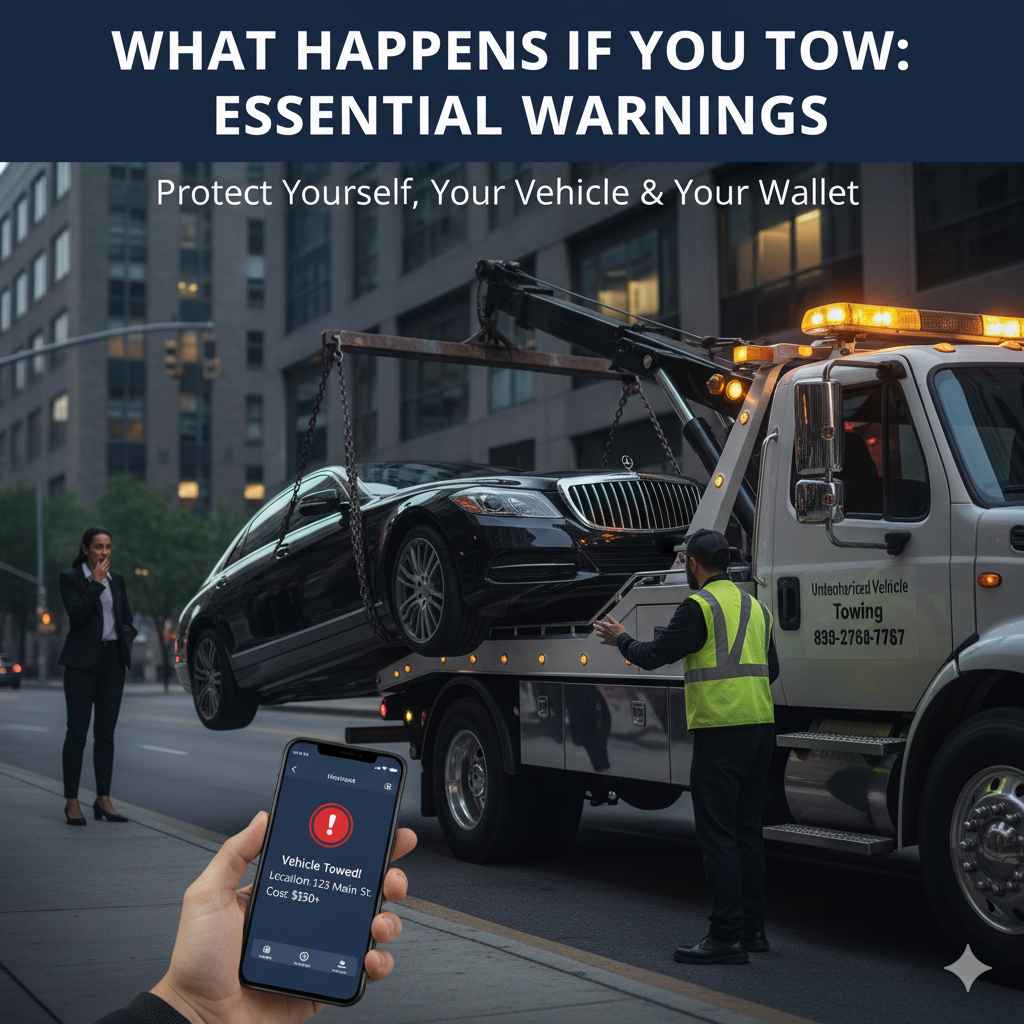
What Happens If You Tow: Essential Warnings
If you tow incorrectly, you risk serious damage to your vehicle, the vehicle being towed, and even personal injury. Key risks include transmission failure, tire blowouts, brake system issues, and dangerous loss of control. Always follow manufacturer guidelines and use appropriate towing equipment to ensure safety and prevent costly repairs.
Hitting the open road with an extra load can be exciting, whether you’re moving or heading out for an adventure. But if you’re new to towing, or even if you’ve done it before but want to be sure, there’s a big question on your mind: “What happens if I tow incorrectly?” It’s a common concern, and frankly, it’s smart to wonder. Getting towing wrong can lead to some pretty costly and dangerous surprises.
Picture this: a sudden breakdown miles from home, or worse, a scary situation on the highway because something went wrong with your setup. That’s why understanding the risks is the first step to a safe and successful tow. We’re going to break down exactly what can go wrong and how you can avoid these common pitfalls, so you can tow with confidence.
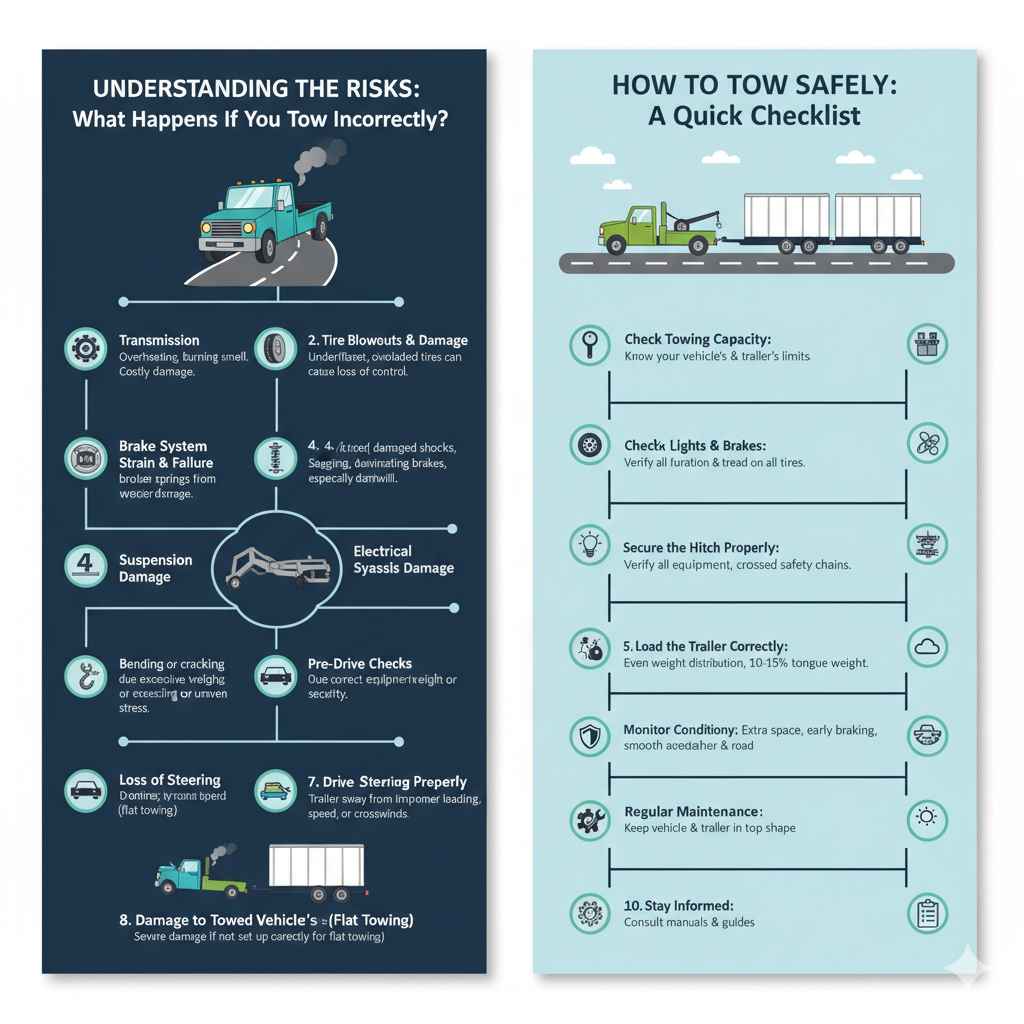
Understanding the Risks: What Happens If You Tow Incorrectly?
Towing might seem straightforward, but many things can go wrong if you’re not careful. Your vehicle isn’t just a car; it’s a complex machine, and adding the stress of towing can highlight any weak points or improper practices. Below, we’ll explore some of the most common and serious consequences of towing without proper knowledge or equipment.
1. Transmission Overheating and Failure
Your vehicle’s transmission is one of the most critical components, and towing puts it under immense strain. When you tow, your engine works harder, generating more heat. If your transmission cooling system isn’t up to par, or if you exceed your vehicle’s towing capacity, the transmission fluid can overheat. Overheated transmission fluid loses its lubricating properties, leading to increased friction, wear, and eventually, costly damage or complete failure. This is especially true for automatic transmissions, which are more susceptible to heat-related issues than manual ones.
Signs of Transmission Trouble While Towing:
- Slipping gears
- Hesitation when shifting
- A burning smell
- Overheating warning light on the dashboard
- Sudden jerky movements
2. Tire Blowouts and Damage
Tires are your vehicle’s connection to the road, and they’re crucial for safe towing. When you tow, the combined weight of your vehicle and the towed item puts significant pressure on your tires. If the tires are underinflated, overloaded, or simply worn out, they can overheat and then suddenly blow out. A tire blowout while towing is incredibly dangerous, as it can cause a loss of control, leading to accidents. This risk is amplified if you’re towing a trailer that’s heavier than your vehicle is designed to handle, or if the trailer’s tires are also overloaded or in poor condition.
It’s essential to check your tires before every tow. Ensure they are inflated to the correct PSI (pounds per square inch) – often found on a sticker in your driver’s side doorjamb or in your owner’s manual – and that they have adequate tread depth. Don’t forget to check the tires on the towed item as well!
3. Brake System Strain and Failure
Towing adds substantial weight, which means your brakes have to work much harder to slow down and stop your vehicle. If your brake system isn’t in prime condition, or if you’re towing beyond your vehicle’s or trailer’s braking capacity, you can experience overheating brakes, reduced stopping power, or even complete brake failure. This is particularly concerning when going downhill, where gravity works against your brakes.
Many larger trailers come equipped with their own braking systems, which connect to your vehicle’s brake controller. Ensuring these are properly installed and functioning is vital. For smaller trailers without dedicated brakes, the load distribution and your vehicle’s own brakes are all that’s working. Always ensure your vehicle’s brakes are serviced regularly and are in excellent condition before attaching any load.
4. Suspension Damage
The springs, shocks, and other components of your suspension system are designed to handle your vehicle’s weight and the stresses of normal driving. Towing a heavy load puts extra stress on these parts. If you exceed your vehicle’s Gross Vehicle Weight Rating (GVWR) or its tongue weight limits, you can cause your suspension to sag, damage the shocks and struts, or even break springs. This can lead to poor handling, uneven tire wear, and a less stable ride.
5. Frame or Chassis Damage
The frame or unibody chassis is the backbone of your vehicle. Towing excessively heavy loads, especially in a way that puts uneven stress on the hitch, can actually bend or crack the frame. This is a very serious and expensive problem to fix, often rendering the vehicle unsafe to drive. Always adhere strictly to your vehicle’s towing capacity limits.
6. Electrical System Issues
Connecting a trailer often involves hooking up its lights and sometimes braking systems to your vehicle’s electrical system. Improper wiring can cause various issues. You might find that your trailer lights aren’t working, or worse, you could blow fuses, damage your vehicle’s wiring harness, or interfere with the functionality of your vehicle’s own lighting and electronic systems. A short circuit can be a significant hazard.
7. Loss of Steering Control
If the trailer you are towing starts to sway from side to side – a phenomenon called “trailer sway” – it can be incredibly difficult to control. Trailer sway is often caused by improper loading, exceeding speed limits, crosswinds, or a trailer that isn’t properly balanced. It can quickly escalate, making you lose control of both the trailer and your tow vehicle, leading to a serious accident.
This is particularly dangerous if the trailer is “tail-heavy,” meaning more weight is concentrated at the rear of the trailer, making it unstable. Proper weight distribution and avoiding sudden steering movements are key to preventing sway.
8. Damage to the Towed Vehicle’s Drivetrain (If Flat Towing)
If you are “flat towing” (towing a vehicle with all four wheels on the ground), sometimes called “dinghy towing,” you need to be absolutely sure your vehicle is equipped for it and set up correctly. Many cars, especially those with automatic transmissions, cannot be flat-towed. If you attempt to do so, you can severely damage the transmission, as it will continue to receive power or lubrication even when the engine is off, leading to internal damage from high-speed rotation.
For vehicles that can be flat-towed, specific procedures, like disconnecting the driveshaft or putting the transmission in neutral and following specific sequences, must be followed. Always consult your towed vehicle’s owner’s manual for specific instructions on flat towing.
The Dangers of Towing with a Too-Heavy Load
One of the most significant mistakes and potential dangers when towing is overloading your vehicle or trailer. Every vehicle and trailer combination has defined weight limits set by the manufacturer for safety and durability. Exceeding these limits can have catastrophic consequences.
Understanding Towing Capacities
Before you even think about hitching up, you need to know your vehicle’s and trailer’s weight limits. These are crucial figures:
| Term | Description |
|---|---|
| Curb Weight | The weight of the vehicle without passengers or cargo. |
| Gross Vehicle Weight (GVW) | The total weight of the loaded vehicle. |
| Gross Vehicle Weight Rating (GVWR) | The maximum allowable weight of a fully loaded vehicle, including passengers, cargo, and tongue weight. |
| Gross Trailer Weight (GTW) | The actual loaded weight of the trailer. |
| Gross Trailer Weight Rating (GTWR) | The maximum allowable weight of a fully loaded trailer. |
| GCWR (Gross Combined Weight Rating) | The maximum allowable weight of the fully loaded tow vehicle and fully loaded trailer combined. |
| Tongue Weight | The downward force the trailer tongue exerts on the trailer hitch. It’s typically 10-15% of GTW for conventional trailers. |
You can usually find these ratings on stickers inside your vehicle’s doorjamb, in the owner’s manual, or on the trailer’s chassis.
Consequences of Exceeding Capacities
- Vehicle Instability: A vehicle struggling under too much weight will be unstable, making it hard to steer and prone to swaying or tipping.
- Braking Difficulties: As mentioned, your brakes won’t be able to stop such a heavy load effectively, significantly increasing stopping distances and the risk of brake failure.
- Frame and Suspension Damage: The vehicle’s structure is not designed for such extreme loads, leading to bending, cracking, or component failure.
- Tire Overload: Tires can overheat and blow, leading to loss of control.
- Transmission Damage: The transmission can overheat and fail.
- Accident Risk: All of the above contribute to a dramatically increased risk of a severe accident.
It’s crucial to know your vehicle’s limits and the weight of what you intend to tow. Weighing your trailer and its contents is often a wise step to ensure you are within safe operating parameters.
Essential Warnings: What Not to Do When Towing
Beyond exceeding weight limits, several common mistakes can lead to disaster. Being aware of these “don’ts” is just as important as knowing what to do.
1. Don’t Ignore Your Owner’s Manual
Your vehicle’s owner’s manual is your best friend when it comes to towing. It contains specific information about your vehicle’s towing capacity, recommended hitch types, proper ball mount heights, and any special instructions for towing. Ignoring this valuable resource is a major risk.
2. Don’t Use the Wrong Hitch or Ball Mount
Using a hitch that’s too small, a ball mount with the wrong drop or rise, or a ball that doesn’t match your trailer coupler can lead to an improperly aligned trailer. This can cause trailer sway, uneven tire wear, and make the trailer difficult to control. Always ensure your hitch and ball mount are rated for the weight you are towing and that the ball size matches your trailer’s coupler. For heavier trailers, a weight-distribution hitch might be necessary for optimal safety and control. Resources like this guide on trailer hitches can help you understand the options.
3. Don’t Neglect Trailer Maintenance
Remember, the trailer is a separate entity with its own maintenance needs. Check its tires, lights, brakes (if equipped), coupler, safety chains, and the condition of its frame. A well-maintained trailer is a safe trailer.
4. Don’t Forget Safety Chains
Safety chains are designed to keep a trailer attached to the tow vehicle in the event of a hitch failure. Cross them under the trailer tongue so that if the coupler fails, the tongue is caught by the chains, preventing it from digging into the road and causing a severe accident. Always connect them to the tow vehicle’s frame or hitch receiver, not to the hitch ball itself.
5. Don’t Rush or Drive Recklessly
Towing requires patience and defensive driving. Speeding, aggressive lane changes, or hard braking can upset the trailer and lead to loss of control. Allow yourself significantly more time to brake, accelerate, and make turns. Be extra cautious in windy conditions or on uneven roads.
6. Don’t Tow in Adverse Weather Without Experience
Rain, snow, ice, and strong winds make towing exponentially more dangerous. Visibility is reduced, and traction is compromised. If you are inexperienced with towing, it’s best to postpone your trip until conditions improve.
7. Don’t Mount Your Trailer Hitch Incorrectly
The hitch must be installed according to the manufacturer’s specifications and rated for your vehicle and trailer. Improper installation can lead to the hitch failing, causing a catastrophic loss of the trailer.
8. Don’t Assume Your Vehicle is Ready for Towing “Out of the Box”
While many vehicles are capable of towing, often aftermarket parts like a proper hitch, trailer wiring, and potentially an upgraded transmission cooler or braking system are required. Check your vehicle’s specifications and consider professional installation for critical components. For instance, the Federal Highway Administration provides safety resources for towing.
What Happens If You Tow a Car with a Rental Car?
Towing with a rental car is a common question, and the answer is usually straightforward: don’t do it, unless the rental company explicitly states it’s allowed and you have the correct equipment. Most standard rental car agreements strictly prohibit towing anything with their vehicles for several critical reasons:
- Insurance Voidance: Most rental car insurance policies are invalidated if the vehicle is used for towing. If any damage occurs to the rental car or the towed item, you will likely be held 100% responsible for all costs.
- Vehicle Damage: Rental cars are typically not equipped with hitches or the necessary cooling systems to handle towing stresses. Attempting to tow can easily cause severe, costly damage to the transmission, engine, and frame.
- Contract Violations: Using a rental car for towing almost certainly violates the rental agreement, leading to hefty fines and potential legal issues beyond just repair costs.
- Safety Concerns: Rental car companies want to ensure the safety of their vehicles and the public. They cannot guarantee that a renter will have the knowledge, equipment, or a vehicle suitable for safe towing.
If you need to tow something, your best bet is to rent a vehicle specifically designed and advertised for towing, or to use a professional towing service. Always read the rental agreement carefully before signing.
How to Tow Safely: A Quick Checklist
Preventing towing disasters is all about preparation and adherence to best practices. Here’s a simple checklist to help you tow safely:
- Check Towing Capacity: Know your vehicle’s and trailer’s limits.
- Inspect Tires: Ensure all tires (tow vehicle and trailer) are properly inflated and have good tread.
- Check Lights and Brakes: Verify that all trailer lights and brakes are functioning correctly.
- Secure the Hitch Properly: Use the correct hitch, ball mount, and coupler. Ensure the safety chains are crossed and securely attached.
- Load the Trailer Correctly: Distribute weight evenly, with about 10-15% of the trailer’s weight on the tongue.
- Pre-Drive Checks: Do a quick walk-around to ensure everything looks secure.
- Drive Defensively: Allow extra space, brake early, accelerate smoothly, and avoid sudden movements.
- Monitor Conditions: Be aware of weather and road conditions, and adjust your driving accordingly.
- Regular Maintenance: Keep both your tow vehicle and trailer well-maintained.
Frequently Asked Questions About Towing
Q1: Can I tow a trailer with a car that doesn’t have a factory-installed hitch?
A1: Yes, you can usually have a hitch installed by a professional. However, your vehicle still has towing capacity limits. You must ensure the hitch is properly rated for your vehicle and the load you intend to tow. Always check your owner’s manual for your vehicle’s towing capacity before installing a hitch or towing.
Q2: Is trailer sway dangerous? How do I prevent it?
A2: Yes, trailer sway is very dangerous as it can lead to a loss of control. To prevent it, ensure proper trailer loading with about 10-15% of the trailer’s weight on the tongue, avoid sudden steering or braking, drive at appropriate speeds, and consider a weight-distribution hitch for larger trailers.
Q3: How do I know if my trailer lights are working correctly?
A3: Before you start driving, have a helper check all your trailer lights: brake lights, turn signals (left and right), and running lights. Each should illuminate and function correctly when activated on your tow vehicle. If they don’t, check fuses, bulbs, and the connection between the trailer and vehicle.