What Is Mid-Range in Car Audio? Frequency Range Explained
Mid-range in car audio is the band of frequencies roughly between 300 Hz and 5 kHz — the range that carries vocals, guitars, pianos, and most other instruments. It sits between the deep thump of bass and the sizzle of treble, and it is the frequency zone the human ear is most sensitive to.
Get the mid-range wrong and music sounds thin, boxy, or hollow even if the bass hits hard and the highs sound crisp. Get it right — with a dedicated mid-range driver, correct crossover points, and a few minutes on your head unit’s equalizer — and vocals sound present instead of buried. Here is exactly what mid-range means, how it differs from a full-range speaker, and how to set it up.
What Frequencies Count as Mid-Range in Car Audio?
BEST DEDICATED MID-RANGE SPEAKER
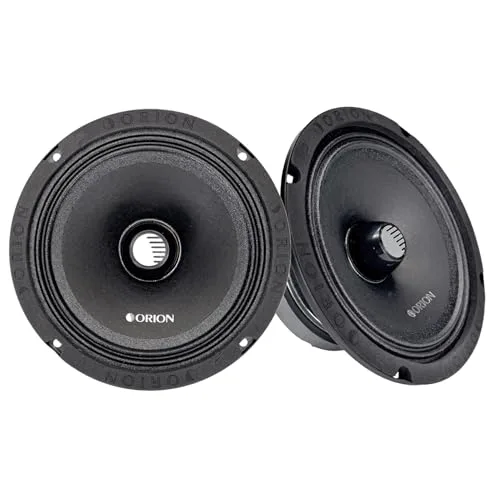 |
ORION Cobalt CM654 Mid-Range Speakers (Pair) – $64.95 A true dedicated mid-range driver instead of a coaxial cone doing three jobs at once, so vocals and instruments come through cleaner.
|
There is no single official cutoff, and you will see slightly different numbers depending on the source. General audio engineering references often define mid-range more narrowly, from around 200 Hz to 2 kHz. In car audio specifically, where dedicated mid-range drivers are built to cover more ground than a home speaker, the commonly used working range is closer to 300 Hz to 5 kHz.
| Frequency Band | Approximate Range | What You Hear |
|---|---|---|
| Bass | 20 Hz – 200 Hz | Kick drum, bass guitar, low engine rumble |
| Midbass | 200 Hz – 500 Hz | Body and warmth of vocals and instruments |
| Mid-range | 300 Hz – 5 kHz | Vocals, guitars, pianos, most instruments |
| Treble | 5 kHz – 20 kHz | Cymbals, sibilance, air and sparkle |
Notice that mid-range overlaps the top of midbass and the bottom of treble — that is normal. Speaker crossovers are built around those overlaps, splitting the signal so each driver only reproduces the band it is designed for. If you want the mechanics of that crossover point, see what a crossover actually does in a car audio system.
Mid-Range Speakers vs. Woofers and Tweeters
A woofer handles the low end — the deep, physical part of bass and drums. A tweeter handles the top end — the bright, airy detail in cymbals and sibilance. A mid-range driver sits between them and does the heavy lifting for vocals and instruments, which is where most of a song’s emotional content actually lives. Drop the mid-range out of a mix and a singer can sound like they are singing from another room.
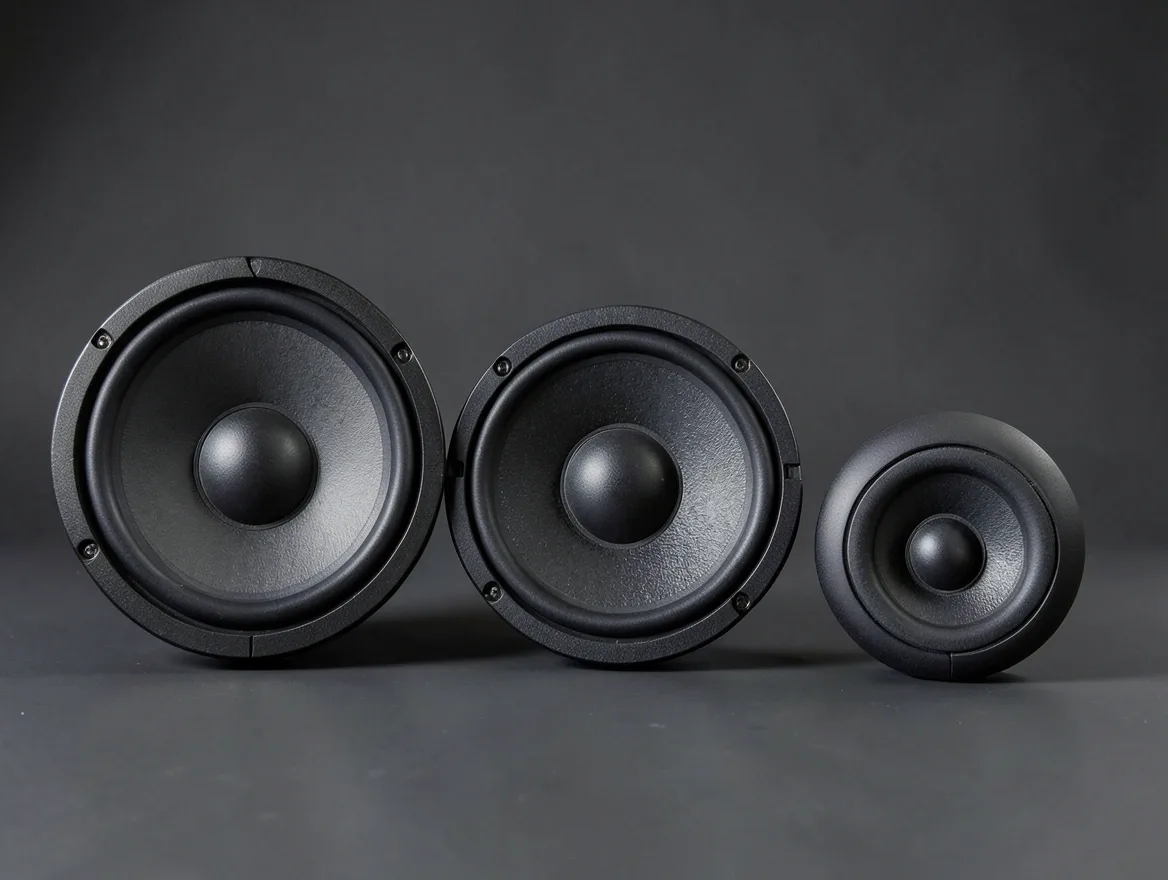
Most factory car speakers are coaxial (full-range) — a single cone with a small tweeter perched in the center, trying to cover bass through treble at once. That works fine for casual listening, but one cone cannot move air efficiently for deep bass and also flex fast enough for crisp highs without compromise. A 2-way component system splits the job between a woofer/mid-range cone and a separate tweeter. A 3-way system goes further, adding a dedicated mid-range driver so nothing is asked to multitask, which is why 3-way setups tend to deliver noticeably clearer vocals and better instrument separation. To see how the top end complements this, check out what tweeters actually do for car audio.
Benefits of a Dedicated Mid-Range Speaker
A dedicated mid-range driver frees a coaxial speaker’s cone from trying to do three jobs at once. The result is clearer vocals, more distinct instrument separation, and a more balanced overall mix — no single band drowning out the others. Voices sound like they are in the car with you instead of smeared into the background.
It also gives you more control. With a dedicated driver and a crossover or processor to feed it, you can shape exactly how much energy goes to vocals versus bass versus treble, which matters if your car’s cabin naturally emphasizes or kills certain frequencies (most do, thanks to glass, hard plastic, and door cavities).
Choosing the Right Mid-Range Speakers
Start with sensitivity and power handling, not brand names. Higher sensitivity (measured in dB) means the speaker produces more volume for the same amplifier power, which matters if you are running off a factory head unit’s low-power output. Check the RMS power rating against your amplifier or deck’s output so you are not underpowering or overdriving the driver.
Size matters for fit, not just sound: dedicated mid-range drivers typically run 3.5 to 6.5 inches, and you need to confirm the mounting depth clears your door panel or dash before buying. Established car audio brands — JBL, Kenwood, Pioneer, Rockford Fosgate, Alpine, and dedicated component-speaker makers like ORION or CT Sounds — each build multiple tiers, so compare specs and read a few verified owner reviews rather than picking on name recognition alone. If you are also upgrading amplifiers or subwoofers as part of the same build, budget for enough alternator output to keep the whole system powered without dimming your headlights at idle.
Installing Mid-Range Speakers
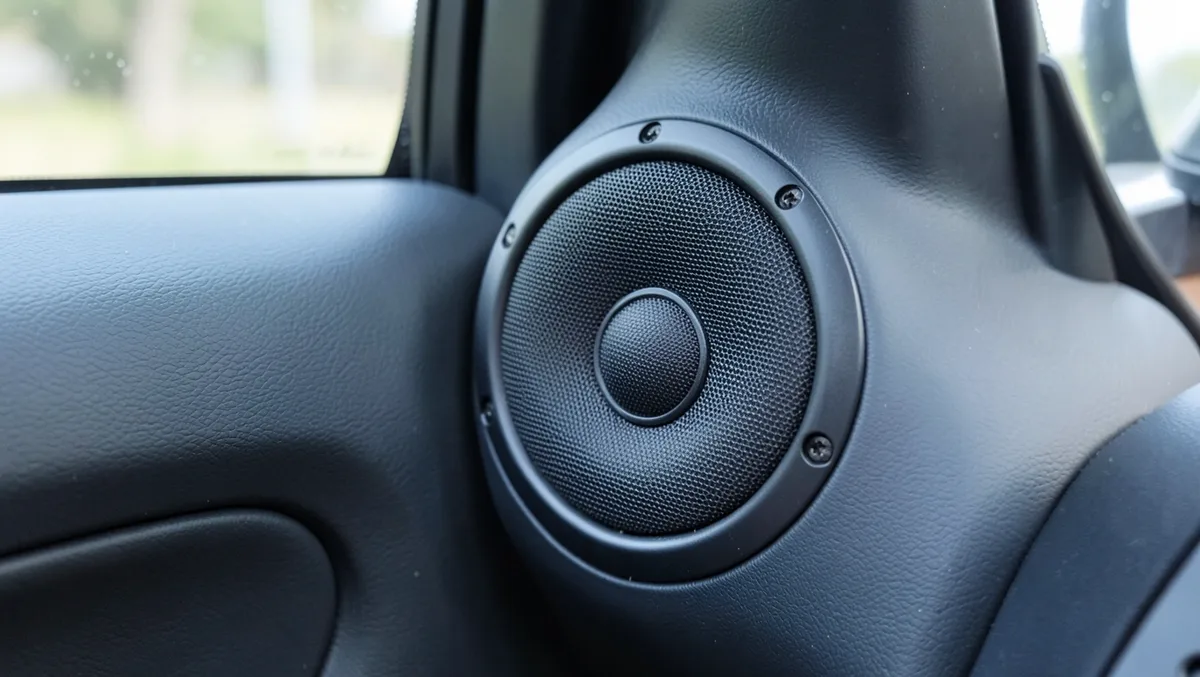
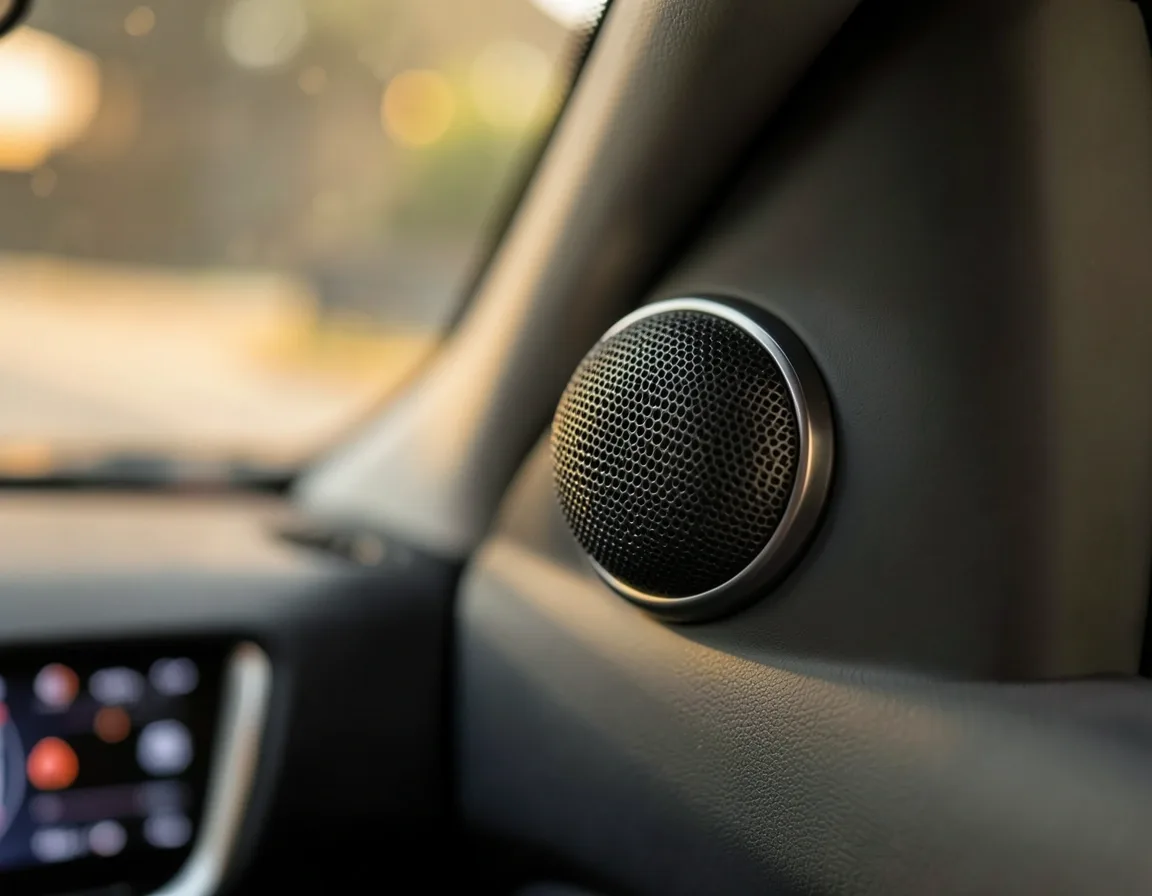
Mid-range drivers usually mount in one of three spots: the front doors (alongside or replacing the factory coaxial), the dash near the windshield, or the A-pillars at the base of the windshield. A-pillar mounting angles the driver toward your ears, which improves imaging — the sense that vocals come from a specific point rather than your feet.
If you are doing it yourself, you need basic tools — a screwdriver set, wire crimpers or a soldering iron, and often a trim-panel removal tool to avoid cracking door clips. Confirm speaker wire gauge and polarity before you button the panel back up; a reversed positive/negative connection will not damage anything, but it will cancel out bass and thin the mid-range when both channels play together. If the mounting depth is tight or your car needs custom brackets, a professional installer’s time is usually worth paying for.
The most common install mistakes: buying a driver that is physically too deep for the door cavity, running cheap thin-gauge wire that adds resistance and softens the sound, and leaving wire runs unsecured so they rattle against the door skin at higher volumes. All three are avoidable with a five-minute check before you start drilling.
Setting Mid-Range on Your Equalizer
Most factory and aftermarket head units place a mid-band EQ control somewhere in that 500 Hz to 5 kHz window. There is no universal “correct” setting — it depends on your speakers, your car’s acoustics, and your ears — but a couple of starting points help. If vocals feel buried, try a small boost (1 to 2 dB) around 1 to 3 kHz, the range where vocal presence lives. If voices sound harsh, boxy, or fatiguing on long drives, cut slightly in that same window instead of boosting elsewhere to compensate.
Make changes in small steps and listen to a few different songs before committing — a setting that sounds great on one track can sound off on the next. If your deck has EQ presets, use them as a starting point rather than a final answer, then fine-tune the mid-band from there. Trust what you actually hear over any generic number.
Troubleshooting Common Mid-Range Issues
Sound Distortion
Distortion in the mid-range is usually one of three things: a loose or damaged speaker wire, an equalizer setting pushed too far, or a driver being fed frequencies it cannot handle because the crossover point is set wrong. Check the wiring connections first — they are the easiest and cheapest thing to rule out — then back off any aggressive EQ boosts before assuming the speaker itself is bad. Dust or debris on the cone can also muddy the sound; a gentle wipe with a dry cloth is usually enough.
Connectivity and Playback Problems
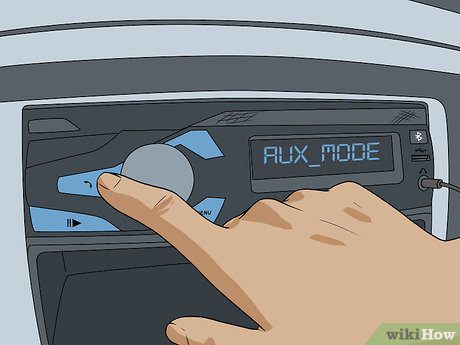
If mid-range sounds fine on a wired source but weak or dropout-prone over Bluetooth, the problem is usually the streaming connection, not the speakers. Confirm Bluetooth is actually paired (not just powered on), check the physical audio cable if you are running an AUX connection, and update your head unit’s firmware if an update is available — many playback glitches are fixed in software, not hardware.
Future Trends in Car Audio
Digital signal processing (DSP) is doing more of the tuning work that used to require a spectrum analyzer and a lot of trial and error — modern processors can time-align and EQ each driver automatically based on where it sits in the cabin. Wireless technology has also simplified installs, and voice control lets drivers adjust volume or tracks without reaching for a touchscreen.
Smartphone integration continues to deepen too. Many systems now let you control car audio settings remotely from a phone or dedicated remote, including saving personalized EQ profiles so your mid-range and overall balance travel with you between vehicles.
Frequently Asked Questions
What should the midrange be set to on a car stereo?
There is no single correct number, but most equalizers place the mid-band control somewhere between 500 Hz and 5 kHz. If vocals sound buried, try a small 1 to 2 dB boost around 1 to 3 kHz. If they sound harsh or boxy, cut slightly in that same range instead. Make changes gradually and test against a few different songs rather than settling on the first adjustment that sounds good.
What is mid-range audio?
Mid-range audio is the band of frequencies that carries vocals, guitars, pianos, and most other instruments. In car audio the working range is typically about 300 Hz to 5 kHz, though general audio references sometimes define it more narrowly, around 200 Hz to 2 kHz. It is the range human hearing is most sensitive to, which is why getting it wrong is the fastest way to make a system sound thin or fatiguing.
Do I need a dedicated mid-range speaker, or is a coaxial speaker enough?
A coaxial (full-range) speaker uses one cone to cover bass, mid-range, and treble at once, which is fine for casual listening and factory setups. A dedicated 2-way or 3-way component system splits those jobs across separate drivers — a woofer, a mid-range, and often a tweeter — so each one only reproduces the frequencies it is built for. That typically means clearer vocals and more precise imaging, which is why most serious car audio upgrades add a dedicated mid-range driver instead of relying on a coaxial cone alone.
Which is better, mid-range or full-range speakers?
They serve different goals rather than one being universally “better.” A dedicated mid-range speaker, paired with a woofer and tweeter, gives more detail and clarity because each driver focuses on one job. A full-range (coaxial) speaker is simpler, cheaper, and easier to install, and is a reasonable choice if you are not chasing audiophile-level sound. Choose mid-range component speakers for detail and control; choose full-range for simplicity and budget.
What size are mid-range car speakers?
Dedicated mid-range drivers most commonly run 3.5 to 6.5 inches in diameter, with 6.5 inches being the most widely available size for door and dash mounting. Smaller 2 to 3 inch drivers are common for A-pillar or dash-top placement where space is tight. Always confirm mounting depth and diameter against your vehicle’s factory speaker openings before buying.
Conclusion
Mid-range is the frequency band, roughly 300 Hz to 5 kHz, that carries vocals and most instruments — and it is the part of the mix your ears notice first when it is missing. A dedicated mid-range driver, a properly set crossover, and a modest equalizer adjustment around 1 to 3 kHz will do more for how “real” your music sounds than almost any other single upgrade.
Compare a few component speaker sets, confirm the mounting size and power handling match your car and amplifier, and trust your own ears over any single spec sheet number.
Products related to this article
Sponsored / affiliate links. As an Amazon Associate I earn from qualifying purchases. I may earn additional commission from eligible campaigns.