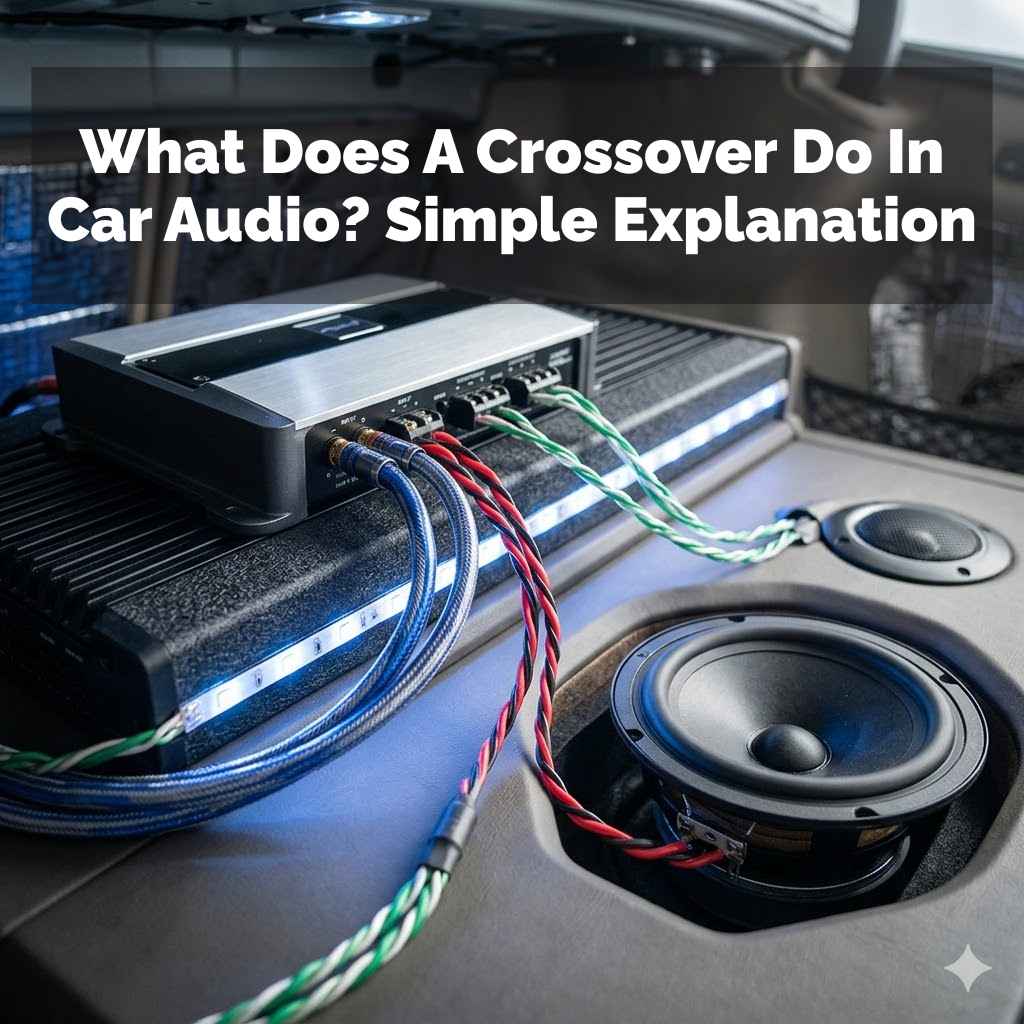
What Does A Crossover Do In Car Audio? Simple Explanation
Ever notice how some car sounds are deep and rumbling, while others are crisp and clear? That’s not magic. It’s often thanks to a clever piece of tech called a crossover.
If you’ve ever felt your car stereo could sound a lot better, this might be the missing link. Let’s break down what a crossover actually does, in ways that just make sense.
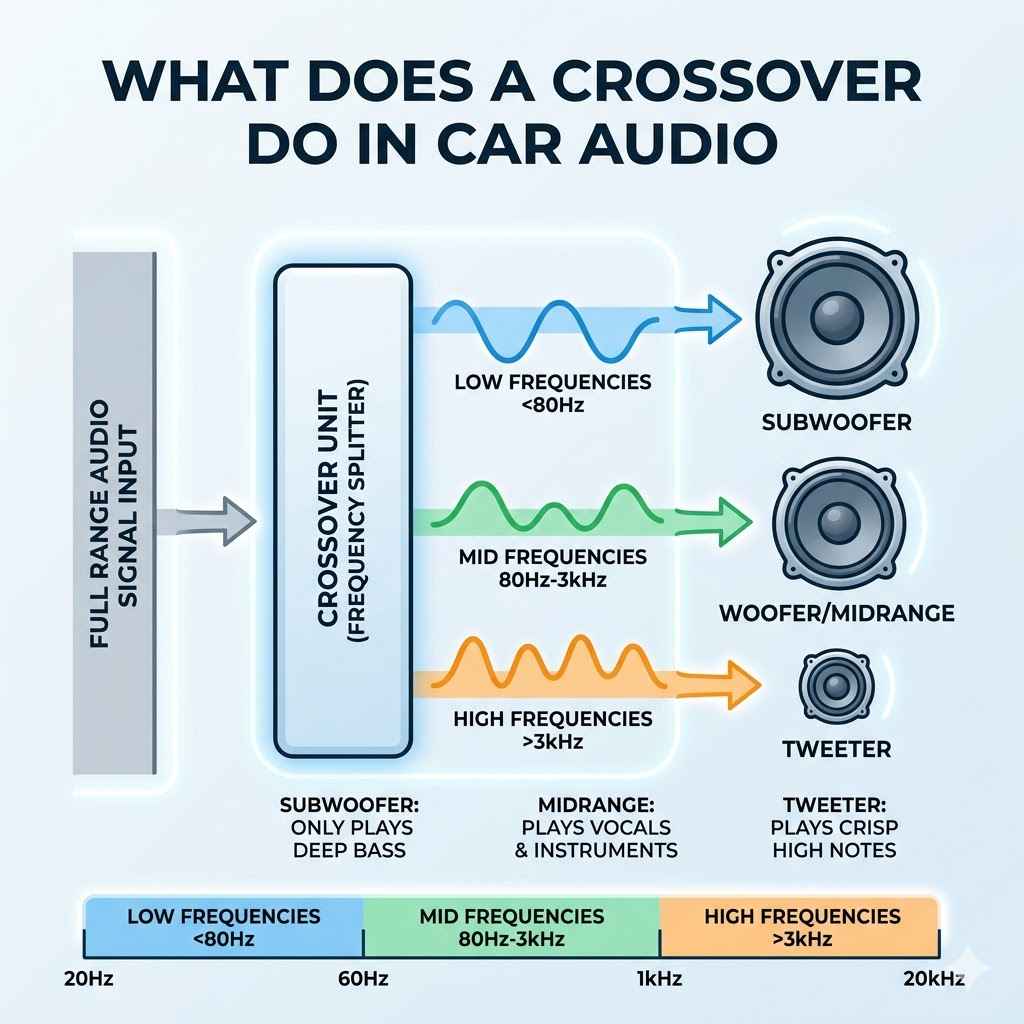
A crossover in car audio is a circuit that splits the audio signal into different frequency ranges. This ensures each speaker receives the sound frequencies it’s best designed to reproduce. It directs bass to woofers and treble to tweeters, improving clarity and preventing speaker damage.
The Heart of Sound: What a Crossover Is
Think of your car’s sound system like a team of singers. You have one singer with a deep voice (a woofer) who’s great at low notes. Then you have another singer with a high voice (a tweeter) who hits the high notes perfectly.
They can’t both sing every note equally well.
A crossover is like the team manager. It tells the low-voice singer, “You only sing the deep stuff.” And it tells the high-voice singer, “You stick to the high notes.” This way, each singer performs their best. They don’t try to do jobs they’re not built for.
In car audio, “frequency” means how high or low a sound is. Low frequencies are bass sounds. High frequencies are treble sounds, like cymbals or clear vocals.
The crossover’s main job is to take the music signal from your head unit (the radio/player) and divide it up. It sends the right frequencies to the right speakers.
Why Speakers Need This Help
Most car speakers are designed to be good at a certain range of sounds. A large speaker, called a woofer, is built to move a lot of air. This is how it makes deep bass sounds.
But it’s not good at making fast, high-pitched sounds. Trying to play high notes through a woofer can make them sound muddy or distorted.
On the other hand, small speakers, called tweeters, are perfect for high frequencies. They’re light and can vibrate very quickly. This makes them sound clear and bright.
But they can’t handle low frequencies at all. If you send bass to a tweeter, it could blow out the speaker instantly. It’s too much power for such a small driver.
So, the crossover acts as a protector and a guide. It prevents the wrong frequencies from reaching the speakers. This protects your equipment.
It also makes sure each speaker plays the sounds it’s meant to play. This is key to getting clear, balanced sound.
My First “Wow” Moment with a Crossover
I remember my first car, a beat-up sedan that sounded like it was playing music through a tin can. The bass was muddy, and the highs were harsh. I thought, “This is just how car stereos are.” Then, a friend who knew car audio suggested we upgrade the speakers and add proper crossovers.
I was skeptical.
We installed new component speakers, which come with separate woofers and tweeters, plus small crossover boxes. The change was instant and amazing. The bass became tighter, you could feel it in your chest.
The vocals sounded like the singer was right there in the car. The high hats on the drums were so crisp, they sparkled. It wasn’t just louder; it was clearer.
It was like hearing the music for the first time. That’s when I truly understood the power of a well-designed crossover.
It showed me that good sound isn’t just about having a powerful stereo. It’s about making sure every part of the system works together perfectly. The speakers work better when they only get the sounds they are meant to play.
The crossover is the unsung hero that makes this happen.
Understanding Frequency Ranges
What are Frequencies?
Frequencies measure sound waves per second. They are measured in Hertz (Hz).
Low Frequencies (Bass):
- Typically below 200 Hz.
- Felt more than heard.
- Examples: Kick drums, bass guitars, deep male voices.
Mid Frequencies:
- Roughly 200 Hz to 4,000 Hz.
- Where most vocals and instruments sit.
- Examples: Guitars, pianos, lead vocals.
High Frequencies (Treble):
- Above 4,000 Hz.
- Adds sparkle and detail.
- Examples: Cymbals, sibilance in voices (S sounds), string noise.
How Crossovers Use Them:
A crossover directs these ranges. Bass goes to woofers. Mids might go to mid-range speakers.
Treble goes to tweeters.
The Two Main Types of Crossovers
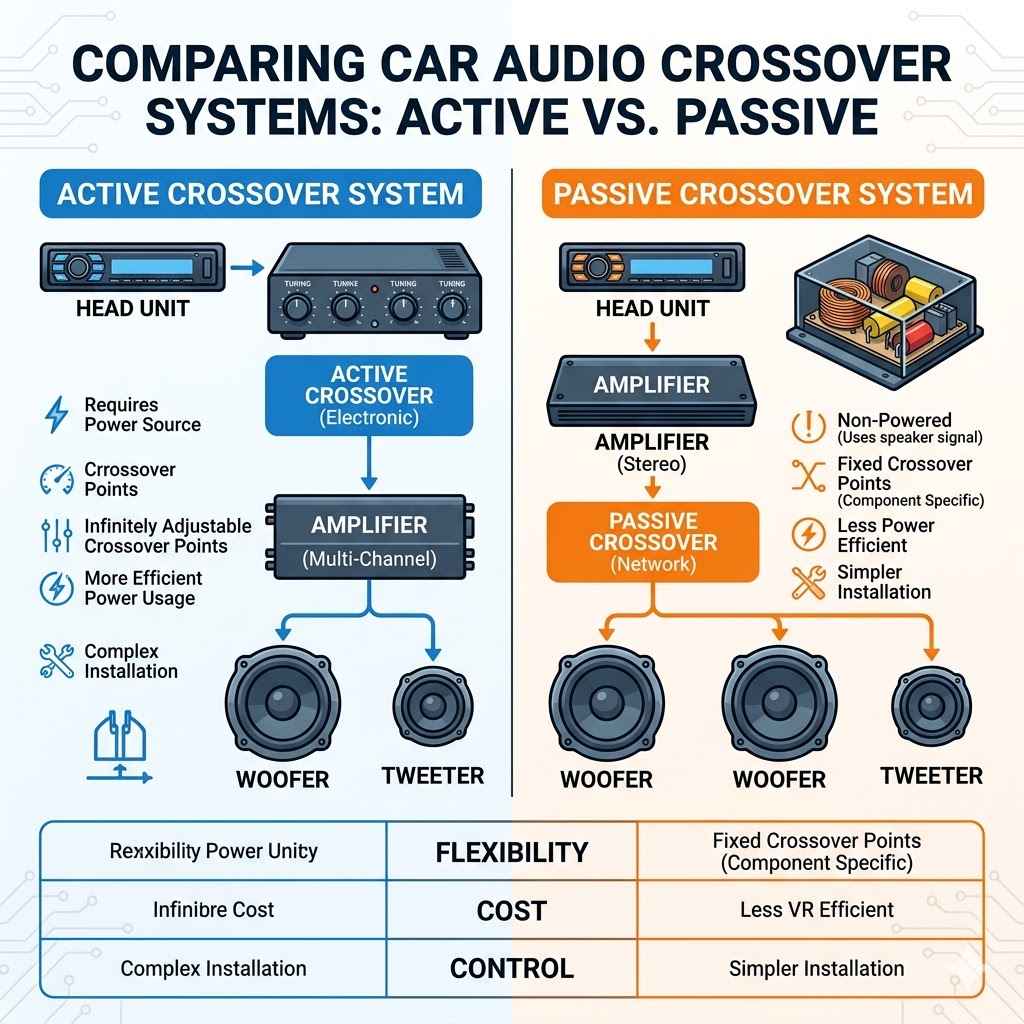
There are two main ways crossovers work in a car audio system. You’ll find passive crossovers built into speaker sets, or active crossovers that are separate electronic units. Each has its place.
Passive Crossovers
These are the most common type. You’ll often find them already inside speaker systems, especially component speakers. They are made up of simple electronic parts like capacitors and inductors.
These parts work together to block or allow certain frequencies to pass through.
Passive crossovers are placed after the amplifier. They take the full signal from the amp and split it before it reaches the speaker. They are simple, don’t need extra power, and are easy to install.
Most car speakers you buy as a pair will include passive crossovers.
The downside is they can sometimes lose a little bit of signal strength. They also work on all the speakers connected to one channel of your amplifier. If you have a four-speaker system, the crossover might be splitting the signal for the front speakers and the rear speakers separately.
Active Crossovers
Active crossovers are different. They work before the amplifier. This means they take the signal from your head unit and split it into different frequency bands before it gets amplified.
Each frequency band then gets its own dedicated amplifier channel.
This offers much more control. You can adjust the crossover points precisely. You can also set different volume levels for each frequency range.
This allows for a much finer tuning of your sound system. Active crossovers require their own power source and more complex wiring.
They are usually found in high-end custom car audio setups. If you’re building a system with separate amps for your woofers and tweeters, you’ll likely use an active crossover. This setup gives you the most power and flexibility over your sound.
Passive vs. Active Crossovers: Quick Look
Passive Crossovers
Works: After the amplifier.
Parts: Capacitors, inductors.
Power: None needed.
Control: Limited, fixed points.
Best For: Simple speaker upgrades, ease of use.
Active Crossovers
Works: Before the amplifier.
Parts: Electronic circuits.
Power: Needs its own power.
Control: High, adjustable points and levels.
Best For: Custom systems, precise tuning, multi-amp setups.
Crossover Points and Slopes: What They Mean
When you talk about crossovers, you’ll hear terms like “crossover point” and “slope.” These describe how the crossover divides the sound and how smoothly it does it.
Crossover Point (Frequency)
This is the specific frequency where the crossover starts to fade one frequency range out and bring another in. For example, a crossover might have a point of 2,500 Hz. This means frequencies above 2,500 Hz will be sent more to the tweeter.
Frequencies below 2,500 Hz will be sent more to the woofer.
Choosing the right crossover point is important. It depends on the speakers you are using. A small tweeter might need a higher crossover point, like 3,000 Hz or 4,000 Hz.
A larger woofer that can handle some mid-range might have a lower point, like 2,000 Hz or 2,500 Hz.
If the point is too low for a tweeter, it can get damaged. If it’s too high for a woofer, you might miss out on important mid-range sounds. It’s about finding the sweet spot for your specific speakers.
Slope (Order)
The slope tells you how quickly the crossover cuts off the unwanted frequencies. It’s often measured in decibels per octave (dB/octave). A steeper slope means the cutoff is more abrupt.
A gentler slope means the frequencies fade out more gradually.
Common slopes are:
- 6 dB/octave (1st Order): This is a gentle slope. It lets some of the unwanted frequencies bleed through. It’s simple and doesn’t affect the sound as much.
- 12 dB/octave (2nd Order): This is a more common slope. It cuts off frequencies more sharply than a 6 dB slope.
- 18 dB/octave (3rd Order): Even steeper, providing a more aggressive cutoff.
- 24 dB/octave (4th Order): Very steep. This offers strong separation between frequency bands.
Steeper slopes can help prevent damage and improve clarity. But they can sometimes introduce phase issues. This means the sound waves might not line up perfectly, which can affect the overall sound.
Gentler slopes are less likely to cause phase issues but offer less isolation.
For most car audio systems, a 12 dB or 24 dB slope is a good balance. It provides enough protection and separation without causing major sound problems. It’s a trade-off that system designers consider carefully.
Real-World Scenarios: Where You See Crossovers in Action
You might not see the crossover itself, but you experience its effect everywhere you listen to music.
Your Car’s Factory System
Even basic car stereos use crossovers. They might be simple passive ones built right into the speaker housings. These basic crossovers help the small factory speakers handle a wider range of sounds without breaking.
They are not very sophisticated, but they serve a purpose.
You’ll often find a single full-range speaker in older cars. This speaker has to try and reproduce everything. However, in most cars today, you’ll see separate speakers for the front doors and the dashboard.
The dashboard speakers are often tweeters, and the door speakers are woofers. These are usually wired through a simple passive crossover network somewhere in the dash or door panel.
Aftermarket Component Speakers
This is where crossovers shine. When you buy component speakers, they come with separate woofers and tweeters. Usually, they also include a pair of passive crossover boxes.
These boxes are designed specifically for those speakers.
You connect your amplifier to the input of the crossover. Then, you connect wires from the crossover to the woofer and the tweeter. The crossover inside the box is tuned to work perfectly with that specific woofer and tweeter pair.
It’s a ready-made solution for better sound.
Custom Audio Builds
In custom car audio, active crossovers are king. A car audio installer might use a digital sound processor (DSP) or a multi-channel active crossover unit. This allows them to:
- Set precise crossover points for every speaker.
- Choose different slopes for each speaker.
- Adjust the volume (gain) for each speaker individually.
- Even adjust the timing of the sound so it reaches your ears at the same moment from each speaker.
This level of control leads to incredibly accurate and immersive sound. It’s like having a mini recording studio in your car, tailored to your exact preferences.
Quick Scan: Speaker Types and Their Frequency Roles
What This Means for Your Car Audio Experience
Understanding crossovers helps you appreciate how good sound is made. It also tells you what to look for when upgrading your system.
When It’s Normal
It’s normal for factory systems to have basic crossovers. You might not notice them working. They are there to protect the speakers and make the sound acceptable.
If your car’s stereo sounds okay for casual listening, it’s doing its job.
It’s also normal for aftermarket component speakers to come with passive crossovers. This is a standard part of these speaker packages. They are designed to be plug-and-play for better sound.
When to Worry (or Investigate)
You should worry if your speakers sound distorted, especially at higher volumes. This is a sign that the wrong frequencies might be reaching them. For example, if your tweeters sound harsh or crackly, they might be getting too much mid-range or bass information.
If your bass sounds muddy and weak, your woofers might not be getting enough of the lower frequencies. Or, they might be trying to play frequencies too high for them, which can cause distortion.
If you’ve upgraded your speakers and the sound isn’t much better, or even worse, a poorly matched or installed crossover could be the culprit. This is where understanding how they work becomes important.
Simple Checks You Can Do
Listen to individual speakers: If you can safely access them, try to identify where the sound is coming from. Do the tiny speakers in the dash sound like they are trying to produce bass? Do the larger door speakers sound harsh on high notes?
Check your system components: If you have aftermarket speakers, look at what kind of crossovers came with them. Are they the ones recommended for those speakers? If you have separate amps and speakers, are you using an active crossover or a crossover setting on your amp?
Consult the manual: If you have an aftermarket head unit or amplifier with built-in crossover settings, check the manual. Make sure the settings are appropriate for your speakers. Most head units have basic high-pass filters that can help protect small speakers from deep bass.
Consider professional help: If you’re unsure, a car audio specialist can quickly diagnose issues related to crossovers. They can also help you select the right components for your system.
Quick Fixes and Tips for Better Sound
While you can’t usually “fix” a crossover’s internal parts without replacing them, you can make adjustments and choices that improve sound.
- Upgrade to component speakers: If you have basic full-range speakers, upgrading to component sets with dedicated woofers and tweeters is a big step. They come with well-matched passive crossovers.
- Use your head unit’s HPF: If your car stereo has a High-Pass Filter (HPF), use it. Set it around 80-100 Hz for smaller speakers. This stops the deepest bass from reaching them, protecting them and cleaning up the sound.
- Match speakers to crossovers: If you buy a crossover separately, make sure its crossover points and slopes are suitable for the speakers you plan to use it with. Consult the speaker manufacturer’s recommendations.
- Consider an active crossover or DSP: For the best control and sound quality, invest in an active crossover system or a Digital Sound Processor (DSP). This allows for precise tuning.
- Professional installation: If you are not comfortable with car audio wiring, hire a professional. Incorrect wiring can damage your equipment, and proper installation ensures everything works as intended.
Crossover Slope Quick Guide
1st Order (6 dB/octave): Gentle roll-off. Minimal phase shift. Good for simple systems or when speakers are very forgiving.
2nd Order (12 dB/octave): Moderate roll-off. Good balance of separation and phase coherence. Very common.
3rd Order (18 dB/octave): Steeper roll-off. More aggressive filtering. Can introduce more phase issues.
4th Order (24 dB/octave): Steepest roll-off. Excellent separation and speaker protection. Often used in high-end active systems.
Note: Phase coherence means the sound waves from different speakers align correctly. This is vital for good stereo imaging.
Frequently Asked Questions
Do all car speakers have crossovers?
Not all individual speakers do. However, most speaker systems designed to work together, especially component speaker sets with separate woofers and tweeters, will include crossovers. Factory systems also have them, though they may be integrated very simply.
Can I just add a crossover to any speaker?
You can, but it’s best to use crossovers that are specifically designed for the speakers you are using. The crossover’s frequency points and slope should match the capabilities of the woofer and tweeter. Using a mismatched crossover can lead to poor sound or even speaker damage.
What is the best crossover point for car audio?
There isn’t one “best” point. It depends entirely on the speakers. For example, a small tweeter might cross over at 3,500 Hz, while a larger woofer that can handle more mid-range might cross over at 2,500 Hz.
Always check the speaker manufacturer’s recommendations.
How do I know if my car has crossovers?
In factory systems, they are often built directly into the speaker assembly or hidden within the dashboard. For aftermarket systems, component speakers will come with separate passive crossover boxes. If you have an active system, the crossover is usually a separate electronic unit or built into your amplifier or digital sound processor.
Will a crossover make my car stereo louder?
No, a crossover does not directly increase volume. Its purpose is to improve sound quality by sending the right frequencies to the right speakers. By doing this, it allows your speakers to perform more efficiently and cleanly, which can make the sound perceived as better and more impactful, but not necessarily louder overall.
What’s the difference between a crossover and an equalizer?
A crossover divides the audio signal into frequency bands and sends them to specific speakers (bass to woofers, treble to tweeters). An equalizer (EQ) adjusts the volume of specific frequency bands across the entire audio signal. They both affect sound, but in different ways and for different purposes.
The Final Sound Decision
So, what does a crossover do? It’s the essential traffic cop of your car audio system. It ensures that every speaker gets only the sounds it’s designed to play best.
This leads to clearer highs, deeper lows, and a much more enjoyable listening experience. It’s a simple concept that makes a huge difference.
Products related to this article
Sponsored / affiliate links. As an Amazon Associate I earn from qualifying purchases. I may earn additional commission from eligible campaigns.
 NuIth Universal Car Amplifier RCA Level Controller, Car Audio Bass Control Knob, High Quality Sub Amp Volume Control Cable for Car, Motorcycle, Speakers, Home Theater
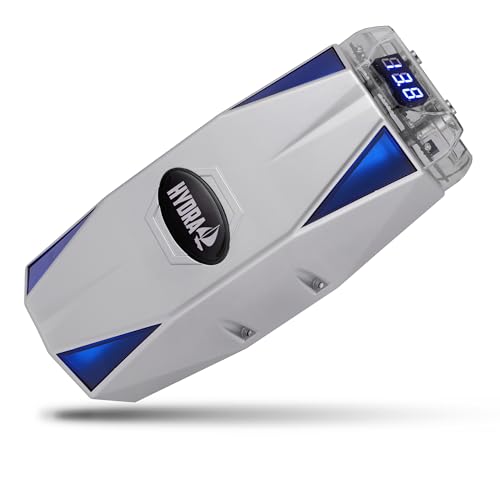 Pyle 3.0 Farad Digital Power Capacitor, High-Performance Car Audio Accessory with Blue Digital Display Voltage Readout and LED Flash, Over Voltage Protection, Mounting Hardware, DC 12-24V