Where To Hide An Airtag In A Car: Genius, Safe Spots
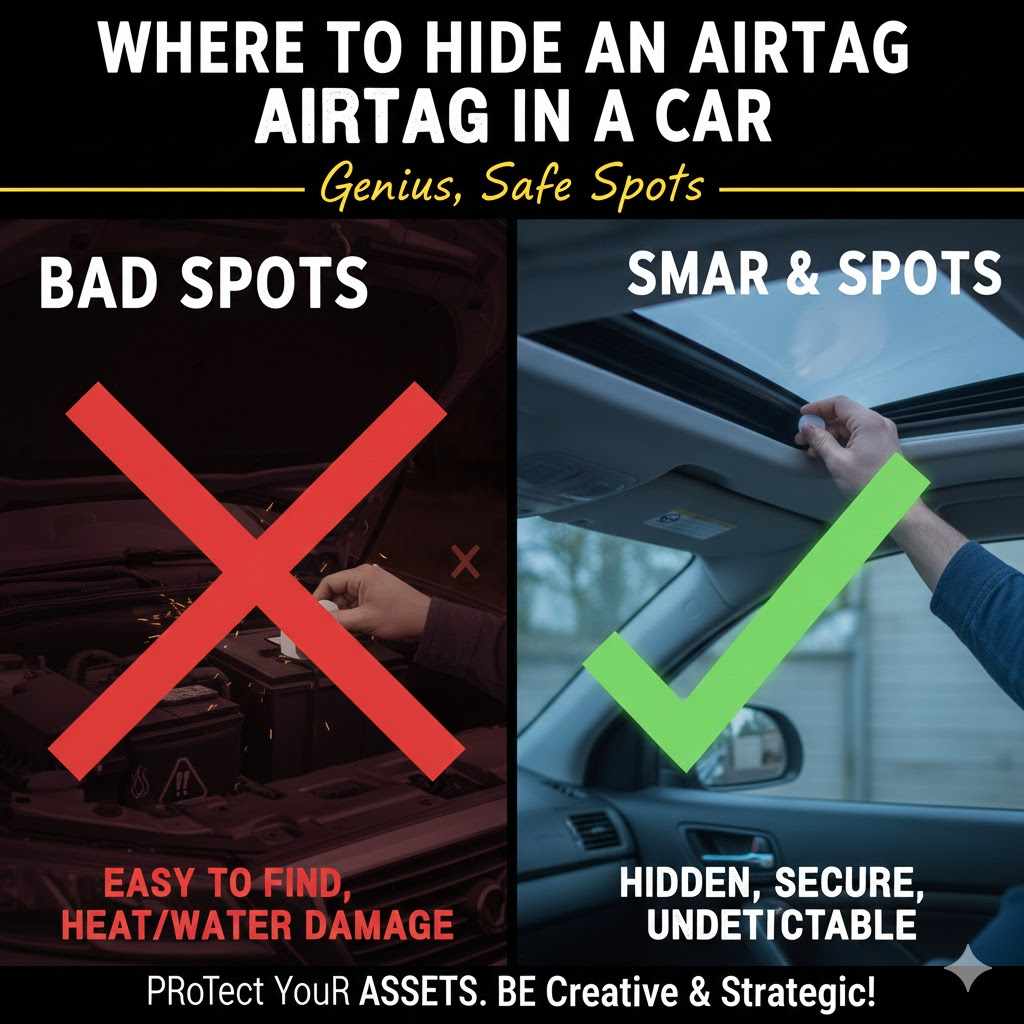
The best places to hide an AirTag in a car are spots that are non-obvious, avoid significant metal blockage, and are secure. Genius interior spots include under the carpet, inside a plastic fuse box cover, or taped deep within the dashboard. For the exterior, use a waterproof magnetic case attached to the car’s frame, away from the hot exhaust.
Losing your car is a terrible feeling. Whether you forgot where you parked in a massive shopping mall lot or you’re facing the nightmare of a stolen vehicle, that sense of helplessness is something no one wants. In the past, sophisticated GPS tracking systems were expensive and complicated. Today, a tiny, affordable device can give you incredible peace of mind: the Apple AirTag.
But just tossing an AirTag in your glove box isn’t enough. A thief will find that in seconds. The real trick is hiding it where no one would think to look. Don’t worry, you don’t need to be a master mechanic or a spy to do this. I’m here to walk you through some genius, safe, and surprisingly easy spots to hide an AirTag in your car. Let’s get your car protected!
Why Use an AirTag for Your Car?
You might be thinking, “Isn’t an AirTag for keys and wallets?” Yes, but it’s also a fantastic and budget-friendly tool for your vehicle. Unlike traditional GPS trackers that often require a monthly subscription fee and complicated installation, an AirTag is a one-time purchase that works with the massive, worldwide Apple Find My network.
Here’s why it’s such a smart move:
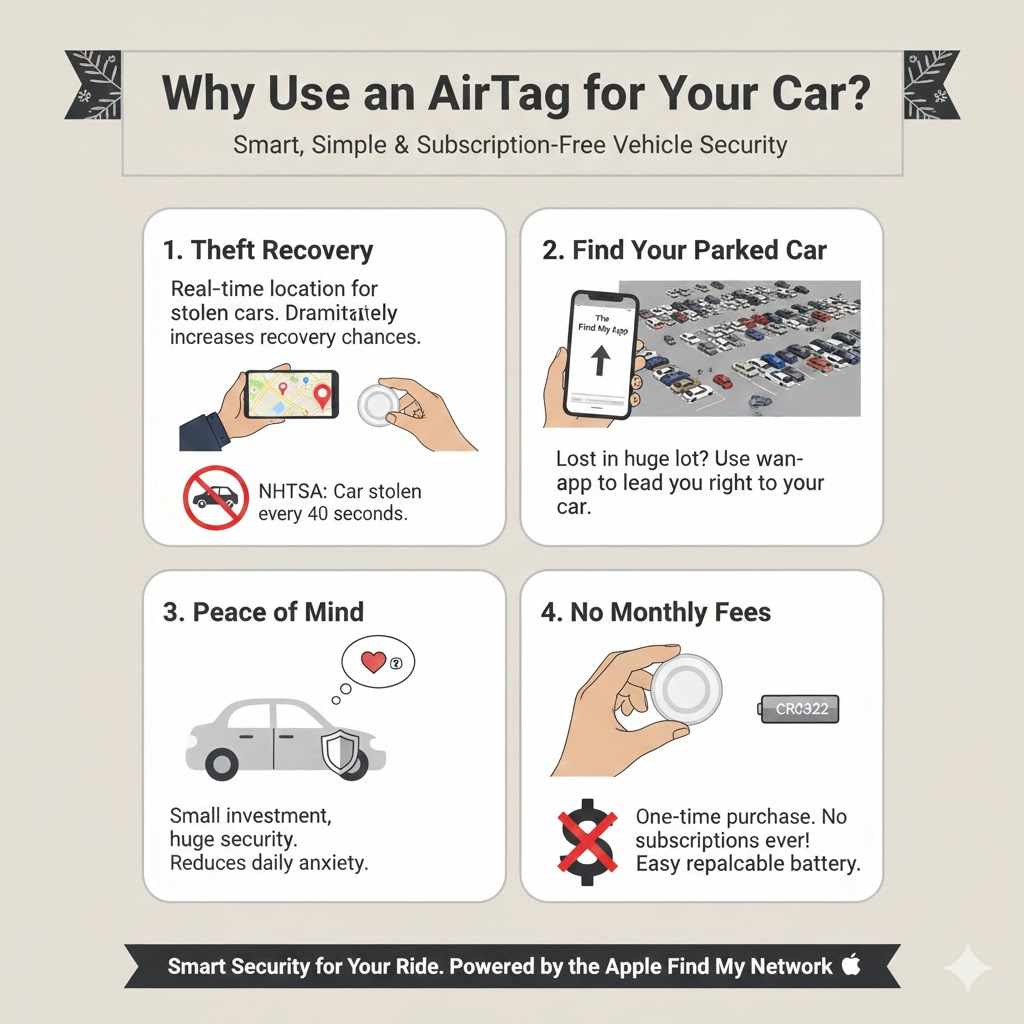
- Theft Recovery: This is the big one. According to the National Highway Traffic Safety Administration (NHTSA), a motor vehicle is stolen every 40.9 seconds in the United States. An AirTag hidden in your car can provide law enforcement with its real-time location, dramatically increasing the chances of getting your vehicle back.
- Find Your Parked Car: We’ve all been there. You come out of a concert or a sports game, and the parking lot is a sea of cars. Instead of wandering around clicking your key fob, you can use the Find My app to lead you right to your vehicle.
- Peace of Mind: Just knowing you have a way to locate your car can reduce a lot of daily anxiety. It’s a small investment for a huge sense of security.
- No Monthly Fees: You buy the AirTag, and that’s it. There are no subscriptions or hidden costs to use its tracking features. The battery is also a standard CR2032 coin battery that you can easily replace yourself once a year.
Key Things to Consider Before You Hide It
Before you start pulling apart your car’s interior, let’s cover a few essential rules. Choosing the right spot is a balance between hiding it well and making sure it can still do its job. Keep these four factors in mind.
1. Signal Strength and Metal Blockage
An AirTag works by sending out a secure Bluetooth signal. This signal is picked up by any nearby iPhones, iPads, or Macs, which then report the AirTag’s location to the Find My network. However, this Bluetooth signal can be blocked by metal. Hiding an AirTag inside a fully enclosed metal box (like a metal glove compartment or inside a trunk’s metal frame) will make it nearly impossible for the signal to escape. Think of metal as a wall the signal can’t pass through. Your goal is to find a spot with plastic or fabric nearby, allowing the signal to travel freely.
2. The Anti-Stalking Feature (The “Chime”)
Apple designed AirTags with privacy in mind. If an AirTag is separated from its owner and is moving with someone else (like a thief who has stolen your car), it will eventually start making a chirping sound to alert the person that they are being tracked. While this is a great safety feature, it can unfortunately alert a car thief to your hidden tracker. A smart thief who hears the chime will start searching for it. We’ll discuss some clever ways to deal with this later in the article.
3. Battery Life and Accessibility
The AirTag battery lasts about a year. This is great, but it means you’ll eventually need to replace it. Hiding your AirTag in a spot that requires you to dismantle your entire dashboard every year isn’t practical. The best spots are hidden but still accessible with minimal effort when you need to swap the battery. Don’t make it impossible for your future self!
4. Weather and Temperature Exposure
If you’re considering an exterior hiding spot, you need to protect the AirTag from the elements. Rain, snow, mud, and extreme temperatures can damage it. AirTags are water-resistant but not fully waterproof. A good waterproof case is a must for any spot on the outside of your car. Also, avoid placing it near hot components like the engine or the exhaust system, as high heat can destroy the battery and electronics.
The Best Interior Hiding Spots for Your AirTag
The inside of your car offers plenty of clever places to conceal an AirTag. These spots protect it from the weather and are often harder for a thief to find during a quick search.
1. Under the Floor Mat or Carpet
This is one of the easiest and most effective spots. Thieves are in a hurry; they’re unlikely to start pulling up all the carpeting in the vehicle.
- How to do it: Lift the floor mat in the front passenger seat or a rear seat. Many cars have a small flap or edge of the main carpet you can lift. Slide the AirTag underneath the carpet itself, not just the removable mat. Use a small piece of duct tape or double-sided tape to keep it from sliding around.
- Pros: Very easy to access, good signal, well-hidden from a quick glance.
- Cons: A very thorough thief might check here.
2. Inside the Fuse Box Cover
Most cars have an interior fuse box, often located in the driver’s side footwell, on the side of the dashboard, or inside the glove compartment. The cover is almost always made of plastic, which is perfect for letting the signal escape.
- How to do it: Locate the fuse box. The cover usually pops off with a gentle pull or by releasing a couple of clips. Find an empty space inside the cover or beside the fuses where the AirTag can sit without interfering with anything. Tape it securely to the inside of the plastic cover.
- Pros: Excellent hiding spot, plastic cover allows for a strong signal, and no thief ever thinks to look here.
- Cons: Can be a little tight depending on your car model.
3. Underneath a Seat
The area under a car seat is a maze of springs, wires, and motors. This makes it a fantastic hiding place. Avoid just tossing it on the floor under the seat, as it can be easily found.
- How to do it: Use a zip tie or strong tape to attach the AirTag to a wiring harness or the metal frame of the seat itself. Try to place it as high up and out of sight as possible. If you have fabric seat covers, you can often find a small opening to slip it inside the cover’s seam.
- Pros: Lots of clutter to hide it in, strong signal, and unlikely to be found.
- Cons: Make sure it’s secured so it doesn’t fall out or rattle.
4. In the Trunk’s Spare Tire Compartment
If your car has a spare tire well in the trunk, this area provides a great hiding spot. Don’t just place it inside the spare tire, as that’s a bit too obvious.
- How to do it: Lift the trunk floor panel. Instead of putting it with the tire, look for pockets or crevices in the surrounding area. You can tape it to the inside of the plastic trim or even inside the tool kit bag that often comes with the car jack.
- Pros: Out of sight, lots of room, and not a primary search area for a thief.
- Cons: The trunk is a large metal box, which could slightly weaken the signal. Test it to be sure.
5. Deep Inside the Glove Compartment or Center Console
Placing it in the glove box is a bad idea. But placing it behind or under the glove box is genius. The same goes for the center console.
- How to do it: For the glove box, you can often remove the main compartment box (usually held in by a few screws) to access the space behind the dashboard. Tape the AirTag securely to a plastic piece or wiring loom back there. For the center console, lift out any removable trays or bins and see if you can tape it to the underside of the fixed structure.
- Pros: Extremely difficult for a thief to find.
- Cons: This is a more advanced spot that requires some minor disassembly. Not as easy for battery changes.
Table: Comparing Interior Hiding Spots
| Hiding Spot | Difficulty to Place | Signal Strength | Security Level (Hard to Find) |
|---|---|---|---|
| Under Carpet | Easy | Excellent | Good |
| Inside Fuse Box Cover | Easy | Excellent | Excellent |
| Under Seat (Secured High) | Medium | Excellent | Very Good |
| Trunk Spare Tire Area | Easy | Good | Good |
| Behind Glove Box | Hard | Good | Excellent |
The Best Exterior Hiding Spots (Use with Caution)
Placing an AirTag outside your car can be very effective, as thieves rarely check the undercarriage. However, this method requires a high-quality, waterproof, and magnetic case. Never place an AirTag outside your car without one.
1. Inside the Bumper
Modern car bumpers are mostly hollow plastic shells. This makes them a perfect place to hide an AirTag because the plastic won’t block the signal.
- How to do it: You may be able to reach up from underneath the car and find a flat, clean surface on the inside of the plastic bumper cover. Use a magnetic case or a holder with strong adhesive to secure it.
- Pros: Signal is very strong, and it’s a completely unexpected location.
- Cons: Requires a good waterproof case and is exposed to road grime.
2. Attached to the Car’s Frame
The metal frame of your car provides plenty of flat surfaces to attach a magnetic case. The key is to choose the right spot.
- How to do it: Get a strong magnetic waterproof case. Look for a part of the frame that is away from the hot exhaust pipe and not too close to the wheels (where it could get knocked off). A spot near the center of the car is often best. Make sure the area is clean before attaching the magnet.
- Pros: Very difficult for a thief to spot.
- Cons: Risk of it getting knocked off on rough roads. You absolutely must use a high-quality magnet.
3. Behind the License Plate
If your license plate is mounted on a plastic bracket, you might have a small space behind the plate to tuck an AirTag.
- How to do it: Unscrew your license plate. If there’s a cavity behind it, you can tape the AirTag inside. Be sure it doesn’t rattle. This only works if the mounting area is plastic. If it’s attached directly to a metal trunk lid, the signal will be blocked.
- Pros: Clever and non-obvious.
- Cons: Only works on some cars; potential for signal blockage.
Table: Interior vs. Exterior Hiding Spots
| Location Type | Pros | Cons |
|---|---|---|
| Interior |
|
|
| Exterior |
|
|
How to Deal with the AirTag’s “Chime”
As we mentioned, the anti-stalking chime can alert a thief. For maximum theft-recovery potential, some people choose to disable the speaker inside the AirTag.
Important Warning: Doing this is an advanced modification. It requires carefully prying open the AirTag and removing the small, circular speaker. This will void your warranty and could permanently damage the AirTag if not done correctly. It is an irreversible process. This step is entirely optional and should only be attempted if you understand the risks.
If you choose not to modify it, the AirTag is still an incredibly useful tool. The chime takes several hours to activate, giving you a large window to track the vehicle before the thief is alerted.
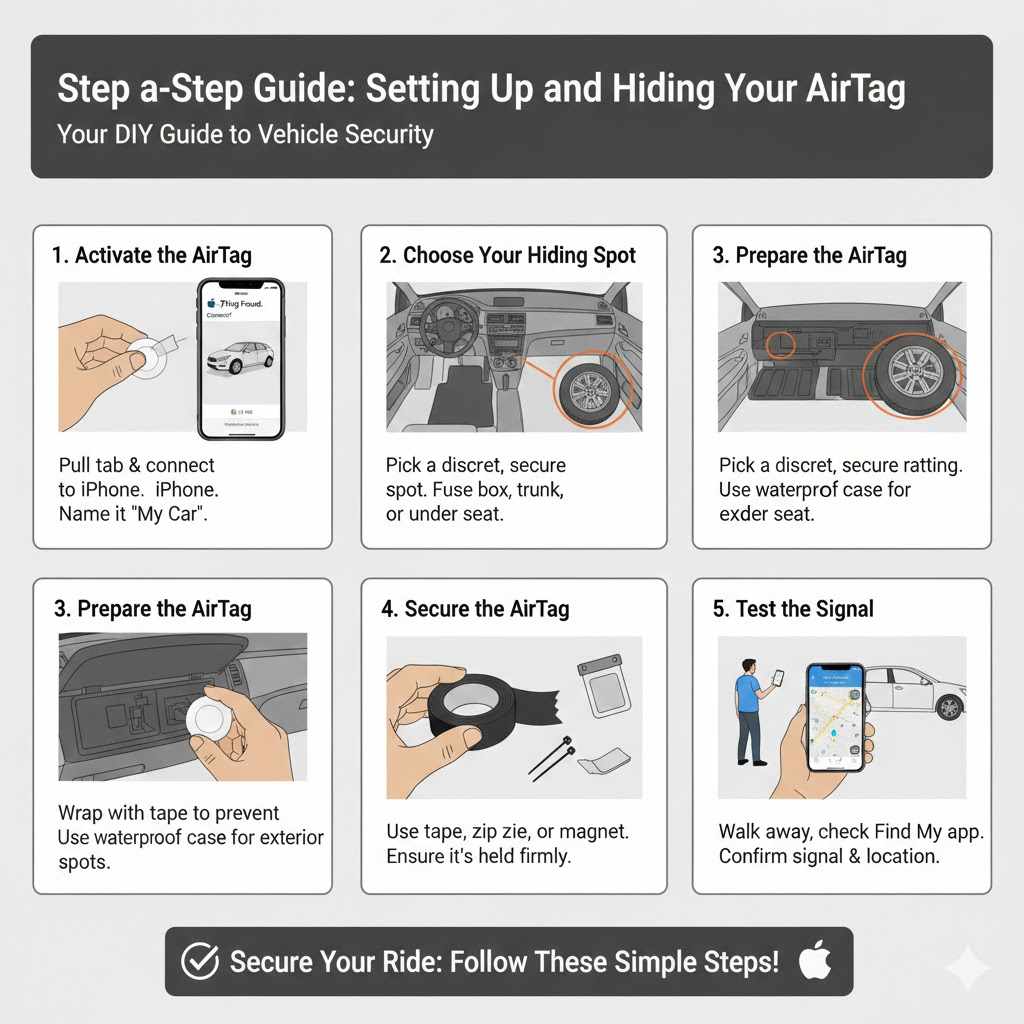
Step-by-Step Guide: Setting Up and Hiding Your AirTag
Ready to get it done? Here’s a simple, step-by-step process.
- Activate Your AirTag: Before you hide it, set it up. Pull the plastic tab to activate the battery. Bring it close to your iPhone and follow the on-screen prompts. You can learn more at the official Apple AirTag support page. Name it something clear, like “My Car” or “[Your Name]s Honda Civic.”
- Choose Your Hiding Spot: Review the spots listed above. Pick one that matches your comfort level. For most people, the fuse box cover or under the carpet are perfect starting points.
- Prepare the AirTag: If you’re hiding it somewhere it might slide around, wrap it once with electrical or gaffer’s tape. This will prevent any rattling sounds and can help secure it. If you’re using an exterior spot, place it firmly inside your waterproof case.
- Secure the AirTag: Place the AirTag in your chosen spot. Use double-sided tape, a zip tie, or the magnet on its case to ensure it’s held firmly in place. You don’t want it to come loose while you’re driving.
- Test the Signal: After hiding it, close up your car. Walk a short distance away and use the Find My app on your phone to see if you can still get a location for it. Check its location on the map. This confirms that the signal is escaping properly.
Frequently Asked Questions (FAQ)
1. Can a car thief find my hidden AirTag?
It’s possible, but unlikely if you choose a good spot. A thief with an iPhone will eventually get a notification that an “AirTag Found Moving With You,” and it may chime. However, they are in a hurry. They will check the obvious places like the glove box, center console, and under the seats. They are very unlikely to start removing fuse box covers or pulling up carpet, which is why those spots are so effective.
2. Will an AirTag work if my car is in an underground garage?
It can, but its effectiveness is reduced. The AirTag needs to be within Bluetooth range of any Apple device to report its location. In a deep underground garage with no people (and their iPhones) walking by, it won’t be able to update its location. However, as soon as the car is driven out of the garage and passes another iPhone, its location will be updated instantly.
3. How long does the AirTag battery last in a car?
The standard CR2032 battery in an AirTag lasts about one year with normal use. Extreme heat or cold inside a car can slightly shorten this lifespan. Your iPhone will notify you when the battery is running low, giving you plenty of time to replace it.
4. Do AirTags work without Wi-Fi or cellular service?
The AirTag itself does not need Wi-Fi or cellular service. It communicates using Bluetooth. Your car’s location is updated when it comes near any iPhone with a cellular connection. Since iPhones are so common, your car’s location gets updated almost constantly as other people simply walk or drive past it.
5. Is it legal to put an AirTag in my own car?
Yes, it is perfectly legal to place a tracking device in a vehicle that you own. It is your property, and using an AirTag for theft recovery or to find where you parked is a completely legitimate use.
6. Does the color of my car or tinted windows affect the AirTag signal?
No, not at all. The Bluetooth signal passes easily through glass, plastic, fabric, and other non-metallic materials. The color of your paint or the tint on your windows will have zero effect on the AirTag’s performance.
7. What is the best AirTag holder for a car?
For interior spots, you often don’t need a holder; a piece of tape is enough. For exterior use, look for a case that is IP68 rated (fully waterproof and dustproof) and has a powerful neodymium magnet. There are many great options available online specifically designed for this purpose.
Conclusion: Your Car is Now Protected
There you have it. You now have a complete guide to turning a simple Apple AirTag into a powerful, discreet security device for your car. By choosing a clever hiding spot—like inside a fuse box cover or securely taped under a seat—you are taking a huge and affordable step toward protecting your vehicle.
You don’t need to be an expert to do this. All it takes is a few minutes and a little thought to gain significant peace of mind. You’ve learned what to consider, where the best spots are, and how to set everything up correctly. Now you can rest easier knowing that if your car ever goes missing, you have a high-tech tool ready to help you get it back.