Where to Put a Car Jack When Changing a Tire
Hey there! So, you need to change a tire and you’re wondering, “Where do I put the car jack?” I’ve been there, kneeling on the side of the road, trying to figure it out. It’s not as tricky as it seems, and I’m here to walk you through it. Getting the jack points right is key to safely lifting your car. Let’s dive into everything you need to know about placing a car jack for a smooth tire change.
Why Jack Placement Matters
Let’s start with the basics. Placing your car jack in the wrong spot can be dangerous. I learned this the hard way when I first tried changing a tire and almost dented my car’s frame. The right jack points keep your car stable while it’s lifted. If you jack up the wrong spot, the car could slip, or you could damage the undercarriage. Most cars have specific spots designed to handle the weight. These are usually near the wheels and built to support the car jack. Knowing where to place it makes the whole tire change process safer and easier.
Understanding Your Car’s Jack Points
Every car has designated jack points. These are reinforced areas on the car’s frame or chassis. They’re built to handle the weight of your vehicle when lifted. I remember flipping through my car’s manual one day, and there it was—a diagram showing exactly where to place the jack. If you’ve got your owner’s manual, check it out. It usually has a section on tire change procedures. If you don’t have it, no worries. Most jack points are located just behind the front wheels or just in front of the rear wheels, along the side of the car. Look for a small notch or reinforced metal area under the car. That’s your spot.
Some cars, like SUVs or trucks, might have slightly different jack points. For example, my old pickup had them on the frame rails, not the body. Sedans usually have them near the rocker panels. If you’re unsure, a quick peek under the car will show you a sturdy metal area that looks different from the rest. That’s where your car jack goes.
Tools You’ll Need for a Tire Change
Before we get to jacking up the car, let’s talk tools. You don’t need a fancy garage to change a tire. I’ve done it with just a few basics in my trunk. Here’s what you’ll need:
| Tool | Purpose |
|---|---|
| Car Jack | Lifts the car off the ground |
| Spare Tire | Replaces the flat tire |
| Lug Wrench | Removes and tightens lug nuts |
| Wheel Chocks | Keeps the car from rolling |
| Gloves | Protects your hands |
| Owner’s Manual | Guides you to the right jack points |
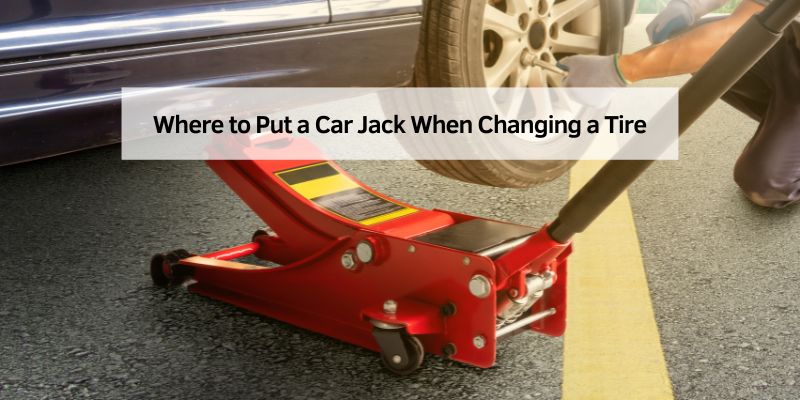
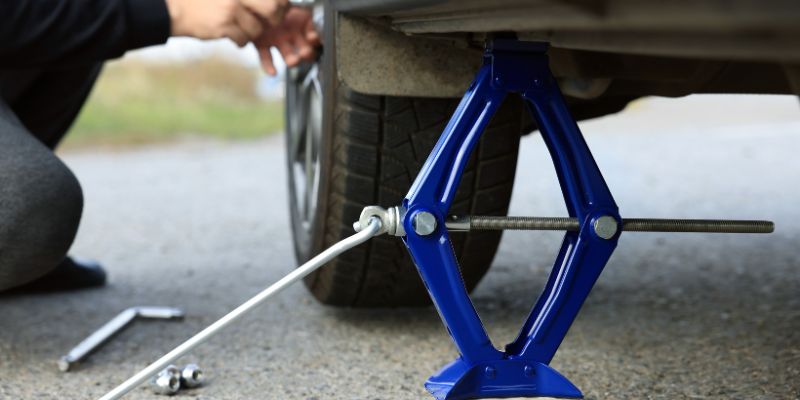
I always keep these in my car, just in case. The car jack that comes with your vehicle is usually a scissor jack or a bottle jack. Both work fine for a tire change, but they need to be placed correctly. If you’re using a floor jack, that’s great too, but it’s bulkier. Make sure whatever jack you use is rated for your car’s weight.
Step-by-Step Guide to Placing the Car Jack
Alright, let’s get to the good stuff—where exactly to put that car jack. I’m going to walk you through the process like I’m sitting next to you. Imagine we’re on the side of the road, ready to tackle this flat tire together.
First, park your car on a flat, stable surface. I made the mistake once of jacking up my car on a slight incline, and it was nerve-wracking. Turn on your hazard lights and set the parking brake. If you have wheel chocks, place them behind or in front of the tires that aren’t being lifted. This keeps the car from rolling.
Next, grab your car jack and locate the jack point for the tire you’re changing. If it’s a front tire, look just behind the wheel. For a rear tire, check just in front of the wheel. You’ll see a reinforced area or a small notch. On my sedan, it’s a metal lip under the rocker panel. If you’re working on a truck or SUV, the jack point might be on the frame itself.
Position the car jack directly under the jack point. Make sure it’s centered and sitting flat on the ground. If the ground is soft, like gravel, place a piece of wood or a flat stone under the jack for stability. I learned this trick after my jack sank into some dirt once. Not fun.
Now, start raising the jack slowly. If you’re using a scissor jack, turn the handle. For a bottle jack, pump the handle. Watch the car as it lifts. If it wobbles or the jack tilts, stop immediately. Lower it and reposition the jack. The car should lift evenly, and the jack point should stay firmly in contact with the jack.
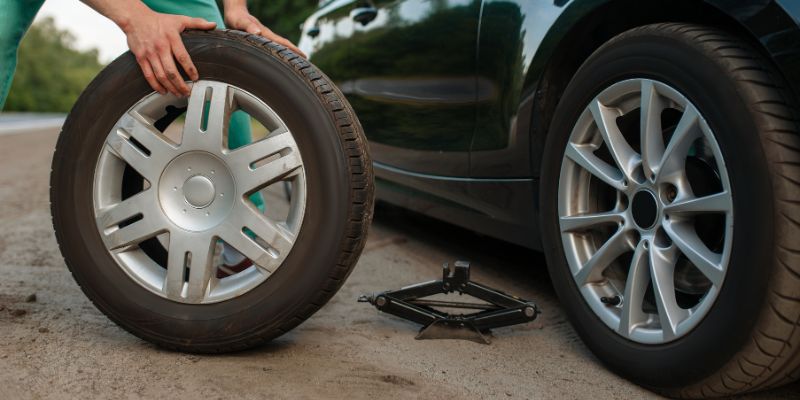
Once the tire is off the ground, you’re good to go. Don’t lift it too high—just enough to get the tire off. I usually aim for about an inch of clearance. That’s plenty to remove the flat tire and put on the spare.
Common Mistakes to Avoid
I’ve made plenty of mistakes changing tires, so let me save you some trouble. One big one is placing the car jack under a weak spot, like the plastic trim or a body panel. I did this once, and the crunching sound still haunts me. Stick to the jack points. Another mistake is not securing the car. Always use the parking brake and wheel chocks. I skipped this once, and my car rolled slightly—scary stuff.
Don’t rush the lifting process either. Raise the jack slowly and keep an eye on it. If you notice the car slipping or the jack tilting, lower it and start over. And never, ever get under the car while it’s only supported by a car jack. If you need to work underneath, use jack stands. Safety first, always.
Different Types of Car Jacks and Their Uses
Not all car jacks are the same. I’ve used a few types over the years, and each has its quirks. The most common is the scissor jack, which comes with most cars. It’s compact and easy to use but can be slow. Bottle jacks are sturdier and great for heavier vehicles like trucks. I’ve got a floor jack in my garage, which is awesome for quick lifts but too big to carry around.
Each type needs to be placed at the same jack points, but the way they contact the car differs. Scissor jacks have a small saddle that fits into the jack point. Bottle jacks have a round top, so you need to be precise. Floor jacks have a wider saddle, which makes them more forgiving but still need to be centered.
If you’re buying your own jack, check its weight rating. My sedan weighs about 3,000 pounds, so I use a jack rated for at least 1.5 tons. That gives me a safety margin. Always double-check your car’s weight in the manual.
How to Find Jack Points Without a Manual
No manual? No problem. I’ve been there, especially with older cars. First, look under the car near the wheel you’re changing. You’ll usually see a reinforced metal area or a notch. It’s different from the thin sheet metal around it. On my old hatchback, the jack points were small metal lips about a foot from each wheel.
If you’re still unsure, check online. Search for your car’s make, model, and year, plus “jack points.” You’ll find forums or videos showing exactly where to place the car jack. I’ve done this for friends’ cars, and it’s a lifesaver. You can also call your car’s manufacturer or a local mechanic for advice.
Tips for a Smooth Tire Change
Changing a tire isn’t just about the car jack. A few extra tips can make it easier. Loosen the lug nuts before jacking up the car. I learned this after trying to loosen them with the tire off the ground—tough work. Just break them loose, don’t remove them yet.
Keep your spare tire in good shape. Check its air pressure every few months. I had a flat spare once, and it was a headache. Also, make sure your car jack is in good condition. If it’s rusty or wobbly, replace it. I keep a small toolkit in my trunk with gloves, a flashlight, and a rag. It makes the whole process smoother.
If you’re on the road, stay visible. Use hazard lights, reflective triangles, or flares if you have them. I always change tires as far off the road as possible. Safety is everything.
Handling Different Vehicles
Not all cars are the same. Sedans, SUVs, trucks, and sports cars have different jack points. My sedan’s jack points are under the rocker panels. My friend’s SUV has them on the frame rails. Sports cars might have them closer to the center of the car due to their low clearance. If you drive a unique vehicle, like a minivan or a classic car, check the manual or online resources. I helped a buddy with his vintage Mustang, and we had to hunt for the jack points—they were hidden under the frame.
If you’re working on a lifted truck, you might need a taller jack. My bottle jack barely reached my truck’s frame. In that case, a floor jack or a high-lift jack is better. Just make sure it’s rated for the weight.
Maintaining Your Car Jack
Your car jack is your lifeline in a tire change, so keep it in good shape. I check mine every six months. Look for rust, leaks, or worn parts. For scissor jacks, make sure the screw mechanism turns smoothly. For bottle jacks, check for hydraulic fluid leaks. I store mine in a dry spot in my trunk to avoid corrosion.
If you’re using a floor jack, maintain it like a pro. Check the hydraulic fluid level and top it off if needed. I learned this from a mechanic friend who swore by regular jack maintenance. A well-kept jack lasts years and keeps you safe.
What to Do After Changing the Tire
Once the new tire is on, lower the car slowly. I always double-check the lug nuts after lowering to make sure they’re tight. Drive slowly to a mechanic to fix or replace the flat tire. If you’re using a spare, it’s usually a temporary fix. My spare tire has a speed limit of 50 mph, so I stick to that.
Check your tire pressure regularly to avoid another flat. I keep a small tire gauge in my glovebox. It’s a small habit that saves big headaches.
Conclusion
Changing a tire isn’t as hard as it looks, especially once you know where to put the car jack. I’ve been through enough flats to know that the right jack points and a little preparation make all the difference. From finding those reinforced spots under your car to using the right tools, it’s all about staying safe and steady. Keep your car jack in good shape, double-check your spare, and don’t rush the process. Next time you’re stuck with a flat, you’ll be ready to tackle it like a pro. Got more questions? Check out the FAQs below—I’ve got you covered!
FAQs
Where exactly are the jack points on my car?
The jack points are usually near the wheels, either just behind the front wheels or just in front of the rear wheels. Look for a reinforced metal area or a notch under the car. Your owner’s manual has a diagram, or you can search online for your car’s make and model.
Can I use any car jack to change a tire?
Not quite. Use a car jack rated for your vehicle’s weight. Most cars come with a scissor or bottle jack that’s designed for them. Floor jacks work too but need to be placed at the same jack points.
What happens if I place the car jack in the wrong spot?
Placing the car jack in the wrong spot can damage your car’s frame or body. It could also make the car unstable, risking it falling. Always use the designated jack points to stay safe.
Do I need jack stands for a tire change?
For a simple tire change, a car jack is usually enough. But if you’re working under the car, jack stands are a must for safety. Never get under a car supported only by a jack.
How do I know if my spare tire is safe to use?
Check your spare tire’s air pressure every few months. Make sure it’s not damaged or worn. Most spares are temporary and have speed or distance limits, so check your manual for details.