Who Reports Accidents To Carfax: Essential Guide
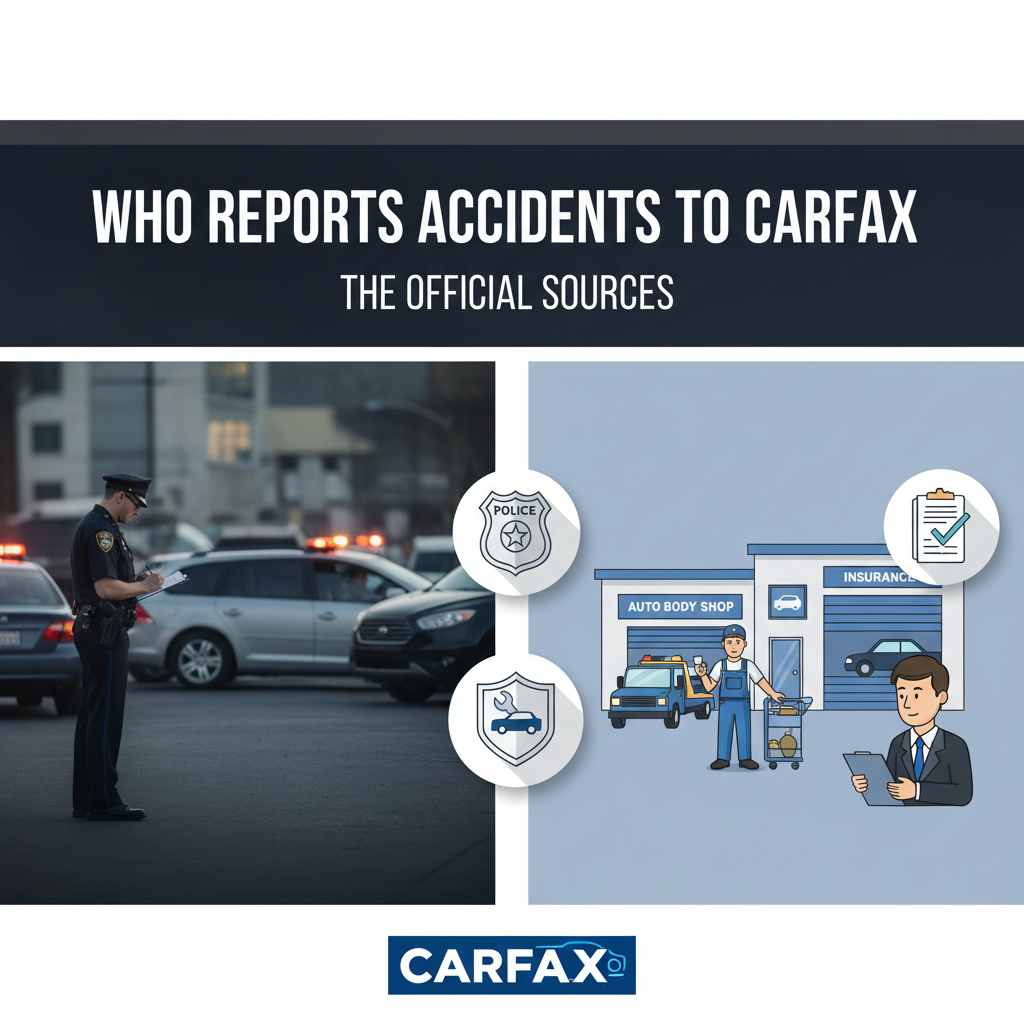
Who Reports Accidents to Carfax? A wide range of sources, including police departments, insurance adjusters, repair shops, and even you, the car owner, report accidents and other important vehicle history events to Carfax. This ensures a comprehensive record for potential buyers and owners, building trust and transparency in the used car market.
Getting a car accident on your vehicle’s history report might seem a bit mysterious. What exactly gets reported, and who is doing the reporting? It’s a common question, especially if you’ve been involved in an accident or are considering buying a used car. Knowing who reports to Carfax helps you understand how your car’s history is built and why it’s so important for transparency in the automotive world.
Don’t worry if this sounds complicated! I’m here to break it down in a simple, step-by-step way. We’ll explore all the different sources that contribute to a Carfax report, making sure you feel confident and informed.
Understanding What Carfax Tracks
Carfax is essentially a digital storyteller for your car. It gathers information from many different places to create a detailed history. This history isn’t just about accidents; it includes things like ownership changes, title issues, odometer readings, and even service records. The goal is to give a potential buyer (or you, the current owner!) as complete a picture as possible about a vehicle’s life. This way, you know what you’re getting into, whether you’re selling or buying.
The Primary Sources: Who is Reporting?
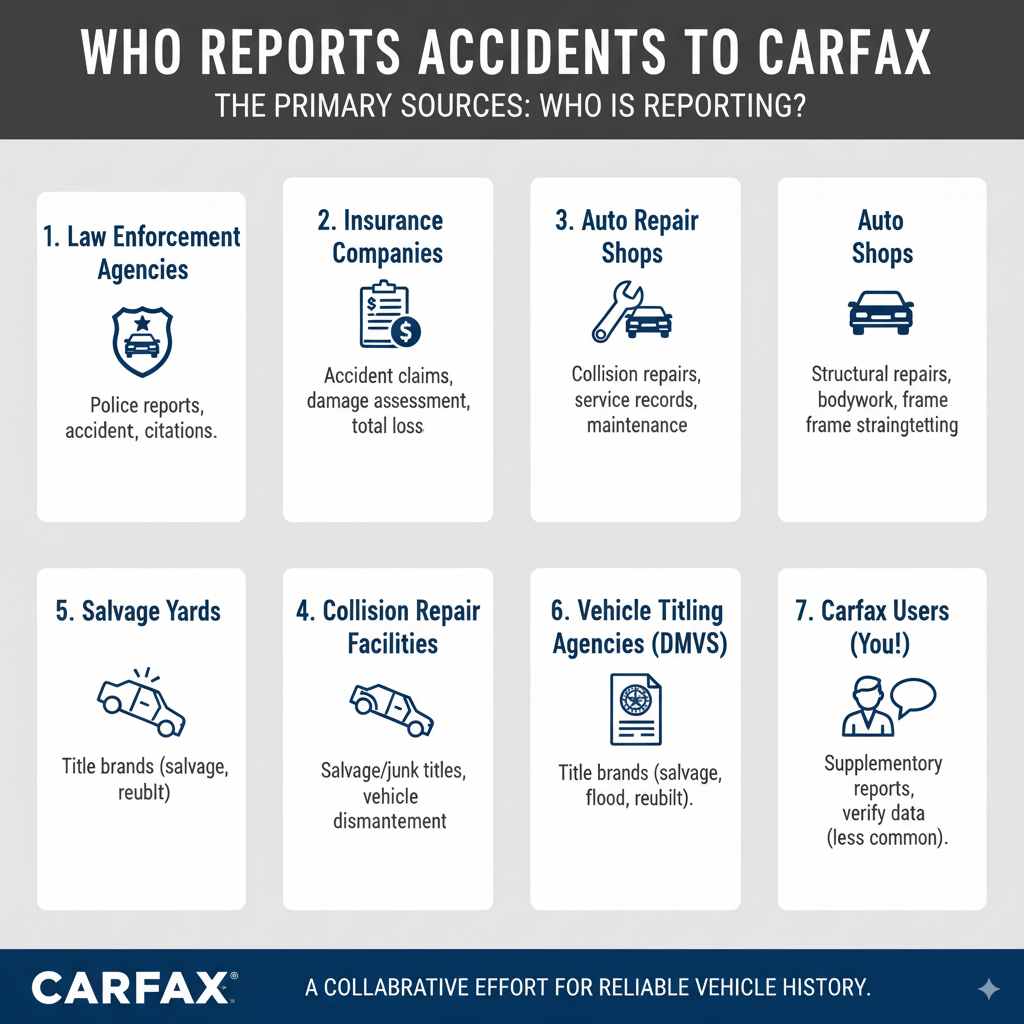
You might be surprised by the number of entities that contribute to a Carfax report. It’s a collaborative effort that relies on data from various official and professional channels. Here’s a look at the main players:
1. Law Enforcement Agencies (Police Departments)
When a car accident occurs, especially one that involves injuries, significant damage, or a violation of traffic laws, police are often called to the scene. They create an official police report. This report contains crucial details like the date and time of the accident, the location, the vehicles involved, any reported injuries, and the responding officer’s assessment of how the accident happened.
Police departments are a significant source of data for Carfax. They often report accident information, sometimes along with details about citations issued. This official documentation is a cornerstone in building a reliable vehicle history. You can usually obtain a copy of a police report from the jurisdiction where the accident occurred. Some police departments might even have online portals for requesting these reports.
2. Insurance Companies
After an accident, if a claim is filed, insurance companies become a key reporting entity. When you or the other party involved in an accident files a claim, the insurance adjuster assesses the damage. They document the extent of the damage, the estimated cost of repairs, and often, whether the vehicle is deemed a total loss.
This information—including the fact that a claim was filed and the payout amount—is typically reported to Carfax. This is why Carfax reports often show “damage reported” or a claim number. It’s a crucial piece of the puzzle, as it directly relates to the physical condition of the vehicle and the financial implications of an incident.
Example: If your car is in a fender-bender and you file a claim for $3,000 in repairs, your insurance company will report this claim to Carfax. This doesn’t necessarily mean it was a severe accident, but it indicates damage occurred and was addressed through insurance.
3. Auto Repair Shops and Service Centers
Reputable repair shops and dealerships that perform bodywork or significant mechanical repairs after an accident often report this information. When a vehicle is brought in for collision repairs, the shop documents the work performed. This can include structural repairs, panel replacements, paintwork, and alignment adjustments.
These service records, especially those related to accident repair, are valuable data points. Carfax partners with many repair facilities to receive this information, adding another layer of detail to the vehicle’s history. Even routine maintenance performed at certified shops can be reported, contributing to a fuller picture of the car’s life.
4. Collision Repair Facilities
Specialized collision repair shops are particularly important reporters. If your car needed significant bodywork or frame straightening after an accident, the shop that performed these specialized repairs is very likely to report the work done. This helps Carfax document structural repairs, which can be critical for a vehicle’s safety and integrity.
These reports can detail the specific damage that was repaired, such as frame damage, which can significantly impact a vehicle’s handling and safety. This level of detail is vital for anyone considering purchasing a vehicle that has undergone substantial collision repair.
5. Salvage Yards and Dismantlers
When a vehicle is declared a total loss by an insurance company, it might end up at a salvage yard. These yards often report vehicles that have been designated as salvage or junked. This is crucial information because it indicates that the vehicle sustained severe damage and may have been rebuilt or sold for parts.
A salvage title is a significant flag on a vehicle’s history, and reporting from these facilities ensures Carfax includes this important detail. This protects consumers from unknowingly purchasing vehicles with such a history.
6. Vehicle Registration and Titling Agencies (DMVs/RMVs)
State Departments of Motor Vehicles (DMVs) or Registry of Motor Vehicles (RMVs) are keepers of important vehicle titles. When a vehicle experiences certain events, like being declared a total loss, having flood damage, or being salvaged, the title record is updated. These updates, such as branding a title as “salvage,” “rebuilt,” or “flood,” are reported to national databases and subsequently flow into Carfax reports.
This is how Carfax learns about title brands, which are critical indicators of a vehicle’s past. A clean title is highly desirable, whereas a branded title signals significant issues that need careful consideration.
According to the National Highway Traffic Safety Administration (NHTSA), title branding laws vary by state, but the core principle is to alert future buyers to severe past damage.
7. Carfax Users (You!)
While not a primary official source in the same way as law enforcement or insurance companies, Carfax also has mechanisms for users to contribute information. If you’ve had a significant accident that wasn’t officially reported anywhere else (though this is rare for major incidents), or if you’ve had extensive repairs done at a shop that doesn’t regularly report, you might have an opportunity to add information. Carfax encourages individuals to report certain events, especially if they believe a vehicle’s history is incomplete.
However, it’s important to note that Carfax primarily relies on its network of official data providers. Direct user reports are more supplementary and often used to verify or supplement existing data.
How Accidents Get Added to the Report: The Process
It’s not magic; it’s a data pipeline! Here’s a simplified look at how an accident report makes its way to Carfax:
- The Incident: A car accident occurs.
- Official Documentation: If police respond, they create a police report. If a claim is filed, the insurance company documents the extent of the damage and repair costs.
- Data Submission: Police departments, insurance companies, repair shops, and titling agencies submit their data. This happens through various methods, including direct data feeds, secure portals, or through partnerships Carfax has established over the years.
- Data Processing: Carfax receives this submitted data. Their systems then process and organize this information, associating it with the specific Vehicle Identification Number (VIN) of the car involved.
- Report Generation: When you or someone else pulls a Vehicle History Report for that VIN, Carfax compiles all the relevant, processed data points, including accident details, into an easy-to-read report.
What Types of “Accidents” Are Reported?
Not every minor scrape is going to show up on a Carfax report. Generally, the incidents that get reported are those that are significant enough to warrant official documentation or professional repair. This typically includes:
- Accidents involving injuries or fatalities.
- Accidents where police are called and an official report is filed.
- Accidents where an insurance claim is filed and paid.
- Vehicles declared a total loss by an insurance company.
- Structural damage requiring significant repair.
- Incidents leading to a salvage, rebuilt, or other branded title.
Minor cosmetic damage that is repaired out-of-pocket without an insurance claim or police report is less likely to appear on a Carfax report. This is why it’s always important to do a thorough visual inspection of any used car, even if its history report looks clean.
Carfax vs. Other History Reports
It’s worth noting that Carfax isn’t the only vehicle history provider. Companies like the National Motor Vehicle Title Information System (NMVTIS) also exist and gather similar data. However, Carfax is widely recognized and has a vast network of data sources that often make it more comprehensive for consumer-facing reports.
The data sources for Carfax and other major providers often overlap significantly. For instance, police reports and insurance claims are fundamental to all reputable vehicle history reports. The differences usually lie in the breadth of their partnerships with repair shops and service centers, and how quickly they can integrate new data into their systems.
For an official, government-backed source of title information, you can check out vehiclehistory.gov, which is part of the NMVTIS.
Table: Common Data Sources for Carfax Reports
| Data Source | Type of Information Reported | Impact on Report |
|---|---|---|
| Police Departments | Accident details, location, injuries, citations | Confirms accident occurrence, provides context |
| Insurance Companies | Claim submission, payout amounts, total loss declarations | Indicates damage extent and financial impact |
| Repair Shops (Body/Collision) | Specific repairs made, parts replaced, structural work | Details physical damage and corrections |
| DMVs/RMVs | Title branding (salvage, flood, etc.), odometer readings | Signals major historical issues with the vehicle’s status |
| Service Centers | Routine maintenance, recalls, significant mechanical repairs | Shows vehicle care and potential future issues |
Why is This Information Important for You?
Understanding who reports to Carfax is crucial for a few key reasons:
- Buying a Used Car: A Carfax report helps you avoid buying a car with a hidden past. Knowing that accidents and major repairs are documented gives you leverage in negotiations and peace of mind.
- Selling Your Car: A clean Carfax report can boost your car’s value. If there have been incidents, being upfront and having documentation shows you’ve been a responsible owner.
- Vehicle Maintenance: Even if you’re just curious about your own car’s history, this information can highlight past issues you might need to keep an eye on.
- Safety: Knowing if a car has had significant structural repairs or a flood title is paramount for your safety and the vehicle’s long-term reliability.
Common Misconceptions about Carfax Reports
It’s easy to have a misunderstanding about how these reports work. Here are a few:
- “Everything is reported”: As mentioned, minor incidents handled out-of-pocket may not make it onto a report.
- “Carfax is infallible”: While Carfax strives for accuracy, data reporting can sometimes have delays or missing entries. It’s a very good tool, but not a perfect crystal ball.
- “One accident ruins everything”: A single accident, especially a minor one that was properly repaired, doesn’t necessarily mean a car is a bad buy. The context and quality of repairs matter.
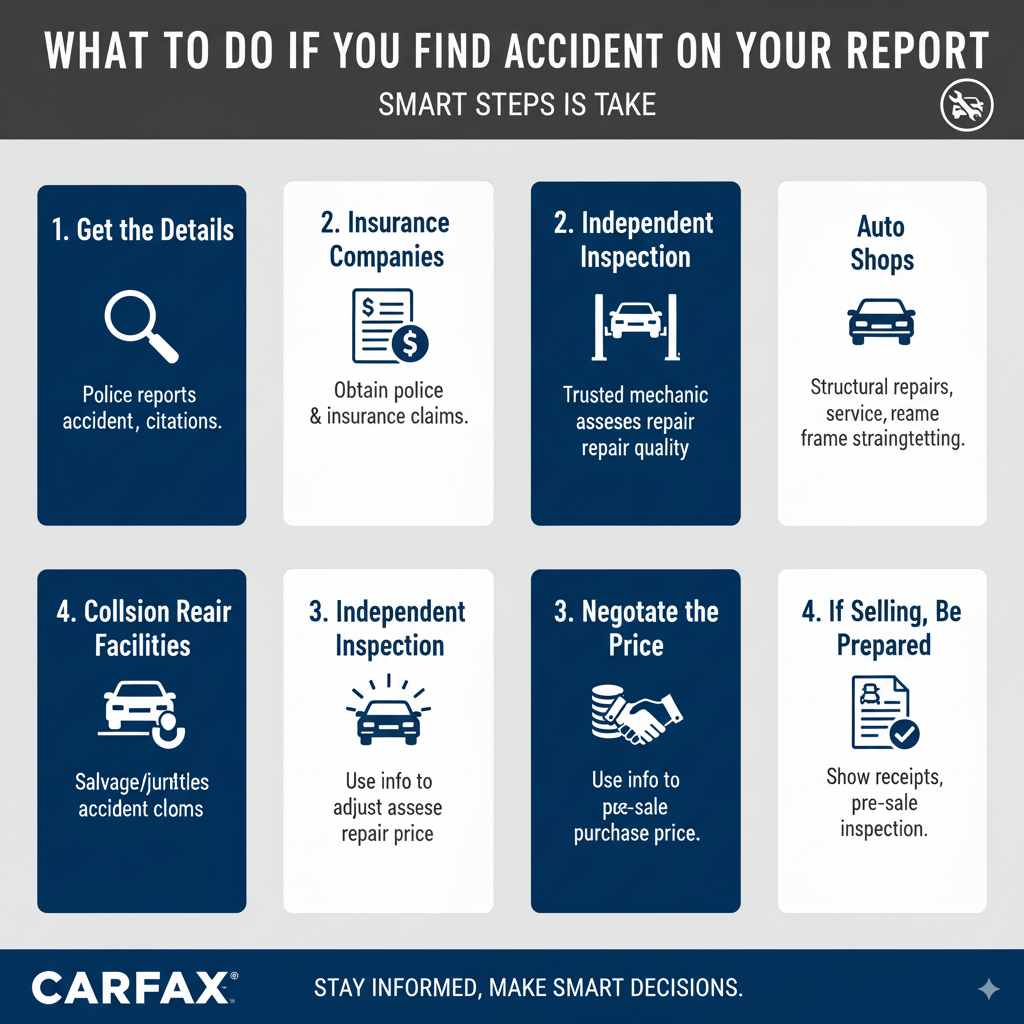
What to Do If You Find an Accident on Your Report
If you’re buying a car and an accident appears on its Carfax report, don’t panic. Instead, take these steps:
- Get the Details: Try to find the original police report and insurance claim information if possible.
- Independent Inspection: Have the vehicle inspected by a trusted, independent mechanic, ideally one specializing in bodywork or collision repair. They can assess the quality of the repairs.
- Negotiate: If the repairs are sound but the accident still affects the value, use this information to negotiate the price.
- If Selling: If an accident is on your Carfax and you’ve repaired it properly, have repair receipts handy to show potential buyers. You can even get a pre-sale inspection to demonstrate the car’s current condition.
Frequently Asked Questions (FAQ)
Q1: Does every single car accident show up on a Carfax report?
A1: Not necessarily. Minor accidents that don’t involve police, aren’t reported to insurance, and are repaired out-of-pocket often do not appear on a Carfax report. Major accidents involving police reports or insurance claims are much more likely to be reported.
Q2: Who is responsible for reporting an accident to Carfax?
A2: No single person is solely responsible. Instead, a wide range of entities report data to Carfax, including police departments, insurance companies, repair shops, salvage yards, and DMVs.
Q3: Can I report an accident myself to Carfax?
A3: While Carfax has mechanisms for data submission and encourages reporting of certain details, individual car owners typically don’t directly “report” historical accidents. Carfax relies on its network of official data providers for the bulk of its information. You may, however, be able to submit service records from your own mechanic.
Q4: If my car was in an accident but I didn’t use insurance, will it show up?
A4: It’s less likely. If no police report was filed and no insurance claim was made, there’s often no official or professional record for Carfax to collect. However, if you took it to a reputable repair shop that reports its work, it might still appear.
Q5: What if an accident is reported to Carfax, but I dispute it?
A5: If you find an error on your Carfax report, you can contact Carfax directly to dispute the information. You will likely need to provide documentation from the source of the information (like a police department or insurance company) to support your dispute.
Q6: How long does accident information stay on a Carfax report?
A6: Accident information generally stays on a Carfax report for the lifetime of the vehicle. Carfax aims to provide a comprehensive history, and significant events like accidents are considered permanent parts of the vehicle’s record.
Conclusion
Understanding who reports accidents to Carfax demystifies the process of vehicle history reporting. It’s a system built on data flowing from official channels like police and insurance companies, supplemented by professional services like repair shops. This network ensures that crucial information about a vehicle’s past, including accident history, title issues, and ownership changes, is captured. For both buyers and sellers, this transparency is key to making informed decisions and building trust in the automotive market. By knowing the sources, you can better interpret a Carfax report and feel more confident in your vehicle dealings.