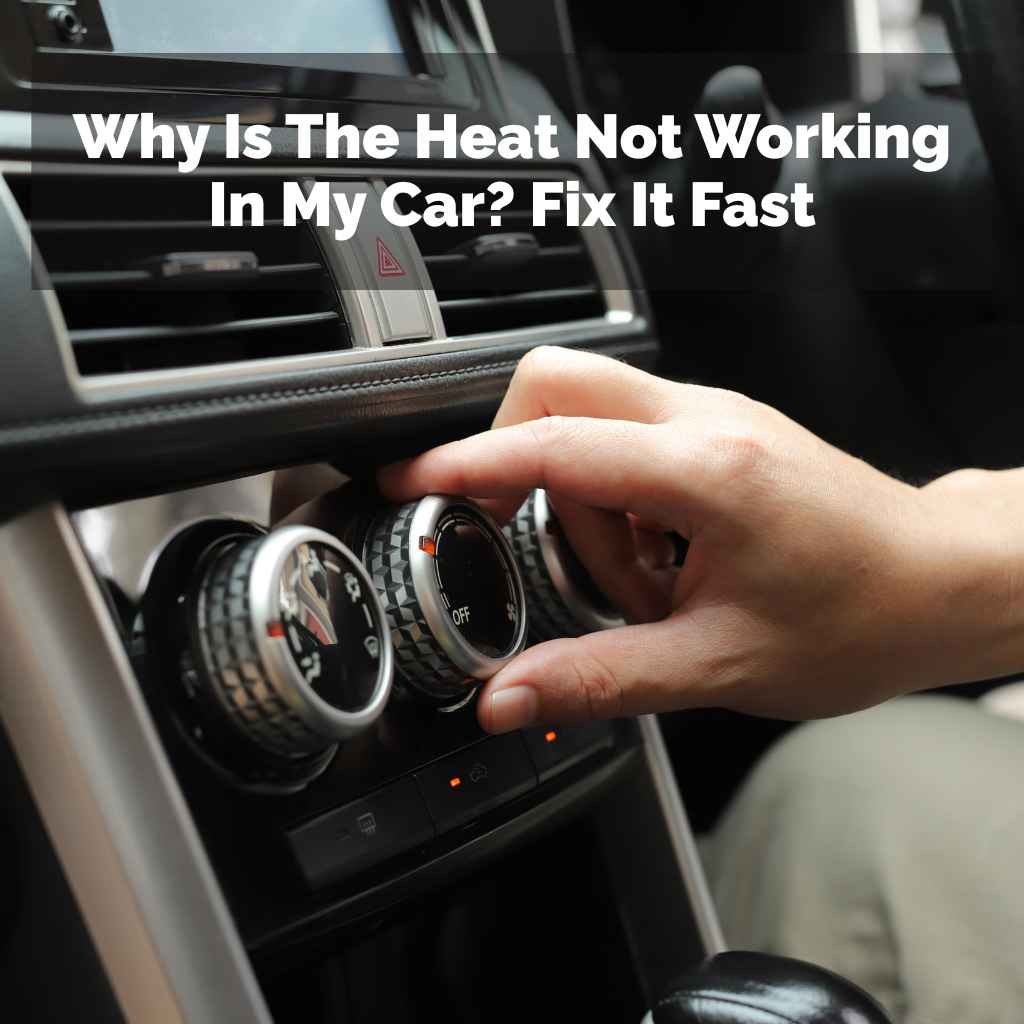
Why Is The Heat Not Working In My Car? Fix It Fast
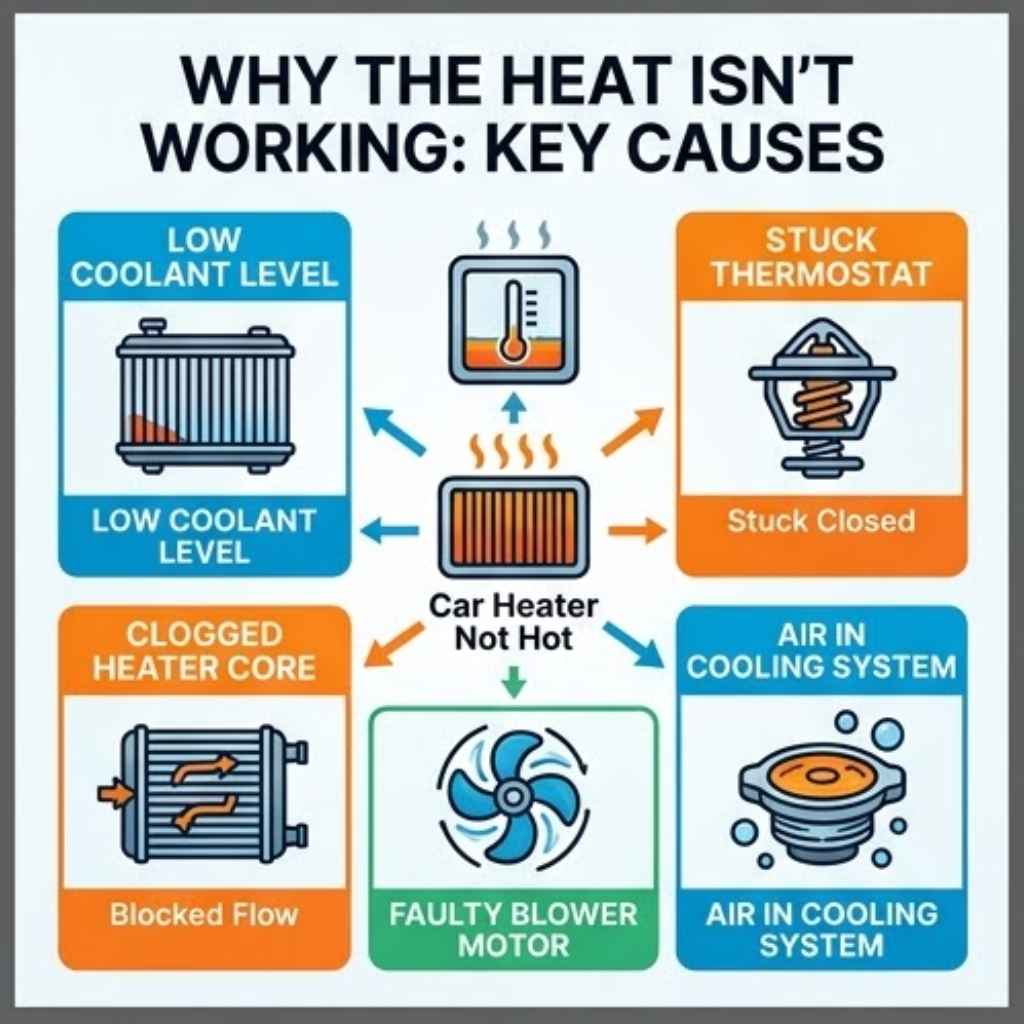
A car heater may not work due to low coolant levels, a faulty thermostat, a blocked heater core, or a broken blower motor. Addressing these common issues can often restore warmth to your vehicle.
Understanding Your Car’s Heating System
Your car’s heater is a clever system. It uses the engine’s heat. Your engine makes a lot of heat when it runs.
This heat is too much for the engine alone. So, the car uses a special liquid called coolant. This coolant flows through the engine.
It picks up the extra heat. Then, the hot coolant flows to a small radiator. This radiator is inside your car’s dashboard.
It’s called the heater core. A fan, called the blower motor, pushes air across this hot heater core. This warms the air.
Then, the fan blows the warm air into the car’s cabin. That’s how you get warm air when you turn your car’s heater on. Several parts must work right for this to happen.
If any part of this chain breaks, you’ll get cold air. Or worse, no air at all. We need to look at each step.
We need to see where the problem might be. Common issues can be simple fixes. Sometimes, they need a bit more work.
But understanding the system is the first step.
My Own Heater Scare on a Freezing Morning
I remember one winter, it was brutal. I mean, really, really cold. My car’s heater just died.
I was heading to an early morning meeting. The frost on my windshield was thick. I turned the heat up, expecting that comforting blast of warm air.
Instead, I got a weak, chilly breeze. Panic set in. My hands were already getting cold on the steering wheel.
I could see the frost on the glass wasn’t melting. My breath was fogging up the inside of the windows. I felt so stuck.
How could I drive safely? How could I even get to work? I pulled over.
I looked at the controls. Everything seemed to be set right. But still, no heat.
It was a moment of pure annoyance mixed with worry. I had to figure this out, fast.
This experience taught me a lot. It showed me how much we rely on these systems. It also pushed me to learn more.
I wanted to be ready next time. Or at least know what to check before calling for help. It’s amazing how a simple thing like no heat can feel like a major crisis.
Common Heater Problems at a Glance
No Heat at All: This often points to big issues like very low coolant or a bad water pump.
Heat Isn’t Warm Enough: Could be a partially blocked heater core or low coolant. Sometimes the thermostat is stuck open.
Heat Works Sometimes: This is tricky. It might be a loose wire, a failing blower motor, or an air pocket in the cooling system.
Strange Smells: A sweet smell could mean a coolant leak. Burning smells might point to electrical issues.
Low Coolant Level: The Most Common Culprit
This is the number one reason your car’s heater might be blowing cold air. Coolant is the lifeblood of your engine’s cooling system. It also heats your cabin.
If there’s not enough coolant, the system can’t do its job. The engine might even overheat. But before that, the heater will stop working.
Why does coolant get low? Leaks are the main cause. These can happen in hoses, the radiator, the water pump, or even the heater core itself.
It could also be a faulty radiator cap. Sometimes, a blown head gasket can cause coolant loss. But a simple leak is more common.
Checking your coolant level is easy. First, make sure your engine is COLD. Never open a hot radiator cap.
You could get badly burned. Look for the coolant reservoir. It’s usually a clear plastic tank.
You’ll see lines for “MIN” and “MAX” or “COLD” and “HOT”. Your coolant level should be between these lines. If it’s low, you need to add more.
Use the correct type of coolant for your car. You can find this in your owner’s manual. If the level drops again quickly, you likely have a leak.
You’ll need to find and fix it.
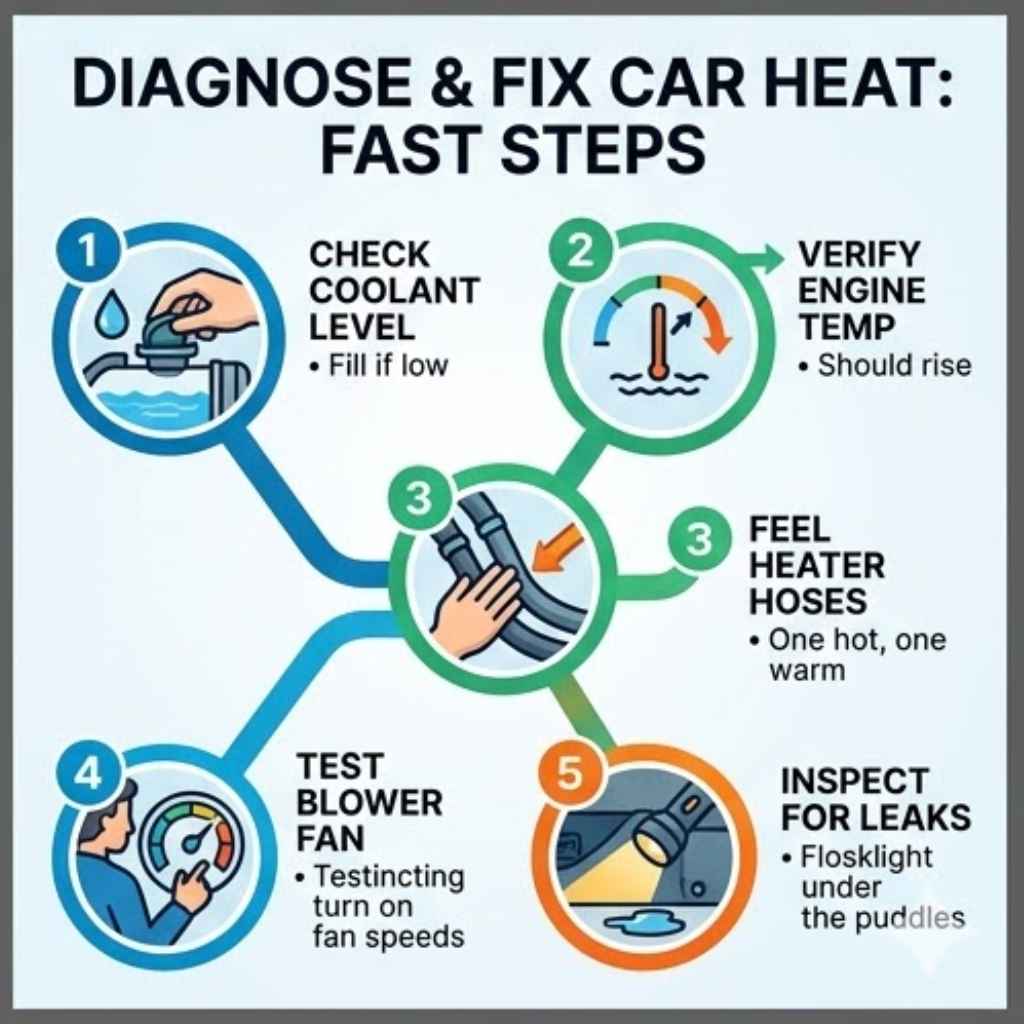
Coolant Check Steps
- Wait for a cold engine. This is super important for safety.
- Find the coolant reservoir. It’s a plastic tank.
- Check the level. Is it between the MIN and MAX lines?
- Add coolant if needed. Use the correct type for your car.
- Look for leaks. Puddles under the car are a bad sign.
A Faulty Thermostat: Stuck Open or Closed
The thermostat is like a gatekeeper for your engine’s temperature. It controls when coolant flows. When the engine is cold, the thermostat stays closed.
This lets the engine warm up faster. Once the engine reaches its normal operating temperature, the thermostat opens. Then, the coolant can flow to the radiator to cool down.
If the thermostat gets stuck open, coolant will always flow. This means your engine might take a very long time to warm up. It might never reach the right temperature.
If it never gets hot enough, the heater won’t get hot coolant. So, you’ll get cold air. If the thermostat gets stuck closed, the engine will overheat very quickly.
This is a much more serious problem and can cause major engine damage.
Symptoms of a stuck-open thermostat include the temperature gauge staying low. You might also notice you have no heat. A stuck-closed thermostat will make your engine overheat fast.
The temperature warning light will come on. You might smell hot coolant. If you suspect a thermostat issue, it needs to be replaced.
It’s a relatively common part to fail. It’s usually located where the upper radiator hose connects to the engine.
Thermostat vs. Temperature Gauge
Normal Operation: The temperature gauge climbs to the middle and stays there. You have good heat.
Thermostat Stuck Open: The gauge stays low. You have little to no heat. The engine takes forever to warm up.
Thermostat Stuck Closed: The gauge shoots up quickly. The engine overheats. This is dangerous for your engine.
The Heater Core: A Common Point of Failure
Remember the small radiator inside your dashboard? That’s the heater core. It’s where the magic happens for cabin heat.
Coolant flows through its tiny tubes. Air from the blower motor passes over these hot tubes. This transfers heat into the car.
If your heater core gets clogged, coolant can’t flow through it properly. This means it can’t get hot enough to warm the air. A clogged heater core is often caused by using the wrong type of coolant.
Or, it can happen if you don’t flush the system regularly. Old coolant can break down. It can leave deposits that clog the small passages.
Another issue is a leak in the heater core. If it leaks, you might notice a sweet smell inside your car. You might also see a wet spot on the passenger side floor.
Sometimes, you’ll see a foggy film on the inside of your windshield. This is because the leaking coolant is vaporizing. Replacing a heater core can be a big job.
It’s usually buried deep in the dashboard. This is often a job for a professional mechanic. However, knowing it’s a possibility helps.
Heater Core Symptoms
- Poor or no heat even when the engine is hot.
- Sweet smell inside the car.
- Wet passenger side floor mat (especially after driving).
- Foggy film on the inside of the windshield.
- Coolant visible in the passenger footwell.
The Blower Motor: Is the Fan Working?
You can have a perfectly hot heater core. But if the blower motor isn’t working, you won’t feel any warm air. The blower motor is the fan that pushes air through your vents.
If this fan is dead, you’ll get nothing. Or, you might get just a tiny bit of air movement. Sometimes, the blower motor might only work on certain speeds.
This could mean a problem with the blower motor itself. Or, it could be the blower motor resistor. The resistor controls the fan speed.
If it fails, you might only get high speed, or no speed at all.
How can you tell if the blower motor is the issue? Turn your car on. Turn your fan speed up.
Listen for any sound of a fan running. If you hear nothing, that’s a clue. If you hear a whirring or grinding noise, the motor might be failing.
If the fan only works on high, it’s likely the resistor. Replacing a blower motor or resistor is often doable for a DIYer. They are usually located behind the glove box or under the dashboard.
Check your car’s manual for the exact location.
Blower Motor Checks
Listen for Fan Noise: Turn the fan on. Do you hear anything? Any whirring, humming, or grinding?
Check Fan Speeds: Does the fan work on all settings? High, medium, low?
Feel the Airflow: Even on low, is there a noticeable push of air from the vents?
Electrical Issues: Fuses can blow. Check your car’s fuse box. A blown fuse can stop the blower motor.
Air in the Cooling System
Air pockets in the cooling system can cause a lot of problems. This includes a lack of heat. When you or a mechanic works on the cooling system, air can get trapped.
This trapped air stops coolant from flowing properly. Especially to the heater core. Think of it like trying to drink through a straw with a hole in it.
The liquid can’t get to where it needs to go. This air can also cause your engine temperature to fluctuate. It might run hotter than normal sometimes.
The solution is to “bleed” the cooling system. This means removing the trapped air. The process varies by car.
It often involves running the engine with the radiator cap off. Or, there might be specific bleeder valves. You need to let the engine warm up.
Then, air bubbles will come out. Make sure the heater is turned to the highest setting. This helps open the heater core and let air escape.
If you’re not comfortable doing this, a mechanic can handle it. It’s a critical step after any cooling system repair or coolant change.
When Air Pockets Cause Trouble
Symptoms:
- No heat or fluctuating heat.
- Engine temperature rises and falls oddly.
- Gurgling sounds from the dashboard.
The Fix:
- Bleeding the cooling system to remove trapped air.
- Ensuring the heater is on during the bleeding process.
Blend Door Actuator Issues
Inside your dashboard, there are little doors. These doors control which air goes where. They mix hot air from the heater core with cold air from outside or the AC.
This is how you set the temperature. The blend door is moved by a small motor called an actuator. If the blend door actuator fails, the door might get stuck.
It could be stuck on full cold. Or, it might not move to let hot air through. This means you’ll get cold air, no matter what you set the dial to.
Symptoms of a bad blend door actuator can be varied. You might hear clicking sounds from behind the dashboard. You might notice the temperature doesn’t change when you adjust the controls.
Sometimes, one side of the car might be hotter than the other. Repairing or replacing a blend door actuator can be difficult. It’s often located in a hard-to-reach spot in the dash.
This is usually a job for a mechanic.
Blend Door Actuator Explained
What it is: A small motor that moves a flap inside your dash.
What it does: Controls the mix of hot and cold air to set your cabin temperature.
When it fails: Can cause no heat, only cold air, or uneven temperatures. You might hear clicking sounds.
Coolant Leaks: A Deeper Dive
We touched on coolant leaks causing low coolant levels. But it’s worth exploring more. Leaks are a major reason for no heat.
They can happen in many places. Radiator hoses are a common spot. They can crack or split with age.
The radiator itself can develop leaks. Especially at the seams or from corrosion. The water pump is another part that can leak.
It has seals that can wear out. And as we mentioned, the heater core can leak too. This is often the hardest to find and fix.
If you see puddles under your car, it’s a leak. The color of the puddle can tell you something. Most coolants are green, orange, pink, or blue.
A leak might also show up as a constant need to add coolant. Or, the coolant warning light on your dashboard might come on. If you have a leak, you need to get it fixed.
Driving with low coolant can lead to serious engine damage. Even if your heater starts working again after adding coolant, the leak needs attention. You don’t want a small problem to become a huge repair bill.
Where Coolant Leaks Happen
- Radiator Hoses: Rubber hoses can crack or split.
- Radiator: Corrosion or damage to tanks and fins.
- Water Pump: Seals can fail, causing drips.
- Heater Core: Leaks inside the dash, often hard to see.
- Thermostat Housing: Gaskets can fail.
- Head Gasket: A more serious internal engine leak.
Other Less Common Causes
While the issues above are the most frequent, other things can stop your heater. A bad radiator cap can fail to hold pressure. This can lower the boiling point of the coolant.
It can also cause coolant to escape. A clogged radiator can prevent proper cooling. This might also affect heater performance.
A malfunctioning engine control unit (ECU) could cause issues. But this is rare for just a heater problem.
Sometimes, a simple electrical problem can cause issues. A blown fuse for the blower motor is easy to fix. Or, a loose wire connection could be the culprit.
These are less common but still possible. If you’ve checked the main items and still have no heat, these might be worth looking into. Always consult your car’s manual for fuse locations and wiring diagrams.
Quick Scan Table: Heater Problems & Likely Causes
| Symptom | Most Likely Cause | DIY Check Possible? |
| No heat at all | Low coolant, stuck thermostat, clogged heater core | Yes (coolant level) |
| Weak heat | Low coolant, air in system, partially clogged heater core | Yes (coolant level, bleeding) |
| Blower motor not working | Blown fuse, bad blower motor, bad resistor | Yes (fuse check) |
| Sweet smell/foggy windshield | Heater core leak | No (requires repair) |
What This Means for You: When to Worry
Most of the time, a no-heat situation is fixable. The first thing to do is check your coolant level. If it’s low, add the correct type.
See if that helps. If the level drops again quickly, you have a leak. That’s something you need to address.
If your coolant level is fine, check your blower motor. Make sure it’s running. If it’s not, check the fuse.
If the fuse is good, the motor or resistor might be bad.
If your engine temperature gauge is acting strange, pay attention. If it stays very low, the thermostat might be stuck open. If it quickly goes to hot, you have a bigger problem.
A stuck-closed thermostat can damage your engine. If you smell coolant or see puddles, find the leak. Ignoring these signs can lead to expensive repairs.
For most people, understanding the basic system is enough. Then you can decide if it’s a DIY fix or time to call a mechanic.
Simple Checks Before Calling a Pro
Check Coolant Level: Make sure it’s in the safe zone on a cold engine.
Listen to the Blower: Turn the fan on. Do you hear it working?
Check Fuses: Locate your car’s fuse box and look for the blower motor fuse.
Observe Temperature Gauge: Does it read normal, low, or high?
Look for Leaks: Check under your car for any colored fluid puddles.
Quick Fixes and Tips for a Warm Ride
Sometimes, the fix is surprisingly simple. If your coolant was just a bit low, topping it up might be all you need. Make sure you use the correct coolant.
Don’t mix types. If you suspect air in the system, try bleeding it. This can make a big difference.
For a bad blower motor fuse, it’s an easy replacement. Just buy the correct amperage fuse and swap it out.
If you notice a small coolant leak, sometimes a temporary fix can help. There are “stop leak” additives for cooling systems. These can seal minor leaks.
However, they are not a permanent solution. And they can sometimes clog the heater core or radiator. Use them with caution.
For anything more serious, like a heater core leak or a bad thermostat, professional help is usually best. They have the tools and knowledge to fix it right.
Proactive Maintenance for Your Heater
Regular Coolant Checks: Do this often, especially before winter.
Coolant Flushes: Follow your car’s maintenance schedule for flushing and refilling coolant. This prevents clogs.
Inspect Hoses: Look for cracks or swelling in radiator hoses.
Listen for Noises: Pay attention to any strange sounds from the engine bay or dashboard.
Frequently Asked Questions About Car Heater Problems
Why is my car’s heater blowing only cold air?
This often happens because of low coolant levels. It could also be a faulty thermostat stuck open. A clogged heater core or a bad blower motor can also cause this.
Air trapped in the cooling system is another common reason.
Can I drive my car if the heater is not working?
Yes, you can usually drive your car. However, it’s not ideal, especially in very cold weather. A working heater helps defrost your windows, which is crucial for safe driving.
Also, if the reason for no heat is engine overheating, driving could cause severe damage.
How do I check my car’s coolant level safely?
Always check the coolant level when the engine is COLD. Never open a hot radiator cap. Locate the plastic coolant reservoir.
Check the fluid level against the MIN and MAX marks. If it’s low, add the correct type of coolant.
What is a heater core, and how do I know if it’s bad?
The heater core is like a small radiator inside your dashboard. It uses hot engine coolant to heat the air blowing into your car. Signs of a bad heater core include a sweet smell inside the car, a wet passenger floorboard, or a foggy windshield.
You might also have poor or no heat.
How much does it cost to fix a car heater?
The cost varies a lot. Simple fixes like adding coolant or replacing a fuse are very cheap. Replacing a blower motor or thermostat might cost $100-$300.
Repairing or replacing a heater core can be expensive, often $500-$1000 or more, because it’s labor-intensive.
Why does my car heater work sometimes but not always?
Intermittent problems can be tricky. It could be an electrical issue like a loose wire or a failing blower motor resistor. Air pockets in the cooling system can also cause this.
Or, a component might be starting to fail and only works when it’s not too hot or cold.
Final Thoughts on Getting Your Heat Back
Dealing with a car heater that won’t work is a real pain. But by understanding the system, you can often pinpoint the issue. Start with the simple checks.
Low coolant is your first suspect. Then, consider the blower motor. Don’t ignore warning signs like temperature gauge behavior or leaks.
Often, a little knowledge goes a long way. This can save you time and money. And more importantly, get you back to a warm, comfortable ride.
Products related to this article
Sponsored / affiliate links. As an Amazon Associate I earn from qualifying purchases. I may earn additional commission from eligible campaigns.