Will An Emp Kill A Car Battery? What You Should Know
It’s a nagging worry, isn’t it? The thought that something totally out of your control, like a sudden burst of energy from space or a military test, could instantly fry your car battery. You rely on your car every single day.
The idea of it just… dying because of an EMP (Electromagnetic Pulse) feels overwhelming. We’re going to break down exactly what happens, why it’s not quite as simple as ‘zap, dead battery,’ and what you can do to feel more prepared.
An EMP is unlikely to directly kill a car battery in most scenarios. While EMPs can disrupt electronics, a car battery itself is relatively robust. However, the sensitive electronics connected to the battery could be damaged, leading to vehicle failure. Protecting these systems is key.
What Is an EMP and How Does It Work?
An EMP is a powerful burst of electromagnetic energy. Think of it like a massive surge of electricity and radio waves all at once. This can happen for a few reasons.
The most talked-about is a nuclear explosion high up in the atmosphere. This is called a high-altitude electromagnetic pulse, or HEMP. The sun can also cause similar events, like solar flares or coronal mass ejections.
These solar EMPs are sometimes called geomagnetic storms.
When an EMP happens, it creates a powerful electric field. This field can induce large currents and voltages in electrical conductors. Almost anything made of metal can act as an antenna.
Power lines, communication cables, and even the wiring inside your car can pick up this energy. It’s like a giant lightning strike that spreads out over a huge area.
The main danger from an EMP isn’t usually the battery itself. Car batteries are pretty simple, heavy-duty things. They’re designed to handle electrical shocks and fluctuations to some extent.
They don’t have much in the way of sensitive microchips directly inside them. The real problem is what those induced currents do to the delicate electronics that your car relies on to run.
Modern cars are like computers on wheels. They have lots of sensors, control units, and computer chips. These are called electronic control units, or ECUs.
The Engine Control Module (ECM) is one example. The Transmission Control Module (TCM) is another. Even the Anti-lock Braking System (ABS) has its own computer.
These are the parts that are very sensitive to sudden voltage spikes.
When an EMP sweeps through, these sensitive electronics can be overloaded. The induced current can burn out tiny pathways inside the microchips. This damage can render the component useless.
It’s not the battery that’s being “killed” directly. Instead, the battery might still be fine, but the car’s computer tells it to do nothing. Or, the engine won’t start because the fuel injection system is damaged.
Or, the car just won’t run at all.
So, while the battery might survive, the car might not. It’s a subtle but important difference. The EMP creates a problem for the car’s nervous system, not its heart.
My Own Close Call (Sort Of)
I remember a time during a massive thunderstorm. The lightning was incredibly close. I was inside my garage, working on a project.
Suddenly, there was this deafening CRACK and a flash that lit up the whole room. My modem and router went dead instantly. They were completely fried.
I panicked a little, thinking my whole home network was gone.
But then I checked my car, which was parked just a few feet away. Its battery was still good. The lights came on, the radio worked.
However, the car’s digital clock had reset, and the check engine light flickered on and then off again. It was like a small, localized EMP event, just from the lightning strike. It showed me how sensitive electronics can be, even when the core battery seems okay.
It wasn’t a real EMP, of course. But it made me think. If a powerful lightning strike could do that much, what could a much larger, more widespread EMP do?
It got me researching. I learned that car batteries are physically quite tough. They are designed to handle a lot of vibration and minor electrical abuse.
That’s because they are essential for starting the car, which is a high-demand electrical event.
But the wiring harnesses, the alternator, the starter motor control, the ignition system, the fuel pump controller, and all the tiny computer chips controlling them are not. They are much more delicate. The EMP’s energy travels through the metal parts of the car, acting like a conduit.
It finds its way to these sensitive components and can cause permanent damage. So, the battery might be fine, but the car still won’t start.
This is why the common advice is to protect the car’s electronics, not just the battery. The battery is a simple chemical storage device. It doesn’t have the intricate circuits that are so vulnerable to high-energy pulses.
How EMPs Affect Different Vehicle Parts
Battery: Relatively robust. Low risk of direct damage from the EMP pulse itself.
Alternator: The part that recharges the battery. It has some electronic components that could be vulnerable.
Starter Motor: Usually a simple, heavy-duty electric motor. Less likely to be damaged directly.
ECUs (Engine Control Units): Highly sensitive microprocessors. This is where most of the damage occurs.
Sensors: Devices that measure things like engine temperature or wheel speed. Many have delicate electronics.
Wiring Harnesses: Act as antennas, picking up and carrying the EMP energy to other components.
Understanding the Physics: Why Batteries Are Tougher
Let’s dive a little deeper into why a car battery is more resilient. A lead-acid car battery works on a simple chemical principle. It has two plates, typically made of lead and lead dioxide.
These are submerged in an electrolyte solution, usually sulfuric acid. When you start your car, a chemical reaction occurs. This reaction releases electrons, creating an electrical current.
This process is robust. It doesn’t rely on tiny, precise electrical pathways like a computer chip. The physical structure of the battery is also quite solid.
It’s built to withstand vibrations from driving, temperature changes, and the high current demands of starting an engine. The materials used are heavy and durable.
Compare this to an ECU. An ECU is a small circuit board filled with microchips. These chips contain millions, even billions, of transistors.
Transistors are tiny switches that control electrical signals. They are incredibly small and operate with very low voltages and currents. When an EMP hits, it can send a massive surge of voltage and current through the wiring.
This surge is far beyond what these delicate transistors can handle.
The energy effectively overloads and burns out these tiny pathways. It’s like trying to pour a gallon of water into a tiny teacup. The excess spills over and causes damage.
The battery, on the other hand, is designed to handle high currents for short bursts. It’s like a large reservoir. It can deliver a lot of water without being overwhelmed, as long as the demand is within its capacity.
Even the charging system, the alternator, has electronic regulators. These regulators control the voltage. They can be more susceptible than the battery itself.
If the alternator’s regulator is damaged, the battery might overcharge, which is also bad. But the initial EMP impact is less likely to destroy the core battery chemistry.
So, when people worry about an EMP killing their car battery, they are often thinking about the functionality of the car. The battery might be charged and ready to go, but if the car’s brain is scrambled, it won’t matter. The battery is just one piece of a very complex system.
What an EMP Does Do to Cars
So, if the battery is usually okay, what exactly gets hit? The primary targets are the car’s electronic systems. These include:
- Engine Control Module (ECM): This is the main computer that manages the engine’s performance. It controls fuel injection, ignition timing, and emissions.
- Transmission Control Module (TCM): Manages the automatic transmission.
- Body Control Module (BCM): Controls various systems like lights, power windows, locks, and the instrument cluster.
- Infotainment System: The radio, navigation, and displays are packed with sensitive electronics.
- Anti-lock Braking System (ABS) Module: Controls the anti-lock brakes.
- Airbag Control Module: Manages the deployment of airbags.
- Sensors: Numerous sensors throughout the car provide data to the ECUs. These can be damaged.
These components are connected by a complex web of wires, the wiring harness. This harness acts like a network of antennas. The EMP’s energy travels along these wires and into the sensitive electronic modules.
The voltage and current spikes can destroy the delicate semiconductor components within these modules.
Think about a modern smartphone. It has a battery, but the phone itself is full of microchips. If you dropped that phone into a bucket of water, the battery might be okay for a while, but the electronics would likely be ruined.
An EMP is similar, but instead of water, it’s a massive electrical surge.
The effect can be widespread. A large HEMP event can affect vehicles over vast areas, potentially thousands of square miles. This means that even if your car is miles away from the detonation point, it could still experience the effects.
Solar EMPs can also be a concern. While typically less intense than a nuclear HEMP, a very strong solar storm could still induce currents strong enough to damage electronics in vehicles, especially those parked in exposed areas.
The key takeaway is that the EMP attacks the “smart” parts of the car, the ones that process information and control functions. The battery is more of a “dumb” power source. It stores and delivers power chemically.
EMP vs. Lightning Strike: A Quick Comparison
EMP (Electromagnetic Pulse):
- Source: Nuclear detonation, solar flare.
- Effect: Broad, widespread surge of electromagnetic energy.
- Target: Primarily sensitive electronic components across a wide area.
- Damage: Can fry microchips and electronic circuits.
Lightning Strike:
- Source: Atmospheric electrical discharge.
- Effect: Intense, direct electrical current and electromagnetic field.
- Target: The most direct path of the current (often a single point or circuit).
- Damage: Can cause direct burning, melting, or electrical overload.
Key Difference: EMP is a broad, induced surge. Lightning is a focused, direct discharge. Both can damage electronics, but EMP’s widespread nature is its unique threat to networked systems.
Can You Protect Your Car from an EMP?
This is the million-dollar question for many. Protecting against a major HEMP event is challenging. It requires shielding the sensitive electronics.
The principle behind EMP protection is called Faraday Caging. A Faraday cage is an enclosure made of conductive material that blocks electromagnetic fields.
Think of a metal box. If you put an electronic device inside a completely sealed metal box, an external electromagnetic field cannot penetrate it. The metal cage redirects the energy around the enclosure.
This is why some people talk about storing sensitive electronics in metal trash cans, metal filing cabinets, or even specially designed Faraday bags.
For a car, creating a perfect Faraday cage is difficult. The car’s body is somewhat conductive, but it has many openings: doors, windows, ventilation systems. These openings can allow EMP energy to enter.
Also, the sheer number of sensitive electronics distributed throughout the car makes it hard to shield everything effectively.
Some people consider specialized EMP-shielded boxes for their car’s ECU. These are essentially small Faraday cages that you’d install inside the car. However, installing these can be complex, and their effectiveness depends on the quality of the installation and the shielding itself.
A small gap can compromise the entire shield.
Another approach is to disconnect the battery. If the battery is disconnected, there’s no complete circuit for the induced currents to flow through to damage the electronics. However, simply disconnecting the battery might not be enough if the EMP energy can still reach the wiring harness itself.
Also, reconnecting it would be a challenge.
For solar EMPs, the threat is generally lower. However, extreme solar storms could still cause issues. Some advice includes parking your car in a garage, especially one with a metal roof.
A garage can provide some degree of shielding. However, it’s not a guarantee.
It’s important to be realistic. For a widespread, powerful EMP event, complete protection of a modern, complex vehicle is very difficult for the average car owner. The focus often shifts to older, simpler cars with fewer electronics.
These cars might have a better chance of surviving.
Many survivalist communities discuss storing vehicles in specialized EMP-proof shelters. These are often constructed with metal mesh or solid metal walls. They are designed to create a robust Faraday cage around the entire vehicle.
For most people, the best strategy is often to understand the risks and potentially take simple, low-cost steps. These might include ensuring your battery terminals are clean and connections are tight, as good connections can sometimes help dissipate excess energy. But the real protection lies in shielding the sensitive electronics, which is a significant undertaking.
What About Older Cars vs. Newer Cars?
This is a really important point. The technology in cars has changed dramatically over the decades. Older cars, from the 1970s or earlier, are much simpler.
They often have mechanical fuel pumps, distributors for ignition timing, and very few electronic components.
A car from, say, 1970 might have a carburetor, mechanical points ignition, and a basic voltage regulator. It might have a simple radio. These systems are far less sensitive to EMPs.
The wiring harnesses are simpler and carry less high-frequency information.
Newer cars, especially those made after the mid-1990s, have become increasingly reliant on computers. Cars from the 2000s onward are packed with microprocessors and complex sensor networks. These are the very components that are most vulnerable to EMP damage.
So, if you’re concerned about EMP survival for a vehicle, an older, less electronic car would likely fare much better. It’s not that the battery is more robust in an old car. It’s that the system the battery powers is much less susceptible to EMP disruption.
Think of it this way: A bicycle has a battery (maybe for a light), but its primary function is mechanical. A high-performance electric race car has a massive battery, but its entire operation depends on complex, sensitive electronics. The electric car is much more vulnerable.
This is why you see a lot of discussion in preparedness circles about keeping older, simpler vehicles running. They are seen as more reliable in a catastrophic event like an EMP. They might not have all the modern conveniences, but they can still get you from point A to point B when a modern car is just a very expensive paperweight.
Car Electronics Evolution & EMP Vulnerability
Pre-1980s Cars:
- Electronics: Minimal (basic radio, voltage regulator).
- Fuel System: Mechanical (carburetors).
- Ignition: Mechanical points or early electronic.
- EMP Vulnerability: Low.
1990s Cars:
- Electronics: Increasing (ECM, ABS).
- Fuel System: Fuel injection becoming common.
- Ignition: Electronic ignition.
- EMP Vulnerability: Moderate.
2000s+ Cars:
- Electronics: Extensive (multiple ECUs, complex sensors, infotainment).
- Fuel System: Sophisticated fuel injection.
- Ignition: Computer-controlled ignition.
- EMP Vulnerability: High.
What Are the Signs of EMP Damage?
If an EMP event occurs and you suspect your car might have been affected, what would you look for? Since the battery itself is usually intact, the signs would be related to the car not functioning. This is what you might observe:
- Car won’t start: This is the most common sign. The engine might crank, or it might not crank at all.
- Dashboard lights won’t come on: The instrument cluster relies on electronics.
- Warning lights stay on or flicker: If any systems are partially damaged, warning lights might behave erratically.
- Engine runs poorly or stalls: If the ECM or related sensors are damaged, engine performance will suffer.
- No response from power windows or locks: If the BCM is affected.
- Radio or infotainment system is dead: These are often the first things people notice.
The crucial thing to remember is that these symptoms are identical to many other car problems. A dead battery, a faulty starter motor, a bad alternator, or a clogged fuel filter can all cause similar issues. The difference with an EMP is the widespread nature of the failure.
If a large EMP event happens, you might see many cars in your area suddenly stop working. This would be a strong indicator that EMP damage is the cause, rather than just individual mechanical failures.
It’s also possible that the damage isn’t immediate and catastrophic. Some electronics might be weakened and fail later. This is sometimes called latent failure.
So, even if your car starts right after an event, it might not be safe to assume it’s fully functional.
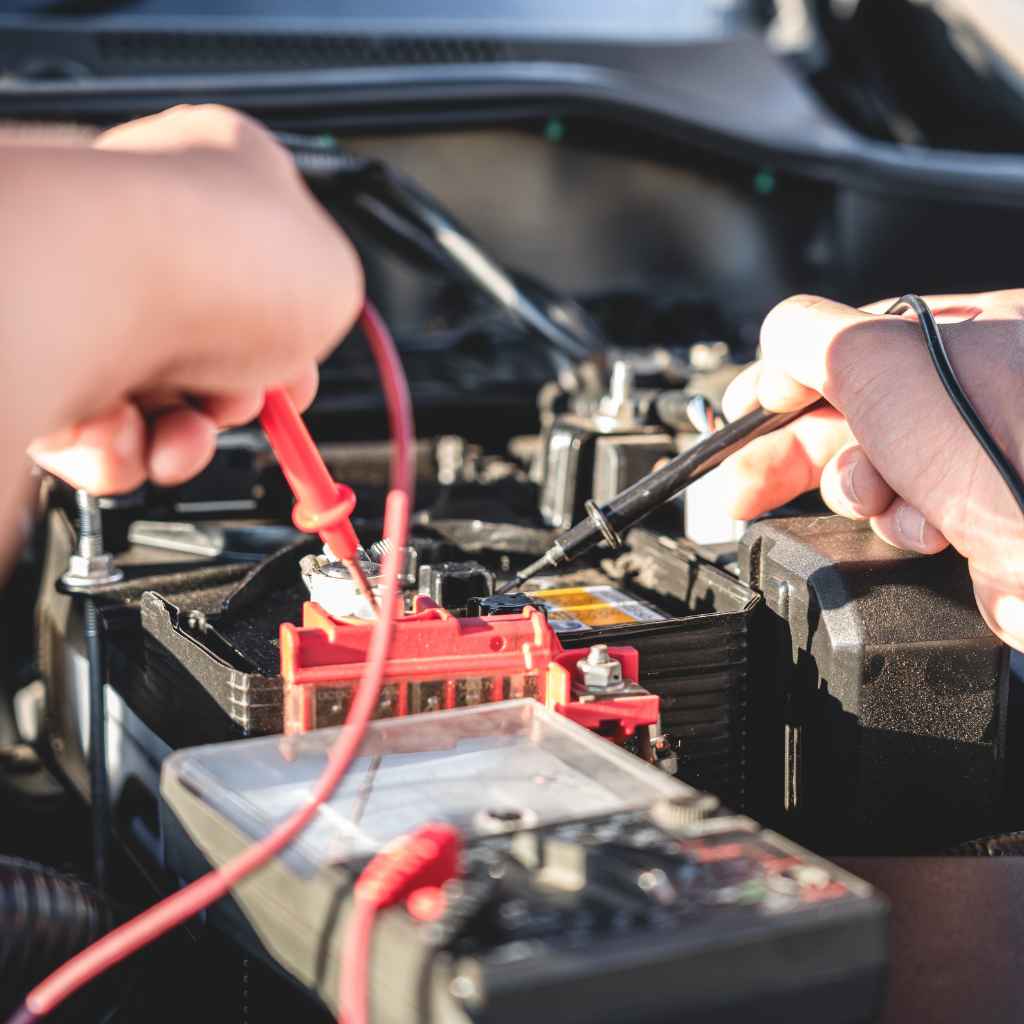
The battery itself, if it’s still connected, might show a normal voltage reading if you try to test it. This is because the chemical reaction within the battery is likely unimpaired. The problem lies in the car’s ability to use that battery power to start and run the engine, or power its systems.
So, don’t assume your battery is dead just because your car won’t start after a potential EMP event. You’ll need to diagnose the electronic systems for damage, which is a much more complex task.
When Is a Car Battery “Killed” by EMP-Like Effects?
While a direct EMP blast is unlikely to kill the battery’s chemistry, there are related scenarios where a battery’s function can be severely impaired by electromagnetic phenomena.
- Overcharging from a Damaged Alternator: As mentioned, the alternator’s voltage regulator can be damaged by an EMP. If this regulator fails, the alternator might overcharge the battery. Continuous overcharging boils the electrolyte, damages the battery plates, and can lead to battery failure.
- Power Surges from Other Sources: Sometimes, electrical faults or surges not related to EMPs can damage the battery. For example, a short circuit in the car’s wiring could rapidly drain or overheat a battery.
- Indirect Effects: If an EMP fries a critical control module (like the one managing the cooling fan), the engine could overheat. Extreme heat can damage a battery.
These are less direct forms of EMP impact. The EMP itself doesn’t directly “zap” the battery. Instead, it damages other components, which then cause harm to the battery.
It’s like a domino effect. The initial impulse hits the electronics, which then affect the power supply or cooling, leading to battery damage.
In these cases, the battery might fail due to overheating, overcharging, or physical damage from an engine malfunction. But again, the primary EMP energy surge is most dangerous to the integrated circuits, not the lead-acid chemistry.
It’s a good reminder that a car is a complex system. All parts are interconnected. Damage to one area can propagate and affect others.
The battery is tough, but even the toughest components can be stressed by the failure of other, more sensitive parts.
What This Means for You and Your Car
For most people, this information is reassuring in one way and concerning in another. The good news is that your car battery is likely to be one of the more resilient parts of your vehicle if an EMP occurs. It’s not the first thing that will likely fail.
The bad news is that the car’s overall functionality is still at high risk. Modern cars are so dependent on electronics that an EMP could render them inoperable, even if the battery is perfectly fine. This means if you’re relying on your car for emergencies, an EMP event presents a significant challenge.
If you live in an area prone to severe thunderstorms, you’ve already seen how electrical surges can affect electronics. An EMP is an extreme version of this. It’s a widespread event that could affect millions of people.
So, what should you consider?
- Assess Your Vehicle: If EMP preparedness is a high priority, consider the age and complexity of your vehicle. Older, mechanically simpler cars are generally considered more EMP-resistant.
- Understand the Risks: Know that modern cars are vulnerable. Don’t assume your car will work after a major EMP event.
- Backup Transportation: Have alternative plans for transportation. This could include bicycles, public transport (if it’s running), or walking.
- Emergency Preparedness: Think about how you would manage without a working vehicle. This includes food, water, medical supplies, and communication.
- Shielding (Advanced): If you are very concerned, you could research EMP shielding options for critical components, though this can be expensive and complex.
The battery itself is a powerful energy storage device. It’s robust. But in the context of a car, it’s only as good as the system it’s powering.
If the car’s computers are dead, the battery’s power can’t be used.
Quick Tips and Considerations
Here are a few simple things to keep in mind regarding your car battery and potential EMP scenarios:
- Keep Battery Terminals Clean: A clean connection is always best for electrical flow. While this won’t stop an EMP, good maintenance is generally wise.
- Regular Maintenance: Ensure your car is well-maintained. A healthy car is generally more resilient.
- Consider a Disconnect Switch (for extreme preparedness): Some people install a master battery disconnect switch. This allows you to quickly shut off all power to the car. In theory, this could protect electronics if you can disconnect it before the EMP wave hits, but timing would be critical and difficult.
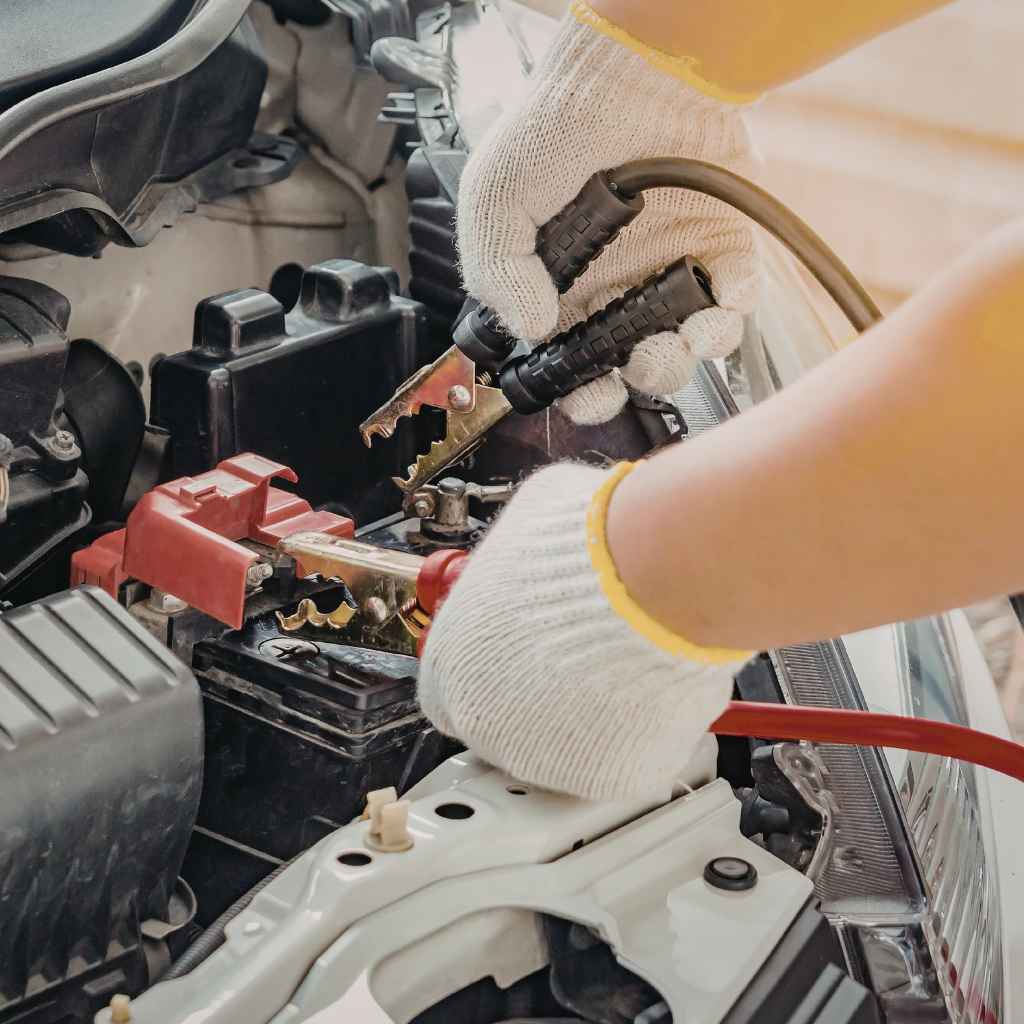
- Have Essential Tools: If your car is damaged but the battery is okay, knowing how to change a tire or jump-start might still be useful.
- Don’t Over-Rely on Car Power: For critical communication or lighting in an emergency, have independent battery-powered devices (like flashlights and radios).
The reality is that a significant EMP event would likely disrupt more than just cars. Power grids, communication networks, and financial systems could all be affected. Focusing solely on the car battery might miss the bigger picture of widespread infrastructure failure.
Frequently Asked Questions
Will an EMP instantly kill my car battery?
No, an EMP is unlikely to directly kill the car battery itself. Car batteries are robust electrochemical devices. The primary risk from an EMP is to the sensitive electronic components in your car, not the battery’s chemistry.
If my car won’t start after an EMP, is it the battery?
It’s possible, but unlikely that the EMP directly killed the battery. More likely, the sensitive electronics (like the Engine Control Module) were damaged by the EMP, preventing the car from starting, even if the battery is fine.
Can I protect my car from an EMP blast?
Complete protection is very difficult for modern cars. Creating a Faraday cage around the vehicle or its critical electronic components is the principle, but it’s complex and expensive to do effectively for an entire car.
Are older cars more resistant to EMPs?
Yes, significantly. Older cars have far fewer sensitive electronic components. Cars from before the 1980s, with more mechanical systems, are much less vulnerable to EMP damage than modern, computer-laden vehicles.
What are the signs my car has EMP damage?
Signs include the car not starting, dashboard lights not coming on, warning lights behaving erratically, or systems like power windows failing. These symptoms are similar to other car problems, but an EMP would likely affect many cars in an area simultaneously.
How does a solar flare EMP differ from a nuclear EMP?
Solar flares create geomagnetic storms that induce currents. While powerful ones can cause damage, they are generally less intense and widespread than a high-altitude nuclear EMP (HEMP), which is designed to affect a massive area.
Conclusion
It’s natural to worry about losing your primary mode of transportation. The good news is that your car battery is likely built to withstand an EMP better than most other parts of your vehicle. The true vulnerability lies in the complex electronics that modern cars rely on.
While you can’t easily shield your entire car, understanding how EMPs work helps you prepare and make informed decisions about vehicle choice and backup plans. Your car battery itself is probably not the weak link.
Products related to this article
Sponsored / affiliate links. As an Amazon Associate I earn from qualifying purchases. I may earn additional commission from eligible campaigns.