How to Store a Car for the Winter Step by Step
Store a car for winter by cleaning off salt and debris, filling the tank with stabilized fuel, protecting the battery, checking fluids, and matching tire and cover prep to whether it sits a week, a month, or all winter. Skip the basics and you risk flat spots, dead batteries, stale fuel, corrosion, and pests. This guide gives you a step-by-step winter storage sequence, with priority order and branch points for garage, outdoor, and long-term storage.
Winter storage steps


Start with the top-priority sequence
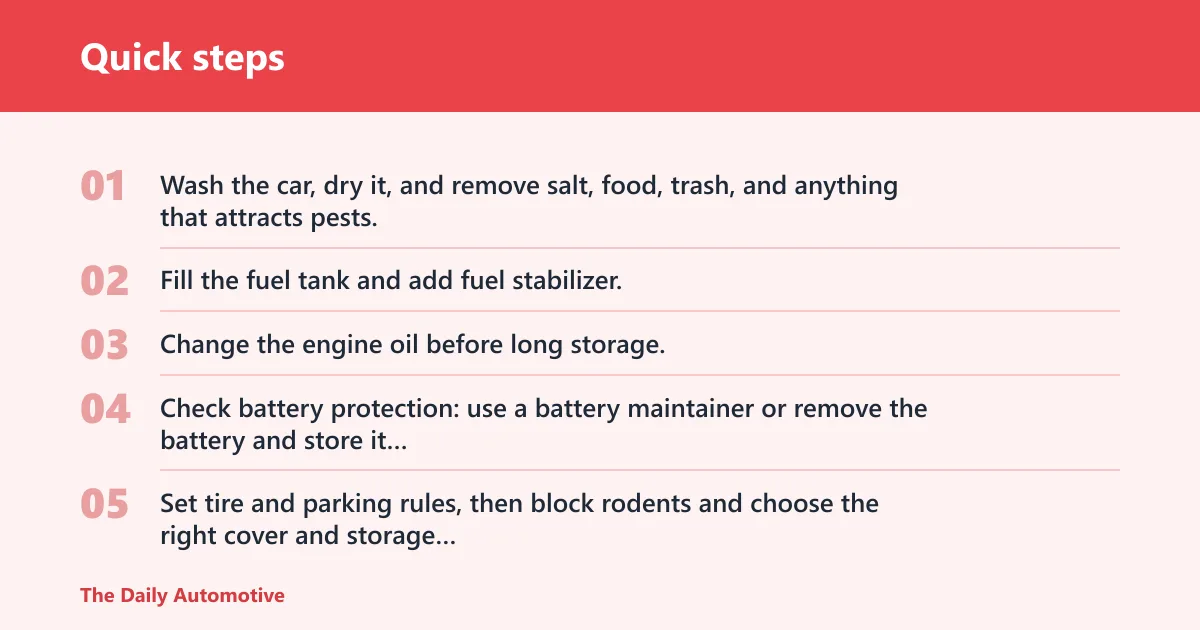
- Wash the car, dry it, and remove salt, food, trash, and anything that attracts pests.
- Fill the fuel tank and add fuel stabilizer, then drive the car briefly so treated fuel reaches the system.
- Change the engine oil before long storage.
- Check battery protection: use a battery maintainer or remove the battery and store it indoors.
- Set tire and parking rules, then block rodents and choose the right cover and storage spot.
If time is tight, stop after the first five steps and you have covered the most failure-prone items. The rest still matters, but these are the ones that prevent the fastest damage when a car sits through winter.
Follow the vehicle and product manuals, never work under a vehicle held only by a jack, and keep the storage setup simple and safe.
What to do first if you only have an hour
Wash off salt, clear the cabin, add fuel stabilizer to a full tank, protect the battery, and set the parking brake rule now. Those five actions address corrosion, stale fuel, no-start risk, and brake drag before the rest of the setup becomes possible.
Say your sedan has to sit in an airport lot for six weeks. A quick wash, a full tank with stabilizer, a maintainer if power is available, and tire inflation checked to the owner’s manual are the best use of limited time. A breathable fitted cover helps if the car is outdoors or in a dusty indoor space.
What changes for one week, one month, and 3+ months
A one-week pause needs fewer changes than a winter layup. One month typically calls for battery protection and fuel treatment. Three months or more moves you into long-term storage, where oil condition, rodent blocking, tire load, and storage environment matter much more.
A common first-timer mistake is treating a two-week business trip the same as a seasonal layup. That can lead to overdoing some steps and skipping the ones that matter most, such as battery support and a clean, dry interior.
How long will it sit?
Match the prep to storage length. One week usually needs cleaning and a battery check. One month usually adds stabilizer, rodent control, and tire checks. Three months or more should generally be treated like true winter storage, with oil, coolant, cover, and parking decisions addressed.
One week: only the essentials
For a week, wash the car, remove food, check tire pressure, and make sure the battery will not drain. If the car is stored indoors, a cover is optional. Fuel stabilizer and oil changes are usually unnecessary at this length unless the vehicle already needs service.
One month: add protection that prevents buildup
At a month, add fuel stabilizer to a full tank, protect the battery, and make sure the storage space is dry and monitored. That is long enough for moisture, self-discharge, and odor buildup to become real problems.
3+ months: treat it like long-term storage
For three months or more, use the full storage sequence: fresh oil, stabilized fuel, battery protection, rodent blocking, tire planning, and a fitted cover if the car is exposed to dust or moisture. Check coolant freeze protection, not only coolant level, before the car goes away.
Where will you store it?
Indoor storage is the least demanding option for the car. An unheated garage still exposes it to temperature swings and damp air. Outdoor storage is the toughest case, and it needs the most attention to drainage, monitoring, and cover choice.
Indoor storage
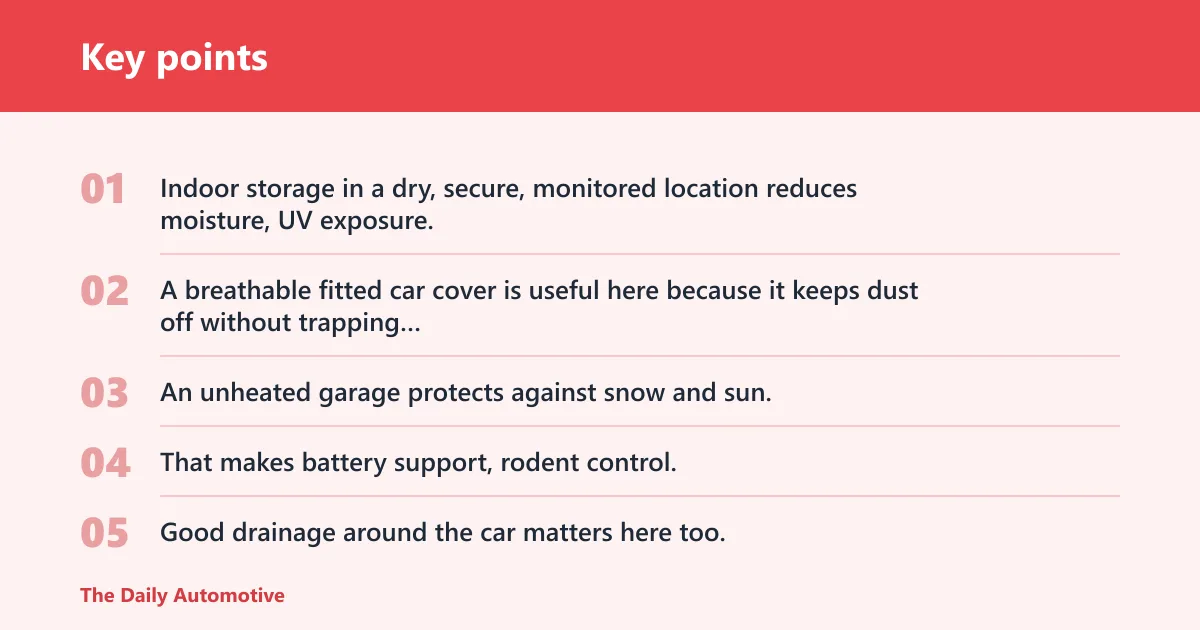
Indoor storage in a dry, secure, monitored location reduces moisture, UV exposure, and pest pressure. A breathable fitted car cover is useful here because it keeps dust off without trapping moisture the way a tarp can.
Unheated garage
An unheated garage protects against snow and sun, but it still sees humidity swings and cold-soak temperatures. That makes battery support, rodent control, and moisture control inside the cabin more important. Good drainage around the car matters here too.
Outdoor or covered outdoor storage
Outdoor storage can work if the vehicle sits on a dry surface with good drainage and you can monitor it regularly, but it needs the highest level of protection. Use a fitted cover meant for vehicles, not a moisture-trapping tarp. Secure it tightly so wind does not rub the paint or expose openings.
| Storage length | Essential steps | Optional steps | Unnecessary steps | Indoor storage | Unheated garage | Outdoor storage |
|---|---|---|---|---|---|---|
| 1 week | Wash, remove trash, check tires, plan battery support | Cover if dusty, add moisture control if cabin is damp | Oil change, long-term rodent blocking, jack stands | Light cover only if needed | Battery attention recommended | Cover and drainage become more important |
| 1 month | Fuel stabilizer, battery maintainer or battery removal, clean interior | Rodent traps, moisture control packs, fitted cover | Jack stands for most cars | Battery support still matters | Rodent and moisture controls matter more | Use a fitted cover and secure it well |
| 3+ months | Fresh oil, stabilized fuel, battery protection, tire and brake plan, rodent blocking | Jack stands only when manual and storage plan justify them | Leaving the parking brake set for months | Best case, but still needs prep | Expect more moisture and pest pressure | Highest risk; monitor drainage and cover condition |
Battery, fuel, and oil
These three items are the core of winter storage. Fresh oil protects internal parts from contaminated old oil. Fuel stabilizer slows fuel degradation. Battery support prevents the classic dead-battery problem that shows up after a stored car has sat too long.
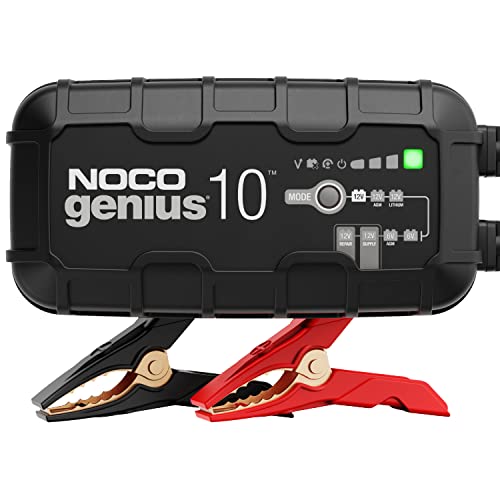
Battery maintainer or battery removal
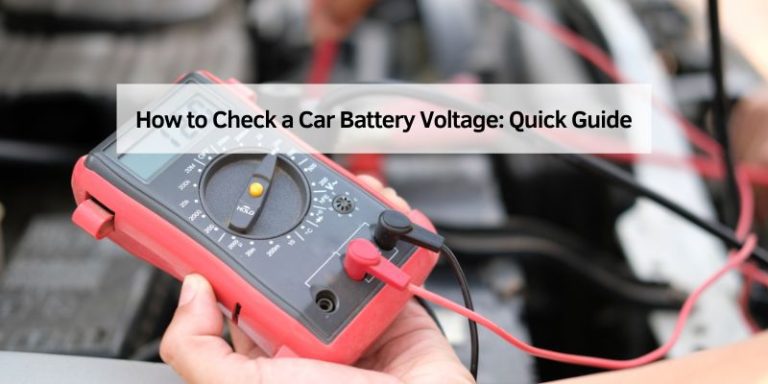
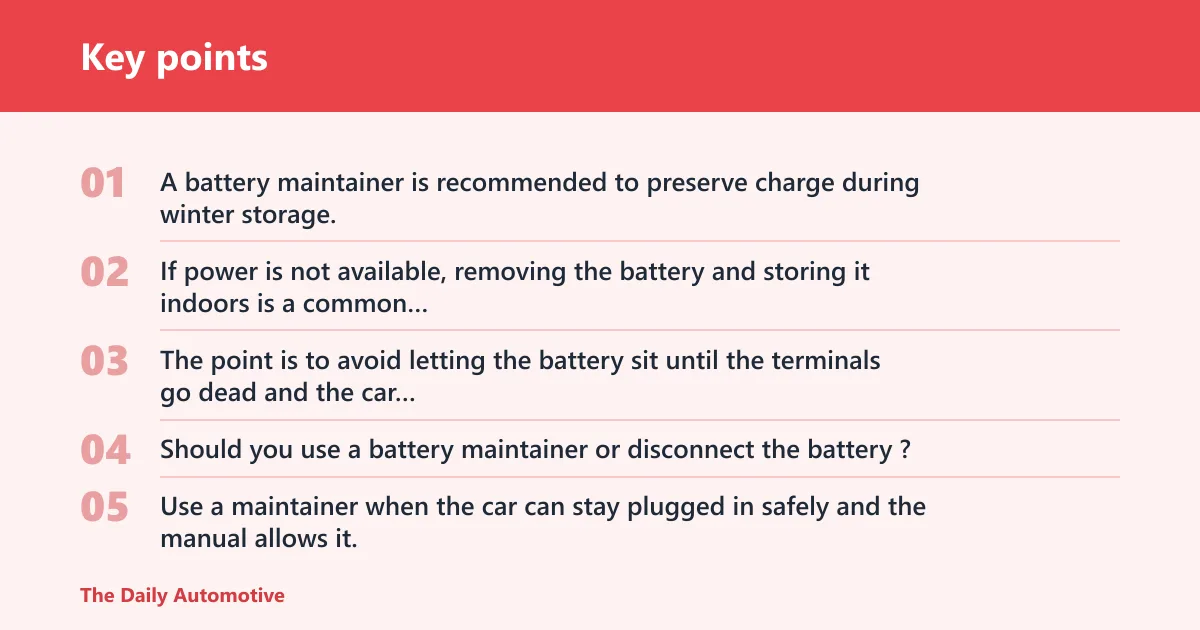
A battery maintainer is recommended to preserve charge during winter storage. If power is not available, removing the battery and storing it indoors is a common alternative. The point is to avoid letting the battery sit until the terminals go dead and the car will not crank in spring.
Should you use a battery maintainer or disconnect the battery? Use a maintainer when the car can stay plugged in safely and the manual allows it. Remove the battery and store it indoors if the car will sit off-site, the outlet is unavailable, or the setup is safer that way.
Fuel stabilizer in a full tank
Fill the fuel tank and add fuel stabilizer before storage. Then drive the car briefly so the treated fuel reaches the lines and injectors. A short drive is better than idle time when conditions and the manual allow it, because it circulates treated fuel and helps dry moisture.
Do you need fuel stabilizer for winter storage? Yes, for storage that lasts more than a short stop. It is especially useful when the car will sit for weeks or months. If the tank is nearly empty, add fuel first, then stabilizer, then drive the car briefly.
Fresh engine oil before long storage
Change the engine oil before long-term storage. Old oil can hold contaminants that sit against internal parts. Fresh oil is recommended before storage, and that simple swap removes one of the easiest sources of corrosion during a long idle period.
Check coolant freeze protection
Check coolant freeze protection strength before winter storage, not only the coolant level. A full reservoir does not tell you whether the mixture can handle freezing temperatures. If the vehicle will face outdoor cold or an unheated garage, that check matters before the car is parked away.
How do you protect tires and brakes?
Tires and brakes need different storage logic than an active car. The parking brake is not the long-term answer, and tire pressure should be checked before the car sits. Long storage can leave tires carrying the same load in one spot for weeks.
Wheel chocks instead of the parking brake
Should the parking brake be set during storage? For extended storage, no. Leaving the parking brake engaged for months is discouraged, and wheel chocks are recommended instead. Chocks help keep the car from rolling while also reducing the chance of brake pads sticking.
Tire pressure and flat-spot risk
Check tire pressure before storage. Tires can lose enough air over time to increase flat-spot risk. Lowering tire pressure to about 25 PSI is not a safe default for most vehicles, because it can make flat-spotting worse unless the manufacturer specifically calls for it.
Should tire pressure be lowered before long-term storage? Not as a general rule. Use the owner’s manual for the right storage pressure, and consider the vehicle’s weight, tire type, and storage length. If the car will sit for many months, some owners use jack stands, but that should follow the manual and the vehicle’s support points.
If the vehicle must remain on its tires, avoid parking on soft ground. A flat, dry surface helps the tires keep their shape and keeps moisture from moving into the undercarriage.
When jack stands make sense
Jack stands can make sense for a car that will sit for a very long time, but only when the manual allows it and the car can be supported at proper points. They are not a casual fix. For most owners, correct inflation, a clean parking surface, and occasional relocation are simpler and safer.
How do you keep mice out?
Mice can damage wires and the air filter in stored cars, so rodent prevention is not cosmetic. Block entry points, remove food sources, and inspect the cabin, engine bay, and exhaust before and after storage. Once mice get a path, they usually take it again.
Seal openings and block the tailpipe
Use steel wool to block other openings where appropriate. The same idea applies to small gaps where rodents can enter. Make sure anything used there is removed before the first start.
How do I keep mice from getting into a stored car? Start with food removal, then block openings and watch for nesting points near the air intake, wiring harnesses, and cabin filter area. Mice usually enter where the car is quiet and undisturbed, not where the bodywork looks obviously damaged.
Wiring, air filter, and cabin entry points
The first failures often show up under the hood and in the cabin filter housing. That is where mice chew insulation, build nests, and leave debris that blocks airflow. A car that smells musty or has shredded insulation needs a full inspection before it is started again.
Traps, mothballs, and cleanup before storage
Traps can help around the storage area, and mothballs are sometimes used as deterrents. Neither one replaces sealing entry points. Clean out the cabin, glove box, console, and trunk so there is nothing edible left behind.
Silica gel can help reduce moisture buildup inside the cabin. Dryer sheets may help with odors, especially when the car sits in an unheated garage where humidity changes from day to day.
What to do after storage
Before the first start, inspect for rodents, remove the cover, check fluids, verify tires, and look under the hood for anything out of place. Then do a first-drive inspection before normal use. A stored car can look fine and still have a weak battery, low tires, or pest damage.
Start with the engine bay, air intake, and exhaust openings. Then check tire inflation, brake response, fluid levels, and lights. If the storage space was outdoor or unheated, look for moisture under the mats and around electrical connections.
Say a coupe sat in an unheated garage for four months and now smells dusty. A torn air filter, a weak battery, and soft tires are all more likely than a major engine problem. Fix the storage-related issues first, then decide whether the car is ready for regular use.
Frequently asked questions
How to store a vehicle for winter
Start with a wash, interior cleanup, fuel stabilization, battery protection, and a tire check. If the car will sit for months, change the oil and verify coolant freeze protection. Then choose a dry, monitored storage spot and use a fitted cover if the car is exposed to dust or moisture.
How to winterize a car for storage
Winterizing for storage means more than topping off fluids. The main tasks are fresh oil, stabilized fuel, battery support, rodent blocking, and the right parking setup. For longer storage, also check tire pressure, use wheel chocks, and confirm the storage environment is dry and secure.
What should I do before putting my car in winter storage?
Before storage, wash and dry the car, change the oil if the storage will be long, fill the tank, add stabilizer, and address the battery. Then confirm the tire pressure, decide on wheel chocks, and block rodents at likely entry points. Finish with a fitted cover if the car needs one.
Should I use a battery maintainer or disconnect the battery?
Use a battery maintainer if safe power is available and the manual allows it. If not, disconnecting and removing the battery for indoor storage is the better option. The goal is the same in both cases: keep the battery from going flat during storage.
Should the parking brake be set during storage?
No, not for extended storage. Leaving the parking brake engaged for months is discouraged, and wheel chocks are recommended instead. That approach reduces the chance of brake pads sticking and avoids leaving the brake system clamped for the whole storage period.
How do I keep mice from getting into a stored car?
Remove food, seal openings where appropriate, and block the tailpipe and other entry points with steel wool. Then inspect the wiring and air filter area before storage and again before the first start. Traps and mothballs can help in the storage area, but they are not the main defense.
Should tire pressure be lowered before long-term storage?
Not as a general rule. Check the owner’s manual first, because lowering pressure can increase flat-spot risk on many vehicles. If the car will sit a long time, use the manufacturer’s guidance, consider the storage surface, and evaluate whether jack stands are allowed and practical.
Products related to this article
Sponsored / affiliate links. As an Amazon Associate I earn from qualifying purchases. I may earn additional commission from eligible campaigns.