3 Best Air Caps for Car Tires (2026): We Compared
The best air caps for car tires are anodized aluminum caps with intact O-rings when you want a tighter seal and better long-term durability than plain plastic. Bad caps can leak air, seize on the valve stem, or crack and go missing. This guide compares three cap types by failure risk, fit, leak protection, and upkeep burden.
Quick comparison
| Product | Badge | Best for | Price | ||
|---|---|---|---|---|---|
 |
DECURCAR Tire Valve Stem Caps 12 Pack Corrosion Resistant –DECURCAR | Our pick | 12 pack · TPMS safe · aluminum | $8.99
Price as of 23 Oct 2026
|
View |
 |
Lucky Shot – 40 Cal Bullet Shell Casing Tire Valve StemLucky Shot | Also great | 4 pack · brass casing · lacquered | $9.99
Price as of 23 Oct 2026
|
View |
 |
Dickno 4PCS Locking Car Tire Valve Stems Caps, Anti-TheftDickno | Upgrade pick | 4 pack · locking · stainless steel | $6.99
Price as of 23 Oct 2026
|
View |
 |
10pcs Metal Tire Valve Stem Caps Slotted Slot Valves CapsEldraqth | Budget pick | 10 pack · brass · O-ring seal | $4.99
Price as of 23 Oct 2026
|
View |
The trade-off is simple: better sealing usually means more upkeep. Anodized aluminum with an O-ring gives the best balance for wet or salty climates, while basic plastic is the lowest-maintenance choice for bulk spares and routine replacement.
Standard Schrader valve stems are what most drivers deal with. The cap threads must match the stem, but on normal passenger vehicles that usually means standard compatibility rather than a special-size hunt.
How we chose
This comparison focuses on failure risk and maintenance burden, not looks. The main criteria are corrosion resistance, seal quality, seizure risk, winter usability, theft risk, and pack value.
We also weighed compatibility with Schrader valve stems, ease of hand-tightened installation, and whether a cap makes routine pressure checks harder. A good cap should protect the valve without becoming the problem.
For product picks, base the ranking on published product details and buyer feedback, not hands-on testing. That keeps the advice tied to what the cap claims to do and where it can fail.
Do tire valve caps actually help prevent air leaks?
Yes, but only in a limited way. A tire valve cap is a secondary seal that helps keep dust, moisture, and corrosion out of the valve core area. It is not a repair for a slow leak, a damaged valve core, or a bead leak.
If a tire keeps losing pressure, the cap is not the first suspect. The leak usually starts at the valve core, the stem, the bead, or the tire itself. A better cap can cut contamination, but it cannot replace a proper repair.
What caps can and cannot seal
Caps with a rubber O-ring or sealing ring can help block air seepage around the cap threads and add another barrier against dirt and water. That matters most when the stem is exposed to rain, salt, slush, or road grime.
They cannot stop a failing valve core from leaking. They also cannot fix a stem that is cracked, damaged, or hard to service. If pressure drops continue after a cap swap, the cap is not the cure.
Where leaks usually start instead
Most tire-pressure complaints point elsewhere. A loose or worn valve core, a corroded stem, or a puncture will matter far more than the cap itself. That is why cap choice should be about protection and maintenance, not miracle sealing.
Say your commuter sedan loses 2 psi over a week in winter. A better cap may keep the stem cleaner, but a pressure check and valve-core inspection still matter more than any cap upgrade.
DECURCAR tire valve stem caps: best for wet or salty climates
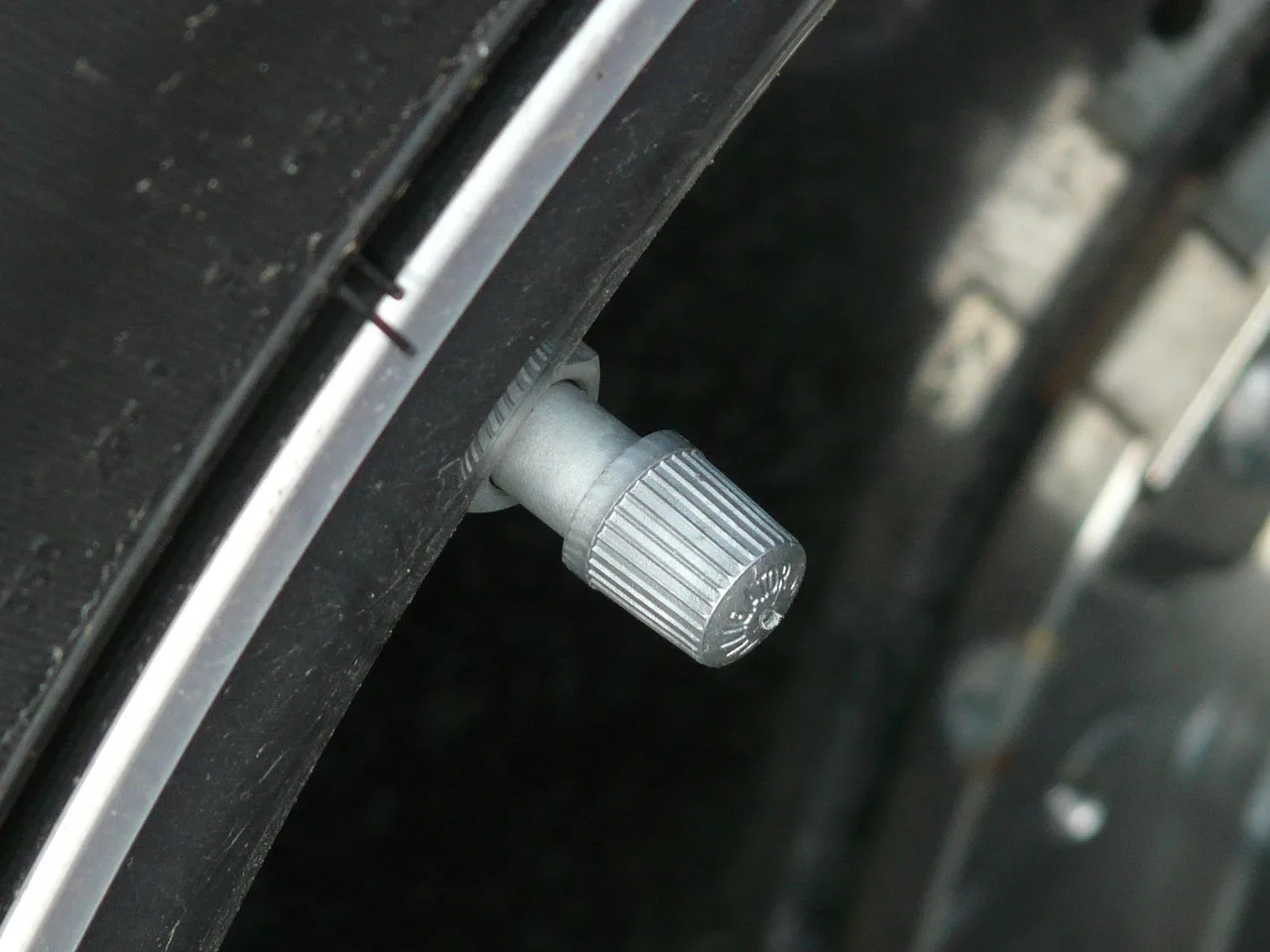
DECURCAR’s 12-pack fits the winter-driver brief better than most budget caps because it combines an aluminum body with a plastic liner and a leak-proof sealing ring. The guide also says it is TPMS safe, which matters because modern internal TPMS sensors should still be easy to service when the cap comes off by hand.
What stands out is the corrosion-resistant approach. Anodized or otherwise protected aluminum is the right direction for wet roads, salted streets, and long exposure to weathering. The plastic liner and sealing ring also reduce the chance of metal-on-metal problems at the stem.
The drawback is the same one that comes with most metal caps: if they are over-tightened, forgotten, or exposed to rough winter grime for long enough, removal can get annoying. Even with a better finish, a metal cap still needs periodic checking so it does not seize.
Corrosion and seizure risk
Aluminum tire valve caps are usually the better pick than plain metal finishes when corrosion matters. Anodized or powder-coated caps resist rust and weathering better than uncoated metal, and the plastic liner gives another layer of protection where the cap meets the stem.
That still does not make them maintenance-free. If the cap is hand-tightened too hard, or if road salt sits on the stem for months, removal can become sticky. Gentle hand-tightening matters here.
Where the O-ring helps
Rubber O-rings or sealing rings help in two places: they block moisture and dust better, and they can reduce the small air path that a plain cap leaves open. That is useful on a cap that sees rain, snow, or repeated washdowns.
The ring is a wear item, though. If it dries out, splits, or falls out, the cap loses much of its advantage. At that point, it is a cap with metal housing and less useful sealing value.
Are tire valve caps universal for cars, trucks, and motorcycles?
Mostly yes, as long as the cap threads match the Schrader valve stem. That is the standard valve type on most cars, SUVs, motorcycles, bicycles, and many trucks. The bigger issue is not vehicle type; it is thread fit, stem condition, and easy access.
External caps usually do not interfere with internal TPMS sensors. The real compatibility check is whether the cap can be removed quickly during pressure checks and whether the stem threads are in good shape. If a cap binds, it is the wrong cap for that stem.
Schrader valve stem fit
On standard passenger vehicles, Schrader compatibility is the normal case. You do not need a special stem-size chart for ordinary tire caps. What you do need is a cap that threads on cleanly without cross-threading or wobble.
If the stem is damaged, corroded, or stripped, even a good cap can feel wrong. In that case, fix the stem or replace the valve hardware instead of forcing a tighter cap.
TPMS access check
TPMS generally lives inside the wheel, so the cap itself is not the problem. The practical concern is access. A cap that is too small, too tight, or hard to grip makes routine pressure checks more annoying than they should be.
A common first-timer mistake is buying a fancy cap that looks sturdy but takes pliers to remove after a winter of road salt. That is not a durability win. It is a maintenance problem waiting to happen.
Plastic sealing-ring cap: best for cheap leak resistance
Plastic sealing-ring caps are the middle ground. They cost less than many metal options, and some designs are dustproof and waterproof enough for daily use. They are a better buy than basic plastic when you want a little extra sealing without adding much corrosion risk.
Compared with plain plastic, the ring helps them hold up better against moisture and grime. Compared with anodized aluminum, they usually give up some durability and feel. For commuters, that trade-off can make sense.
Why some plastic caps seal better than basic caps
A sealing ring helps a plastic cap sit more securely on the stem and adds a small barrier against dust and water. That can be useful in rain, mud, and winter slush, especially when the cap is checked and replaced before the ring wears out.
The guide for this type also describes the caps as dustproof and waterproof. That is the right claim to focus on: protection from contamination, not pressure recovery from a leak elsewhere in the wheel.
Crack resistance and wear limits
Plastic is budget-friendly, but it can crack, soften, or wear faster than metal. Cold weather makes that worse. Repeated removal for pressure checks can also chew up the threads or the sealing ring sooner than you would expect.
That means plastic sealing-ring caps are best when you value easy replacement more than long service life. They are not the strongest choice for salted roads, but they are often easier to live with than a seized metal cap.
Best use for commuters and spares
Suppose a family sedan gets checked every month and lives in a dry climate. A plastic sealing-ring cap is good enough for dust control and easy access, and it avoids the seizure worries that come with some metal caps.
It also makes sense as a spare set. If a cap goes missing, a low-cost replacement is easier to justify than a premium finish that will still be exposed to curbs, car washes, and winter grit.
Will metal tire valve caps corrode on your car?
They can, especially in wet, salty, or winter conditions. Metal caps are not automatically bad, but they are the ones most likely to seize on a brass stem if road salt, moisture, and time work on the threads. That is the main reason finish and fit matter.
Anodized aluminum or powder-coated aluminum lowers that risk. Uncoated or poorly finished metal is where corrosion and removal trouble start to show up. The concern is not only rust; it is the cap becoming stuck to the stem.
Salt, moisture, and winter road grime
Winter driving loads the stem with slush, brine, and grit. That mixture attacks threads and makes later removal harder. A cap that seemed fine in summer can become sticky after one cold season.
This is why corrosion resistance matters so much more than looks. A decent finish can buy time. It cannot make a neglected cap immune to winter grime.
Why brass stems and metal caps can seize
Metal-on-brass contact is where seizure risk becomes real. If the cap and stem stay wet, the threads can bind. That is why a hand-tightened cap is better than one forced down with tools.
Coated aluminum is safer than raw metal here, and a plastic liner can help separate the cap from the stem. The goal is easy removal, not maximum clamping force.
Lucky Shot 40 Cal bullet casing caps: best for style-first buyers
Lucky Shot’s 4-pack is the clear style-first option in this group. It uses a brass casing look, the listing describes a lacquered finish, and the product details say it includes a patented insert to help protect TPMS. For drivers who want a conversation piece, that is its main appeal.
The drawback is maintenance risk. Brass-style caps can be more likely to tarnish over time, and any metal cap still needs care on salted or wet roads. This is not the lowest-hassle choice for winter use.
It also costs more per cap than bulk plastic. That is fine if the look matters to you, but it is hard to justify if your only goal is cheap valve protection.
Seizure risk and finish quality
A lacquered finish helps resist tarnish, but it does not erase seizure risk. If the stem lives in winter road grime, any metal cap can become harder to remove than a plastic one.
That means this is a niche buy. It fits style-first owners who still want a capped valve, not people who want the lowest upkeep possible.
Bulk plastic cap: best for multi-vehicle packs
Bulk plastic caps are the value play. They are simple, light, and easy to replace, which makes them useful for households, spare kits, and fleets. The trade-off is that they usually do less to fight corrosion and can wear faster than metal.
For a driver who only wants dust protection and fast replacement, that may be enough. The point is not premium feel. The point is having enough caps on hand when one disappears.
Why basic plastic still has a place
Plain plastic is easy to install, easy to remove, and unlikely to seize to the stem. That makes it a low-stress choice for frequent pressure checks and for vehicles that see a lot of service work.
It is also the least intimidating option for people who do not want to worry about finish wear or metal corrosion. The downside is that the cap may crack sooner and may not seal as well as a ring-equipped design.
Pack counts and replacement value
Pack size matters more than many buyers expect. A 4-pack is fine for one car. A 5-pack can cover one vehicle with a spare. A 12-pack works better for households or a small garage. A 20-pack or 30-pack makes more sense for fleets, shared vehicles, or repeat replacements.
The sourced product details reflect that spread: DECURCAR is sold as a 12 pack, JUSTTOP’s set includes 12 caps, Outus offers a 20-pack option, and SAMIKIVA is listed as a 30-pack option. Bigger packs lower the cost per cap and reduce the annoyance of a missing piece.
Which one should you buy?
Choose the anodized aluminum cap with an O-ring if you drive in winter, park outside, or deal with salted roads. It is the best fit when corrosion resistance and removal confidence matter more than the lowest price.
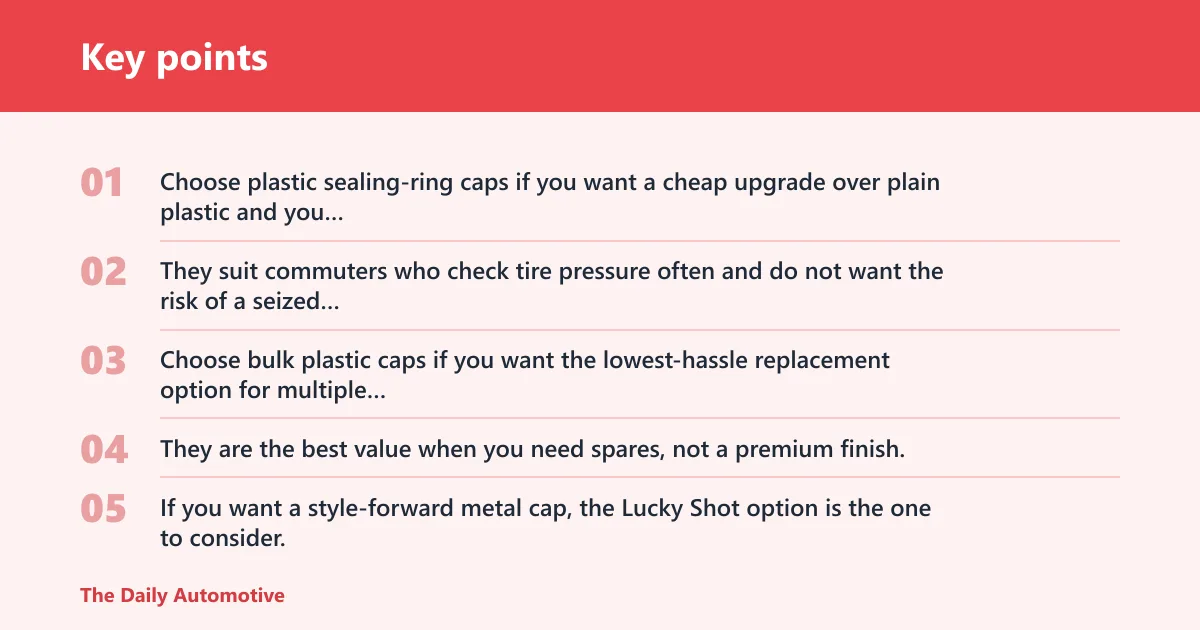
Choose plastic sealing-ring caps if you want a cheap upgrade over plain plastic and you still want some dust-and-water protection. They suit commuters who check tire pressure often and do not want the risk of a seized metal cap.
Choose bulk plastic caps if you want the lowest-hassle replacement option for multiple vehicles. They are the best value when you need spares, not a premium finish.
If you want a style-forward metal cap, the Lucky Shot option is the one to consider, but it is not the low-maintenance pick. It is for appearance first, not winter-proof practicality.
Best pick for winter drivers
Start with DECURCAR. Its aluminum body, sealing ring, and corrosion-resistant approach make the most sense when salt and moisture are the main threat. It is the strongest fit for drivers who want fewer headaches in cold weather.
Best pick for low-maintenance value
Choose a plastic sealing-ring cap if you want a simple balance of price and protection. It is not as durable as anodized aluminum, but it is less likely to seize and easier to replace when a cap goes missing.
Best pick for spares and fleets
Go with bulk plastic if you need quantity. A 20-pack or 30-pack is easier to justify for households with multiple vehicles or for fleets where caps get lost, swapped, or damaged often.
What to buy if you check tire pressure often
Pick the cap that removes cleanly every time. That usually means hand-tightened plastic or a well-finished aluminum cap with a good sealing ring. A cap that fights you during every pressure check is the wrong cap, even if it looks premium.
Choose DECURCAR if… / Choose Lucky Shot if…
Choose DECURCAR if: you drive through wet, salty, or snowy conditions; you want better corrosion resistance; you like the extra dust and moisture protection of a sealing ring; you want a 12-pack with spares for one or two vehicles.
Choose Lucky Shot if: you want a 4-pack with a distinctive look; you are comfortable paying for style; you still want a metal cap with a protective insert; you do not mind more care than you would with plain plastic.
Choose plastic sealing-ring caps if: you want a cheaper upgrade over basic caps; you remove caps often for pressure checks; you prefer lower seizure risk over a premium finish; you need a middle-ground choice for daily driving.
Choose bulk plastic if: you are buying for several vehicles; you want the lowest replacement burden; you care more about dust protection than long-term metal durability; you want to keep extra spares in the glovebox or tool kit.
Frequently asked questions
What are the best air caps for car tires?
The best air caps for car tires are anodized aluminum caps with intact O-rings when you want the strongest mix of corrosion resistance, seal help, and long-term durability. For low-cost replacements, plastic sealing-ring caps are a good second choice. Basic plastic works best when you want quantity and easy replacement.
Are aluminum tire valve caps better than plastic?
Usually yes for durability and weather resistance, especially if the finish is anodized or powder-coated. Aluminum caps are less likely to crack than plastic, but they can seize on the stem in wet or salty conditions if they are over-tightened or left too long. Plastic is easier to replace.
Will metal tire valve caps corrode on my car?
They can, especially in winter climates with road salt, slush, and repeated moisture. The risk is not only corrosion but sticking to the stem, which makes removal harder later. A corrosion-resistant finish and hand-tightened installation lower the risk, but they do not remove it completely.
How many tire valve caps should I buy?
For one vehicle, a 4-pack or 5-pack is usually enough if you want one spare. For a second car or motorcycle, a 12-pack gives more flexibility. A 20-pack or 30-pack makes more sense for households with multiple vehicles, fleets, or drivers who expect occasional replacements.
Products related to this article
Sponsored / affiliate links. As an Amazon Associate I earn from qualifying purchases. I may earn additional commission from eligible campaigns.