Are Car Washes Safe: Proven Essential
Yes, car washes are generally safe and essential for maintaining your vehicle’s appearance and protecting its paintwork from damage. Modern automatic car washes use advanced technology and gentle materials to clean effectively without harming your car.
Washing your car can seem like a chore, but keeping it clean is really important. It’s not just about looks; dirt and grime can actually hurt your car over time. Many people wonder if those automatic car washes that spin brushes and spray water are actually good for their car, or if they might cause damage. It’s a common worry, especially if you like to keep your car in great shape. Don’t worry, I’m here to help! We’ll break down exactly why car washes are a good idea and how they work safely to keep your ride sparkling and protected.
Why Regular Car Washing is Essential for Your Vehicle
Keeping your car clean is more than just making it look shiny and new. It’s a vital part of protecting your investment and ensuring its longevity. Dirt, mud, salt, bird droppings, and tree sap can all be nasty little enemies to your car’s paint and undercarriage. Left unchecked, these elements can break down protective coatings, cause rust, and even damage the metal underneath.
Think of it like taking care of your skin. You wouldn’t let dirt and grime build up for months, right? Your car’s paint is its protective layer, and a regular wash is like a spa day for it. This isn’t just for show; it’s a practical way to prevent costly repairs down the road. Choosing the right way to wash can make all the difference.
Understanding Different Types of Car Washes
When you think of car washes, a few images might pop into your head: the noisy automatic tunnel, the self-service spray bay, or maybe even washing it yourself in your driveway. Each has its own way of cleaning your car, and understanding them helps you decide which is best for your vehicle.
Automatic Car Washes: The Tunnel Experience
These are the most common type of automated car wash. You drive your car into a long tunnel, and it gets pulled through by a conveyor system or pulled by its own wheels. Along the way, your car encounters a series of cleaning stations:
- Pre-soak: Sprays that loosen tough dirt and grime.
- Washing Apparatus: This is where the brushes or soft cloths come in. Modern systems use soft cloth, foam, or synthetic materials designed to be gentle on paint.
- Rinsing: High-pressure water jets to remove soap and remaining dirt.
- Drying: Powerful air blowers to dry the car.
The technology in these washes has come a long way. The “spinning brushes” of the past were often made of stiff materials. Today, most reputable automatic washes use soft cloth, foam strips, or microfiber materials that are much less likely to scratch your paint. Many also use sophisticated sensor systems to adjust to your car’s shape, ensuring even coverage without excessive force.
For more information on how automatic car washes work, you can look at resources from the European Automobile Manufacturers’ Association (ACEA) which often discuss vehicle maintenance standards and best practices.
Self-Service Car Washes: The DIY Spray Bay
These are often coin-operated bays where you can use high-pressure spray wands and foaming brushes. This gives you more control over the cleaning process. You typically have options for different cycles:
- Rinse: For a quick wash.
- Soap: To apply detergent.
- Wax: A protective coating.
- Drying: Often air dryers or a ‘spot-free rinse’ option.
The key here is how you use the equipment. The spray wands are powerful, so keeping a good distance from the surface is important. The foaming brushes can be useful, but it’s generally recommended to use them lightly or even skip them if you’re worried about potential scratches, especially if the brush looks dirty.
The Manual Wash: Your Driveway or Local Car Wash Bay
Washing your car yourself in your driveway or using a dedicated wash bay with your own buckets and sponges is the traditional method. This allows for the most control and the gentlest touch, provided you use:
- Two buckets (one for soapy water, one for rinsing your wash mitt).
- A clean, high-quality wash mitt (microfiber is excellent).
- pH-neutral car wash soap.
- Clean drying towels (microfiber again).
This method is considered the safest by detailing enthusiasts because you can be very deliberate about each step and avoid abrasive materials. However, it requires more time and effort. Some local car wash businesses also offer bays where you can use your own supplies, combining the convenience of the bay with the gentle care of manual washing.
Are Car Washes Safe for Your Car’s Paint?
This is the big question! The safety of car washes, particularly automatic ones, often comes down to their design, materials, and maintenance. The primary concern for car paint is scratching or swirling. These can happen if:
- Abrasive materials are used: Old, stiff brushes that haven’t been replaced can trap dirt and debris, acting like sandpaper on your paint.
- Dirt isn’t rinsed off properly: If the car isn’t adequately pre-soaked or rinsed, grit can be carried around by the brushes or cloths.
- Improper maintenance: Car wash equipment needs regular cleaning and maintenance to prevent contamination.
However, most modern automatic car washes have addressed these issues. They use:
- Soft Cloth or Foam: These materials are designed to conform to your car’s shape and lift dirt without scratching. Many use a system similar to detailing cloths.
- High-Pressure Water: Powerful jets are essential for thoroughly rinsing away dirt and detergent.
- Quality Detergents: pH-neutral soaps are used to break down grime effectively and safely.
- Regular Maintenance: Reputable car washes clean and replace their equipment regularly to ensure they are no longer holding abrasive particles.
When choosing an automatic car wash, look for ones that explicitly state they use soft cloth or foam. A quick look at their equipment can also tell you a lot. If the brushes look old, matted, or dirty, it might be best to steer clear.
Potential Risks and How to Mitigate Them
While generally safe, there are a few potential risks associated with car washes, especially if you’re not careful or if the facility isn’t well-maintained.
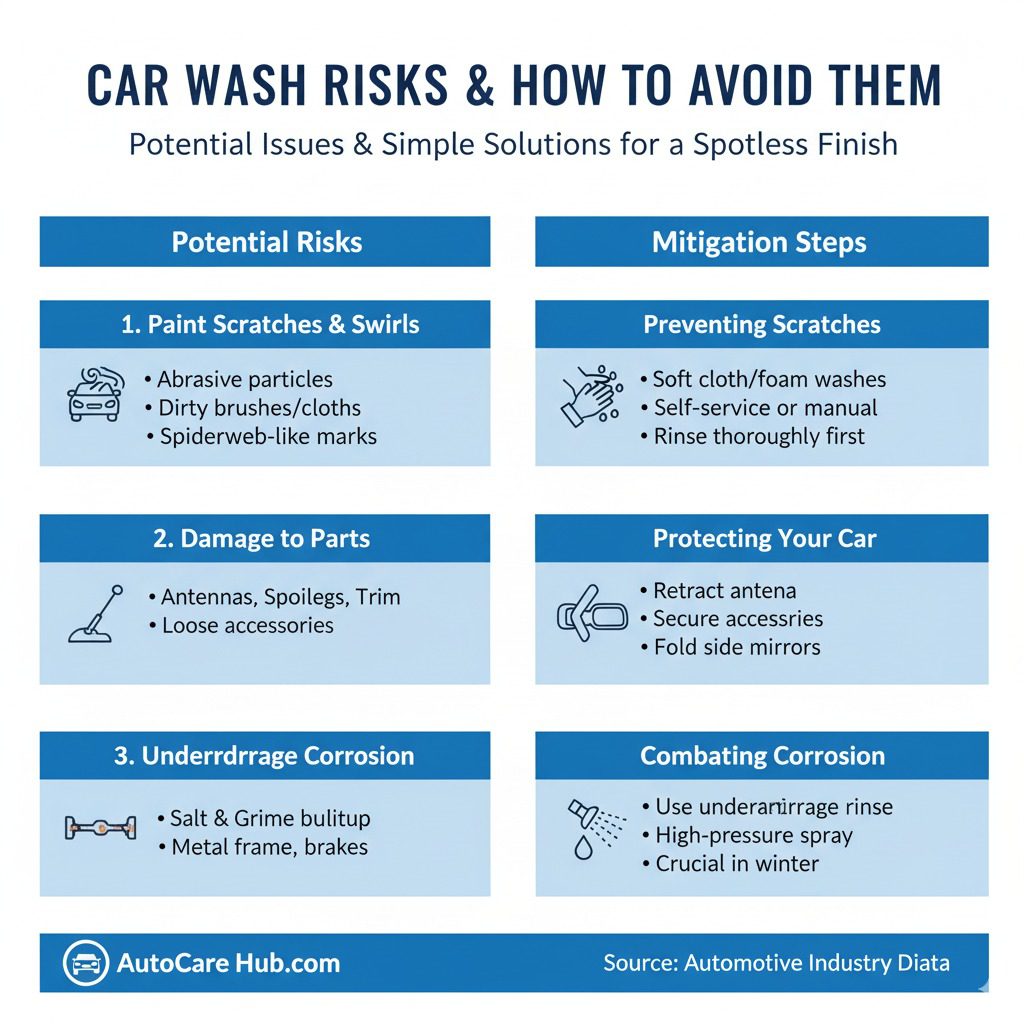
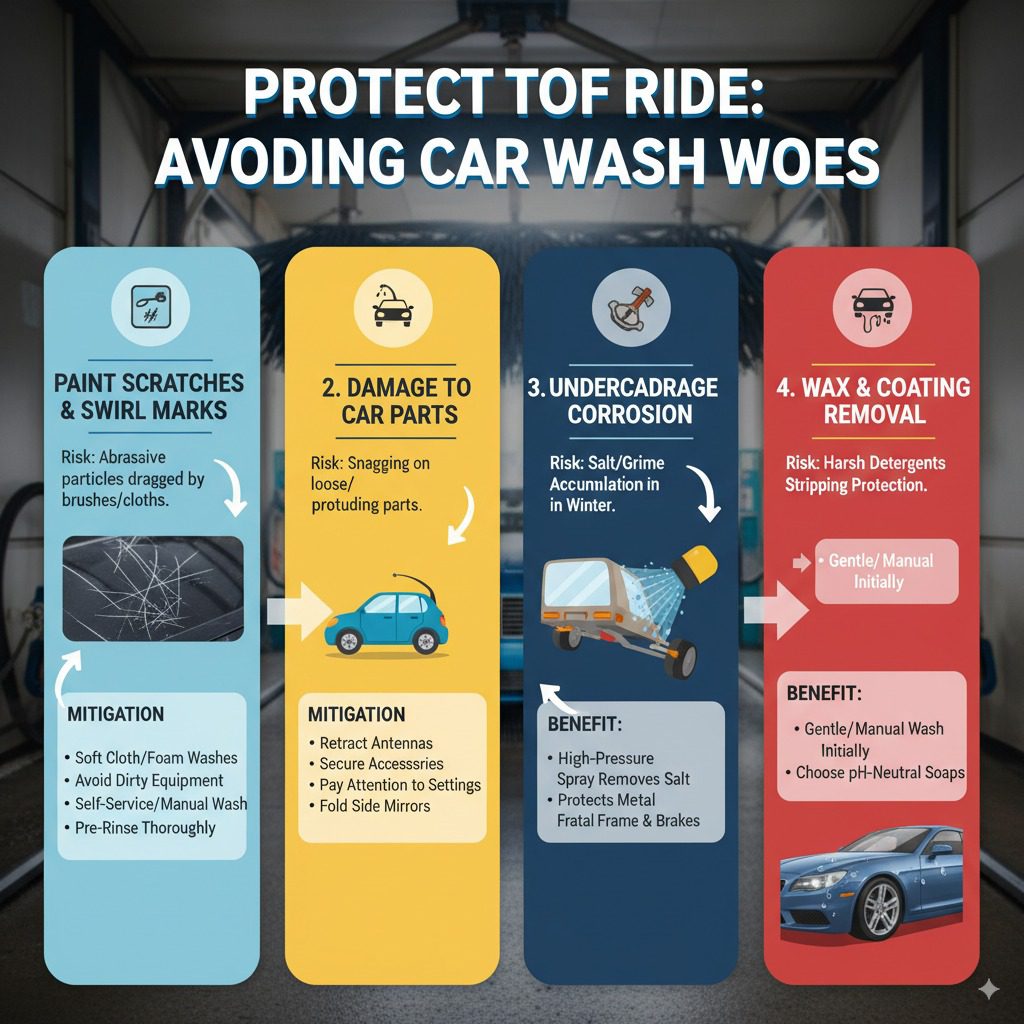
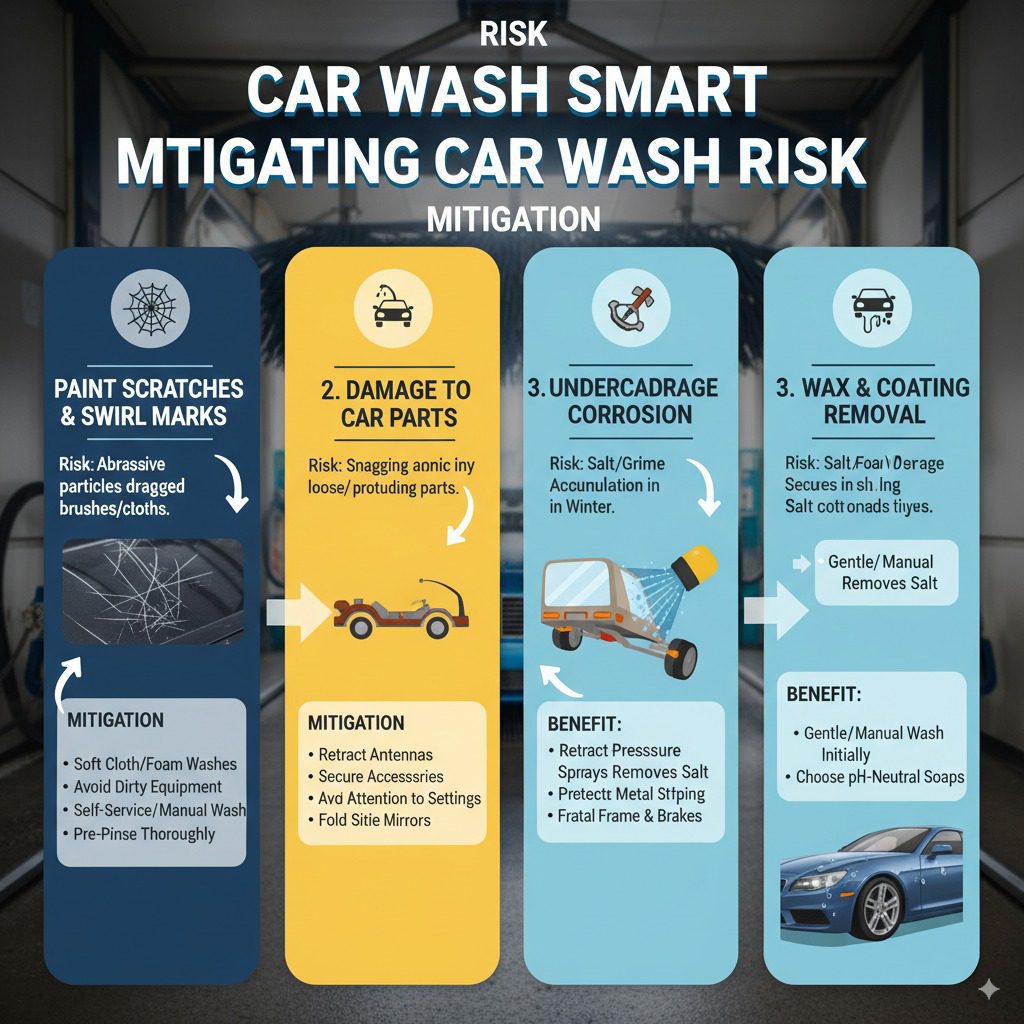
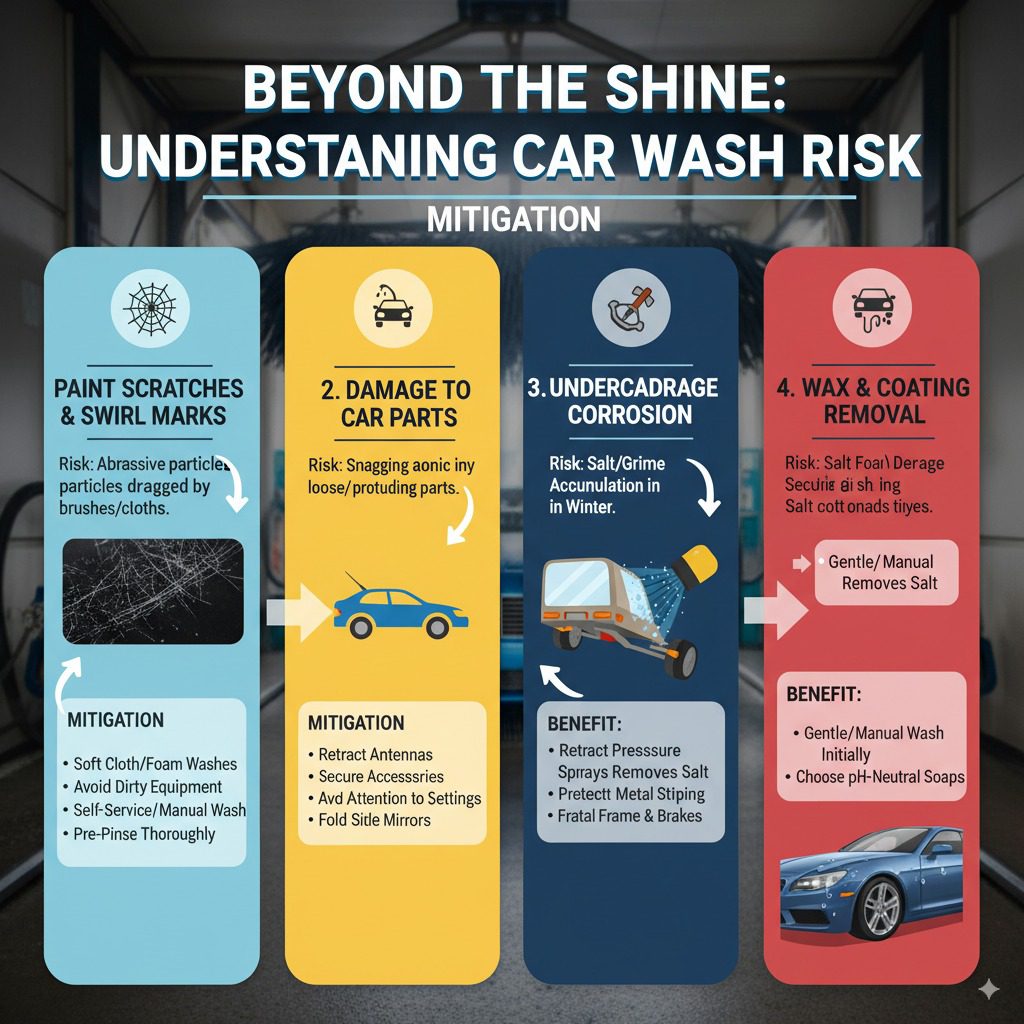
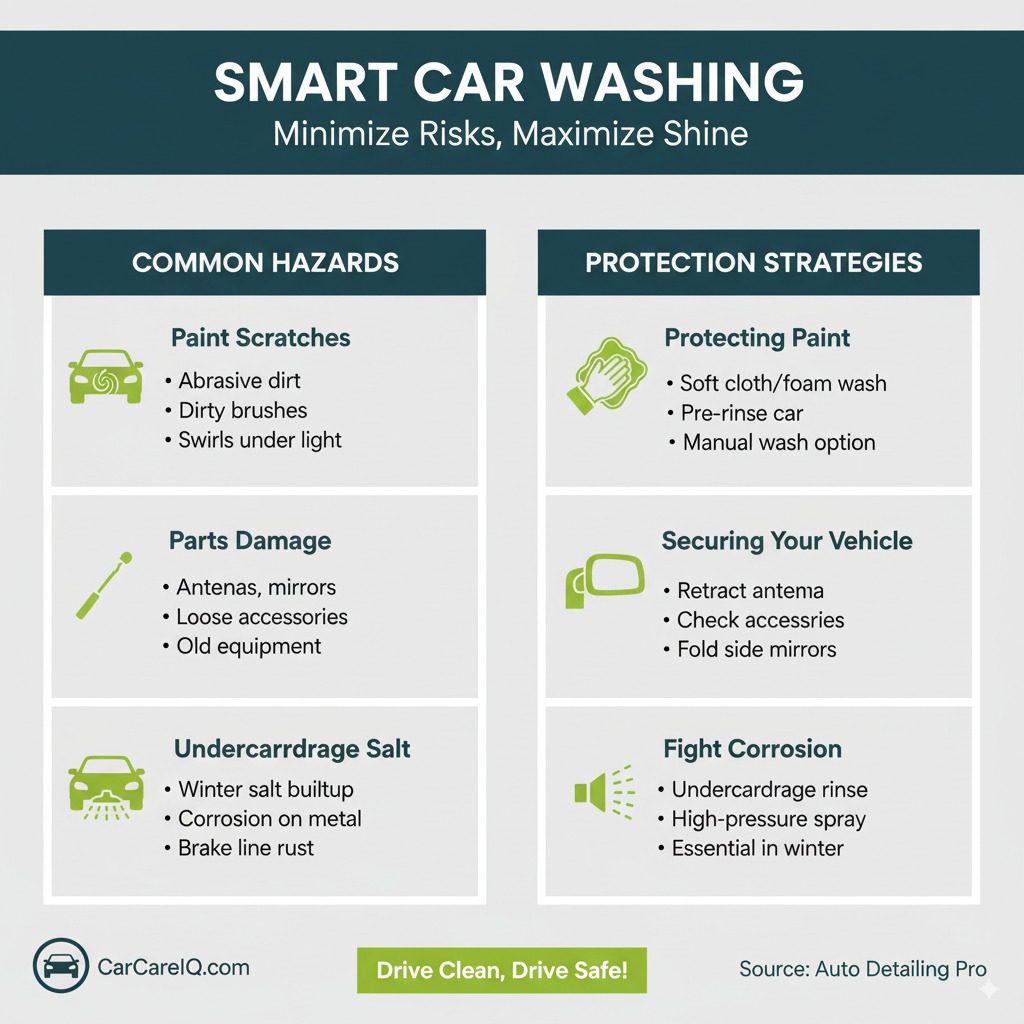
1. Paint Scratches and Swirl Marks
This is the most common concern. It happens when abrasive particles are dragged across the paint by brushes, cloths, or even drying mitts. These look like fine, spiderweb-like scratches, especially visible under bright light.
Mitigation:
- Choose car washes that advertise using soft cloth, foam, or tire-mounted friction.
- Avoid places where the equipment looks visibly dirty or worn.
- Consider self-service bays or manual washing if you have a very delicate or show-car finish.
- If using a self-service bay, rinse your car thoroughly yourself before using the brush, and keep the spray wand a good distance away.
2. Damage to Car Parts (Antennas, Spoilers, Trim)
Older or poorly designed automatic washes might snag on loose or protruding parts of your vehicle. Modern systems are much better at detecting these, but it’s not impossible.
Mitigation:
- Retract or remove external antennas if possible.
- Check that any aftermarket accessories like roof racks or spoilers are securely attached.
- Some car washes have settings or instructions for specific vehicle types. Pay attention.
- Folding in side mirrors is a good practice if you drive a wider vehicle.
3. Undercarriage Corrosion from Salt
In regions where roads are salted during winter, the undercarriage of your car can accumulate corrosive salt. Automatic washes, especially those with an undercarriage rinse option, are excellent for preventing this.
How it helps: The high-pressure spray under the car blasts away salt and grime that can eat away at the metal frame, suspension parts, and brake lines. This is a crucial benefit often overlooked.
4. Wax and Coating Removal
Some aggressive wash cycles or harsh detergents could potentially strip off protective waxes or sealants. However, most car washes use pH-neutral soaps specifically designed to clean without being overly harsh.
Mitigation:
- If you’ve just applied a premium ceramic coating or high-end wax, you might opt for a gentler wash or manual wash for the first few weeks.
- Always choose car washes that mention using gentle or pH-neutral soaps.
The Benefits of Using a Car Wash
Beyond just looking good, regular car washing offers tangible benefits for your vehicle’s health and your experience as a driver.
Keeping Your Car Looking New Longer
A clean car is a car that generally ages better. By removing contaminants, you prevent them from etching into or degrading your paint and clear coat. This preserves the finish, which is also a factor in your car’s resale value.
Preventing Rust and Corrosion
As mentioned, dirt, mud, and especially road salt can accelerate rust. A clean undercarriage is just as important as a clean body. Regular washes, especially during winter months, are a proactive defense against rust formation. Visit the National Highway Traffic Safety Administration (NHTSA) for general vehicle maintenance advice that includes keeping your vehicle clean for safety and component longevity.
Improved Visibility and Safety
Dirty windows, mirrors, and headlights can significantly impair your vision, especially at night or in bad weather. A clean car means clearer windows, brighter headlights, and safer driving conditions for you and others on the road.
Protecting Your Car’s Resale Value
A well-maintained vehicle, both mechanically and aesthetically, will always fetch a higher price when it’s time to sell or trade it in. Consistent cleaning shows that you’ve taken good care of the car, which buyers appreciate.
Convenience and Time-Saving
For busy individuals, automatic car washes are a lifesaver. They offer a quick and efficient way to get your car clean without dedicating hours of your weekend to washing it yourself.
Comparing Car Wash Methods: A Quick Guide
Here’s a simple comparison to help you choose:
| Method | Pros | Cons | Best For |
|---|---|---|---|
| Automatic Tunnel (Soft Cloth/Foam) | Fast, convenient, effective undercarriage cleaning, protective wax options. | Slight risk of minor swirls if not top-tier, can’t control specific areas. | Daily drivers, busy individuals, winter driving. |
| Self-Service Bay | More control, customizable cycles, budget-friendly. | Requires more effort, potential for user error with equipment, may not have best drying. | Those on a budget, wanting some control, washing off heavy off-road mud. |
| Manual Wash (DIY or Bay) | Maximum control, gentlest on paint, thorough cleaning. | Time-consuming, requires supplies and space, can be messy. | Car enthusiasts, those with sensitive or classic cars, meticulous detailers. |
Best Practices for Using Car Washes
To get the best and safest clean for your car, follow these simple tips:
- Choose the Right Wash: Opt for facilities that clearly use soft cloth or foam materials. Look for signs of good maintenance.
- Pre-Rinse if Possible: If using a self-service bay or your own hose, give the car a good rinse to remove loose grit before using brushes or mitts.
- Remove or Secure Accessories: Stow away antennas, roof racks, or loose trim.
- Fold Mirrors: If your car is wide, folding in side mirrors can prevent snags.
- Skip the Undercarriage Wash if it’s Dry Season: If you’re not dealing with salt or heavy mud, you might skip the undercarriage wash to avoid unnecessary water exposure, though in most modern washes it’s quite beneficial.
- Inspect After Washing: After the wash, take a quick look for any missed spots or if anything seems out of place.
- Consider a Detailer: For the most pristine finish or if you’re worried about safety, hire a professional detailer. Professional detailers use extremely safe methods and high-quality products; see resources from organizations like the International Detailing Association (IDA) for more on professional standards.
Frequently Asked Questions (FAQ) About Car Washes
Q1: Will automatic car washes scratch my paint?
Reputable modern automatic car washes use soft cloth, foam, or microfiber materials that are designed to be safe for your paint. Older, poorly maintained washes with abrasive brushes are more likely to cause scratches.
Q2: Is it safe to wash my car in freezing temperatures?
It’s generally not recommended to wash your car in freezing temperatures if you do it yourself, as water can freeze in door locks, windows, and on brake components. Automatic car washes usually have drying cycles and operate in warmer tunnels, making them a safer option in cold weather, but it’s still best to avoid them during extreme cold snaps if possible, or ensure the facility is well-equipped for winter.
Q3: Should I remove my antenna before going through an automatic car wash?
If your car has a traditional whip-style antenna that can be unscrewed, it’s a good idea to remove it. Modern cars often have “shark fin” or integrated antennas that are very secure and don’t need removal.
Q4: What’s the difference between a soft cloth wash and a brush wash?
Soft cloth and foam washes use gentle materials that flex and conform to your car’s shape, lifting dirt without excessive pressure. Traditional brush systems can be harsher and, if not properly maintained, may hold trapped dirt, leading to scratches.
Q5: How often should I wash my car?
It’s recommended to wash your car at least once every two weeks, and more often if it’s exposed to harsh elements like salt, bird droppings, or tree sap. Regular washing prevents damage and maintains your car’s appearance.
Q6: Are “touchless” car washes better?
Touchless car washes use strong detergents and high-pressure water jets instead of physical brushes or cloths. They are very safe for paint as there’s no physical contact, but they may not be as effective at removing stubborn grime or road film compared to washes that use gentle friction materials.
Conclusion: A Clean Car is a Protected Car
So, are car washes safe? The answer is a resounding yes, especially when you choose wisely and understand how they work. Modern automatic car washes are engineered to clean efficiently and protect your vehicle’s finish. They are not just about making your car look good; they are an essential part of protecting your car from the elements, preventing rust, and maintaining its value over time.
By opting for washes that use soft cloth or foam, taking simple precautions with external accessories, and washing regularly, you’re actively prolonging the life and beauty of your car. Whether you choose the convenience of an automatic tunnel, the control of a self-service bay, or the gentle touch of a manual wash, keeping your car clean is smart maintenance. It’s a small effort that pays big dividends in how long your car looks great and how reliably it performs.