Auto Accesorios vs Auto Parts Key Differences
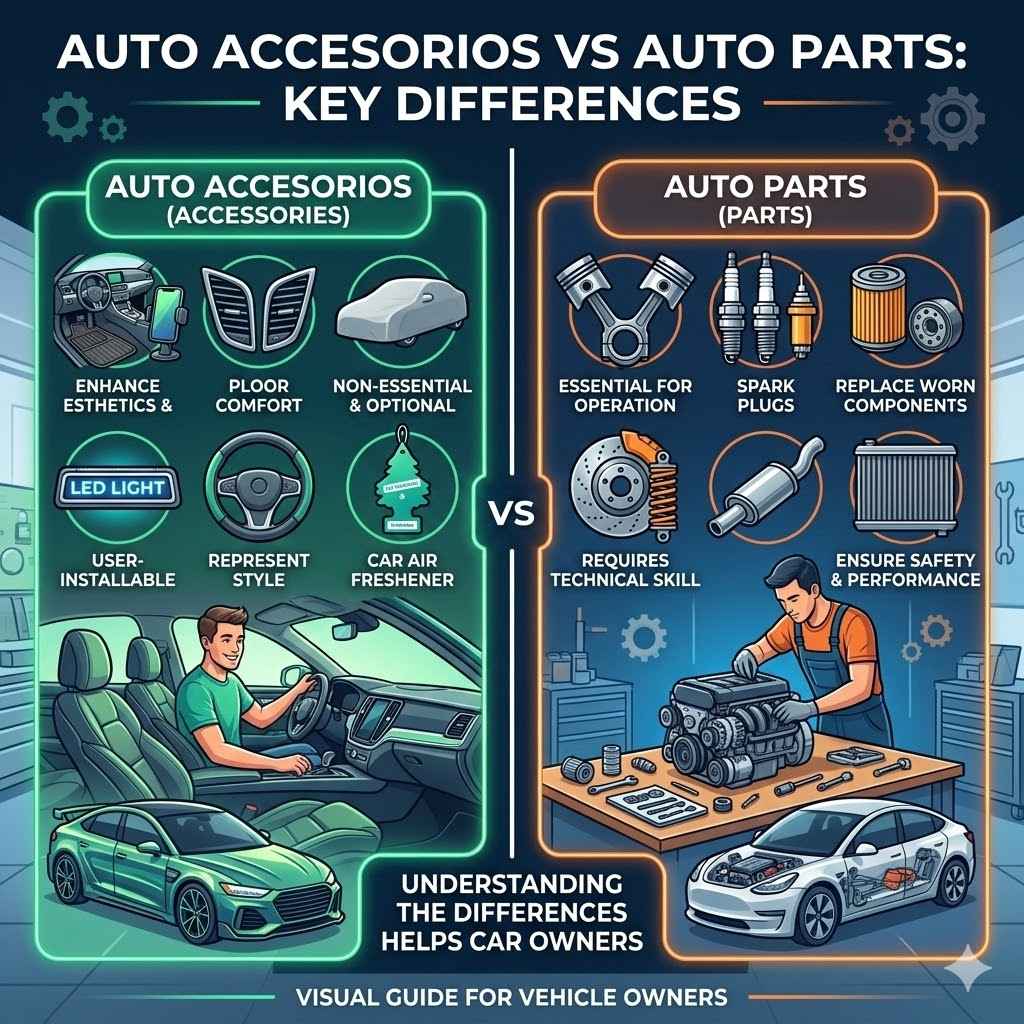
Sometimes figuring out car items can be a little tricky, especially when words sound alike but mean different things. You might wonder about Auto Accesorios vs Auto Parts Key Differences Explained. It’s easy to get confused!
This post will make it super simple. We’ll walk through everything step-by-step so you know exactly what you need for your car. Get ready to learn the clear differences!
Understanding Auto Accesorios vs Auto Parts
This section will clarify the basic meanings and uses of the terms “Auto Accesorios” and “Auto Parts.” We will explore how these terms are commonly used in different regions and contexts, helping you grasp the core distinction right from the start. Think of it as laying the groundwork for everything else you’ll learn.
What Are Auto Parts
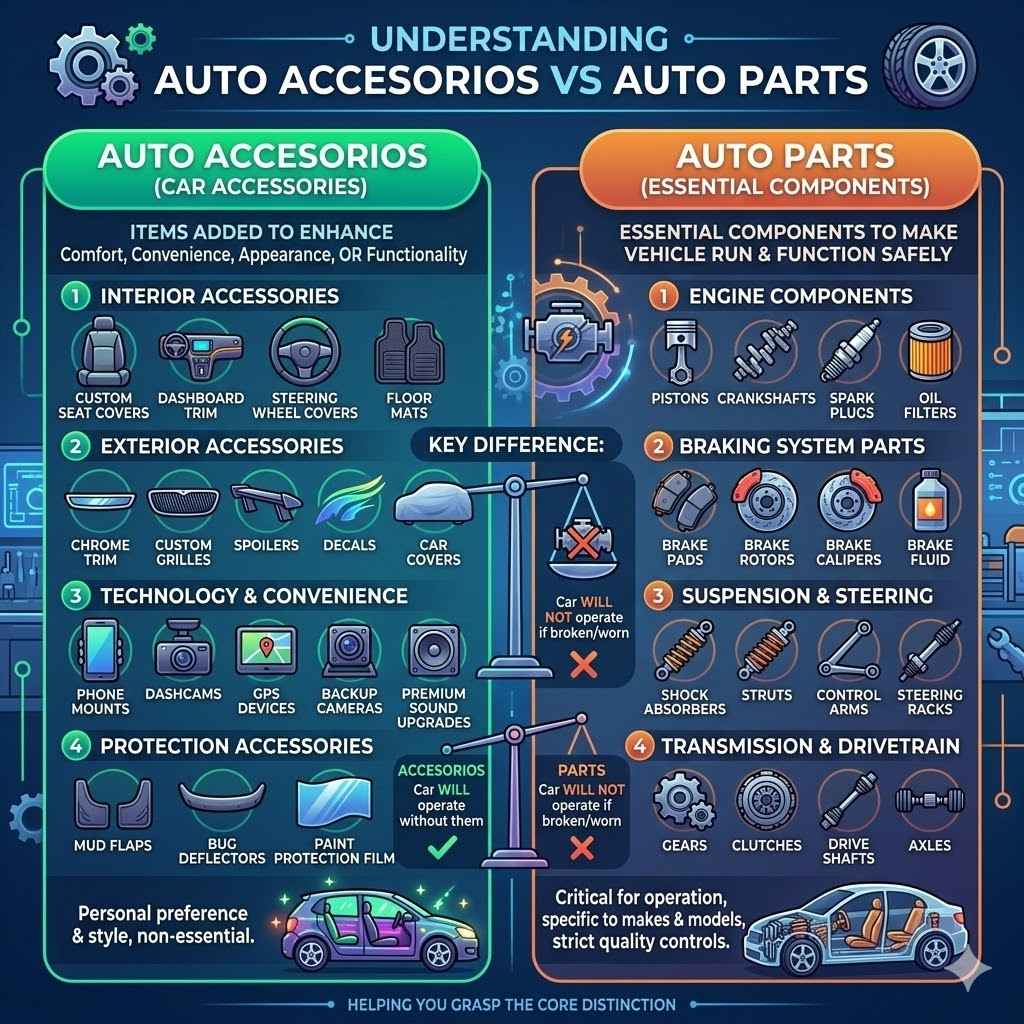
Auto parts are the essential components that make a vehicle run and function safely. These are the items that, if broken or worn out, need to be replaced to keep the car operational. They are fundamental to the car’s mechanical and structural integrity.
For example, your car’s engine, brakes, transmission, tires, and exhaust system all consist of various auto parts. If your brake pads are worn, you need new brake pads, which are auto parts. If your car won’t start because of a faulty starter motor, that starter motor is an auto part that needs replacing.
These parts are designed for specific makes and models of vehicles, ensuring proper fit and performance. They are typically manufactured with strict quality controls and are vital for a car’s safety and performance.
Engine Components: These include parts like pistons, crankshafts, spark plugs, and oil filters. They are all necessary for the engine to combust fuel and generate power. Without functioning engine components, the car simply cannot move.
Braking System Parts: This category covers items such as brake pads, brake rotors, brake calipers, and brake fluid. These parts work together to slow down or stop the vehicle safely. A failure in any of these can have serious safety consequences.
Suspension and Steering Parts: Examples include shock absorbers, struts, control arms, and steering racks. These components ensure a smooth ride, stable handling, and precise control of the vehicle’s direction.
Transmission and Drivetrain Parts: This includes gears, clutches, drive shafts, and axles. They transfer power from the engine to the wheels, allowing the car to move.
What Are Auto Accesorios
Auto accesorios, often translated as car accessories, are items added to a vehicle to enhance its comfort, convenience, appearance, or functionality beyond its basic operational needs. They are not typically essential for the car to drive but improve the overall driving experience or the car’s aesthetic.
Think about things like floor mats, seat covers, sunshades, phone holders, or even custom spoilers. These items don’t make the car run, but they can make your life easier or make your car look cooler. They are often a matter of personal preference and style.
Accesorios can range from very simple add-ons to more complex electronic systems. The key difference is that the car will still operate without them, whereas essential auto parts are critical for operation.
Interior Accessories: This includes items like custom seat covers, dashboard trim, air fresheners, steering wheel covers, and floor mats designed to protect the interior or add style.
Exterior Accessories: Examples are decorative items like chrome trim, custom grilles, spoilers, decals, and car covers. These are used to change or enhance the car’s external look.
Technology and Convenience Accessories: This category includes things like phone mounts, dashcams, GPS devices, backup cameras, and premium sound system upgrades. They add features or improve user experience.
Protection Accessories: Items like mud flaps, bug deflectors, and paint protection films fall into this category. They help protect the car’s body from damage or debris.
Key Differences Between Auto Accesorios and Auto Parts
This section directly tackles the core question by highlighting the main distinctions. We will break down the functional purpose, necessity, and typical replacement cycles of each category to provide a clear comparison. Understanding these differences is crucial for making the right purchasing decisions.
Functional Purpose
The primary function of auto parts is to ensure the vehicle operates safely and efficiently. These are the building blocks of a car’s mechanics. Without the correct auto parts, a car cannot perform its fundamental task of transportation.
For example, a water pump is an auto part. Its job is to circulate coolant through the engine, preventing it from overheating. If the water pump fails, the engine will quickly overheat and suffer severe damage.
Auto accessories, on the other hand, are additions that enhance the vehicle but are not vital for its operation. They can improve comfort, aesthetics, or convenience. A custom car stereo system is an accessory.
While it makes listening to music more enjoyable, the car will still drive perfectly fine without it.
Necessity for Operation
Auto parts are absolutely essential for a vehicle to function. They are the components that make the car move, stop, steer, and remain safe. If an auto part fails, it directly impacts the car’s ability to operate.
Think about your car’s tires. They are auto parts. You cannot drive a car without tires.
If your tires are worn out or damaged, you must
Auto accessories are optional. They are added enhancements. Your car will run and drive perfectly well with basic floor mats, but you might choose to buy custom-fit ones for better protection or a nicer look.
The absence of an accessory does not prevent the car from being driven.
| Category | Primary Purpose | Necessity for Operation |
|---|---|---|
| Auto Parts | Ensure vehicle function, safety, and performance | Essential |
| Auto Accesorios | Enhance comfort, convenience, appearance, or functionality | Optional |
Replacement vs. Enhancement
Auto parts are typically replaced when they wear out, break, or become defective. This is a matter of maintenance and repair to keep the vehicle in working order. The lifespan of auto parts varies greatly depending on the part and driving conditions.
For instance, brake pads are auto parts that wear down over time with use. They need to be replaced periodically to ensure effective braking. Similarly, a timing belt is a critical auto part that has a recommended replacement interval to prevent engine damage.
Auto accessories are usually added to improve or personalize the vehicle. While some accessories might wear out or become damaged, they are generally not part of a scheduled maintenance routine for the vehicle’s core functions. People often buy accessories to upgrade their car’s look or add new features.
Typical Lifespan and Wear
Auto parts are designed with a specific lifespan in mind, often measured in mileage or time. For example, a car battery might last 3-5 years, while engine components can last hundreds of thousands of miles if maintained properly. They are expected to wear down through normal use.
Wear and tear are natural for auto parts. This is why regular inspections and replacements are part of car ownership. A worn-out shock absorber will eventually stop dampening effectively, impacting ride quality and tire wear.
Accessories do not typically have the same wear-and-tear considerations tied to the car’s core function. A car cover might degrade over many years due to UV exposure, but this doesn’t affect how the car drives. A phone mount might break, but it’s an accessory failure, not a car system failure.
Examples and Use Cases
Seeing these terms in action helps solidify their meaning. We will provide clear examples to illustrate when you would need to buy auto parts versus when you would look for auto accessories. This practical approach will make the distinction easy to remember.
Scenario 1 Buying Parts
Imagine you are driving and suddenly hear a loud grinding noise when you press the brake pedal. The brakes feel less effective. This is a clear sign that a critical auto part has failed or is severely worn.
You would need to take your car to a mechanic or a parts store to get
Another example: your car’s check engine light comes on, and the engine starts running rough, perhaps misfiring. A diagnostic scan reveals a faulty oxygen sensor. The oxygen sensor is an auto part that monitors exhaust gases and is crucial for engine performance and emissions control.
Replacing it is necessary to fix the problem.
Scenario 2 Buying Accessories
Consider you want to protect your car’s interior from dirt and spills, especially if you have pets or children. You might go to an auto parts store or an online retailer to buy custom-fit car floor mats or a waterproof seat cover. These are auto accessories.
Perhaps you want to make your commute more enjoyable by listening to podcasts or music with better sound quality. You might decide to purchase a new car stereo with Bluetooth connectivity or a set of upgraded speakers. These are auto accessories that enhance your in-car entertainment experience.
Or maybe you’re planning a long road trip and want to carry extra luggage. You could buy a roof rack or a cargo carrier. These are auto accessories that add storage capacity but are not required for the car to drive.
- A car owner notices their headlights are dim and yellowed. They decide to purchase new, brighter LED headlights. The headlights themselves are considered functional auto parts because they are essential for safe driving at night. However, upgrading to a fancier type of headlight could be seen as an accessory choice if the original ones were still functional.
- A driver wants to keep their car’s dashboard clean and protected from sun damage. They buy a custom dashboard cover. This dashboard cover is an auto accessory.
- Your car’s air conditioning stops blowing cold air. You might need to replace the refrigerant, the compressor, or the condenser. These are all auto parts critical to the AC system’s operation.
Common Misconceptions and Clarifications
It’s common for people to use these terms interchangeably, leading to confusion. We will address these common misunderstandings and provide clear, straightforward clarifications. This will help you avoid buying the wrong items for your needs.
Is a Tire an Auto Part or an Accessory?
A tire is definitively an auto part. It is essential for the vehicle to move, stop, and maintain traction. Without tires, a car is immobile and unsafe.
Tires are designed to wear out and require regular replacement as part of the vehicle’s maintenance.
While you might choose a specific brand or type of tire (e.g., all-season, performance, winter) based on preference or driving conditions, the tire itself is a fundamental component of the car’s functionality.
An accessory, in contrast, would be something like a tire pressure monitoring system that you add to your existing tires, or decorative tire valve caps. These items do not affect the tire’s ability to perform its core function.
What About a Car Stereo?
A car stereo is generally considered an auto accessory. While it significantly enhances the driving experience by providing entertainment, the car will function perfectly well without it. The original factory-installed radio might be considered part of the car’s equipment, but upgrades or aftermarket systems fall under accessories.
If your car’s original stereo system malfunctions and you
The distinction often lies in whether the item is required for the vehicle’s safe and legal operation versus being an added feature for comfort or enjoyment.
Custom Grilles vs. Radiators
This is another area where clarity is helpful. A radiator is a vital auto part. It’s crucial for keeping your engine from overheating by dissipating heat from the coolant.
If your radiator fails, your engine will quickly suffer severe damage.
A custom grille, on the other hand, is an auto accessory. It is purely for aesthetics. It bolts onto the front of the car, usually covering the radiator, but its primary purpose is to change the look of the vehicle.
While some grilles might offer minor aerodynamic benefits, they are not functionally required for the car’s operation or cooling system.
Where to Buy Auto Accesorios and Auto Parts
Knowing the difference is one thing, but knowing where to shop is another. This section will guide you through the different types of retailers and online platforms where you can find both auto parts and auto accessories, and how to choose the best option for your needs.
Specialty Auto Parts Stores
These stores focus exclusively on selling replacement parts for vehicles. They often have a wide selection of parts for various makes and models, from common maintenance items to more specialized components. Staff at these stores are usually knowledgeable about auto parts and can help you find the exact item you need.
Examples include chains like AutoZone, O’Reilly Auto Parts, and Advance Auto Parts in the United States, or Halfords in the UK. They typically have both original equipment manufacturer (OEM) parts and aftermarket alternatives.
Their websites often allow you to search for parts by vehicle make, model, and year, and some even offer online ordering for in-store pickup or delivery. This is usually the best place to go when you know you need a specific part to fix your car.
OEM vs. Aftermarket Parts
When buying auto parts, you’ll often encounter terms like OEM and aftermarket. OEM stands for Original Equipment Manufacturer. These are parts made by the same company that manufactured your car, or by a supplier to that company.
They are designed to meet the exact specifications of your vehicle.
Aftermarket parts are made by companies other than the car manufacturer. They are designed to be compatible with your car but may not be identical to OEM parts. Aftermarket parts are often less expensive than OEM parts, and their quality can vary widely.
Some aftermarket parts are even designed to offer improved performance over OEM parts.
Choosing between OEM and aftermarket depends on your budget, your priorities (e.g., performance, longevity, cost), and the specific part. For critical safety components, many people prefer OEM parts.
Auto Accessory Retailers
These retailers specialize in items that enhance or personalize your vehicle, rather than fix its core functions. You’ll find a wide range of products here, from basic necessities to novelty items.
Examples include dedicated accessory shops, larger auto parts stores that have a significant accessory section, and even general merchandise stores that carry automotive accessories. Online marketplaces also have vast selections.
When shopping for accessories, personal preference, style, and the specific need you are trying to fill (comfort, entertainment, appearance) are the main drivers.
Online Marketplaces
Online platforms like Amazon, eBay, and specialized automotive websites offer a huge selection of both auto parts and auto accessories. The advantage is convenience and often competitive pricing due to the large number of sellers.
You can find everything from a specific engine sensor to custom seat covers. However, it’s important to buy from reputable sellers and to carefully check product descriptions and reviews to ensure you are getting the correct item and good quality.
For both parts and accessories, online shopping allows for easy comparison of prices and features. Always verify the compatibility of parts with your vehicle’s make, model, and year before purchasing.
Manufacturer Dealerships
Car dealerships are the primary source for OEM auto parts. If you need a part that is guaranteed to be an exact fit and meet the manufacturer’s standards, the dealership is the place to go. They will also typically have trained technicians who can install these parts.
Dealerships also often sell manufacturer-branded accessories, which are designed to perfectly complement the vehicle’s design and features. However, both parts and accessories from dealerships tend to be the most expensive option.
This option is best for those who prioritize authenticity and guaranteed compatibility, and for whom cost is less of a concern, or for very specific parts that are hard to find elsewhere.
Tips for Buying Smart
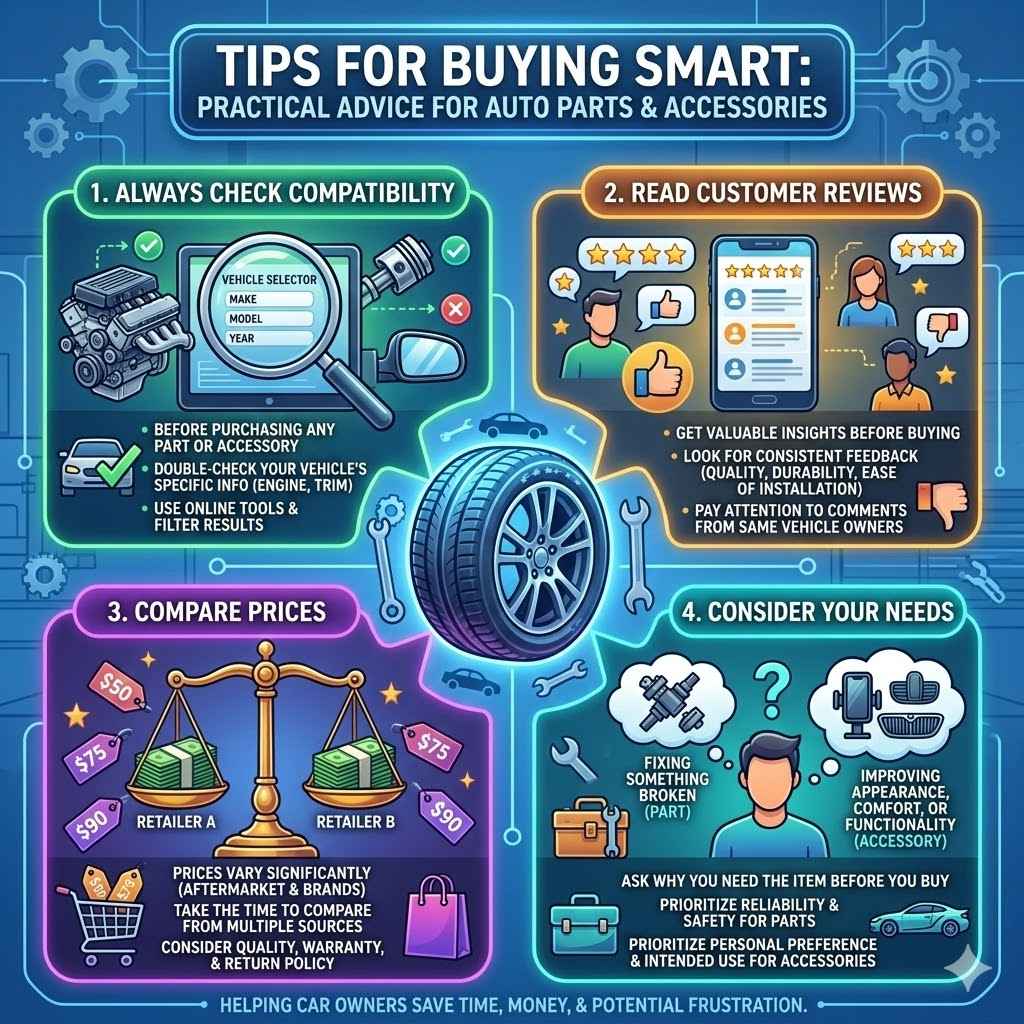
To wrap things up, let’s share some practical advice to help you make informed purchasing decisions. Knowing these tips will save you time, money, and potential frustration when shopping for your car.
Always Check Compatibility
This is perhaps the most critical piece of advice. Before purchasing any auto part or accessory, double-check that it is compatible with your specific vehicle’s make, model, and year. Parts are often designed for particular engines or trim levels.
Most reputable online stores and physical retailers have tools that allow you to input your vehicle information to filter compatible products. Never assume a part will fit; always verify. This is especially important for functional auto parts.
For accessories, compatibility might be about dimensions or mounting methods. For example, a floor mat for a sedan might not fit an SUV.
Read Reviews
Before buying, especially online, take the time to read customer reviews. Reviews can provide valuable insights into the quality, durability, and ease of installation of a product. They can also highlight potential issues that you might not find in the product description.
Look for consistent feedback, both positive and negative. Pay attention to comments from customers who have the same vehicle as you. Reviews can help you differentiate between a good quality part or accessory and a poorly made one.
This is true for both functional parts and aesthetic accessories. A review might tell you that an aftermarket brake pad wears out too quickly, or that a seat cover is difficult to clean.
Compare Prices
Prices can vary significantly between different retailers and brands, especially for aftermarket parts and accessories. Take the time to compare prices from multiple sources before making a purchase.
Remember that the cheapest option isn’t always the best. Consider the quality, warranty, and return policy when comparing prices. Sometimes, paying a little more for a higher-quality item or a reputable brand can save you money in the long run.
This applies to everything from a simple air filter to a complex suspension component, and from a phone holder to a custom exhaust tip.
Consider Your Needs
Before you buy, ask yourself why you need the item. Are you trying to fix something that’s broken (auto part)? Or are you trying to improve your car’s appearance, comfort, or functionality (auto accessory)?
For parts, prioritize reliability and safety. For accessories, prioritize how well they meet your personal preferences and intended use. Understanding your exact need will guide you to the right type of product and the right place to buy it.
Frequently Asked Questions
Question: Are floor mats auto parts or auto accessories?
Answer: Floor mats are considered auto accessories. They are added to improve the interior’s appearance and protect the original carpet from dirt and wear, but the car will function perfectly without them.
Question: If my car’s engine is making a strange noise, do I need auto parts or auto accessories?
Answer: If your car’s engine is making a strange noise, you likely need auto parts. This indicates a potential problem with a component that is essential for the engine’s operation, and it needs to be repaired or replaced.
Question: Can I buy both auto parts and auto accessories at the same store?
Answer: Yes, many large auto parts retailers sell both essential auto parts and a wide variety of auto accessories. Online marketplaces also offer a vast selection of both categories.
Question: Is a new car stereo an auto part or an auto accessory?
Answer: A new car stereo is typically considered an auto accessory. While it enhances your driving experience, the car can still operate safely and legally without it.
Question: What is the main difference between OEM parts and aftermarket parts?
Answer: OEM parts are made by the car’s manufacturer or their direct suppliers and are designed to meet exact specifications. Aftermarket parts are made by other companies and are designed to be compatible, often at a lower cost, but quality can vary.
Summary
You now understand that auto parts keep your car running safely and smoothly. Auto accessories add comfort, style, or convenience. Parts are for function, accessories are for enhancement.
Always check compatibility and compare prices. You can confidently shop for what your car needs.