Best Brake Pads for Daily Driving (2026): research shows
The best brake pads for daily driving are usually ceramic pads for light-to-midweight cars in mixed city-highway use, semi-metallic pads for heavy vehicles or steep terrain, and low-dust OE-style pads for worn rotors or noise-sensitive drivers. Wrong pad choice can mean squeal, dusty wheels, longer stops, and rotors wearing faster than needed. This guide matches pad type to commute length, vehicle weight, rotor condition, climate, and noise tolerance.
This guide is part of our Car maintenance and repair guide series.
Quick comparison
| Product | Badge | Best for | Price | ||
|---|---|---|---|---|---|
 |
Raybestos Element3 EHT™ Automotive Replacement Rear BrakeRaybestos | Also great | Rear pads · Jeep/Dodge · Element3 EHT | $40.98
Price as of 28 Sep 2026
|
View |
 |
Akebono-ACT1324A Ultra-Premium Ceramic Front Disc Brake PadsAkebono | Upgrade pick | Front ceramic · Lexus NX 2015-24 | $66.78
Price as of 28 Sep 2026
|
View |
 |
StopTech 309.11240 Sport Brake Pads with Shims and HardwareStopTech | Upgrade pick | Sport pads · Shims & hardware · Para-Aramid | $59.39
Price as of 28 Sep 2026
|
View |
 |
Wagner Brake ThermoQuiet QC1451 Ceramic Disc Brake Pad SetWagner | Budget pick | Ceramic front set · Hardware included · ThermoQuiet | $34.32
Price as of 28 Sep 2026
|
View |
 |
Bendix Premium SBC1521 Ceramic Front Brake Pads for SelectBendix | Our pick | Ceramic front · Acura/Honda/Subaru · OE-spec | $39.78
Price as of 28 Sep 2026
|
View |
For many commuters, Bosch QuietCast is a solid all-around starting point because it balances comfort, noise control, and everyday braking feel. TRW Premium is the value play, Wagner ThermoQuiet is the low-dust option, and Power Stop Z26 or Z36 make sense only when the vehicle’s use pattern calls for a more aggressive pad.
How we chose
The ranking leans on four daily-driving filters: noise and dust control, stop-and-go braking feel, rotor wear risk, and total install cost when hardware is missing. Fitment matters too; OE/OEM-style pads with direct make-model coverage are easier to recommend when the application is specific.
Hardware inclusion changes the real cost. A pad set that skips clips or shims can add labor time and parts cost, especially on vehicles that need fresh hardware for quiet operation. Climate and vehicle mass also matter, because hot weather, mountain grades, and heavier crossovers expose weak friction compounds faster.
Pad material is part of the decision, but not the whole decision. Ceramic often brings lower dust and lower noise. Semi-metallic often brings stronger initial bite and better fade resistance, though it may also create more dust and rotor wear.
Decision matrix: match pad type to your driving
| Daily-driver scenario | Best pad type | Expected noise | Expected dust | Rotor wear risk | Worth paying for hardware? |
|---|---|---|---|---|---|
| Short commute, light car, mostly suburban streets | Ceramic OE-style | Low | Low | Low | Yes, if the kit omits shims or clips |
| Long commute, mixed traffic, hot-climate braking | Comfort-focused ceramic with solid shims | Low to moderate | Low to moderate | Low to moderate | Often yes, because heat and repeated stops make quiet hardware matter |
| Heavy crossover, SUV, or pickup | Semi-metallic or truck-focused pad | Moderate | Moderate to high | Moderate | Yes, if the kit includes better shims and wear hardware |
| Worn rotor or budget-limited replacement | Low-dust OE-style ceramic | Low if bedding is done correctly | Low | Low to moderate | Sometimes, because fresh clips can quiet an older rotor setup |
That matrix is the fastest way to avoid overbuying. A mild ceramic pad often suits the average commuter better than a sporty compound, while a heavier vehicle may need more fade resistance than a comfort-first pad can give.
Bosch QuietCast: best overall for daily driving
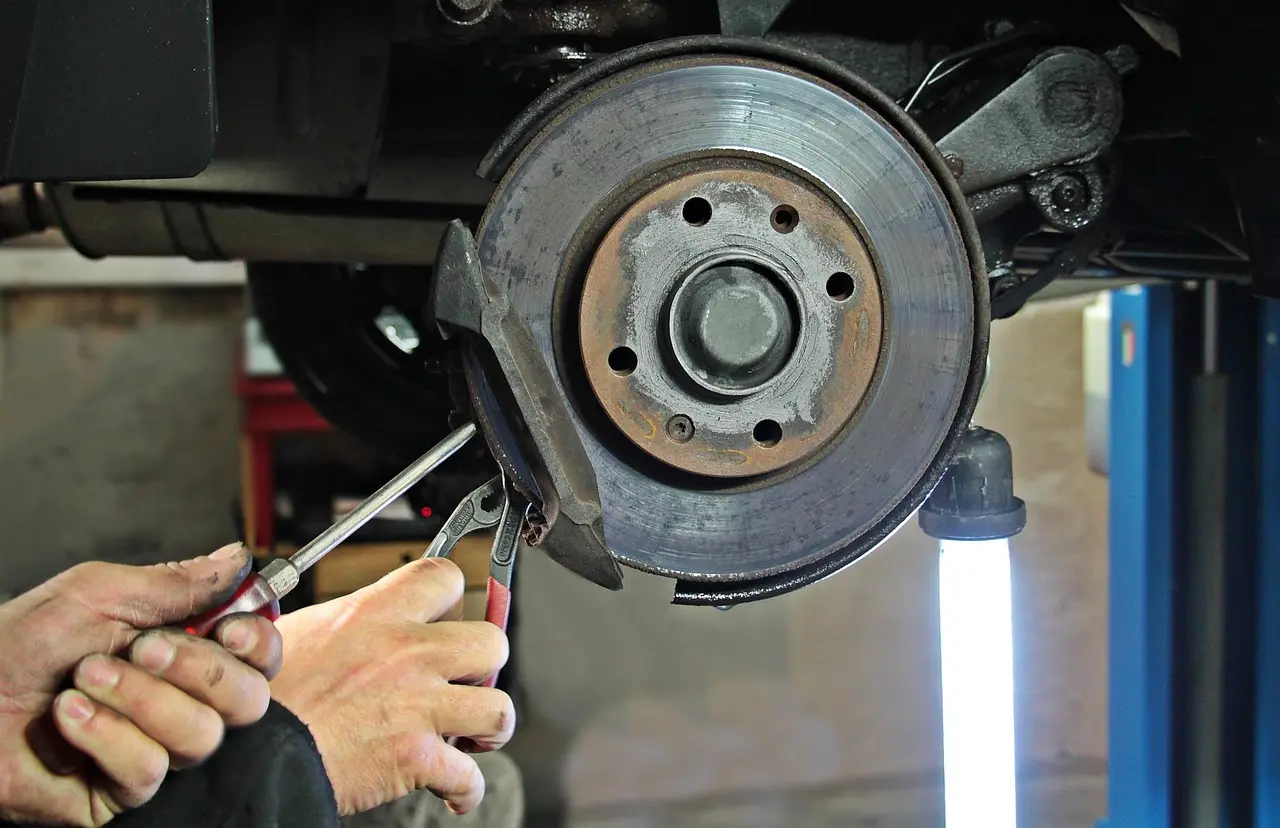
Bosch QuietCast is the best overall pick when the priority is calm, predictable braking for a normal commute. It fits drivers who want OE supplier background, comfort-first behavior, and direct fitment by make and model without moving into a louder performance compound. That is why it sits at the top of the category even though it costs more than comparables and may not include hardware in all sets.
Its strongest trait is balance. Bosch QuietCast gives a mix of performance and comfort, which matters more than chasing the highest initial bite in stop-and-go traffic. For a daily driver, that balance usually means fewer complaints about squeal, less wheel dust, and a friendlier pedal feel after proper bedding.
The drawback is straightforward: the premium can be hard to justify if the vehicle is older, the rotors are already rough, or the owner is replacing pads just to keep the car moving. In those cases, hardware and rotor condition may matter more than the brand name on the box.
TRW Premium: best value for OE-style replacement
TRW Premium makes sense for drivers who want better-than-stock behavior without paying for a luxury-positioned pad. The best fit is an everyday car that needs OE-style replacement, not a louder or more aggressive setup, and the brand’s market position fits buyers who care more about total value than badge prestige.
TRW pads were said to perform better than stock, and the large nitrile rubber-coated steel shims help explain why they can feel calmer than many basic replacements. The silicate-compound break-in coating is also useful because it helps the pad bed in more quickly, which can cut down on early noise and weak first-stop feel.
The main drawback is availability. TRW Premium can be limited in some markets, so the best price is not always the easiest set to find. That matters when a car is down and the owner needs a direct-fit replacement quickly.
Wagner ThermoQuiet: best for low dust and long life
Wagner ThermoQuiet is the sensible choice for drivers who are tired of dirty wheels and want a comfort-focused pad that lasts. It suits daily use where low dust matters more than sharp initial bite, and it is especially appealing on lighter vehicles that do not live in mountain country or do repeated heavy towing.
The one-piece design is part of the appeal, and Wagner ThermoQuiet is known for long pad life and very little brake dust. That combination makes it a strong pick for commuters who want a clean wheel face and a quiet ride without chasing a performance pad.
The honest drawback is quality control complaints. That does not make the pad a bad buy, but it does mean the installer should inspect the set carefully, confirm the right hardware, and verify fitment before assembly. On older rotors, proper bedding becomes even more important.
Power Stop Z26 Street Performance: best for stronger bite
Power Stop Z26 Street Performance is for the driver who wants a more assertive pad than a comfort-first OE replacement. It fits daily use only when the vehicle sees brisk stops, warmer conditions, or a driver who prefers a firmer response and accepts that a performance pad usually brings more noise and dust than a commuter pad.
The included shims and hardware are useful, especially because a pad with a more aggressive compound often benefits from a clean installation. For street-performance use, that can make the setup feel more complete than a bare pad box.
The drawback is the tradeoff itself. Z26 is less comfort-focused than OE-style ceramics, so it is not the best fit for a quiet suburban driver or anyone who is highly sensitive to pedal noise after bedding. It is also easy to overspec for a normal sedan that never sees hard braking.
Power Stop Z36 Truck and Tow: best for heavier vehicles
Power Stop Z36 Truck and Tow is the better match for trucks, loaded SUVs, and towing duty. Heavy vehicles build heat quickly, and repeated hard stops expose weak friction compounds faster than a light commuter ever would. In that setting, higher load tolerance matters more than soft pedal feel. (thedrive.com)
The strength of a truck-focused pad is fade resistance under repeated use. That makes Z36 a practical choice for towing, mountain driving, and heavy cargo runs where a normal commuter pad can feel tired after a few hard stops.
The tradeoff is easy to predict: more capability usually means more dust, more noise, and more rotor wear than a comfort pad. For a light sedan, that extra capacity would be wasted. For a loaded pickup, it can be the right call.
Which one should you buy
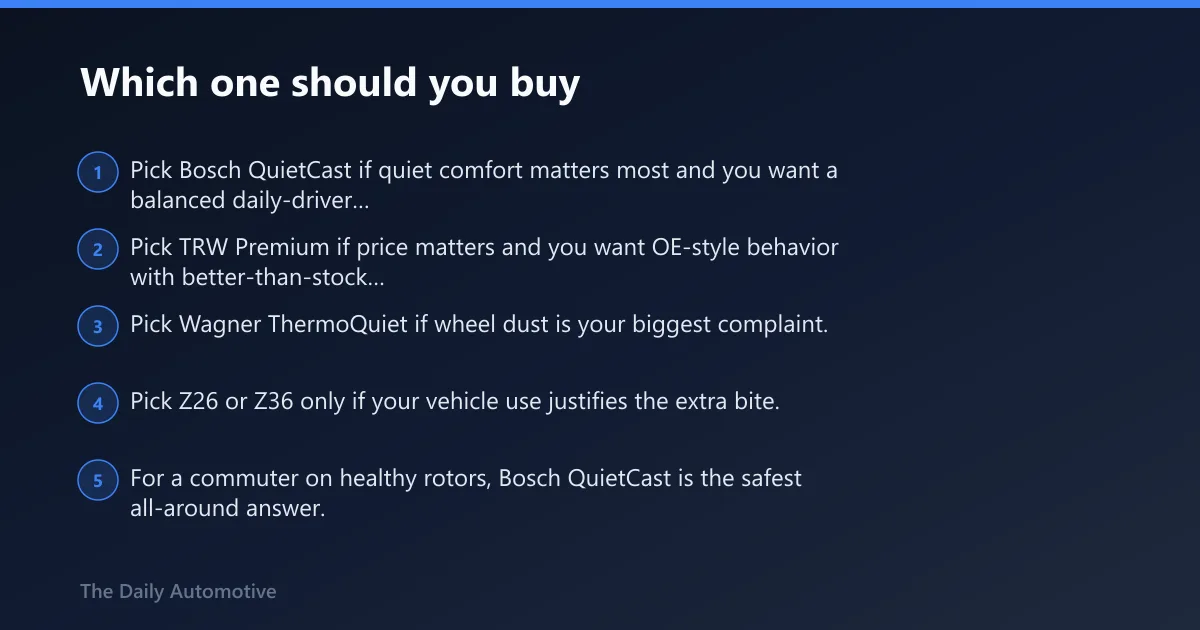
Pick Bosch QuietCast if quiet comfort matters most and you want a balanced daily-driver pad with OE supplier credibility. Pick TRW Premium if price matters and you want OE-style behavior with better-than-stock feel. Pick Wagner ThermoQuiet if wheel dust is your biggest complaint. Pick Z26 or Z36 only if your vehicle use justifies the extra bite.
For a commuter on healthy rotors, Bosch QuietCast is the safest all-around answer. For a budget-minded replacement, TRW Premium is the value play. For a heavier vehicle or a driver who lives on brakes, a truck or mild performance pad can make more sense than a soft ceramic.
OE-style pads are usually the better first choice for normal daily driving. Mild performance pads belong to drivers who know why they need them. If the car is a light sedan on suburban routes, comfort and dust control usually beat raw aggression.
How brake material changes daily driving
Ceramic pads usually give lower dust and lower noise, which is why they fit most commuter cars. Semi-metallic pads generally resist heat better and keep stronger bite when the vehicle is heavy, the route is hilly, or summer temperatures are high. The downside is more dust and often more rotor wear.
Low-dust pads are aimed at clean wheels and calm street use. They are a good match when the owner cares more about appearance and comfort than hard braking feel. Pad choice should follow vehicle mass and use, not brand prestige.
Brake hardware matters more than many buyers think
Clips, shims, and wear hardware can change how quiet a brake job feels after installation. Pad sets do not always include them, and missing hardware can add labor time, parts cost, or both. On vehicles with sensitive calipers or worn brackets, new hardware is often worth the extra spend.
That is especially true when a set includes large shims or a pad-specific anti-noise design. Good hardware can reduce chatter and help the pad sit square in the bracket. Bad or reused hardware can make a decent pad sound cheap.
Brake pad break-in affects noise and early performance
Bedding is the process that lays down a controlled surface transfer layer on the rotor. That layer helps the pad bite evenly and can reduce squeal. Skipping it can leave the brakes inconsistent for the first few hundred miles and may create noise that has nothing to do with the pad’s quality.
A normal bedding routine uses a series of moderate stops, then cool-down driving without sitting on the pedal. The goal is not maximum heat. The goal is even transfer and a stable friction surface. On worn rotors, the bedding process matters even more because the rotor face is already less forgiving.
How to choose brake pads
Start with the vehicle. A compact car and a three-row SUV do not need the same pad type. Then look at the commute. Stop-and-go traffic rewards low noise and low dust, while mountain driving or towing calls for better fade resistance. Finally, check whether the kit includes hardware or whether that cost is separate.
Rotor condition is the next filter. If the rotors are worn or uneven, the quietest pad on paper may still squeal. In that case, fresh rotors or at least fresh hardware may matter more than paying extra for a premium compound.
Which brake pads are better
The better brake pads are the ones that fit the vehicle’s weight, commute, climate, and noise tolerance. For most daily drivers, a ceramic or OE-style pad is the better choice because it keeps dust and noise low. Semi-metallic and truck-focused pads are better only when heat, mass, or towing demands more fade resistance.
“Better” does not mean more expensive. It means better matched to the car and the route. A premium pad on the wrong vehicle can feel worse than a cheaper pad chosen for the right use case.
Which brake pads wear faster
Softer, quieter pads often wear faster than harder, more aggressive compounds. That tradeoff is common with comfort-oriented ceramics and low-dust pads, especially on heavy vehicles or routes with repeated hard stops. Semi-metallic pads often last longer under heat, but they usually bring more dust and more rotor wear.
Pad life also depends on driving style and rotor condition. A gentle highway commuter can get far more life from almost any pad than a stop-and-go driver who rides the brakes in traffic every day.
What are the best brake pads for daily driving
The best brake pads for daily driving are usually ceramic or OE-style low-dust pads for normal cars, semi-metallic pads for heavier vehicles, and more aggressive pads only for drivers who need extra bite. Bosch QuietCast is the best overall balanced pick, TRW Premium is the value pick, and Wagner ThermoQuiet is the low-dust specialist.
Daily driving favors quiet engagement, predictable pedal feel, and moderate rotor wear. That is why comfort-first pads usually beat performance pads for the average commute.
How to make brake pads last longer
Use the right pad for the vehicle, keep rotors in good shape, and complete the bedding procedure after installation. Avoid holding the brake pedal hard after heavy stops, because that can print material unevenly onto the rotor. Gentle, steady braking also helps pad life a lot.
Fresh hardware can help pads wear more evenly. Sticking caliper slides, rusty clips, and worn shims can shorten pad life even when the friction material itself is decent.
How to take care of brake pads
Inspect pad thickness, rotor condition, and hardware at regular service intervals. Listen for new squeal, grinding, or a pulsing pedal. Those signs often point to worn pads, uneven rotor surfaces, or hardware that no longer holds the pad correctly in the bracket.
Keep the brakes clean and avoid contaminating the friction surface with grease or brake fluid. If a wheel is filthy with dust after a short time, that can be a normal sign of a dustier compound, but it can also hint at a sticking caliper.
How to choose brake pads
Choose brake pads by matching the compound to the job. Quiet suburban commuting calls for ceramic or low-dust OE-style pads. Heavy SUVs, trucks, and towing use call for more heat tolerance. If the car has worn rotors or the owner hates brake noise, hardware quality matters almost as much as the pad itself.
Fitment matters too. OE/OEM pads are built around vehicle-specific application coverage, and direct fitment by make and model lowers the chance of installation headaches. That is one reason part number accuracy matters more than marketing language.
Which brake pads are more important
Neither front nor rear pads are always more important in every sense, but front pads usually do more work during stopping because weight transfers forward under braking. That is why front pad choice often has the bigger effect on pedal feel, noise, and dust for a daily driver.
Rear pads still matter for balance and stability. A mismatched rear pad can change brake feel and wear patterns, especially on vehicles with sensitive electronic brake systems or heavier rear loading.
Are more expensive brake pads better
More expensive brake pads are not automatically better. They are better only when the added cost buys the right trait for the vehicle, such as lower noise, better hardware, or higher heat tolerance. A premium commuter pad can be worth it; a performance pad for a mild sedan usually is not.
Price tends to follow material, hardware, and application coverage. That means a costlier pad may give better comfort or longer life, but it can also be the wrong tool for a basic daily commute.
Frequently asked questions
which brake pads are better
The better brake pads are the ones that match the vehicle’s mass, driving conditions, and noise tolerance. For most daily driving, ceramic or OE-style low-dust pads are the better fit. Semi-metallic pads are better when heat and load matter more than wheel cleanliness or quiet operation.
which brake pads wear faster
Comfort-oriented pads often wear faster than more aggressive compounds, especially in heavy vehicles or stop-and-go traffic. Wear rate also depends on rotor condition, caliper health, and the driver’s braking habits. A smooth highway commute is much easier on pads than repeated hard stops in city traffic.
what are the best brake pads for daily driving
For most daily drivers, Bosch QuietCast is the best overall balance, TRW Premium is the best value, and Wagner ThermoQuiet is best when dust is the main complaint. Ceramic and OE-style pads are usually the safest default because they keep noise, dust, and rotor wear in check.
how to make brake pads last longer
Match the pad to the vehicle, bed the pads properly, and avoid sitting on the brake after a hard stop. Fresh hardware and healthy rotors also help. When calipers slide freely and the pad sits square in the bracket, wear is usually more even and pad life improves.
how to take care of brake pads
Check pad thickness, rotor surface condition, and hardware during routine service. Watch for squeal, grinding, and vibration. Those symptoms often point to worn pads, contaminated friction material, or hardware that no longer holds the pad correctly. Clean installation matters more than many owners realize.
are more expensive brake pads better
More expensive pads are not automatically better. They are only better if the extra cost buys the right characteristics for the job, such as lower noise, better fitment coverage, or higher heat tolerance. A premium pad can be a bad value if the vehicle is light and the commute is gentle.
Products related to this article
Sponsored / affiliate links. As an Amazon Associate I earn from qualifying purchases. I may earn additional commission from eligible campaigns.