Best Floor Jacks for Low Cars (2026): We Compared
The best floor jack for low cars is the one that fits under your lowest lift point, usually with a 2.75- to 3.5-inch minimum height. Miss the minimum height or reach, and you can damage side skirts, waste time, or never get the car up. This guide shows how to match height, reach, and lift travel before comparing the best options. Based on the supplied specs, the YELLOW JACKET model is the strongest all-around fit for many lowered cars because it combines a 3-3/8-inch minimum height with 24-inch maximum lift and a dual-piston quick lift pump.
Quick comparison
| Product | Badge | Best for | Price | ||
|---|---|---|---|---|---|
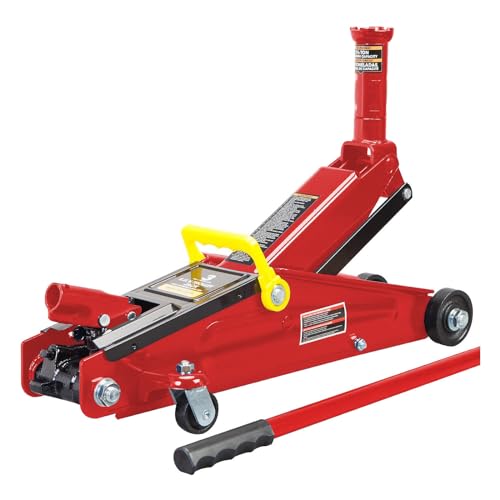 |
BIG RED Hydraulic Trolley Service/Floor Jack with ExtraBIG RED | Our pick | 3 ton · trolley jack · red | $93.59
Price as of 31 Oct 2026
|
View |
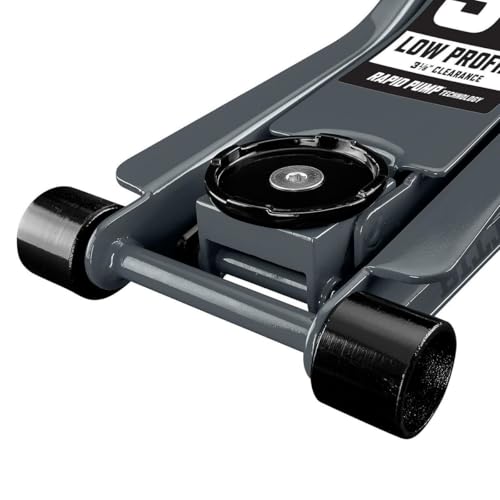 |
3 ton Heavy Duty Low Profile Floor Jack with Rapid Pump byPittsburgh | Pair with it | 3 ton · low profile · grey | $252.86
Price as of 31 Oct 2026
|
View |
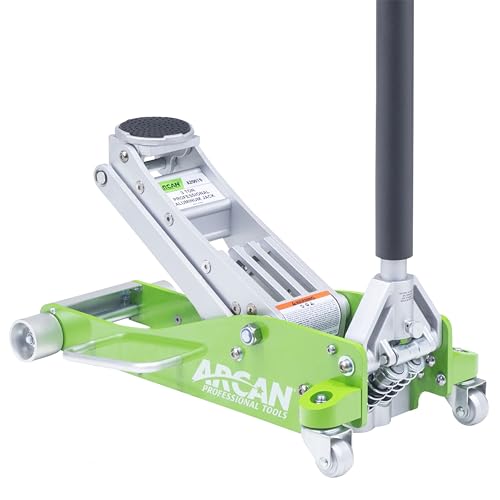 |
ARCAN 3-Ton Aluminum Low Profile Floor Jack, Model A20019ARCAN | Also great | 3 ton · aluminum · low profile | $256.69
Price as of 31 Oct 2026
|
View |
 |
3 Ton Floor Jack Extra Long Reach Low Profile HydraulicYELLOW JACKET | Upgrade pick | 3 ton · extra long reach · blue | $199.99
Price as of 31 Oct 2026
|
View |
Start with the table. Check the minimum height against your lowest lift point, then sort the rest by material, pump speed, and price. A jack can look low on the box and still sit too tall for a front lip or pinch weld.
How we chose
We compared manufacturer specs, listing details, and published buyer feedback for minimum height, maximum lift, lifting capacity, jack construction, and listed lift features. The filter was simple: a jack had to make sense for low cars first, then for stand clearance and everyday use.
The fit logic matters more than brand names. If a jack slips under the car but cannot raise it high enough for jack stands, skip it for garage work.
We also separated use cases by ride height. Stock-height cars, mildly lowered cars, slammed street cars, and track cars do not need the same jack geometry.
Best low-profile jack: best for daily lowered cars
The YELLOW JACKET 3 Ton Floor Jack is often a fit-first pick for lowered daily drivers because it is commonly listed with about a 3-3/8-inch minimum height and about 24 inches of maximum lift, along with a dual-piston quick lift pump. That spread helps when you need both easy entry and enough height to place jack stands afterward.
It is a strong match for cars with lowered bumpers, front splitters, or a shallow approach angle, as long as the approved lift point clears the jack saddle. The dual-piston pump should reduce the number of strokes versus a single-piston design, which matters when the jack barely fits under the car.
The drawback is simple: at 3-3/8 inches minimum height, it is not the answer for every ultra-low build. Check the manufacturer’s listing for your exact model if your side skirt or lip sits close to the pavement.
Best aluminum jack: best for portable use
The ARCAN 3-Ton Aluminum Low Profile Floor Jack is a portable choice here because its aluminum construction makes it easier to carry and move around the garage. Its 3.75-inch minimum height still works for many low cars, and the lower weight helps if you have to store it or roll it between bays.
This is the better fit when portability matters as much as clearance. Aluminum or aluminum-steel jacks usually cost more than steel models, but they are easier to move and load into a vehicle for track-day use or shared garage space.
The tradeoff is entry height. A 3.75-inch minimum saddle height can be too tall for some lowered cars, especially those with low splitters or deep front lips. Check the manufacturer’s listing for your exact model before buying.
Best steel jack: best for budget durability
The BIG RED T83006 is the steel-leaning durability pick, and it is one of the easiest matches for many passenger vehicles because it is rated to 6,000 lbs and has a 5-7/8-inch minimum saddle height. It also comes with a quick-lift pump and swivel casters, which help once the jack is under the car.
This jack makes sense when you want a heavier, sturdier-feeling tool and do not need the lowest possible entry height. Steel construction is common in budget and heavy-duty jacks, and the extra mass can make the jack feel planted during positioning.
The drawback is also obvious: 5-7/8 inches is tall for many lowered cars. That minimum height rules it out for some splitters, side skirts, and low lift points unless you are working with ramps or drive-on blocks first.
Best value low-profile jack: best for the money

The Pittsburgh 3 Ton Heavy Duty Low Profile Floor Jack is the value play when you want low-profile packaging and a 3-ton class without stepping into the highest-priced segment. For a lot of DIY owners, that combination is the right middle ground between entry height, capacity, and cost.
Its low-profile design is the main draw. That matters more than badge prestige when your front bumper sits close to the ground and you are trying to reach a safe lift point without contacting the splitter first.
The drawback is price relative to the other options shown here, so the “money” part depends on local pricing and the exact listing. Check the manufacturer’s listing for your model, and do not buy it only because it says low profile.
Low-car fit checklist
Use this checklist before you buy. Match three numbers first: vehicle ride height, front lip clearance, and jack minimum saddle height. Then confirm that the jack’s maximum lift still leaves enough room for jack stands.
| Vehicle ride height | Front lip clearance | Lift-point depth | Required jack minimum height | Required maximum lift for stands | Recommended jack class |
|---|---|---|---|---|---|
| Stock height or slight drop | 4.5 in or more | Standard pinch weld or subframe access | 5 in or less | At least 14 in for most jack stand setups | 2.5-ton to 3-ton |
| Mildly lowered street car | 3 to 4.5 in | Moderate depth, no tall splitter interference | 3 to 3.75 in | At least 15 in | Low-profile 3-ton |
| Slammed street car | 2.5 to 3 in | Deep or awkward lift point | 2.75 to 3 in | At least 16 in | Low-profile with long reach, or ramps first |
| Track car with aero | Under 2.5 in | Splitter, side skirt, or deep subframe cutout | Under 2.75 in, or lift from another point | At least 16 in, often more depending on stands | Low-profile jack plus ramps or drive-on blocks |
Pass: the jack slips under the lowest approved lift point with clearance to spare, and its full lift leaves room to place jack stands on level ground.
Fail: the saddle hits the splitter, the jack touches the side skirt before reaching the lift point, or the car rises too little for the stands to fit.
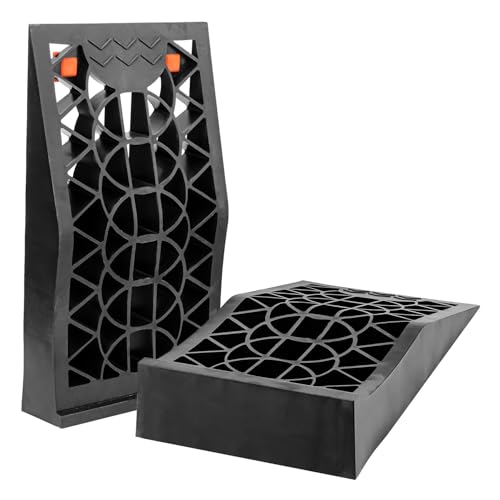
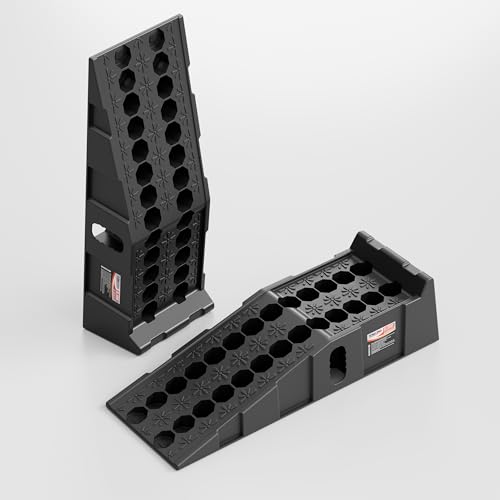
When front lip clearance is tight but the car only needs access for oil changes or tire rotation, ramps or drive-on blocks can be the better first step. They raise the whole car before the jack enters the picture.
Suppose your lowered coupe has 3 inches of front lip clearance but the approved lift point sits 3.25 inches off the ground. A jack with a 3.75-inch minimum height fails before it starts, while ramps or drive-on blocks can create the room needed for the jack to enter safely.
A common beginner mistake is choosing a jack solely by lift speed instead of checking whether its minimum saddle height will actually slide under a lowered sports car. Capacity matters, but a 3-ton jack that is too tall is still the wrong tool for a low car.
Which one should you buy?
Start with the car, not the color.
For daily lowered cars, the YELLOW JACKET is the best fit-first option here because its 3-3/8-inch minimum height is much friendlier to low bumpers and splitters while still offering 24-inch maximum lift for stand placement. If the car is only mildly low, that is often the cleanest all-around choice.
For portable use, the ARCAN aluminum jack is easier to move, but it only works if 3.75 inches at the saddle still clears your car. For a value-minded buyer who still wants a low-profile shape, the Pittsburgh jack is the closest fit-first compromise in this group, assuming the price and listing details make sense for your needs.
Slammed cars and track setups are different. If your approved lift point sits very low or deep under the body, the safest plan is often a low-profile jack plus ramps or drive-on blocks, not a taller jack forced into a job it cannot do.
How to get a jack under a low car
Measure the front lip clearance, the lift-point height, and the jack’s minimum saddle height before you buy. If the jack is taller than the clearance, use ramps or drive-on blocks first, then slide the jack in only after the car is raised enough to create working room.
What is the best floor jack for the money?
The best value is the jack that clears your car, reaches your lift point, and still leaves enough height for stands. For many buyers, that means a 3-ton low-profile jack with a minimum height around 3 to 4 inches, not the cheapest jack on the page.
How to choose a floor jack
Choose by fit first, then capacity, then construction. Check minimum saddle height, maximum lift, and rated capacity, and confirm whether the jack’s shape works around side skirts, splitters, or deep subframe lift points before you compare extras like handle length or finish.
How to use a small floor jack
Place the jack on level ground, position the saddle at the approved lift point, and raise the car only as high as needed for jack stands. Follow the vehicle and product manual, and never work under a vehicle supported only by a jack.
Is a low profile floor jack better?
A low-profile jack is better when the car is too low for a standard jack to enter without scraping the bodywork. It is not automatically better for every job, because some low-profile models sacrifice height, speed, or stability to gain extra clearance under the car.
Frequently asked questions
What minimum saddle height do I need for a lowered car?
For many lowered cars, a minimum saddle height between 2.75 and 3.5 inches is the useful range. If your front lip clearance or side skirt sits below that, the jack will not enter cleanly, and you may need ramps or drive-on blocks before lifting.
How high should a floor jack lift for jack stands
Pick a jack that raises the car enough to place the stands at their correct height with room left to lower the vehicle onto them. For many garages, that means a jack with at least 14 to 16 inches of lift, depending on stand design and vehicle shape.
Should I buy an aluminum or steel floor jack?
Choose aluminum if you want easier carrying and storage. Choose steel if you want a heavier, often less expensive jack that can feel more planted. Aluminum-steel hybrids split the difference, but you still need to verify the minimum height and maximum lift.
What floor jack capacity is safe for my car
Choose a jack rated above the vehicle’s weight, with margin. For most passenger vehicles, 2-ton, 2.5-ton, 3-ton, and 3.5-ton classes are the common options, but the right call depends on the specific vehicle and how you lift it. Check the owner’s manual and the jack listing.
Can I use ramps instead of a low profile floor jack?
Yes, for some jobs. Ramps or drive-on blocks are often better when front clearance is too low for a jack to enter safely, or when you need to create space before lifting. For wheel removal or suspension work, you still need a jack and jack stands afterward.
How high should a floor jack lift for jack stands: the jack’s max lift has
The jack’s max lift has to do more than contact the car; it must create enough space for the stands to fit at the chosen lift points. That matters more than raw jack height alone, especially on lowered cars with deep or awkward lift points.
Products related to this article
Sponsored / affiliate links. As an Amazon Associate I earn from qualifying purchases. I may earn additional commission from eligible campaigns.