How Much Does an OBD2 Scanner Cost?
A basic OBD2 scanner is often about $20 to $60, a better code reader with live data is commonly around $60 to $150, and app-based tools with bi-directional functions can start near $100 and go into the several-hundred-dollar range. Buy the wrong one and you may clear a warning light without fixing the fault, then spend more on parts and diagnostics. This guide breaks down scanner price tiers, hidden costs, and the cheapest tool that matches your problem.
What drives OBD2 scanner prices?


Price rises with function, vehicle coverage, and ownership costs after purchase. A simple reader clears generic engine codes. A stronger scanner adds live data, freeze-frame data, and service functions. At the top end, full-system access, bi-directional control, and software support push the total cost up fast.
Core functions that change the price
Entry-level code readers are priced at $15-$50 and usually handle generic engine trouble codes only. Mid-range tools are priced at $50-$200 and often add live data plus freeze-frame data, which helps when a fault appears only under certain driving conditions. Advanced and professional units are priced at $200-$1,000+ because they can reach more modules and run active tests.
How vehicle coverage changes the price
The OBD2 port is usually under the dashboard near the driver’s seat, and most 1996+ U.S. vehicles use it. That does not mean every scanner will talk to every system on every vehicle. Engine diagnostics are the baseline; ABS, airbag, transmission, and body modules often require a more capable tool.
Picture a 2012 sedan with an engine light and an intermittent misfire. A basic reader may point to a code, but freeze-frame data from a mid-range scanner can show engine load, coolant temperature, and speed when the fault set. That extra context can save a lot of parts-swapping.
Hidden costs that buyers often miss
Bluetooth OBD2 adapters can look cheap up front, but the total cost may include app fees, subscription plans, and compatibility limits with your phone or vehicle. Some tools also charge for software updates. A scanner that is cheap today can become expensive if the app shuts out older phones or locks useful features behind payment.
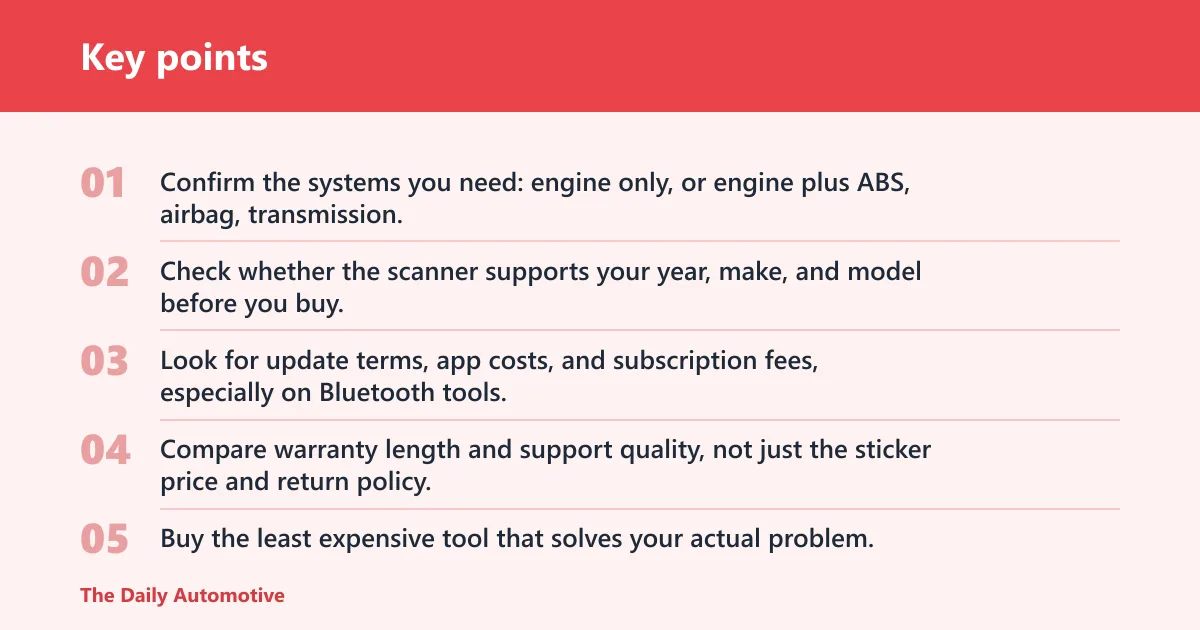
- Confirm the systems you need: engine only, or engine plus ABS, airbag, transmission, or service functions.
- Check whether the scanner supports your year, make, and model before you buy.
- Look for update terms, app costs, and subscription fees, especially on Bluetooth tools.
- Compare warranty length and support quality, not just the sticker price and return policy.
- Buy the least expensive tool that solves your actual problem.
OBD2 scanner cost table
The cheapest sensible choice depends on the job. A reader that fits a one-time check-engine-light scan is a bad buy for battery registration, and a pro scanner is overkill for a simple emissions check. Match the tool to the task below so you do not pay for functions you will never use.
| Buyer scenario | Expected sticker price | Likely extra costs | Features you actually need | Cheapest sensible buy range |
|---|---|---|---|---|
| Occasional check-engine-light use | $15-$50 | Usually none, unless a Bluetooth app needs payment | Read and clear generic engine codes; basic code description | $20-$40 |
| DIY maintenance | $50-$200 | Possible update fees or app subscriptions | Live data, freeze-frame data, oil-life reset, battery-related functions where supported | $70-$120 |
| Multi-system diagnosis | $200-$1,000+ | Software updates, paid vehicle coverage, subscription renewals | Full-system diagnostics, module access, bi-directional control | $250-$500+ |
| Shop-level work | $500-$1,000+ | Annual software plans, repair database access, calibration or coding add-ons | Bidirectional testing, ECU coding, advanced service functions, broad vehicle coverage | $500+ only if you need repeated use |
How much do basic code readers cost?
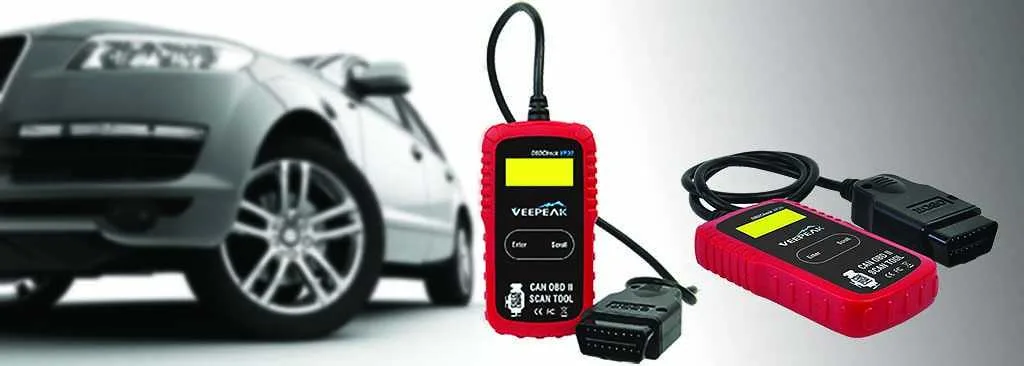
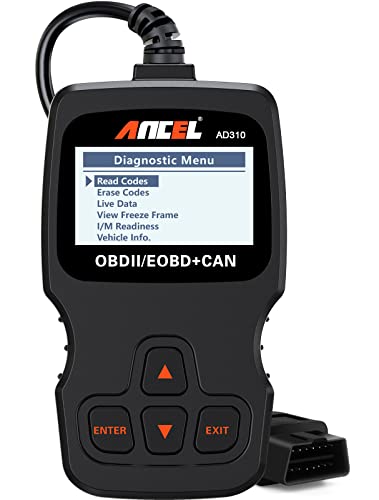
A basic code reader usually costs about $15-$50 and is best for reading and clearing generic engine trouble codes. It can help you confirm why the check-engine light came on, but it usually will not reach ABS, airbag, or transmission systems. For many owners, that is enough for a quick emissions-related check.
What a $15-$50 reader can do
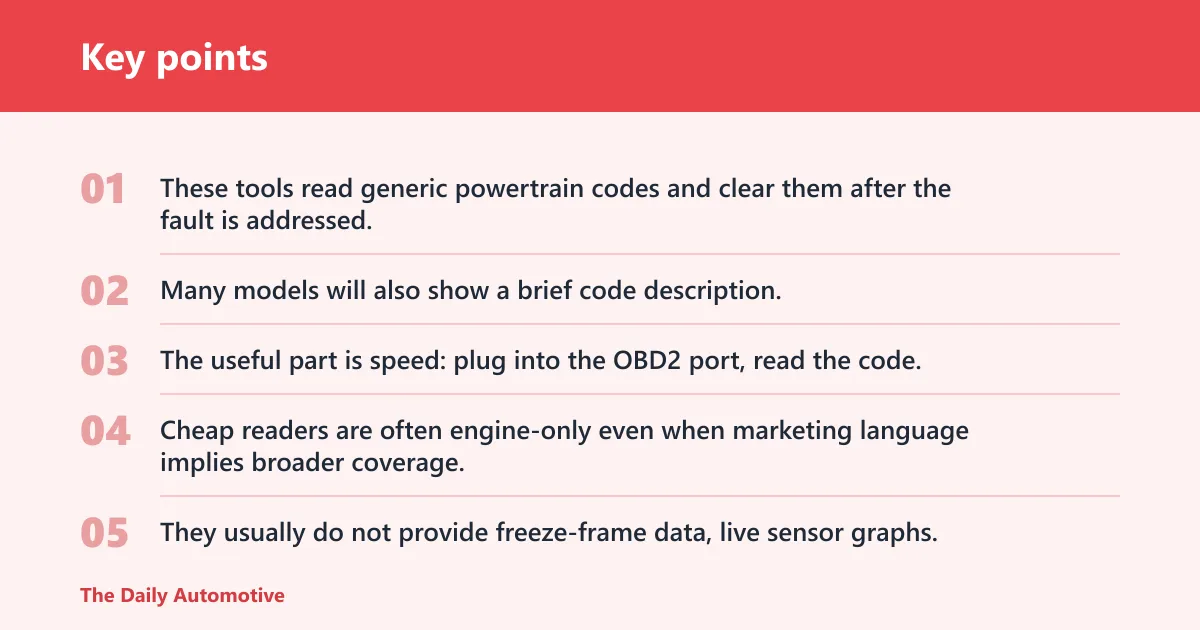
These tools read generic powertrain codes and clear them after the fault is addressed. Many models will also show a brief code description. The useful part is speed: plug into the OBD2 port, read the code, and decide whether the repair is simple enough to handle or whether a shop should take over.
What it cannot do
Cheap readers are often engine-only even when marketing language implies broader coverage. They usually do not provide freeze-frame data, live sensor graphs, or access to other modules. If the issue is an ABS light, airbag light, or a transmission fault, a basic reader can leave you guessing.
Best use cases for a basic reader
Use this tier when you only need to know why the check-engine light is on, or when you want a quick way to confirm a repaired code has cleared. It is also the right starting point for a first scanner if the goal is low-cost ownership and occasional use, not deep diagnosis.
A common first-timer mistake is buying a $25 reader for an ABS warning. The tool may work exactly as promised on engine codes and still be useless for the problem at hand, which means the cheapest sticker price becomes the wrong purchase.
What do mid-range scanners add?
Mid-range OBD2 scanners usually cost about $50-$200 and are the sweet spot for many DIY owners. They add live data and freeze-frame data, and some include service functions. That extra information can help you decide whether a fault is a bad sensor, a wiring issue, or a condition-based problem that appears only under load.
Live data and freeze-frame data
Live data lets you watch sensors in real time. Freeze-frame data captures the conditions when a fault occurred, which is useful for intermittent problems. If a code returns only on a cold morning or during highway cruising, that snapshot is often more useful than the code number alone.
Service functions you may get
Some models in this range include oil-life reset, battery registration, or electronic parking-brake service mode. These are useful, but they are not universal across vehicles. A scanner can list a service function and still fail to support your exact car, so vehicle compatibility matters as much as feature count.
Where coverage varies by vehicle
Coverage changes by make, model, model year, and even trim. A scanner that handles one vehicle’s oil reset may not support another vehicle’s battery registration. Read the compatibility chart before you buy, especially if you expect to work on more than one vehicle in the driveway.
Why do professional scanners cost so much?
Professional diagnostic scanners usually cost about $200-$1,000+ because they do far more than read engine codes. They support full-system diagnostics, bidirectional controls, ECU coding, and module access. That capability is expensive because the tool has to communicate with many vehicle systems and stay current with software changes.
Full-system diagnostics and module access
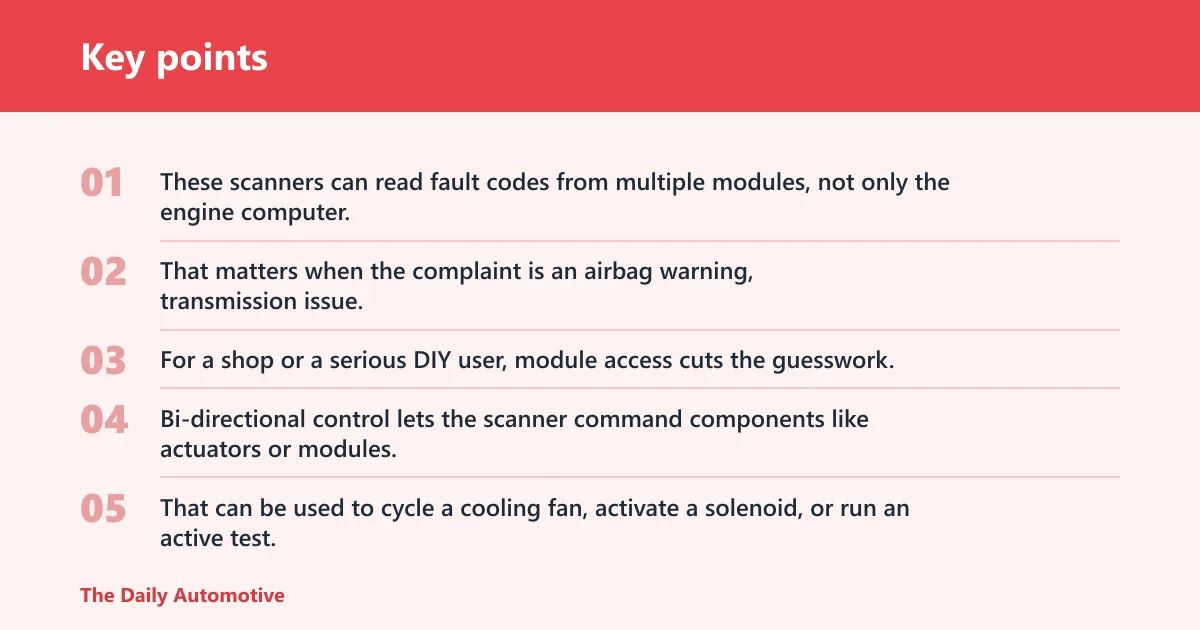
These scanners can read fault codes from multiple modules, not only the engine computer. That matters when the complaint is an airbag warning, transmission issue, or a body control fault. For a shop or a serious DIY user, module access cuts the guesswork.
Bi-directional control and active testing
Bi-directional control lets the scanner command components like actuators or modules. That can be used to cycle a cooling fan, activate a solenoid, or run an active test. It raises the price significantly because it turns the scanner from a reader into a diagnostic command tool.
Software subscriptions and paid updates
Higher-end tools often require software subscriptions or paid updates. That is a real ownership cost, not a footnote. If you plan to keep the scanner for years, compare the renewal price and the update policy before buying, or the upfront deal may be a poor one.
Is renting a scanner cheaper than buying?
Renting a scanner can be cheaper than buying one if you only need it once for a limited repair. That is especially true when the repair requires a stronger scanner than the $20-to-$50 range. If you need repeated checks, though, ownership usually wins after a small number of uses.
When a rental makes sense
Renting works best for one-time jobs such as a stubborn warning light, a single service reset, or a diagnostic session before a shop visit. If the rental gives you the exact function you need for one weekend and you will not use it again, the math can favor rental over purchase.
When buying is the better call
Buy when you expect repeat use, such as regular maintenance on several vehicles or ongoing troubleshooting of an older car. A scanner also makes sense if you want quick access to live data whenever a new code appears. In that case, the purchase can pay for itself in a few repairs.
How to judge one-repair value
Compare the rental fee, deposit, and time limit against the price of a scanner with the exact feature you need. If the repair needs only generic code reading, a low-cost reader may be cheaper than a rental. If you need freeze-frame data or a service function, the rental may be the smarter short-term move.
What is a good cheap OBD2 scanner?
A good cheap OBD2 scanner is one that solves your problem without adding fees or compatibility headaches. For many owners, that means a reliable consumer model around $30 to $100, or a simple reader in the $20-$50 range if the goal is only engine codes. Cheap should still mean usable.
What to look for in a low-cost tool
Look for clear support for your vehicle year, easy code lookup, and a warranty that is easy to use. If you are considering a Bluetooth adapter, check app ratings, phone compatibility, and whether the app locks important functions behind payment. The wrong app can erase the savings.
What to avoid
Avoid tools that imply full-system access without listing it clearly. Avoid vague compatibility claims that do not name your vehicle. And avoid paying extra for functions you will not use, such as bidirectional tests or advanced coding on a car that only needs a basic emissions check.
Frequently asked questions
How much does an OBD2 scan cost?
If you mean a scan service at a shop, pricing varies widely by location and what the diagnosis includes. The cheapest choice is the one that matches the job.
How much does an OBD2 code reader cost?
An OBD2 code reader usually costs about $15-$50. That price gets you basic reading and clearing of generic engine codes, which is useful for a check-engine light. It usually will not cover ABS, airbag, transmission, or deeper service features.
How much is an OBD II scanner cost?
An OBD II scanner can cost anywhere from $15 to over $1,000, depending on coverage and features. A reliable consumer model typically lands between $30 and $100. If you only need to read a code once in a while, the low end is usually enough.
How much does a good OBD2 scanner cost?
A good OBD2 scanner for most DIY owners often falls in the $50-$200 range. That bracket usually gets you live data, freeze-frame data, and some service functions. For broader vehicle coverage or active testing, expect the price to move into professional territory.
How much does it cost to rent an OBD2 scanner?
Rental pricing varies by store, model, and rental period, so compare the total fee with a low-cost purchase before you decide. Renting makes the most sense when you need one advanced function for a single repair. If you expect repeat use, buying is usually the better value.
Is it worth buying an OBD2 scanner?
Yes, if you plan to diagnose warning lights more than once or maintain your own vehicle. A basic reader is worth buying for occasional engine-code checks, while a mid-range scanner makes sense if you want live data and service functions. If you need only one repair, rental may be cheaper.
Products related to this article
Sponsored / affiliate links. As an Amazon Associate I earn from qualifying purchases. I may earn additional commission from eligible campaigns.