5 Best Tire Pressure Gauges for Home Car Maintenance: We Compared
For home car maintenance, choose a 0.5 psi digital gauge for daily drivers, a long-chuck analog gauge for winter-storage vehicles and trucks, and a pencil gauge only as a backup. Bad readings can leave tires underinflated or overinflated, which hurts wear, fuel use, and wet grip. This guide compares the best gauge types for driveway use, mixed car-and-bike households, and light trucks, plus the failure points to watch for.
Quick comparison
| Product | Badge | Best for | Price | ||
|---|---|---|---|---|---|
 |
Milton S-920 Pencil Tire Pressure Gauge With Tread DepthMilton | Our pick | 70 PSI · pencil · dual-purpose | $12.90
Price as of 2 Nov 2026
|
View |
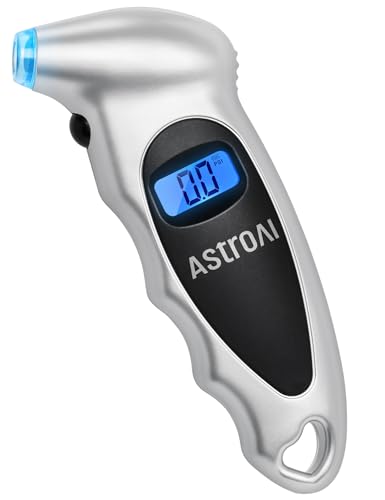 |
AstroAI Digital Tire Pressure Gauge 150PSIAstroAI | Also great | 150 PSI · digital · backlit | $6.58
Price as of 2 Nov 2026
|
View |
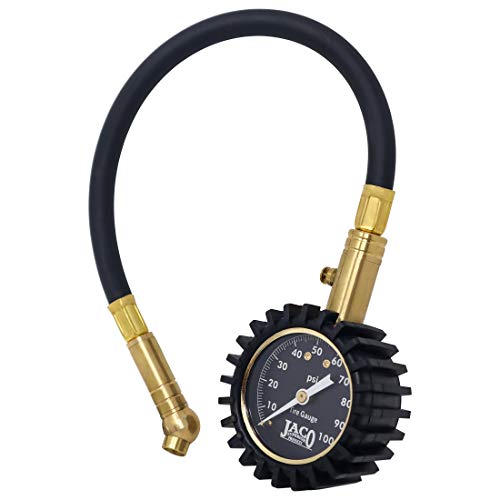 |
JACO ElitePro Tire Pressure Gauge – 100 PSIJACO Superior Products | Upgrade pick | 100 PSI · analog · glow dial | $22.90
Price as of 2 Nov 2026
|
View |
 |
Ziquruv Car Tire Pressure GaugeZiquruv | Pair with it | 100 PSI · analog · universal | $8.99
Price as of 2 Nov 2026
|
View |
 |
Longacre 50417 0-60 PSI Analog Tire Pressure Gauge, 2 InchLongacre | Budget pick | 60 PSI · analog · hose | $42.81
Price as of 2 Nov 2026
|
View |
For home car maintenance, choose a 0.5 psi digital gauge for daily drivers, a long-chuck analog gauge for winter-storage vehicles and trucks, and a pencil gauge only as a backup. Correct tire pressure helps fuel economy and tire life. It also helps keep wear even and improves wet grip, while bad readings can leave tires underinflated or overinflated.
📊 Jaco ElitePro Digital Tire Pressure Gauge measures from zero to 200 psi. Source: Caranddriver.
How we chose
We compared manufacturer specs, listing details, and published buyer feedback for reading style, valve fit, pressure range, low-light use, and storage fit. We also looked for practical driveway details: battery dependence, bleed control, and whether the tool is likely to give repeatable readings on a Schrader valve.
Best overall pick: Jaco elitePro tire pressure gauge
This is the strongest all-around pick for a driver who wants one gauge for routine home checks and occasional fine-tuning. Based on the published product details, it pairs a glow dial, a solid brass body, a protective guard, a swivel chuck, and a built-in bleeder valve.
The drawback is cost. At $22.90, it is pricier than basic pocket gauges, and the analog format gives up the unit-switching and backlit screen that some digital models offer.
Best for glove box storage: Milton S-920 pencil Tire Pressure gauge
This is the simplest backup choice for glove box or center-console storage. The listing describes a pencil design, a built-in deflator valve, dual PSI and kPa markings, and a tread depth gauge in one tool.
Its weakness is convenience, not function. Pencil gauges can be harder to read than a dial or backlit digital display, and the shorter format can be awkward if the valve stem is tucked behind a wheel cover or tight spoke pattern.
Best for mixed car and bike use: AstroAI Digital Tire Pressure Gauge
This is the best fit for a household that inflates cars and motorcycles and wants one tool that is easy to read in dim garages. The listing says it is calibrated to ANSI B40.7, has a backlit LCD, four unit settings, and auto-off.
The tradeoff is battery dependence. Like most digital gauges, it needs power, so a dead battery can turn a quick tire check into a delay if you do not keep a spare cell around.
Best premium analog pick: Longacre 50417 0-60 PSI Analog Tire Pressure Gauge
This is a strong choice for drivers who prefer a hose style and want better reach around awkward wheel designs. The listing calls out a glow-in-the-dark face, a high-flex hose, and included angle and ball chucks.
The obvious drawback is price. At $42.81, it costs far more than a basic pencil gauge, and the 60 PSI ceiling is better suited to passenger vehicles than to higher-pressure truck or RV use.
Best budget digital pick: Ziquruv Car Tire Pressure Gauge
This is the value pick for a driver who wants a large dial, metal and rubber construction, and a simple universal fit without spending much. The listing says the connector can rotate 360 degrees, which can help when the valve stem sits at an awkward angle.
Its limitation is that the listing gives less detail than the other picks about calibration references or low-light behavior. If you want a tool for dark driveway checks, confirm the screen or dial visibility in the product photos and listing text before buying.
What PSI range should a home tire gauge cover?
A home gauge should cover your normal vehicle pressure first, then leave some room above it. For most passenger cars, a range that starts around 5 PSI and runs into the 60 PSI area is often enough; trucks, SUVs, and some specialty uses call for more headroom, while bikes and some low-pressure tires need a lower starting point.
Passenger-car range
For commuter cars, a gauge that handles the common passenger-car band is the practical choice. Many home users do not need a 200 PSI tool, but they do need a gauge that reads cleanly in the range their tires actually use, without forcing them to read near the bottom or top of the scale.
Heavy-duty range
If you maintain trucks, some SUVs, or gear with much higher inflation targets, look for a heavier-duty range that goes up to about 200 PSI or even 250 PSI. The point is not bragging rights. It is headroom, so the gauge does not feel cramped when used on higher-pressure tires.
Low-pressure coverage for bikes and specialty tires
A mixed household may also need coverage that starts around 3 to 5 PSI for bike use or other low-pressure inflation jobs. A gauge that only wakes up well above that range is the wrong tool for those jobs, even if it works fine on a car tire.
Digital gauge: best for low-light checks
Digital gauges are the easiest to read in a dark garage or on a roadside shoulder because the backlit LCD screen removes guesswork. They also often switch between PSI, Bar, kPa, and kg/cm2, which is handy if you maintain more than one vehicle or compare a door-jamb sticker to a service spec in another unit.
The best reason to buy one is readability. The best reason not to is dependence on batteries and electronics, which can fail at the exact moment you want a quick pressure check.
Backlit LCD and unit switching
A backlit LCD screen helps when the valve stem sits in a shadowed wheel well or when you are checking pressure before sunrise. On some models, unit switching makes it easier to match a door sticker or a bike pump scale without mental conversion.
Battery needs and lock-on readings
Digital gauges need batteries, which means the owner has to think about storage and replacement. A lock-on reading feature can help because it lets you hold the pressure reading after you remove the gauge from the valve, but it does not fix a dead cell or a bad contact inside the tool.
Where digital models fail in driveway use
Digital gauges can fail in ways a simple analog gauge does not. Dead batteries, dim or cracked screens, sticky buttons, and poor seals at the chuck are common trouble spots. A digital model can also give inconsistent results if you press it to the valve at a different angle each time or release it too quickly.
A common first-timer mistake is checking a tire hot from a short drive, seeing a higher number, and then letting air out to “correct” it. Check cold tires when possible, and follow the vehicle manual for the target pressure.
Analog gauge: best for battery-free storage
Analog gauges work well when you want something that can sit in a glove box for months and still work when you grab it. Dial and pencil styles avoid batteries, and many shop-style models add a bleeder valve that helps you trim pressure a little at a time.
The tradeoff is readability. In dim light, a bare analog face can be harder to read than a backlit digital screen, especially if the needle lands between marks or the gauge is being held at a bad angle.
Dial and pencil styles
Dial gauges usually feel easier to read than pencil gauges, and they are often better for repeat checks because the display is larger. Pencil gauges are smaller and cheaper, which is why they remain a good backup, but they are not the friendliest tool for hurried nighttime use.
Bleed valves on some models
A bleeder valve lets you release excess air in small steps. That matters when a tire reads a little over spec after inflation, because you can trim the pressure and check again without guessing or unseating the chuck.
What makes a metal or brass body worth it
Durable metal or brass construction matters because the tool is likely to live in a door pocket, trunk bin, or console for years. Metal bodies tend to tolerate rough storage better than flimsy plastic shells, and a sturdier chuck usually seals more consistently on a Schrader valve.
Mixed-household gauge: best for cars and bikes
If your garage includes a car and a bike, buy for valve compatibility first. Most passenger cars, SUVs, and trucks use the Schrader valve connection, but bikes may use a Presta valve adapter, and that accessory can be the difference between one useful tool and two separate tools.
The right choice is usually a digital gauge with a Presta adapter or a quality analog gauge plus an adapter in the drawer. The wrong choice is a car-only gauge that leaves you improvising when a bike tire needs air.
Schrader valve chuck fit
A Schrader valve chuck matters because it is the standard passenger-car connection and it should attach quickly and cleanly. If the chuck leaks or will not seat well, readings can drift, and the gauge may make you bleed or add air for no good reason.
Presta adapter use
A Presta adapter is the practical add-on for mixed vehicle households. It turns a car-oriented gauge into something that can also serve bikes, which saves storage space and avoids buying a second inflation tool for a separate valve style.
One-tool storage tradeoffs
One-tool storage sounds simple until the accessory bag goes missing. If the adapter is essential to how you use the gauge, keep it clipped to the tool or stored with the same glove box kit, or the “one tool” becomes two searches.
Home tire gauge decision matrix
This table shows what matters most in real driveway use, not just on a spec sheet.
| Use case | Best gauge type | Must-have specs | Common failure mode | When to upgrade |
|---|---|---|---|---|
| Daily commuter car | Digital | Backlit LCD, lock-on reading, 0.1 or 0.5 PSI resolution | Dead battery or unreadable screen in low light | Upgrade if you check pressure weekly or before long trips |
| Winter-storage vehicle | Analog | Battery-free body, solid chuck seal, durable metal or brass build | Hard-to-read face in dim garages | Upgrade if you want faster nighttime checks or unit switching |
| Mixed car and bike household | Digital or dial analog with adapter | Schrader chuck, Presta valve adapter, easy storage | Missing adapter or leaking connection at the valve | Upgrade if one tool needs to cover both low and normal pressures |
| Trucks and SUVs | Analog or heavy-duty digital | Higher pressure range, sturdy hose or chuck, clear scale | Gauge tops out too early | Upgrade if your required pressure sits near the top of the gauge |
Feature priority by vehicle type
| Vehicle type | Feature that matters most | Why it matters at home |
|---|---|---|
| Commuter cars | Readability | You want a fast check before work or before a road trip |
| Winter storage | Battery-free storage | The gauge may sit unused for months |
| Mixed car/bike households | Valve compatibility | One tool needs to handle Schrader and Presta use |
| Trucks and SUVs | Pressure range | The gauge must stay accurate through higher fill levels |
Which one should you buy?
For commuters, buy the easiest-to-read gauge you will actually use in the driveway. A backlit digital model is the best fit if you often check tires in low light, while a quality dial gauge makes sense if you want battery-free storage and fewer failure points.
For winter storage, start with an analog gauge. It avoids dead-battery surprises after months in the glove box or trunk, and it is a good match for drivers who check pressures only a few times a season.
For trucks and SUVs, buy for range first, then durability. If your normal pressure sits high, a gauge that tops out too low is a poor match, even if it looks premium. If you need to fine-tune air by small amounts, a model with a bleeder valve is worth paying for.
For mixed car-and-bike households, buy a gauge that includes or supports a Presta adapter. That one detail matters more than a fancy face or extra trim, because it decides whether the tool actually covers both vehicles.
How to verify a gauge at home
Use the same cold tire, the same valve, and the same sequence with two gauges if you want a sanity check. Compare your reading to a gauge you trust, such as one from a shop or another known-good gauge, and watch for a consistent offset rather than one noisy number.
If a gauge is consistently off by more than a couple psi, stop treating it as your reference. Replace it, recalibrate it if the model allows that, or confirm the spec against the manufacturer’s listing.
Frequently asked questions
What is the best tire pressure gauge for home car maintenance?
A 0.5 psi digital gauge is the best all-around choice for many daily drivers because it is easy to read and quick to use in a garage or driveway. If you want battery-free storage and a simpler tool, a quality analog gauge is the better pick, especially for cars that sit for long periods.
Are digital tire pressure gauges more accurate than analog ones?
Not automatically. Digital gauges can be easier to read and may give finer resolution, but accuracy depends on build quality, calibration, and how well the chuck seals on the valve. A good analog gauge can be more trustworthy than a cheap digital one with a weak battery or poor fit.
How do I choose a tire pressure gauge for my car?
Start with valve type, pressure range, and storage needs. Most passenger cars use Schrader valves, so the gauge should fit that chuck cleanly, and the range should cover your door-jamb spec with some extra headroom. If you check in low light, a backlit display helps.
Do tire pressure gauges need batteries?
Only digital gauges need batteries. Analog gauges do not, which is one reason they are popular for glove box storage and long-term backup use. If you buy digital, keep spare batteries around and check whether the model uses an auto-off feature to save power.
Should I buy a gauge with a bleeder valve?
If you often end up a little over target after inflating, yes. A bleeder valve lets you trim pressure in small steps instead of guessing, which is useful on shop-style gauges and some better analog models. If you only want quick checks, it is optional.
Products related to this article
Sponsored / affiliate links. As an Amazon Associate I earn from qualifying purchases. I may earn additional commission from eligible campaigns.