
Vixen Horns Car Alarm Review: Loud Enough for Theft?
Vixen Horns works best as a loud, horn-driven theft deterrent, not as a full alarm system. It can draw attention fast, but results depend on wiring, trigger setup, and whether the noise is acceptable where the vehicle sits. Install it badly and you get nuisance blasts, irritated neighbors, and a deterrent that drains trust instead of stopping theft. This review covers install burden, false-alarm risk, horn volume, and where it makes sense on street-parked cars, trucks, garages, and older 12V vehicles.
Verdict: is Vixen Horns worth it?
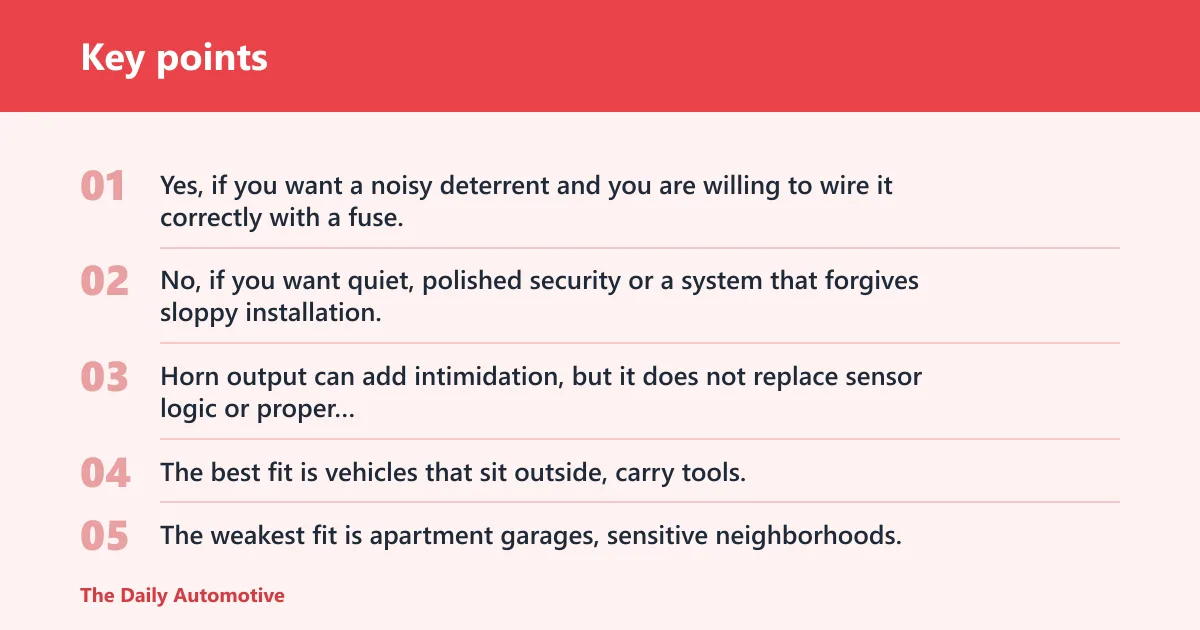


Yes, if you want a noisy deterrent and you are willing to wire it correctly with a fuse, relay, and a trigger plan. No, if you want quiet, polished security or a system that forgives sloppy installation. Horn output can add intimidation, but it does not replace sensor logic or proper electrical protection.
The best fit is vehicles that sit outside, carry tools, or already have a 12V system that can support aftermarket gear. The weakest fit is apartment garages, sensitive neighborhoods, and drivers who care more about low false-alarm risk than loud output.
What vixen Horns
Vixen Horns belongs in the horn-based deterrent category: it uses the vehicle’s audible output as the main alarm event instead of a separate siren box. That makes the idea simple, but the install is only as good as the trigger source, wiring gauge, fuse choice, and relay layout you supply.
A horn-based setup usually reacts to a trigger such as a door circuit, motion sensor, or remote arm signal. A regular car alarm more often uses its own siren module, separate logic, and broader intrusion sensing. The horn approach can be louder in some cabins and more familiar to passersby, but it can also be easier to miswire and easier to ignore if it chirps for no clear reason.
For a complete install, you still need compatible 12V power, a safe fused feed, a trigger path, and a mounting plan that keeps water and vibration away from the horn and relay. On many cars, that means adding a harness instead of relying on a bare direct splice.
How loud is a horn-based car alarm?
Horn-based alarms are loud enough to be noticed quickly in open parking areas, but loudness alone is not security. A horn that blasts continuously can attract attention faster than a short siren pulse, yet the sound only helps if it starts soon, continues long enough, and comes from a trigger thieves do not expect.
Technaxx’s TX-100 provides a useful reference point for this style of product: it uses a passive infrared motion detector and a 110dB siren. That 110dB figure shows why sound level matters, but it also shows the limit. If the trigger is weak or delayed, a loud output still comes too late.
Continuous alarm sound is more disruptive than a brief pulsed pattern, especially when the vehicle sits near apartments or office windows. That can work in your favor on a street, where quick social attention matters. It can also work against you if the alarm trips from vibration, heat, or a poor sensor angle.
Picture a pickup parked under a streetlight with tools locked in the bed. A horn that sounds immediately when the cab is opened can draw eyes from a block away. The same setup in a shared garage can create complaints long before it stops a thief.
Will it drain your battery?
It can, especially if the alarm stays powered for long periods, sits on an older battery, or is wired without sane fuse protection. Any 12V vehicle electrical system can support aftermarket devices, but the drain picture changes fast when you add standby electronics, remote receivers, or a motion unit that stays live while the car is parked.
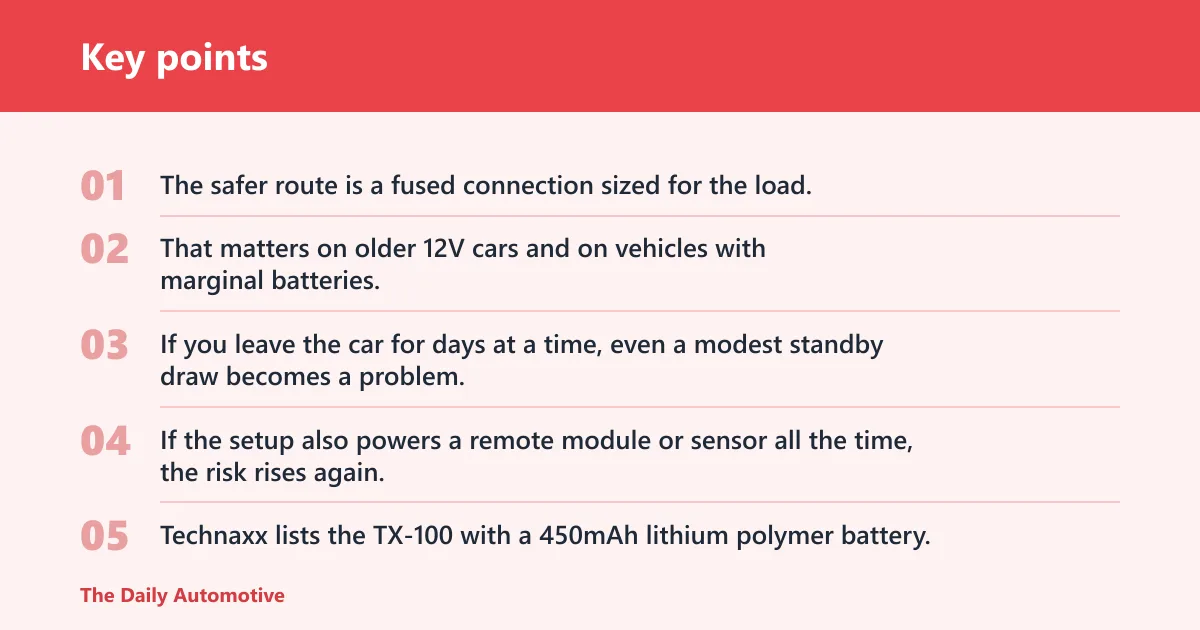
The safer route is a fused connection sized for the load, plus a relay so the trigger circuit does not carry the full horn current. That matters on older 12V cars and on vehicles with marginal batteries, because a bad install can create parasitic draw even when the alarm is “off.”
For parked-street use, battery load deserves more attention than raw volume. If you leave the car for days at a time, even a modest standby draw becomes a problem. If the setup also powers a remote module or sensor all the time, the risk rises again.
Technaxx lists the TX-100 with a 450mAh lithium polymer battery, a charging time of 3–4 hours, and standby battery life of 6 days. It also charges through a cigarette lighter socket and works as a USB car charger with two USB charging ports rated at 5V/1A. Those details make the battery tradeoff easy to see: convenience features are useful, but they are still powered features.
A proper install should use fuse protection at the source and a relay where the horn load is switched indirectly. That reduces heat, protects the circuit if the horn or wiring shorts, and lowers the chance that a small fault becomes a dead battery or melted wire.
Can a motion sensor be wired to the horn?
Yes, if the motion sensor output matches the horn trigger path and the alarm logic is planned correctly. A PIR sensor can feed a relay that activates the horn, but interior-only detection and false-trigger control matter more than raw sensitivity. Otherwise the car will punish you for heat soak, vibration, or bad placement.
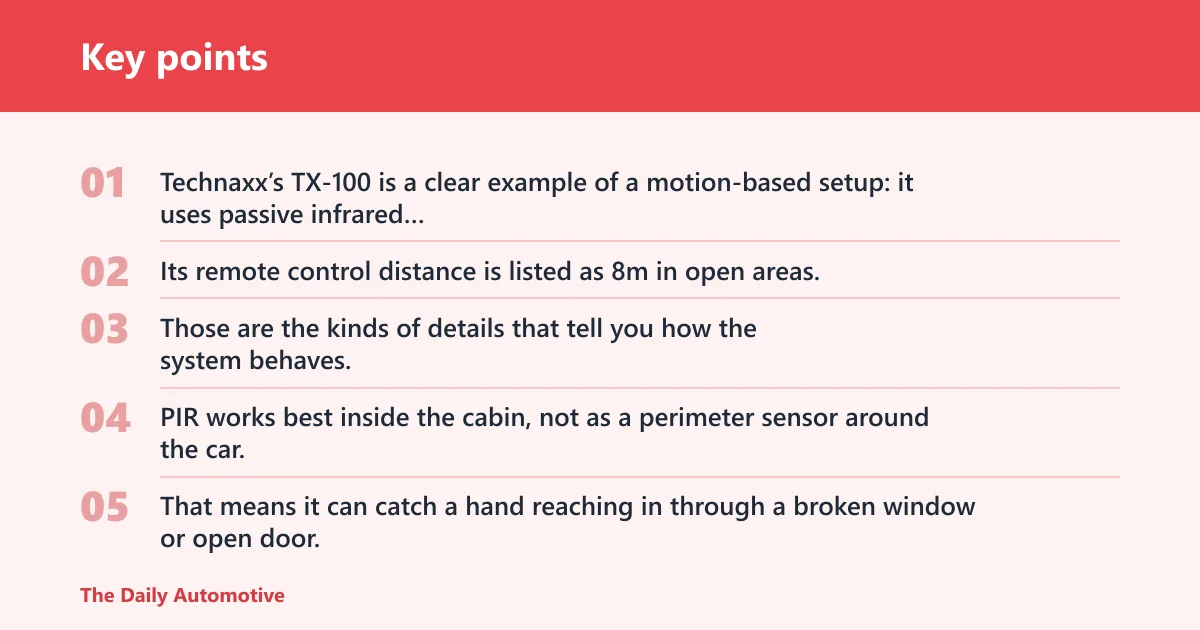
Technaxx’s TX-100 is a clear example of a motion-based setup: it uses passive infrared detection, covers the car interior with a 120° cone angle, and sounds for a maximum of 2 minutes. Its remote control distance is listed as 8m in open areas, and the remote uses a CR2032 battery. Those are the kinds of details that tell you how the system behaves, not just how loud it is.
PIR works best inside the cabin, not as a perimeter sensor around the car. That means it can catch a hand reaching in through a broken window or open door, but it will not reliably detect someone standing near the body panels unless the sensor has line of sight into the cabin.
False triggers usually come from heat shifts, cabin air movement, or vibration from heavy trucks and passing traffic. A sensor aimed at a sunlit windshield can be more troublesome than useful. Remote arming, a clear status indicator, and battery backup help, but they do not fix a poor mounting location.
A common first-timer mistake is mounting the PIR unit where cabin heat rises across the sensor face every afternoon. The result is nuisance alarms in one parking spot and silence in another, which is exactly the wrong tradeoff for a theft deterrent.
Horn alarm decision table
| Use case | Recommended trigger type | Expected false-alarm risk | Install complexity | Battery-draw concern | Horn-based fit? |
|---|---|---|---|---|---|
| Daily street parking | Door trigger plus remote arm | Medium | Moderate | Medium | Yes, if neighbors can tolerate noise |
| Apartment garage | Door trigger only | High | Moderate | Medium | No, unless the area is isolated |
| Truck/tool theft | Motion plus door trigger | Medium | High | High | Yes, strong fit if wiring is clean |
| Soft-top convertible | Door trigger with tamper response | Medium | High | Medium | Yes, but only with careful sensor placement |
| Older 12V car | Simple door circuit | Low to medium | High | High | Maybe, if charging and grounding are solid |
| Budget temporary deterrent | Remote arm or basic motion | Medium | Low to moderate | Medium | Yes, for short-term use only |
Pros and cons
Pros
- Very loud deterrent potential for open lots and street parking.
- Can work with door, motion, or remote-triggered logic depending on the setup.
- Fits older 12V vehicles better than many app-driven security products.
- Can be paired with a fuse, relay, and remote arm for a straightforward install.
Cons
- False alarms are the main failure mode if sensor placement is poor.
- Battery draw becomes a real concern on cars that sit for days.
- Noise can be a legal or social problem in apartments and garages.
- It adds deterrence, not immobilization or tracking.
Who should buy it?
This is best for drivers who want a loud deterrent for street parking, work trucks, or vehicles that carry tools and gear. It also fits owners of older 12V cars who want a simpler, hardware-based option instead of a phone-dependent system. The tradeoff is that you must accept wiring work and noise.
If you want quieter operation, tighter intrusion logic, or less battery risk, a siren-based alarm is the better choice. If your vehicle lives in an apartment garage, or if false triggers would become a daily problem, skip a horn-based setup entirely.
Suppose you park a half-ton truck outside a job site with a toolbox in back. A horn alarm can be a good fit because attention matters and the vehicle already spends time away from home power. Now change one thing: park the same truck beneath an apartment balcony. The same alarm can turn into a complaint generator.
What should you check before installing a Vixen Horns alarm?
Check vehicle compatibility first, then wiring safety, then the trigger source. Make sure the car uses a clean 12V system, confirm where the fuse should sit, and decide whether the horn needs a relay instead of a direct switch. If the product includes a remote, verify the pairing process, remote battery type, activation range, and arm/disarm behavior before final mounting.
Also confirm that your chosen trigger matches the actual use case. Door opening is useful for break-in response. Motion works better inside the cabin than outside it. A status indicator helps you see whether the system is armed, which matters more than people think when alarms are shared across drivers.
For legality, check local noise and alarm rules, not just the product listing. Rules vary by state and by city, and some places care more about nuisance alarms than about the device category itself. If the alarm can sound continuously, be stricter about where and how you use it.
Frequently asked questions
Is Vixen Horns car alarm any good?
It is good when your goal is fast attention and you are willing to wire it correctly. It is not a full replacement for a true security system with better sensing and tamper logic. For street parking and work vehicles, the loudness can be useful; for garages and quiet neighborhoods, less so.
Will a horn alarm drain my battery?
It can, particularly if the car sits parked for long periods or the install leaves a live draw on the 12V system. Fuse protection and relay use reduce risk, but they do not erase it. Older batteries and vehicles with weak charging systems need the most caution.
Can a motion alarm be wired to the horn?
Yes, a PIR sensor can trigger a relay that sounds the horn, as long as the sensor output and horn circuit are matched correctly. Technaxx’s TX-100 shows the basic pattern: PIR detection, interior coverage, remote arming, and a limited alarm window. Bad placement still causes false alarms.
What is the difference between a horn alarm and a regular car alarm?
A horn alarm uses the vehicle’s horn or horn-style output as the warning sound, while a regular alarm often relies on a separate siren module and dedicated control logic. Horn alarms can be louder in practice, but they often offer less refined sensor control and can be more annoying to neighbors.
What are the common failures with cheap car alarms?
The most common problems are nuisance triggers, weak wiring, battery drain, and missed break-ins caused by poor sensor placement. Cheap setups often fail at the boring details: no proper fuse, no relay, no clear arm status, and no thought given to vibration or heat inside the cabin.
Products related to this article
Sponsored / affiliate links. As an Amazon Associate I earn from qualifying purchases. I may earn additional commission from eligible campaigns.