Best Torque Wrenches for Car Work (2026): We Compared
For most DIY car work, buy a 3/8-inch torque wrench for general repairs, add a 1/2-inch model for wheel lugs and suspension fasteners, and choose a smaller wrench for tiny engine or interior hardware. Pick the wrong size and you can stretch bolts, warp brake parts, strip threads, or leave wheels under-torqued. This guide matches torque wrench type and drive size to wheels, brakes, suspension, and smaller jobs so you buy the right tool once.
Quick comparison
| Product | Badge | Best for | Price | ||
|---|---|---|---|---|---|
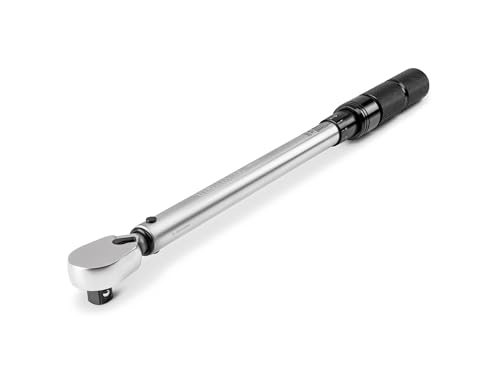 |
TEKTON 1/2 Inch Drive Micrometer Torque WrenchTEKTON | Our pick | 1/2-inch · 40-200 ft-lb · micrometer | $125.00
Price as of 3 Nov 2026
|
View |
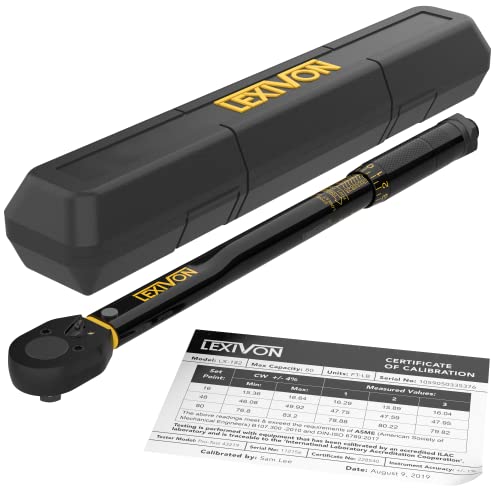 |
LEXIVON 3/8-Inch Drive Click Torque Wrench 10~80LEXIVON | Budget pick | 3/8-inch · 10-80 ft-lb · click | $39.97
Price as of 3 Nov 2026
|
View |
 |
GEARWRENCH 1/2" Drive Micrometer Torque Wrench 30-250GEARWRENCH | Also great | 1/2-inch · 30-250 ft-lb · micrometer | $149.00
Price as of 3 Nov 2026
|
View |
The quickest answer is simple: use a 1/2-inch drive for lug nuts and heavier under-car work, and a 3/8-inch drive for smaller bolts and tight spaces. The right pick depends on the fastener, the target torque, and how close the job sits to the middle of the wrench’s range.
How we chose
This guide uses manufacturer specs, published product details, and buyer feedback. The focus is fit for job type, usable torque range, drive size, accuracy spec, and whether the wrench type is practical for DIY car work.
Range matters more than brand hype. A wrench that sits near the middle of its scale is easier to use well, while a tool pushed to the edge of its range is more likely to miss the target.
Drive size matters just as much. A 1/2-inch drive covers lug nuts and most under-car work, while a 3/8-inch wrench is a better match for smaller bolts.
Which torque wrench do you need?
For wheel work, start with a 1/2-inch torque wrench. For brake, interior, and smaller engine fasteners, a 3/8-inch model usually fits better. The main job is pairing the tool with the fastener, so you are not forcing a large wrench onto delicate hardware or stretching a small bolt with a tool that feels awkward in a tight space.
Wheel and lug nut use
Lug nuts are the clearest reason to buy a 1/2-inch drive first. A 1/2-inch wrench covers lug nuts and most under-car work, and common lug nut torque can fall anywhere between 80 and 140 lb-ft. Tighten wheel fasteners in the vehicle maker’s specified star sequence, then recheck the set value if the manual calls for it.
Brake and suspension fasteners
Brake and suspension work often lands in the same torque neighborhood as wheel service, which is why a 1/2-inch wrench is still the default for many of those jobs. But small caliper bolts, bracket hardware, and interior trim fasteners can sit lower, where a 3/8-inch wrench gives better control and less risk of overshooting.
Smaller engine and interior bolts
For accessory brackets, intake hardware, interior bolts, and other lower-torque fasteners, a 3/8-inch wrench is often the better match. Garage Chart recommends a 3/8-inch wrench for small bolts, and that smaller drive size is easier to manage when the listed torque is well below lug nut territory.
Say your service manual calls for a low-torque fastener on a valve cover or interior bracket. A 1/2-inch wrench can work, but it is more tool than the job needs, and it is easier to overshoot when the usable range sits near the bottom of the scale.
TEKTON 1/2 Inch Drive Micrometer Torque Wrench: best for wheel and under-car work
This TEKTON 1/2-inch micrometer wrench fits buyers who want a straightforward tool for lug nuts and other heavier automotive fasteners. The listed 40-200 ft-lb range puts it in the right neighborhood for wheel work and many suspension jobs, and the included calibration certificate is a useful proof point for owners who want documentation from day one.
What stands out is the dual-direction torque setting and the easy-to-read micrometer scale. That makes it a sensible pick for a car owner who wants a single 1/2-inch wrench for common wheel and under-car use.
The drawback is simple: the 40-200 ft-lb range is not ideal for smaller bolts. It is the wrong size for delicate fasteners, so this is not the only wrench most owners will want.
LEXIVON 3/8-Inch Drive Click Torque Wrench: best for smaller fasteners
This LEXIVON 3/8-inch click wrench is aimed at lower-torque car jobs where control matters more than brute force. Its 10-80 ft-lb range fits many brake, interior, and small engine fasteners, and it ships pre-calibrated, which is helpful for buyers who want to get to work quickly.
The click feedback is the main reason to look at it. The same source notes that click wrenches need no batteries, and the click sign at the set value keeps the tool simple in daily use.
The tradeoff is that a 3/8-inch wrench will not replace a 1/2-inch model for wheel lugs or heavier under-car work. It is the better tool only when the fasteners are smaller and the torque spec stays modest.
GEARWRENCH 1/2" Drive Micrometer Torque Wrench: best for higher-range wheel work
This GEARWRENCH 1/2-inch micrometer wrench suits owners who want a wider range for automotive work without moving to a digital model. The listed 30-250 ft-lb range gives it more headroom than a standard wheel-only wrench, which helps if the same tool will see suspension and heavier under-car use.
The quick adjustment collar is a practical detail, and the stated torque accuracy within spec is useful for buyers who care about repeatability. For car owners who want one 1/2-inch wrench to cover more jobs, that range is the main appeal.
The drawback is that its broad range can tempt people to use it outside the middle of the scale. Like any torque wrench, it is best when the job falls near the center of its working range, not at the extremes.
1/2-inch drive torque wrench
For most automotive work, a 1/2-inch drive is the best first buy. It covers lug nuts and most under-car work, and a common working range around 10-150 ft-lb covers many car jobs. That makes it the right starting point for wheel changes, suspension fasteners, and other heavier bolts.
Use a 1/2-inch wrench when the spec is in the lug nut and suspension zone, especially if the fastener needs steady torque rather than fine fingertip control. It is also the safer choice when the fastener size is large enough that a smaller wrench feels cramped or underbuilt.
Why this drive size fits lug nuts
Wheel work is the most common use case for a car owner, and the 1/2-inch drive matches it well. Lug nuts are typically checked in ft-lb, should follow the vehicle service manual specs, and should be tightened in a star sequence. That combination points directly to a 1/2-inch wrench for most owners.
Typical torque range to look
The same source says 10-150 ft-lb suits most car jobs, and that is a useful target band for a 1/2-inch wrench. Many owners will want a tool that lives comfortably in the middle of that span, because torque accuracy is best in the middle of the scale.
When to step down to 3/8-inch
Step down when the fastener is smaller, the torque spec is lower, or the workspace gets tight. A 1/2-inch wrench can be clumsy on smaller engine or interior bolts, and the risk is overshooting a low spec because the tool feels less precise than the job demands.
3/8-inch drive torque wrench
A 3/8-inch drive is the better choice for smaller, lower-torque bolts. The same source recommends a 3/8-inch wrench for small bolts, and the working range is often around 10-80 ft-lb. That makes it useful for interior hardware, brake hardware, and many smaller engine bolts.
This size earns its place because it is easier to control on lower-torque fasteners. If a job lives well below lug nut torque, the smaller drive can make the wrench feel more natural and reduce the chance of overdoing the final pull.
Where a smaller drive helps
Interior trim, sensor brackets, accessory hardware, and some brake fasteners are all good candidates for a 3/8-inch wrench. The smaller head and lower range are easier to manage when there is little room to swing the tool or when the spec is far below wheel-fastener levels.
Typical torque range to look for: a 3/8-inch model commonly works
A 3/8-inch model commonly works in the lower half of the automotive torque world. Around 10-80 ft-lb is a practical place to shop, because it keeps the tool centered on the kind of jobs this drive size does best.
When 1/2-inch is too much tool
Use the larger wrench only when the job needs it. If you are working on smaller bolts, a 1/2-inch model can feel oversized, and using a large wrench near the bottom of its range is not a great setup for accuracy or comfort.
Are digital torque wrenches better?
Digital torque wrenches are better for some buyers, but not for everyone. They give an exact readout and an alert at target, which is useful if you want a clear number instead of a click signal. For many DIY car owners, though, a click wrench is still simpler, cheaper, and easier to live with.
Click wrench vs digital wrench
Click torque wrenches give mechanical feedback through an audible and tactile click, and they do not need batteries. Digital torque wrenches use a screen and beep at target, which can help when you want a precise readout. The tradeoff is more cost and another power source to manage.
Battery and cost tradeoffs
Digital models usually cost more and depend on batteries, so they make sense when the readout matters enough to justify the extra expense. A click wrench is the simpler choice for lug nuts and basic maintenance, especially if the owner wants a tool that stays ready without battery checks.
When digital makes sense
Digital makes the most sense when you want a direct display, target alert, or very fine adjustment. A model with 0.1 ft-lb increments can feel more exact for careful work, and a digital wrench with a 25 to 250 ft-lb range can span a lot of car tasks. Just remember that the higher price and battery needs are part of the deal.
Torque decision table
| Job category | Typical fastener type | Recommended wrench | Why it fits | When to step up or down in size |
|---|---|---|---|---|
| Wheel change | Lug nuts | 1/2-inch click or micrometer torque wrench | Best match for wheel work and common lug nut torque in ft-lb | Step up only if the listed torque sits near the top of a lower-range wrench; step down if the job is light-duty and the spec is much lower |
| Brake hardware | Caliper bolts, bracket bolts | 3/8-inch for smaller bolts; 1/2-inch for heavier bracket fasteners | Brake work spans both lower and moderate torque values | Step down when the fastener is small or the spec is below the middle of a 1/2-inch range |
| Suspension work | Control arm and linkage fasteners | 1/2-inch torque wrench | Fits under-car work and larger hardware better than a smaller drive | Step down only for small links or accessory hardware with lower specs |
| Engine accessories | Accessory brackets, smaller cover bolts | 3/8-inch torque wrench | Better control for lower-torque bolts and tight spaces | Step up if the spec moves into moderate torque and the bolt head is larger |
| Interior hardware | Trim bolts, seat or console fasteners | 3/8-inch torque wrench | Smaller drive size is easier to handle in cramped spaces | Step up only if the service manual calls for noticeably higher torque |
| Battery replacement and basic maintenance | Hold-down hardware, small clamps | 3/8-inch torque wrench | Vehicle and service manuals often call for modest torque on these parts | Step down if the hardware is tiny; step up only for larger hold-downs or bracket bolts |
Picture a lug nut job that calls for a mid-range ft-lb spec and a 1/2-inch wrench in the middle of its scale. That is a clean match. Now picture the same wrench trying to handle a tiny interior bracket bolt. The tool still turns the fastener, but the risk of overshooting goes up fast.
Accuracy specs and where they matter
Common accuracy ratings include +/- 2%, +/- 3%, and +/- 4%, and counterclockwise accuracy may differ from clockwise. That matters because the number on the box does not guarantee the same result in every direction or at every point on the scale. A calibration certificate may also be included.
The practical rule is simple: keep the wrench near the center of its range when you can. Accuracy is best in the middle of the scale, and car jobs often span 10-250 ft-lb, so a badly chosen wrench can leave you working at one extreme all the time.
How to read torque range
Do not buy by maximum number alone. A wrench that technically reaches the target may still be a poor fit if the job lives near the bottom or top of the scale. The better question is whether the fastener spec sits in the comfortable middle of the tool’s range.
Which one should you buy?
If you only plan to do wheels and under-car work, buy the 1/2-inch TEKTON or GEARWRENCH size first and keep the range centered on your common lug nut specs. If you want one tool for smaller bolts, the LEXIVON 3/8-inch click wrench makes more sense. If you want one 1/2-inch wrench with wider coverage, the GEARWRENCH range is the more flexible pick.
A common first-timer mistake is buying a big 1/2-inch wrench because it sounds like the “real” automotive choice, then trying to use it on tiny brackets and interior fasteners. That is backwards. Match the wrench to the job, not the other way around.
Cheap torque wrenches
Are cheap torque wrenches any good? Some are fine for occasional DIY use if the range fits the job and the tool is treated carefully. The weak point is usually consistency, not the basic idea of the tool. If you buy cheap, pay closer attention to range, readability, and whether the wrench ships with any calibration documentation.
Brand choice
What brand of torque wrench is best? There is no single best brand for every buyer, but the better choice is the one whose specs match your car work. For DIY use, the listed range, drive size, and accuracy matter more than logo size, especially when the job is wheel work versus smaller fasteners.
Calibration and storage
Do I need to calibrate a torque wrench? Torque wrenches can drift over time, so periodic checks make sense if you rely on the tool a lot. Store click wrenches at the lowest setting after use, and if the wrench gets heavy use, re-check calibration every year or two.
Loose fasteners
Can I use a torque wrench to loosen bolts? No. Use the torque wrench for tightening only, not for breaking fasteners loose. A stuck bolt needs the correct loosening tool and method; forcing a torque wrench into that job can damage the mechanism and throw off the setting.
Frequently asked questions
Are cheap torque wrenches any good?
They can be, if you keep the job simple and the range sensible. Cheap torque wrenches are usually fine for occasional wheel changes or light maintenance, but the buyer should watch for weak readability, vague accuracy claims, and a range that puts the target fastener too close to an extreme.
What brand of torque wrench is best
The best brand is the one whose drive size, range, and accuracy fit your work. For DIY car tasks, a clear scale, a usable middle range, and a known accuracy spec matter more than the label. The right brand for lug nuts is not always the right brand for small bolts.
What torque impact wrench for automotive work
An impact wrench is not a torque wrench, and it should not be used as a substitute for final tightening. For automotive work, use the impact tool for removal when appropriate, then finish with the correct torque wrench. Final wheel torque still needs the service manual spec and the proper tightening sequence.
Are digital torque wrenches better: digital torque wrenches are better?
Digital torque wrenches are better if you want a readout and an alert at target, and they can be easier to read in low light. They are not automatically the better buy for everyone, because they cost more and need batteries. A click wrench is still the simpler option for many car owners.
What size torque wrench do I need for lug nuts?
For lug nuts, a 1/2-inch drive is the right starting point for most car owners. That size covers wheel work and most under-car jobs, and common lug nut torque often falls in the range a 1/2-inch wrench handles well. Always follow the vehicle service manual for the exact spec.
Can I use a torque wrench to loosen bolts?
No. A torque wrench is for tightening to a specified value, not for breaking fasteners loose. Using it to loosen bolts can damage the wrench’s mechanism and throw off its calibration. If a bolt is stuck, use the correct removal tool before switching back to the torque wrench for final tightening.
Follow the vehicle and product manual. Never work under a vehicle supported only by a jack; if you need to get underneath, use jack stands on level ground.
Products related to this article
Sponsored / affiliate links. As an Amazon Associate I earn from qualifying purchases. I may earn additional commission from eligible campaigns.