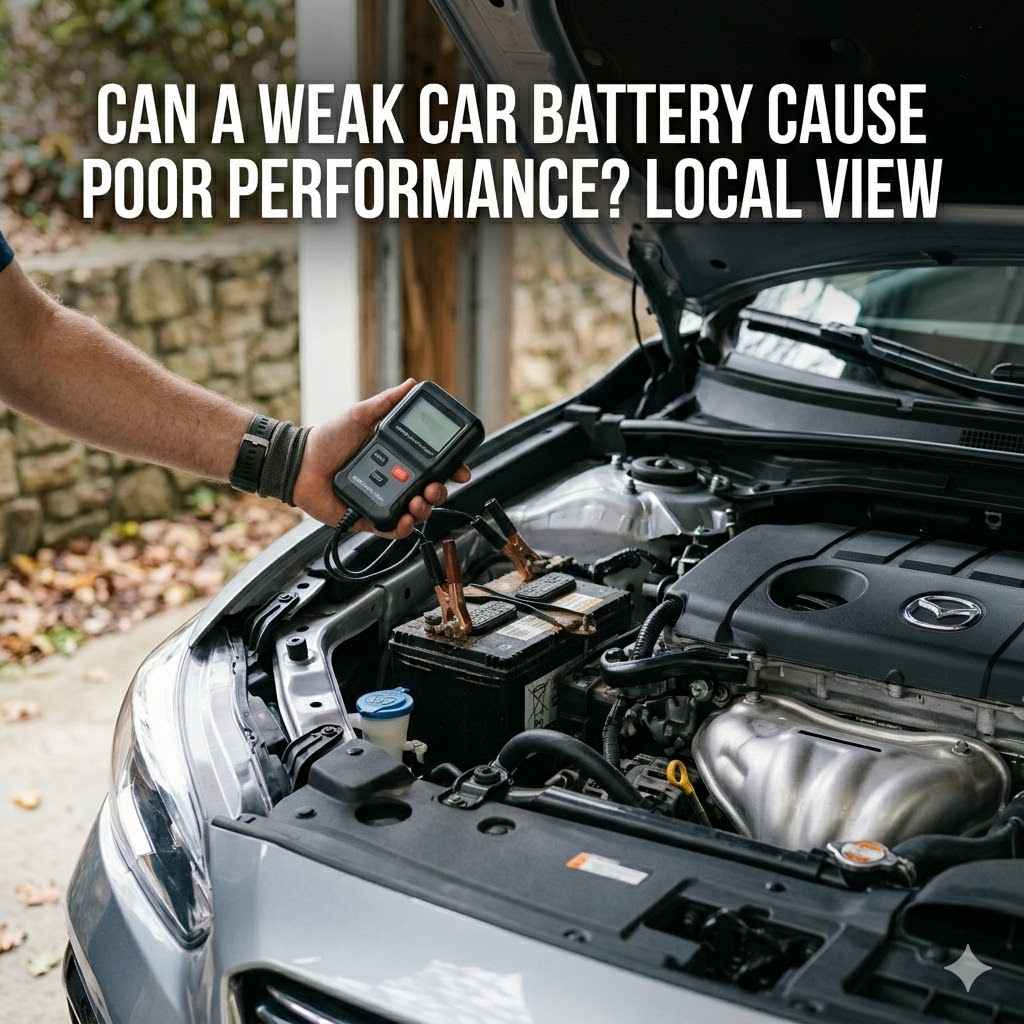
Can a Weak Car Battery Cause Poor Performance? Local View
It’s really common to wonder, Can a Weak Car Battery Cause Poor Performance? Local View when your car starts acting strange. Sometimes, figuring out car problems can feel a bit tricky when you’re new to it.
You might see odd symptoms and not know where to start. Don’t worry, though! We’ll break it down simply, step by step, so you can get your car running smoothly again.
We’ll look at how a battery affects your car and what you can do about it.
Understanding Car Battery Health and Performance
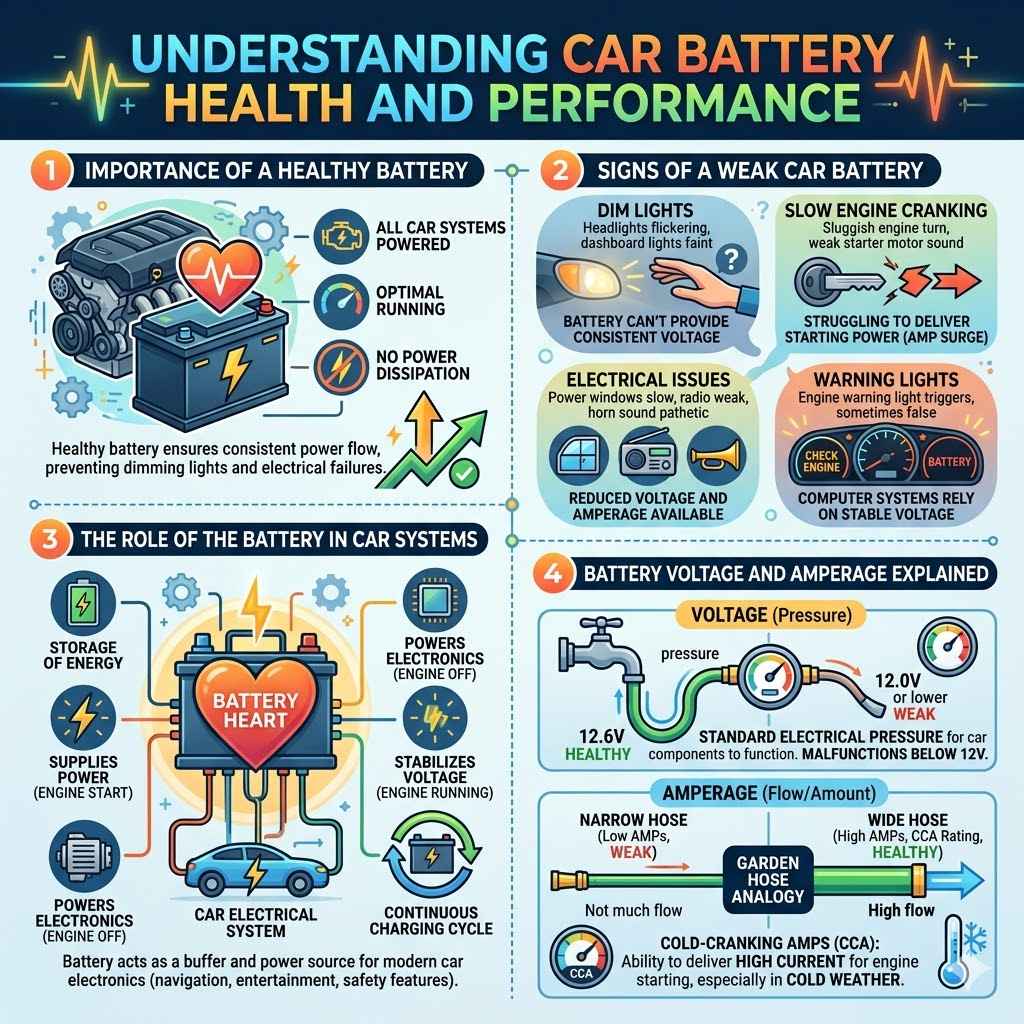
This section explains why your car battery is super important for how your vehicle runs. A healthy battery gives all the parts of your car the power they need to work right. When the battery gets weak, it’s like your car losing its energy.
This can make many different things go wrong, from dim lights to slow acceleration. We will explore the signs of a weak battery and why they show up.
Signs of a Weak Car Battery
A weak car battery might show its age in several ways. You might notice your car’s lights are dimmer than usual, especially when the engine isn’t running. The dashboard lights might flicker or seem a bit faint.
When you try to start your car, you might hear a slow cranking sound instead of the usual quick engine turn. This is the battery struggling to send enough power to the starter motor.
Another sign is when your electrical accessories don’t work as well. This could mean your power windows move slower, the radio seems weak, or even your car’s horn sounds a bit pathetic. Sometimes, the engine warning light might come on, even if there isn’t a major engine problem.
These symptoms are often linked directly to the reduced voltage and amperage a failing battery can provide.
Dim Lights and Electrical Issues
A weak battery struggles to provide consistent power. This affects everything from your headlights and interior lights to your power windows and radio. Think of it like a phone battery nearing 1%. Everything starts to slow down and dim.
Slow Engine Cranking
When you turn the key, the starter motor needs a lot of power to get the engine going. A weak battery can’t deliver this surge of energy, resulting in a slow, sluggish crank. It sounds like the engine is trying but just can’t quite make it.
Warning Lights
While warning lights can indicate many issues, a weak battery can sometimes trigger them. This is because the car’s computer systems rely on stable voltage. Fluctuations caused by a failing battery can lead to false error readings.
The Role of the Battery in Car Systems
Your car battery is like the heart of your vehicle’s electrical system. It stores electrical energy and supplies the power needed to start the engine. It also powers all the electronic components when the engine is off and helps to stabilize the voltage when the engine is running.
Modern cars have many electronic systems, like the navigation, entertainment, and safety features, that all rely on a consistent power supply from the battery.
When the engine is running, the alternator takes over and provides power. However, the battery still plays a vital role in smoothing out voltage spikes and drops, ensuring that all the delicate electronics receive a steady flow of electricity. A compromised battery means less stable power, which can lead to erratic behavior in these systems.
The battery’s main job is to deliver a strong burst of electrical current to the starter motor, which then cranks the engine. This requires a significant amount of power. After the engine starts, the alternator generates electricity to power the car’s systems and recharge the battery.
This continuous cycle needs the battery to be in good working order.
Battery Voltage and Amperage Explained
Voltage is like the “pressure” of electricity, while amperage is like the “flow” or amount of electricity. A car battery typically operates at 12 volts. This is the standard electrical pressure needed for most car components to function.
When the battery’s voltage drops below this, things start to malfunction.
Amperage, measured in cold-cranking amps (CCA), is the battery’s ability to deliver a high current for starting the engine, especially in cold weather. A higher CCA rating means the battery can provide more power for starting. If a battery has low amperage, it might not be able to turn the starter motor effectively, leading to slow starts or no start at all.
Think of a garden hose. Voltage is the water pressure from the tap. Amperage is how wide the hose is and how much water can flow through it at once.
If the pressure is low (low voltage), the water won’t spray far. If the hose is narrow (low amperage), even with good pressure, not much water comes out. Both are needed for proper function.
How a Weak Battery Affects Engine Performance
A weak battery doesn’t just affect your car’s lights or radio; it can significantly impact how your engine runs. The engine control unit (ECU), which is the computer that manages your engine, needs a steady supply of power to operate correctly. If this power is unstable due to a weak battery, the ECU might make wrong decisions about fuel injection, ignition timing, and other critical functions.
This can lead to a noticeable drop in performance.
You might experience hesitation when you accelerate, a rough idle, or even occasional stalling. The car might feel sluggish and not as responsive as it used to be. This is because the engine isn’t getting the precise electrical signals it needs from the ECU.
We will explore these specific performance issues and how they connect back to the battery’s condition.
Engine Hesitation and Sluggishness
When you press the gas pedal, you expect your car to respond quickly. If your battery is weak, the engine might hesitate. This means there’s a delay between when you push the pedal and when the car starts to speed up.
It can feel like the car is struggling to catch its breath.
This hesitation happens because the engine’s computer needs a stable electrical signal to tell the engine how much fuel to use and when to ignite it. A weak battery can cause the voltage to drop during acceleration, disrupting these signals. The computer might not get accurate information, leading to less power being delivered to the wheels.
The feeling of sluggishness is also a common symptom. Your car might not have the same get-up-and-go. It feels heavy and slow to accelerate, even on the highway.
This is also a direct result of the engine not performing at its best due to inconsistent power delivery from the electrical system.
Rough Idling and Stalling
An engine at idle, when you’re stopped at a light or in traffic, should run smoothly. If your battery is weak, you might notice the engine starts to shake or vibrate more than usual. This is called a rough idle.
It’s like the engine is having trouble staying steady.
Sometimes, the engine might even stall completely, meaning it shuts off unexpectedly. This is a more serious symptom of a severely weak battery. The engine control unit needs consistent power to maintain a steady idle speed.
If the voltage fluctuates too much, it can cause the engine to falter and die.
This can be quite alarming, especially in stop-and-go traffic. It’s a clear sign that the electrical system, starting with the battery, is not functioning as it should. The engine needs a reliable electrical “brain” to keep running smoothly, and a weak battery compromises that reliability.
Impact on Fuel Efficiency
Interestingly, a weak battery can also affect your car’s fuel efficiency. When the engine isn’t running optimally due to inconsistent power, it has to work harder to perform tasks. This means it might burn more fuel to achieve the same level of performance.
The engine control unit (ECU) constantly monitors various sensors to ensure the most efficient fuel mixture. If the ECU is not receiving stable power, its calculations might be off. This can lead to the engine running inefficiently, using more gasoline than it normally would.
Over time, this can add up to more frequent trips to the gas station and higher fuel costs.
So, while it might not be the first thing you think of, a struggling battery can contribute to your gas bill. Ensuring your battery is in good shape is not just about starting your car; it’s also about keeping it running as efficiently as possible.
Example Scenario
Imagine Sarah driving her car to work. Lately, she’s noticed her car feels a bit sluggish, especially when she’s accelerating from a stop. Sometimes, when she’s waiting at a red light, the engine seems to shake a little more than usual.
She also thinks her gas mileage has been worse lately.
Sarah initially thought it might be something with the transmission or the fuel system. However, after checking her headlights and noticing they seemed a bit dim, she decided to get her car’s battery tested. The mechanic confirmed that her battery was weak and not holding a charge properly.
After replacing the battery, Sarah immediately noticed a difference. Her car felt more responsive when she accelerated, the engine idled smoothly, and she felt more confident in its performance. She also saw an improvement in her fuel economy on her next few fill-ups.
This experience showed her firsthand how a weak battery can indeed cause noticeable performance issues.
Diagnosing and Addressing Battery Issues Locally
When you suspect your car’s battery is the culprit behind poor performance, the next step is to get it checked out. Many local auto parts stores and repair shops offer free battery testing. This is a quick and easy way to find out if your battery is weak or has failed completely.
They use special equipment to measure the battery’s voltage and its ability to hold a charge.
If the test shows your battery is weak, you’ll likely need to
Getting Your Battery Tested Locally
The first and most important step is to confirm that the battery is indeed the problem. Many local mechanics and auto parts stores provide this service for free. They use a device called a battery tester or a multimeter.
This tool checks the battery’s voltage and its cranking amps.
These tests can quickly tell you if the battery is at full strength, needs charging, or is on its way out and needs replacement. It’s a simple procedure that takes only a few minutes. Don’t hesitate to ask for this test if you’re experiencing any of the symptoms we’ve discussed.
Some common places to get your battery tested include:
- Major auto parts retailers (e.g., AutoZone, Advance Auto Parts, O’Reilly Auto Parts)
- Independent mechanic shops
- Dealership service centers
What a Battery Test Reveals
A battery test typically looks at a few key things. It measures the battery’s voltage, which should be around 12.6 volts when fully charged and the engine is off. It also measures the battery’s ability to deliver cold-cranking amps (CCA), which is crucial for starting the engine, especially in cold weather.
The tester simulates the load the battery experiences during starting.
The results will usually indicate whether the battery is “Good,” “Weak,” or “Bad.” A “Weak” battery might still start your car but is failing and likely causing performance issues. A “Bad” battery has likely failed its test and needs immediate replacement. The tester might also check the alternator to ensure it’s charging the battery correctly.
This diagnostic step is essential because other car problems can sometimes mimic battery issues. For example, a faulty alternator could prevent the battery from charging properly, making it seem like the battery is weak when it’s actually the alternator that needs attention.
Replacing a Weak Battery
If your battery test comes back showing a weak or bad battery, replacement is usually the solution. Most auto parts stores sell a wide range of batteries for different car makes and models. They can help you find the right one for your vehicle.
The replacement process itself is often straightforward for most cars. It involves disconnecting the old battery, cleaning the terminals, and installing the new one. It’s important to connect the new battery correctly, usually positive first and then negative.
If you’re not comfortable doing this, a professional mechanic or the auto parts store staff can handle it.
The cost of a new battery can vary depending on the brand and type, but it’s generally a reasonable investment to ensure your car runs reliably. Once the new battery is installed, you should notice an immediate improvement in how your car starts and performs.
DIY Battery Replacement Steps
Replacing a car battery yourself can save you money and is quite manageable for many car owners. Here are the basic steps:
- Gather your tools: You’ll likely need a wrench or socket set to loosen the battery terminal clamps and hold-down bracket.
- Safety first: Wear safety glasses and gloves. Car batteries contain acid and can produce flammable gas.Ensure the engine is off and the key is out of the ignition.
- Disconnect the old battery: Loosen the nut on the negative (-) terminal clamp first and remove it. Then, disconnect the positive (+) terminal clamp. Always disconnect the negative first to prevent accidental short circuits.
- Remove the hold-down bracket: This bracket secures the battery in its tray.Loosen and remove it.
- Lift out the old battery: Batteries are heavy, so lift with your legs.
- Clean the battery tray and terminals: Use a wire brush to clean any corrosion from the battery tray and the cable clamps.
- Install the new battery: Place the new battery in the tray, ensuring it’s oriented correctly.
- Secure the hold-down bracket: Reinstall and tighten the bracket to keep the battery firmly in place.
- Connect the new battery: Attach the positive (+) terminal clamp first, then the negative (-) terminal clamp. Tighten them securely.
- Test your car: Start the engine to make sure everything is working properly.
When to Call a Professional
While DIY battery
Also, if you’ve
Don’t hesitate to seek professional help if you feel overwhelmed or if your car continues to act up. A skilled technician can quickly identify the root cause and get your car back to its optimal performance.
Maintaining Your Car Battery for Peak Performance
Once you’ve got a healthy battery, keeping it that way is key to preventing future performance problems. Regular maintenance can significantly extend the life of your battery and ensure your car always starts and runs smoothly. This involves simple checks and practices that don’t take much time but offer big rewards.
We’ll look at easy ways to care for your battery, from keeping the terminals clean to understanding the impact of your driving habits. Taking these steps will help you avoid those frustrating moments of a car that just won’t start or a sudden drop in performance.
Cleaning Battery Terminals
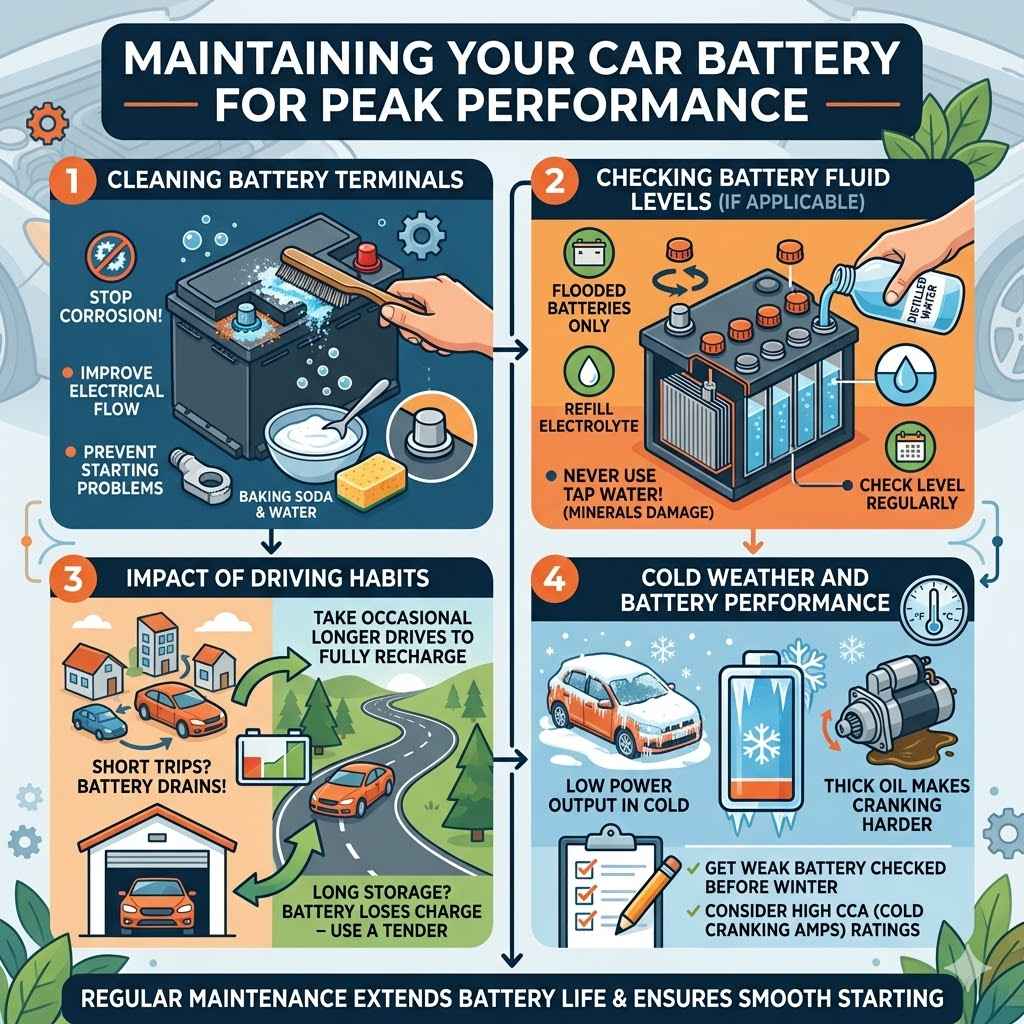
Over time, corrosion can build up on your battery terminals. This usually looks like a white or bluish powdery substance. Corrosion acts as an insulator, preventing the electrical current from flowing freely between the battery and the car’s cables.
This can lead to starting problems and other electrical issues.
Cleaning the terminals is a simple DIY task. You’ll need a wire brush, some baking soda, and water. Mix a paste of baking soda and water, apply it to the terminals, and scrub away the corrosion.
Rinse with clean water and dry thoroughly. Make sure the battery is disconnected before cleaning.
Keeping these connections clean ensures that the battery can efficiently send power throughout the car’s electrical system. It’s a small step that makes a big difference in reliability.
Checking Battery Fluid Levels (If Applicable)
Some types of car batteries, known as flooded batteries, have removable caps that allow you to check the electrolyte fluid levels. If the fluid level is low, it can reduce the battery’s capacity and performance. You can top them up with distilled water.
However, many modern car batteries are “maintenance-free” and sealed, so this step doesn’t apply to all vehicles.
If your battery has these caps, check the fluid level regularly. Make sure the plates inside the battery are covered by fluid. Never use tap water, as minerals in it can damage the battery.
Only use distilled water.
This simple check, if your battery type requires it, can prevent premature battery failure and ensure it operates at its best. Always refer to your car’s owner’s manual to see if your battery requires fluid level checks.
Impact of Driving Habits
How you drive your car can also affect your battery’s health. Frequent short trips, where the engine doesn’t run long enough to fully recharge the battery, can gradually drain it. If you often drive only for a few minutes at a time, the alternator might not have enough time to replenish the power used to start the car.
Conversely, leaving your car parked for very long periods without driving can also be hard on the battery. Car batteries naturally lose charge over time, and without the alternator recharging them, they can become deeply discharged, which can damage them.
To help your battery stay healthy, try to take your car for a longer drive occasionally, at least once a month, to allow the alternator to fully recharge it. If you know you’ll be storing your car for an extended time, consider using a battery tender or disconnect the battery.
Cold Weather and Battery Performance
Cold weather significantly impacts a car battery’s performance. Batteries produce less power in cold temperatures. At the same time, your engine oil becomes thicker, making it harder for the starter motor to crank the engine.
This combination makes starting your car in winter much more challenging.
A battery that is already weak will struggle even more in the cold. This is often when a weakening battery finally fails completely. Regular battery checks, especially before winter, can help prevent being stranded on a cold day.
If you live in a region with very cold winters, consider getting a battery that is rated for higher cold-cranking amps (CCA). This will give your battery a better chance of starting your car when temperatures drop.
Frequently Asked Questions
Question: Can a weak car battery make my car run rough?
Answer: Yes, a weak car battery can cause your car to run rough. The engine control unit (ECU) needs stable power to manage engine functions like fuel injection and ignition. If the battery voltage fluctuates, the ECU might not operate correctly, leading to a rough idle or poor engine performance.
Question: How often should I test my car battery?
Answer: It’s a good idea to test your car battery once a year, especially before winter. Many auto parts stores offer free battery testing. If your car is older or you’ve noticed any symptoms of a weak battery, you might want to test it more frequently.
Question: Can a weak battery drain my car’s other electronics?
Answer: A weak battery might struggle to power all the car’s electronics, but it doesn’t typically “drain” them in the sense of damaging them. Instead, you might notice that accessories like power windows, radios, or interior lights don’t work as well or seem weaker when the battery is low on power.
Question: My car won’t start, but the lights turn on. Is it the battery?
Answer: It’s possible. The lights require much less power than the starter motor. If the lights come on but the engine doesn’t crank or cranks very slowly, it often indicates a weak battery that can’t provide the necessary power for starting.
However, a faulty starter motor can also cause this issue.
Question: How long does a car battery typically last?
Answer: Car batteries typically last between 3 to 5 years. However, this can vary greatly depending on factors like climate, driving habits, and battery quality. Regular maintenance and testing can help maximize a battery’s lifespan.
Summary
So, yes, a weak car battery can absolutely cause poor performance. From slow starts and dim lights to engine hesitation and rough idling, the battery is a key player. Getting your battery tested locally is simple and will tell you if it needs replacing.
Keeping your battery terminals clean and adopting good driving habits will help it last longer.