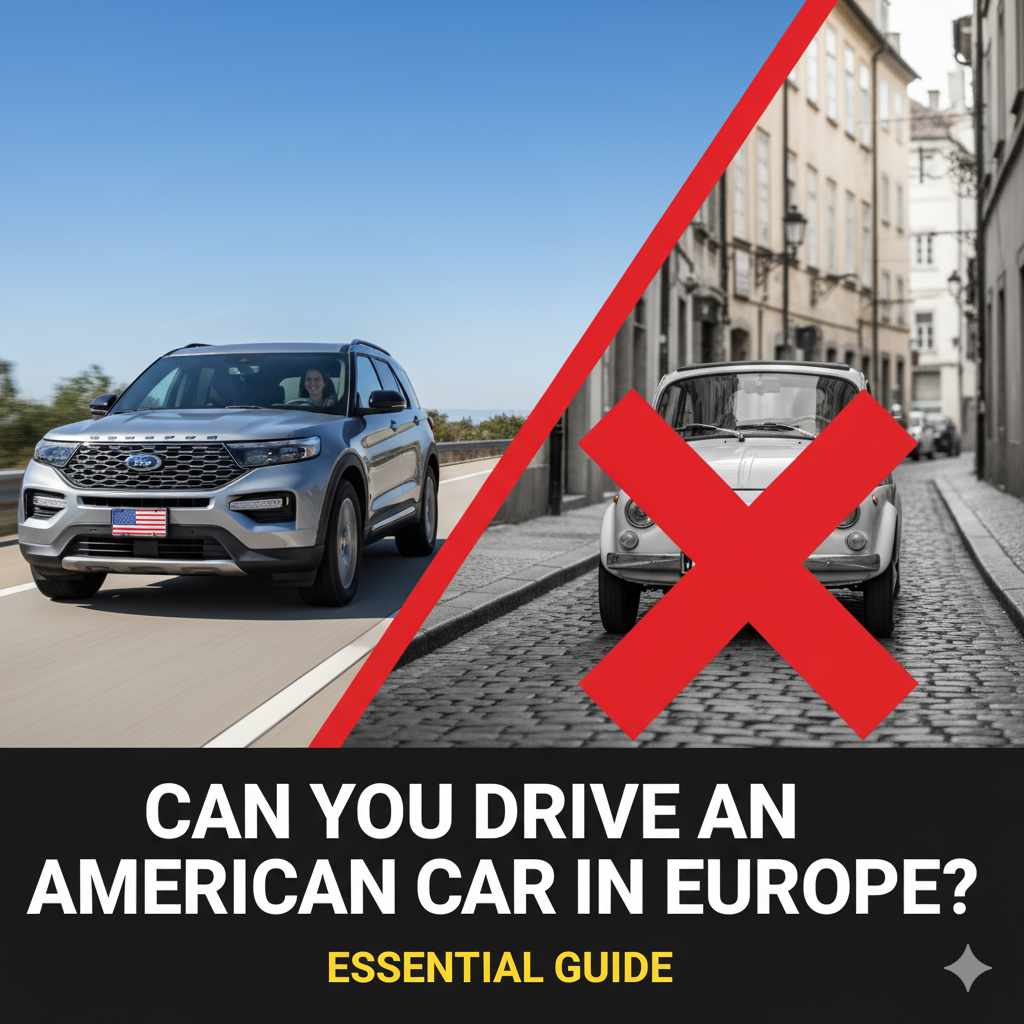
Can You Drive An American Car In Europe? Essential Guide
Yes, you can generally drive an American car in Europe, but it requires careful preparation. Key considerations include vehicle compatibility with European roads, necessary paperwork like international driving permits, and understanding local traffic laws and vehicle regulations. It’s wise to research specific country requirements and potential modifications needed for a smooth experience.
Planning an adventure abroad that includes bringing your trusty American car? The thought of exploring Europe’s charming streets and scenic routes in your own vehicle can be exciting! But before you pack your bags and chart your course, you likely have a big question on your mind: Can you actually drive an American car in Europe? It’s a common concern, and rightfully so. Europe has different road standards, regulations, and even fuel types than what you might be used to in the United States.
The good news is that with a bit of research and preparation, driving your American car on European soil is often very achievable. We’re here to walk you through everything you need to know, step by step, to make your European driving dream a reality. Let’s get started on making sure your journey is as smooth as it is memorable!
Can You Drive An American Car In Europe? The Short Answer & What to Know
Let’s dive right into the core question: Can you drive an American car in Europe? The straightforward answer is yes, but it’s not quite as simple as just shipping it over and hitting the road. There are several important factors to consider to ensure your vehicle is legal, safe, and practical for European driving. Think of it like preparing your car for a long road trip, but with a few international twists.
From understanding the physical differences in roads and car sizes to navigating different traffic laws and obtaining the right paperwork, a little foresight goes a long way. We’ll break down these crucial aspects so you can confidently assess if and how you can bring your American car to Europe and enjoy your travels without unexpected roadblocks.
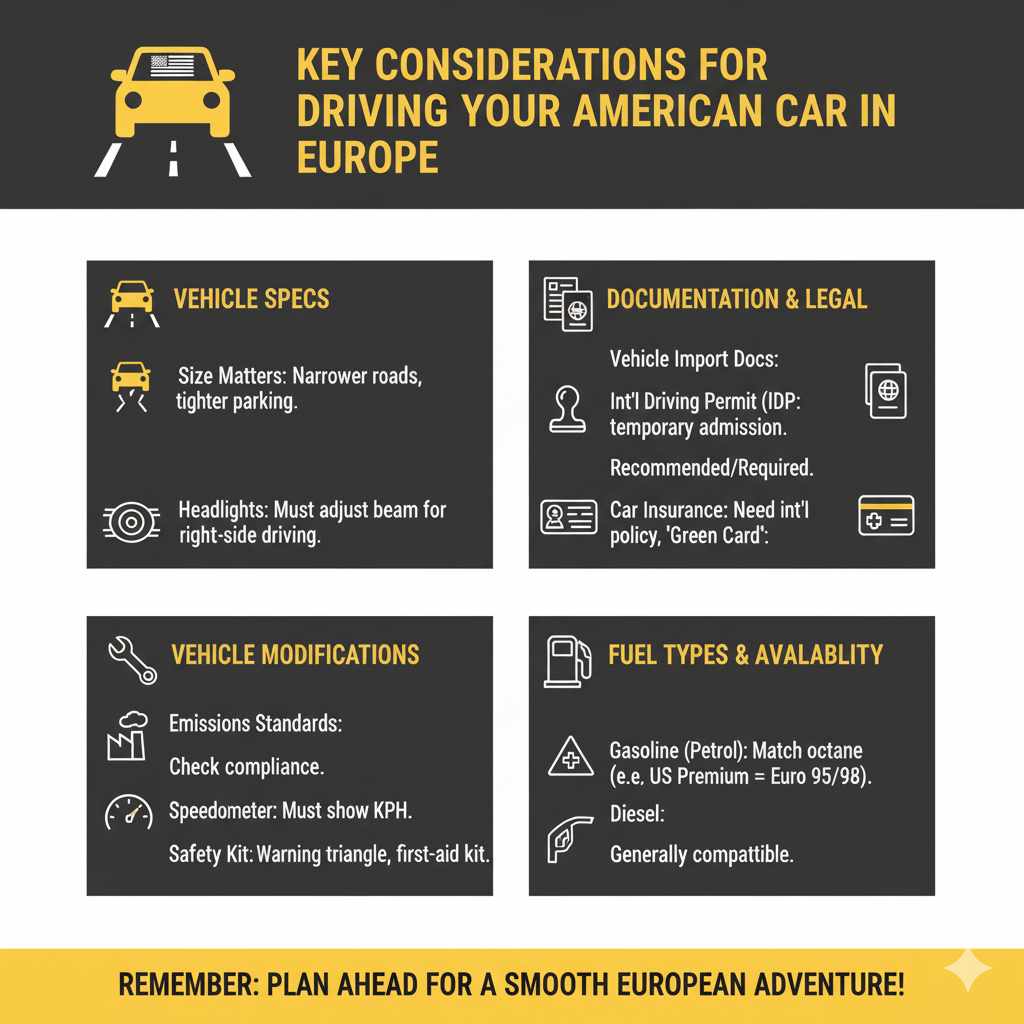
Key Considerations for Driving Your American Car in Europe
So, you’re set on bringing your American car. That’s fantastic! To make this happen smoothly, let’s look at the most important things you’ll need to consider. These aren’t insurmountable obstacles, just checkpoints to ensure you’re fully prepared.
1. Vehicle Specifications and Road Compatibility
American cars are often designed with American roads and regulations in mind. Europe’s roads can be narrower, and parking spaces can be tighter. This is especially true in older European cities.
- Size Matters: Many American vehicles, particularly SUVs and trucks, are larger than the average European car. This can make navigating narrow city streets, winding country lanes, and especially parking quite challenging. You might find yourself spending extra time searching for suitable parking spots or needing to be extra cautious when maneuvering.
- Headlights: European driving is on the right side of the road, just like in most of the US. However, headlights are typically designed to direct the beam slightly to the right to illuminate the kerb. For driving on the right side of the road in Europe, you’ll need to adjust or change your headlights so they don’t dazzle oncoming traffic. Some cars have adjustable headlights, while others might require a conversion or protective film to be applied. A quick check with your car manufacturer or a specialized auto shop can tell you if your car has this feature.
- Tires: Ensure your tires are in good condition and appropriate for the potential weather conditions you might encounter. Many European countries have specific laws regarding tire tread depth. You can find general guidelines on tire safety from the Federal Highway Administration, but always double-check local regulations.
2. Documentation and Legal Requirements
This is a critical area. Without the correct paperwork, you won’t be able to legally drive your American car in Europe.
- Vehicle Importation Documents: If you are importing your car for an extended stay or planning to stay permanently, you will need to navigate customs and import regulations. This often involves paying duties or taxes, which can be substantial. Rules vary significantly by country, so you must research the specific country you plan to enter. For temporary visits, short-term import often involves specific temporary admission procedures, which can exempt you from some duties.
- Proof of Ownership: You’ll need to have your car’s title and registration documents with you. Ensure these are up-to-date and clearly show you are the legal owner.
- International Driving Permit (IDP): While your US driver’s license might be recognized in some European countries for short tourist stays, an International Driving Permit (IDP) is highly recommended and often required. It’s essentially a translation of your national license into multiple languages, making it easier for foreign authorities to understand. You can obtain an IDP from organizations like AAA before you leave the US. You can learn more about IDPs from the U.S. Department of State.
- Car Insurance: Your standard US car insurance policy will almost certainly NOT cover you in Europe. You will need to secure additional international auto insurance. Often, shipping companies can help arrange this, or you can research policies specifically designed for expatriates or long-term travelers. You’ll need to ensure your policy meets the minimum liability requirements for the countries you plan to visit.
- “Green Card” Insurance: In many European countries, motorists carry a “Green Card” as proof of their motor insurance. This is an international certificate of insurance that confirms your vehicle is covered by a valid policy meeting the minimum legal requirements. You’ll need to ensure your insurance provider can issue you a Green Card valid for the countries you will be driving in.
3. Vehicle Modifications for European Standards
Beyond headlights, there might be other subtle modifications or checks needed.
- Emissions Standards: Some countries have strict emissions regulations. Modern American cars generally meet these, but older vehicles might face scrutiny. It’s wise to have documentation showing your car’s emissions compliance.
- Speedometer: While most modern cars display speed in both miles per hour (MPH) and kilometers per hour (KPH), ensure yours clearly shows KPH, as this is the standard unit of speed in Europe.
- Warning Triangle and First-Aid Kit: Many European countries legally require vehicles to carry a warning triangle and a first-aid kit. These are relatively inexpensive to purchase and can often be bought at an auto parts store before you leave or upon arrival. It’s also common to see a high-visibility vest (reflective vest) required for each occupant.
4. Fuel Types and Availability
The type of fuel your car uses is a significant factor.
- Gasoline (Petrol): Most American gasoline cars will run fine on European gasoline. However, octane ratings differ. American Premium is roughly equivalent to European Super Unleaded (95 or 98 octane). You’ll need to know your car’s required octane rating and find the corresponding fuel at European stations.
- Diesel: If your American car is diesel, it will likely run on European diesel without issues. However, be aware that diesel prices can fluctuate and sometimes be higher than gasoline in Europe.
- Availability: While major cities and highways have abundant gas stations, rural areas might have fewer. It’s always a good idea to keep your tank reasonably full, especially when venturing off the beaten path.
The Process of Driving Your American Car in Europe
Bringing your car over involves a few steps beyond just deciding you want to. Here’s a general overview, but remember, specific details will vary by country.
Step-by-Step Guide
- Research Your Destination Countries: Identify the specific countries you plan to drive in. Each country has its own rules regarding vehicle import, registration, and local driving laws. Websites of national transportation ministries or official tourism sites are good places to start.
- Assess Vehicle Suitability: Consider the size and handling of your car for European roads. Research potential modifications needed for headlights and any other safety equipment required (like the warning triangle and vest).
- Gather Essential Documentation: Collect your vehicle title, registration, driver’s license, and obtain an International Driving Permit (IDP).
- Secure International Insurance: This is non-negotiable. Contact your insurance provider or specialized international insurers to obtain coverage valid in Europe. Ensure you have a “Green Card” if required.
- Arrange Shipping or Driving Over: If you’re shipping your car, research reputable international auto transport companies. Consider the costs, timeframes, and insurance coverage for the shipment. If driving over, you’ll need to plan your ferry or Eurotunnel crossing and have all documents ready for border checks.
- Understand Local Driving Laws: Familiarize yourself with speed limits, toll road systems (many European countries have toll roads), parking regulations, and any specific rules (e.g., laws about using mobile phones while driving, requirements for child seats). Organizations like the European Parliament often provide information on road safety, and individual country tourism sites will detail traffic laws.
- Prepare Your Vehicle: Make any necessary modifications (e.g., headlight adjustments). Ensure you have the required safety equipment (warning triangle, first-aid kit, hi-vis vest).
- Upon Arrival: Present all your documentation at customs and border control. Be prepared to explain your vehicle’s purpose and duration of stay.
Alternatives to Driving Your American Car
While driving your own car offers familiarity, exploring options can sometimes be more practical or cost-effective. If it turns out bringing your current car is too complex or expensive, here are some alternatives:
- Rent a Car in Europe: This is often the simplest solution for tourists. Rental companies have a wide variety of vehicles suitable for European roads, and you won’t have to worry about import duties, shipping, or insurance technicalities. You can book in advance online.
- Purchase a Used Car in Europe: If you’re planning a very long stay or moving to Europe, buying a used car locally can be a more economical choice than importing. However, this involves understanding European used car markets and registration processes.
- Leasing a Car: Programs exist where you can lease a car specifically for use in Europe, often with unlimited mileage and full insurance included. These are popular with expats and long-term visitors. Some companies offer brand-new vehicles.
- Use Public Transportation: Europe boasts an excellent and extensive public transportation network, including high-speed trains, buses, and local transit systems. For many travelers, especially those sticking to major cities, this is the most convenient and cost-effective way to get around.
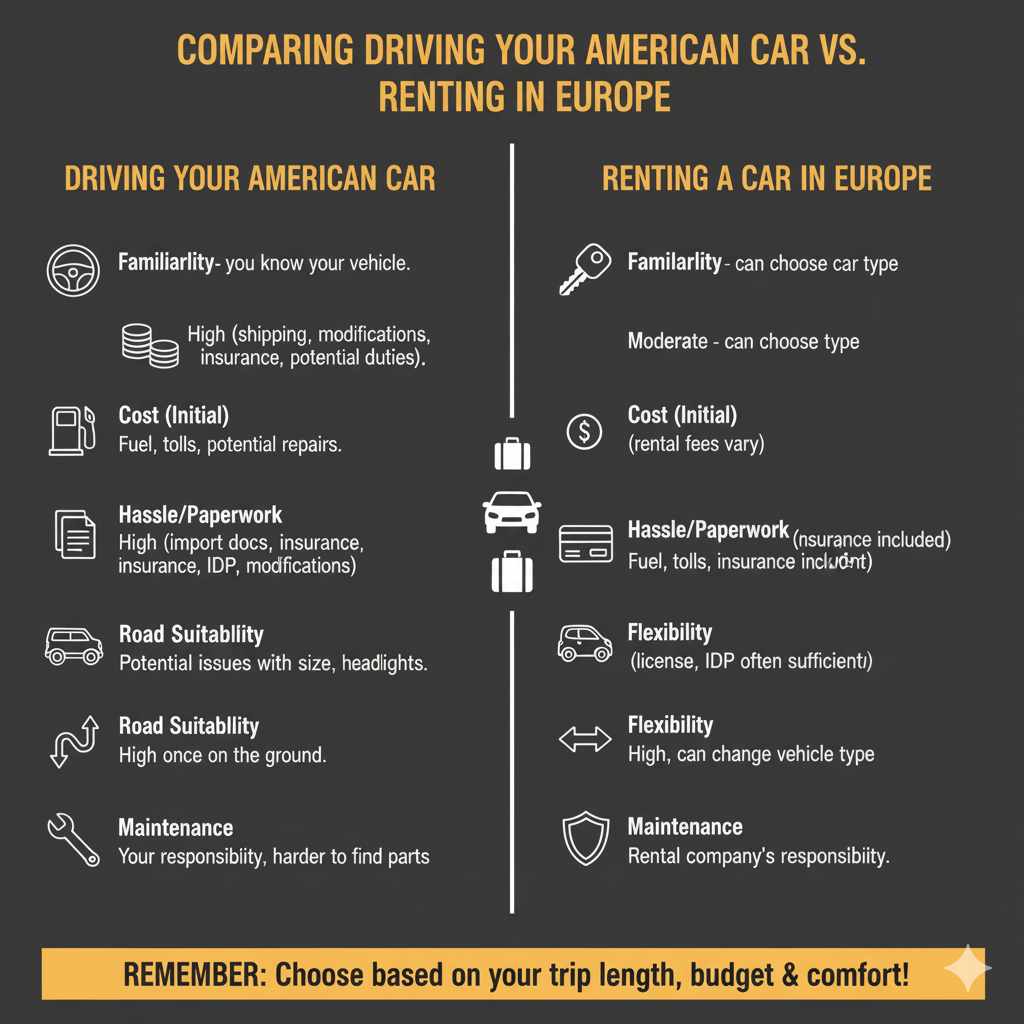
Table: Comparing Driving Your Car vs. Renting in Europe
To help you weigh your options, here’s a quick comparison:
| Feature | Driving Your American Car | Renting a Car in Europe |
|---|---|---|
| Familiarity | High – you know your vehicle. | Moderate – you can choose your preferred type. |
| Cost (Initial) | High (shipping, modifications, insurance, potential duties). | Moderate (rental fees vary by car type and duration). |
| Cost (Ongoing) | Fuel, tolls, potential repairs. | Fuel, tolls, insurance included in rental fee (usually). |
| Hassle/Paperwork | High (import docs, insurance, IDP, modifications). | Low (driver’s license, IDP often sufficient for rental). |
| Road Suitability | Potential issues with size, headlights. | Vehicles sized appropriately for European roads available. |
| Flexibility | High once on the ground. | High, can change vehicle type if needed. |
| Maintenance | Your responsibility, potentially harder to find parts. | Rental company’s responsibility. |
Frequently Asked Questions (FAQ)
Q1: Do I need an International Driving Permit (IDP) to drive my American car in Europe?
While some countries might allow you to drive with just your U.S. driver’s license for short tourist stays, an IDP is strongly recommended and often legally required. It acts as an official translation of your license and can prevent you from facing fines or having your car impounded. You can get an IDP from organizations like AAA in the U.S.
Q2: Will my U.S. car insurance cover me in Europe?
No, your standard U.S. car insurance policy will not provide coverage in Europe. You must secure separate international auto insurance that is valid in the European countries you plan to drive in. This often includes obtaining a “Green Card.”
Q3: Are American cars too big for European roads?
Some American cars, especially larger SUVs and pickup trucks, can be significantly wider and longer than typical European vehicles. This can make navigating narrow city streets, rural lanes, and parking in tight spots challenging. It’s wise to assess your car’s dimensions against common European car sizes.
Q4: What are the main modifications I’ll need for my American car?
The most common modification is adjusting your headlights. They need to be aimed correctly for driving on the right side of the road to avoid dazzling oncoming drivers. You will also likely need to carry a warning triangle, a first-aid kit, and a high-visibility vest for each occupant, which are mandatory in many European countries.
Q5: How do I handle fuel for my American car in Europe?
Most gasoline (petrol) cars will run on European gasoline, but be mindful of octane ratings. American premium gasoline typically corresponds to European Super Unleaded (95 or 98 octane). Diesel cars will usually run fine on European diesel. Check your car’s manual for the correct fuel type and octane rating.
Q6: What happens if I want to stay in Europe long-term with my car?
For long-term stays or permanent import, you will need to go through formal customs procedures, which can involve paying import duties and taxes, and ensuring your car meets local emissions and safety standards. The specific process and costs vary greatly by country. It’s often more complex and expensive than temporary tourist importation.
Conclusion
So, can you drive an American car in Europe? The answer, as we’ve explored, is a resounding yes, with the crucial caveat that careful planning and preparation are key. From understanding the physical fit of your vehicle on European roads to navigating the essential paperwork like your International Driving Permit and securing valid insurance, each step builds towards a successful journey. While the idea of shipping your beloved car across the Atlantic might seem daunting, for many, the comfort and familiarity it provides can greatly enhance their European experience.
Remember to research the specific requirements of the countries you intend to visit, as regulations can differ. Always prioritize safety by ensuring your vehicle meets local standards, especially regarding headlights and mandatory safety equipment. If the logistics or costs become too overwhelming, don’t forget the excellent alternatives like rental cars, public transport, or even purchasing a car locally if you’re planning a very long stay. Ultimately, whether you drive your American car or opt for another method, the goal is to enjoy your adventure safely and stress-free. Happy travels!