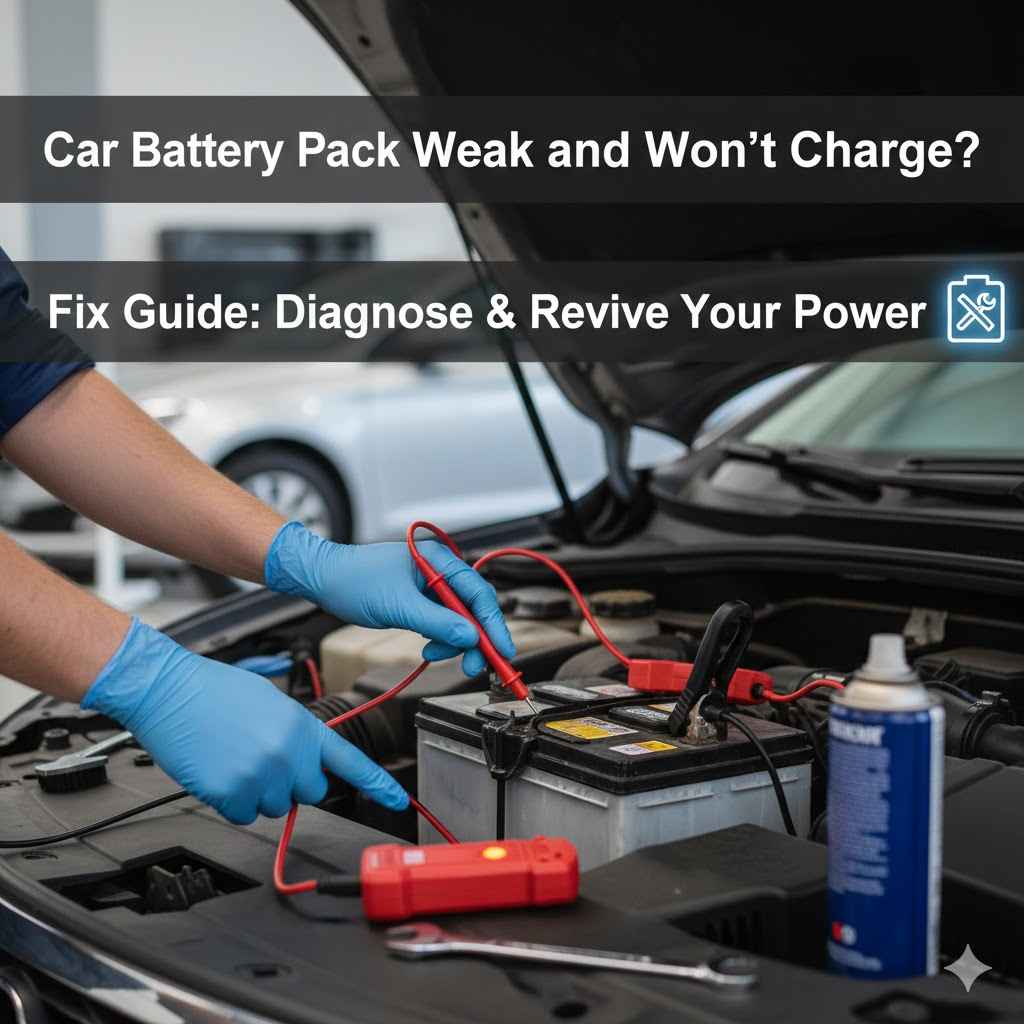
Car Battery Pack Weak and Won’t Charge? Fix Guide
It’s frustrating when your car battery pack is weak and won’t charge, especially if you’re not super handy with car stuff. Many people find this problem a bit tricky because car batteries have a few important parts that work together. But don’t worry!
We’ll walk through this step by step. This guide will help you figure out what’s going on and how to fix it. Get ready to learn how to solve your Car Battery Pack Weak and Won’t Charge?
Fix Guide problem with easy steps.
Understanding Car Battery Issues
This section helps you understand why your car battery might be weak or not charging properly. We’ll look at the main reasons this happens and what the battery does. Knowing these basics makes fixing it much easier.
We will cover common problems and what they mean for your car’s power.
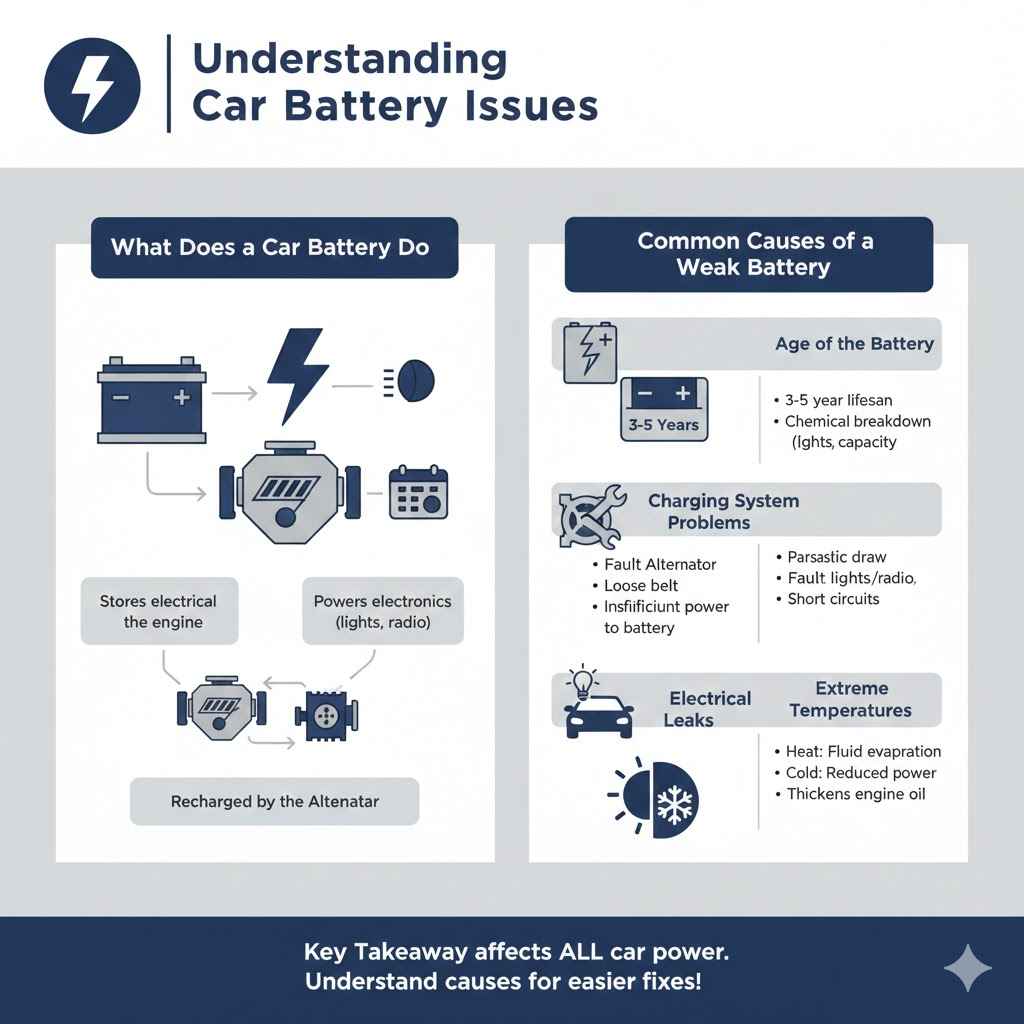
What Does a Car Battery Do
A car battery is a small but mighty power source. It stores electrical energy. This energy is used to start your car’s engine when you turn the key.
It also powers your car’s lights, radio, and other electronics when the engine is off. Think of it like the heart of your car’s electrical system.
When you drive, your car’s alternator recharges the battery. This keeps it ready for the next time you need to start your car. If the battery isn’t getting enough charge, or if it’s old and worn out, it can become weak.
This means it won’t have enough power to start the car.
Common Causes of a Weak Battery
Age of the Battery
Car batteries don’t last forever. They typically last about 3 to 5 years. Over time, the chemical reactions inside the battery that store and release energy start to break down.
This means the battery can’t hold as much charge as it used to. An old battery might seem fine one day and then completely die the next. It’s like a phone battery that used to last all day but now only lasts a few hours.
Charging System Problems
Your car has an alternator, which is like a small generator. Its job is to recharge the battery while the engine is running. If the alternator isn’t working right, it won’t send enough power to the battery.
This causes the battery to drain and become weak. Sometimes, a loose belt connected to the alternator can also cause it to spin too slowly, leading to poor charging.
Electrical Leaks
Sometimes, a car can have an electrical leak. This is when something in the car is drawing power from the battery even when it shouldn’t be. This could be a faulty light that stays on, a radio that doesn’t turn off completely, or a short circuit somewhere.
These leaks slowly drain the battery, even when the car is parked.
Extreme Temperatures
Both very hot and very cold weather can hurt your car battery. Extreme heat can cause the fluids inside the battery to evaporate, damaging its internal components. Cold weather makes it harder for the battery to produce power, and it also thickens the engine oil, making it harder to start the engine.
This puts more strain on an already weaker battery.
Troubleshooting a Car Battery That Won’t Charge
When your car battery pack is weak and won’t charge, it’s time to do some detective work. This part of the guide focuses on how to find the problem. We’ll look at simple checks you can do yourself before you need to call a mechanic.
This will help you save time and money.
Checking Battery Terminals and Cables
Corrosion
Look at the battery terminals, which are the metal posts where the cables connect. You might see a white or bluish powdery substance on them. This is called corrosion.
Corrosion can prevent the battery from getting a good connection, meaning it can’t charge or deliver power properly. It’s like dirt on a plug preventing an appliance from working.
Loose Connections
Make sure the cables are securely attached to the battery terminals. If they are loose, they can easily slip off or make a poor connection. This will stop the charging process.
You should be able to wiggle the cable clamp slightly to check for looseness. A snug fit is essential.
How to Clean Battery Terminals
If you find corrosion, you can clean it yourself. First, make sure your car is off and the keys are out of the ignition. You’ll need some safety gear, like gloves and eye protection.
- Disconnect the cables. Always disconnect the negative cable (usually black) first, then the positive cable (usually red).
- Use a wire brush or a special battery terminal cleaning tool to scrub away the corrosion. You can also use a paste made of baking soda and water.
- Wipe the terminals clean with a damp cloth.
- Reattach the cables. Connect the positive cable first, then the negative cable. Make sure they are tight.
- You can also apply a thin layer of dielectric grease or petroleum jelly to the terminals after cleaning. This helps prevent future corrosion.
Testing the Battery Voltage
To know if your battery is weak, you need to check its voltage. A multimeter is a tool that measures electrical voltage. You can buy one at most auto parts stores.
Using a Multimeter
Here’s how to test your battery voltage:
- Set your multimeter to measure DC voltage (VDC). Look for a setting with a V and a straight line or dashed line above it.
- Connect the red probe of the multimeter to the positive (+) terminal of the battery.
- Connect the black probe to the negative (-) terminal of the battery.
- Read the display. A fully charged car battery should read around 12.6 volts when the engine is off. If the reading is below 12 volts, the battery is likely weak or discharged.
A reading between 12.0 and 12.4 volts suggests the battery needs charging. If it’s below 12.0 volts, it might be a dead battery.
Inspecting the Alternator
The alternator is crucial for keeping your battery charged. If it’s failing, your battery won’t get the power it needs.
Signs of Alternator Problems
- Dimming LightsIf your car’s headlights or dashboard lights dim when you’re driving, especially when you turn on other accessories like the radio or air conditioning, it could be a sign that the alternator isn’t keeping up. The battery isn’t getting enough power, so the lights get weaker.
- Warning LightMost cars have a dashboard warning light that looks like a battery. If this light comes on while you’re driving, it usually means there’s an issue with the charging system, which often points to the alternator.
- Strange NoisesA failing alternator can sometimes make whining or grinding noises. This might happen when the engine is running. The sound often changes with the engine speed.
Testing the Alternator
You can test your alternator using a multimeter.
- Start your car’s engine.
- Set your multimeter to measure DC voltage.
- With the engine running, place the red probe on the positive battery terminal and the black probe on the negative terminal.
- The voltage reading should be higher than the battery’s resting voltage. A healthy alternator will typically charge the battery at around 13.7 to 14.7 volts. If the reading is too low or the same as the battery’s resting voltage, the alternator may not be working correctly.
Car Battery Pack Weak and Won’t Charge? Fix Guide Steps
Now that you know the common issues, let’s put it all together into clear steps for your Car Battery Pack Weak and Won’t Charge? Fix Guide. These are practical actions you can take.
We will move from simple checks to more advanced ones.
Step 1 Check Battery Age and Condition
The first thing to do is find out how old your battery is. Most batteries have a sticker with a date code. Sometimes it’s a month and year, other times it’s a code you might need to look up.
If your battery is over 3 to 5 years old, it’s a prime suspect.
Also, look for any physical damage. Swollen sides, cracks, or leaks are bad signs. If the battery looks damaged, it’s time for a new one.
You cannot fix a physically damaged battery.
Step 2 Inspect and Clean Terminals
As we discussed, corrosion is a big problem. Follow the steps above to disconnect, clean, and reconnect your battery terminals and cables. Ensure the connections are tight.
This simple step can often solve charging issues caused by poor contact.
Step 3 Test Battery Voltage
Use a multimeter to check the battery’s voltage. A reading significantly below 12.6 volts indicates a discharged or failing battery. If the voltage is very low, you may need to try charging it.
Step 4 Attempt to Charge the Battery
If your battery voltage is low but not completely dead, you can try charging it. You will need a battery charger.
Connect the charger to the battery. Make sure to connect the positive clamp to the positive terminal and the negative clamp to the negative terminal.
Plug in the charger and follow its instructions. Charging can take several hours, depending on how discharged the battery is.
After charging, re-test the battery voltage. If it holds a charge (stays above 12.4 volts for a while), it might just have been discharged. If it drops quickly again, the battery is likely bad.
Step 5 Test the Alternator
If the battery seems okay after charging but your car still won’t start properly or the battery drains again quickly, the alternator might be the issue. Perform the alternator test described earlier using a multimeter with the engine running. A reading in the 13.7-14.7 volt range indicates a functioning alternator.
If it’s lower, the alternator needs attention.
Step 6 Check for Parasitic Draw
A parasitic draw is when something is draining your battery when the car is off. This requires a bit more advanced troubleshooting.
How to Find a Parasitic Draw
You’ll need a multimeter and patience.
With the car completely off and all doors closed, set your multimeter to measure amperage (A or mA) in series with the battery. This means you disconnect one of the battery cables and put the multimeter probes in between the cable and the battery terminal.
A normal parasitic draw is usually very low, typically under 50 milliamps (mA). If your reading is much higher, you have a draw.
To find the source of the draw, start pulling fuses one by one. When you pull a fuse and the amperage reading drops significantly, you’ve found the circuit that’s causing the problem. You can then investigate the components on that circuit.
For example, a common cause is a faulty trunk light that doesn’t turn off, or a stuck relay.
Step 7 Replace the Battery or Alternator
If your tests show the battery is old, damaged, or won’t hold a charge, it’s time for a new battery. If the alternator is not charging the battery, it needs to be replaced. These are the most common fixes for a Car Battery Pack Weak and Won’t Charge?
Fix Guide scenario.
When to Seek Professional Help
While many battery issues can be diagnosed and fixed by the car owner, there are times when it’s best to call in an expert. If you’re not comfortable working with car electrical systems, or if the problem seems complex, a professional mechanic can help. They have specialized tools and experience to diagnose and repair your car quickly and safely.
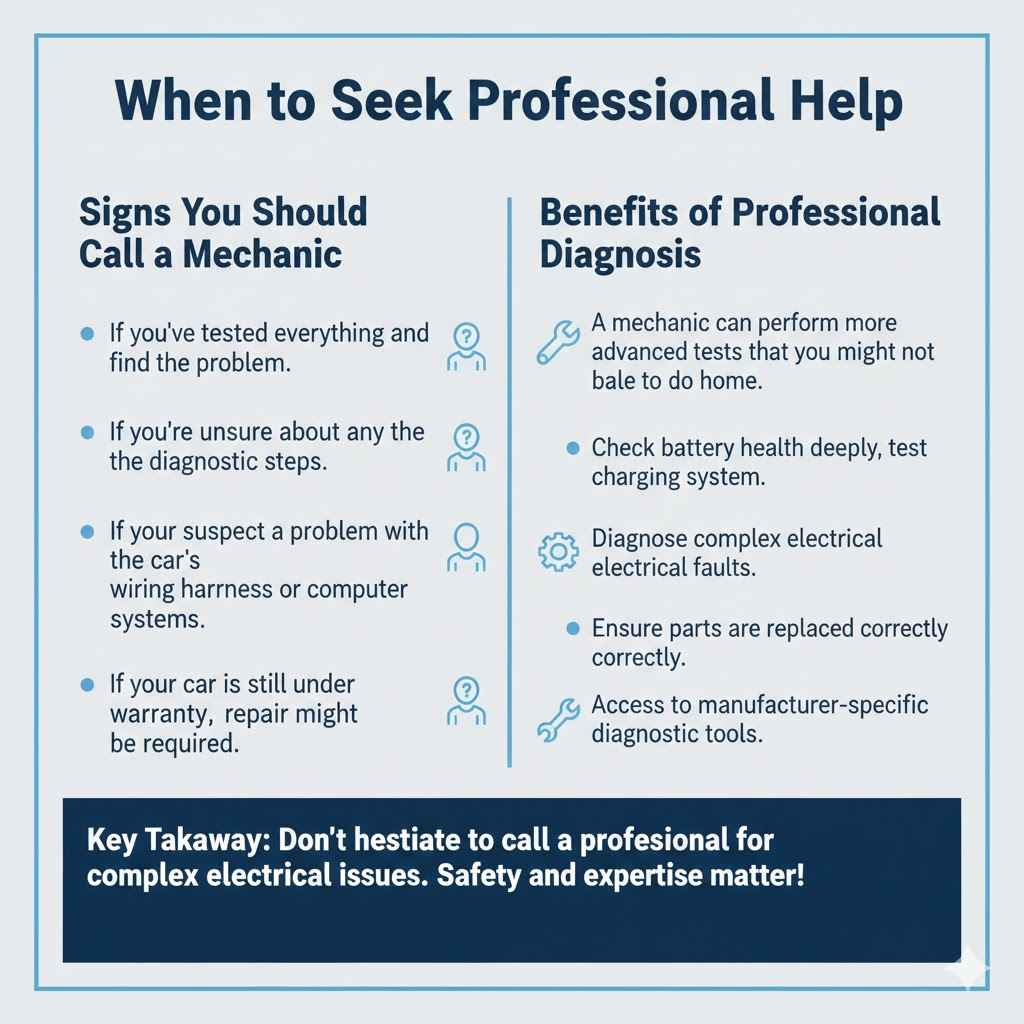
Signs You Should Call a Mechanic
- If you’ve tested everything and can’t find the problem.
- If you’re unsure about any of the diagnostic steps.
- If you suspect a problem with the car’s wiring harness or computer systems.
- If your car is still under warranty, professional repair might be required.
Benefits of Professional Diagnosis
A mechanic can perform more advanced tests that you might not be able to do at home. They can check the battery health deeply, test the charging system with specialized equipment, and diagnose complex electrical faults. This can save you time and prevent further damage to your car.
They can also ensure parts are replaced correctly.
For instance, a mechanic might use an oscilloscope to analyze the waveform produced by the alternator. This can reveal subtle issues that a simple voltage reading might miss. They also have access to manufacturer-specific diagnostic tools that can communicate directly with your car’s computer modules.
Frequently Asked Questions
Question: How long does a car battery typically last
Answer: A car battery typically lasts between 3 to 5 years, but this can vary based on driving habits, climate, and battery quality.
Question: Can I jump-start my car if the battery is completely dead
Answer: Yes, you can jump-start a dead battery if the battery itself is not damaged. However, if the battery is old or has been dead for a long time, it might not hold a charge afterward.
Question: What is the difference between a battery dying and the alternator failing
Answer: A dying battery means it can no longer hold enough charge. An alternator failing means it’s not recharging the battery while the engine is running, which will eventually lead to a dead battery.
Question: How often should I check my car battery
Answer: It’s a good idea to check your car battery visually for corrosion and loose connections at least twice a year, and test its voltage if you suspect issues or before long trips.
Question: Can I use a phone charger to charge my car battery
Answer: No, a phone charger operates at a much lower voltage and current and is not designed to charge a car battery. You need a dedicated car battery charger.
Conclusion
If your car battery pack is weak and won’t charge, follow these steps. Check the battery’s age, clean its terminals, and test its voltage and the alternator. Simple fixes like cleaning connections can often solve the problem.
If these don’t work, you might need to replace the battery or alternator. Don’t hesitate to get professional help if you’re unsure. You can get your car running smoothly again.