Car Wash vs Auto Detailing
Choose a car wash for light dirt, dust, road film, and weekly upkeep. Choose auto detailing when grime is heavy, the cabin needs cleaning, paint needs correction, or you want protection that lasts longer than a quick rinse. Use the wrong level of care, and salt, brake dust, and bonded grime can stay on the car long enough to dull paint and speed up wear. This guide breaks down which option fits your vehicle’s condition, season, paint risk, and maintenance goal.
| Decision factor | Car Wash | Auto Detailing | Winner |
|---|---|---|---|
| Speed | Usually under 10 minutes | Commonly 2 to 6 hours or more | Car Wash |
| Cleaning depth | Fast exterior clean with soap and high-pressure water | Interior and exterior cleaning, vacuuming, shampooing, polishing, and more | Auto Detailing |
| Paint care | Depends on the method; hand wash is gentler than brush tunnels | Can include clay bar treatment and paint correction for bonded grime and swirl marks | Auto Detailing |
| Cost | Basic packages can start around $13 | Commonly starts much higher, with examples from $149 to $279 and beyond | Car Wash |
| How long the clean lasts | Short-term clean for routine upkeep | Longer-lasting clean with protection add-ons like wax, sealant, or ceramic coating | Auto Detailing |
| Best use case | Dust, light road film, and weekly maintenance | Heavy grime, stains, odors, pet hair, oxidation, and resale prep | Depends on condition |
Car wash vs auto detailing
The core trade-off is simple: a car wash favors speed and price, while detailing favors depth and how long the clean lasts. A traditional car wash can bring back shine in minutes, and most finish in under 10 minutes. Detailing takes longer because it handles the parts a wash usually leaves behind.
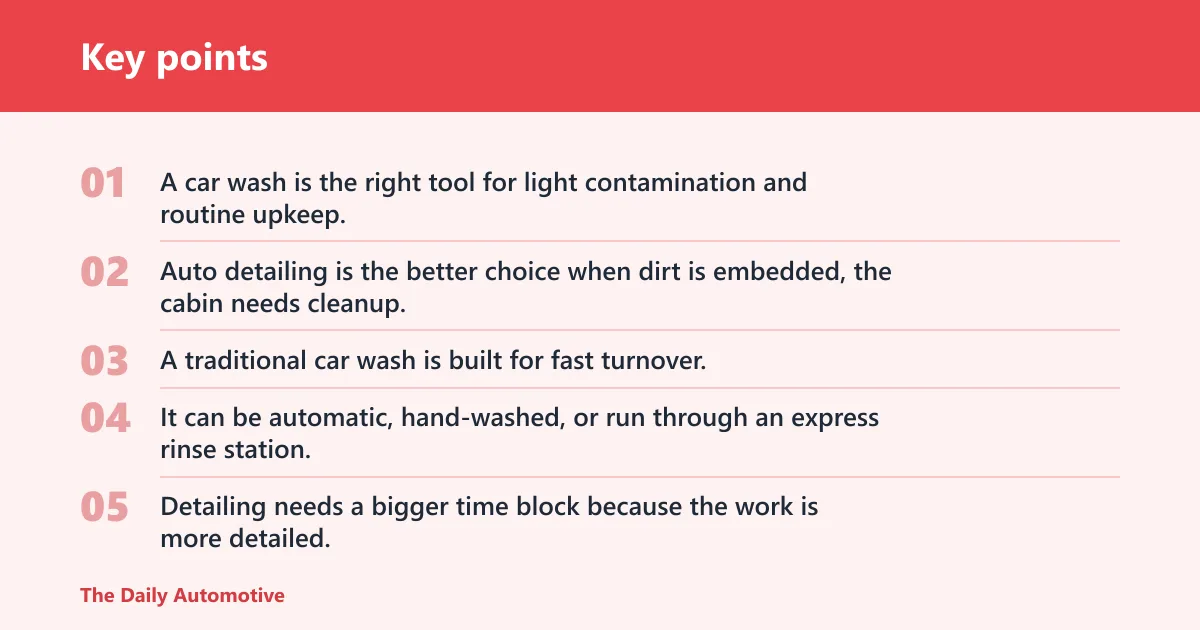
A car wash is the right tool for light contamination and routine upkeep. Auto detailing is the better choice when dirt is embedded, the cabin needs cleanup, or the paint needs correction and protection.
Time and convenience
A traditional car wash is built for fast turnover. It can be automatic, hand-washed, or run through an express rinse station, and the goal is a quick reset rather than a deep restoration.
Detailing needs a bigger time block because the work is more detailed. A basic mobile package can take 2 to 3 hours, while larger services can run 4 to 6 hours.
Cleaning depth and longevity
Car washes mainly handle surface dirt. They remove loose grime, road film, and salt buildup well enough for routine maintenance, but they rarely address stains, odors, bonded contaminants, or dull paint.
Detailing goes further. Interior detailing can include vacuuming, shampooing carpets and upholstery, leather conditioning, and odor and stain removal. Exterior detailing can add clay bar treatment, polishing, wax, sealant, and ceramic coating for longer-lasting results.
Paint risk and protection
Hand washing is generally more controlled than automated brushes because microfiber mitts and hand tools limit hard contact. Automatic drive-through washes use spinning brushes and jets, so the real risk depends on equipment condition and maintenance.
Detailing can reduce visible defects when it includes paint correction. That process uses machine polishing to remove swirl marks and light scratches, and clay bar treatment removes bonded contamination before polishing or waxing.
Typical price bands
Basic wash pricing can start around $13, which makes it practical for frequent upkeep. Detailing costs more because it includes more labor and more steps; examples in the market include a $149 wash package, a $239 package listed at 240 minutes, and a $279 exterior service.
That price gap matters. If the car only needs dust and light road grime removed, detailing is usually more service than you need.
Traditional car wash options
A traditional car wash comes in a few forms, and the best one depends on speed, paint sensitivity, and how dirty the vehicle is. The common choices are automatic drive-through wash, hand wash, and express rinse station.
Automatic drive-through wash
An automatic drive-through wash moves the vehicle through a tunnel with spinning brushes and jets. It is optimized for speed and convenience, so it fits drivers who want a quick exterior reset without spending time on hand cleaning.
Hand wash
A hand wash uses ultra-soft microfiber mitts or hand tools, which gives the operator more control over contact on the paint. That makes it the gentler choice when the vehicle has a darker finish, recent polishing, or a finish you want to treat carefully.
Express rinse station
An express rinse station is a self-serve option with high-pressure sprays and foaming options. It works well for quick exterior cleaning when you want to remove loose grime before it dries or bakes onto the paint.
Say your sedan has a week of dust and light pollen after a dry commute. An express rinse or basic wash is usually enough, because the goal is to remove loose contamination before it becomes harder to clean.
What auto detailing includes
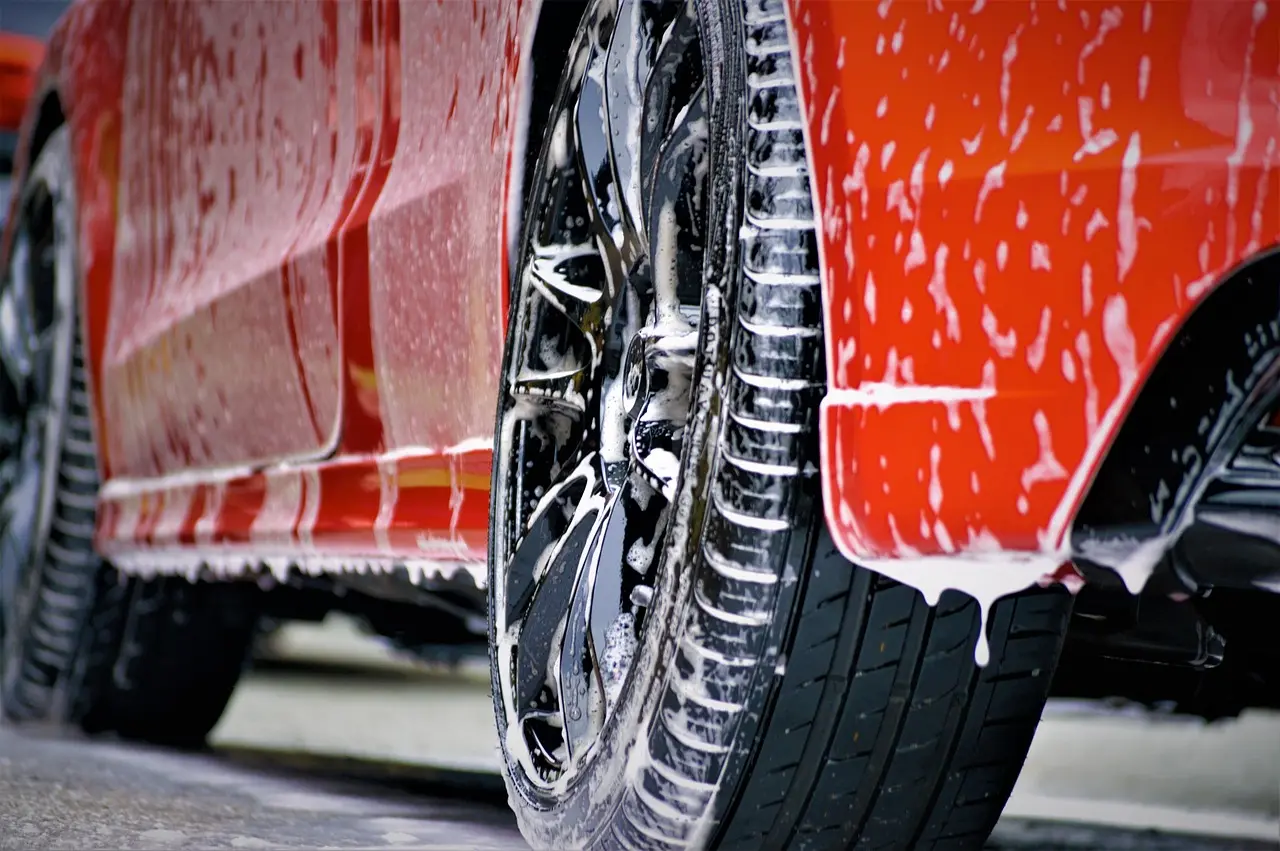
Auto detailing is a deeper cleaning and restoration process for the vehicle’s interior and exterior. It can include vacuuming, shampooing, conditioning, polishing, clay bar decontamination, paint correction, and protection steps such as wax, sealant, or ceramic coating.
Interior detailing
Interior detailing focuses on the cabin. Vacuuming removes loose debris, shampooing lifts stains from carpets and upholstery, leather conditioning helps care for finished leather, and odor and stain removal targets the problems that a basic wash never touches.
Exterior detailing
Exterior detailing is more than soap and water. It often includes a careful hand wash, wheel and tire cleaning, decontamination, polishing, and a protective layer that helps the paint shed dirt more easily after the service.
Clay bar treatment and paint correction
Clay bar treatment removes bonded contaminants that remain after a normal wash, such as industrial fallout and other stuck-on grit. Paint correction is a multi-stage machine polishing process used to reduce swirl marks and light scratches.
A common first-timer mistake is expecting a wash to remove rail dust or stubborn fallout from a dark hood. If the paint still feels rough after washing, detailing steps like clay bar treatment are the right next move.
Wax, sealant, and ceramic coating
Wax is common in detail packages and adds a short-term protective layer. Sealant usually lasts longer than wax, and ceramic coating offers longer-lasting shielding than either, though it is still not a free pass to skip washing.
Decision matrix for your car’s condition
Use the vehicle’s actual condition, not the service label, to decide. A car with routine dust needs a different answer than one carrying winter salt, pet hair, or oxidation.
| Vehicle condition | Best service choice | Expected time | Likely cost band | Risk if you choose the wrong option |
|---|---|---|---|---|
| Weekly upkeep | Car Wash | Under 10 minutes | Low; basic packages can start around $13 | Overpaying for work you do not need |
| Winter salt | Car Wash | Under 10 minutes | Low to moderate | Letting salt sit long enough to attack trim and paint |
| Family mess | Auto Detailing | 2 to 6 hours or more | Higher than a wash | Surface cleaning leaves stains, crumbs, and odor behind |
| Pet hair | Auto Detailing | 2 to 6 hours or more | Higher than a wash | Hair stays embedded in carpet and upholstery |
| Road-trip grime | Car Wash | Under 10 minutes to a few hours, depending on method | Low to moderate | Grime hardens if ignored, making later cleaning harder |
| Heavy oxidation | Auto Detailing | 4 to 6 hours or more | High | Paint keeps dulling if polishing and correction are skipped |
| Resale prep | Auto Detailing | Several hours | Higher than a wash | First impressions suffer if the cabin and paint still look tired |
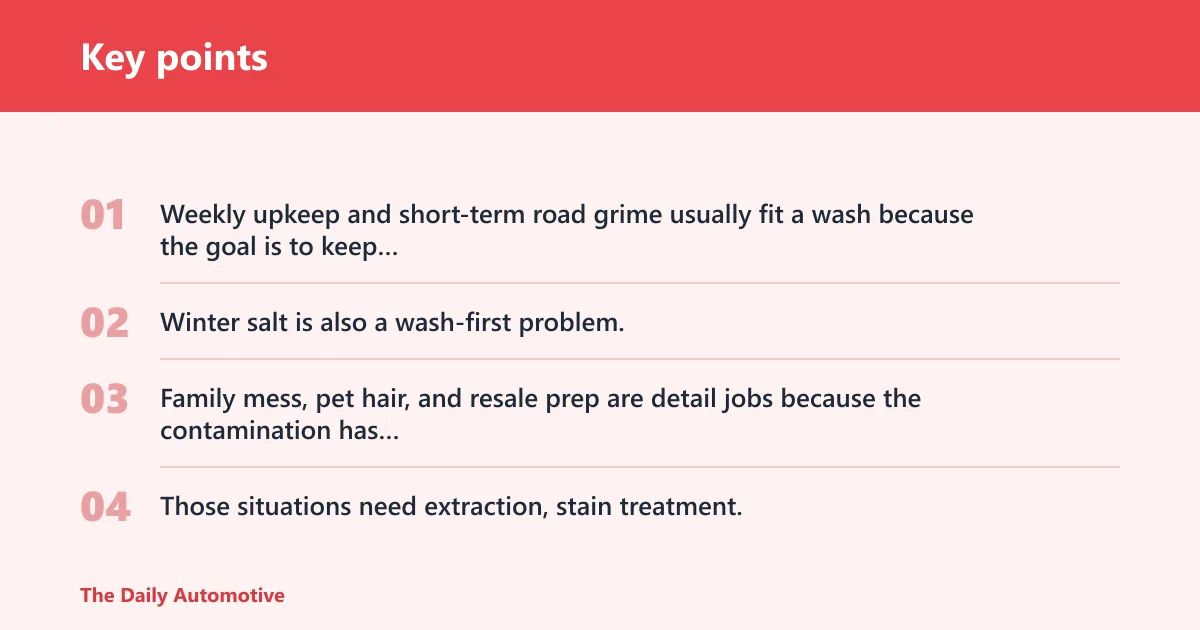
Weekly upkeep and short-term road grime usually fit a wash because the goal is to keep contamination from building up. Winter salt is also a wash-first problem, because salt left on the car can keep working on surfaces between cleanings.
Family mess, pet hair, and resale prep are detail jobs because the contamination has moved beyond the surface. Those situations need extraction, stain treatment, and more time on the interior and paint.
When is a wash enough?
A wash is enough when the car is lightly dirty, the cabin is already clean, and you only need a short-term reset before the next drive. It is also the right move when the car has routine road dust, pollen, or salt and you want to stay ahead of buildup without paying for more labor than the car needs.
For normal ownership, a weekly or biweekly wash is a practical cadence for many drivers. That cadence keeps grime from hardening and reduces the chance that a later detail has to fight neglected contamination.
Light dirt and routine maintenance
If the vehicle looks dusty, lightly speckled with road film, or just dull from daily use, a wash is usually enough. A hand wash is a good choice when you want more control on the paint, while an automatic wash fits when speed matters more than the level of contact.
Short-term clean before a drive or event
If the car only needs to look presentable for a weekend drive, commute, or event, a wash is the efficient option. You are paying for appearance, not for deep restoration, so a detail would often be unnecessary.
When does detailing make more sense?
Detailing makes more sense when the car has stains, odors, pet hair, embedded dirt, oxidation, or bonded contamination that a wash will not remove. It is also the better call when you want the clean to last longer because protection products can slow down how quickly dirt sticks again.
Suppose a compact SUV has winter salt on the doors, sticky cupholder spills in the cabin, and a rough-feeling hood after a long highway season. A wash can knock down the salt, but a detail is the better answer for the interior mess and the paint surface.
Stains, odors, and embedded dirt
Once spills dry into fabric or odors work into the cabin, a wash has no path to solve the problem. Interior detailing with shampooing, conditioning, and odor treatment is the service that matches that kind of contamination.
Paint defects and contamination
When the paint has swirl marks, light scratches, roughness, or bonded grit, detailing is the right tool. Clay bar treatment and paint correction address problems a rinse or drive-through wash cannot reach.
Preparation for sale or long-term ownership
Detailing is worth considering before selling because a clean cabin and corrected paint improve first impressions. It is also worth it for long-term ownership if you want to keep the finish looking even and reduce the need for aggressive cleaning later.
Choose Car Wash if… / Choose Auto Detailing if…
Choose Car Wash if the vehicle has light dust, road film, or weekly grime; you need a quick clean under 10 minutes; you want the lowest-cost option; or the goal is maintenance rather than restoration.
Choose Auto Detailing if the cabin has stains, odors, pet hair, or crumbs in the seams; the paint feels rough or looks dull; winter salt has built up; or you want protection and longer-lasting cleanliness after the service.
The right answer is usually clear once you match the service to the contamination. If the car only needs a reset, wash it. If the car needs correction, extraction, or protection, detail it.
Frequently asked questions
What is a full detail car wash?
A full detail car wash usually means a service that goes beyond a basic exterior wash and adds interior cleaning, vacuuming, glass cleaning, wheel care, and some level of protection. The exact package varies, so check whether it includes shampooing, conditioning, polishing, or only a more thorough wash.
How much does it cost to wash and detail a car?
A basic car wash can start around $13, while detailing generally costs much more because it takes more time and labor. Real-world packages can start near $149 and go to $279 or higher depending on size, condition, and whether interior work, polishing, or protection is included.
Hand car wash vs automatic car wash
A hand car wash is usually the gentler option because microfiber mitts and hand tools give more control over contact on the paint. An automatic drive-through wash is faster and more convenient, but the brush condition and maintenance matter if you want to limit paint risk.
Is auto detailing worth it?
Auto detailing is worth it when the car has more than surface dirt, especially if you need stain removal, odor removal, pet hair cleanup, or paint correction. It is also worth the cost before resale or when the goal is to keep the vehicle looking good for longer between services.
How long does it take to wash and detail a car?
A traditional car wash often finishes in under 10 minutes. Detailing usually takes 2 to 6 hours or more, with some packages taking 2 to 3 hours and larger services taking 4 to 6 hours, because the work includes deeper cleaning and protection steps.
What is the best car wash for your car?
The best car wash depends on the car’s condition and your goal. Choose a hand wash if you want more control on the paint, an automatic wash if speed matters most, and an express rinse station if you only need a quick exterior refresh between deeper cleanings.
Products related to this article
Sponsored / affiliate links. As an Amazon Associate I earn from qualifying purchases. I may earn additional commission from eligible campaigns.