
How to Unclog AC Line in Car: Drain Line Fixes and Safe Limits
To unclog the A/C line in a car, you almost always mean the evaporator drain tube, the small hose that lets condensation run out from under the vehicle, not the refrigerant lines. If the passenger footwell is wet, the windows fog up or a musty smell shows up, this guide explains how to find the drain outlet, which blockages maker service bulletins have actually documented, which checks are safe at home, and which jobs belong to a shop.
What Is a Car’s AC Drain Line?
Best Drain Tube Brush Pick
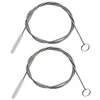 |
ICEYLI 2 Pack 60 Inch Long Pipe Cleaner Flexible Tube Cleaning Brush ($6.99) A long, reusable nylon-bristle brush on a flexible stainless wire with a loop handle, which the listing describes as a sunroof drain cleaning tool for cars.
|
As an Amazon Associate we earn from qualifying purchases. Spec-based pick from the listing, not a hands-on test.
Per Ford’s support page, the A/C cools and dehumidifies cabin air, moisture condenses on the evaporator behind the dash, and that condensate normally drains out through a tube under the vehicle. Ford adds that a small puddle of water under the vehicle, usually near the front passenger footwell area, after running the A/C is normal. Hyundai’s owner’s manual says the same thing in plain words: water dripping on the ground is normal after the air conditioning has been used.
So the drip itself is not the problem. The problem is water that stays inside. Ford says that if the drain hole becomes plugged or dislodged, condensate can leak into the cabin onto the footwell carpet or fog the windows, and its advice in that case is to have a Ford dealer service the vehicle (Ford support page). A wet passenger carpet on a day when the A/C has been running, with no puddle outside, is the pattern that points toward the drain.
This page is about clearing and checking that drain safely. If you are still working out where the water comes from, start with how to tell what is leaking from your car. If you want a longer walk-through of the drain-clearing steps themselves, our car AC drain line guide covers them; this article focuses on maker-documented causes and where DIY stops.
Drain Line or Refrigerant Lines? Why the Difference Matters
Searches for this topic mix two very different things. The drain tube carries plain condensed water. The refrigerant lines are part of the sealed cooling system. Clearing a drain tube is a floor-level job on some cars; working on refrigerant is regulated work.
EPA states that any person who repairs or services a motor vehicle air conditioning system for payment must be trained and certified under section 609 of the Clean Air Act through an EPA-approved program (EPA section 609 page). EPA’s page does not say what that means for owners working on their own vehicles, so this guide stays on the safe side: it contains no steps for opening, venting, flushing or topping up the refrigerant circuit.
If a car is not cooling, hissing, or you believe a refrigerant line is blocked or leaking, that is a certified A/C technician’s job. Our car AC not cooling guide and refrigerant leak page explain the warning signs without any DIY refrigerant work.
Why Do AC Drain Lines Get Clogged?
No single cause covers every car. The clearest evidence comes from manufacturer service bulletins, which describe specific problems on specific models. Read them as examples of what can go wrong, not as a diagnosis of your vehicle.
| Documented cause | Where it was documented | What the maker’s repair involved |
|---|---|---|
| Debris in the drain tube | Toyota bulletin S-SB-0026-13, 2011-2014 Scion tC, water leaking from the HVAC system | Tube removed from the HVAC box and blown out with shop air, wet carpet dried, system operation verified. If no debris was found, the bulletin says to diagnose the leak source with the repair manual. |
| Plastic obstruction inside the drain hose | Toyota bulletin T-SB-0007-22, some 2020-2021 RAV4 and RAV4 Hybrid, damp front carpet (NHTSA copy) | Hose removed and checked with low-pressure air; a new drain hose installed when only plastic came out. |
| Insect nest in the drain hose | Lexus bulletin L-SB-0024-21, some 2007-2022 models in particular geographic areas | An optional insect-repellent tip fitted to the drain hose, an optional service part with its own handling precautions. |
| Hose twisted, crushed or misplaced | Same RAV4 bulletin notices | Installation notes say a twisted or crushed hose, or a rib placed on top of it, may let water leak into the interior. |
| Wet footwell carpet with a musty odor | MINI bulletin for F54, F55, F56, F57 and F60 models | Drain hose check and modification, condensate drainage rechecked, filters replaced, evaporator cleaned and flushed. |
Makers describe blockages from debris, plastic and insects, so the outlet end is worth a look. Some failures are mechanical, such as a hose that is crushed or not seated, and no brush can fix those.
Symptoms, Likely Causes, Safe Checks and When to Call a Pro
| What you notice | Likely cause (from sources read) | Safe check at home | Leave to a pro |
|---|---|---|---|
| Clear water drips under the front passenger side after using the A/C, cabin dry | Normal condensate drainage (Ford, Hyundai) | Nothing to fix | Nothing |
| Wet passenger footwell carpet or fogged windows, no drip outside | A plugged or dislodged drain (Ford) | Look for the drain outlet with a flashlight and see whether it is visibly blocked | Outlet clear, or the hose cannot be reached from the side |
| Musty smell plus damp carpet | Water intrusion; a MINI bulletin pairs this with a drain check and evaporator cleaning | Dry the carpet; see the musty smell guide | Evaporator cleaning and flushing |
| Droplets inside the car near the vents on a humid day with windows open | Humid air with the A/C running (Hyundai manual) | Run the A/C with the windows closed | Only if it continues with windows closed |
| Debris or an insect nest visible at the outlet | Debris (Toyota) or insects (Lexus) | Remove only what you can see and reach | Anything that sits deeper, or comes back |
Tools and Materials You’ll Need
- Your owner’s manual, to locate the drain outlet and see what your maker says about it
- A flashlight, to see the outlet from the side of the car
- Old towels, to soak up water and to dry the carpet
- Eye protection, because the RAV4 bulletin cautions to wear eye and ear protection when using compressed air
- A long flexible brush for debris you can see and reach, such as the one in the box above
How to Unclog AC Line in Car: Step-by-Step Guide
Step 1: Find the AC Drain Line
Check the owner’s manual for the drain location. Ford says the condensate drains under the vehicle through a tube and that the normal puddle shows up near the front passenger footwell area. Run the A/C for a while, switch the car off, and look at the ground and the underside from the side with a flashlight. If reaching the outlet would mean lifting the car, stop and hand it to a shop; jacks and stands are a separate safety topic and are not covered here.
Step 2: Check for Clogs
Water that never appears outside while the carpet is wet points toward a blocked or detached drain. Look at the outlet for leaves, dirt, or an insect nest, the cause Lexus documents. Touch the front passenger carpet to see whether it is damp. The Toyota tC bulletin starts with the same question: is the tube clogged with debris? If not, the leak has another source.
Step 3: Clear the Blockage
Remove loose debris you can see at the open end by hand with a glove or with the brush, and stop if you meet resistance. Blowing air through the tube is how the bulletins clear it, but those are shop procedures on removed hoses for particular models. The RAV4 procedure covers the hose end loosely with a plastic bag, limits air to no more than 20 psi, and requires eye and ear protection. That number belongs to that procedure, so no figure is given for other cars.
Step 4: Dry the Area and Check for Odor
Toyota’s tC procedure includes drying wet carpet around the HVAC case, and the RAV4 bulletin points to a separate odor remediation bulletin after water intrusion. In plain terms, a damp carpet needs drying and a lingering smell may need treatment. Our A/C smell guide and cabin air filter guide cover the smell side, and the interior shampoo guide helps with the carpet.
Step 5: Test the AC
Run the A/C again, as the bulletins do, and confirm the condition no longer exists: water should drip outside and the passenger carpet should stay dry. Recheck over the next few days of A/C use, because a hose that was twisted or not seated can look fine at first. If the carpet is wet again, the drain was not the only problem.

Safe DIY vs Pro-Only: Who Should Do What
| Task | DIY or pro | Why |
|---|---|---|
| Noting whether water drips under the car after A/C use | DIY | Ford and Hyundai both say dripping after A/C use is normal, so the absence of a drip is the clue |
| Picking loose debris from an open outlet | DIY, gently | Stop at any resistance; the bulletins clear blockages by removing the hose, not by pushing blind |
| Drying a damp carpet | DIY | Drying the carpet is part of Toyota’s tC procedure |
| Removing the drain hose from the HVAC box | Pro | The bulletins use clamps, grommets and model-specific steps, and call for a new grommet if it was removed from the body |
| Blowing air through the hose | Pro or your own manual | The RAV4 procedure limits air to no more than 20 psi and requires eye and ear protection |
| Cleaning or flushing the evaporator | Pro | MINI’s procedure uses an approved cleaner, a lance and a flush |
| Anything involving the refrigerant lines | Certified A/C technician | EPA requires section 609 certification for paid A/C service |

Common Mistakes to Avoid
| Mistake | Why it matters | Do this instead |
|---|---|---|
| Treating every drip as a leak | Ford and Hyundai both call post-A/C dripping normal | Worry about water inside, not water outside |
| Treating refrigerant lines like a clog | Servicing the refrigerant side is regulated work under EPA section 609 | Book a certified A/C technician |
| Pushing a stiff tool in blind | The maker procedures read for this article remove the hose and use air; none call for pushing a rigid tool | Clear what you can see, then stop |
| Reinstalling a hose twisted or crushed | Toyota’s RAV4 notices say water may then leak into the interior | Have the hose seated and checked by a shop |
| Running the A/C with windows open on a humid day | Hyundai says droplets can form inside around the vent in that case | Close the windows while the A/C runs |
Habits That Match Maker Guidance
Nothing in the sources read promises that any habit prevents a blocked drain. Makers do give practical guidance: Hyundai’s manual recommends using the A/C every week for around five minutes and running it with the windows closed in humid weather, and a MINI bulletin describes software that keeps the blower running for up to 120 seconds after shut-off to dry the evaporator and housing. Toyota’s tC repair also included a new cabin air filter; see our cabin air filter interval guide.
Frequently Asked Questions
What causes a car’s AC drain line to clog?
Makers describe debris in the tube (Toyota tC), plastic left inside a hose (some RAV4 models) and an insect nest (some Lexus models). Hoses that are twisted, crushed or not seated can also let water into the cabin.
How do I know if my AC drain is clogged?
Water inside is the sign: a damp passenger footwell carpet, foggy windows or a musty smell, with no drip outside after using the A/C. Ford describes exactly this pattern for a plugged or dislodged drain.
Can I use a coat hanger to unclog the AC line?
None of the maker procedures read for this article use a stiff wire. They remove the drain hose and blow air through it, or replace it. Clear only visible debris and let a shop handle anything deeper.
How much does it cost to unclog an AC line?
No dependable price came from the sources read, so none is given here. Some bulletins involve removing the hose and drying carpet, so ask a shop for an estimate once the drain is confirmed as the cause.
How often should I clean my AC drain line?
The sources read give no cleaning interval. Act on symptoms such as a wet footwell or a musty smell.
What happens if I don’t unclog the AC line?
Ford says condensate can leak into the cabin onto the footwell carpet or fog the windows. A MINI bulletin links wet footwell carpet with a foul, musty odor.
Can a clogged AC line affect cooling?
The bulletins read tie a blocked drain to wet carpet, fogging and odor, and none says that it reduces cooling. If the car is blowing warm air, look at refrigerant, airflow and freezing instead, which are separate problems from the drain.
Conclusion
Unclogging the A/C drain in a car comes down to three decisions: confirm the water is condensate that is staying inside, clear only what you can see and reach, and hand the removal, air-blowing and cleaning work to a shop. Keep refrigerant out of it entirely. If the cabin is also warm, read why the A/C is not cooling and what causes an A/C to freeze up. For water on the ground, see whether A/C water under a car is normal, and for a wet interior with other causes, the interior leak guide.
Products related to this article
Sponsored / affiliate links. As an Amazon Associate I earn from qualifying purchases. I may earn additional commission from eligible campaigns.