Clutch Replacement Cost: What You’ll Actually Pay
Clutch replacement cost usually runs $900-$2,500 at an independent shop, while hydraulic fixes are often $150-$700 and a clutch-plus-flywheel job can reach $1,500-$3,500. Ignore slipping or bad hydraulics and you can end up stranded, damage the flywheel, or pay twice for overlapping labor. This guide spells out the warning signs, how to separate clutch wear from hydraulic or release-system faults, and what each repair path typically costs.
Clutch fault cost breakdown table


| Symptom pattern | Likely failed component | Expected cost drivers |
|---|---|---|
| Engine revs rise, road speed does not, especially in higher gears | Clutch disc wear | Transmission removal, clutch kit parts, possible contamination from oil leaks. This often escalates from a clutch-only quote to replacement of the full kit. |
| High bite point, hot smell after hill starts, shudder under load | Pressure plate wear | Clutch kit replacement, inspection for heat spotting, and labour that does not change much if the gearbox is already out. A worn pressure plate usually means replacement, not repair. |
| Squeal, chirp, or growl with the pedal pressed | Release bearing noise | Transmission removal for access, replacement of the throw-out bearing, and often the rest of the clutch kit because the extra labour is already committed. This commonly becomes a clutch-plus-bearing job. |
| Spongy pedal, fluid loss, hard shifting, poor disengagement | Master/slave cylinder leaks | Hydraulic parts, bleeding time, and sometimes fluid drain and refill. This can stay a repair-only job if the clutch disc is still healthy. |
| Pedal feels vague, cable free play is wrong, gear changes improve after adjustment | Cable adjustment issues | Adjustment or cable replacement, lower parts cost, and much less labour than a full clutch job. If the cable is intact and wear remains, then look deeper. |
| Judder, vibration, rattling near idle or shutdown, metallic noise from bellhousing area | Flywheel damage | Inspection of flywheel surface or dual mass flywheel condition, possible resurfacing, or full flywheel replacement. This is the main reason a clutch-only quote turns into a larger bill. |
How much does clutch replacement cost?
For a typical manual transmission car, clutch replacement cost depends on make and model, labour rates, and whether the flywheel also needs work. In the UK, FixMyCar lists a clutch replacement average of £450–£750, with an average booking price of £666.74 on its platform. In Australia, the market is often quoted higher for larger cars, diesel models, and performance versions because labour time and parts prices move up with access difficulty.
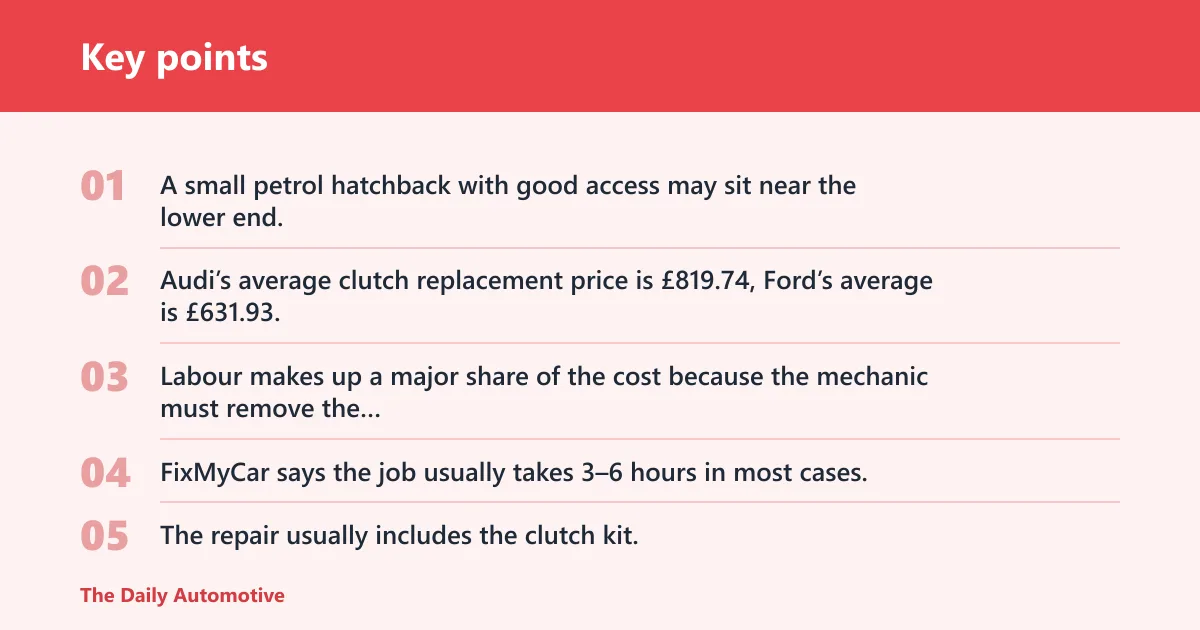
That spread matters. A small petrol hatchback with good access may sit near the lower end, while a transverse diesel, a four-wheel-drive layout, or a car with a dual mass flywheel can jump well above the headline number. Audi’s average clutch replacement price is £819.74, Ford’s average is £631.93, and MINI’s average is £727.27, which shows how much the badge and packaging can change the bill.
Labour makes up a major share of the cost because the mechanic must remove the transmission to replace a clutch. FixMyCar says the job usually takes 3–6 hours in most cases, and also lists four to six hours as the normal window. The repair usually includes the clutch kit, and the mechanic will normally drain the transmission and replace the fluid.
Suppose a front-wheel-drive diesel has a slipping clutch and a rattling flywheel. The quote may begin as a clutch-only job, then expand once the gearbox is out and the flywheel shows wear. That is why two cars with the same symptom can leave the workshop with very different invoices.
What the price usually includes
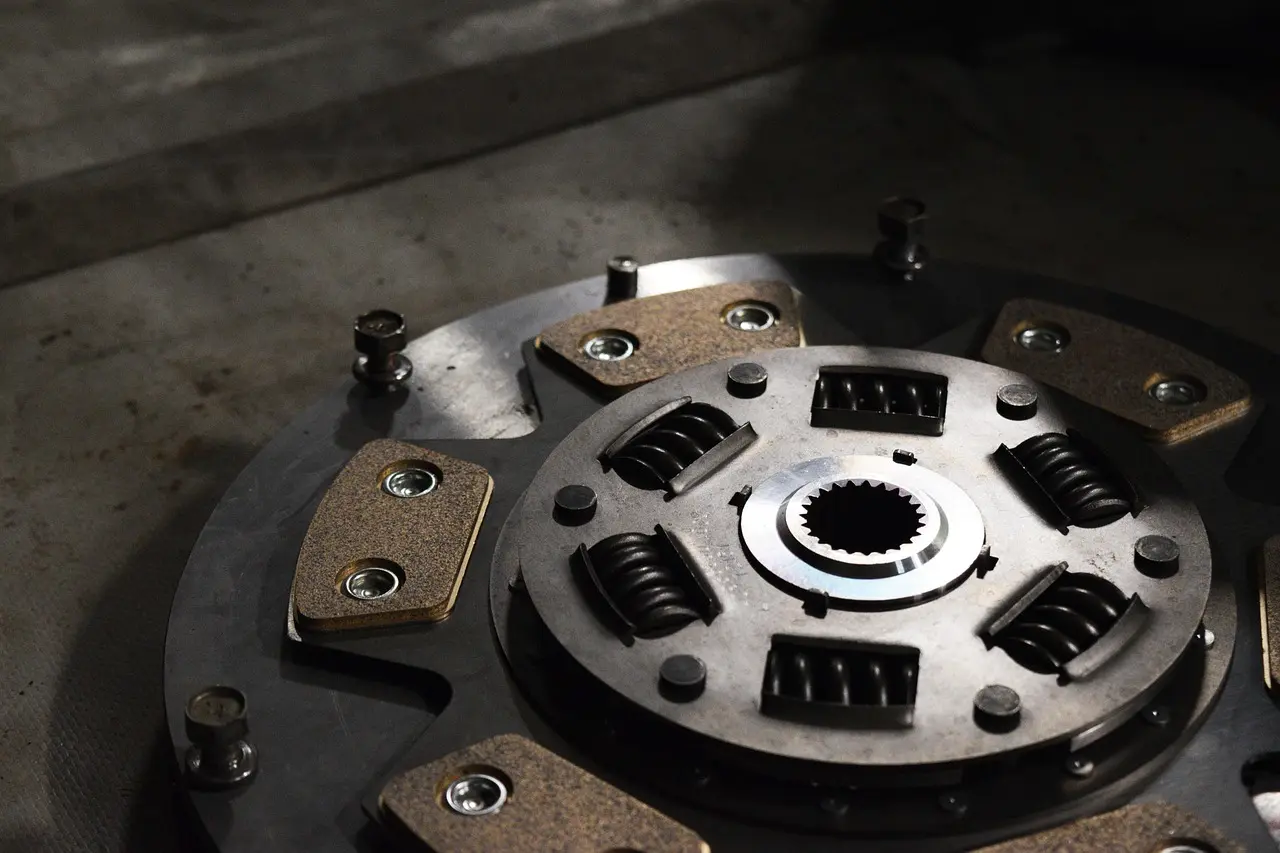
A clutch kit usually contains the friction disc, pressure plate, release bearing or throw-out bearing, and often a pilot bearing or guide parts depending on the vehicle. Some kits also account for flywheel compatibility, which matters when the replacement unit must match the engine, gearbox spline count, and clutch diameter.
The bill can also include fluids, seals, and small hardware. If the hydraulic system shares service access with the transaxle layout, the job may need a bleed or fluid service at the same time. That extra time is small on paper, but it adds up on the invoice.
UK and Australia pricing context
UK pricing is often easier to compare because large booking platforms publish averages, but those numbers still move by region. A city workshop with higher labour rates will usually charge more than a rural garage, even for the same model.
Australia tends to show wider variation because long-haul use, towing, diesel torque, and remote labour rates can all push the price up. A quote that looks fair on paper can still be low if it excludes flywheel work or hydraulic repair.
Which symptoms point to clutch wear?
True clutch wear usually shows up as slipping under load, a hot or burning smell, and a pedal that bites too high or feels inconsistent. The same source lists slipping gears and a burning smell among common symptoms, along with a spongy or stiff clutch pedal. Those clues are useful, but they are not proof by themselves.
A worn disc or pressure plate often reveals itself under acceleration in a high gear or on a hill. The engine speed rises, but the car does not pull as hard as it should. That is classic clutch slip, and it usually points to replacement rather than adjustment.
Grinding, chatter, and vibration clues
Grinding during gear changes can mean the clutch is not fully disengaging, but it can also mean hydraulic trouble, cable misadjustment, or worn linkage. Chatter at takeoff may point to a contaminated disc, a warped flywheel, or a failing dual mass flywheel.
Dual mass flywheel problems often bring vibration and rattling noise, especially near idle or shutoff. If those symptoms are present, a clutch-only quote may not hold once the bellhousing is open.
How long clutches last
The same source says clutch lifespans are typically 50,000–100,000 miles, and most new cars can have clutches lasting 75,000 miles or more. Driving style, stop-start traffic, towing, and high torque all change that range. Short trips and poor pedal habits can wear a clutch long before the odometer looks high.
Could it be hydraulic or cable fault?
Yes. A slipping-feeling pedal or bad shift quality does not always mean the clutch disc is worn out. Master cylinder leaks, slave cylinder leaks, cable adjustment issues, and linkage faults can all mimic clutch failure, and these repairs are often far cheaper than replacing the full clutch assembly.
Diagnosis matters because the labour overlap can tempt a shop to quote the larger job first. If the clutch is still healthy, replacing hydraulics or adjusting the cable can solve the symptom without removing the gearbox.
Master and slave cylinder leaks
A spongy pedal, fluid loss, or a pedal that slowly sinks are classic hydraulic clues. In a shared hydraulic layout, a leak may also create hard shifting or partial disengagement. Those repairs often stay in the $150-$700 range at independent shops, depending on the vehicle and how much of the system must be bled or replaced.
Cable and linkage issues
Older or simpler manual transmission cars may use a clutch cable. If the cable stretches or the adjustment drifts, the pedal may feel stiff, the bite point may move, or the clutch may drag. That is usually a service or adjustment job, not a transmission-out repair.
A common first-timer mistake is booking a full clutch replacement because the pedal feels odd after a cold morning start. If the pedal feel changes after adjustment, the fault may be in the cable or linkage rather than the clutch pack.
What parts are in a clutch kit?
A clutch kit usually includes the friction disc, pressure plate, release bearing or throw-out bearing, and sometimes the pilot bearing or guide parts. On some vehicles, the kit also accounts for the flywheel setup or the hardware needed to keep the assembly compatible with the gearbox.
That is why a quote should list more than one line item. If the estimate only says “clutch,” ask what is included before booking.
When to replace extra hardware
If the release bearing is noisy, the flywheel is heat damaged, or the pilot bearing shows wear, it makes sense to address those parts while the transmission is already out. Labour is the expensive part, so repeating the same teardown twice is usually a false economy.
Say your compact diesel has 92,000 miles, starts to slip in fourth gear, and makes a chirp when the pedal is pressed. That pattern often leads to a clutch kit plus release bearing, and possibly a flywheel if the face is damaged or the dual mass unit rattles.
Why does the flywheel change the price?
The flywheel can turn a routine clutch job into a much larger invoice. The same source says a clutch replacement may include flywheel replacement, and that matters because the flywheel may be worn, cracked, glazed, or out of tolerance by the time the clutch comes out.
Dual mass flywheels add more risk and more cost. They are common on many diesel and higher-torque cars because they help smooth vibration, but they can wear in ways that create rattling, vibration, and harsh take-up. If the unit is beyond spec, replacement is usually safer than reuse.
Resurfacing versus replacement
Some flywheels can be resurfaced if the design and wear limit allow it, but many dual mass flywheels are replaced instead. The wrong call here can create chatter, hot spots, or a repeat teardown if the surface or spring pack fails again soon after the clutch job.
The quote changes because the labour is already there, but the part cost is not. That is why a clutch-only estimate can become a clutch-plus-flywheel estimate after inspection.
How long does clutch replacement take?
Clutch replacement usually takes 3–6 hours in most cases, and FixMyCar also describes the job as taking four to six hours. Access is the deciding factor. A transverse manual transmission in a tightly packed engine bay can take longer than a car with easier bellhousing access.
The mechanic has to remove the transmission, and that alone explains much of the labour bill. On some cars, fluid must be drained and refilled during the repair, which adds time and cleanup. If the flywheel, hydraulics, or related seals need attention, the job gets longer again.
What adds more time
- Four-wheel-drive or all-wheel-drive packaging.
- Rusty fasteners or seized subframe components.
- Dual mass flywheel replacement.
- Hydraulic bleeding after master or slave cylinder work.
- Leak cleanup from engine oil or gearbox oil contamination.
Frequently asked questions
How much for a clutch replacement?
In practical terms, the final bill depends on the model, the labour rate, and whether the flywheel or hydraulics also need attention.
How much does replacing a clutch cost?
Replacing a clutch can be a modest repair on an easier car or a much larger one on a cramped diesel or performance model. Labour is the main cost because the transmission must come out, and the flywheel may add another large line item if it is worn or damaged.
How expensive to replace clutch?
It gets expensive when access is poor, the gearbox is heavy to remove, or the flywheel is also due. A dual mass flywheel can push a routine clutch job into a much higher band, especially if the car already shows vibration or rattling near idle.
Does a clutch usually need replacing or repairing?
True clutch wear usually means replacement, not repair, because the friction disc and pressure plate are wear items. But many clutch-like symptoms come from master cylinders, slave cylinders, cable adjustment, or release bearing faults. A proper diagnosis can prevent an unnecessary full clutch job.
Products related to this article
Sponsored / affiliate links. As an Amazon Associate I earn from qualifying purchases. I may earn additional commission from eligible campaigns.