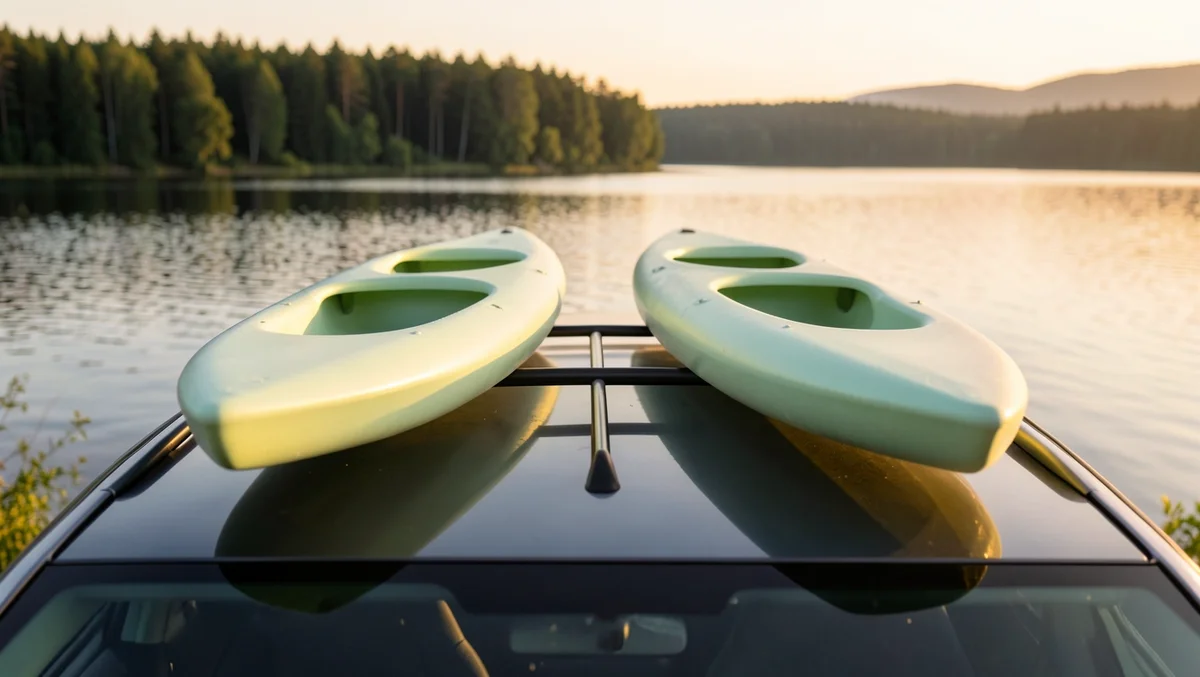
Double Kayak Rack for a Car: Two Kayaks or One Tandem Kayak
“Double kayak rack” means two different things: a rack built to carry two separate kayaks, or a rack sized for one tandem (“double”) kayak built for two paddlers. The hardware you need is different for each, so get that sorted first.
If you searched for a double kayak rack because you and a friend each have your own kayak, you need two mounting points on your crossbars — either two J-cradles or a stacker bar. If you searched because you bought a single tandem kayak that two people paddle together, you need a rack rated for one wide, heavy boat, not two narrow ones. This guide covers both cases, plus the weight limits and overhang rules that actually change once you are carrying two kayaks instead of one.
Two Kayaks or One Tandem Kayak? Pick Your Rack Style First
For two separate kayaks, the two common setups are J-cradles and stackers. A pair of J-cradles holds each kayak on its side at roughly a 45-degree angle, which uses your crossbar space efficiently and is the setup most people mean when they search for a “double kayak rack.” A stacker is a single vertical post that lets you lean two or more kayaks against it on their sides — it handles more kayaks per crossbar length, but loading and unloading takes more coordination since the boats brace against each other.
For one tandem kayak, skip the two-cradle setup. A tandem kayak is a single hull, typically 30-36 inches wide and 12-16 feet long, so it needs either one pair of J-cradles rated for that width and length, or a set of padded saddles spaced to match the hull’s actual mounting points. Trying to load a single tandem kayak across two separate J-cradle pairs meant for narrower boats is the single most common fitment mistake people make when shopping for a “double” rack.
A Rack Built for Two Separate Kayaks
If you are carrying two individual kayaks, a two-pair J-cradle kit is the most common and least expensive way to do it. Each cradle pair clamps to your existing roof crossbars, so it works on any vehicle that already has bars installed — you are adding the kayak-specific hardware, not the crossbars themselves.
BEST FOR TWO SEPARATE KAYAKS
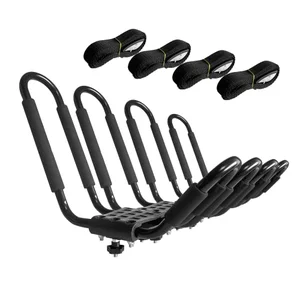 |
HIGHRAZON 2-Pair J-Bar Kayak Roof Rack – $55.99 Two full J-cradle pairs plus 4 tie-down ropes in one kit, so you can mount both kayaks on your existing crossbars without buying two separate racks.
|
Two J-cradle pairs like this one work on almost any car with crossbars already installed — if your car has a bare roof with no bars at all, you need to add crossbars first; see our guide on what cross bars on a car actually do and whether you need them.
How Much Weight Can Your Roof Rack Hold With Two Kayaks?
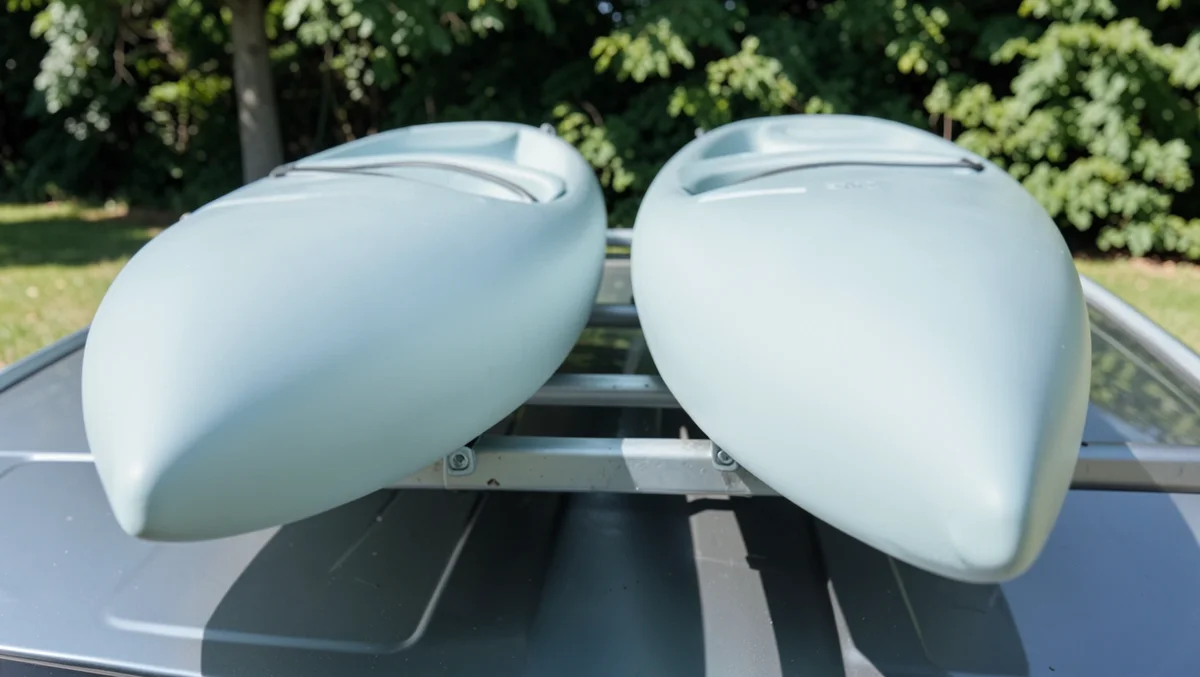
This is where carrying two kayaks changes the math compared to carrying one. A single recreational kayak typically weighs 30-45 lbs, so two of them together usually run 60-90 lbs before you add the rack hardware itself. A single tandem kayak commonly weighs 65-85 lbs on its own. Either way, you need to check that combined figure against your crossbar system’s dynamic weight rating — the number that applies while the car is moving — not the higher static rating some listings advertise for a parked car.
Aftermarket crossbars from brands like Thule, Yakima, and Malone commonly carry dynamic ratings in the 100-165 lbs range, and factory-installed crossbar systems are often rated lower, sometimes under 100 lbs dynamic. Two kayaks at 60-90 lbs combined usually fits inside that range with room for the rack hardware, but a heavier tandem kayak paired with a low-rated factory rack can get close to the limit fast. Always check your specific crossbar’s dynamic rating, not the kayak rack’s own maximum, since the crossbar is almost always the weaker link.
Overhang and Flag Rules When Two Kayaks Stick Out the Back
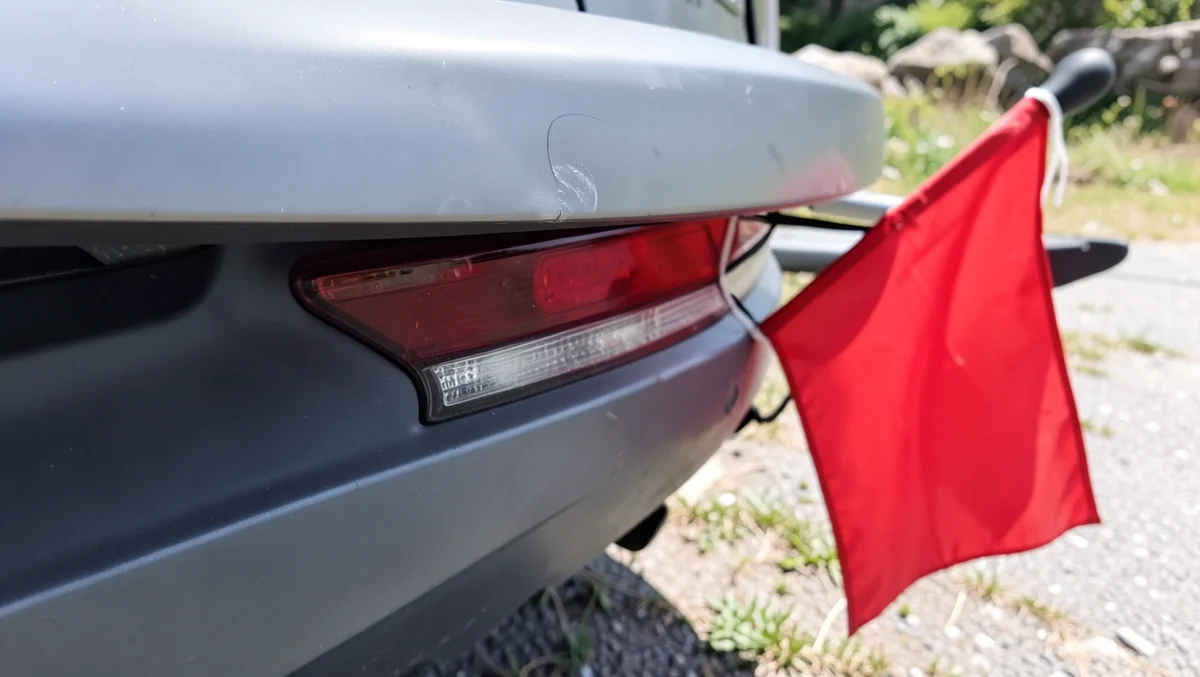
Carrying two kayaks — especially two longer touring kayaks or one long tandem — makes it far more likely that the load extends past your bumper, which single-kayak guides often skip. Federal guidance allows cargo to overhang the rear of a vehicle by up to 4 feet before extra marking is required. Once you cross that 4-foot mark, you need a red or fluorescent flag at least 18 inches square tied to the rear of the load during the day, and a red light in its place after dark.
State rules vary on top of the federal baseline — some states allow longer overhangs before requiring a flag, and a few require marking at shorter distances, so check your state’s DMV or Department of Transportation page if you are driving a long tandem kayak or a pair of touring kayaks regularly. Measuring the actual overhang from your specific car and rack combination, rather than assuming, takes a few minutes and avoids a roadside citation.
How to Load and Secure Two Kayaks on One Roof
- Space the cradles to your car’s crossbar spread, not the kayak’s length. Most crossbar systems are 24-32 inches apart; the cradles just need to sit under a stable part of each hull, not the ends.
- Load one kayak at a time. Lifting two kayaks onto a roof simultaneously is how most drops and scratches happen — set one, strap it loosely, then load the second.
- Use bow and stern lines on both kayaks, not just the rack straps. The cradle or stacker straps hold the kayak down; separate lines to the car’s tow hooks or frame stop it from sliding forward under hard braking.
- Recheck strap tension after the first 10-15 minutes of driving. Straps settle as foam padding compresses, and this is especially noticeable with two kayaks’ combined weight versus one.
For the full strapping and knot-tying technique once your rack is mounted, see our guide on how to carry a kayak on a car safely. If your car has no factory roof rails at all — common on several current sedans and hatchbacks — start with our Honda Civic bare-roof kayak rack guide, which covers the same bare-roof problem in more depth for that specific car.
Frequently Asked Questions
What Is a Double Kayak Rack for a Car?
It usually means a rack built to carry two separate kayaks on one car roof, most often as two J-cradle pairs or a stacker bar. The same term is sometimes used for a rack sized to fit one tandem (“double”) kayak built for two paddlers, so check which one you actually need before buying — the hardware is not interchangeable.
Can I Use a Double Kayak Rack for One Tandem Kayak Instead?
Not directly. A two-pair J-cradle kit is spaced and sized for two narrower individual kayaks, not one wide tandem hull. A tandem kayak needs a single wide-set rack — one pair of J-cradles rated for its width, or padded saddles matched to its mounting points — rather than a “double” kit built for two boats.
How Much Weight Can My Roof Rack Hold With Two Kayaks?
Check your crossbar’s dynamic weight rating, which applies while driving and is almost always lower than its static rating. Two recreational kayaks typically add up to 60-90 lbs combined, and a single tandem kayak usually weighs 65-85 lbs. Aftermarket crossbars commonly rate 100-165 lbs dynamic, but factory bars can rate lower, so confirm your specific bars before loading two boats.
Do I Need a Flag When Carrying Two Kayaks?
Only if the load overhangs the rear bumper by more than 4 feet, which is the federal guidance most states follow. At that point you need a red or fluorescent flag at least 18 inches square during the day and a red light after dark. Carrying two kayaks or one long tandem makes this more likely than a single short kayak, so measure the actual overhang on your car before a long trip.
Do I Need Existing Roof Crossbars to Install a Double Kayak Rack?
Yes, for a J-cradle or stacker kit like the one in this guide — those clamp onto existing crossbars rather than attaching directly to a bare roof. If your car has no crossbars, you need to add a crossbar system first, or use a soft-pad rack designed to strap directly to a bare roof for one or two kayaks.
Conclusion
A “double kayak rack” is really two different products depending on what you own — two J-cradle pairs for two separate kayaks, or a single wide-set rack for one tandem kayak. Match the hardware to the boats you actually have, check the combined weight against your crossbar’s dynamic rating rather than its static number, and measure your rear overhang before a long trip.
Once the rack is mounted, the loading and securing steps are the same as for a single kayak, just doubled: one boat at a time, bow and stern lines in addition to the rack straps, and a strap-tension check a few minutes into the drive.
Products related to this article
Sponsored / affiliate links. As an Amazon Associate I earn from qualifying purchases. I may earn additional commission from eligible campaigns.