Electric Cars: AC or DC Power Explained Simply
Electric cars use both AC and DC power, but understanding the fundamental differences and how they interact is key to comprehending their operation. While the battery stores and delivers DC power, the motor typically runs on AC. This requires a sophisticated system to manage the conversion and delivery of electricity efficiently.
This post breaks down the AC vs. DC dynamics in EVs, clarifying their roles, the components involved, and why this distinction matters for your driving experience and charging needs.
In short, electric cars use DC power from their batteries to run onboard electronics and charge, but their motors primarily operate on AC power. An inverter converts the battery’s DC to AC for the motor, while a converter handles AC to DC for charging and accessories.
Key Takeaways
- Electric cars store energy as DC power in their batteries.
- The electric motor in most EVs runs on AC power.
- An inverter is crucial for converting DC from the battery to AC for the motor.
- A converter manages AC to DC conversion for charging and accessories.
- Understanding AC/DC helps explain charging types and vehicle performance.
What is DC Power in an Electric Car?
Direct Current (DC) power is the fundamental energy source stored within an electric vehicle’s battery pack. Think of it as the raw energy waiting to be used. It flows in one consistent direction, making it ideal for storage and for powering the car’s internal systems that require a stable, unchanging voltage.
This includes everything from the infotainment system and climate control to the various sensors and computers managing the vehicle’s functions.
The high-voltage battery pack, often comprising hundreds of lithium-ion cells, is a massive DC power source. When you press the accelerator, this DC energy is drawn from the battery. However, it doesn’t go directly to the motor in its raw DC form for propulsion.
Instead, it’s routed through a critical component that dictates how the car moves.
- The battery pack stores energy in DC format.
- DC power is used for vehicle accessories and computers.
- It provides a stable and consistent electrical flow.
- Lithium-ion is the dominant battery chemistry for EVs, delivering DC.
- DC voltage in EV batteries can range from 400V to 800V or more.
The quality and capacity of the DC power storage are directly related to the vehicle’s range and performance. Manufacturers invest heavily in battery technology to maximize energy density, improve lifespan, and ensure safety. Without DC power stored efficiently, an electric car simply wouldn’t function.
What is AC Power in an Electric Car?
Alternating Current (AC) power is what typically drives the electric motor responsible for propelling the vehicle. Unlike DC, AC power periodically reverses its direction of flow. This characteristic makes AC motors very efficient for generating rotational force, which is exactly what a car needs to move.
The speed and torque of the motor can be precisely controlled by adjusting the frequency and voltage of the AC power supplied to it.
Most modern electric vehicles employ AC induction motors or permanent magnet synchronous motors, both of which excel at converting electrical energy into mechanical motion. The ability to finely tune the AC power allows for smooth acceleration, regenerative braking (where the motor acts as a generator to recapture energy), and overall responsive driving dynamics. This is a core reason why AC power is favored for the propulsion system.
| AC vs. DC Characteristics | DC Power | AC Power |
|---|---|---|
| Direction of Flow | Unidirectional (one direction) | Alternating (reverses direction) |
| Primary Use in EVs | Battery storage, onboard electronics | Electric motor propulsion |
| Control Capability | Stable voltage for electronics | Precise control of motor speed and torque |
The interplay between AC and DC is a sophisticated dance managed by the car’s power electronics. This table highlights the core differences that make each type of current essential for different functions within the electric vehicle.
- AC motors are generally more efficient for variable speed applications.
- AC power allows for simpler motor design in many cases.
- The frequency of AC power directly correlates to motor speed.
- Many home appliances and grid power are AC.
The Role of the Inverter
The inverter is the unsung hero in an electric car’s powertrain. Its primary job is to convert the DC power coming directly from the high-voltage battery into AC power that the electric motor can use. Without an inverter, the DC electricity would simply not be compatible with the AC motor, rendering the vehicle immobile.
It’s a crucial piece of power electronics that enables the fundamental operation of most EVs.
This conversion process isn’t just a simple flip of a switch. The inverter must precisely control the frequency and voltage of the AC output to manage the motor’s speed and torque. This allows for smooth acceleration from a standstill, efficient cruising at higher speeds, and powerful bursts of acceleration when needed.
The inverter also plays a vital role in regenerative braking, converting the AC generated by the motor back into DC to recharge the battery.
How the Inverter Works
Inside an inverter are semiconductor switches, typically made from materials like silicon carbide (SiC) or insulated-gate bipolar transistors (IGBTs). These switches turn on and off at extremely high frequencies, chopping the DC voltage into a waveform that approximates AC. By carefully controlling the timing and duration of these switching cycles, the inverter generates the desired AC output for the motor.
Modern inverters are highly sophisticated, featuring advanced algorithms and control logic. They constantly monitor motor speed, driver input (throttle position), and battery status to deliver the optimal AC waveform. This precision ensures maximum efficiency, smooth performance, and extends the life of both the motor and the battery pack.
The efficiency of the inverter itself is also critical; any energy lost during the DC to AC conversion directly impacts the vehicle’s overall range.
- Converts DC from battery to AC for the motor.
- Controls motor speed and torque by adjusting AC frequency and voltage.
- Enables regenerative braking by converting motor-generated AC back to DC.
- Uses semiconductor switches (IGBTs, SiC) for rapid power modulation.
- Efficiency of the inverter directly impacts EV range.
- Advanced control logic optimizes performance and energy recovery.
The Function of the Converter (DC-DC)
While the inverter handles the DC-to-AC conversion for the motor, another essential component is the DC-DC converter. This device manages the conversion of the high-voltage DC from the battery pack to a lower-voltage DC, typically 12V. This lower-voltage DC is what powers the car’s standard accessories, such as headlights, power windows, windshield wipers, infotainment system, and even the 12V auxiliary battery.
Without this converter, these essential systems would not receive the correct voltage and would not function.
The DC-DC converter is essentially a voltage regulator that steps down the high voltage from the main battery. It ensures that all the low-voltage components receive a stable and safe power supply. Additionally, it often plays a role in charging the 12V auxiliary battery, which is still present in most EVs to manage system startup and provide power for safety systems even when the main high-voltage system is offline.
This dual functionality makes the DC-DC converter indispensable for the overall operation of an electric vehicle.
Why a Separate Converter is Necessary
The primary reason for a separate DC-DC converter is voltage compatibility. The main battery operates at a very high voltage (400-800V or more) to deliver sufficient power for propulsion. However, most automotive accessories are designed to run on a standard 12V DC supply, a convention carried over from internal combustion engine vehicles.
Trying to power these accessories directly from the main battery would likely damage them due to the excessive voltage.
Furthermore, the DC-DC converter provides a layer of electrical isolation between the high-voltage system and the low-voltage systems. This is crucial for safety, preventing electrical faults in accessories from potentially affecting the main battery or propulsion system. It’s a robust solution that ensures reliability and longevity for all vehicle components.
| Component | Input Voltage | Output Voltage | Function |
|---|---|---|---|
| DC-DC Converter | High-Voltage DC (400V-800V+) | Low-Voltage DC (12V) | Powers accessories, charges 12V battery |
| Inverter | High-Voltage DC (400V-800V+) | AC (Variable Frequency/Voltage) | Drives the electric motor |
This table clearly shows the distinct roles of the DC-DC converter and the inverter, both essential for managing the different types of electrical current in an EV.
- Ensures compatibility between high-voltage battery and low-voltage accessories.
- Provides electrical isolation for safety.
- Supplies power for the car’s lights, audio system, and other electronics.
- Charges the 12V auxiliary battery.
AC vs. DC Charging: Understanding the Differences
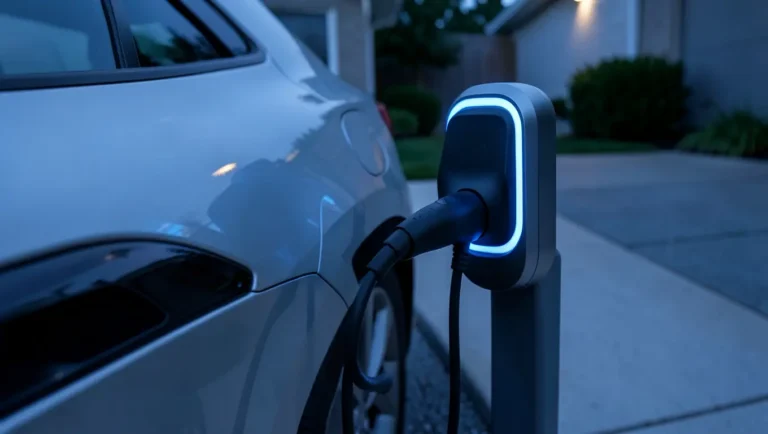
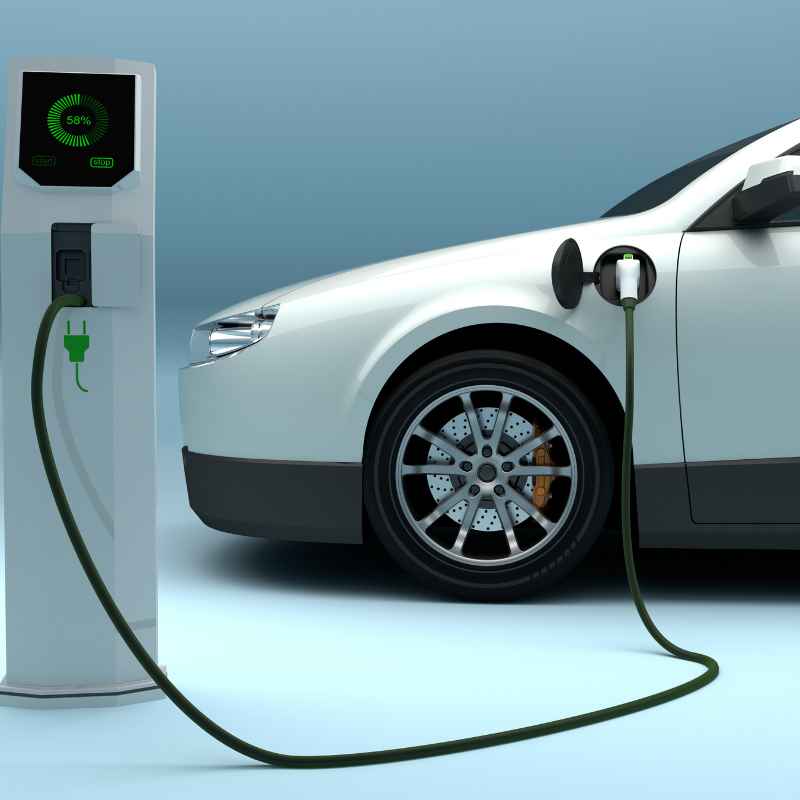
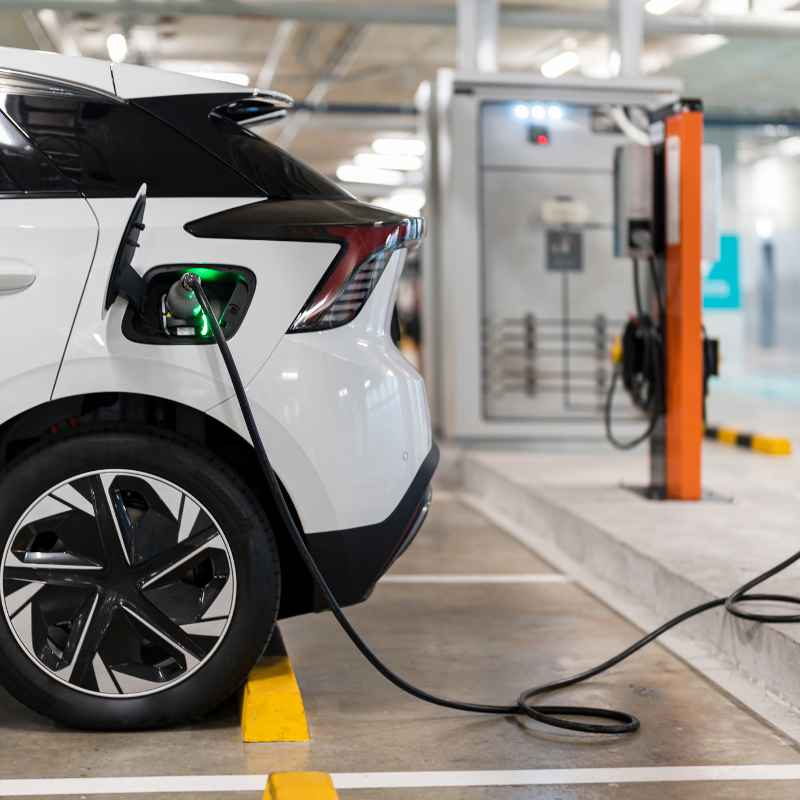
The distinction between AC and DC power is most directly experienced when charging an electric car. This is where you’ll encounter terms like Level 1, Level 2 (AC charging), and DC fast charging. Understanding these differences is crucial for choosing the right charging solution and knowing how long it will take to get your EV ready for the road.
AC charging, used in Level 1 and Level 2 chargers, relies on the car’s onboard charger to convert the incoming AC power from the grid into DC power that can be stored in the battery. DC fast charging, on the other hand, bypasses the onboard charger entirely. The charging station itself performs the AC-to-DC conversion, delivering high-power DC directly to the battery, which significantly speeds up the charging process.
Important: Your car’s onboard charger dictates the maximum AC charging speed, not the charging station itself. For DC fast charging, the car’s battery management system and the charging station’s power output are the limiting factors.
Level 1 and Level 2 (AC Charging)
Level 1 charging uses a standard 120V household outlet and is the slowest form of charging. It’s convenient for overnight charging or topping up when you have ample time. Level 2 charging, typically installed in homes or public charging stations, uses a 240V connection (similar to a clothes dryer outlet) and offers a significantly faster charging rate.
In both Level 1 and Level 2 charging, the electricity from the grid is AC. This AC power enters your car and is then converted to DC by the vehicle’s onboard charger to charge the battery.
The capacity of the onboard charger varies by EV model, typically ranging from 3.3 kW to 11 kW, with some high-performance models offering up to 22 kW. This onboard charger is the bottleneck for AC charging speed. The charging station provides the AC power, but the car’s internal converter determines how quickly it can accept that power.
DC Fast Charging
DC fast charging stations deliver high-voltage DC power directly to the EV’s battery, bypassing the onboard AC-to-DC converter. This allows for much faster charging, often adding hundreds of miles of range in 30-60 minutes. These stations contain large, powerful rectifiers that convert grid AC power to DC before it even reaches the car.
The charging speeds can range from 50 kW to over 350 kW, depending on the station and the car’s capabilities.
This method is ideal for long road trips where quick top-ups are necessary. It’s important to note that not all EVs are equipped to handle the highest DC fast charging rates. The vehicle’s battery and thermal management systems need to be designed to accept such high power inputs safely and efficiently.
Therefore, compatibility between the car and the charging station is key for DC fast charging.
- Level 1 (AC): 120V, slow charging, uses onboard charger.
- Level 2 (AC): 240V, faster charging, uses onboard charger.
- Onboard Charger: Converts AC to DC within the vehicle.
- DC Fast Charging: High-power DC directly to battery, station converts AC to DC.
- Speed: DC fast charging is significantly faster than AC charging.
- Compatibility: Vehicle must support specific charging speeds.
Why the AC/DC Distinction Matters for EV Owners
Understanding the roles of AC and DC power in your electric car isn’t just an academic exercise; it has practical implications for EV owners. It helps you make informed decisions about charging, understand your vehicle’s performance characteristics, and appreciate the complex engineering that makes electric mobility possible. Knowing these distinctions can empower you as an EV driver.
For instance, if you’re planning a road trip, understanding charging speeds – how AC charging is limited by your car’s onboard charger and how DC fast charging offers rapid power delivery – will help you plan your routes and charging stops more effectively. It also explains why some charging stations are faster than others, even if they look similar. The internal capabilities of both the car and the charging infrastructure play a significant role.
Warning: Never attempt to modify or bypass the car’s internal power electronics or charging systems. These are highly complex and dangerous systems that require specialized knowledge and equipment. Always use certified charging equipment.
Impact on Performance and Range
The efficiency of the inverter and DC-DC converter directly impacts your EV’s performance and driving range. An efficient inverter minimizes energy loss during the DC-to-AC conversion for the motor, meaning more of the battery’s energy is used to move the car. Similarly, an efficient DC-DC converter ensures that accessories don’t drain the main battery unnecessarily.
Moreover, the precise control offered by the inverter over AC motor speed is what enables features like smooth acceleration and effective regenerative braking. Regenerative braking, where the motor acts as a generator to capture kinetic energy and convert it back to DC for the battery, is a key contributor to an EV’s overall range. The better these systems are designed, the more miles you can expect to get from a single charge.
| Aspect | AC Power’s Role | DC Power’s Role |
|---|---|---|
| Propulsion | Drives the electric motor for motion. | Stored in the battery, supplied to inverter. |
| Charging | AC input from grid (Level 1 & 2), converted by onboard charger. | DC input directly from fast chargers, stored by battery. |
| Accessories | N/A (typically) | Powers most interior systems via DC-DC converter. |
| Energy Recovery | Motor acts as generator, producing AC. | Inverter/converter changes AC back to DC for battery recharge. |
This comparative table summarizes the critical roles of both AC and DC power in an electric vehicle’s ecosystem.
- Informed charging decisions (AC vs. DC fast charging).
- Understanding vehicle range and efficiency.
- Appreciating the function of onboard systems (inverter, converter).
- Evaluating charging infrastructure.
- Understanding regenerative braking capabilities.
Frequently Asked Questions
Are electric car motors AC or DC?
The electric motors that drive most electric cars are AC motors. They operate on Alternating Current (AC) power, which allows for efficient control of speed and torque, crucial for vehicle propulsion. The battery, however, stores Direct Current (DC) power.
How does an electric car get AC power from a DC battery?
An inverter is the component responsible for this conversion. It takes the Direct Current (DC) power from the battery and transforms it into Alternating Current (AC) power needed by the electric motor. This process is highly controlled to manage vehicle performance.
Can you charge an EV with AC or DC?
You can charge an EV with both AC and DC power. AC charging (Level 1 and Level 2) uses the car’s onboard charger to convert AC from the grid to DC for the battery. DC fast charging bypasses the onboard charger, with the charging station delivering DC power directly to the battery.
What voltage do electric cars use?
Electric cars operate with a high-voltage battery system, typically ranging from 400 volts to 800 volts or even higher for some models, delivering DC power. A DC-DC converter then steps this down to a lower 12-volt DC to power standard accessories.
Is the electricity from my home’s wall socket AC or DC?
The electricity from a standard household wall socket (like a 120V outlet in North America or 230V in Europe) is Alternating Current (AC). This is the type of power supplied to Level 1 and Level 2 charging stations before it’s converted by the car’s onboard charger.
Final Thoughts
Electric cars masterfully integrate both AC and DC power systems to achieve efficient and powerful transportation. The battery reliably stores DC energy, while the electric motor efficiently utilizes AC for propulsion, bridged by sophisticated inverters and converters. Understanding this dynamic is fundamental to appreciating EV charging, performance, and the technological advancements driving sustainable mobility forward.
Products related to this article
Sponsored / affiliate links. As an Amazon Associate I earn from qualifying purchases. I may earn additional commission from eligible campaigns.