Can You Get a Car Loan with a 600 Credit Score?
Yes, many lenders will finance a car loan at a 600 credit score, but the rate, down payment, and vehicle price have to fit the lender’s risk rules. Push the deal too far, and the payment can climb fast enough to strain your budget or trap you in negative equity. This guide explains when 600 is financeable, what terms to expect, and when the math says to walk away.
This guide is part of our Car Dealer Money Guide: Negotiating, Financing, Leasing, Trading In and Selling series.
What lenders look at beyond your credit score
Yes, approval is possible at 600, but it is less predictable than with prime credit. Experian says 600 is below what lenders typically view as good credit, and lenders may still use FICO Score, VantageScore, or FICO Auto Score when they review an application. Approval usually comes down to the full file, income, debts, and vehicle value, not the score alone.
Where 600 falls in common score ranges
A 600 score sits in fair-credit territory for many auto lenders, and some models will treat it as near-prime or subprime depending on the bureau and scoring version. Credit Karma says 670 or higher is generally considered good, while Lendbuzz places 601 to 660 in the near-prime tier and 501 to 600 in subprime.
What lenders usually want to see besides credit
The same source says lenders may consider your credit report, employment history, and debt-to-income ratio. That means a 600 score can be offset by steady income, manageable monthly debts, a sensible loan amount, and a vehicle that keeps the lender’s risk low. A short credit file or recent late payments can still hold the deal back.
Why underwriting matters more than the headline score
Auto lenders care about repayment capacity and collateral value. If your monthly debt load is already high, or the car is expensive relative to the amount financed, the lender may decline the loan or price it higher. A 600 score works only when the rest of the file keeps the risk within limits.
Can you get a new car loan with a 600 credit score?
Yes, but new-car financing is often harder to place at 600 than used-car financing. New cars usually come with larger loan amounts, and that can stretch the lender’s exposure. A stronger down payment, steady income, and a shorter term can make a new-car deal fit underwriting limits.
Why new-car financing can be harder
New vehicles often cost more, so the loan-to-value ratio can stay high unless you put money down. Higher loan sizes can also make the monthly payment less forgiving if the APR is elevated. If the borrower has thin reserves or unstable income, a lender may prefer a smaller used-car loan instead.
Why used-car loans are often easier to place
Used-car loans are frequently easier to approve at 600 because the amount financed is smaller, which reduces lender exposure. That does not mean the rate will be low. It means the structure is often easier to justify, especially if the vehicle is not too old, has reasonable mileage, and the down payment is meaningful.
How vehicle age and mileage change lender appetite
Lenders usually become more cautious as a car gets older or carries higher mileage. A late-model used car with moderate miles can be far easier to finance than an older car with a short remaining useful life. At 600, that collateral detail can matter as much as the score itself.
600 score loan matrix
This matrix uses simple payment estimates to show how loan size, term length, and down payment change the deal. The figures are approximate and exclude tax, title, registration, and insurance. Red means likely too tight for many budgets. Yellow means possible, but only if the rest of the file is strong. Green means the structure is more sustainable.
| Scenario | Vehicle type | Price | Down payment | Amount financed | Term | Est. payment | Call |
|---|---|---|---|---|---|---|---|
| A | New | $25,000 | 20% | $20,000 | 60 months | about $430/month | |
| A | New | $25,000 | 20% | $20,000 | 60 months | about $430/month | Green |
| B | New | $30,000 | 10% | $27,000 | 72 months | about $475/month | Yellow |
| C | New | $30,000 | 10% | $27,000 | 84 months | about $430/month | Red |
| D | Used | $18,000 | 20% | $14,400 | 60 months | about $310/month | Green |
| E | Used | $22,000 | 10% | $19,800 | 72 months | about $350/month | Yellow |
| F | Used | $24,000 | 0% | $24,000 | 84 months | about $375/month | Red |
These estimates assume higher fair-credit pricing, not prime rates. The payment can still rise if the APR is higher than expected. A longer term lowers the monthly bill, but it raises total interest and keeps the loan underwater longer.
Say your target is a $30,000 new car with only 10% down. If the lender stretches the loan to 84 months, the payment may look manageable at first, yet the long payoff window can slow equity buildup and reduce trade-in flexibility for years.
What rate should you expect?
APR at a 600 score varies by lender, term, vehicle, and down payment. New-car APRs are usually lower than used-car APRs, but a 600 file can still face steep pricing. A lower APR can still be a bad deal if the term is so long that total interest becomes excessive.
How APR changes with lender type
Credit unions often price more carefully than many banks and may weigh income and DTI heavily. Specialty and subprime auto lenders serve fair and low-credit borrowers, and faster approvals are common, but rates are usually higher than prime lending. Some buy-here-pay-here lots charge APRs above 20%, which is a serious warning sign.
Why term length affects total cost
A longer term usually lowers the monthly payment, but it can add a large amount of interest over the life of the loan. That matters even more at 600, because the APR is often higher to begin with. If a 72- or 84-month term is the only way the budget works, the deal may be too expensive.
Why a lower rate can still be a bad deal
A slightly better APR does not fix a payment that is too high for your income. If the loan amount is large, the car is overpriced, or the term is stretched too far, the total cost can still be risky. Focus on the payment, the total finance charge, and the equity path together.
What helps a 600 score qualify?
Down payment, debt-to-income ratio, employment history, and the car itself all matter. Lenders use these factors to judge whether the loan is sustainable. Lendbuzz says a 10% to 20% down payment can reduce risk, which can improve approval odds and sometimes help pricing.
Down payment and loan-to-value
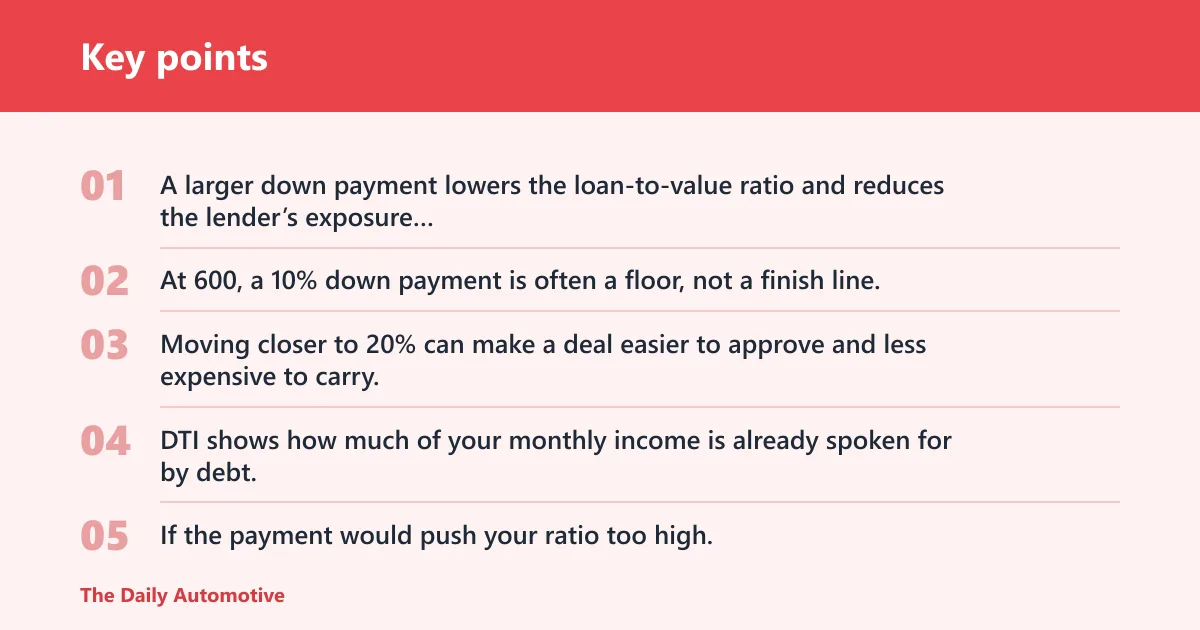
A larger down payment lowers the loan-to-value ratio and reduces the lender’s exposure if the car depreciates quickly. At 600, a 10% down payment is often a floor, not a finish line. Moving closer to 20% can make a deal easier to approve and less expensive to carry.
Debt-to-income ratio and income stability
DTI shows how much of your monthly income is already spoken for by debt. If the payment would push your ratio too high, the lender may pass even when the credit score is acceptable. Stable, documented income can offset a fair score because it shows the loan can be repaid on time.
Employment history and documentation
Longer job stability helps because it makes future payment capacity easier to verify. Be ready to document recent pay stubs, employment status, and any income that supports the loan request. If you are changing jobs, a lender may want more proof before approving the deal.
Cosigner tradeoffs
A cosigner can improve approval odds and sometimes improve terms because the lender has another person legally responsible for repayment. That does not make the loan harmless. Missed payments can damage both credit files, and the cosigner is on the hook if the primary borrower cannot pay.
Which lenders should you try first?
Start with credit unions and then compare specialty and subprime auto lenders. Consumer Reports says many lenders will prequalify with a soft credit check, and it also advises shopping banks or credit unions before the dealer. Prequalification helps you see likely terms without a hard inquiry at the outset. (Consumerreports)
Credit unions and membership rules
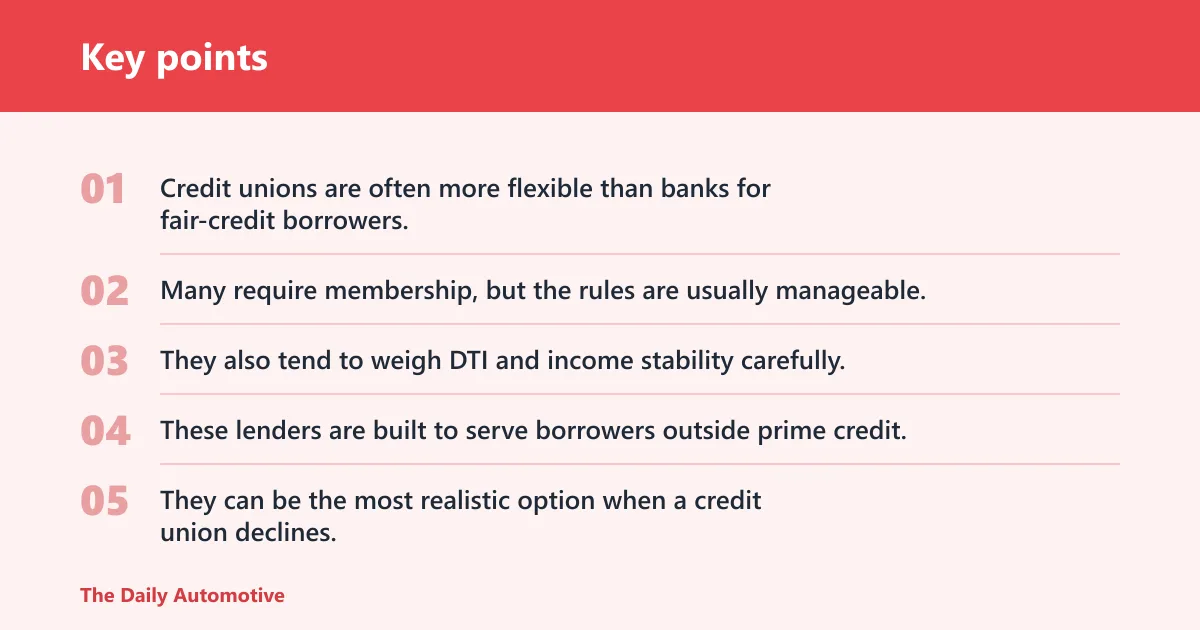
Credit unions are often more flexible than banks for fair-credit borrowers, and they may offer lower APRs. Many require membership, but the rules are usually manageable. They also tend to weigh DTI and income stability carefully, which can help a 600-score borrower with a solid paycheck.
Specialty and subprime auto lenders
These lenders are built to serve borrowers outside prime credit. They can be the most realistic option when a credit union declines, especially if the car is modest and the down payment is solid. The tradeoff is cost: terms vary widely, and APRs can be high.
Why prequalification comes before the dealer desk
Prequalification shows how much room you have before you sit down at the dealership. It also helps you compare offers from banks, credit unions, and specialty lenders on the same footing. That gives you a benchmark before dealer financing enters the picture.
Picture a shopper with a 600 score, a steady job, and a $4,000 down payment on a $20,000 used car. That deal may be financeable because the loan amount stays contained and the payment can fit a normal budget. Now change only one variable: remove the down payment. The loan gets larger, the lender’s risk rises, and the same file becomes harder to place.
When should you wait instead of buying now?
Wait when the payment is too tight, the APR is too high, or the loan would leave you underwater for too long. A score around 600 can sometimes be financeable today, but a common rule of thumb is that 30 to 90 days of preparation can improve the result enough to change the loan from risky to more workable.
When the payment math is too tight
If the proposed payment strains your budget before insurance, fuel, and maintenance, the car is too expensive. That is especially true with long terms or a high APR. A deal that only works by stretching the payment is usually a deal that will cause trouble later.
When waiting 30 to 90 days could improve pricing
Waiting can help if you can lower balances, reduce utilization, document income more cleanly, or save a larger down payment. Those changes matter because they affect underwriting, not just the score. Even a small improvement in DTI or loan-to-value can change the offer set.
Signs a deal is likely too expensive
Be cautious if the lender wants to roll negative equity into the loan, stretch the term well beyond the vehicle’s useful life, or push you toward a buy-here-pay-here lot with a very high APR. Those structures can look easy at the dealership and painful a month later. If the only path to approval is a deal that stays underwater for years, walk away.
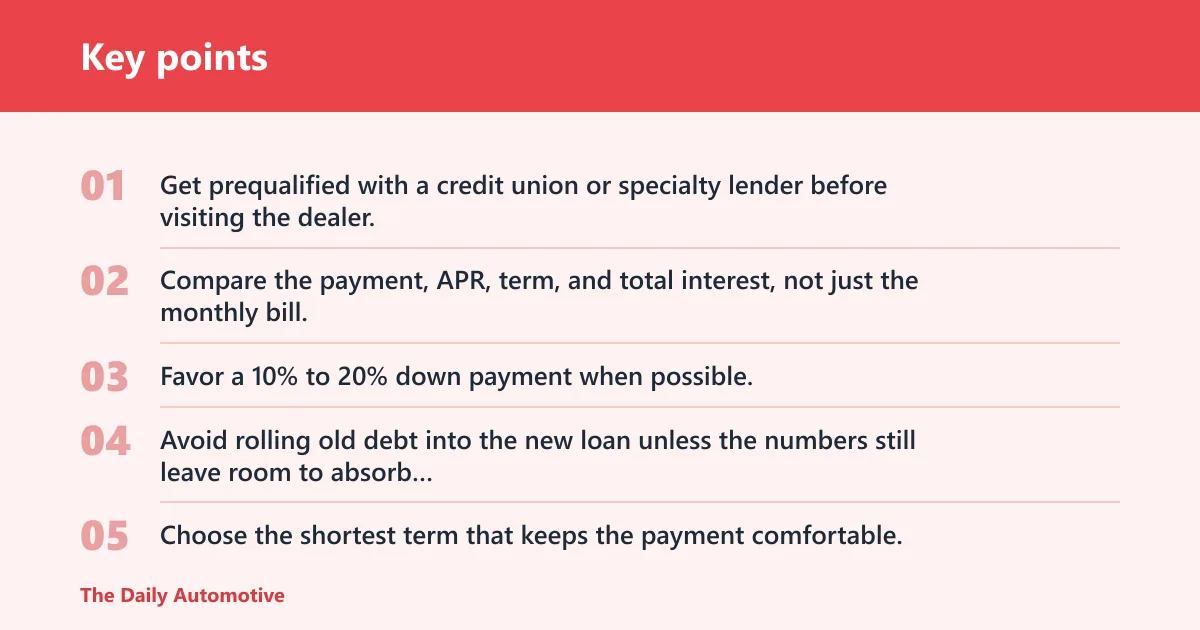
- Get prequalified with a credit union or specialty lender before visiting the dealer.
- Compare the payment, APR, term, and total interest, not just the monthly bill.
- Favor a 10% to 20% down payment when possible.
- Avoid rolling old debt into the new loan unless the numbers still leave room to absorb depreciation.
- Choose the shortest term that keeps the payment comfortable.
Frequently asked questions
Can you get a car loan with a 600 credit score?
Yes. A 600 credit score may still qualify you for an auto loan, but approval is less predictable than with prime credit. Lenders usually look at income, employment history, debt-to-income ratio, down payment, and the car itself before deciding whether the deal fits their rules.
Can you get a used car loan with a 600 credit score?
Yes, and used-car financing is often easier to place than new-car financing at this score. The smaller loan amount can make the lender more comfortable, especially if the vehicle is reasonably late-model and not packed with miles. The APR can still be high, so check the payment carefully.
What interest rate can I expect with a 600 credit score auto loan?
There is no fixed APR for a 600 score. Rates vary by lender type, loan term, vehicle age, down payment, and your overall file. New-car APRs are usually lower than used-car APRs, but fair-credit borrowers can still face expensive pricing, especially at specialty or subprime lenders.
Do I need a down payment with a 600 credit score?
You may not need one every time, but a down payment often helps a great deal. The same source says a 10% to 20% down payment can reduce risk, and that can improve approval odds. It also lowers the amount financed, which can cut the monthly payment and reduce negative-equity risk.
Will a cosigner help me get a car loan with a 600 credit score?
Often, yes. A cosigner can improve approval odds and may improve terms because the lender has another legally responsible borrower. The tradeoff is serious: both people share the repayment obligation, and missed payments can hurt both credit files. A cosigner should only be used with full understanding of the risk.
Can I get a $30,000 car loan with a 600 credit score?
Possibly, but it depends on the rest of the file. A $30,000 loan is much easier to approve if the down payment is meaningful, the term is not excessive, and the income can support the payment. Without those supports, the deal may become too expensive and too risky to justify.
Products related to this article
Sponsored / affiliate links. As an Amazon Associate I earn from qualifying purchases. I may earn additional commission from eligible campaigns.
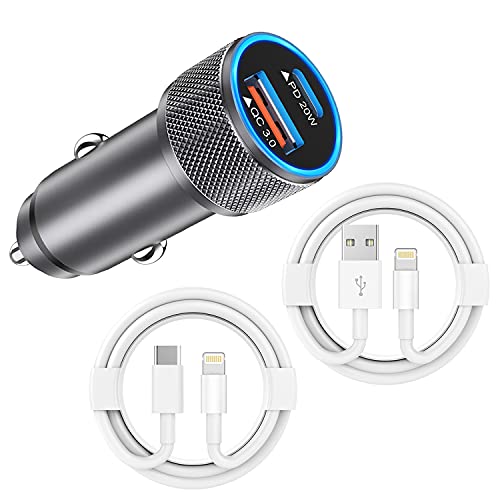 iPhone Car Charger,USB C Fast Car Charger[Apple MFi Certified] Apple Car Charging 38W Dual Port CarCharger Cigarette Lighter Adapter 2x3ft PD&QC 3.0 Lightning Cable for iPhone 14/13/12 Pro/11/Airpods
 800g Auto Headlight Restoration Liquid, Car Headlight Scratch Restoring Fluid Headlight Repair Polish Cleaner, Headlight Restoration Kit Refill Bottle for Polishing, Restoring Dull Yellow Headlamp