How Long Do Car Tires Last In Storage? Proven Tips
Properly stored car tires can last for many years, often 6 to 10 years, sometimes even longer. Key factors influencing longevity include storage conditions like temperature, humidity, and protection from UV light and pressure. Following a few simple storage tips will maximize their lifespan.
Got a set of tires that aren’t currently on your car? Maybe they’re spares, off-season tires, or wheels you plan to use later. You might be wondering, “How long do car tires last in storage?” It’s a common question, and knowing the answer can save you money and ensure your tires are safe when you need them. Storing tires correctly is simpler than you think, and I’m here to guide you through it step-by-step. Let’s get your tires ready for their next use!
Why Storing Tires Properly Matters
Tires are more than just rubber circles; they’re engineered to handle a lot of stress, from the road’s grip to changing weather. When they’re not on your car, they’re still subject to wear and tear, but from different sources. Exposure to things like sunlight, heat, cold, and even just being in the wrong position can degrade the rubber and materials inside them. This degradation can lead to cracks, loss of flexibility, and reduced performance, making them unsafe to use. Proper storage isn’t just about keeping them clean; it’s about preserving their integrity and ensuring they perform as they should when it’s time to put them back on your vehicle.
Understanding Tire Aging: What Degrades Them?
Even when not in use, tires are susceptible to aging. Several factors can shorten their lifespan in storage:
- Ozone: This gas, present in the air, can attack the rubber compounds in tires, causing them to crack over time.
- UV Radiation: Sunlight is a major enemy of rubber. UV rays break down the polymer chains in the tire, leading to brittleness and cracking.
- Temperature Extremes: Excessive heat can accelerate the aging process and make rubber soft and sticky, while extreme cold can make it brittle and prone to cracking. Fluctuating temperatures are also damaging.
- Oxygen: Oxidation is a natural process that affects many materials, including rubber. It causes the rubber to harden and lose its elasticity.
- Humidity: High humidity can contribute to an environment where mold and mildew can form on tires, especially if they are stored dirty.
- Chemicals: Exposure to solvents, oils, or other harsh chemicals can severely damage tire compounds.
- Physical Stress: Hanging tires or stacking them incorrectly can cause flat spots or distortions. Sitting in one position for too long without support can lead to permanent deformation.
Understanding these culprits is the first step to protecting your stored tires.
How Long Do Car Tires Last in Storage? The Big Picture
So, how long can you expect tires to hold up when stored well? Generally, you can expect tires to remain in good condition in storage for 6 to 10 years. Some sources even suggest they can be usable for up to 12 years if meticulously cared for and manufactured with modern rubber compounds. However, this is a broad guideline. The actual lifespan depends heavily on how they are stored.
Here’s a breakdown of what influences this timeline:
- Initial Condition: Tires that are new or have very low mileage will naturally last longer in storage than those that are already aged or have seen significant wear.
- Manufacturing Date: Always check the DOT (Department of Transportation) code on your tire’s sidewall. The last four digits indicate the week and year of manufacture (e.g., “3522” means the 35th week of 2022). A tire manufactured more recently will have a longer potential storage life.
- Quality of Materials: Higher-quality tires, often made with more robust rubber compounds and advanced chemicals, tend to resist aging better than cheaper alternatives.
- Storage Environment: This is arguably the most crucial factor. A controlled environment significantly extends tire life compared to exposure to the elements.
What is the Ideal Storage Environment for Car Tires?
Creating the right environment is key to maximizing your tires’ lifespan in storage. Think of it as creating a cozy, safe haven for them. The ideal conditions are:
- Cool Temperatures: Aim for temperatures consistently between 50-70°F (10-21°C). Avoid extreme heat or cold.
- Moderate Humidity: Keep humidity levels moderate. Very dry air can dry out the rubber, while very damp air can encourage mold growth.
- Darkness: Store tires away from direct sunlight and any sources of UV light.
- Cleanliness: Tires should be clean before storage. Dirt, grease, and road salt can degrade the rubber.
- Away from Electrical Equipment: Motors and electrical equipment can generate ozone, which is harmful to tires. Keep them clear of such items.
Step-by-Step Guide to Storing Car Tires
Ready to give your tires the best chance to last? Follow these simple steps:
Step 1: Clean Your Tires Thoroughly
Before tucking them away, give your tires a good wash. Use mild soap and water to remove dirt, grime, brake dust, road salt, and any oil or grease. Rinse them well and let them dry completely. This prevents contaminants from eating away at the rubber over time.
Step 2: Inspect for Damage
While cleaning, take a moment to inspect each tire carefully. Look for any existing cuts, cracks, bulges, or embedded objects. If you find significant damage, it might be best to discard the tire rather than store it.
Step 3: Consider Tire Bags (Optional but Recommended)
For an extra layer of protection, especially against ozone and UV light, consider using specialized tire storage bags. These are often made of durable, UV-resistant materials and will help keep the tires clean and protected from environmental contaminants. If you don’t have bags, tightly sealed plastic bags can offer some protection, but be aware that trapped moisture can be an issue if not managed.
Step 4: Choose the Right Storage Location
Find a spot that meets the ideal conditions mentioned earlier. Good options include:
- An indoor closet or storage room
- A basement that is dry and not prone to extreme temperature swings
- A climate-controlled garage or storage unit
- Avoid storing tires in direct sunlight, next to furnaces or water heaters, or in damp, unventilated areas.
Step 5: Position Tires Correctly
How you store them physically is important to prevent flat spots or deformation:
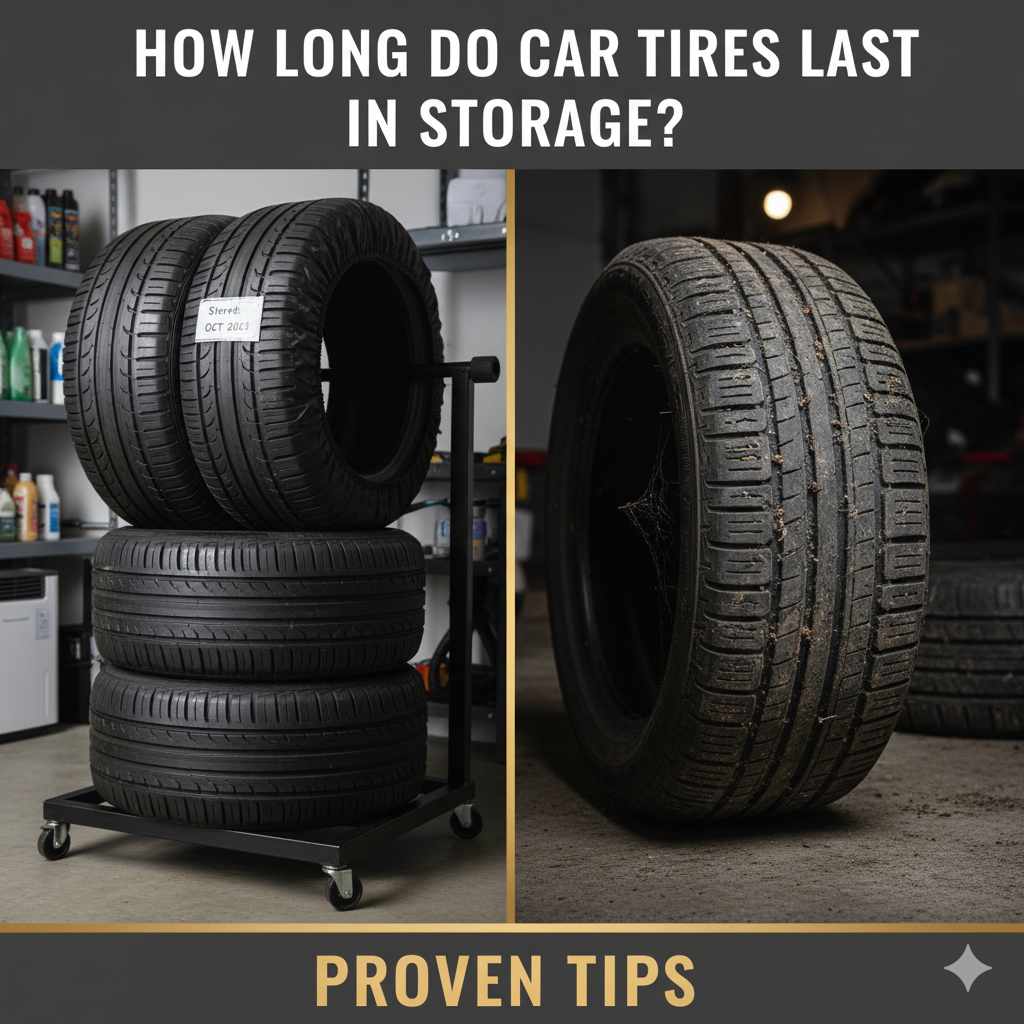
- On Racks (Ideal): The best method is to store tires horizontally on their treads on a tire rack or sturdy shelf. This allows air to circulate and prevents pressure points. Staggering them slightly or placing them on their sidewalls is also acceptable if they are not mounted on wheels.
- Stacked (If Mounted on Wheels): If your tires are mounted on wheels, you can stack them horizontally (one on top of the other). This keeps the tire bead seated properly and prevents the sidewall from collapsing.
- Vertical Storage (Avoid if Possible): Storing tires vertically on their sidewalls is generally discouraged for long periods, especially if they are not mounted on wheels. They can develop flat spots or deform over time. If you must, rotate them periodically.
- Hung Tires (Avoid): Never hang tires by the tread. This can distort and damage the tire structure.
For more information on proper vehicle maintenance and tire care, the National Highway Traffic Safety Administration (NHTSA) provides valuable safety resources.
Step 6: Deflate Slightly (If Mounted on Wheels)
If your tires are mounted on wheels and you plan to store them horizontally, you can slightly deflate them. This reduces the stress on the tire bead and sidewall. Don’t completely deflate them, just take out a few pounds of pressure.
Step 7: Avoid Contaminants
Keep tires away from anything that could damage them. This includes oils, greases, solvents, fuels, and even certain types of plastics or electrical equipment that might emit ozone. Sharp objects or debris should also be kept clear.
Storing Tires vs. Storing Wheels and Tires
There’s a slight difference when it comes to storing just tires versus tires mounted on their wheels (as a complete wheel assembly).
Just Tires:
- Tires without wheels are more prone to developing flat spots if not stored correctly.
- They can be stacked flat, placed on racks, or even hung (though hanging is not ideal).
- Deflating them is generally not necessary and can do little to help.
Wheels and Tires (Wheel Assemblies):
- These are generally easier to store.
- They can be stacked horizontally on top of each other, which is often the preferred method.
- Slight deflation can be beneficial to ease pressure on the bead.
- They are less prone to developing flat spots due to the rigidity of the wheel.
Regardless of whether they are mounted or not, the core principles of cool, dark, dry storage away from contaminants and ozone still apply.
Factors Affecting Tire Lifespan in Storage: A Table
To better visualize how different conditions impact your tires, here’s a table:
| Storage Factor | Ideal Condition | Risks of Poor Condition | Impact on Lifespan |
|---|---|---|---|
| Temperature | Cool, stable (50-70°F / 10-21°C) | Extreme heat/cold, rapid fluctuations | Heat accelerates aging; cold causes brittleness. Fluctuations weaken rubber. |
| UV Exposure | Darkness, no direct sunlight | Direct sunlight, UV lamps | Causes cracking, hardening, and loss of flexibility. |
| Humidity | Moderate, not excessively damp | High humidity, standing water | Can lead to mold/mildew, corrosive effects on wheel rims (if mounted). |
| Physical Stress | Proper support, no excessive load on sidewalls | Hanging, standing vertically on sidewalls for long periods, incorrect stacking | Deformation, flat spots, bead damage, structural weakening. |
| Chemical Exposure | Away from oils, solvents, fuels, ozone sources | Proximity to chemicals, electrical motors | Severe degradation, rubber breakdown, weakening of tire structure. |
| Cleanliness | Clean, dry surfaces | Dirt, salt, oil, grease present | Contaminants can become embedded or react with rubber over time. |
When Should You NOT Use Stored Tires?
Even with careful storage, there comes a point when tires are no longer safe to use. Here are the key indicators:
- Age: As a general rule, most tire manufacturers and safety experts recommend replacing tires that are older than 6 years, regardless of tread depth. Some go up to 10 years, but caution is advised beyond 6. The recommended maximum lifespan often cited by tire makers is 10 years from the date of manufacture, but many recommend replacement much sooner, especially after 5-6 years.
- Cracking or Dry Rot: If you see any hairline cracks, increasingly large cracks, or a dry, brittle appearance on the sidewalls or tread, the tire has likely suffered significant degradation and is unsafe.
- Bulges or Blisters: Any sign of a bulge or blister on the sidewall indicates an internal structural problem and the tire could fail catastrophically.
- Uneven Wear: While this can be a sign of alignment or inflation issues, if accompanied by aging or storage degradation, it’s a reason for concern.
- Damage: Visible cuts, punctures that weren’t properly repaired, or signs of impact damage.
- Loss of Flexibility: If the rubber feels unusually hard and unyielding, it has likely aged out.
Your tire’s DOT code is your best friend here. If the manufactured date is more than 6 years ago, it’s wise to have them inspected by a professional before mounting them, or better yet, consider new tires. You can find more detailed information on tire aging and safety on the Tire Rack technical section, a reputable source for tire information.
Frequently Asked Questions (FAQ)
Q1: Can I store my tires outside?
A1: It’s highly recommended not to store tires outside. Exposure to direct sunlight, rain, snow, extreme temperatures, and ozone will drastically reduce their lifespan and make them unsafe much faster.
Q2: What’s the best way to stack tires?
A2: If tires are mounted on wheels, stack them horizontally on top of each other. If they are just tires (no wheels), the best way is to lay them flat on their treads on a rack or shelf, or in stacks no higher than four. Avoid storing them vertically on their sidewalls for extended periods.
Q3: Should I put air in my tires when storing them?
A3: If tires are mounted on wheels, it’s fine to store them with regular driving pressure or slightly deflated to reduce stress on the bead and sidewall. If they are just tires (no wheels), it doesn’t significantly impact storage. Over-inflation is not advised. For stored wheel assemblies, slightly less pressure (e.g., 10-15 PSI less than normal) can be beneficial.
Q4: Does it matter if tires are clean when storing them?
A4: Yes, very much so. Dirt, road salt, oil, and other road grime can react with and degrade the rubber over time. Cleaning them thoroughly before storage is a crucial step in preserving their condition.
Q5: How can I tell how old my tires are?
A5: Look for the DOT code on the tire’s sidewall. It’s a series of letters and numbers. The last group of four digits indicates the week and year of manufacture. For example, “2119” means the tire was made in the 21st week of 2019.
Q6: What is “dry rot” and how does it affect stored tires?
A6: Dry rot is the degradation of the rubber’s flexibility due to oxidation and UV exposure. It appears as fine cracks on the tire’s surface. Tires suffering from dry rot are compromised and unsafe, as the rubber loses its structural integrity.
Conclusion
Understanding how long car tires last in storage and, more importantly, how to ensure they last that long, comes down to a few key practices. By cleaning your tires, storing them in a cool, dark, and dry environment, positioning them correctly, and keeping them away from damaging elements like UV light and ozone, you can significantly extend their useful life. While a general guideline is 6-10 years, proactive care is what truly makes the difference. Always remember to inspect stored tires for signs of aging, cracking, or damage before re-installing them. Your safety and peace of mind on the road depend on it. Happy storing!