Car Rack for Fishing Rods: Roof, Hitch & Magnetic Mounts
Roof racks suit long trips and multiple rods, hitch racks suit heavier setups and easier loading, and magnetic mounts are best only for short drives on clean steel roofs. A poor match can bend rods, scratch paint, or leave expensive gear exposed to theft. This guide compares roof, hitch, and magnetic carriers by vehicle fit, rod type, security, and trip length.
Best mount type by setup


The best car rack for fishing rods depends on where the vehicle can actually carry load, how long the rods are, and how much security you need. Roof-mounted systems work best when the vehicle already has real crossbars; hitch carriers suit rear loading and longer rods; magnetic mounts make sense only on ferrous metal surfaces and shorter, slower trips.
Roof racks for crossbar-equipped vehicles
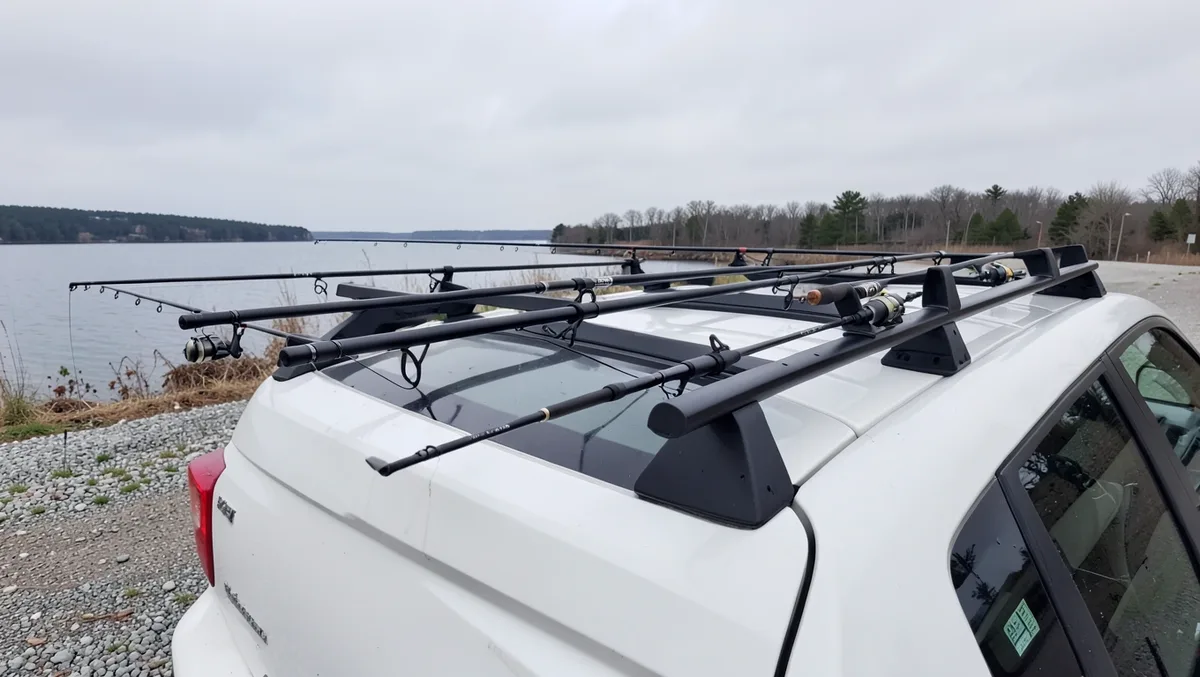
A roof-mounted fishing rod rack is the cleanest choice for cars, SUVs, trucks, and vans that already have stable crossbars. It keeps rods above the cargo area, which helps preserve rear visibility and keeps reels out of the way. It also tends to be the better fit for highway miles, provided the product itself is rated for that use and the vehicle’s roof load limit is respected.
Roof systems are strongest when the rack clamps to proper crossbars rather than to trim or bare sheet metal. They usually hold multiple rods, and some let reels stay mounted if the tube spacing and reel clearance are generous enough. For fly rods, that clearance matters even more because the rod sections and guides need room to avoid pressure points.
Hitch carriers for rear access and long rods
A hitch-mounted fishing rod carrier uses a trailer hitch receiver, so it is often the easiest option for loading from waist height. That matters when you are handling heavier rigged setups, long rod tubes, or repeated stop-and-go access at the launch. The tradeoff is rear overhang, which can affect ground clearance, parking, and tailgate access.
This style is especially useful when you want quick loading without reaching over a roofline. It can also cut wind exposure compared with a roof system, since the rods sit lower and farther back. The hitch receiver still has to match the carrier, and the setup must not interfere with rear visibility or the vehicle’s hitch rating.
Magnetic mounts for ferrous roofs only
A magnetic fishing rod rack is generally the most limited option. It requires a ferrous metal surface, often a steel roof or other metallic panel, and it is not a good fit for many aluminum, composite, or heavily contoured roofs. It is best reserved for short trips, light loads, and situations where the owner can inspect the contact points before driving.
Magnetic systems can be convenient, but convenience is not the same as broad compatibility. They are more exposed to wind lift, dirt under the pads, and surface abrasion if the roof is not spotless. For that reason, they are the least forgiving choice for long highway runs, rough weather, or expensive rods that need strong theft deterrence.
Fishing rod rack decision matrix
Use this matrix to match vehicle type, roof material, rod length, rod type, theft risk, and trip distance to the most practical mount style. The score favors fit, security, and real-world use, not just easy installation.
| Setup | Best mount style | Why it fits | Score roof | Score hitch | Score magnetic |
|---|---|---|---|---|---|
| Sedan with factory crossbars, 7 to 8 foot conventional rods, low theft risk, day trip | Roof-mounted fishing rod rack | Crossbars support secure clamping and keep rods clear of trunk access | 5 | 2 | 1 |
| SUV with trailer hitch, 9 to 12 foot rods, medium theft risk, highway trip | Hitch-mounted fishing rod carrier | Rear loading handles longer rods and avoids roof height issues | 3 | 5 | 1 |
| Truck with steel roof, short conventional rods, low mileage, close-in fishing | Magnetic fishing rod rack | Ferrous roof allows magnetic adhesion, but the use case should stay short and local | 2 | 3 | 4 |
| Van with roof rack and multiple reels mounted, high theft risk, long interstate trip | Roof-mounted fishing rod rack | Best blend of capacity, lockability, and long-trip stability | 5 | 3 | 1 |
| Vehicle with adjustable crossbars, fly rods, moderate theft risk, mixed city and highway use | Roof-mounted fishing rod rack | Crossbar spacing can be tuned, but fly rod clearance must be checked closely | 4 | 2 | 0 |
Use the score as a filter, not a verdict. If the roof surface is wrong for magnets, the magnetic score drops to zero. If the vehicle has no usable hitch, the hitch score drops no matter how convenient the rear loading looks on paper.
Will a fishing rod rack work with my crossbars?
Yes, if the rack is designed for adjustable crossbars and the spacing matches the mounting hardware. A crossbar-ready rod rack depends on clamp reach, bar diameter range, and enough room for the reel body and rod tips. If the bars are too close together or too far apart, the rack can bind or leave the rods unsupported.
Crossbar spacing requirements
Crossbar spacing is the first fit check. The rack needs enough distance between bars to support the rod length and prevent flex at the ends, but not so much that the mounting arms run out of adjustment. On shorter rooflines, especially compact cars, the reel housing can end up too close to the hatch or antenna.
Many roof-rack rod holders install in less than an hour, but that is only useful if the hardware matches the bars already on the vehicle. Some roof baskets and cargo trays also crowd the same mounting space, which can block the rod rack or force the rods into a poor angle.
Clamp and mounting hardware
Look for hardware that clamps firmly to the bar profile and uses a lockable latch or keyed fastener when theft risk is a concern. A secure rack should not depend on friction alone. If the mounting system shifts when you tug it by hand, it is not ready for road use.
Crossbar-mounted systems also need enough vertical room for reels. A rack that fits bare rods may still fail with reels mounted, especially if the reel seats are large or the rod handles are unusually long.
When roof baskets get in the way
Roof baskets and cargo boxes can block the rod rack or force it to sit too close to other gear. That can create reel collision, tip interference, or awkward loading from one side only. If the roof is already occupied by a basket, a hitch carrier may be the cleaner answer.
Are magnetic fishing rod racks safe for highway driving?
Magnetic fishing rod racks can be safe only within the product’s own limits and only on the right metal surface. They are not a universal highway solution. Adhesion, surface cleanliness, roof shape, and wind exposure all matter, and some manufacturers recommend not exceeding 50 mph.
Surface compatibility and adhesion limits
Magnetic racks require a ferrous metal surface. If the roof, hood, or panel is aluminum, composite, or heavily trimmed, the magnets may not bond properly at all. Even on steel, dirt or grit under the pads can reduce grip and scratch the finish.
Vacuum and magnetic combinations can improve adhesion on some models, but they still depend on a smooth, clean contact area. That means a magnetic rack is a poor choice for textured paint, roof seams, spoilers, or surfaces with sharp body contours.
Paint protection and contact points
Any mount that contacts painted metal can mark the finish if the surface is dirty or the pads shift under load. Use protective pads exactly as the maker intends, and remove the rack before debris bakes onto the roof. A small grit particle can act like sandpaper over a long drive.
Say your steel roof looks clean but the edge has a thin layer of road dust. A magnetic rack may still grip at the start of the trip, but the first hard stop or side gust can let the pads move and leave scuffs where the load first shifted.
Speed, wind, and weather limits
Speed and weather are where magnetic racks usually fall behind roof and hitch systems. Wind load rises quickly with rod length, and rain can make repeated checks more important if the rack uses suction or any mixed adhesion method. For interstate travel, a roof rack with mechanical clamps is the safer default.
MAGNERAK says its rack is safe for U.S. speed limits up to 85 mph, and it also mentions road tests over 100,000 miles in 26 states. That is a strong stated claim, but it does not change the basic rule: verify the specific model’s rating before relying on it for highway use.
Can you carry fly fishing rods?
Yes, but fly rods are less forgiving than many conventional rods. The main issues are rod length, section count, fighting butt clearance, and guide protection. Some rack models do not suit fly fishing rods well because the reel seat, guides, or butt section do not clear the clamp path cleanly.
Fly rod length and section count
Long one-piece fly rods are the hardest to carry. A two-piece or multi-piece rod is easier to fit, but only if the assembled length still matches the rack’s tube or cradle length. If the rod extends too far beyond the support points, the tip can flex hard in crosswind.
MAGNERAK M1 works with rods up to 12 feet long, which matters for anglers carrying long conventional setups. It also transports 3-5 fishing rods and reels. That kind of capacity is useful, but capacity alone does not guarantee fly rod compatibility.
Fighting butt and guide clearance
Fly rods often have a fighting butt or longer rear grip, and that can interfere with the clamp, latch, or reel pocket. The rod also needs clearance around the guides so the blank is not pinched. If the rack grips too close to a guide wrap, the rod can vibrate or wear unevenly.
Picture a 9-foot fly rod with a rear fighting butt and a mounted reel. A rack that fits a simple spinning rod may still press on the fly rod’s lower section and put the reel handle against the housing, which is exactly the kind of contact point that should be avoided.
Rod tip protection during transport
Fly rod tips are fragile. Use a rack that keeps the tip fully supported or enclosed, and avoid layouts that let the tips whip in side wind. If the rack forces the rod to bend around an edge, choose a different mount style before the first long drive.
Security, scratches, and access
Security matters because rods are easy to see and easy to grab. Scratches matter because all three mount styles can mark a vehicle if installed carelessly. Access matters because the easiest rack to load is not always the easiest rack to live with at the launch, in the driveway, or at a fuel stop.
Lock systems and cable options
Do fishing rod racks lock? Some do, and the best option is a rack with a real security hardware package rather than a cosmetic latch. MAGNERAK includes a window mount and cable lock in its security system, and Rhino-Rack 574 is key lockable. Those features can slow casual theft and reduce quick grab risk.
A cable lock helps when the rods need to stay together, but it should not be treated as a substitute for a secure mount. If a rack can be removed with hand tools in minutes, the lock only protects the rods after the rack itself is secure.
How each style can mark paint
Roof racks can scratch at the bar feet, the edge of the roof, or the hatch opening if the rods shift during loading. Hitch carriers can mark the rear bumper, hatch, or tailgate if the receiver sits close to painted surfaces. Magnetic racks can scratch anywhere the pads move, especially on dirt-covered metal.
Do fishing rod racks scratch my car? They can, if the contact points are dirty, misaligned, or overloaded. The safest approach is simple: clean the surface, tighten the hardware to the manual’s instructions, and recheck the load after the first few miles.
Rear loading, hatch, and tailgate access
Hitch carriers make rear loading easy, but they can limit tailgate use and reduce departure angle on steep driveways. Roof racks preserve rear access better, though they ask more of the user at shoulder height. Magnetic mounts are quickest to place, but they offer the least forgiveness if the route includes rain, heat, or long freeway stretches.
How many rods can each style hold?
Capacity is not only a rod-count question. Reel clearance, rod spacing, rod length, and transport style all affect how many setups will actually fit without rubbing. A rack that lists a high number may still be a poor choice if the reels are oversized or the rods are long and stiff.
Rod count versus reel clearance
Roof racks usually offer the best balance of capacity and separation. Hitch carriers can also hold multiple rods, but rear vehicle shape may force tighter spacing. Magnetic mounts often have the most limited practical capacity because the adhesion area and contact patch have to do more work with less hardware.
Vac Rac Combi holds up to 4 rods and reels, and it uses magnetic and vacuum-on-demand adhesion. That puts it in a middle ground: more capable than a basic magnetic pad setup, but still dependent on surface quality and adhesion discipline.
Single-piece, two-piece, and multi-piece rods
Single-piece rods need the most length allowance and are the most sensitive to side wind. Two-piece rods are easier to package, but the joint must stay supported. Multi-piece travel rods are the easiest to transport, yet reel clearance and guide spacing still matter if you leave reels mounted.
How many rods can a roof rack hold? That depends on the rack design, but many systems are built for a small bundle rather than a full rod locker. If the rods are wide spinning setups with big reels, the practical count can be lower than the advertised slot count.
When reels can stay mounted
Reels can stay mounted only if the carrier leaves enough room around the spool, handle, and drag knob. Roof and hitch systems are better for this than many magnetic racks because they usually provide more positive spacing. If the reel body touches the housing, remove the reel before the trip.
Which is better for fishing rods: roof, hitch, or magnetic?
Roof is best for long trips, multiple rods, and secure transport when the vehicle already has proper crossbars. Hitch is best for easier loading, longer rods, and drivers who want less roof reach. Magnetic is best only for short drives on clean steel surfaces when convenience matters more than all-weather confidence.
- Choose roof if you have crossbars, want lockable storage, and need highway stability.
- Choose hitch if you have a receiver, carry long or heavy rods, and want rear loading.
- Choose magnetic only if the roof is ferrous steel, the trip is short, and the surface is clean.
- Check rod length, reel height, and fly rod clearance before you buy.
- Match the rack to theft risk and weather exposure, not price alone.
Can I use a fishing rod rack on an SUV or truck? Yes, provided the vehicle has the right mounting point. SUVs often work well with roof racks or hitch carriers, and trucks can work with all three styles if the roof material is compatible. A truck with a non-ferrous roof still rules out magnetic mounts.
Frequently asked questions
What is the best car rack for fishing rods?
The best car rack depends on the vehicle and the trip. Roof racks are the safest all-around choice for crossbar-equipped vehicles and longer highway runs. Hitch carriers are better for rear access and long rods. Magnetic racks are only a fit for clean steel surfaces and short, slower trips.
Can I carry fly fishing rods on a car rack?
Yes, but only when the rack provides enough clearance for the fighting butt, guides, and reel body. Fly rods are more delicate than many conventional rods, so the tip and lower section should not rub against the mount. Multi-piece fly rods are easier to manage than long one-piece rods.
Do fishing rod racks lock?
Some do. MAGNERAK includes a window mount and cable lock in its security system, and Rhino-Rack 574 is key lockable. A lock helps deter casual theft, but it should be paired with a mount that is firmly attached and matched to the vehicle’s actual roof or hitch setup.
Can I use a fishing rod rack on an SUV or truck?
Usually, yes. SUVs and trucks often offer the best options because they can take roof-mounted or hitch-mounted systems, and some trucks also work with magnetic racks if the roof is ferrous steel. The deciding factors are still roof material, hitch receiver fit, and whether the rods stay clear of body panels.
Products related to this article
Sponsored / affiliate links. As an Amazon Associate I earn from qualifying purchases. I may earn additional commission from eligible campaigns.