How Long Does Battery Reset Take on Honda CR-V
Many Honda CR-V owners wonder about How Long Does Battery Reset Take on Honda CR-V? This is a common question, especially for those new to car maintenance. Sometimes, after disconnecting the battery, systems can act a little funny, and you want to know how long it will take to get everything back to normal. It can seem tricky, but don’t worry.
We’ll walk you through it simply, step by step, so you can get your CR-V running smoothly again in no time. Let’s figure out the timing together.
Understanding Honda CR-V Battery Reset Times
When you need to reset the battery on your Honda CR-V, knowing the expected timeframe is super helpful. This process often involves disconnecting the car battery for a short period to clear out old electronic settings or troubleshoot minor glitches. For many drivers, especially those who don’t work on cars often, figuring out exactly how long to wait can be a bit confusing.
This section will break down what influences the reset time and what you can generally expect, setting the stage for a smooth process.
Factors Affecting Battery Reset Duration
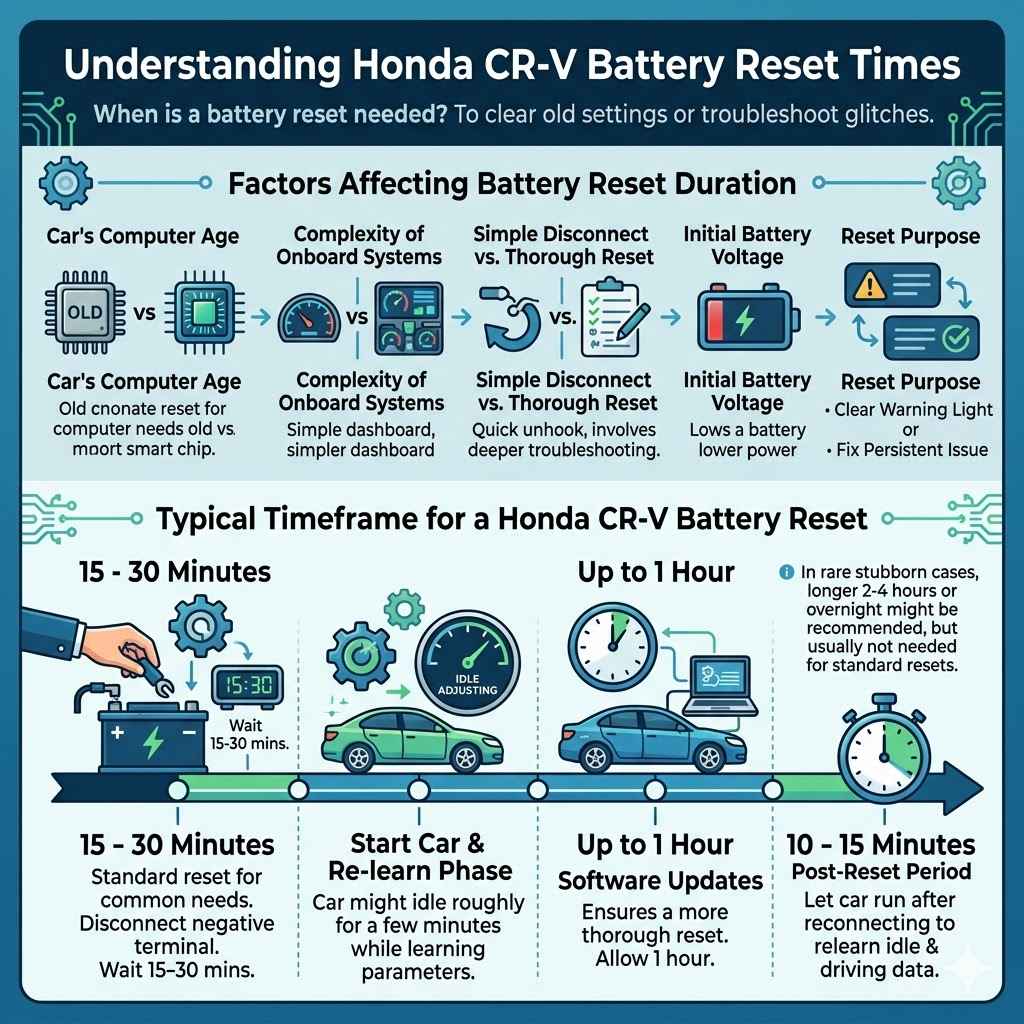
Several things can play a role in how long a battery reset might take for your Honda CR-V. Think of it like cooking; some dishes need longer to simmer than others. The main factors are usually the age of your car’s computer system and whether you’re just doing a simple disconnect or a more involved reset.
Sometimes, a quick disconnect and reconnect will do the trick almost immediately. Other times, you might need a bit more patience for the car’s electronics to fully recalibrate.
One key factor is the complexity of your CR-V’s onboard computer. Newer models have more advanced systems that might take a few minutes longer to reset completely compared to older ones. This is because there are more settings and learning parameters to be cleared and re-established.
The battery voltage itself can also play a minor role. If the battery was quite low before being disconnected, it might take a bit longer for the systems to stabilize once reconnected.
Another consideration is what you’re trying to achieve with the reset. Are you just clearing a minor warning light, or are you trying to fix a more persistent electronic issue? The purpose of the reset can sometimes guide how long you should leave the battery disconnected.
For most standard resets, a short period is usually enough.
Typical Timeframe for a Honda CR-V Battery Reset
For most common battery resets on a Honda CR-V, you can expect the process to take anywhere from 15 minutes to an hour. This includes the time the battery is disconnected and a short period afterward for the vehicle’s systems to re-learn settings like idle speed and radio presets. Often, you can simply disconnect the negative terminal for about 15-30 minutes, reconnect it, and then start the car.
You might notice the car’s idle speed is a bit rough for the first few minutes as the engine computer adjusts.
If you’re dealing with specific issues, like after a software update or a minor electrical fault, you might leave the battery disconnected for a full hour. This ensures a more thorough reset. It’s also a good idea to let the car run for at least 10-15 minutes after reconnecting the battery.
This allows the engine control module (ECM) to relearn idle parameters and other important driving data. So, while the actual disconnection might be short, the full “reset” period includes this re-learning phase.
In rare cases, if you’re trying to reset a more stubborn electronic fault, a longer disconnect period of 2-4 hours or even overnight might be recommended by some forums. However, for the vast majority of users asking How Long Does Battery Reset Take on Honda CR-V?, the standard 15-60 minute window is more than sufficient for everyday needs and minor troubleshooting.
The Process of Resetting Your Honda CR-V Battery
Understanding the actual steps involved in resetting your Honda CR-V battery is key to knowing what to expect timewise. This isn’t just about waiting; it’s about performing the task correctly to achieve the desired outcome. This section will guide you through the typical disconnection and reconnection process, explaining each step so you can confidently perform it and estimate the time commitment accurately.
Tools You Will Need
Before you start, gathering the right tools will make the process go much smoother and faster. You won’t need a lot of fancy equipment, just a few common items you might already have in your garage or toolbox. Having everything ready means you can disconnect and reconnect the battery without delays.
This also helps ensure safety, as you’ll be less likely to rush.
The most important tool is a socket wrench or an adjustable wrench. You’ll need one that fits the nuts on your battery terminals. Typically, a 10mm or 12mm socket is used for most Honda CR-V battery terminals.
Having both sizes on hand is a good idea in case one isn’t quite right.
You might also want a wire brush or terminal cleaner. Over time, battery terminals can build up corrosion, which looks like a white or greenish powdery substance. Cleaning the terminals before reconnecting them ensures a good electrical connection.
This simple step can prevent future electrical issues.
Safety is crucial, so wearing safety glasses is highly recommended. Gloves can also protect your hands from any grease or dirt on the battery. Finally, having a rag or paper towels handy will help you clean up any residual grime.
Step-by-Step Disconnection Procedure
Here’s how to safely disconnect your Honda CR-V’s battery. Always start with the negative terminal. This is the most important safety rule when working with car batteries.
It prevents accidental short circuits. Follow these steps carefully to ensure a smooth and safe disconnection, which is a critical part of understanding How Long Does Battery Reset Take on Honda CR-V?
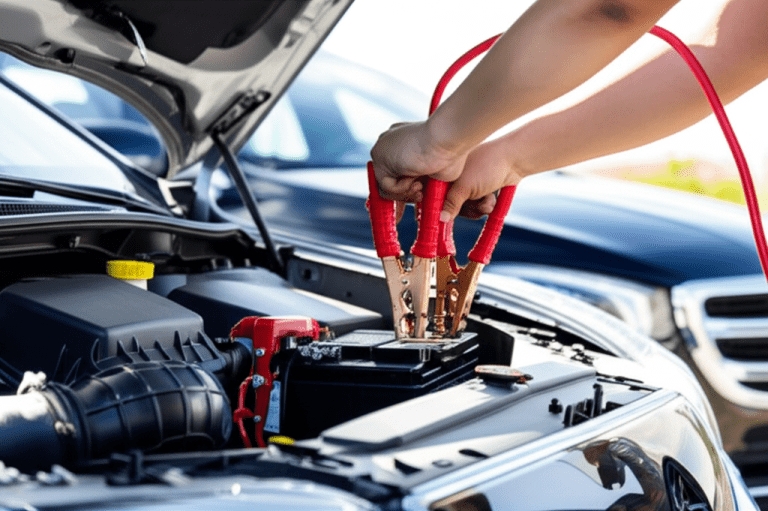
- Locate the battery. It’s usually found under the hood, towards the front of the vehicle. You may need to remove a plastic cover depending on your CR-V model.
- Identify the negative terminal. It’s typically marked with a minus (-) sign and often has a black cable connected to it.
- Using your wrench, loosen the nut on the clamp holding the negative cable to the battery post. You don’t need to remove the nut completely, just loosen it enough to slide the clamp off the post.
- Carefully pull the negative cable clamp away from the battery post. Ensure it doesn’t touch any metal parts of the car while it’s disconnected. You can tuck it aside or use a piece of tape to secure it away from the terminal.
- Once the negative terminal is disconnected, you can then disconnect the positive terminal (marked with a plus (+) sign and a red cable) in the same way. Again, make sure it doesn’t touch any metal.
After you’ve disconnected both terminals, the power supply to the car’s electronics is cut. This is when the “reset” begins. The duration you leave it disconnected is the primary factor determining how long the reset takes.
Reconnection and System Relearning
After the recommended disconnection period has passed, it’s time to reconnect the battery. This part is also straightforward and doesn’t add significant time to the overall process. What comes next is the important “relearning” phase for your CR-V’s computer systems.
Begin by reconnecting the positive terminal first. Ensure the clamp is securely fitted onto the post and tighten the nut with your wrench. Make sure it’s snug but don’t overtighten.
Next, reconnect the negative terminal in the same manner. Once both terminals are securely connected, you can start your Honda CR-V.
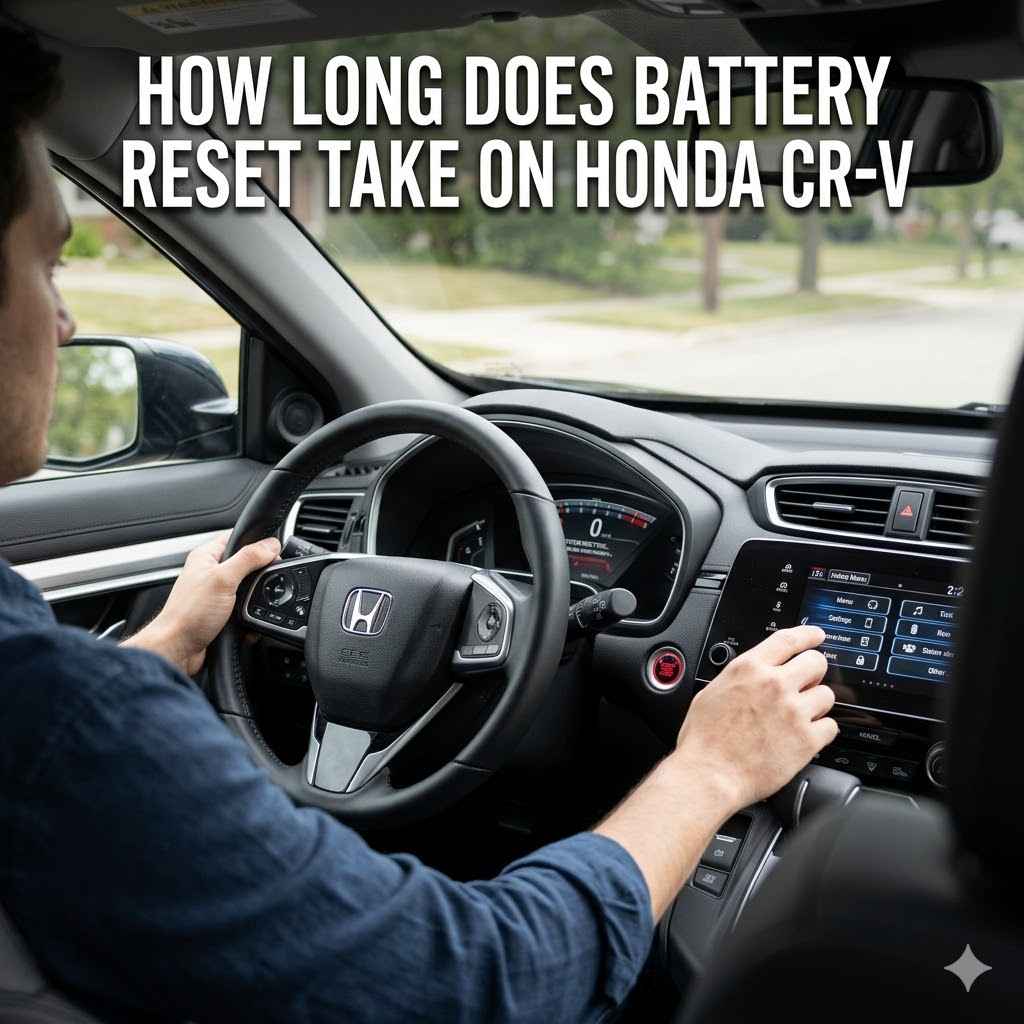
When the engine starts, the vehicle’s computer modules will begin to reinitialize. This is the “relearning” period. For the first few minutes, you might notice the idle speed is a bit higher than usual or slightly irregular.
This is normal as the engine control module (ECM) recalibrates itself, learning optimal settings for fuel delivery, air intake, and ignition timing based on various sensor inputs. Radio presets, clock settings, and power window auto-up/down features will also need to be reset.
To help the system relearn effectively, it’s often recommended to drive the vehicle for at least 10-15 minutes in varied conditions. This includes some stop-and-go traffic and some steady-speed driving. This allows the ECM to gather enough data to fine-tune performance.
Most of these relearning processes are completed within the first few miles of driving.
Common Reasons for a Honda CR-V Battery Reset
Drivers often perform a battery reset on their Honda CR-V for a variety of reasons, from simple troubleshooting to preparing for more complex repairs. Understanding these common scenarios can help you determine if a battery reset is the right solution for your vehicle and how long you might need to keep the battery disconnected. This knowledge is crucial for anyone asking How Long Does Battery Reset Take on Honda CR-V?
Troubleshooting Minor Electronic Glitches
One of the most frequent reasons for a battery reset is to clear out minor electronic glitches. Cars today are filled with complex computer systems, and sometimes these systems can encounter temporary hiccups. This might manifest as a warning light that stays on despite no apparent problem, the infotainment system freezing, or power windows acting strangely.
A battery reset acts like a reboot for your car’s electronics. By disconnecting the power for a short while, you effectively clear the temporary memory of these computer modules. When power is restored, the systems start fresh.
This often resolves minor issues without needing a trip to the mechanic. The time taken for the actual disconnection is brief, but the subsequent system relearning is part of the overall reset duration.
For example, if your check engine light came on for no apparent reason, and then turned off, but you want to ensure it doesn’t reappear due to a phantom code, a battery reset might be considered. Similarly, if your car’s navigation system or Bluetooth connection suddenly stops working correctly, a reset can often bring it back online. This process is usually quite fast.
After a New Battery Installation
When you
The reset ensures that the car’s computer modules, particularly the Engine Control Module (ECM), can properly learn and adapt to the new battery’s characteristics. This helps maintain optimal performance and prevents potential issues like inconsistent idling or charging system warnings. The time involved here is similar to other resets, primarily the disconnection and subsequent relearning period.
Think of it as introducing a new employee to a team. The new employee needs time to understand the team’s dynamics and their role. The car’s computer systems similarly need to “learn” the new battery.
This ensures that the alternator charges the new battery correctly and that all the vehicle’s electronic functions operate as intended.
Preparing for or After Diagnostic Work
Mechanics often perform battery resets as part of diagnostic procedures or after completing repairs. When a mechanic is troubleshooting a problem, they might disconnect the battery to clear any stored fault codes, allowing them to see if the issue reappears once the car is restarted. This helps isolate the problem accurately.
After repairs are completed, a battery reset ensures that all systems are functioning correctly with the repaired components. For instance, if a sensor was replaced, resetting the battery can help the car’s computer relearn the new sensor’s readings. This is crucial for ensuring the repair was successful and the vehicle is operating optimally.
The time taken during these scenarios is standard, focusing on the disconnection and subsequent system checks.
A common scenario is after replacing a component related to the emissions system or a major engine sensor. The mechanic will disconnect the battery for a set period, then reconnect it. They will then often perform a specific drive cycle to ensure the onboard diagnostic system (OBD-II) is satisfied and ready for emissions testing.
This ensures the repair is fully integrated into the vehicle’s operation.
When a Simple Reset Isn’t Enough
While a battery reset is a fantastic tool for resolving many common issues, there are times when it’s not the magic bullet. Understanding these limitations is key to knowing when to seek professional help. If your CR-V is experiencing more serious problems, simply disconnecting the battery might not fix the underlying issue, and you’ll need to know how to proceed.
This is important for anyone asking How Long Does Battery Reset Take on Honda CR-V? because it highlights that sometimes the answer is “longer than you think, or requires more steps.”
Persistent Warning Lights and Error Codes
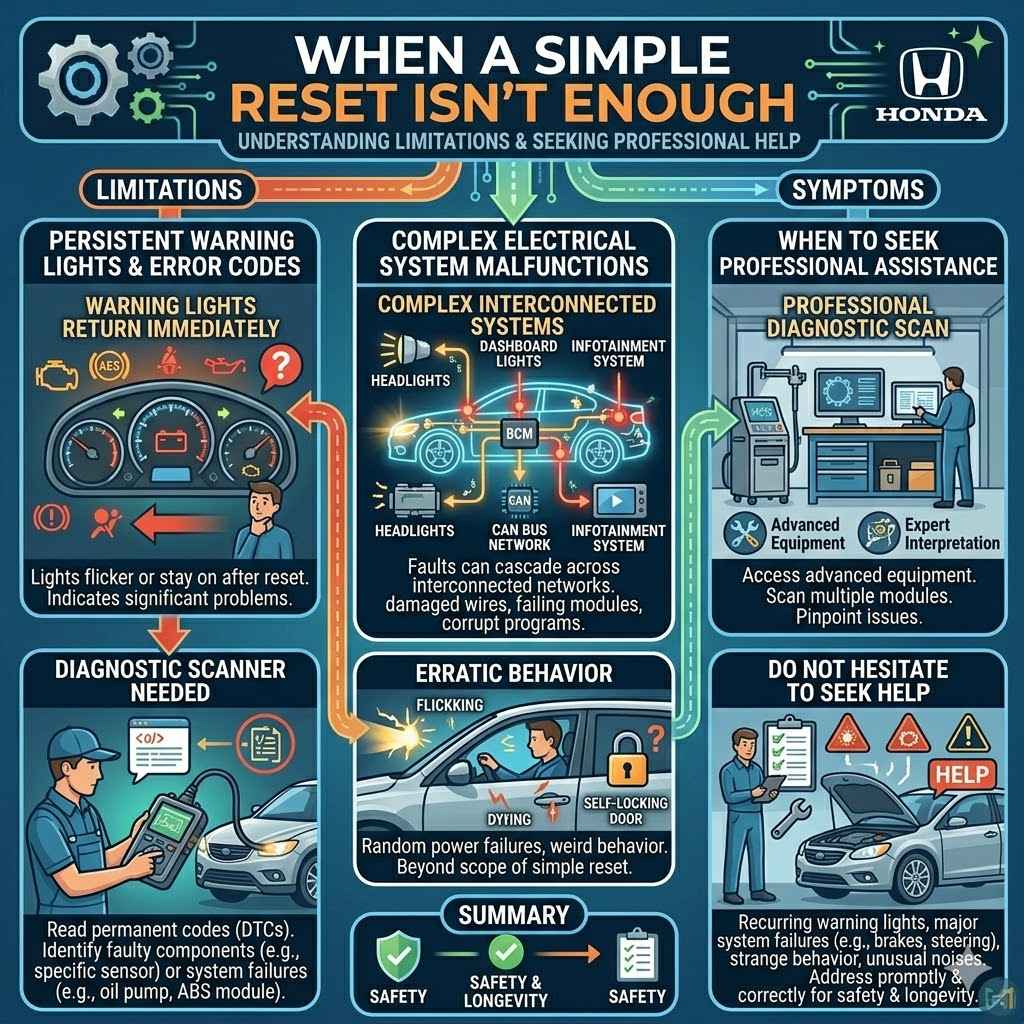
If you perform a battery reset and a warning light, such as the check engine light or an ABS light, immediately returns or persists, it usually indicates a more significant problem. A battery reset can clear temporary fault codes, but it cannot fix underlying mechanical or electrical faults. These lights are designed to alert you to issues that require attention.
For example, if your oil pressure light comes on and stays on after a reset, it’s a critical warning about potential engine damage. Simply resetting the battery won’t solve a lack of oil or a faulty oil pump. Similarly, persistent ABS or airbag lights suggest problems with those specific systems that need professional diagnosis and repair.
In these cases, the time spent waiting for the battery to reset is less important than understanding that the problem is still present. You’ll need to get the car scanned with a diagnostic tool to read the permanent fault codes. These codes will point mechanics towards the specific component or system that needs repair.
A battery reset might temporarily silence the light, but the underlying issue remains.
Complex Electrical System Malfunctions
More intricate electrical problems, like intermittent power failures to multiple systems, issues with the car’s Body Control Module (BCM), or problems with the CAN bus communication network, often go beyond what a simple battery reset can fix. These systems are highly interconnected, and a fault in one area can cascade and cause widespread issues.
While a reset might clear a temporary communication error, it won’t repair a damaged wire, a failing module, or a corrupt computer program. If you experience situations where your headlights flicker randomly, the dashboard lights behave erratically, or doors lock/unlock on their own, these point to more complex electrical gremlins. The time invested in a battery reset won’t resolve these deeper issues.
For instance, if your CR-V’s infotainment system completely dies and won’t come back on after a reset, or if multiple warning lights illuminate simultaneously without a clear cause, it’s a sign that a professional diagnostic scan is needed. These problems often require specialized tools and expertise to pinpoint and fix. The complexity of modern vehicle electronics means sometimes only a trained technician can effectively address them.
When to Seek Professional Assistance
If you’ve tried a battery reset and the problem persists, or if you’re dealing with issues that go beyond simple glitches, it’s time to consult a qualified mechanic. Trying to fix complex electrical problems yourself without the right knowledge and tools can sometimes lead to more damage and greater expense.
A professional mechanic has access to advanced diagnostic equipment that can scan your CR-V’s various computer modules for detailed error codes. They also have the expertise to interpret these codes and understand the intricate workings of your vehicle’s electrical systems. They can identify faulty components, damaged wiring, or software issues that are beyond the scope of a simple battery reset.
Don’t hesitate to seek professional help if you notice any of the following after attempting a reset: recurring warning lights, complete failure of major systems (like brakes, steering, or engine), unusual noises, or strange behavior from the vehicle’s electronics. Your safety and the longevity of your CR-V depend on addressing these issues promptly and correctly.
Frequently Asked Questions
Question: How long do I need to keep the battery disconnected to reset my Honda CR-V?
Answer: For most common issues, disconnecting the negative terminal for about 15 to 30 minutes is sufficient. Some suggest up to an hour for a more thorough reset.
Question: Will resetting the battery erase my radio presets and clock?
Answer: Yes, disconnecting the battery will reset most memory settings, including radio presets, clock time, and sometimes driver seat memory.
Question: How long does it take for the car to relearn after a battery reset?
Answer: The engine computer usually relearns idle and driving parameters within the first 10-15 minutes of driving after reconnecting the battery.
Question: What should I do if the check engine light stays on after a battery reset?
Answer: If the check engine light remains illuminated, it indicates a persistent issue that requires professional diagnosis with a scan tool.
Question: Is it safe to reset the battery on a modern Honda CR-V?
Answer: Yes, it is generally safe for most common issues, as long as you follow the correct procedure, starting with disconnecting the negative terminal.
Conclusion
For most Honda CR-V owners, a battery reset typically takes about 15 to 60 minutes. This includes the time the battery is disconnected and the subsequent period for the car’s computer systems to relearn settings. This process effectively resolves minor electronic glitches and issues after battery replacement.
If problems persist, professional help is recommended.