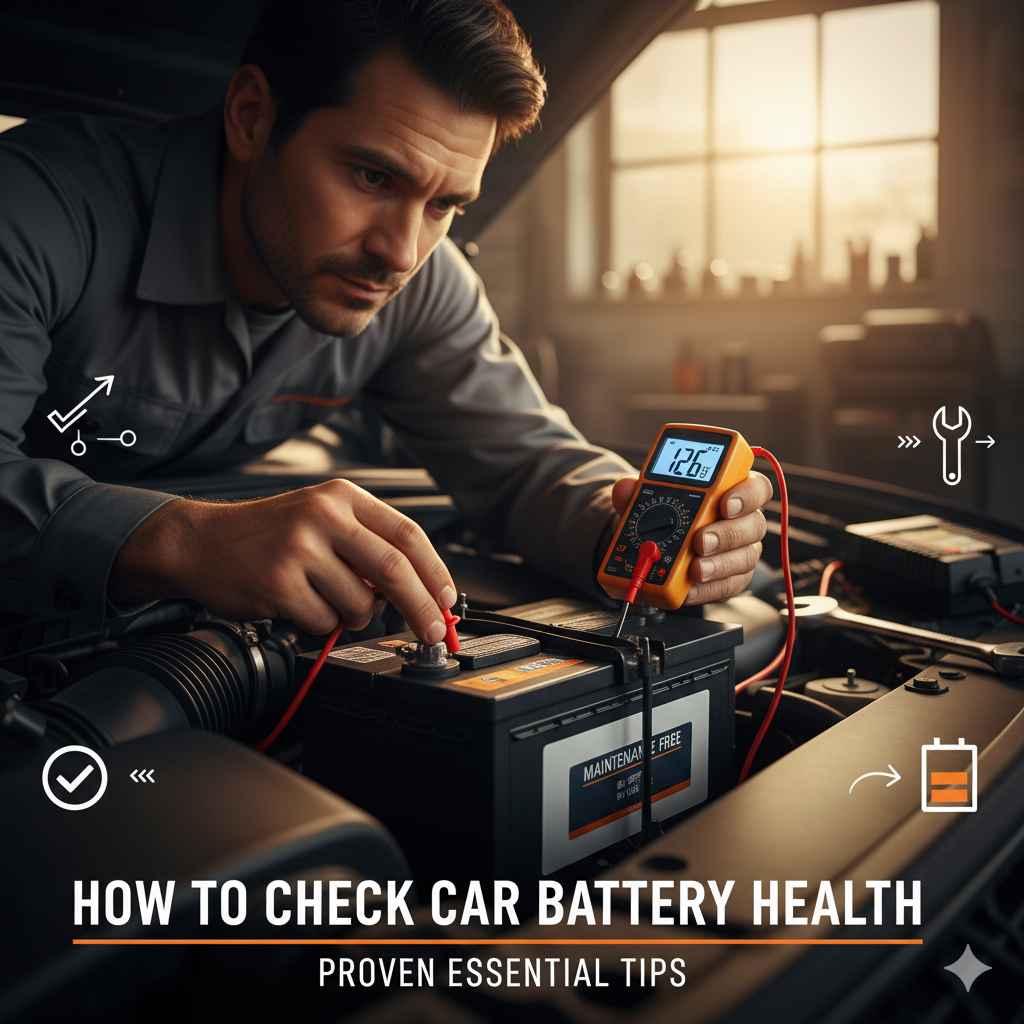
How To Check Car Battery Health: Proven Essential Tips
Check car battery health by looking for corrosion on terminals, testing voltage with a multimeter (aiming for 12.4V+ when off, 13.7V+ when running), observing starting symptoms, and considering professional load testing. Regular checks prevent unexpected breakdowns.
Is your car acting a bit sluggish lately? Maybe the engine cranks slower than usual, or you’ve had a few close calls with a dead battery. It’s a common frustration, but the good news is that checking your car battery’s health doesn’t have to be a mystery. With a few simple steps, you can understand what’s going on under the hood and potentially save yourself a headache and some money. This guide will walk you through easy ways to assess your car’s battery, making sure it’s in good shape or telling you when it’s time for a change. Let’s get started on keeping your car running smoothly!
Why Checking Your Car Battery Health is Crucial
Your car battery is the heart of your vehicle’s electrical system. It’s responsible for starting the engine and powering everything from your headlights and radio to your car’s computer. When a battery starts to fade, it can lead to a cascade of problems, with the most common and inconvenient being a non-starting car. Regular checks are like annual check-ups for your car; they help catch issues before they become major problems.
Think about it: a dead battery on a freezing morning or when you’re already late for an important appointment is incredibly stressful. By understanding how to perform simple checks, you gain control. You can identify early warning signs, avoid being stranded, and make informed decisions about when to replace your battery, often saving money by doing it proactively rather than reactively.

Common Signs of a Failing Car Battery
Before diving into technical checks, your senses can often tell you a lot. Pay attention to these common signals that your car battery might be losing its power:
- Slow Engine Crank: This is perhaps the most classic sign. When you turn the key, the engine makes a slow, struggling sound instead of a quick, strong crank.
- Clicking Sound: If you hear a rapid clicking noise when you try to start the car but the engine doesn’t turn over, it often means the battery doesn’t have enough power to engage the starter motor.
- Dim Lights: Notice if your headlights, interior lights, or dashboard lights appear dimmer than usual, especially when the engine isn’t running or when you first start the car.
- Electrical Issues: Problems with your car’s radio, power windows, or other electrical components can sometimes be linked to a weak battery.
- Battery Warning Light: Most modern cars have a warning light on the dashboard that resembles a battery. If this illuminates, it’s a clear signal to investigate the battery or charging system.
- Swollen Battery Case: In some cases, a faulty battery might physically swell or warp. If you see this, the battery needs immediate attention.
- Leaking Battery: Any signs of liquid around or leaking from the battery are also a serious cause for concern.
Essential Tools for Checking Battery Health
You don’t need to be a master mechanic to perform basic battery checks. Here are a few simple tools that can help:
- Multimeter: This is an inexpensive and incredibly useful tool that measures voltage, current, and resistance. For checking batteries, you’ll primarily use its voltage setting. You can find reliable multimeters at most auto parts stores or online retailers for under $20.
- Battery Terminal Cleaner/Wire Brush: Corrosion can build up on your battery terminals, preventing a good connection. A specialized cleaner or a simple stiff wire brush can help remove this.
- Gloves and Safety Glasses: Batteries contain corrosive acid, so it’s always wise to protect yourself.
- Owner’s Manual: Your car’s manual is a valuable resource for specific information about your vehicle, including battery type and location.
Step-by-Step Guide: How to Check Car Battery Health Visually
Start with a simple visual inspection. This is the easiest way to spot potential problems.
- Locate Your Battery: Consult your owner’s manual if you’re unsure. Batteries are usually found under the hood, but in some vehicles, they may be in the trunk or under a seat.
- Inspect for Corrosion: Look at the battery terminals (the metal posts where the cables connect). You’re looking for a bluish-greenish powdery substance, which is corrosion. Corrosion can impede the flow of electricity.
- Clean the Terminals (if needed): If you see corrosion, disconnect the battery cables (always disconnect the negative terminal first, then the positive, and reconnect the positive first, then the negative). You can use a wire brush or a battery terminal cleaner to scrub the terminals and the inside of the cable clamps until they are clean and shiny. A mixture of baking soda and water can also help neutralize acid.
- Check for Leaks or Damage: Examine the battery case for any signs of cracks, swelling, or leaking fluid. If you find any, the battery needs immediate replacement.
- Ensure Connections are Tight: Make sure the cable clamps are securely fastened to the battery terminals. A loose connection can cause a lot of starting issues.
How to Check Car Battery Health Using a Multimeter (Voltage Test)
This test gives you a more quantitative understanding of your battery’s condition. It’s best done when the car has been sitting for a few hours, ideally overnight, so the surface charge from recent driving doesn’t skew the results.
What You’ll Need:
- A digital multimeter
- Gloves and safety glasses
Steps:
- Set Up Your Multimeter: Turn the dial on your multimeter to the DC Voltage setting (usually indicated by a ‘V’ with a straight line above it and dots, or ‘DCV’). Ensure it’s set to a range that can measure at least 20 volts.
-
Connect the Multimeter Probes:
- Touch the red probe (+) to the positive (+) terminal of the battery.
- Touch the black probe (-) to the negative (-) terminal of the battery.
(Note: Always connect the red probe to positive and the black probe to negative. If you accidentally reverse them, the multimeter will usually show a negative reading and won’t be damaged.)
-
Read the Voltage (Engine Off): Note the voltage displayed on the multimeter. This reading tells you the battery’s ‘static’ charge.
- 12.6 volts or higher: The battery is fully charged and in good condition.
- 12.4 volts: The battery is about 75% charged. This is generally considered good.
- 12.0 – 12.3 volts: The battery is partially discharged. It might be okay, but it’s a sign to monitor it, and may indicate it’s not holding a full charge well.
- Below 12.0 volts: The battery is significantly discharged. It may struggle to start the car, and its ability to hold a charge is questionable.
- Start the Engine: With the multimeter still connected, start your car’s engine.
-
Read the Voltage (Engine Running): Observe the voltage reading while the engine is running. This test checks the alternator’s ability to charge the battery.
- 13.7 to 14.7 volts: This is the ideal range. It indicates your alternator is working correctly and charging the battery.
- Below 13.7 volts: Your alternator may not be charging the battery sufficiently, or the battery itself is not accepting a charge well.
- Above 14.7 volts: This might indicate that your alternator is overcharging the battery, which can damage it over time.
A healthy battery will typically hold its charge well when the engine is off and show a healthy charging voltage when the engine is running. For more detailed information on battery testing, you can refer to resources from organizations like the Car Care Council, a non-profit organization dedicated to consumer education on vehicle maintenance.
Understanding Battery Load Testing
While voltage testing is a great indicator, a “load test” provides a more definitive assessment of a battery’s health, especially its ability to deliver power under the strain of starting the engine. A load test simulates the demands placed on the battery when starting your car.
What is a Load Test?
A load test uses a special device that applies a simulated heavy load (often half the battery’s rated amperage) to the battery while measuring its voltage. This test effectively checks how well the battery can maintain voltage under stress.
Why it’s Important:
- A battery might show a decent voltage when not under load but fail miserably when the starter motor is engaged.
- Load testing is the most accurate way to determine if a battery is still capable of its original performance.
How to Get a Load Test:
- Auto Parts Stores: Many auto parts stores offer free battery testing, including load testing, as a service to customers. This is often the easiest and most cost-effective option. They have the specialized equipment readily available.
- Mechanic Shops: Your local mechanic will also have load testing equipment and can include it as part of a larger check-up or diagnostic.
When you go to a store or shop, they will typically disconnect your current battery (if it’s in the car) and connect it to the load tester. They’ll then tell you the results and whether the battery is considered good, weak, or needs replacement.
Battery Age and Its Impact on Health
Car batteries don’t last forever. The average lifespan of a car battery is typically between 3 to 5 years, but this can vary significantly based on climate, driving habits, and battery quality.
- Climate: Extreme heat is a battery’s worst enemy, significantly shortening its lifespan. Cold weather can also reduce a battery’s cranking power, making an older battery more likely to fail.
- Driving Habits: Short trips where the engine doesn’t run long enough to fully recharge the battery can also take a toll.
- Battery Type: Different types of batteries have varying lifespans and performance characteristics.
Check the Date Code: Most batteries have a sticker with a date code. This is usually a letter followed by a number (e.g., C4). The letter represents the month (A=January, B=February, etc.), and the number represents the year (e.g., 4=2024). So, C4 would mean March 2024. If your battery is more than 3-4 years old, it’s wise to start checking its health more diligently, even if it’s currently working fine.
Tips for Extending Your Car Battery’s Life
Once you know how to check your battery’s health, you can also take steps to prolong its life:
- Keep it Clean: Regularly clean battery terminals to prevent corrosion.
- Ensure a Tight Fit: Make sure the battery is securely held in its tray. A loose battery can be damaged by vibrations.
- Avoid Deep Discharges: Try not to drain the battery completely by leaving lights or accessories on. If you do, charge it as soon as possible.
- Regular Driving: Drive your car regularly, ideally for at least 20-30 minutes, to ensure the alternator has enough time to recharge the battery fully.
- Protect from Extremes: If possible, park in a garage during very hot or very cold weather.
- Consider a Battery Tender: If your car is stored for long periods, a battery tender (or trickle charger) can maintain the battery’s charge and prevent sulfation, a process that degrades battery capacity over time. You can learn more about battery maintenance and charging from resources like the BatteryStuff Knowledge Base.
When to Seek Professional Help
While these DIY tips are excellent for routine checks, there are times when you should call in the experts:
- Persistent Warning Lights: If the battery warning light stays on or you suspect issues with the charging system, a mechanic can diagnose the alternator and other charging components.
- Battery Leaks or Damage: Any signs of leaks, cracks, or swelling mean the battery needs to be handled and replaced by a professional.
- Repeated Starting Issues: If your car continues to have starting problems despite your checks and simple fixes, there might be a more complex electrical issue.
- Uncertainty: If you’re uncomfortable performing any of these checks yourself, don’t hesitate to visit an auto parts store or a mechanic for assistance.
Professional mechanics have advanced diagnostic tools that can provide a comprehensive overview of your car’s electrical system, pinpointing any issues with the battery, alternator, starter, or wiring.

Battery Specifications Explained
When it’s time for a new battery, you’ll encounter terms like CCA, Reserve Capacity, and Ah. Understanding these helps you choose the right replacement:
| Term | What it Means | Why it Matters |
|---|---|---|
| CCA (Cold Cranking Amps) | The number of amps a battery can deliver at 0°F (-18°C) for 30 seconds while maintaining at least 7.2 volts. | Crucial for starting your engine in cold weather. More is generally better in colder climates. Check your owner’s manual for the recommended CCA. |
| RC (Reserve Capacity) | The amount of time (in minutes) a fully charged battery can deliver 25 amps at 80°F (27°C) before its voltage drops below 10.5 volts. | Indicates how long your battery can power essential systems (like lights) if the alternator fails. |
| Ah (Ampere-hour) | A measure of the battery’s total energy storage capacity. | Larger Ah ratings generally mean the battery can provide more power for longer. |
| Group Size | Standardized sizing for battery dimensions and terminal placement (e.g., Group 24F, Group 35). | Ensures the battery will physically fit in your car’s battery tray and that the cables will reach the terminals correctly. Always match your car’s required Group Size. |
Always refer to your owner’s manual or a reliable auto parts store’s compatibility guide to ensure you purchase the correct battery for your specific vehicle. Using the wrong size or type can lead to fitment issues or improper charging.
FAQ: Your Car Battery Questions Answered
Q1: How often should I check my car battery health?
A: It’s a good idea to do a visual check monthly and a voltage test with a multimeter every 3-6 months. More frequent checks are recommended in extreme climates or if your car is older.
Q2: Can I check my battery if my car won’t start at all?
A: Yes. Even if your car won’t start, you can still visually inspect the battery and check its voltage with a multimeter. If the voltage is very low (below 10V), the battery is almost certainly dead or severely discharged.
Q3: My car starts fine, but the lights seem dim. What could be wrong?
A: Dim lights can indicate a weak battery that isn’t holding a full charge, or it could point to a problem with the alternator not supplying enough power when the engine is running. A voltage test and checking the charging system are advised.
Q4: How do I know if I need a new battery or just a recharge?
A: If your battery is healthy but just discharged (e.g., from leaving lights on), a recharge might be enough. If a battery tests poorly on a load test, is several years old, or doesn’t hold a charge after recharging, it likely needs replacement.
Q5: What’s the difference between a weak battery and a dead battery?
A: A weak battery might struggle to start the car or lead to dim lights, but it still has some charge. A dead battery has very little to no charge left and won’t power anything or crank the engine.