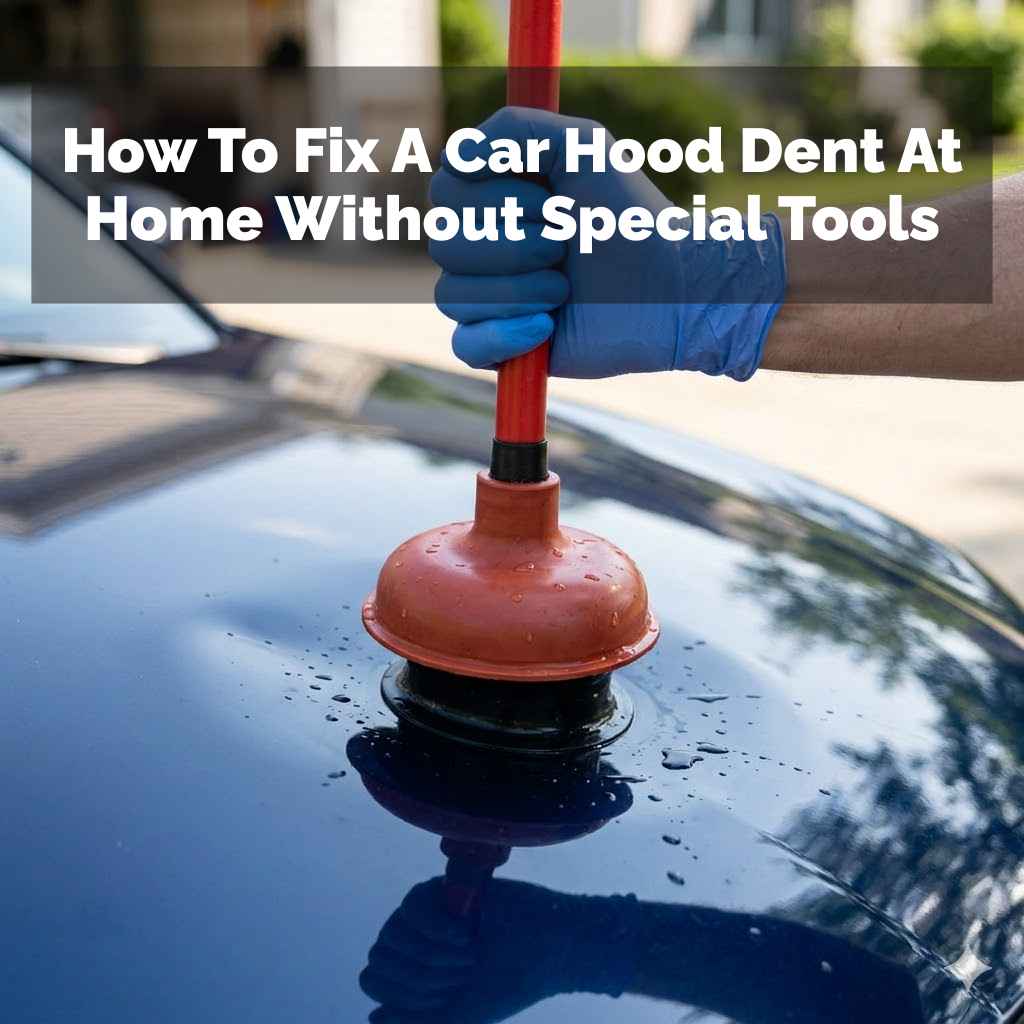
How To Fix A Car Hood Dent At Home Without Special Tools
For minor car hood dents, home repair often involves simple techniques like using hot water, a plunger, or specialized DIY dent removal kits. Success depends on the dent’s size, location, and the material of the hood panel. Always start with the least invasive method and assess the results.
Understanding Car Hood Dents
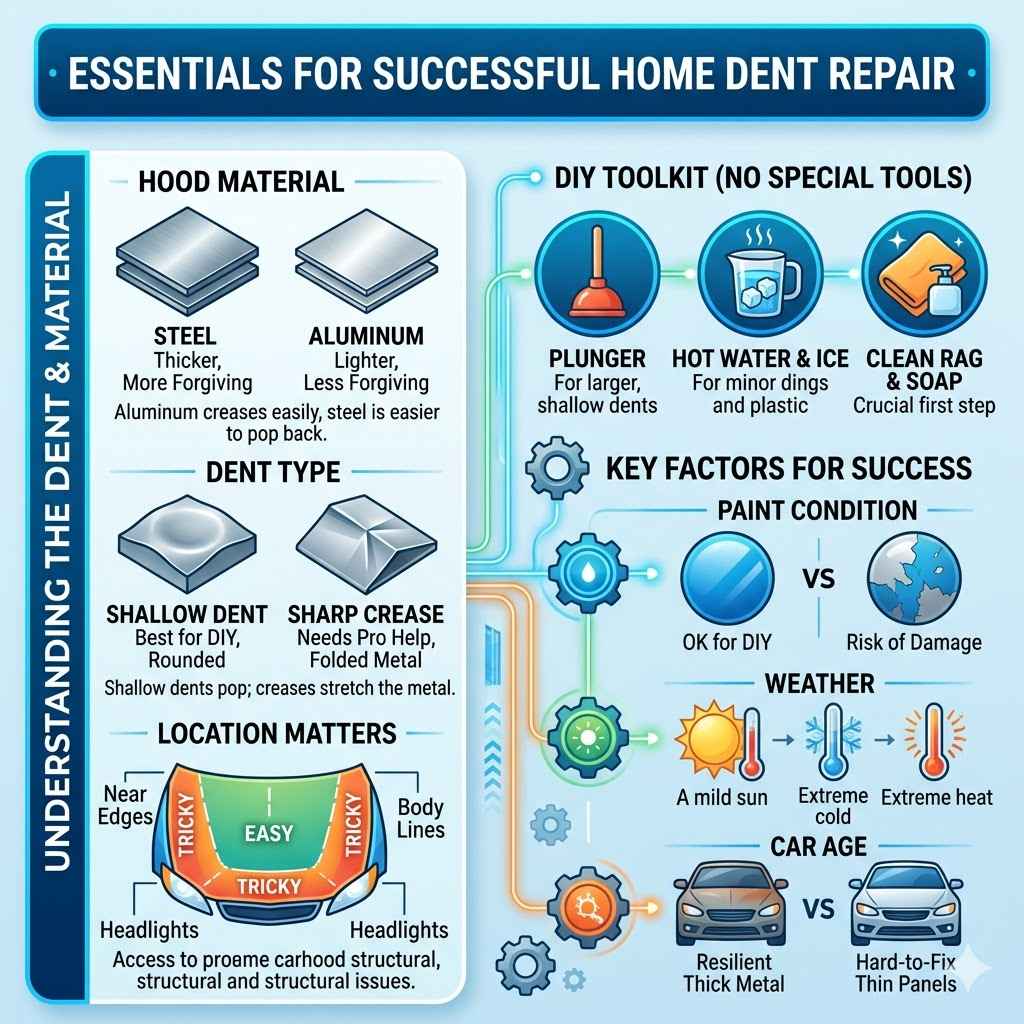
Car hoods are usually made of steel or aluminum. Steel is more common and a bit more forgiving. Aluminum is lighter but can be trickier to work with.
Dents happen when a force pushes the metal inwards. The bigger and sharper the impact, the harder it is to fix.
The type of dent matters a lot. Is it a shallow, wide ding? Or is it a sharp, creased line?
Shallow dents are much easier to fix at home. Sharp creases often mean the metal is stretched or torn, which usually needs professional help. Location is also key.
Dents near edges or body lines are harder to access and repair smoothly.
Most cars today have hoods designed to absorb impact. This can sometimes lead to complex shapes when a dent occurs. Understanding your car’s hood material and the nature of the dent helps you pick the right method.
It’s like knowing if a knot is loose or tangled before you try to untie it.
My Own Dent Scare
I remember one Saturday morning. I was washing my car, a ritual I really enjoy. As I dried the hood, my hand brushed against a small, but noticeable, dent near the front.
My heart sank. I had no idea how it got there. I’d parked it on the street overnight, so it could have been anything.
My first thought was, “This is going to cost a fortune.”
I spent the next hour just staring at it, feeling annoyed. It wasn’t huge, maybe the size of a quarter, but it was just enough to mar the smooth surface. I’d seen those expensive tools on TV but figured they were for pros.
I felt a mix of frustration and resignation. Then, I remembered hearing about some simple home remedies for dents. I decided to give one a try before calling a repair shop.
DIY Dent Repair: What You Need to Know
Surface Prep: Always clean the dented area. Dirt can scratch the paint. Use car soap and water.
Dry it well.
Patience is Key: Don’t rush. Some dents take time and multiple tries.
Start Gentle: Begin with the easiest, least invasive methods first.
Know Your Limits: Some dents are just too big or sharp. Don’t make them worse.
Fixing Shallow Dents with Hot Water and Cold Shock
This method works best on plastic bumpers but can sometimes help with metal hoods, especially on older cars. The idea is to make the metal more flexible, then help it pop back into place.
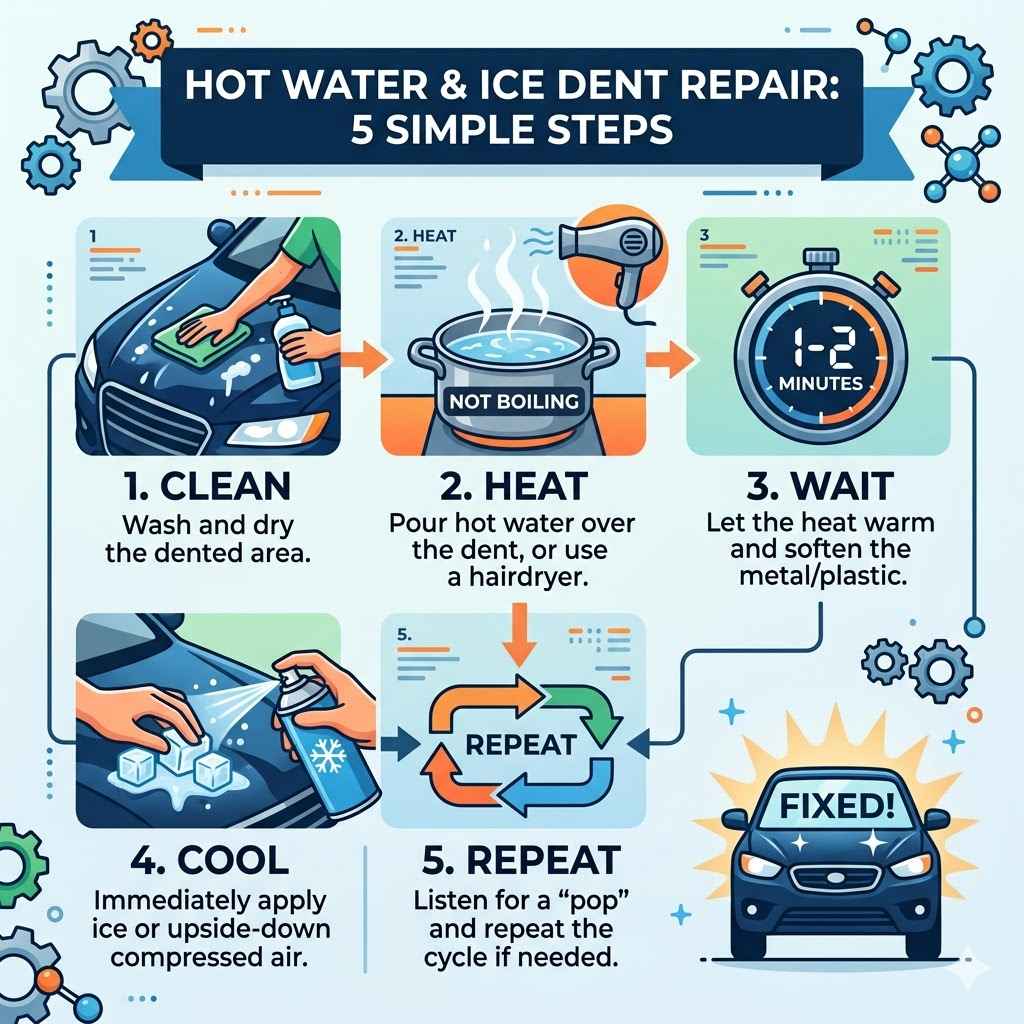
First, you need to heat the area around the dent. Get a pot of hot, but not boiling, water. You can also use a hairdryer on a medium setting.
Pour the hot water over the dented spot. Let it sit for a minute or two. This makes the metal or plastic warmer and a bit softer.
Now, for the cold shock. Quickly grab some ice cubes or a can of compressed air turned upside down. If you use compressed air, spray it onto the dent.
The sudden cold makes the metal contract. Sometimes, this temperature change is enough to pop the dent back out.
It might take a few tries. Pour hot water, then apply cold. Repeat this cycle.
Listen for a pop or a click. That’s usually the sound of the metal returning to its original shape. This works because heating expands the metal and cooling contracts it, and this rapid change can sometimes force the dent out.
Hot Water & Ice Method Steps
- Clean: Wash and dry the dented area.
- Heat: Pour hot water or use a hairdryer.
- Wait: Let the heat work for 1-2 minutes.
- Cool: Apply ice or compressed air.
- Repeat: Try the process again if needed.
Using a Plunger for Dents
You might be surprised, but a simple bathroom plunger can sometimes work wonders. This is best for larger, shallow dents. You need a clean plunger, preferably one that hasn’t seen much bathroom action.
First, wet the rim of the plunger and the surface of the dented area. This creates a good seal. Now, firmly press the plunger onto the center of the dent.
You want to push out as much air as possible.
Once sealed, give the plunger a strong, steady pull straight back. The suction created can sometimes pull the dent outwards. You might need to try this several times.
Wiggle the plunger slightly as you pull to create more force. If it doesn’t work the first time, try repositioning the plunger and pulling again.
For this method to work, the dent needs to be relatively smooth and have some space around it for the plunger to grip. Sharp creases or dents near edges are unlikely to respond well to this technique. It’s a low-risk method that’s worth trying for accessible dents.
When a Plunger Works Best
- Dent Size: Larger, shallow dents (5 inches or more across).
- Dent Shape: Dents without sharp creases.
- Location: Flat, open areas of the hood.
- Seal: Good contact between plunger and car surface.
DIY Dent Puller Kits
There are many DIY dent puller kits available online and at auto parts stores. These kits vary in complexity but often involve a pulling mechanism and some sort of adhesive.
A common type uses a hot glue gun. You heat special glue tabs, stick them to the center of the dent, and then use a pulling tool (like a small bridge puller or a slide hammer) to gently pull the tab upwards. The force transfers to the dent, pulling it out.
Another type might involve suction cups. These are similar to the plunger method but often have a stronger grip and a more controlled pulling action. You attach the cup, create suction, and then use a lever or handle to pull the dent out.
When using these kits, follow the instructions carefully. Clean the area thoroughly. Apply the tabs or cups correctly.
Pull gently at first, increasing force gradually. You might need to use multiple tabs for larger dents. It’s important not to pull too hard or too fast, as you could damage the paint or even stretch the metal.
These kits are designed for people without professional experience. They offer a more targeted approach than a plunger. Remember that the goal is to pull the metal back to its original shape, not to rip it out.
This is where patience and a gentle touch are crucial.
DIY Dent Puller Kit Types
Glue Puller Kits: Use hot glue and tabs to lift dents.
Suction Cup Pullers: Rely on vacuum power to pull dents.
Bridge Pullers: These have a beam with a pulling knob.
Slide Hammers: Use momentum to pull dents, often with glue tabs.
Real-World Context: Factors Affecting DIY Success
The success of home dent repair depends on many things. Think about the car’s hood material. Aluminum hoods are lighter but less forgiving than steel.
If your car has an aluminum hood, be extra cautious. Aluminum tends to crease more easily and can be harder to reshape without specialized tools and knowledge.
The weather also plays a role. Extreme cold can make metal brittle. Extremely hot days can make paint soft.
Ideally, you want to work on a mild, dry day. This helps the metal react predictably to heating and cooling methods.
Your car’s paint is also a factor. If the paint is already chipped or cracked around the dent, you risk making it worse. Some dent removal methods, especially aggressive pulling, can lift or crack the paint.
This means you’d need to factor in paint repair, which is a separate skill.
Finally, consider the age and condition of your car. Older cars might have thicker metal that is more resilient. Newer cars often have thinner panels designed for safety and fuel efficiency, which can dent more easily and be harder to repair perfectly.
Key Factors for DIY Dent Removal
Metal Type: Steel is generally easier than aluminum.
Dent Severity: Shallow is good, sharp creases are bad.
Paint Condition: Pristine paint offers the best chance of success.
Location: Avoid dents near edges or body lines.
Weather: Mild temperatures are ideal.
When It’s Time to Call a Professional
While DIY methods are great for small dings, there are times when you absolutely need a professional. If the dent is deep or has sharp creases, it’s usually a job for the experts. These types of dents mean the metal has been significantly stretched or deformed.
Trying to fix them yourself can cause more damage.
Dents near panel edges, around headlights, or on body lines are also tricky. These areas have structural support and curves that are hard to replicate at home. A professional has the tools and experience to work around these areas without causing new problems.
If your car’s paint is cracked or damaged around the dent, you’ll likely need a professional for both the bodywork and the paint repair. Some advanced paintless dent repair (PDR) technicians can handle minor paint issues, but severe damage requires a different approach.
Also, consider the value of your car. If you have a classic car or a high-end vehicle, it might be worth investing in professional repair to maintain its value and appearance. For a minor dent on a daily driver, however, a DIY fix might be perfectly acceptable.
Signs You Need a Pro
- Deep Dents: More than 1/4 inch deep.
- Sharp Creases: The metal is folded.
- Stretched Metal: The dented area looks wider.
- Paint Damage: Cracks or chips in the paint.
- Location: Near edges, lights, or complex body lines.
Quick Fixes & Tips for Home Repair
Here are some extra tips to help you get the best results with DIY dent repair. Always start by cleaning the area thoroughly. Dirt and grime can interfere with adhesives and make scratching more likely.
Use a good car wash soap and a clean microfiber cloth.
Be patient. It’s rare for a dent to pop out perfectly on the first try. You might need to repeat a process several times.
If you’re using a glue puller kit, apply multiple tabs if the dent is large. Work from the outside of the dent inward.
When pulling, use steady, controlled force. Jerky movements can shock the metal and cause issues. If you feel resistance, don’t force it.
Sometimes, letting the metal rest for a few minutes can help.
After you’ve successfully removed the dent, clean the area again. If there are any minor paint imperfections, you might be able to buff them out with a mild polishing compound. Always test any product on an inconspicuous area first.
Pro Tips for DIY Success
Cleanliness First: Always start with a spotless surface.
Gentle Persistence: Repeat methods patiently.
Controlled Pulling: Use steady force, avoid sudden yanks.
Work Smart: For larger dents, use multiple pull tabs.
Final Polish: Clean and buff any minor marks afterward.
Frequently Asked Questions About Fixing Car Hood Dents
Can I really fix car hood dents with just hot water?
Yes, for certain types of shallow dents, especially on plastic parts, the rapid temperature change from hot water and then ice or compressed air can sometimes cause the material to contract and pop the dent back out. It’s less common for steel hoods but worth a try on minor dings.
Will a plunger scratch my car’s paint?
A clean plunger used carefully on a clean surface is unlikely to scratch your paint. The key is to ensure both the plunger rim and the car’s surface are free of grit and debris. Wetting the rim also helps create a better seal and reduces friction.
How deep of a dent can I fix at home?
Generally, home repair methods are most effective for shallow dents that are less than about a quarter-inch deep. Deeper dents or those with sharp creases involve metal that has been stretched and usually requires professional tools and techniques like paintless dent repair (PDR).
What’s the difference between a dent and a crease?
A dent is usually a rounded inward depression in the metal. A crease is a sharp fold or line in the metal. Dents are generally easier to fix at home because the metal is not as severely deformed.
Creases often mean the metal has been stretched or torn, making them much harder to repair without professional tools.
Are DIY dent puller kits safe for my car’s paint?
Most reputable DIY dent puller kits are designed to be paint-safe when used correctly according to instructions. However, there’s always a risk, especially if the paint is already compromised. Always follow the kit’s directions precisely and avoid excessive force.
Test any adhesive in an inconspicuous area if you’re concerned.
When should I consider paintless dent repair (PDR)?
Paintless dent repair (PDR) is a professional service that is ideal for shallow to moderate dents where the paint is not damaged. Technicians use special tools to access the back of the panel and gently massage the metal back into its original shape. It’s often a quicker and less expensive option than traditional bodywork.
Conclusion
Dealing with a dent on your car’s hood doesn’t always mean a costly repair bill. For many minor dents, simple household items and readily available DIY kits can get the job done. Remember to start with the least aggressive methods, be patient, and know when to stop.
If a dent is too deep, creased, or near a complex body line, it’s best to seek professional help to avoid further damage. With a little care and the right approach, you can often restore your car’s smooth finish without special tools.
Products related to this article
Sponsored / affiliate links. As an Amazon Associate I earn from qualifying purchases. I may earn additional commission from eligible campaigns.
 Super PDR Dent Puller Kit Paintless Dent Repair Kit for Car – Slide Hammer Suction Cup and PDR Light for 98% Auto Body Dent Removal, Hail Damage & Appliance Dents or Vehicle Dent Removal
 Dent Puller Kit for Car Dent Removal Tools with Adjustable for bridge - Hail Damage Repair Glue Tabs for Auto Body