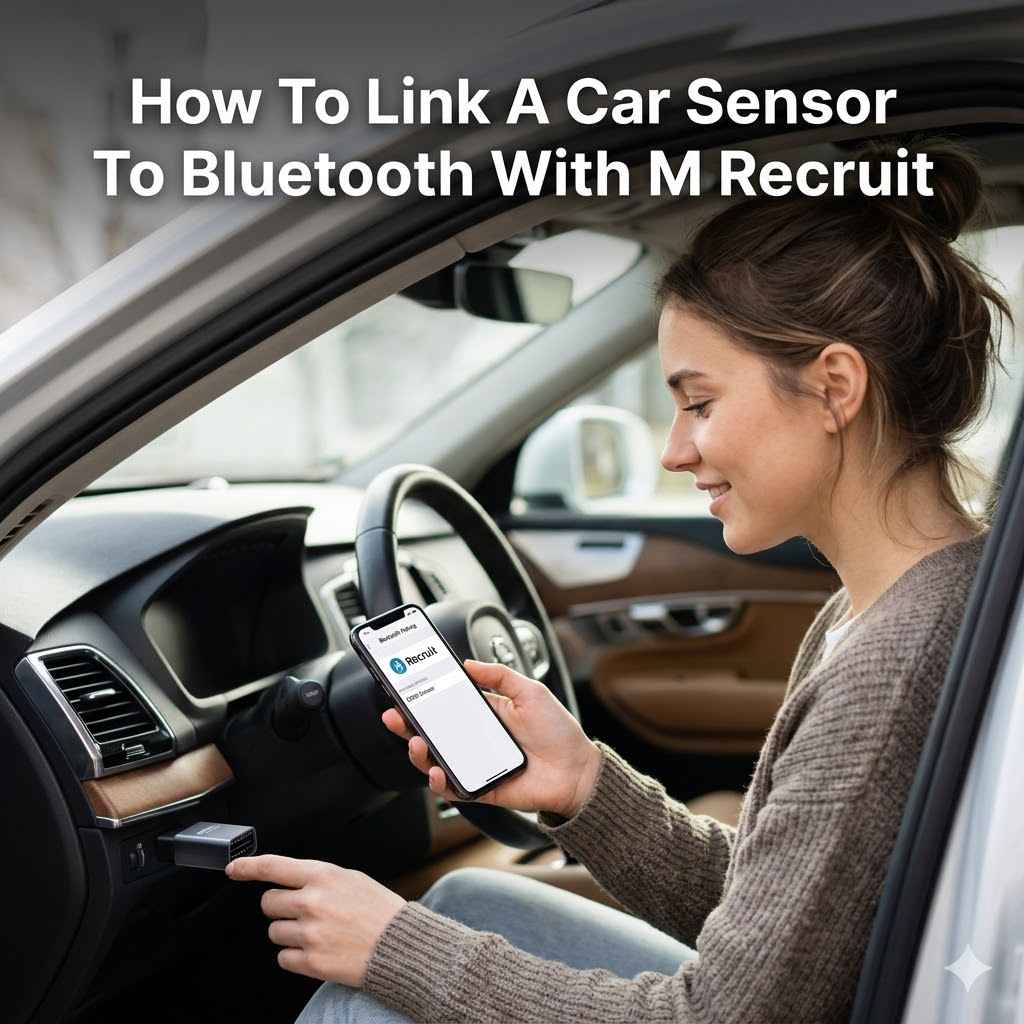
How To Link A Car Sensor To Bluetooth With M Recruit
Linking a car sensor to Bluetooth with M Recruit involves ensuring the sensor is in pairing mode and then using the M Recruit app to discover and connect to it. Follow the sensor’s manual for pairing instructions and the M Recruit app’s prompts for a successful connection.
Understanding Your Car Sensor and Bluetooth
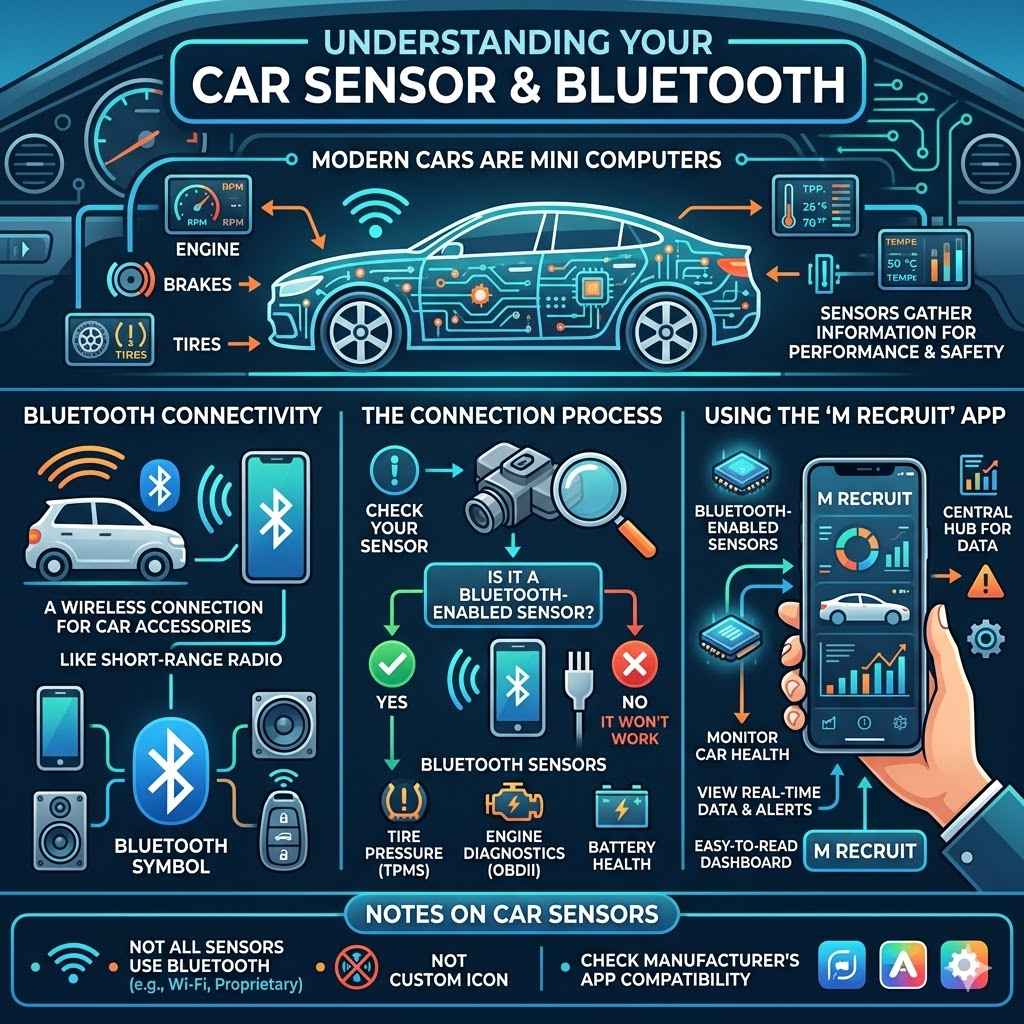
Cars today are like mini computers on wheels. They have lots of sensors. These sensors watch over different parts of your car.
Think of your engine, your brakes, or even your tires. They gather information. This data helps your car run well.
It also helps keep you safe.
Bluetooth is a way for devices to talk wirelessly. It’s like a short-range radio. Your phone uses it.
So do many car accessories. Some sensors can send their data to your phone. This needs Bluetooth.
M Recruit is an app. It helps manage these connections. It makes the data easy to see.
Not all car sensors use Bluetooth. Some use Wi-Fi. Others have their own special ways to connect.
You must check your sensor. It needs to be a Bluetooth-enabled car sensor. This is the first step.
If it’s not, it won’t work with M Recruit via Bluetooth. It’s like trying to plug a fork into a USB port. It just won’t fit.
Many modern aftermarket sensors are designed for this. They might be for monitoring tire pressure (TPMS), engine diagnostics, or battery health. These often come with their own apps.
M Recruit might be the app for this specific sensor, or it could be a central hub. It really depends on the brand.
How M Recruit Fits In
M Recruit is a handy app. It often works with various car accessories. It acts as a middleman.
It takes the data from your sensor. Then it shows it to you on your phone. This makes complex car data easy to understand.
You get real-time updates. This is super helpful.
Think of it like a translator. Your car sensor speaks “sensor language.” Your phone speaks “app language.” M Recruit translates between them. This allows you to see things like tire pressure or engine codes right on your screen.
No more guessing games. You get clear numbers and warnings.
The app’s main job is to find your sensor. It needs to connect to it. This connection is usually done through Bluetooth.
Once linked, it can receive and display the information the sensor sends. It’s designed to be user-friendly. Even if you’re not a car expert, you can use it.
Sometimes, M Recruit might need specific setup. This depends on the sensor manufacturer. The app might guide you.
Or you might need to follow the sensor’s own instructions first. This is a common point of confusion. People expect the app to do everything magically.
But the sensor needs to be ready too.
Key Components for Bluetooth Connection
1. Bluetooth-Enabled Sensor: The car sensor must have Bluetooth capabilities. Check its packaging or manual.
2. M Recruit App: Downloaded and installed on your smartphone. Make sure it’s the correct version for your sensor.
3. Smartphone’s Bluetooth: Your phone’s Bluetooth must be turned on. It needs to be discoverable.
4. Power Source for Sensor: The sensor needs power, usually from a battery or the car’s system. Ensure it’s active.
Step-by-Step Guide to Linking Your Sensor
Let’s get down to business. Connecting your Bluetooth car sensor to M Recruit takes a few steps. It’s not hard once you know them.
Just follow along closely. Every step is important.
Step 1: Prepare Your Sensor
First, make sure your sensor is ready. It needs to be powered on. Check its battery.
If it’s wired, make sure it’s connected correctly to your car. This might involve plugging it into your car’s OBD-II port. Or it might be a sensor you installed yourself on a tire valve.
The most crucial part here is putting the sensor into pairing mode. This is how it tells other devices, like your phone, “Hey, I’m here! Connect with me!” How you do this varies a lot by sensor.
Some sensors go into pairing mode automatically when they are first powered on. Others might have a small button you need to press and hold.
Always, always check the sensor’s manual. This is the golden rule. The manual will tell you exactly how to activate its pairing mode.
It might say “press the button for 5 seconds until the light blinks blue.” Or it could be something else. Don’t skip this part. It’s vital for the connection.
Sometimes, a blinking light on the sensor is a good sign. It often means it’s actively trying to connect. If there’s no light, or it’s solid, it might not be in pairing mode.
You might need to reset it and try again.
Step 2: Prepare Your Smartphone and M Recruit App
Now, grab your phone. Turn on your phone’s Bluetooth. Most phones have a quick setting for this.
Swipe down from the top of your screen. You should see a Bluetooth icon. Tap it to turn it on.
Make sure it’s not just on, but discoverable. Sometimes there’s a separate setting for this.
Next, open the M Recruit app. If you don’t have it, download it from your phone’s app store. Search for “M Recruit.” Make sure you get the official one.
Once it’s open, you might need to create an account or log in. Follow the app’s on-screen instructions.
Look for a section in the app related to adding new devices or sensors. It might be called “Add Device,” “Scan for Sensors,” or “Connect New Device.” This is where the magic happens. The app will start looking for nearby Bluetooth devices.
Ensure the M Recruit app has permission to use Bluetooth. Your phone might ask for this the first time you open it. If you denied it, you’ll need to go into your phone’s settings and grant permission.
This is a common oversight that stops connections.
Step 3: Connect Through M Recruit
With your sensor in pairing mode and your phone’s Bluetooth on, the M Recruit app should start searching. You’ll likely see a list of available Bluetooth devices. Look for the name of your car sensor.
It might be something like “TPMS Sensor XYZ” or “CarDiag 123.”
Tap on your sensor’s name in the app’s list. The app will try to connect. This might take a few seconds.
You might see a “connecting” message. If it works, you’ll get a confirmation. This could be a message saying “Device Connected” or something similar.
Some sensors or apps might ask for a pairing code. This is less common with car sensors, but possible. If it asks for a code, try common ones like “0000” or “1234.” Again, check your sensor’s manual.
It would usually specify a unique code if one is required.
Once connected, M Recruit should start receiving data from the sensor. You should see live readings or status updates. For example, if it’s a tire pressure sensor, you’ll see the PSI for each tire.
If it’s an engine sensor, you might see RPMs or temperature.
Quick Connection Checklist
- Sensor powered ON and in pairing mode?
- Phone’s Bluetooth ON and discoverable?
- M Recruit app open and seeking devices?
- M Recruit app has Bluetooth permissions?
- Sensor name appears in the app’s list?
Troubleshooting Common Connection Issues
Even with clear steps, things can go wrong. It’s normal to hit a snag. Don’t get discouraged.
Most connection problems are easily fixed. Let’s look at some common issues and how to solve them.
Issue 1: Sensor Not Showing Up in M Recruit
This is a big one. If your sensor doesn’t appear in the app’s list, it means the app can’t see it. The most common cause is the sensor not being in pairing mode.
Double-check the sensor’s manual. Did you press the button long enough? Is the light blinking correctly?
Another reason could be interference. Too many other Bluetooth devices nearby can sometimes cause problems. Try moving to a quieter spot.
Or turn off other Bluetooth devices temporarily. Make sure your phone isn’t already connected to another Bluetooth device, like headphones or a speaker.
Your phone’s Bluetooth might also be acting up. Try turning your phone’s Bluetooth off and then on again. A full phone restart can also help.
Sometimes the phone just needs a quick reboot to clear temporary glitches.
The distance between your phone and the sensor matters. Bluetooth has a limited range. Make sure your phone is close to the sensor.
Try holding your phone right next to it. Then move back a bit once connected.
Issue 2: Connection Fails or Drops
You saw the sensor, you tapped it, but it failed to connect. Or it connected, then suddenly disconnected. This can be frustrating.
Again, check the pairing mode. Ensure the sensor is still actively trying to pair.
Low battery in the sensor is a frequent culprit. If the sensor’s battery is weak, it might not be able to maintain a stable connection. Check the battery life or replace it if needed.
Sometimes, the M Recruit app itself might have a bug. Check if there’s an update available for the app. Developers often release updates to fix these kinds of issues.
Uninstalling and then reinstalling the app can also help. Just make sure you remember your login details.
The sensor might be paired to another device already. Some sensors can only connect to one phone at a time. If it was previously paired to another phone or tablet, you might need to “forget” or “unpair” it from that device first.
This is often done in the Bluetooth settings of the other device.
Issue 3: Incorrect or No Data Displayed
You’re connected! Great! But the numbers look wrong, or nothing is showing.
This often points to a misunderstanding of the sensor’s output or a problem with how M Recruit is interpreting it.
First, confirm what data your sensor is supposed to be sending. Does it measure tire pressure in PSI, BAR, or kPa? Does it report temperature in Fahrenheit or Celsius?
Check your sensor’s manual. Then, check the M Recruit app’s settings. You can usually choose the units of measurement there.
Make sure you selected the correct sensor type within the M Recruit app if it asked. If you have multiple sensors, picking the wrong one can lead to display issues. For instance, a tire pressure sensor showing engine RPMs wouldn’t make sense.
Sometimes, the sensor might require calibration. This is common for tire pressure sensors. They might need to be set to a specific baseline pressure.
Look in the M Recruit app or the sensor’s manual for calibration instructions.
Finally, if all else fails, try restarting the entire process. Unpair the sensor from M Recruit. Turn off Bluetooth on your phone.
Power cycle the sensor. Then go through the steps to pair it again from scratch.
Troubleshooting Summary
- No Sensor Found: Check pairing mode, distance, other devices, and phone Bluetooth.
- Connection Drops: Verify sensor battery, app updates, and check for existing pairings.
- Bad Data: Confirm units, sensor type in app, and look for calibration options.
Real-World Context: When This Is Most Useful
Why would you even want to link a car sensor to Bluetooth with M Recruit? It’s not just for techy folks. There are real, practical reasons.
These sensors can seriously improve your driving experience and safety.
Monitoring Tire Pressure
This is one of the most common uses. Properly inflated tires are crucial. They affect your car’s handling, fuel economy, and tire wear.
Under-inflated tires can be dangerous. They can overheat and blow out. Over-inflated tires cause a bumpy ride and uneven wear.
A tire pressure monitoring system (TPMS) sensor linked via Bluetooth to M Recruit gives you real-time alerts. If a tire starts losing air, you’ll know instantly. You won’t have to wait for a warning light on your dashboard.
This is especially helpful for long road trips. Or if you live in areas with extreme temperature swings. Cold weather can lower tire pressure.
Hot weather can raise it. Consistent monitoring is key.
In my own experience, I remember driving in the dead of winter. I had a slow leak in one tire that I didn’t notice. My dashboard light eventually came on, but it was already quite low.
If I had a Bluetooth TPMS connected to M Recruit, I would have seen the pressure dropping gradually. I could have addressed it before it became a major issue. It’s that kind of proactive maintenance that saves time and money.
Tracking Engine Health
Some sensors plug into your car’s OBD-II port. This port is usually under the dashboard. These sensors can read diagnostic trouble codes (DTCs).
They can also monitor engine performance metrics. Like engine temperature, RPMs, speed, and even fuel system status.
If your car’s “check engine” light comes on, a Bluetooth sensor and M Recruit can tell you why. Instead of just seeing the light and worrying, you can see the specific code. This helps you understand the problem.
You can then decide if it’s something you can fix yourself or if you need to go to a mechanic. It empowers you with knowledge. It can even save you money by helping you avoid unnecessary repairs.
I’ve seen friends get a check engine light and immediately panic, thinking the worst. They’d book an expensive diagnostic appointment. Then, they’d find out it was just a loose gas cap.
A simple check with a diagnostic tool via Bluetooth would have saved them hundreds. It’s about informed decisions.
Monitoring Battery Health
A car battery is vital. If it dies, your car won’t start. Some sensors can monitor your battery’s voltage and health.
They can tell you if your battery is getting weak. This is particularly useful if your car sits for long periods. Or if you live in a very hot or cold climate, which can stress batteries.
Getting an alert that your battery is failing before it dies is a lifesaver. You can plan to replace it at your convenience. Not on a cold morning when you’re already running late for work.
This proactive approach avoids the stress and inconvenience of a dead battery. It’s about preventing the “stranded” feeling.
Why Monitor Your Car With Bluetooth Sensors?
- Safety First: Tire pressure and engine health are critical for safe driving.
- Save Money: Catch small issues before they become big, expensive repairs. Improve fuel efficiency.
- Convenience: Get real-time data without needing complex tools or visits to the shop.
- Peace of Mind: Know your car’s status, especially on long drives or in extreme weather.
What This Means For You: When Is It Normal?
Understanding when your sensor’s data is normal is just as important as getting it connected. Every car and sensor is different. But there are general guidelines.
Normal Tire Pressure Readings
For most passenger cars, normal tire pressure is typically between 30 and 35 PSI. However, this can vary. Always check the sticker on your driver’s side door jamb.
Or consult your car’s owner’s manual. It will specify the recommended tire pressure for your specific vehicle. This is often called the “placard pressure.”
Note that the pressure listed on the tire’s sidewall is the maximum pressure the tire can hold, not the recommended driving pressure. Don’t use that number. Use the one from your car’s manual or door sticker.
It’s also normal for tire pressure to fluctuate with temperature. For every 10-degree Fahrenheit drop in outside temperature, tire pressure can decrease by about 1 PSI. Likewise, it increases in warmer weather.
So, a reading of 32 PSI on a hot day might be 29 PSI on a cold morning. This is why real-time monitoring is so useful.
Normal Engine Readings
Engine readings are more complex. Things like engine temperature, RPMs, and oil pressure should fall within a specific range for your vehicle. For instance, a normal engine operating temperature is usually around 195-225 degrees Fahrenheit.
If your M Recruit app shows these readings, compare them to your car’s specifications. Your owner’s manual is the best source. If you see readings that are significantly higher or lower than normal, it’s time to investigate.
Especially if other symptoms appear, like strange noises or a dashboard warning light.
A specific diagnostic trouble code (DTC) will have a defined meaning. For example, P0420 means “Catalyst System Efficiency Below Threshold.” Knowing this code is normal for certain issues, but it still requires attention. The app might provide brief explanations for common codes.
When to Worry or Seek Help
If your tire pressure is consistently 10% below the recommended pressure, it’s time to worry. For example, if the recommended pressure is 32 PSI, and your sensor shows 28 PSI or less, that’s a significant drop.
Similarly, if the tire pressure is very high, over 40 PSI for a typical car, that can also be an issue. It can lead to a rough ride and damage to the tire. Always check your car’s specific recommended range.
For engine readings, any data that seems drastically out of the ordinary is a cause for concern. A sudden spike in engine temperature, extremely low or high oil pressure, or unusual RPMs are red flags. If M Recruit shows a check engine light code, don’t ignore it.
Even if the car feels fine, the code indicates a problem the car’s computer has detected.
If you’re ever unsure about the data your sensor is providing, or if you see concerning readings, it’s always best to consult a qualified mechanic. They have the expertise and tools to diagnose issues accurately. Using M Recruit and your sensor is a great way to be informed, but it doesn’t replace professional advice.
Normal vs. Concerning: At a Glance
- Normal Tire Pressure: Within placard range (e.g., 30-35 PSI) and fluctuates with temp.
- Concerning Tire Pressure: More than 10% below placard, or excessively high.
- Normal Engine Temp: Within specified range (e.g., 195-225°F).
- Concerning Engine Temp: Sudden, significant spikes or drops outside normal range.
- Normal DTC: App may explain codes, but persistent ones need attention.
- Concerning DTC: Any code accompanied by dashboard warnings or noticeable car issues.
Quick Fixes and Tips for a Stable Connection
Getting your car sensor linked to M Recruit should be straightforward. But sometimes, a few extra tips can make all the difference. Here are some quick fixes and best practices for a stable Bluetooth connection.
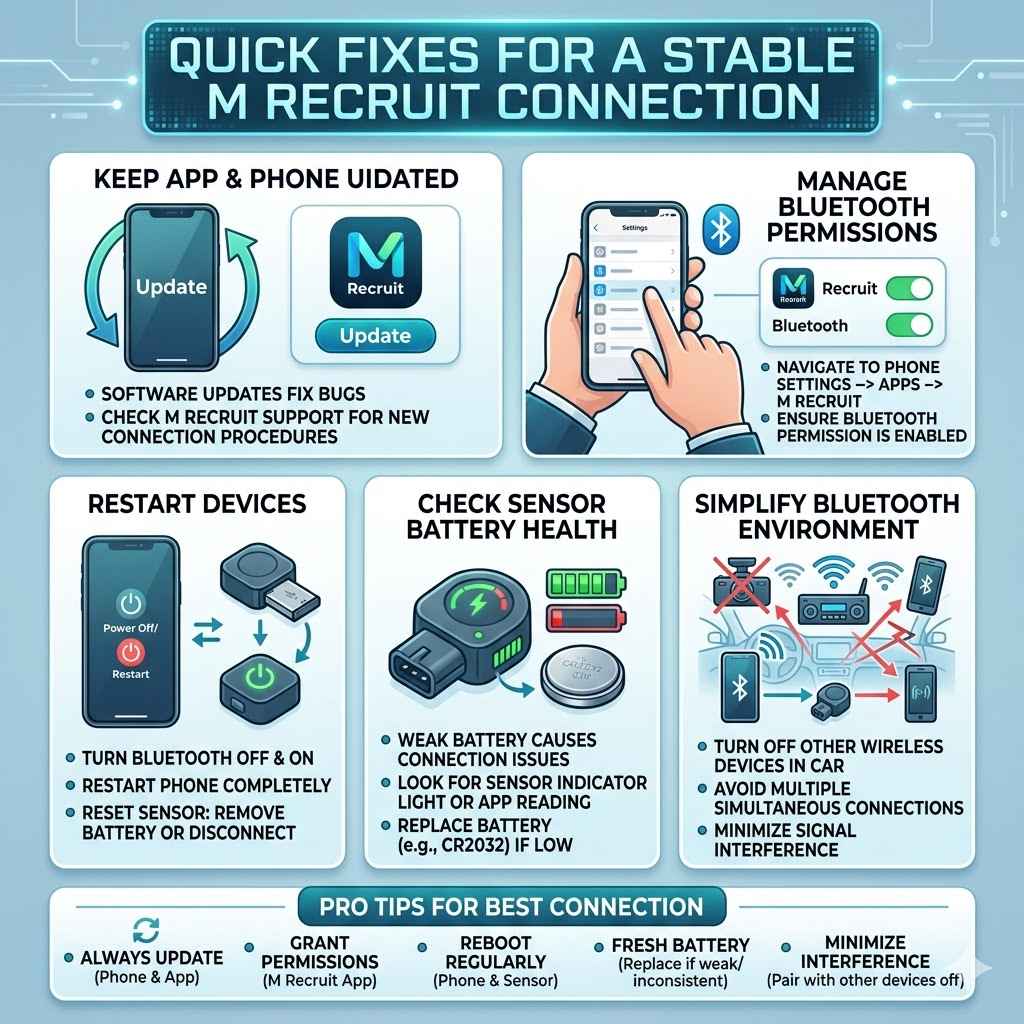
Keep Your App and Phone Updated
Software updates are like tune-ups for your phone and apps. They often contain bug fixes and performance improvements. Ensure your smartphone’s operating system is up-to-date.
Also, regularly check for updates to the M Recruit app in your app store.
Sometimes, an app update might change how it interacts with Bluetooth devices. If you recently updated M Recruit and are having trouble, check the app’s release notes or support page. The developers might mention new connection procedures.
Manage Bluetooth Permissions
Your phone needs to allow M Recruit to use Bluetooth. If you denied this permission when you first installed the app, it won’t work. Go to your phone’s Settings menu.
Find “Apps” or “Application Manager.” Locate M Recruit. Then, look for “Permissions” and make sure “Bluetooth” is enabled.
If you’re not sure, it’s often safe to toggle the permission off and then back on. This can reset the connection permissions. Always ensure the app has the necessary access to function correctly.
Restart Devices
It sounds simple, but restarting devices often resolves many temporary glitches. If your sensor isn’t connecting, try turning your phone’s Bluetooth off and on again. If that doesn’t work, restart your phone completely.
For the sensor, if it has a removable battery, take it out for 30 seconds, then put it back in. This can reset the sensor’s internal electronics. If it’s wired, you might try disconnecting and reconnecting it.
A full restart can clear temporary errors in both the sensor and the app.
Check Sensor Battery Health
A weak battery in your car sensor is a prime suspect for connection problems. If the sensor has a low battery, it may not have enough power to transmit a stable signal. Many sensors have an indicator light.
Or the M Recruit app might show the battery level.
If your sensor uses a coin cell battery, like a CR2032, these are relatively inexpensive and easy to replace. If you’ve had the sensor for a while, consider replacing the battery as a preventive measure, especially if you’re experiencing connection issues. Fresh batteries can revitalize a struggling sensor.
Simplify Your Bluetooth Environment
Your car’s cabin can be a busy place for radio signals. Things like dashcams, aftermarket stereos, and even other phones can interfere with Bluetooth. If you’re having trouble connecting, try temporarily turning off other wireless devices in your car.
Also, ensure your phone isn’t connected to multiple Bluetooth devices simultaneously. While some phones can handle multiple connections, it can sometimes lead to conflicts, especially with single-mode Bluetooth devices like many car sensors.
Pro Tips for Best Connection
- Always Update: Keep phone OS and M Recruit app current.
- Grant Permissions: Ensure M Recruit can access Bluetooth.
- Reboot Regularly: Restart phone and sensor to clear glitches.
- Fresh Battery: Replace sensor battery if connection is weak or inconsistent.
- Minimize Interference: Turn off other wireless devices when pairing.
Frequently Asked Questions About Linking Car Sensors
We get a lot of questions about connecting these devices. Here are some of the most common ones.
Do all car sensors work with M Recruit?
No, not all car sensors will work with M Recruit. M Recruit is designed for specific types of Bluetooth-enabled sensors. You must check the product description of your car sensor to ensure it is compatible with M Recruit or similar apps.
How do I know if my car sensor is Bluetooth?
The best way to know is to check the sensor’s packaging or its instruction manual. It will usually clearly state if it uses Bluetooth technology. Some sensors might have a small Bluetooth logo on them.
My sensor is connected, but the M Recruit app shows an error. What should I do?
This can happen if there’s a communication issue between the sensor and the app. Try closing and reopening the M Recruit app. You can also try unpairing the sensor from the app and then re-pairing it.
Ensure your phone’s Bluetooth is also toggled off and on.
Can I connect multiple car sensors to M Recruit at the same time?
This depends on the M Recruit app’s design and your phone’s capabilities. Some apps are built to manage multiple sensors, like a full TPMS kit with four sensors. Others might only support one.
Check the app’s features or settings. Your phone’s Bluetooth might also have limits on simultaneous connections.
What is the range of a Bluetooth car sensor?
The range for most Bluetooth devices, including car sensors, is typically around 30 feet (10 meters). However, this can be affected by obstructions like metal parts of your car or thick walls. For reliable connection, keep your phone relatively close to the sensor, especially during pairing.
I forgot my M Recruit app password. How can I reset it?
If you forgot your password, look for a “Forgot Password” or “Reset Password” link on the M Recruit app’s login screen. You’ll usually need to enter the email address associated with your account. The app will then send you instructions to create a new password.
Is it safe to use a Bluetooth car sensor?
Yes, using a Bluetooth car sensor is generally safe. They use low-power Bluetooth technology. This technology is widely used in many consumer devices.
Ensure you are using reputable brands and follow the installation instructions carefully. It’s always good to be aware of any device that requires permissions on your phone.
Conclusion
Getting your car sensor talking to your phone through M Recruit can seem tricky at first. But by breaking it down into simple steps, it becomes much easier. Remember to check your sensor’s manual.
Make sure Bluetooth is on. And follow the M Recruit app’s guidance.
These sensors offer real benefits. They help keep you safe and informed. They can save you money too.
Don’t let a little technical hurdle stop you. With a bit of patience, you’ll have your Bluetooth car sensor linked up and working in no time. Happy driving!
Products related to this article
Sponsored / affiliate links. As an Amazon Associate I earn from qualifying purchases. I may earn additional commission from eligible campaigns.