How To Put Oil In A Car Jack: Essential Guide
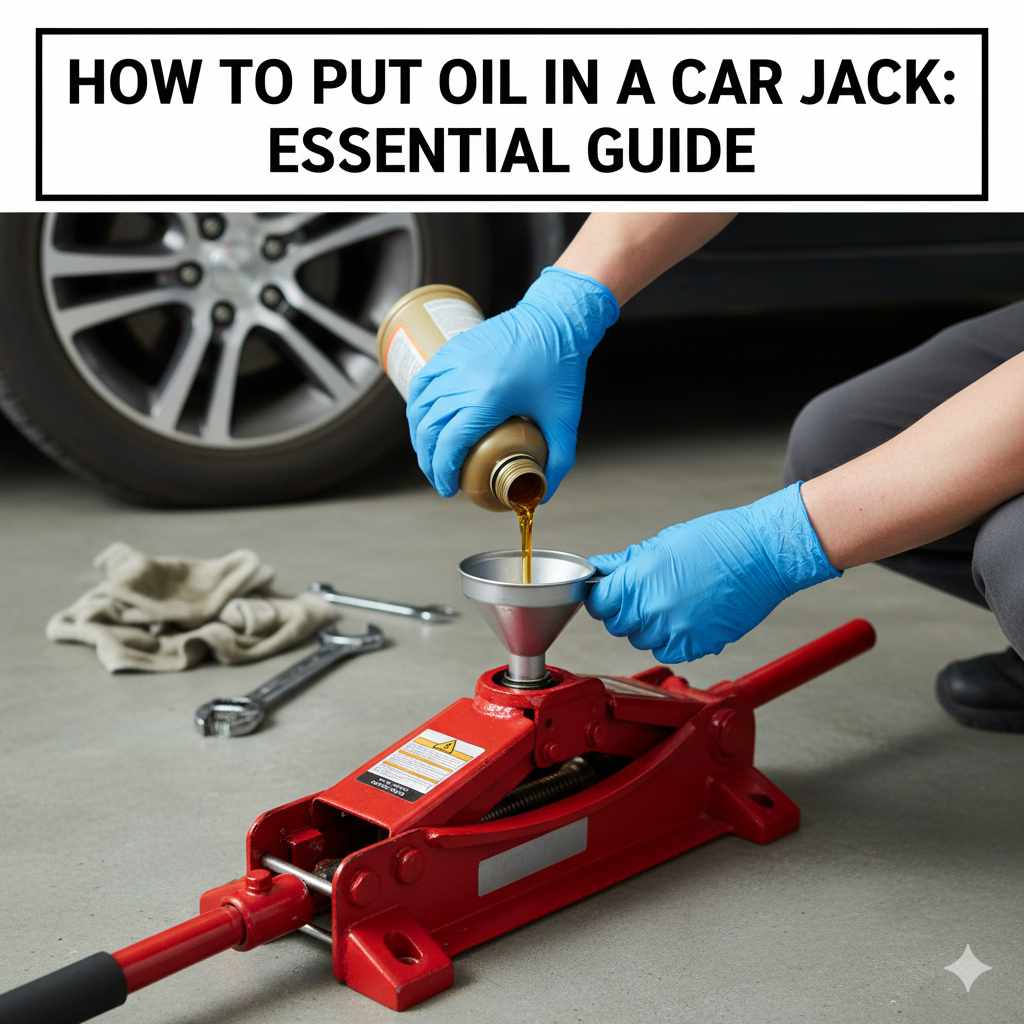
Putting oil in a car jack is a straightforward maintenance task. By following these simple steps, you can ensure your hydraulic jack operates smoothly and safely, ready to lift your vehicle whenever needed. This guide provides a clear, step-by-step approach for beginners, making car maintenance accessible and manageable.
Ever felt that sinking feeling when your car jack struggles to lift your vehicle, or worse, seems to lose pressure? It’s a common issue for many car owners, and often, the solution is simpler than you might imagine. Many hydraulic car jacks, the kind you’d typically find in your trunk or garage, rely on hydraulic fluid to operate. Over time, this fluid can leak out or simply diminish, leading to a sluggish or failing jack. If you’ve noticed your jack isn’t performing like it used to, it might just need a quick top-up of oil. Don’t worry, this isn’t a complicated mechanic’s job!
In this essential guide, I’ll walk you through exactly how to put oil in your car jack. We’ll cover everything you need to know, from identifying the right type of oil to the simple steps for refilling it, ensuring your jack is always reliable and safe for use. Let’s get your jack back in top shape without any fuss!
Your car jack is a critical safety tool. Whether you’re changing a tire on the roadside or performing a simple maintenance task at home, a functioning jack is paramount. Most standard car jacks operate using hydraulics, meaning they rely on the pressure of a fluid to lift heavy objects. Over time, like any mechanical component, these jacks can experience wear and tear. One of the most common issues that lead to poor performance is a low hydraulic fluid level. This can happen due to minor leaks or simply evaporation over extended periods. If your jack feels spongy, struggles to lift, or doesn’t hold its height well, it’s likely in need of more hydraulic oil.
Fear not! Adding oil to your car jack is a surprisingly simple process that most car owners can handle with ease. It doesn’t require specialized tools or advanced mechanical knowledge. The key is to understand which type of oil to use and follow a few straightforward steps. This guide is designed to be your go-to resource, breaking down the process into easy-to-understand instructions. We’ll cover why this maintenance is important, what you’ll need, and the step-by-step procedure. By the end, you’ll have the confidence to perform this essential task yourself, ensuring your jack remains a reliable partner in your car care journey.
Why Does Your Car Jack Need Oil?
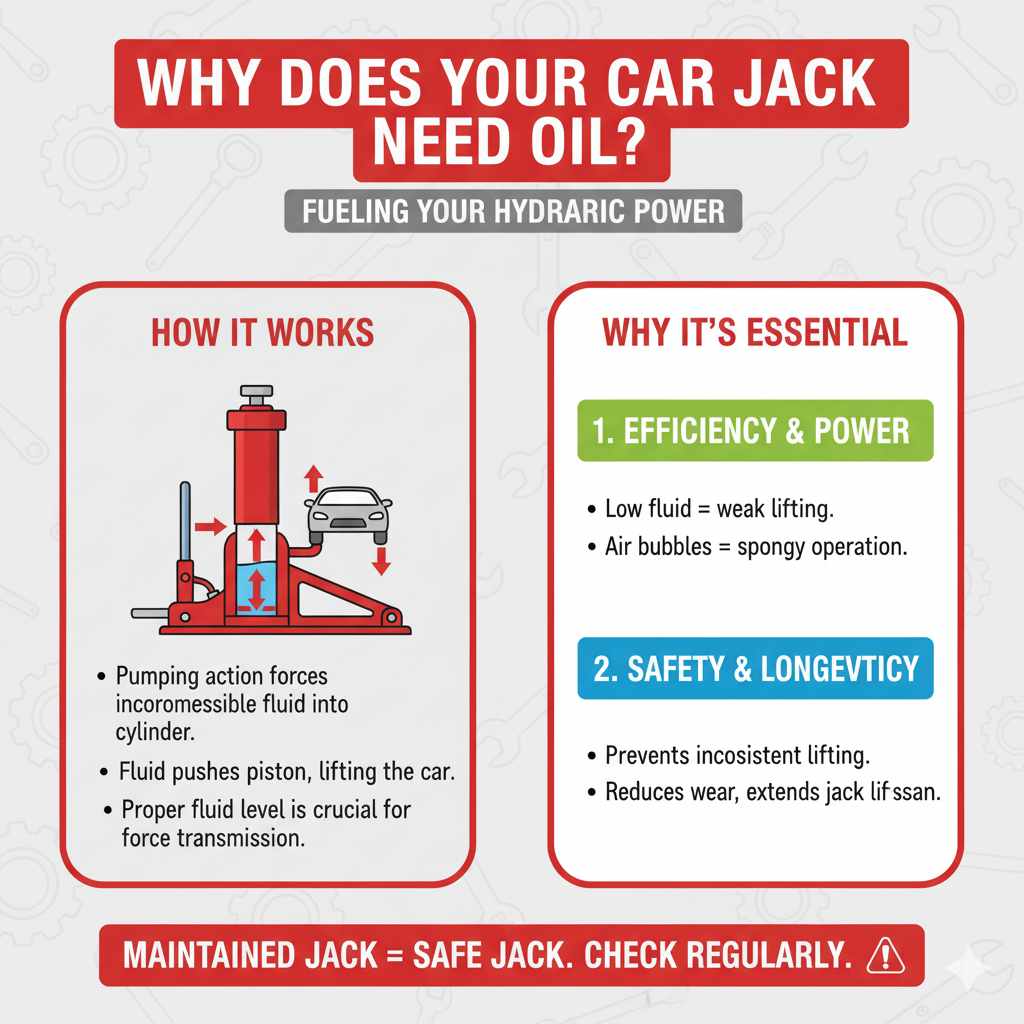
Hydraulic systems, like those in your car jack, work by transmitting force through an incompressible fluid. When you pump the handle of a hydraulic jack, you are forcing this fluid into a cylinder, which pushes a piston upwards, lifting your car. This fluid needs to be at the correct level and free of air bubbles to function efficiently. If the oil level drops too low, the jack won’t be able to generate enough force, or it might suck in air, causing the spongy, hesitant operation you might have experienced. Think of it like the oil in your car’s engine; without enough, things start to wear out and don’t work properly.
Regular checks and occasional refills are part of basic maintenance that can significantly extend the lifespan of your jack and, more importantly, ensure your safety. A well-maintained jack is a safe jack. Low fluid levels can lead to inconsistent performance, making it difficult to control the lift and descent of your vehicle, which can be a dangerous situation. So, understanding why your jack needs oil is the first step to keeping it in optimal working condition.
When Should You Add Oil to Your Car Jack?
The most obvious sign that your car jack needs oil is a noticeable decrease in its lifting performance. If pumping the handle feels unusually easy and the jack doesn’t lift your vehicle efficiently, it’s time to check the fluid level. Other indicators include:
- Spongy Operation: When you pump the handle, the jack might feel soft or “spongy” instead of firm and responsive. This often means there’s air in the system, usually due to low fluid.
- Slow Descent: If the jack slowly lowers on its own when it’s supposed to stay in place, it could be a sign of a leak or low fluid.
- Visible Leaks: Sometimes, you might see traces of hydraulic fluid around the seals of the jack.
- Lack of Full Extension: The jack might not reach its maximum lifting height even when fully pumped.
- Infrequent Use: Even if you don’t notice any performance issues, it’s good practice to check and top up the oil at least once a year, especially if the jack is stored in extreme temperatures, which can affect fluid levels.
Don’t wait for a critical situation, like needing to change a tire on the side of a busy road, to discover your jack isn’t working. Perform these checks proactively.
Types of Hydraulic Fluid for Car Jacks
This is a crucial point. Using the wrong type of hydraulic fluid can damage your jack. Most common hydraulic floor jacks and bottle jacks use either:
- Hydraulic Jack Oil: This is specifically formulated for hydraulic jacks and is often the best choice. It’s designed to work with the seals and metals commonly found in jacks and maintain viscosity across a range of temperatures.
- General Purpose Hydraulic Fluid (ISO 32 or ISO 46): Many manufacturers recommend a general hydraulic fluid. The ISO viscosity grade is important. ISO 32 is a common recommendation for many jacks, while ISO 46 is for slightly heavier-duty or warmer climate applications. Always check your jack’s manual if you have it.
- Automatic Transmission Fluid (ATF – Type A or Dexron III): Some older jacks or specific models might recommend ATF. Again, consult your jack’s manual.
What to Avoid: Do NOT use motor oil, brake fluid, or power steering fluid unless your jack’s manual specifically states to do so. These fluids have different properties and can degrade the seals, causing leaks and further damage.
How to Determine the Right Fluid
The best place to find out exactly what type of oil your jack needs is to:
- Check the Jack’s Manual: This is the most reliable source of information. Look for a section on maintenance or specifications.
- Look for Labels on the Jack: Sometimes, manufacturers will put a sticker near the oil fill cap specifying the fluid type.
- Manufacturer’s Website: If you know the brand and model of your jack, visiting the manufacturer’s website can provide technical specifications and maintenance guides.
- Consult a Professional: If you can’t find this information and are unsure, a local automotive parts store or a mechanic can often help identify the correct fluid based on the jack’s appearance and type.
When in doubt, opt for a dedicated hydraulic jack oil. It’s widely available and generally safe for most hydraulic jacks.
What You’ll Need
Gathering your supplies before you start will make the process much smoother. Here’s a list of what you’ll likely need:
- Hydraulic Fluid: The correct type and quantity as determined by your jack’s manual or manufacturer. A quart or liter is usually more than enough for a refill.
- Funnel: A small, clean funnel that fits into the oil fill port.
- Container for Old Fluid (if draining): A small pan or container to catch any old fluid if you need to drain it.
- Wrench or Allen Key: To open the oil fill plug. The size will depend on your jack.
- Clean Cloths or Paper Towels: For wiping up spills and cleaning the area.
- Gloves: To keep your hands clean and provide a better grip.
- Safety Glasses: To protect your eyes from any splashes.
Ensure all your tools are clean. Any dirt or debris introduced into the hydraulic system can cause significant damage.
Step-by-Step Guide: How to Put Oil in a Car Jack
Let’s get this done! Follow these steps carefully for a successful oil refill:
Step 1: Prepare Your Workspace and Jack
Find a clean, level, and well-lit area to work. Ensure your car is parked on a flat, stable surface, and engage the parking brake. If the jack has been recently used, let it cool down completely. Place the jack on a solid, level surface. The jack should be in its lowest possible position. To achieve this, you’ll need to locate and open the release valve. This is usually a small screw or lever. Gently turn it counter-clockwise to lower the ram fully.
Step 2: Locate the Oil Fill Port
Examine your jack. Most hydraulic jacks have a designated oil fill port. It’s typically a threaded plug, often with a small rubber or metal cap. This port is usually located on the side of the body, near the main cylinder or pump assembly, sometimes near the handle mechanism. It might be labeled with “Oil,” “Fill,” or have a similar marking.
Step 3: Open the Fill Port
Using the appropriate wrench or Allen key, carefully unscrew the oil fill plug. Be prepared for a small amount of fluid to potentially seep out if the jack is very full or has been stored at an angle. Have your clean cloth or paper towels ready to catch any drips. If you plan to drain the old fluid first (usually only necessary if it looks contaminated or you suspect significant air in the system), now is the time to place your collection pan underneath the port.
Step 4: Check and Drain Old Fluid (If Necessary)
If the fluid inside looks dirty, milky, or contaminated with water, it’s best to drain it. Tilt the jack to let the old fluid drain completely into your collection container. Once drained, re-tighten the fill plug temporarily. If the fluid looks clean, you can proceed directly to refilling.
Step 5: Add the New Hydraulic Fluid
Insert your clean funnel into the oil fill port. Slowly and carefully pour the new hydraulic fluid into the jack. Do not overfill. Most jacks have a fill line indicating the correct level, or you can aim to fill it until the fluid is about 1/2 inch (1-2 cm) below the fill port opening. Overfilling can cause pressure issues and leaks.
Tip: It’s better to add slightly less fluid and check the operation, then add more if needed, rather than overfilling.
Step 6: Bleed Air from the System
After refilling, you need to remove any air that may have entered the system. This process is called “bleeding.”
- Ensure the release valve is closed (tighten it clockwise).
- Pump the jack handle a few times (about 5-10 full pumps). You might feel some resistance or lack thereof if air is present.
- Open the release valve again (counter-clockwise) to lower the ram completely.
- Close the release valve.
- Repeat the pumping and lowering process several times (e.g., 5-10 cycles).
You should feel the resistance in the handle become more consistent and firm as the air is purged and the fluid circulates properly. If the jack still feels spongy or sluggish after several cycles, you may need to add a little more fluid or repeat the bleeding process.
Step 7: Secure the Fill Port Plug
Once you’re satisfied with the fluid level and the jack has been bled, carefully remove the funnel. Clean any spilled fluid from the fill port area. Screw the oil fill plug back in securely, ensuring it’s snug but not overtightened, which could strip the threads. If there was a cap, replace it.
Step 8: Test the Jack
Before relying on the jack for any serious lifting, test its operation. Pump the handle to raise the jack to its full height and ensure it lifts smoothly and holds its position. Then, slowly open the release valve to lower it completely. If it operates smoothly in both directions and holds pressure, your jack is ready. If it still feels off, re-check the fluid level and repeat the bleeding process.
It’s essential to understand that while this process is generally straightforward, some jacks might have specific quirks or designs. Always prioritize safety and consult your jack’s manual if you encounter any difficulties.
Maintenance Tips for Your Car Jack
To ensure your jack remains in peak condition and ready whenever you need it, follow these maintenance tips:
- Regular Inspections: Periodically check the jack for any signs of damage, leaks, or corrosion.
- Keep it Clean: Wipe down your jack with a clean cloth after each use to remove dirt, grease, and road salt, which can accelerate corrosion.
- Store Properly: Store your jack in a dry place. If possible, keep it in its original case or a protective bag to prevent dust and debris from accumulating on moving parts. Keep it in the lowest possible position when not in use.
- Check Fluid Annually: Even if you don’t notice any problems, it’s a good idea to check the hydraulic fluid level and condition at least once a year.
- Avoid Overloading: Always ensure you are not exceeding the weight capacity of your jack. Using a jack that is too small for the job can lead to catastrophic failure.
These simple steps will help prolong the life of your jack and ensure it operates safely and reliably for years to come. For more detailed information on automotive maintenance, resources like the National Highway Traffic Safety Administration (NHTSA) offer valuable safety tips and guidelines for vehicle owners.
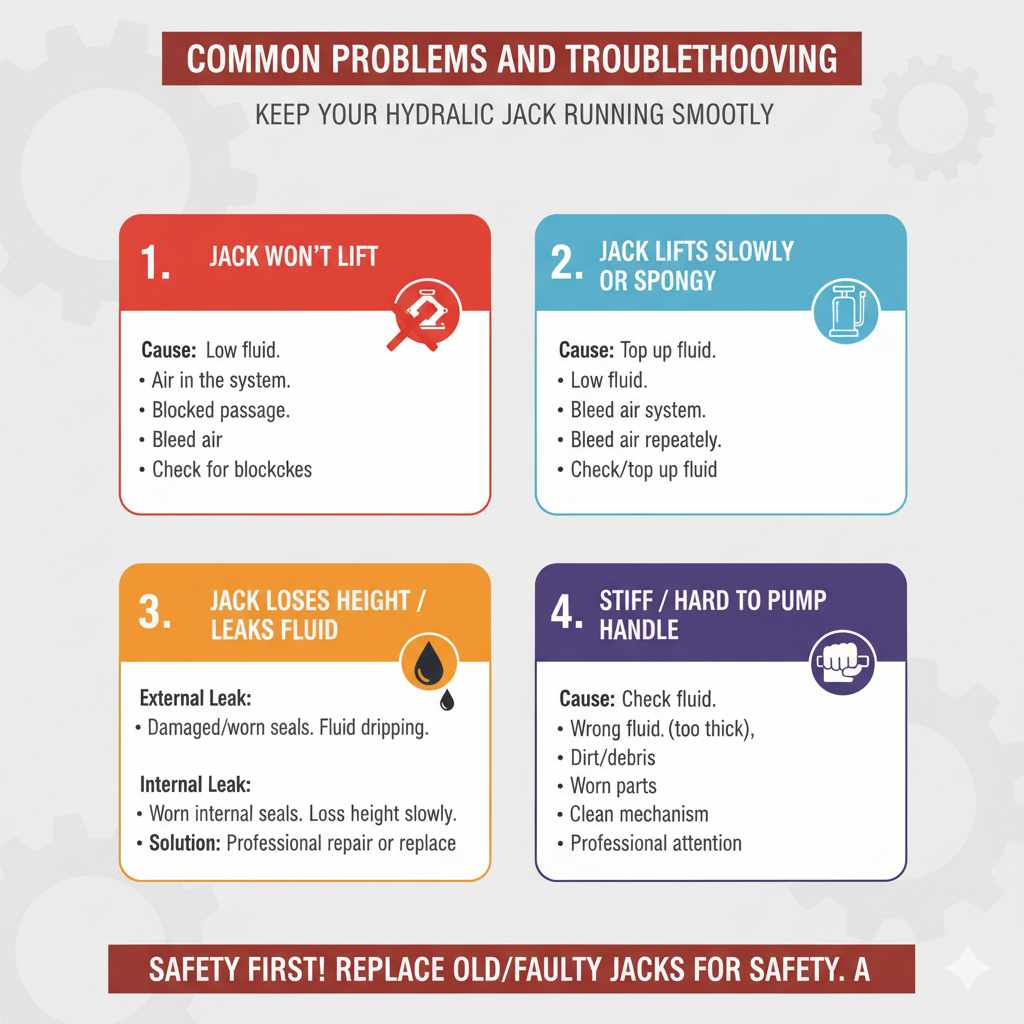
Common Problems and Troubleshooting
Even with proper maintenance, you might encounter issues with your hydraulic jack. Here’s a look at some common ones and how to address them:
Problem: Jack Won’t Lift
- Cause: Low fluid level, air in the system, or a blocked internal passage.
- Solution: Check fluid level and top up if necessary. Bleed the air from the system thoroughly. Inspect the oil fill port and cylinder for any obvious blockages.
Problem: Jack Lifts Slowly or Feels Spongy
This is usually a classic sign of air in the hydraulic system or a low fluid level. Perform multiple cycles of pumping and bleeding as described in Step 6. If it persists, check and top up the fluid.
Problem: Jack Loses Height or Leaks Fluid
This usually indicates a leak.:
- External Leak: Inspect the seals around the piston rod and the body of the jack. If you see fluid dripping, the seals might be damaged or worn and may need replacement. This can be a complex repair, and sometimes it’s more economical to replace the jack.
- Internal Leak: The jack might still lift but slowly lose height or fail to hold its position. This could be due to worn internal seals.
For minor external leaks at the fill port itself, ensure the plug is tightened properly. For more significant leaks, consulting the manufacturer or considering a replacement might be best for safety.
Problem: Jack Handle is Stiff or Hard to Pump
This can be caused by several factors:
- Low Fluid: Again, check the fluid level.
- Wrong Fluid: Using a fluid that is too thick, especially in cold temperatures, can make pumping difficult.
- Dirt or Debris: The pumping mechanism might be clogged. Try cleaning the exterior of the jack.
- Worn Parts: Internal components might be worn, requiring professional attention or replacement.
Recommendation: If your jack is old, extensively used, or showing persistent problems, it might be more cost-effective and safer to replace it rather than attempt extensive repairs, especially for essential safety equipment like a car jack. Reputable sources like automotive supply stores offer a wide range of reliable jacks.
Frequently Asked Questions (FAQ)
How often should I put oil in my car jack?
You don’t necessarily need to add oil regularly. Check the fluid level at least once a year or before any critical use. Add oil only when you notice a decrease in performance or see signs of leaks. Overfilling can be as detrimental as underfilling.
Can I use any type of oil in my car jack?
No, you must use the specific type of hydraulic fluid recommended by the jack’s manufacturer. This is usually hydraulic jack oil or a specific viscosity of general hydraulic fluid (like ISO 32). Using motor oil, brake fluid, or other types can damage the jack’s seals and internal components.
My jack feels spongy. What does that mean?
A spongy feel when pumping the handle usually means there is air in the hydraulic system. This often happens when the fluid level is low and the pump mechanism starts drawing air instead of fluid. Bleeding the system is the primary solution.
How much hydraulic fluid do I need to add?
You typically only need to add enough fluid to bring the level up to the recommended line, usually about 1/2 inch to 1 inch below the fill port. Don’t fill it to the brim. A small bottle of jack oil is often sufficient for multiple top-ups over the jack’s lifetime.
Is it okay to use a jack that is leaking a little oil?
It’s best to address minor leaks immediately. If your jack is leaking hydraulic fluid, it means its internal seals are compromised. Continued use of a leaking jack can lead to further damage, reduced performance, and most importantly, a safety hazard when lifting your vehicle. It might be time to consider a replacement.
Where is the oil fill plug usually located on a car jack?
The oil fill plug is typically a threaded cap located on the main body of the jack, often on the side, near the hydraulic cylinder or the pump mechanism. It might be labeled with “OIL,” “FILL,” or a similar indicator.
Do I need to drain the old fluid every time I add new oil?
No, you typically only need to drain the old fluid if it appears contaminated (e.g., milky, dark, or contains visible debris). If the fluid is clean, simply topping it up is usually sufficient. After adding fluid, remember to bleed any air out of the system.
Conclusion
Taking care of your car jack is an essential part of DIY car maintenance, and thankfully, putting oil in it is a manageable task for any car owner. By understanding the role of hydraulic fluid, identifying the correct type of oil, and following the simple step-by-step process for refilling and bleeding the system, you can ensure your jack is always ready to perform safely and effectively. Remember to perform regular checks and maintenance, like keeping it clean and stored properly, to extend its lifespan.
Don’t let a sluggish or unreliable jack add stress to a tire change or repair. With this essential guide, you’ve gained the knowledge and confidence to maintain this vital piece of equipment yourself. A well-maintained jack is a crucial safety tool that provides peace of mind every time you need to lift your vehicle. So, next time you hear that slight groan or feel that spongy resistance, you’ll know exactly what to do. Happy motoring, and stay safe on the road!