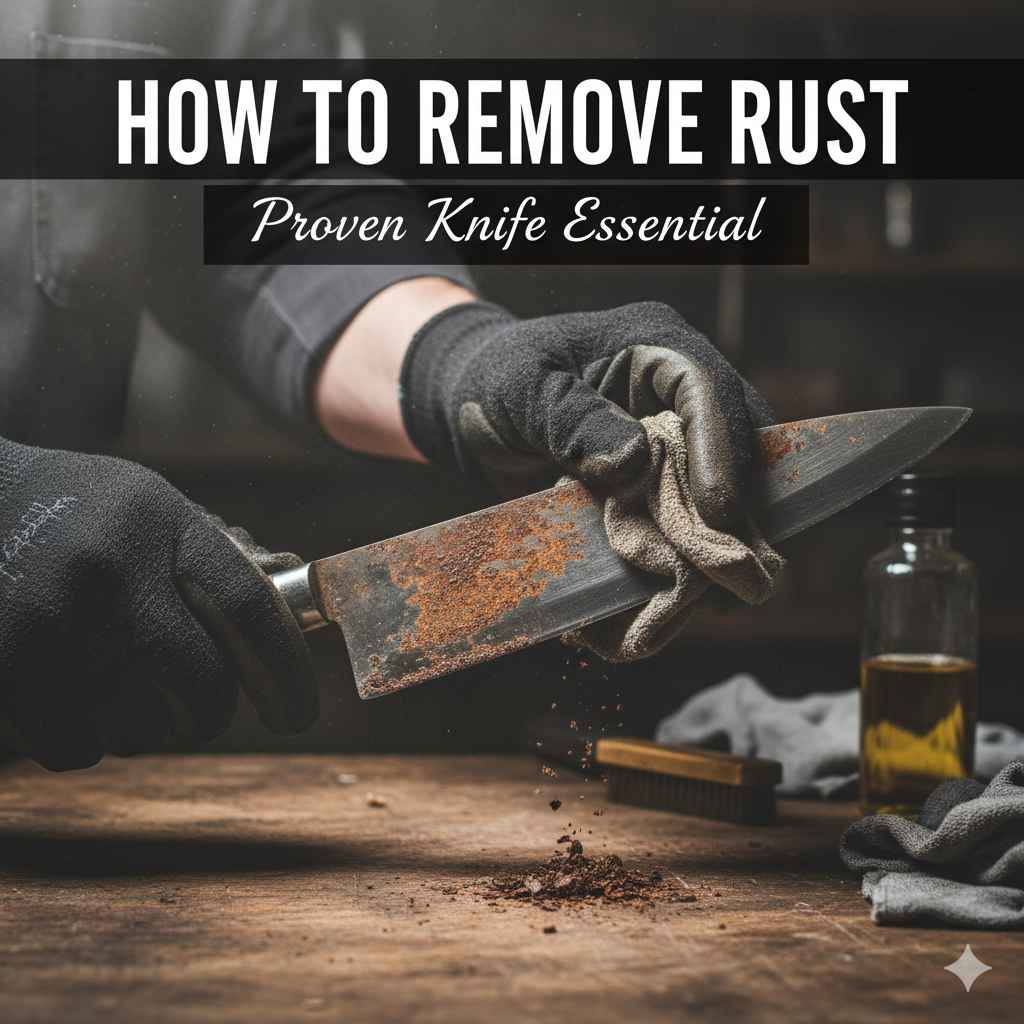
How to Remove Rust: Proven Knife Essential
Don’t let rust ruin your favorite knives! This guide shows you easy, effective ways to remove rust from carbon steel knives using simple household items. Get your blades shining like new with our step-by-step solutions.
Every cook knows the frustration of finding tiny orange spots on a beloved knife. Rust, especially on carbon steel blades, can seem like a daunting problem. It’s not just unsightly; rust can affect your knife’s performance and even safety. But don’t worry! You don’t need to be a professional chef or a tool expert to tackle this. We’ve got your back with straightforward methods that will restore your knives to their former glory. Get ready to say goodbye to rust and hello to perfectly sharp, beautiful blades.
Why Does Rust Appear on Kitchen Knives?
Rust on carbon steel knives is a common issue, and it happens for a few simple reasons. Carbon steel is a fantastic material for knives because it holds an edge incredibly well and is easy to sharpen. However, it’s also more reactive to moisture and acids than stainless steel.
Think of it like this: when the iron in the steel comes into contact with oxygen and moisture, a chemical reaction occurs, creating iron oxide – rust. This is why your knives are most at risk:
- Leaving them wet: The biggest culprit is often leaving a knife to air dry after washing, or even worse, leaving it sitting in a sink full of water.
- High humidity: Storing your knives in a very humid environment can accelerate rust formation over time.
- Acidic foods: While not as common for causing rust, prolonged contact with acidic foods (like tomatoes, citrus, or onions) without immediate cleaning can weaken the protective layer on the steel, making it more susceptible to rust if left wet afterwards.
- Dishwashers: Never, ever put a carbon steel knife in the dishwasher! The harsh detergents, high heat, and prolonged moisture exposure are a recipe for rust and can damage the handle too.
Understanding these triggers is the first step to preventing future rust. But what if the rust is already there? That’s where our proven removal methods come in!
Proven Methods to Remove Rust from Your Carbon Steel Knife
You’ve got options when it comes to rust removal, and many of them use items you might already have in your kitchen or garage. We’ll walk through some of the most effective and beginner-friendly techniques. Always remember to work safely and gently to avoid damaging your blade.
Method 1: The Baking Soda Paste (Gentle & Effective)
Baking soda is a mild abrasive and a great cleaner. It’s perfect for light to moderate rust because it can scrub away the rust without being too harsh on the steel.
What You’ll Need:
- Baking soda
- Water
- A soft cloth or sponge (non-abrasive)
- A toothbrush (optional, for nooks and crannies)
- Dry paper towels or a microfiber cloth
Steps:
- Clean the Knife: First, wash your knife with mild soap and water to remove any food debris. Dry it thoroughly.
- Make the Paste: In a small bowl, mix baking soda with a little water. You want to create a thick paste, similar in consistency to toothpaste.
- Apply the Paste: Generously apply the baking soda paste to the rusted areas of the knife blade. Make sure the rust is well-covered.
- Let it Sit: Allow the paste to sit on the rust for about 30-60 minutes. This gives the baking soda time to work on breaking down the rust. For tougher spots, you might leave it a bit longer.
- Gently Scrub: Using your soft cloth or sponge, gently scrub the rusted areas in a back-and-forth motion along the length of the blade. For any hard-to-reach spots, a toothbrush can be helpful. Be patient and avoid scrubbing too hard, which could scratch the blade.
- Rinse and Dry: Rinse the knife thoroughly under running water to remove all the baking soda paste and loosened rust. Immediately dry the knife completely with a clean, dry cloth or paper towels.
- Inspect and Repeat: Check the blade for any remaining rust. If you still see some spots, you can repeat the process.
- Protect the Blade: Once the rust is gone and the knife is dry, apply a very thin layer of food-grade mineral oil to the blade. This helps to protect it from future rust. You can learn more about knife care and maintenance from resources like The Cooking Channel’s guide to knife care.
Method 2: The Vinegar Soak (For MoreStubborn Rust)
White vinegar is acidic and can work wonders on tougher rust spots. However, it’s a bit stronger, so it’s best used for rust that baking soda can’t tackle alone. Be careful not to leave the knife in the vinegar for too long, as it can start to etch the steel if left unattended.
What You’ll Need:
- White vinegar
- Water
- A shallow dish or container (large enough to hold the blade)
- A soft cloth or sponge
- Baking soda (optional, for neutralizing)
- Dry paper towels or a microfiber cloth
- Food-grade mineral oil
Steps:
- Clean and Dry: Wash and dry your knife thoroughly.
- Prepare the Soak: In your shallow dish, mix equal parts white vinegar and water. A 50/50 solution is usually effective.
- Submerge the Blade: Carefully place the rusted part of your knife blade into the vinegar and water solution. Do not submerge the handle, especially if it’s made of wood.
- Monitor Closely: Let the blade soak for no more than 30 minutes. Check it every 10-15 minutes. You should see the rust starting to loosen and lift.
- Scrub Gently: Remove the knife from the solution. Use your soft cloth or sponge to gently scrub away the loosened rust. You can also use a toothbrush.
- Neutralize and Rinse: Once you’ve scrubbed away the rust, rinse the knife immediately under cold water. To neutralize any remaining acetic acid from the vinegar, you can make a quick baking soda and water paste and apply it to the blade for a minute or two before rinsing again.
- Dry Completely: This is crucial! Dry the knife immediately and thoroughly with a clean cloth.
- Oil the Blade: Apply a thin coat of food-grade mineral oil to protect the blade.
Method 3: The Potato Trick (Surprisingly Effective for Light Rust)
This is a clever hack for dealing with very light rust. Potatoes contain oxalic acid, which can help break down rust. It’s a gentle method and doesn’t require any special supplies.
What You’ll Need:
- A raw potato
- A clean knife
- A soft cloth
- Food-grade mineral oil
Steps:
- Cut the Potato: Cut a raw potato in half.
- Sharpen the Edge: Insert the rusted part of your knife blade into the cut side of the potato.
- Let it Sit: Leave the knife inserted for a few hours, or even overnight for stubborn spots. The oxalic acid in the potato will work on the rust.
- Remove and Wipe: Pull the knife out of the potato. You should see that the rust has softened. Use a soft cloth to wipe away the rust.
- Rinse and Dry: Rinse the blade with water and dry it immediately and thoroughly.
- Oil Up: Apply a thin layer of food-grade mineral oil.
Method 4: Steel Wool or Fine-Grit Sandpaper (Use with Caution!)
For stubborn rust that won’t budge with gentler methods, you can resort to abrasive materials like fine-grit steel wool (0000 grade is best) or very fine-grit sandpaper (400 grit or higher). This method should be used with extreme care, as it can scratch the blade if you’re not gentle.
What You’ll Need:
- Fine-grit steel wool (grade 0000) or fine-grit sandpaper (400+ grit)
- A small amount of oil (mineral oil or even vegetable oil)
- A soft cloth
- Water
- Dry paper towels or microfiber cloth
- Food-grade mineral oil
Steps:
- Clean and Dry: Wash and dry your knife.
- Apply Lubrication: Put a drop of oil onto the steel wool or sandpaper. This helps to lubricate the surface and reduce the risk of scratching.
- Gentle Rubbing: Carefully and gently rub the rusted areas with the oiled steel wool or sandpaper. Work with the grain of the steel if possible. Use very light pressure.
- Check Progress: Frequently wipe away debris with a cloth and check your progress. Stop as soon as the rust is gone to avoid damaging the blade’s finish.
- Rinse and Wash: Once the rust is removed, wash the knife thoroughly with soap and water to remove any residue from the steel wool or sandpaper.
- Dry Immediately: Dry the knife completely and immediately.
- Oil Protection: Apply a good coat of food-grade mineral oil.
Method 5: Specialized Rust Removers (For Serious Cases)
There are commercial rust removers available, often found in hardware stores or online. These can be very effective, but it’s important to choose one that is safe for kitchen knives and follow the manufacturer’s instructions precisely. Always ensure the product is labeled as food-safe or non-toxic for kitchen use.
What You’ll Need:
- A food-safe or non-toxic metal rust remover
- Gloves (recommended)
- Safety glasses (recommended)
- Soft cloths
- Water
- Food-grade mineral oil
Steps:
- Read Instructions: Carefully read and follow the product’s instructions.
- Safety First: Wear gloves and safety glasses if recommended by the product.
- Apply to Rust: Apply the rust remover to the affected area as directed.
- Wait and Scrub: Let it sit for the recommended time, then gently scrub with a soft cloth or sponge.
- Rinse Thoroughly: Rinse the blade very well with clean water to remove all traces of the chemical.
- Neutralize if Advised: Some products may require neutralization, so check the instructions.
- Dry Intensely: Dry the knife immediately and completely.
- Oil for Protection: Apply food-grade mineral oil generously.
Choosing the Right Method for Your Knife
Deciding which rust removal method to use depends on the severity of the rust and what you have on hand. Here’s a quick look at how they stack up:
| Method | Best For | Gentleness | Ease of Use | Supplies Needed |
|---|---|---|---|---|
| Baking Soda Paste | Light to moderate rust | High | Easy | Baking soda, water, cloth |
| Vinegar Soak | Moderate to stubborn rust | Medium | Easy | White vinegar, water, container, cloth |
| Potato Power | Very light rust | Very High | Very Easy | Potato, cloth |
| Steel Wool/Sandpaper | Stubborn rust, not responding to others | Low (risk of scratching) | Moderate | Fine steel wool/sandpaper, oil, cloth |
| Specialized Removers | Severe rust | Varies (check product) | Moderate | Rust remover, cloths, oil |
For everyday cooks, the baking soda paste and vinegar soak are usually your best bets. They are accessible, effective, and relatively safe. Always start with the gentlest approach first!
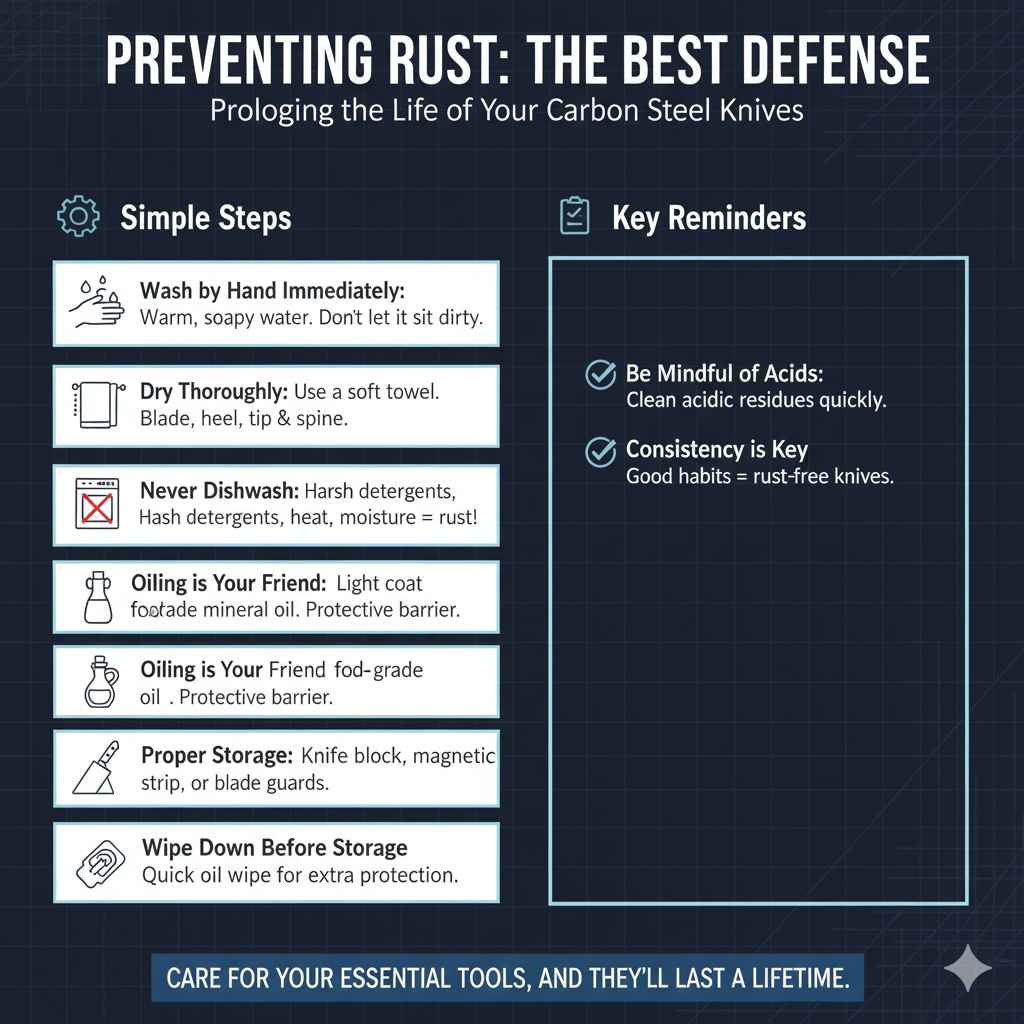
Preventing Rust: The Best Defense
The easiest way to deal with rust is to prevent it from forming in the first place! Keeping your carbon steel knives in top condition is all about a few good habits. These simple steps will save you a lot of time and effort in the long run.
- Wash by Hand Immediately: After each use, wash your knife by hand with warm, soapy water. Don’t let it sit dirty.
- Dry Thoroughly: This is the most critical step. Use a soft towel (like a microfiber cloth) to dry the blade completely, from the heel to the tip, and don’t forget the spine.
- Never Dishwash: As we mentioned, dishwashers are the enemy of carbon steel knives.
- Oiling is Your Friend: For carbon steel knives, a light coat of food-grade mineral oil after drying can create a protective barrier against moisture. You don’t need much – just a thin sheen.
- Proper Storage: Store your knives in a way that prevents the blades from touching each other or other metal objects. A knife block, magnetic strip, or blade guards are excellent options. Avoid storing them loosely in a drawer.
- Wipe Down Before Storage: If you won’t be using a knife for a while, give it a quick wipe with oil before storing it to add an extra layer of protection.
- Be Mindful of Acids: While not a direct cause of rust, cleaning acidic residues quickly can help maintain the blade’s surface.
By incorporating these simple practices into your routine, you can keep your carbon steel knives rust-free and performing beautifully for years to come. Think of it as giving your essential kitchen tools the care they deserve.

Frequently Asked Questions
Q1: Will vinegar damage my carbon steel knife?
A: Vinegar is acidic, so prolonged exposure can etch or dull the blade’s surface. It’s important to use it in a diluted solution and only soak for short periods (30 minutes maximum). Always rinse and neutralize with baking soda afterwards, and dry it thoroughly.
Q2: Can I use lemon juice to remove rust?
A: Yes, lemon juice contains citric acid, which can also help with rust removal, similar to vinegar. It’s a mild acid and can be an alternative if you don’t have vinegar. Use it in a similar way: apply, let sit briefly, scrub, rinse, and dry thoroughly.
Q3: How often should I oil my carbon steel knife?
A: It’s a good practice to apply a thin layer of food-grade mineral oil after every wash and dry, especially if you notice the blade looking dull or dry. If you use your knife daily, a light oiling every few days or weekly is usually sufficient for protection.