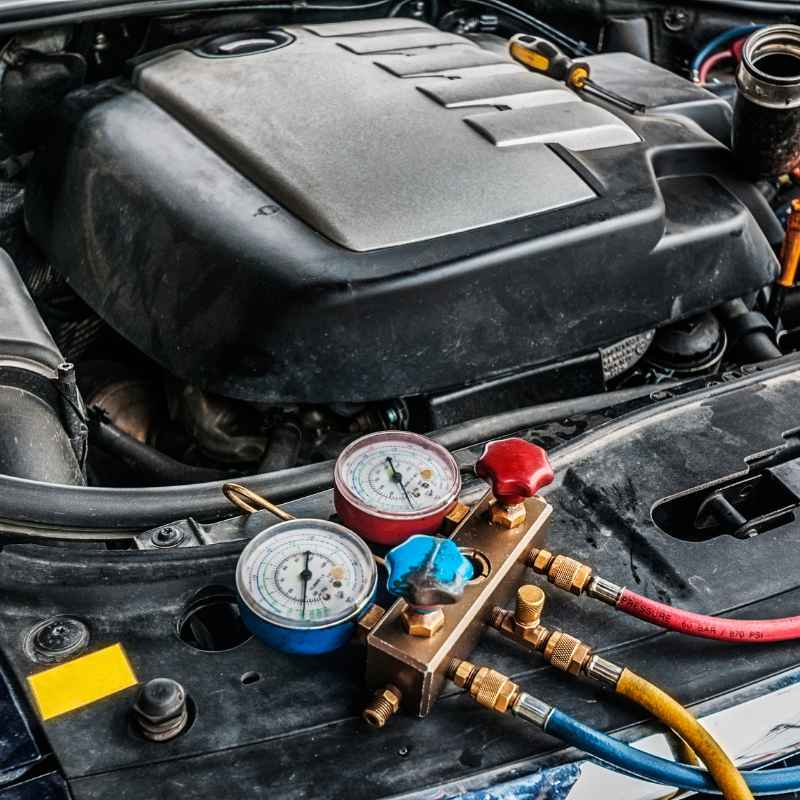
Does Freon Run Out in a Car? The Honest Answer Explained
Does Freon run out in a car is a question almost every driver asks when their AC starts blowing warm air. The honest answer is yes, but only because it escapes through leaks, not because it gets used up.
This guide explains how car refrigerant works, why it disappears, and exactly what you should do to fix it permanently.
Simply put, Freon does not “run out” like gasoline. Your car’s AC system is a sealed, closed loop. If the refrigerant level is low, it means there is a leak somewhere in the system. Refrigerant only needs to be replaced if it has actually escaped.
Key Takeaways
- Freon does not run out naturally in a properly sealed car AC system.
- Low refrigerant always points to a leak in the AC system that needs repair.
- Ignoring low Freon levels will eventually ruin your AC compressor.
- Professional leak repair is more cost-effective than repeatedly using DIY recharge kits.
What Does Freon Do in Your Car’s AC System?
Freon, technically known as refrigerant, is the lifeblood of your car’s air conditioning system. It cycles through a sealed loop, changing from liquid to gas and back again to absorb heat from the cabin and release it outside.
Without the correct amount of refrigerant, the AC compressor cannot build enough pressure to cool the air effectively. The system relies on a precise chemical balance to function.
- Absorbs heat from the cabin air as it evaporates.
- Lubricates the compressor seals and internal moving parts.
- Circulates continuously through the closed-loop system.
- Regulates pressure to maintain optimal cooling performance.
- Carries oil that keeps the entire system running smoothly.
Every component in the AC system is designed to keep the refrigerant contained. When everything is working, the system never needs a top-up.
So, Does Freon Run Out in a Car Naturally?
The direct and honest answer is no. Unlike engine oil or coolant, refrigerant is not consumed during normal operation. The AC system is a completely sealed, closed loop with no exhaust or combustion.
If your system is low on Freon, it means there is a breach. Even microscopic leaks over months or years can cause all the refrigerant to escape entirely.
| Myth | Fact |
|---|---|
| Freon naturally depletes like fuel. | Freon is not consumed; it recirculates. |
| All cars need refills every 2 years. | A sealed system doesn’t need refills unless there is a leak. |
| Low Freon is normal for older cars. | Leaks are common but still abnormal and need repair. |
Understanding this distinction saves you money. You don’t need a routine “top-up” — you need a proper leak diagnosis from a qualified technician.
Why Does Car AC Freon Get Low Over Time?
Since Freon does not run out naturally, a low level always means the refrigerant has escaped through a leak. The most common culprits are tiny failures in the system’s rubber seals or metal components.
Under the hood, constant vibration and extreme temperature changes cause seals to shrink, harden, and crack. Over years of use, these microscopic gaps become pathways for Freon to seep out into the atmosphere.
- A/C Compressor Shaft Seal Leak: This is the most common failure point on high-mileage vehicles.
- Condenser Damage: Small rocks and road debris easily puncture the thin aluminum fins.
- Evaporator Corrosion: Moisture buildup inside the dashboard slowly rusts the evaporator core.
- O-Ring Deterioration: Rubber O-rings at every hose connection dry out and lose their seal.
- Schrader Valve Failure: The valve cores in the service ports can leak just like tire valves.
Warning: Never use “stop leak” additives sold at auto parts stores. These chemical sealants can clog the compressor and cause total AC system failure.
According to the Mobile Air Conditioning Society (MACS), over 85% of AC system failures are directly related to a loss of refrigerant due to leaks. Regular inspections help catch these issues early.
Common Signs Your Car Is Running Out of Freon
Your car gives you clear warnings before the AC system fails completely. Recognizing these signs early can save you from an expensive compressor replacement.
If you notice any of these symptoms, check your refrigerant level or visit a mechanic right away.
| Symptom | What It Means |
|---|---|
| Air is warm or barely cool | Low refrigerant can’t absorb enough heat from the cabin. |
| Hissing sound from dashboard | Refrigerant is actively leaking out of the evaporator. |
| AC compressor clicks on and off rapidly | Low-pressure switch keeps disengaging the clutch to protect the compressor. |
| Visible oily residue on AC fittings | O-rings are leaking refrigerant mixed with compressor oil. |
| Frost on the AC lines | Low refrigerant causes the evaporator to get too cold and freeze. |
Once you spot these signs, do not delay. Running the AC with low Freon forces the compressor to work harder with less lubrication.
What Happens If You Drive With Low Freon?
It is tempting to simply ignore a weak AC system, especially during the winter months. However, driving with low refrigerant can cause permanent and expensive damage to your car’s compressor.
The compressor relies on the refrigerant to carry lubrication oil. Without enough Freon, the metal parts inside the compressor grind against each other, generating heat and debris.
- Compressor Seizure: Lack of lubrication leads to metal-on-metal contact and total lock-up.
- Clutch Failure: The rapid cycling caused by the low-pressure switch wears out the electromagnetic clutch.
- System Contamination: A failing compressor sends metal shavings throughout the entire AC loop.
- Total System Replacement: Once contaminated, every component must be flushed or replaced.
- Belt Damage: A seized compressor can snap the serpentine belt, leaving you stranded.
Important: A compressor replacement costs between $800 and $2,000. A simple seal repair with a professional recharge costs between $200 and $400. Addressing leaks early saves a significant amount of money.
How to Check and Recharge Your Car’s Refrigerant
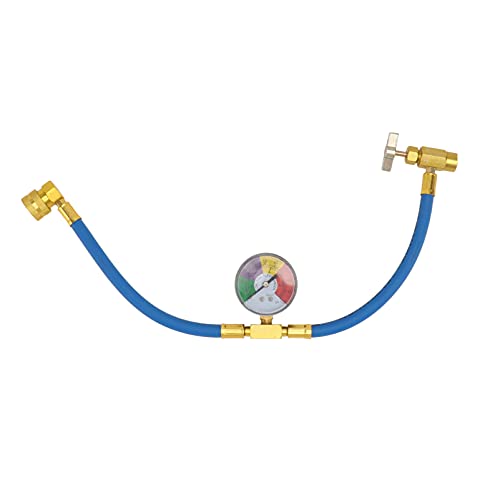
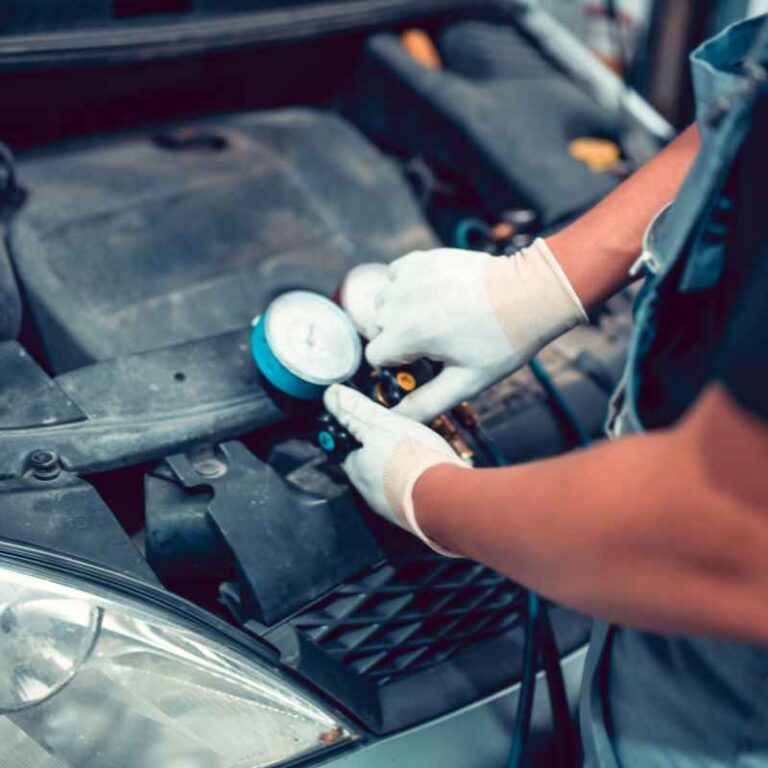
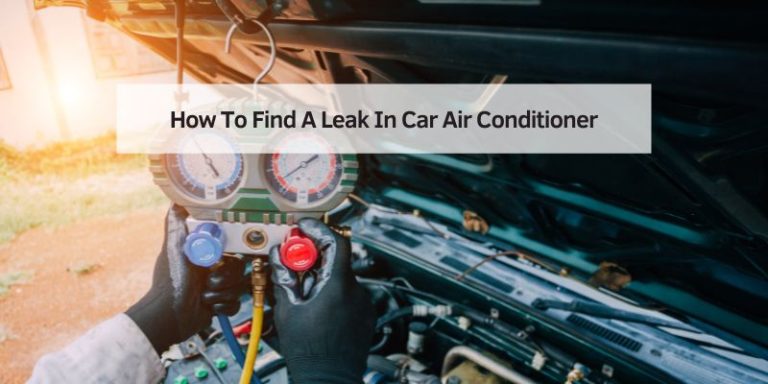
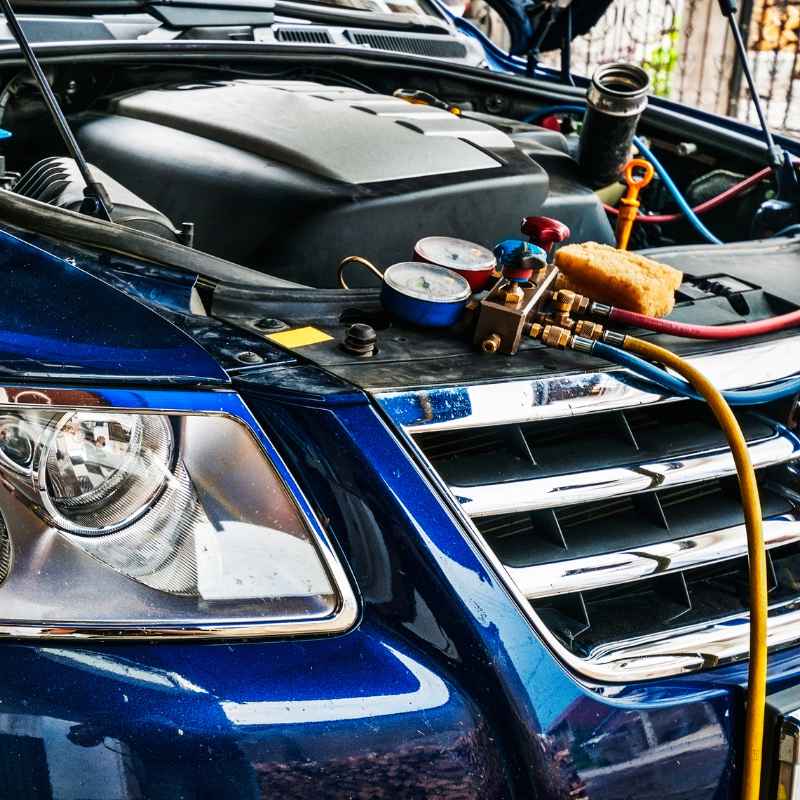
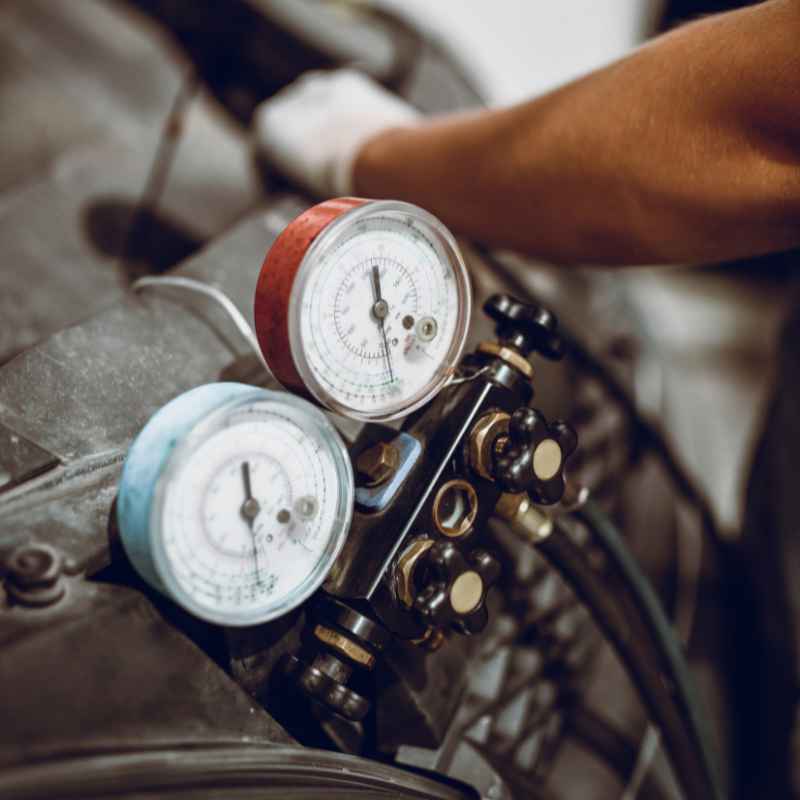
You can check if your car has Freon using a manifold gauge set or a DIY recharge kit with a built-in gauge. However, fixing the underlying leak is far more important than simply refilling the gas.
Here is the basic process for checking and recharging your car’s AC refrigerant safely.
Step 1: Locate the Low-Pressure Service Port
The low-pressure port is located on the larger aluminum tubing between the compressor and the firewall. It has a plastic cap marked with an “L”.
Step 2: Attach the Pressure Gauge
Connect the recharge hose to the low-pressure port. The gauge will show the current static pressure. A reading below 25 psi indicates low refrigerant.
Step 3: Add Refrigerant
Start the engine and turn the AC to maximum cooling. Shake the can of refrigerant and attach it to the hose. Add refrigerant until the gauge reads between 25 and 45 psi.
Step 4: Monitor the Output Temperature
Place a thermometer in the center air vent. The target temperature is 35 to 45 degrees Fahrenheit. If it doesn’t reach that range, the system still has a leak or a blockage.
Tip: DIY recharge kits are a temporary band-aid. The Freon will leak out again if you do not repair the underlying issue. Use them only as a short-term fix.
How Much Does It Cost to Recharge Car Freon?
The cost to recharge your car’s AC varies widely depending on the type of refrigerant, labor rates, and whether you choose the DIY route or a professional service.
| Method | Cost Estimate | Long-Term Effectiveness |
|---|---|---|
| DIY Recharge Kit | $30 – $70 | Temporary (Leaks remain) |
| Professional Recharge (R-134a) | $100 – $200 | Moderate (Includes leak check) |
| Professional Recharge (R-1234yf) | $200 – $400 | Moderate (Newer, expensive gas) |
| Full Leak Repair + Recharge | $500 – $1,500 | Permanent solution |
According to the U.S. Department of Energy, properly maintaining your car’s AC system can improve cooling efficiency by up to 25%. Investing in a proper repair prevents repeat visits to the shop.
R-134a vs. R-1234yf: Does It Matter?
If your car is older than 2015, it likely uses R-134a refrigerant. Newer models use R-1234yf, which is more environmentally friendly but significantly more expensive to buy and service.
Mixing these two refrigerants is dangerous and illegal. They require different fittings, different compressor oils, and different service equipment. Using the wrong one can destroy your AC system.
| Feature | R-134a | R-1234yf |
|---|---|---|
| Global Warming Potential | 1,430x CO2 | 4x CO2 |
| Cost per Pound | $5 – $10 | $50 – $100 |
| Vehicle Year | 1995 – 2015 | 2015+ |
| Flammability | Non-flammable | Mildly flammable (Lower risk) |
Always check your owner’s manual or the sticker located under the hood to confirm which refrigerant your car requires before buying any products.
Tips to Prevent Freon Leaks in Your Car
While you cannot stop rubber seals from aging indefinitely, regular maintenance can significantly slow the process and alert you to small problems before they become big ones.
Following these simple tips will extend the life of your AC system and help you avoid unexpected failures during the hottest days of the year.
- Run your AC at least once a week throughout the year. Keeping the seals lubricated prevents them from drying out and cracking.
- Clean the condenser fins with a gentle stream of water. Removing bugs and debris prevents corrosion and improves cooling efficiency.
- Use only the specified refrigerant type. Using the wrong gas can damage seals, cause leaks, and void your warranty.
- Schedule an annual AC inspection. Many shops offer a basic pressure test for a small fee that catches leaks early.
- Install a protective grille mesh. Aftermarket grille inserts shield the condenser from rocks and road debris.
- Check for unusual smells. A musty odor from the vents can indicate a leaking evaporator core.
Proactive care is always much cheaper than reactive repairs. A simple seal replacement costs a fraction of what a full AC system overhaul will set you back.
Frequently Asked Questions
Does Freon run out in a car over time?
No, Freon does not run out over time in a properly sealed AC system. If your AC loses cooling power, a leak has developed and needs to be repaired.
How often does car AC Freon need to be replaced?
Car AC Freon does not need to be replaced on any regular schedule. It is not a consumable fluid. It only needs to be replaced if it has leaked out of the system.
Can I recharge my car AC myself?
Yes, you can use a DIY kit to recharge your car AC. However, it is only a temporary solution. The underlying leak remains, and the Freon will escape again over time.
How do I know if my car is low on Freon?
Common signs include warm air from the vents, a clicking sound from the compressor cycling on and off, and a visible oily residue on the AC hoses and fittings.
Is low Freon bad for my car engine?
Low Freon does not directly damage your engine, but it can damage the AC compressor. A seized compressor adds excessive resistance to the serpentine belt drive system.
Final Thoughts
To sum it up, Freon does not run out in a car on its own. It is a sealed system, and any loss of refrigerant is a clear sign of a leak that needs professional attention.
Ignoring the problem leads directly to expensive compressor damage and total AC failure. Whether you choose a DIY approach or a professional repair, fixing the leak is the only real solution.
Sponsored / affiliate links. As an Amazon Associate I earn from qualifying purchases. I may earn additional commission from eligible campaigns.
Products related to this article