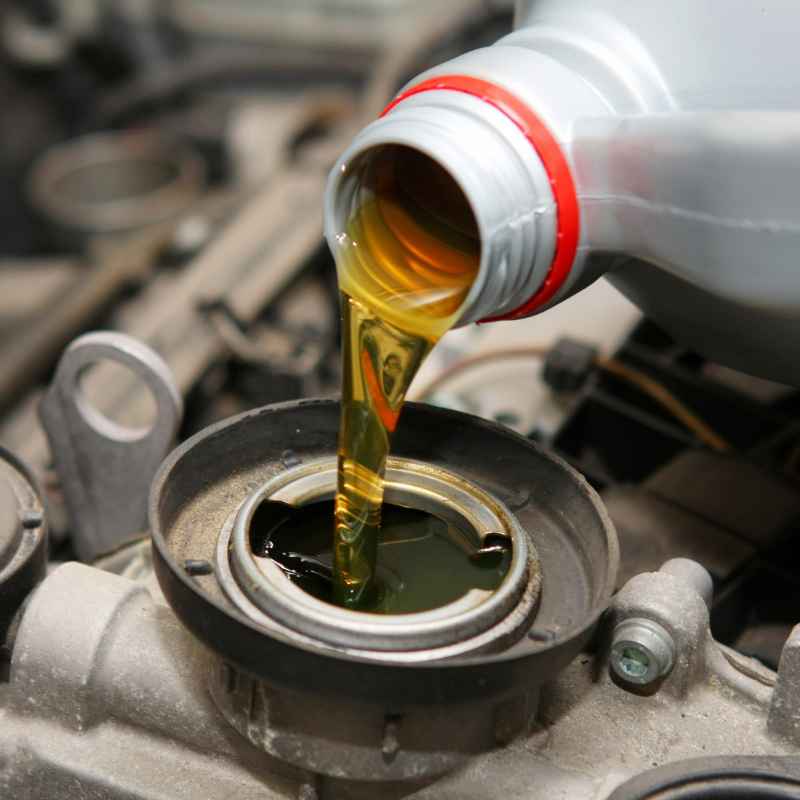
Is It Bad to Mix Car Oil? What Every Driver Should Know
Mixing car oil might seem like a harmless way to save money or fix an emergency, but it carries risks that many drivers overlook. This guide explains exactly what happens inside your engine when you combine different oils and provides clear guidelines for doing it safely.
Simply put, mixing oils of the same weight and type (like two different 5W-30 synthetics) is generally safe for the short term. However, mixing different weights or types (conventional plus synthetic) dilutes the additive package and alters viscosity, which reduces engine protection. A full oil change should always follow any mix.
Key Takeaways
- Mixing car oil is acceptable in an emergency but should never become your long-term strategy.
- Mixing different viscosities (10W-40 and 5W-30) creates an unstable protective film that increases engine wear.
- Synthetic and conventional oils are chemically compatible, but blending them reduces the high-performance additives in the synthetic oil.
- Always consult your owner’s manual for the exact specification your engine requires before adding anything.
- Perform a complete oil change as soon as possible after mixing to restore full protection and prevent sludge buildup.
What Does It Mean to Mix Car Oils?
Mixing car oils refers to combining two different motor oils in a single engine crankcase. This can mean mixing different brands, different viscosities (weights), or entirely different base oil types like conventional, synthetic, or synthetic blend.
Drivers often do this when they are low on oil and only have a partial bottle of a different spec available. While oil companies formulate their products to be compatible, the resulting mixture may not perform exactly as the manufacturer intended.
The core issue is that modern engine oils are complex cocktails of base oils and additive packages. Each additive serves a specific purpose, such as reducing friction, cleaning deposits, or preventing corrosion. When you mix formulas, these additives can clash or simply become diluted, reducing their overall effectiveness.
| Mix Type | Is It Safe Short-Term? | Long-Term Risk Level |
|---|---|---|
| Same weight, different brands | Yes | Low |
| Same weight, synthetic + conventional | Yes | Medium |
| Different weight, any type | Caution | High |
| Different weight, different type | Not Recommended | Very High |
This table shows that while mixing same-weight oils is generally safe in a pinch, introducing different viscosities or base oil technologies creates a much greater risk for your engine’s health.
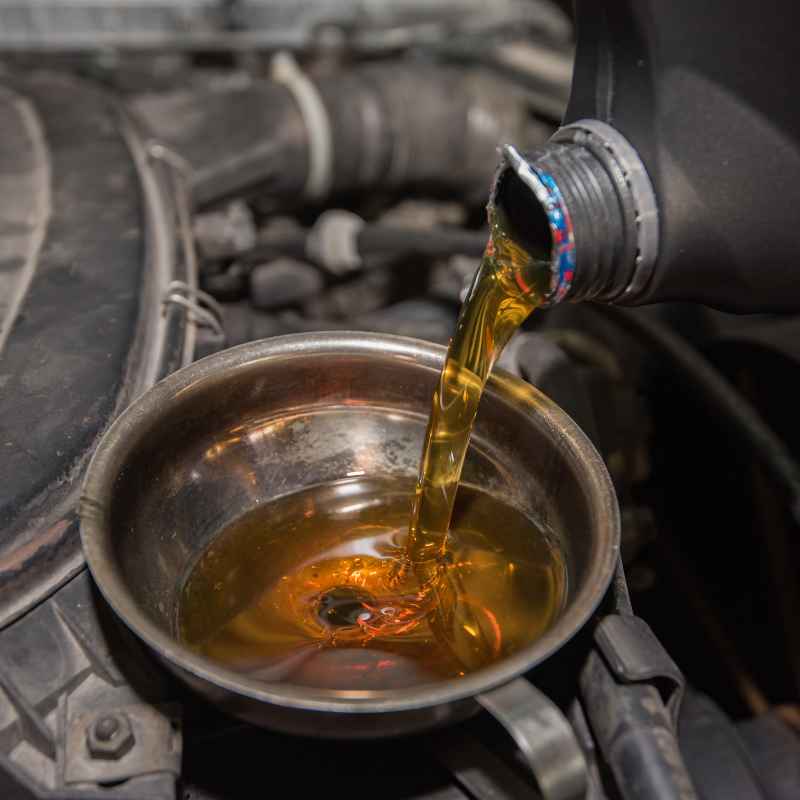
How Does Mixing Different Oil Weights Affect Your Engine?
Viscosity is the single most important property of motor oil. It determines how easily the oil flows at low temperatures and how thick it remains at high engine temperatures. When you mix two different weights, the resulting viscosity is unpredictable because modern oils use viscosity index improvers (VIIs) to achieve their specific grades.
For example, mixing equal parts of SAE 5W-30 and SAE 10W-40 does not give you 7.5W-35. The chemical interplay between the base stocks and the VIIs can create a non-linear result. You might end up with oil that is too thin at high temperatures, leading to metal-on-metal contact, or too thick at start-up, causing oil starvation to critical components like the camshaft bearings.
According to the Society of Automotive Engineers (SAE), deviating from the recommended viscosity grade by just one level can reduce fuel economy by 1-2% and increase engine wear by up to 15% over 100,000 miles.
Common Viscosity Combinations and Their Real-World Effects
- 5W-30 + 10W-30: Both are 30-weight oils at operating temperature. Mixing these has very little effect on high-temperature protection but may slightly alter cold-start flow.
- 5W-30 + 5W-20: Creates a thinner oil at operating temperature than intended. Risk of insufficient film strength under heavy load. Commonly done accidentally in modern cars.
- 5W-30 + 10W-40: Produces an unstable viscosity. The oil may shear down to a lower grade quickly or remain too thick, causing drag on the engine and reduced gas mileage.
- 0W-20 + 5W-30: Often done in newer engines. Results in a thicker cold-flow and possibly inadequate high-temperature shear resistance depending on the balance.
Warning: Using a significantly thicker oil (like 20W-50 instead of 5W-30) to stop a leak is a dangerous band-aid. It can clog oil passages, starve the top end of the engine of oil, and lead to catastrophic failure. Always fix the leak properly.
What Are the Risks of Mixing Conventional and Synthetic Oil?
Mixing synthetic and conventional oil is a very common practice, often called making your own “synthetic blend.” While they are both petroleum-based products and chemically compatible, the risks lie in the additive package dilution rather than any chemical reaction.
Synthetic oils contain much higher concentrations of robust additives like esters and polyalphaolefins (PAO) which provide superior thermal stability and film strength. When you mix a high-quality synthetic with a basic conventional oil, you are effectively watering down the synthetic’s performance features.
A study by the American Petroleum Institute (API) indicates that engines running on full synthetic oil experience up to 50% less deposit formation compared to conventional oils. Mixing them halves that protection level. You lose the extended drain interval, the superior cold-cranking performance, and the high-temperature resistance.
Immediate Effects of Blending Base Oils
- Reduced Oxidation Resistance: The conventional oil components break down faster, forming acids and sludge earlier than a full synthetic would.
- Lower Viscosity Index: The mixture tends to thin out more at high temperatures compared to a pure synthetic.
- Increased Volatility: More of the oil will evaporate off at high temperatures, leading to higher oil consumption.
- Diluted Detergents: The powerful detergents in the synthetic are spread thinner, allowing existing deposits to remain on pistons and valves.
Tip: If you normally use full synthetic and only have conventional oil on hand, you can safely top off to get to a repair shop. Just plan to change the oil completely within 500 miles to restore full synthetic protection.
Why Do Drivers Mix Motor Oil? Common Scenarios
Understanding why mixing happens can help you avoid the most common mistakes. The primary reason is simple: convenience during a top-off situation. Whether you are on a road trip or between paychecks, having the exact right oil is not always possible.
Here are the five most frequent scenarios where drivers end up mixing motor oils and the best course of action for each.
-
Emergency Top-Off on a Trip: You buy whatever the gas station has.
Best action: Buy the correct viscosity first, even if the brand is different. Change oil at your destination. -
Bargain Bin Buy: You found a great deal on clearance but it is a different weight.
Best action: Do not use it unless it matches the exact spec in your manual. It is not a bargain if it damages your engine. -
Switching from Conventional to Synthetic: Old oil is drained but some remains.
Best action: This is unavoidable. A small amount (5-10%) of old oil left in the engine is harmless. Do not add more. -
Mixed-Up Jugs: You grabbed the wrong bottle from the shelf.
Best action: If caught immediately, do not pour it in. If already added, follow the emergency procedure below. -
Performance Blend: Intentionally mixing synthetic and conventional for a “budget blend.”
Best action: Avoid this. Pre-formulated synthetic blends are engineered for balance. Your custom mix is likely not optimized.
| Scenario | Right Way | Wrong Way |
|---|---|---|
| Low on oil at night | Top off with same viscosity, any brand | Using 20W-50 in a 5W-30 engine |
| Store out of synthetic | Buy conventional, plan immediate change | Draining and reusing old oil |
| Oil change special | Stick to your required API/ILSAC rating | Choosing price over specification |
How to Safely Top Off Your Engine Oil
If you find yourself in a situation where you need to add oil but don’t have the exact match, follow this step-by-step process to minimize risk to your engine.
- Identify the Required Viscosity: Check the oil cap or owner’s manual. This is non-negotiable. Always match the SAE grade first.
- Check the Current Level: Park on level ground, wait a few minutes after shutting off the engine, and wipe the dipstick clean before reinserting for an accurate reading.
- Select the Closest Match: If you cannot find the exact grade, choose the next closest winter grade (e.g., 5W-30 instead of 0W-20) for a single top-off. Never go thicker than the recommended hot grade.
- Add Slowly and Recheck: Add small amounts (quarter to half a quart at a time). Overfilling is just as bad as using the wrong oil. It causes foaming and aeration.
- Follow Up Immediately: Make plans to do a complete oil and filter change within the next 500-1000 miles. This restores the engineered additive balance and removes the mixed oil.
Important: Do not rely on “stop gap” additives that claim to fix mixing issues. There is no chemical fix for dilution. The only correct solution is a complete oil drain and refill with the manufacturer-recommended oil type and weight.
What Does the API and Car Manufacturers Say?
The American Petroleum Institute (API) and the International Lubricants Standardization and Approval Committee (ILSAC) set the standards for motor oil performance. They do not recommend mixing oils for long-term use because their certifications are based on the performance of a single, unadulterated oil formulation.
Car manufacturers like Toyota, Honda, Ford, and General Motors go further. Many modern engines, particularly those with turbochargers or variable valve timing (VVT), are highly sensitive to oil properties. Using a mixed oil can disrupt the hydraulic timing of VVT solenoids or cause turbo bearing coking.
According to a report from the Coordinating Research Council (CRC), engines using oils that do not meet the manufacturer’s viscosity and API specification can experience up to 30% more high-temperature deposit formation. This directly impacts performance and longevity.
- API Service “SN” or “SP”: Ensures the oil provides adequate protection against low-speed pre-ignition (LSPI) and timing chain wear. Mixing dilutes these protections.
- ILSAC GF-6: Focuses on fuel economy and emissions system compatibility. Mixed oils may not meet these stringent fuel economy standards.
- OEM Approvals (e.g., MB 229.5, VW 502.00): These are specific tests passed by a single oil. Mixing automatically voids the approval.
Tip: Keep a one-quart bottle of the exact oil your car needs in the trunk. This prevents the need to ever mix oils on the road and ensures you always have the right spec for emergencies.
Signs Your Oil Has Been Mixed Incorrectly
Sometimes you may inherit a vehicle with mixed oil or make a mistake without realizing it until later. Watch for these warning signs that indicate an incompatible oil mixture is circulating in your engine.
If you notice any of these symptoms, stop driving and perform a full oil change immediately. Continuing to drive on a compromised oil mixture can cause irreversible damage to bearings, piston rings, and the cylinder head.
- Loud Tapping or Knocking: This indicates insufficient film strength, often caused by mixing heavy weight with light weight, leading to hydraulic lifter noise or bearing knock.
- Check Engine Light: In modern cars, incorrect oil viscosity can trigger fault codes related to VVT solenoids or camshaft position sensors due to insufficient hydraulic pressure.
- Smoke from Exhaust: If the mixed oil is too thin, it can slip past piston rings and burn in the combustion chamber, producing blue or gray exhaust smoke.
- Oil Sludge on Dipstick: Mixing incompatible additive packages can cause chemical incompatibility, leading to gel or sludge formation on the dipstick and under the valve cover.
- Poor Fuel Economy: If the resulting mixture is too thick, it creates excessive drag on rotating parts, forcing the engine to work harder and burn more fuel.
Frequently Asked Questions
Can you mix 5W-30 and 10W-30 motor oil?
Yes, you can mix them in an emergency. Both oils have the same high-temperature viscosity (30 weight), so your engine will be protected at operating temperature. The cold-flow characteristics will be a compromise between 5W and 10W.
It is safe for a single top-off but not for long-term use.
Is it bad to mix synthetic oil with regular oil?
It is not chemically dangerous, but it is not ideal. When you mix synthetic with conventional, you dilute the advanced additives in the synthetic oil. This reduces the oil’s ability to resist heat, clean deposits, and last for long drain intervals.
A full oil change should follow soon after.
What happens if I put the wrong weight oil in my car?
If the weight is too thick, you may experience reduced fuel economy, sluggish engine performance, and difficulty starting in cold weather. If the weight is too thin, you risk increased engine wear, noise, and potential bearing failure. Always correct the weight at your next oil change.
Can mixing oil brands cause engine damage?
Mixing brands of the same viscosity and type is unlikely to cause damage. All API-certified oils are back-compatible. The primary risk is that different brands use different additive chemistries, which can theoretically reduce the overall effectiveness of the additive package, but it will not cause immediate failure.
How long can I drive after mixing different oil types?
You can safely drive for 500 to 1000 miles after mixing same-weight oils. If you mixed different weights or conventional with synthetic, try to limit driving to under 500 miles and perform a full oil and filter change as soon as possible. Do not wait for the next scheduled interval.
Final Thoughts
Mixing motor oil is a practical solution for emergencies, but it should never become a habit or a cost-cutting measure. The risks of reduced engine protection, increased wear, and potential sludge formation are simply not worth the short-term convenience. Always prioritize using the exact oil specified by your manufacturer, and if you find yourself mixing, schedule a premium-quality oil change immediately.
Your engine’s long-term reliability depends on maintaining the correct lubricant environment.