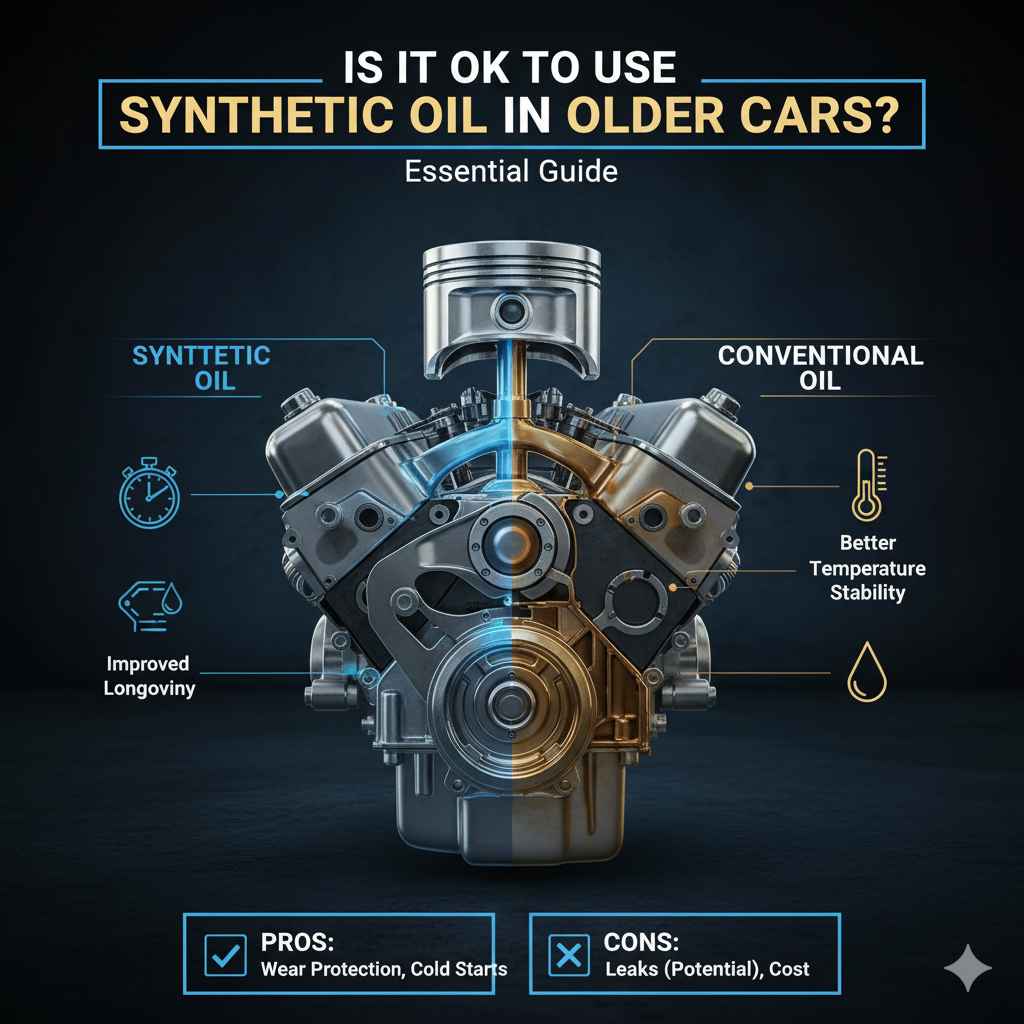
Is It OK to Use Synthetic Oil in Older Cars? Essential Guide
Yes, it’s generally okay to use synthetic oil in older cars! Modern synthetic oils can offer better protection and performance than conventional oils, even for engines designed decades ago. When choosing, always consult your car’s manual and consider oils designed for older vehicles.
Ah, the age-old question about car maintenance: is it really okay to switch to that fancy synthetic oil for my older car? If you’ve ever stared at the oil bottles in an auto parts store, feeling a bit lost, you’re not alone. Many car owners worry that newer technology might not be happy in an older engine. But what if I told you that switching could actually be a good thing for your beloved classic or well-loved older ride?
Don’t let the jargon or the years create confusion. We’re going to break down exactly what synthetic oil is, how it works, and most importantly, whether it’s a smart choice for older vehicles. We’ll cover everything you need to know to make a confident decision for your car’s health and performance. Let’s get your questions answered and motor on!
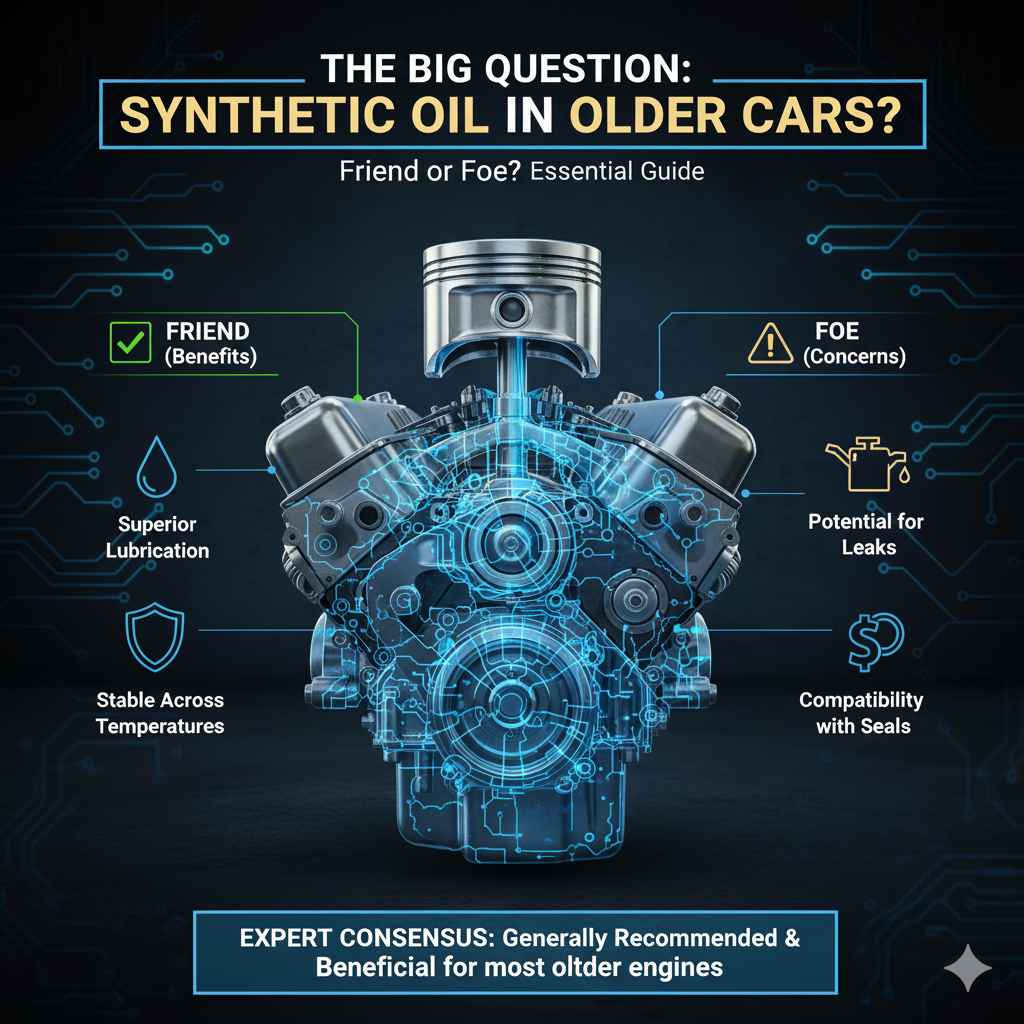
The Big Question: Synthetic Oil in Older Cars – Friend or Foe?
It’s a concern many drivers have: Will using a modern lubricant like synthetic oil harm an engine that was built in a different era, perhaps during the days of conventional oil? The short answer is: generally, yes, it’s perfectly fine, and often beneficial. In fact, many automotive experts recommend it.
Think of it this way: your car’s engine, even if it’s from the 80s or 90s, is a mechanical system that benefits from the best protection available. Synthetic oils have advanced significantly over the years. They are engineered to provide superior lubrication, protection, and performance across a wider range of temperatures and conditions than traditional oils.
However, as with many things in life, there are a few nuances to consider that can make the difference between a great decision and a potentially questionable one. We’ll dive into these specifics to ensure you’re making the best choice for your particular older vehicle.
What Exactly is Synthetic Oil?
Before we talk about older cars, let’s quickly cover what makes synthetic oil different.
Conventional motor oil is refined directly from crude oil, with additives blended in to improve its properties. It’s been the standard for a long time.
Synthetic oil, on the other hand, is chemically engineered in a laboratory. Manufacturers start with a base oil that is highly refined and often synthesized from petroleum but purified to remove as many impurities as possible. They then add specific additives to create a lubricant with specific characteristics. This engineered approach allows for greater control over the oil’s performance.
Key Differences and Benefits of Synthetic Oil
This engineered process leads to several advantages that synthetic oils typically offer:
- Superior Lubrication: Synthetic oils have a more uniform molecular structure. This means they can flow more smoothly and create a stronger lubricating film, reducing friction between moving engine parts.
- Better Temperature Performance: They resist breaking down at high temperatures and maintain their flow even in very cold conditions. This means your engine gets better protection from the moment you start it up in winter and when it’s running hot in summer.
- Cleaner Engine: Synthetics are less prone to forming sludge and deposits, which can clog oil passages and reduce engine efficiency over time. This helps keep your engine running cleaner.
- Longer Drain Intervals: Because synthetics degrade more slowly, they often last longer than conventional oils. This means you might be able to extend the time between oil changes, saving you time and money.
- Reduced Volatility: They tend to evaporate less at high temperatures, meaning your engine oil level might stay more consistent.
Why the Concern About Older Cars?
The hesitation about using synthetic oil in older cars often stems from a few common concerns, largely rooted in outdated perceptions or anecdotal evidence:
- Detergents Stripping Gunk: One common worry is that the detergents in synthetic oils are too powerful and might “strip” away accumulated sludge and deposits in an older engine. This could, in theory, dislodge debris that might be helping to seal worn parts, leading to leaks or even mechanical damage.
- Seal Swelling Issues: Another concern is that synthetic oils might cause older rubber seals and gaskets to swell or degrade, leading to oil leaks. This was a more significant issue with very early synthetic formulations.
- Older Engine Designs: Some believe that engines built for conventional oil simply won’t benefit from or can’t handle the advanced properties of synthetics, and that they are designed to work with the specific characteristics of conventional oil.
Addressing the Myths: Modern Synthetics and Older Engines
Let’s tackle those concerns head-on, because modern science has largely addressed these issues:
Detergent Myth: It’s true that synthetic oils often contain advanced additive packages, including detergents. However, modern synthetics are formulated to clean engines effectively without being overly aggressive. While switching to synthetic could reveal existing leaks by cleaning around them, it’s unlikely to cause new problems on its own. In fact, keeping the engine cleaner by removing harmful deposits is a major benefit for longevity.
Seal Compatibility: Today’s synthetic oils are compatible with most seals and gaskets found in vehicles, including those in older models. Manufacturers have carefully balanced the chemical formulations to ensure they don’t cause undue swelling or deterioration. If you have a very, very old engine with known brittle seals, it’s always wise to check, but for most cars from the last few decades, this is not a significant concern.
Engine Design: Engines are designed to run on oil. While conventional oil was the standard, that doesn’t mean they can’t benefit from an improved lubricant. The fundamental requirements for lubrication, heat dissipation, and protection remain the same, and synthetics excel at all of these.
When is it OK to Use Synthetic Oil in Older Cars?
For most vehicles manufactured in the last 30-40 years, using synthetic oil is not only okay but often recommended. Here’s a breakdown of when it’s a good idea:
1. Consult Your Owner’s Manual
This is your absolute first step. The manufacturer knows your car best. Your owner’s manual will specify the recommended oil type, viscosity grade (like 5W-30), and API service category (e.g., API SP, SN, SM).
If the manual recommends conventional oil, check if it permits the use of synthetic oil as an alternative or says to use a synthetic with the “API Service Category” listed. Often, manufacturers will approve synthetics that meet or exceed the specifications for conventional oils. If your manual is lost, many manufacturer websites offer downloadable PDFs of owner’s manuals, or you can search online communities dedicated to your specific car model.
2. Consider Oils Formulated for Older Vehicles
Some oil manufacturers have recognized the need to cater to older engines. They offer synthetic or synthetic-blend oils that include specific additive packages designed for older vehicles. These might contain:
- Higher levels of ZDDP (Zinc Dialkyldithiophosphate): This additive has been reduced in many modern oils due to concerns about catalytic converter longevity. However, older flat-tappet camshafts (common in many classic and some older engines) benefit greatly from ZDDP’s anti-wear properties.
- Seal conditioners: These can help to keep older seals supple and prevent leaks.
- Fewer aggressive detergents: Some formulations might be less aggressive to avoid disturbing established deposits, while still providing excellent protection.
Look for products marketed as “classic,” “vintage,” or “for older cars.” These are often excellent choices for your older vehicle when opting for a synthetic or synthetic blend.
3. Understand Your Engine’s Condition
Well-Maintained Engines: If your older car has been regularly maintained, its seals and gaskets are likely in good condition. In this case, switching to a high-quality synthetic oil should be straightforward and beneficial.
Engines with Known Issues: If your older car has known oil leaks, or if the seals are visibly degraded or known to be problematic, proceed with caution. It might be wise to address those seal issues first, or start with a synthetic blend, or an oil specifically designed for older engines that includes seal conditioners. A sudden switch to a highly “flushing” conventional oil or a very aggressive synthetic could potentially worsen existing minor leaks by cleaning out whatever was sealing them.
4. Your Driving Conditions
If you drive in extreme conditions (very hot or very cold weather, frequent short trips, stop-and-go traffic, or if you tow), synthetic oil’s superior performance in temperature regulation and wear protection can be a significant advantage, even for an older car.
When MIGHT You Want to Stick with Conventional Oil?
While synthetic oil is generally fine, there are a few scenarios where sticking with conventional oil might be the safer or more appropriate choice:
- Very Old Engines with Original Seals: If you have a vintage car with extremely old, original rubber seals that are visibly brittle or known to be problematic, a highly aggressive synthetic might theoretically expedite their deterioration. In such cases, sticking to the oil type recommended in the original manual and ensuring it meets current API standards is prudent.
- Cost Considerations: Synthetic oils are typically more expensive than conventional oils. If budget is a primary concern and your car is not subject to extreme driving conditions or doesn’t require synthetic for performance reasons, conventional oil might suffice.
- Specific Manufacturer Warnings: In extremely rare cases, a specific vintage vehicle manufacturer might have issued very specific warnings against synthetic oil for their models due to some unique engineering quirk. Always defer to the manufacturer’s direct guidance if it exists.
Benefits of Using Synthetic Oil in Your Older Car
Let’s recap the advantages you can gain:
Enhanced Protection: Synthetic oil provides a more robust shield against wear and friction, especially under stressful conditions. This is crucial for older engines that may have slightly more wear and tear than newer ones.
Improved Performance in Extremes: Whether it’s a scorching summer day or a frosty winter morning, synthetic oil maintains its integrity better than conventional oil, ensuring your engine is protected from the moment you turn the key.
Engine Cleanliness: By preventing sludge and deposit buildup, synthetics help maintain optimal engine performance and can even help an older engine run more smoothly and efficiently.
Potential for Extended Drain Intervals: This can save you time and money over the long run. Always follow a sensible schedule, but you might find you can go a bit longer between changes with a quality synthetic.
How to Make the Switch Safely
Ready to make the switch? Here’s a simple, step-by-step approach:
- Check Your Manual: As mentioned, confirm viscosity grade (e.g., 10W-40, 5W-30) and API service category.
- Choose the Right Oil: Select a high-quality synthetic oil that meets or exceeds your manual’s specifications. If your car is older and you have concerns about seals, consider a synthetic blend or one specifically designed for older vehicles.
- Perform an Oil Change: This is the best time to switch. Drain the old oil completely.
- Replace the Oil Filter: Always use a new, quality oil filter.
- Fill with New Oil: Add the correct amount of your chosen synthetic oil.
- Monitor for Leaks: After your first drive, inspect under the car for any new oil drips. This is unlikely, but it’s good practice.
- Listen to Your Engine: Pay attention to how your engine sounds and runs. Most drivers report smoother operation and quieter running after switching to synthetic.
Understanding Viscosity and API Service Categories
When picking oil, you’ll see numbers and letters. Let’s decode them quickly?
Viscosity Grade
This tells you how thick the oil is. The number before the “W” (like 5W in 5W-30) is the oil’s thickness in cold temperatures. A lower number flows better when it’s cold. The number after the “W” (like 30 in 5W-30) is the oil’s thickness at normal engine operating temperature.
Example: 10W-40 oil is thicker at operating temperature than 5W-30 oil.
What’s important is that the viscosity grade recommended in your owner’s manual is the one you should stick to, whether you choose conventional or synthetic. For example, if your manual calls for 10W-40, you should buy 10W-40 synthetic oil.
API Service Categories
The American Petroleum Institute (API) assigns service categories to motor oils. These indicate what standards the oil meets. For gasoline engines, you’ll usually see categories like API SP (the latest), SN, SM, SL, etc. Higher letters mean it meets newer, more stringent standards.
For an older car, using an oil that meets the API category recommended in your manual is crucial. If your manual says “API SG” (an older standard), using an oil labeled “API SP” is perfectly fine, as it meets and exceeds older standards. You can find this information on the oil bottle’s label.

Table: Conventional vs. Synthetic Oil Comparison
Here’s a quick look at how they stack up:
| Feature | Conventional Oil | Synthetic Oil |
|---|---|---|
| Source | Refined from crude oil | Chemically engineered in a lab |
| Molecular Structure | Irregular, contains impurities | Uniform, highly pure |
| Temperature Performance | Limited cold-weather flow, breaks down at high heat | Excellent cold-weather flow, resists breakdown at high heat |
| Lubrication | Good, but can be inconsistent | Superior, more consistent film strength |
| Deposit Formation | More prone to sludge and varnish | Less prone to deposits, keeps engine cleaner |
| Oxidation Resistance | Lower | Higher |
| Cost | Lower | Higher |
| Drain Intervals | Shorter | Longer (often) |
Frequently Asked Questions (FAQ)
Q1: My mechanic said not to use synthetic oil in my 1995 car. Should I listen?
While most modern synthetics are fine, listen to your mechanic! They might have specific reasons based on your car’s condition or their experience. If you disagree, ask for a detailed explanation or do your own research on oils specifically formulated for classic cars, which often balance modern technology with older engine needs. You can also consult your car’s original owner’s manual or reputable online forums for your specific make and model.
Q2: Will synthetic oil make my older car’s engine leak oil?
This is a common concern but less of an issue with modern synthetics. Older synthetics sometimes contained solvents that could affect older seals. Today’s formulas are much more advanced and are designed to be compatible with most engine seals. If your engine already has very old, brittle seals, any oil change might potentially reveal a minor leak that was already there. If you’re worried, opt for synthetic blends or oils specifically labeled for older engines with seal conditioners.
Q3: How do I choose the right synthetic oil grade for my classic car?
Always refer to your car’s owner’s manual first! It will specify the recommended viscosity grade (like 5W-30, 10W-40) and API service category. If you can’t find the manual, search online for a PDF version for your specific car model and year. You should then choose a synthetic oil that matches the recommended viscosity and meets or exceeds the API service rating. For example, if your manual requires API SG, a modern oil labeled API SP is a suitable and often better choice.
Q4: Is it okay to switch back and forth between conventional and synthetic oil?
Yes, it is generally okay to switch between conventional and synthetic oils. Modern synthetic oils are designed to be compatible with conventional oils. However, once you switch to synthetic, staying with it often provides the most consistent benefits for your engine. If you switch back to conventional after a long period on synthetic, ensure you use a high-quality conventional oil that meets your car’s specifications.