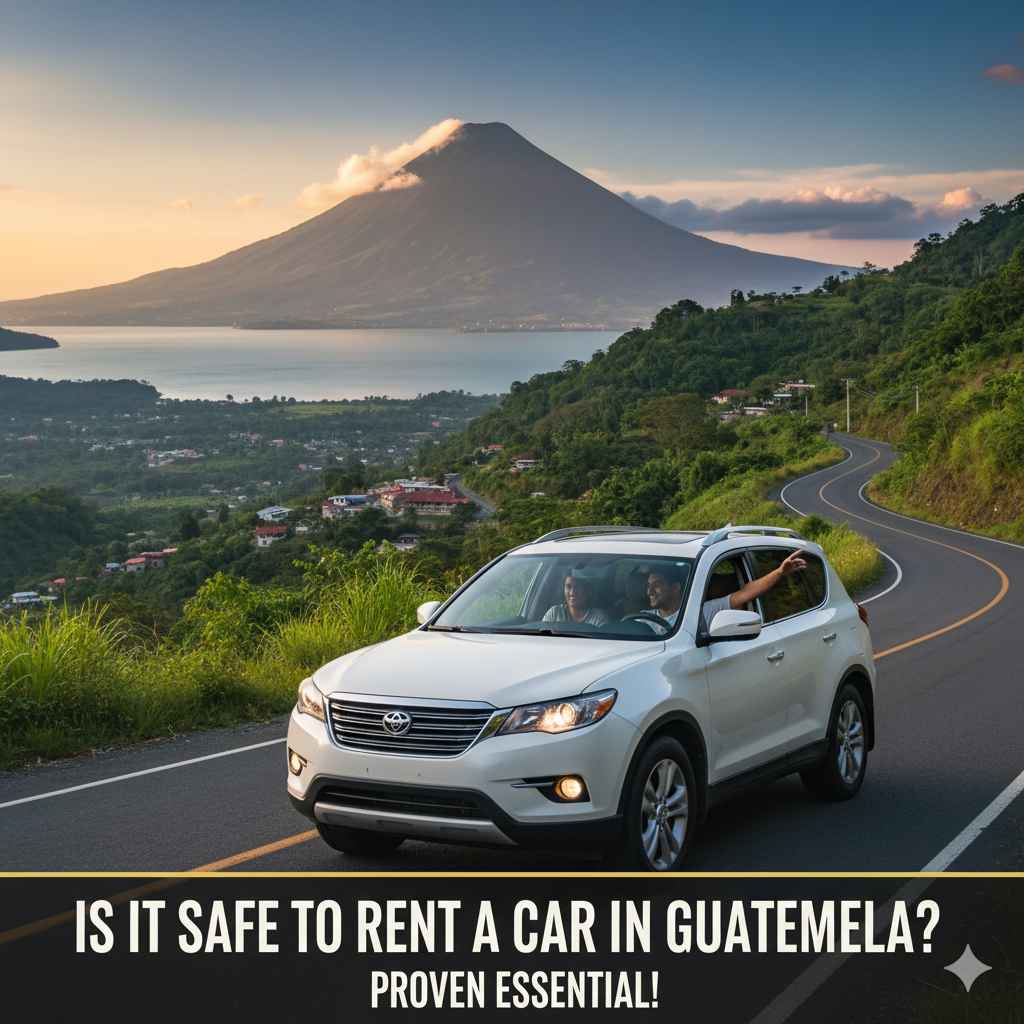
Is It Safe Rent Car Guatemala? Proven Essential!
Yes, it is generally safe to rent a car in Guatemala if you take sensible precautions, choose reputable rental companies, and drive defensively. Understanding local driving habits and road conditions is key to a smooth and safe journey.
Planning a trip to beautiful Guatemala often sparks the exciting idea of exploring at your own pace. And what better way to do that than by renting a car? However, a common question many travelers ask is, “Is it safe to rent a car in Guatemala?” It’s a valid concern, and you’re not alone in wondering about navigating unfamiliar roads and traffic. The good news is that with the right preparation and awareness, renting a car can be a safe and incredibly rewarding way to experience all that Guatemala has to offer. This guide will walk you through everything you need to know, from choosing the best rental company to staying safe on Guatemalan roads. Get ready to unlock your adventure!
Understanding the Road Ahead: Safety First
Guatemala is a land of breathtaking landscapes, from ancient Mayan ruins to vibrant markets and stunning volcanic scenery. Renting a car offers unparalleled freedom to discover these gems. However, it’s essential to approach driving there with a clear understanding of the realities. Roads can vary significantly, from well-maintained highways to more rugged, unpaved paths. Traffic can be unpredictable, often with a mix of cars, buses, motorcycles, and even animal-drawn carts. Knowing what to expect helps you prepare and drive with confidence.
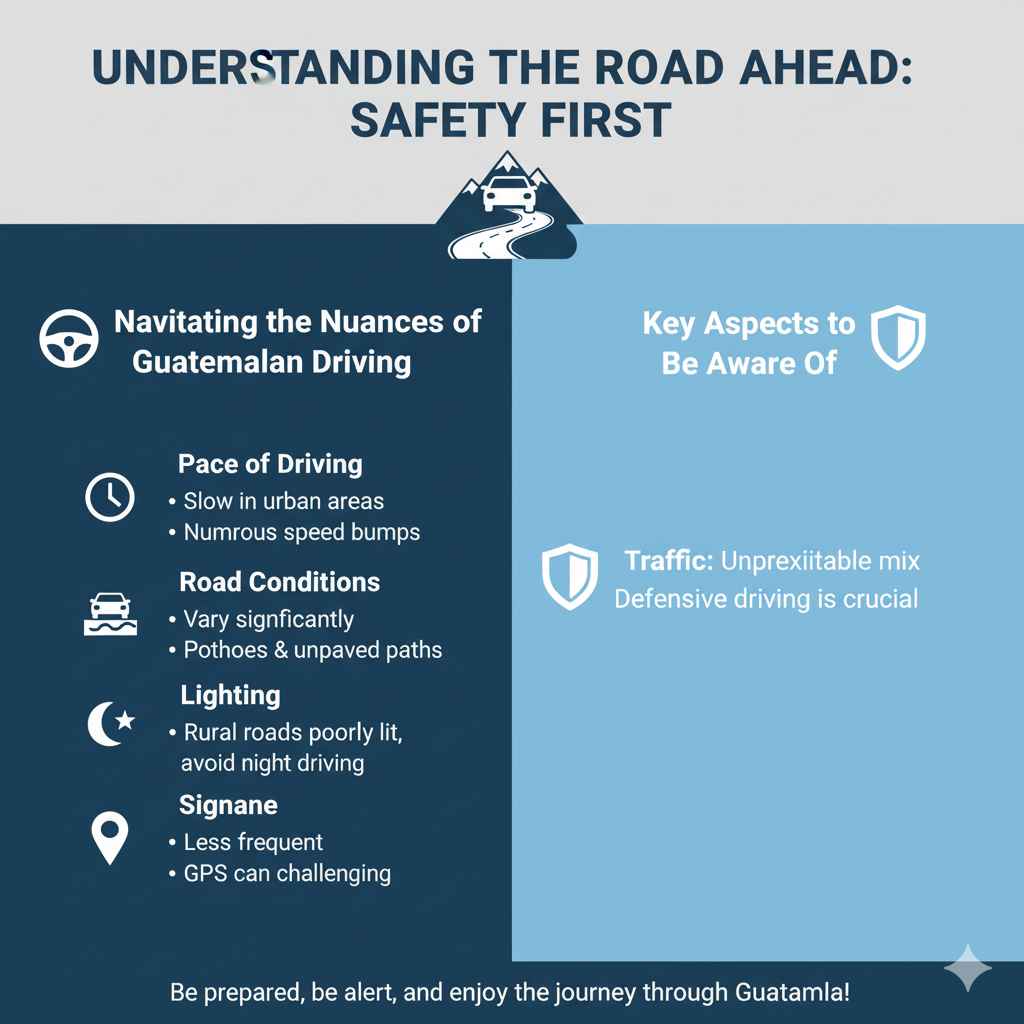
Navigating the Nuances of Guatemalan Driving
Driving in Guatemala has its unique characteristics. While many drivers are courteous, you’ll also encounter situations where traffic laws might not be strictly followed. Expect vehicles to pass aggressively, buses to stop unexpectedly, and intersections to be navigated with a sense of spirited negotiation rather than strict adherence to signals. This doesn’t mean it’s unsafe, but it does require a higher level of alertness and defensive driving than you might be accustomed to.
Key aspects to be aware of include:
- Pace of Driving: Traffic can be slow in urban areas due to congestion and numerous speed bumps (often unmarked). On highways, speeds can be higher, but always be ready for sudden slowdowns.
- Road Conditions: While major highways are generally good, secondary roads can be bumpy, have potholes, or be unpaved. Roads can also be narrow and winding, especially in mountainous regions.
- Lighting: Many rural roads are not well-lit, and driving at night is generally discouraged.
- Signage: Road signs may be less frequent or visible compared to what you might find in other countries. Relying solely on GPS can be challenging, so having a good map and local knowledge is beneficial.
Renting Your Ride: Choosing Wisely
Selecting the right car rental company is a crucial step in ensuring a safe and hassle-free experience. While you’ll find major international brands at the airport, local companies can also offer competitive rates. Researching and comparing options beforehand is highly recommended.
Where to Rent: Airport vs. Local Agencies
Airport Rental Agencies:
- Pros: Convenience upon arrival, a wider selection of vehicles, often more familiar brands with established customer service standards.
- Cons: Can be more expensive.
Local Rental Agencies:
- Pros: Often offer better rates, potentially more flexibility with rental terms.
- Cons: May have fewer vehicle options, customer service can vary, requires more research to find reputable ones, and might not be as readily available in smaller towns.
When choosing a company, look for those with good online reviews and clear terms and conditions regarding insurance, mileage, and fuel policies. Avoid companies that seem evasive about these details.
Important Questions to Ask Your Rental Company:
- What is included in the rental price (e.g., mileage, taxes)?
- What are the insurance options, and what do they cover?
- What is the policy for dropping off the car before the scheduled time or returning it late?
- Is there a roadside assistance plan? What is the procedure if I break down?
- What is the fuel policy (e.g., full to full, full to empty)?
Insurance: Your Shield on the Road
Car insurance is a non-negotiable aspect of renting a car anywhere, and Guatemala is no exception. Understanding your coverage is vital to protect yourself from unexpected costs.
Understanding Your Coverage Options
Most international car rental companies will offer several insurance packages. It’s essential to understand what each covers:
- Collision Damage Waiver (CDW) / Loss Damage Waiver (LDW): This waives your responsibility for damage to the rental car, usually up to a certain deductible.
- Supplemental Liability Insurance (SLI): This provides coverage for damages or injuries you might cause to other people or their property.
- Personal Accident Insurance (PAI): Covers medical expenses for you and your passengers in case of an accident.
Tip: Check if your personal auto insurance or credit card provides any rental car insurance coverage. This can sometimes help you decline expensive duplicate coverage offered by the rental agency, but always verify the terms carefully.
The New York State Department of Financial Services offers a good overview of various auto insurance coverages, which can help you understand the types of protection available more broadly.
Local Requirements and Recommendations
In Guatemala, it’s often mandatory to have at least third-party liability insurance. Rental companies typically include a basic amount of this, but it might not be sufficient. Adding comprehensive CDW/LDW is highly recommended to protect you from significant repair costs if an accident occurs. Always clarify the deductible amounts for any insurance policy you accept.
Pre-Drive Checks: Ensuring Your Vehicle is Road-Ready
Before you even pull out of the rental lot, a thorough check of the car can save you from potential issues and ensure your safety. Treat it like you would your own car!
What to Inspect Before Driving Off
Take a few minutes to walk around the car with a rental agent and note any existing damage. Don’t be shy about documenting everything.
- Exterior: Check for dents, scratches, or any damage to the bodywork, bumpers, mirrors, and lights.
- Tires: Inspect the tires for wear and ensure they are properly inflated. Check for any visible damage.
- Interior: Look for rips, stains, or damage to the seats, dashboard, and other fittings.
- Lights and Signals: Test headlights (high and low beams), taillights, brake lights, and turn signals.
- Wipers and Washer Fluid: Ensure the windshield wipers are in good condition and that there is adequate washer fluid—essential for visibility.
- Brakes: While you can’t fully test brakes without driving, listen for any unusual noises when you initially move the car slowly.
- Air Conditioning/Heating: Test if the AC and heating systems are working.
- Spare Tire and Jack: Confirm that a spare tire, jack, and lug wrench are present and in good condition.
Take photos or videos of any existing damage with your phone. This documentation is crucial for protecting yourself from being charged for pre-existing issues when you return the car.
Driving Safely in Guatemala: Essential Tips
Now that you have your car and it’s checked, it’s time to talk about the actual driving experience. Adopting a defensive and proactive driving style is key.
Defensive Driving Techniques for Guatemalan Roads
- Be Predictable: Signal your intentions clearly and early.
- Maintain Distance: Always leave ample space between your vehicle and the one in front of you. This is especially important given potentially sudden stops.
- Scan Ahead: Constantly look as far down the road as possible to anticipate hazards.
- Be Aware of Your Surroundings: Pay attention to other road users, pedestrians, cyclists, and animals.
- Use Your Horn Wisely: A quick honk can alert others to your presence, especially on blind curves or when passing.
- Watch for Speed Bumps: Many speed bumps are unmarked and can appear suddenly, especially in towns and villages. Drive slowly in areas where they might be present.
- Avoid Night Driving: As mentioned, it’s strongly advised to avoid driving after dark. Roads are often unlit, poorly maintained, and visibility is severely reduced.
Navigation: Beyond the GPS
While GPS devices and apps like Google Maps are incredibly useful, they aren’t always perfect in Guatemala. Roads can be mislabeled, or your device might suggest routes that are not suitable for rental cars.
- Download Offline Maps: Ensure you have offline maps downloaded for the areas you plan to visit. This is critical for areas with spotty or no cell service. You can do this within Google Maps by tapping your profile icon, then “Offline maps,” and selecting the area.
- Carry a Physical Map: A good old-fashioned paper map can be a lifesaver if your electronics fail or if you need a broader perspective.
- Ask for Directions: Don’t hesitate to ask locals for directions. Most people are friendly and willing to help, but be clear and confirm your understanding.
- Follow Main Roads When Possible: Stick to major, well-trafficked roads whenever you can, especially if you’re unsure about the conditions of smaller routes.
The U.S. Department of Transportation provides general information on safe driving practices that are universally applicable.
Handling Roadblocks and Pitfalls
While rare for tourists, it’s good to be aware of potential issues like informal roadblocks, which can sometimes occur for political or social reasons. These are usually peaceful, but it’s wise to remain calm and follow instructions.
What to Do if You Encounter a Roadblock:
- Stay Calm: Do not panic.
- Assess the Situation: Observe who is at the roadblock and what their demeanor is.
- Cooperate: If the roadblock is organized and peaceful, it’s usually best to stop and wait. They may simply be collecting donations or wanting to talk.
- Do Not Argue: Engaging in arguments can escalate a situation unnecessarily.
- If Unsure, Wait: If you feel unsafe or unsure about the intentions of people at the roadblock, it is often best to wait for other traffic to pass through or for instructions.
- Contact Your Rental Company/Embassy (If Necessary): If the situation feels serious or you are detained for an extended period, contact your rental car company or your country’s embassy for advice. The U.S. Department of State provides travel advisories and contact information for their embassy in Guatemala.
In most cases, tourists are treated with courtesy, and roadblocks are temporary. Your calm demeanor is your best asset.
Key Vehicle Maintenance for Your Trip
While you won’t be doing major repairs, a few simple checks can ensure your rental car performs reliably throughout your journey.
Essential Checks for a Smooth Ride
- Tire Pressure: Regularly check your tire pressure, especially before long drives or if you’re carrying a lot of luggage. Properly inflated tires improve safety and fuel efficiency.
- Fluid Levels: Keep an eye on the coolant and oil levels. If you notice any leaks, contact your rental company immediately.
- Lights: Ensure all lights are working before you set off each day.
- Cleanliness: Keeping your windshield clean not only improves visibility but also your overall driving experience.
Most rental companies have procedures for minor issues. If you encounter a problem, contact them for advice or to arrange a check-up or replacement vehicle.
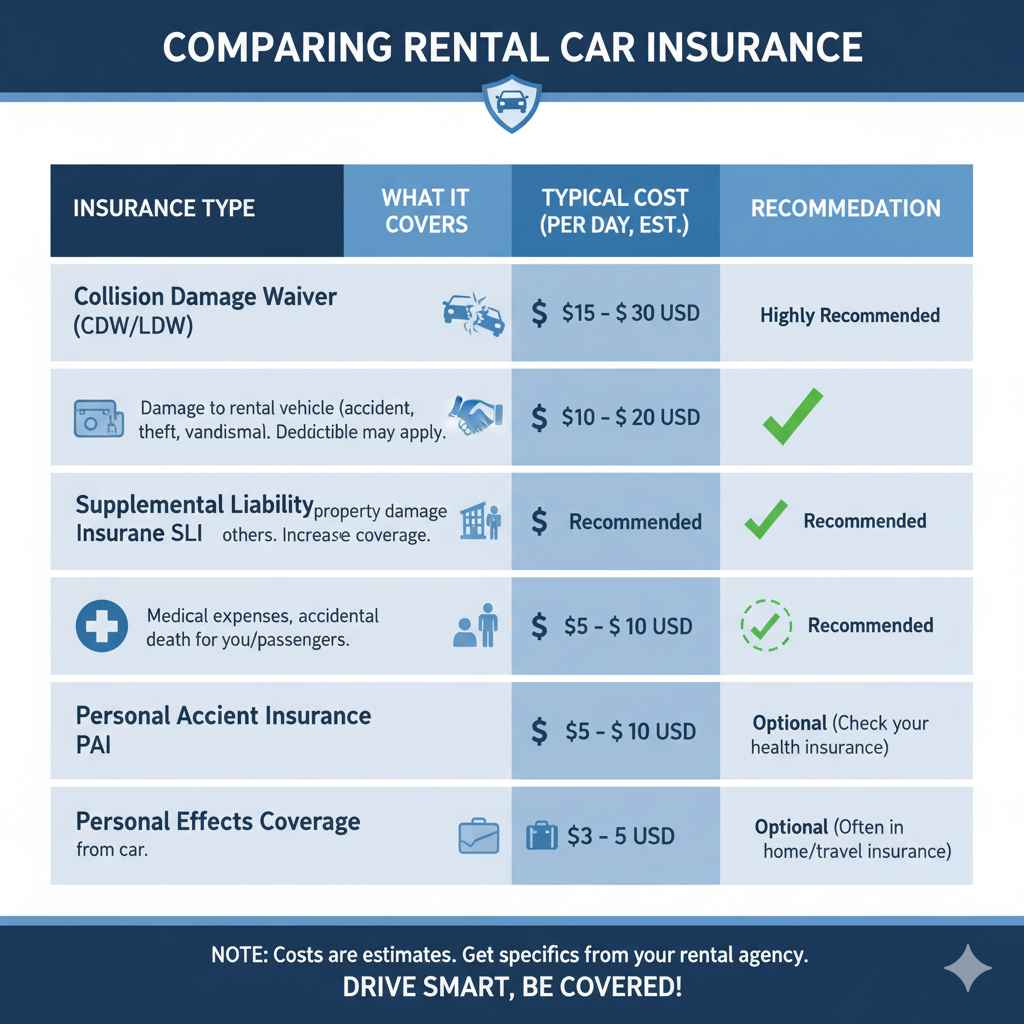
Table: Comparing Rental Car Insurance
To further clarify insurance, consider this comparison. Remember to always get specifics from your chosen rental agency.
| Insurance Type | What it Covers | Typical Cost (Per Day, Estimate) | Recommendation |
|---|---|---|---|
| Collision Damage Waiver (CDW/LDW) | Damage to the rental vehicle in case of an accident, theft, or vandalism. Often has a deductible. | $15 – $30 USD | Highly Recommended |
| Supplemental Liability Insurance (SLI) | Bodily injury and property damage you may cause to others. Often increases coverage limits beyond state/local minimums. | $10 – $20 USD | Recommended |
| Personal Accident Insurance (PAI) | Medical expenses, accidental death, and dismemberment for you and your passengers. | $5 – $10 USD | Optional, consider if your personal health insurance has limited international coverage. |
| Personal Effects Coverage (PEC) | Theft of personal belongings from the rental car. | $3 – $5 USD | Optional, often covered by home/travel insurance. |
Note: Costs are estimates and can vary significantly by company, vehicle type, optional coverage, and rental duration.
Frequently Asked Questions (FAQ)
Q1: Is it safe to drive in Guatemala City?
Driving in Guatemala City can be very busy and chaotic, with heavy traffic, aggressive drivers, and numerous intersections. It’s recommended to be extra vigilant, drive defensively, and avoid driving during peak rush hours if possible. Many visitors prefer to use taxis or ride-sharing services within the city.
Q2: Can I rent a car with a standard driver’s license?
Generally, a valid driver’s license from your home country is sufficient for renting a car in Guatemala. However, some rental companies might prefer or require an International Driving Permit (IDP), especially if your license is not in English or Spanish. It’s always best to check with your rental agency beforehand. You can learn more about obtaining an IDP from organizations like AAA.
Q3: What is the legal driving age in Guatemala?
The minimum age to rent a car in Guatemala is typically 21 or 25 years old, depending on the rental company. Drivers under 25 may also face a “young driver surcharge.”
Q4: Are there toll roads in Guatemala?
Yes, there are toll roads (cuotas) in Guatemala, particularly on major highways connecting cities like Guatemala City to Antigua, Panajachel, and the Pacific coast. The fees are generally modest and can help ensure you’re on better-maintained routes.
Q5: What should I do if I get into a minor fender-bender?
In case of a minor accident, stay calm. Exchange information with the other driver, including names and contact details. If there are injuries, call the police immediately. Take photos of the scene and any damage. Contact your rental car company as soon as possible and follow their instructions. Do not admit fault.
Q6: Is it okay to drive a 4×4 in Guatemala?
While a standard car is usually fine for most popular tourist routes, a 4×4 vehicle can provide extra peace of mind and capability if you plan to venture onto more remote, unpaved, or mountainous roads. It’s not strictly necessary for most typical tourist itineraries but can be beneficial for exploring off-the-beaten-path destinations.
Conclusion
Renting a car and driving in Guatemala can be an incredibly enriching and safe experience, offering you the freedom to explore at your own pace and discover hidden gems. By understanding the local driving culture, choosing a reputable rental company, securing adequate insurance, and always prioritizing defensive driving and awareness, you can significantly enhance your safety and enjoyment. Remember to prepare thoroughly, stay alert on the roads, and embrace the adventure. With the right preparation and a positive mindset, your Guatemalan road trip is sure to be unforgettable and, most importantly, safe!