Can You Mix Winter Tires and All-Season Tires?
You can mix winter and all-season tires only as a short-term, low-speed compromise, and never across an axle; four matched tires remain the safe setup. Mixed grip can increase braking distance, interfere with ABS and stability control, and stress the driveline, especially on AWD vehicles. This guide explains the failure modes, the least risky setup, and what to do if you cannot buy four winter tires.
Can you mix winter and all-season tires?
What each tire type is designed to do
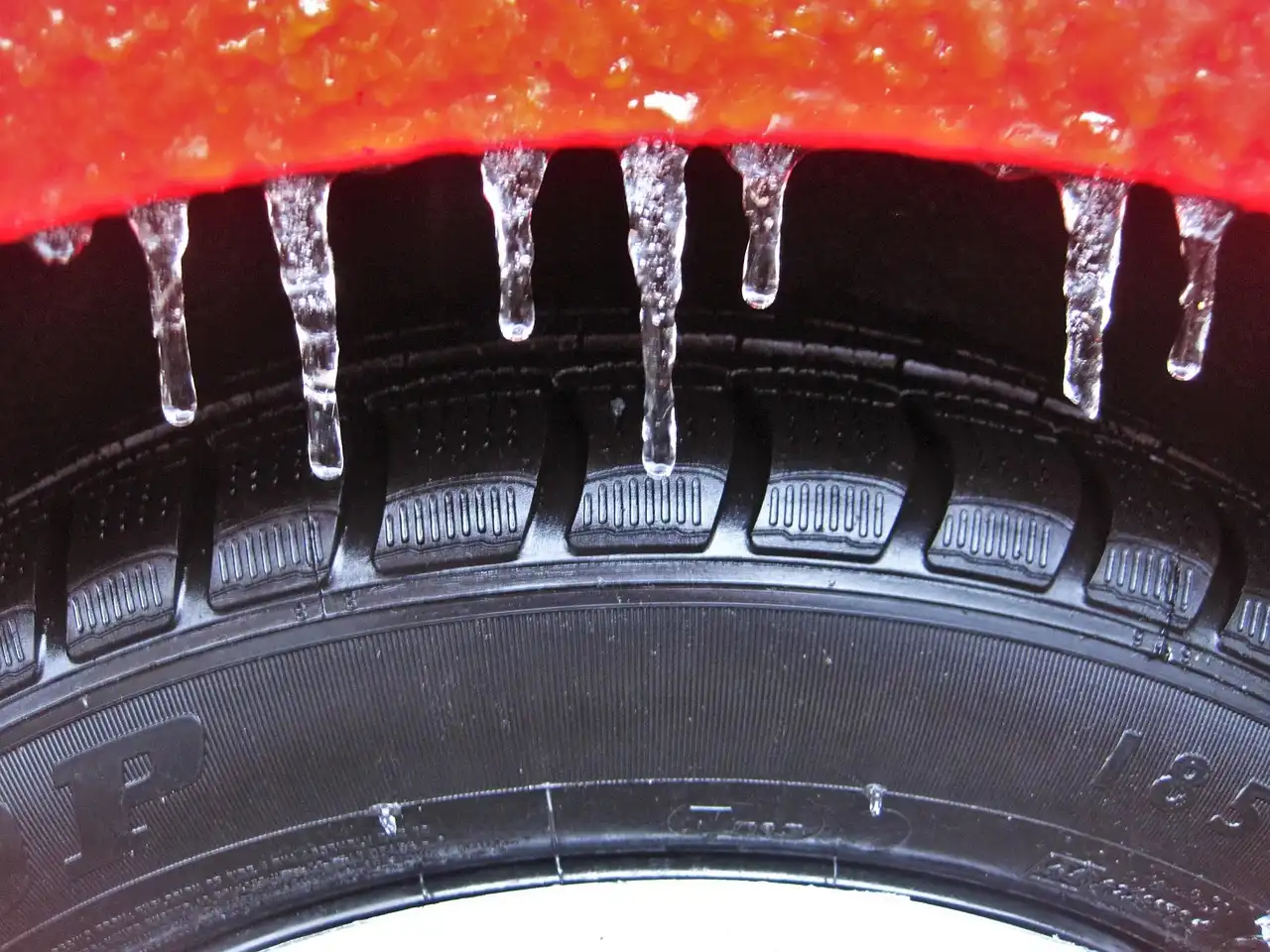
Winter tires are built for snow, ice, slush, and cold roads, and they stay flexible in freezing temperatures. They are typically recommended below 45 degrees Fahrenheit (7 degrees Celsius), and some versions are studded while others are studless. Their deep grooves and biting edges help move snow and slush away.
All-season tires are built to cover a wider range of weather, including light winter driving. They are a compromise tire, so they give up some winter traction in exchange for broader year-round use. Summer tires are tuned for warm, dry conditions, and they should not be mixed with winter tires.
Why the grip gap matters more than the label
The problem is not the name on the sidewall. It is the gap in grip, tread design, and cold-weather behavior. A winter tire can bite into snow and ice while an all-season or summer tire may stiffen in cold weather, giving each end of the car different traction on the same road.
That difference shows up first in braking and steering. The better-gripping axle slows or turns sooner, while the weaker axle lags, which can create a pull, a wiggle, or a longer stop. Mixing winter tires with summer tires is the harshest version of that mismatch.
What goes wrong with mixed tires?
Mixed tires can create traction imbalance, confuse stability systems, and change how the car behaves under braking and cornering. The problem is not only lower grip. It is the way different tread patterns, compounds, and tread depth make each wheel react differently at the same moment.
Traction imbalance on wet, cold, and snowy roads
Winter tires have more winter bite, while all-season tires give up some of that bite for versatility. On snow, ice, or slush, the winter pair may accelerate and stop more easily than the all-season pair. That imbalance can make the car feel loose at the rear or slow to settle after a lane change.
On cold wet pavement, the mismatch still matters. The better-gripping tires may hold speed while the others slip first, which changes how the car rotates. That is one reason mixed tires can lead to poor handling and longer braking distances.
ABS and traction-control confusion
ABS and traction control depend on similar wheel behavior from side to side and axle to axle. When one pair of tires has much more grip, or much more tread depth, wheel-speed sensors can see a difference that is not caused by a road hazard. That can make the system intervene sooner or more often than expected.
That does not mean the system fails outright. It means the control logic may be reacting to the mismatch, not the road. In practice, the driver may feel pulsing brakes, unexpected throttle reduction, or a warning lamp after a wheel-speed disagreement.
How mixed tread depth changes balance
Tread depth matters because it affects wet and winter handling. Newer tires can clear water and slush better than worn tires, and worn rear tires reduce traction and hydroplaning resistance. If the rear axle has less tread than the front, the back of the vehicle can lose composure first.
Say your front tires are winter tires with 9/32 inch of tread and your rear tires are all-seasons with 4/32 inch. The car may feel fine at parking-lot speed, then become vague in a slushy lane change because the rear tires run out of reserve before the fronts do.
Can you run mismatched tires for a few weeks?
Sometimes, yes, but only as a short-term fallback when budget, supply, or timing leaves you stuck. Keep speeds low, avoid snowstorms, and replace the tires as soon as you can. It is not a routine setup, and it is not acceptable if the mismatch is large, if the tires are on the same axle, or if the vehicle starts to behave oddly.
Can you Run mismatched tires for a few weeks?
| Drivetrain type | Tread-depth gap | Winter severity | Recommended action |
|---|---|---|---|
| Front-wheel drive | Small gap, under 2/32 inch | Light cold, no snow or only occasional slush | Run briefly, then replace two on the rear if needed |
| Front-wheel drive | Noticeable gap, 2/32 inch or more | Frequent snow, ice, or mountain driving | Replace four |
| Rear-wheel drive | Small gap, under 2/32 inch | Light winter use only | Run briefly, then replace two on the rear |
| Rear-wheel drive | Noticeable gap, 2/32 inch or more | Any real winter travel | Replace four |
| All-wheel drive | Any visible mismatch in tread depth or type | Any winter severity | Replace four unless the maker specifically allows the setup |
When the setup becomes unsafe
It becomes unsafe when the car pulls under braking, the rear feels nervous in turns, ABS chatters early, or traction control flashes on ordinary launches. It also becomes unsafe when the tread-depth difference is large enough to alter balance across the axles. AWD systems are the least tolerant, because the driveline has to manage four wheels that do not roll the same way.
Summer tires with winter tires are a worse combination than winter with all-season tires. Summer rubber is tuned for warm, dry roads and is not suited to cold or winter traction, so the grip gap grows larger and the control problem gets sharper.
Which axle should get the winter tires?
If you can only buy two winter tires, they should go on the rear axle. That rule applies even on front-wheel-drive cars. Rear placement helps keep the vehicle stable in braking and cornering, and it reduces the chance of a sudden rear-end slide on wet or snowy pavement.
Rear-axle placement rule
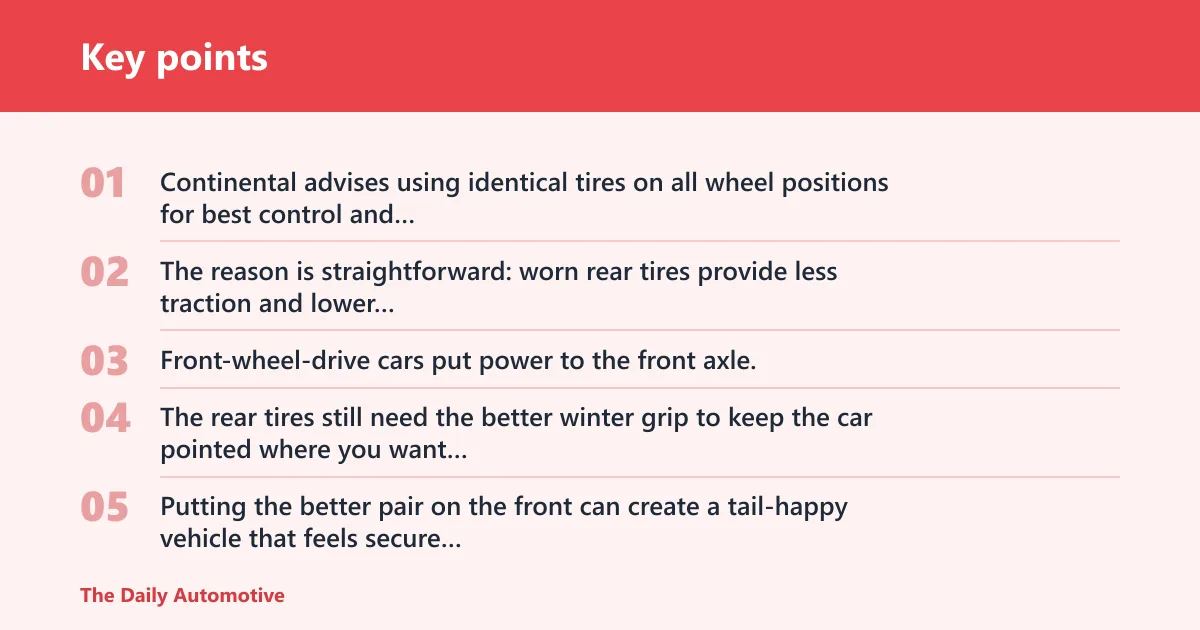
Continental advises using identical tires on all wheel positions for best control and stability, and it says if you buy two tires, place them on the rear of the vehicle. The reason is straightforward: worn rear tires provide less traction and lower hydroplaning resistance, and the back of the car can lose grip without much warning.
Front-wheel drive guidance
Front-wheel-drive cars put power to the front axle, but that does not change the placement rule for a two-tire winter purchase. The rear tires still need the better winter grip to keep the car pointed where you want it. Putting the better pair on the front can create a tail-happy vehicle that feels secure until it suddenly does not.
Rear-wheel drive guidance
Rear-wheel-drive cars also benefit from winter tires on the rear if you are installing only two. The driven axle gains traction for starting off, and the rear end has more reserve when the road gets slick. If the fronts are the better pair instead, steering may feel calmer for a moment, but the rear can break loose during braking or cornering.
All-wheel drive cautions
All-wheel drive does not cancel mismatch risk. It can still suffer from different rolling diameters, tread depths, or compound behavior across the four corners. If the system is working with mismatched tires, the center differential or clutch pack may spend more time compensating for wheel-speed differences than it should. That adds stress and can shorten component life.
Suppose an AWD crossover has one pair of winter tires at 10/32 inch and one pair of all-seasons at 3/32 inch. Even if the vehicle moves away cleanly, the control system may keep trimming power because one axle is behaving very differently from the other. That is a warning, not a normal condition.
Does tread depth mismatch matter?
Yes. Even when all four tires have the same brand and model, different tread depth changes how they clear water, slush, and snow. The deeper pair generally has more reserve, which can shift balance across the car and change how quickly the rear or front reacts. This matters on dry pavement too, because grip is not only a snow issue.
Why paired tires should match closely
Paired tires on the same axle should be as close as possible in tread depth, wear pattern, and construction. General Tire says drivers should avoid mixing different tread patterns, internal constructions, or sizes, and it states that it is always best to drive on tires identical in brand, model, size, and remaining tread depth. That is the cleanest way to keep wheel behavior predictable.
When a worn pair means replacing four
If one pair is worn far more than the other, replacing only two may still leave the car with a large balance split. That is especially true if the car uses all-wheel drive or if the existing tires are near the wear limit. In that case, replacing four is the safer choice because it restores even grip and reduces control-system conflict.
When should you replace all four tires?
Replace all four when the vehicle manual requires it, when the tire maker does not allow mixed fitment, when the size is not approved as a staggered setup, or when the tread-depth gap is large enough to affect balance and driveline behavior. Four matching tires remain the safest choice for braking, steering, and stability.
Manufacturer guidance and approved sizes
Your owner’s manual comes first. If the vehicle or tire manufacturer approves staggered sizes, follow that exact specification and do not improvise. If the manual does not allow staggered sizes, or if the tires differ in size, compound, or construction without approval, the mismatch should be treated as a problem to fix rather than a setup to keep.
When two new tires are the practical fallback
Two new tires can be a practical fallback when budget or supply forces the decision, but only if the other two tires still have usable tread and the vehicle maker does not forbid the mix. Even then, the rear axle gets the newer pair. That rule is about keeping the car stable, not about chasing the best launch traction.
Winter tire setup checklist
Before you install mixed tires, check the warning signs below and measure tread carefully. If the car already shows instability, do not treat the mixed setup as a solution. Fix the tire mismatch first.
| Check | What to look for | Action |
|---|---|---|
| ABS warning | ABS lamp stays on after startup or comes on during normal driving | Stop and inspect the tire match, sensor area, and manual guidance |
| Traction-control warning | Traction-control lamp flashes on dry pavement or during gentle acceleration | Check for tread and grip mismatch before driving farther |
| Steering feel | Pulling, wandering, or delayed response in corners | Replace the mismatched pair or all four |
| Braking feel | Longer stop, early ABS pulsing, or rear instability | Do not continue the setup as normal use |
| Tread depth | Visible gap between axles or one pair near the wear limit | Match tread more closely or replace four |
- Check the owner’s manual for tire size, approved staggered fitment, and any AWD limits.
- Measure tread depth on all four tires, not just the worn pair.
- Keep the better pair on the rear axle if you can only install two tires.
- Reject any setup that causes ABS, traction control, pulling, or rear instability.
- Replace all four if the mismatch is large or the vehicle maker requires matched tires.
Frequently asked questions
Can you mix winter tires and all-season tires on the same car?
You can, but only as a short-term compromise and not across an axle. The safest choice is four matching tires. Mixed winter and all-season tires can create uneven grip, longer braking distances, and extra work for ABS and traction control.
Is it safe to put winter tires on only two wheels?
It can be acceptable for a brief period if you must, but only with the winter pair on the rear axle. That placement helps preserve stability. It is still a fallback, not a preferred setup, and it should be corrected as soon as possible.
Which axle should winter tires go on if I can only buy two?
Put them on the rear axle. That rule applies across front-wheel-drive, rear-wheel-drive, and all-wheel-drive vehicles because rear grip has a bigger effect on straight-line stability and cornering balance when the road is slick.
What happens if my tires have different tread patterns or tread depth?
Different tread patterns or tread depth can change braking, cornering, and straight-line tracking. One axle may grip sooner than the other, which can make the vehicle pull, wander, or react oddly when ABS or traction control steps in.
Can mixed tire types affect traction control or ABS?
Yes. Those systems depend on similar wheel-speed behavior. When one tire set grips or rolls differently, the system may think a wheel is slipping and intervene early. That can produce warning lights, pulsing brakes, or unexpected power reduction.
Are winter tires still worth it if I only drive in light snow?
Yes, if temperatures regularly drop below 45 degrees Fahrenheit (7 degrees Celsius) or you still see snow, slush, or icy mornings. Winter tires are built for that kind of use, while all-season tires are only a compromise for light winter weather.
Products related to this article
Sponsored / affiliate links. As an Amazon Associate I earn from qualifying purchases. I may earn additional commission from eligible campaigns.