Paintless Dent Repair Hail Damage Hood
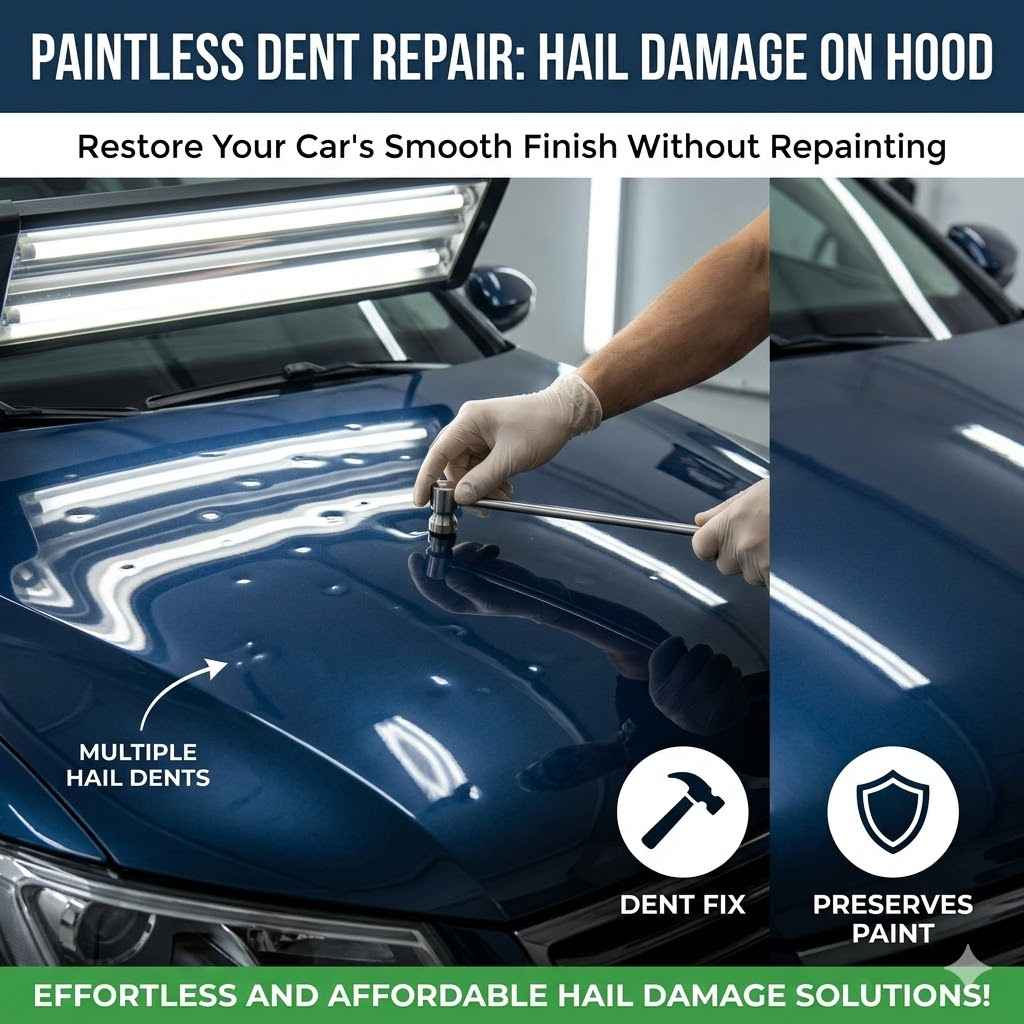
When hail strikes, it can leave tiny dents all over your car’s hood. Many folks wonder if they can fix these themselves, especially with paintless dent repair. It might seem tricky at first, but learning about Paintless Dent Repair for Hail Damage Hood can make it much simpler.
We’ll walk through it step-by-step so you can feel confident. Get ready to see how easy it can be.
Understanding Paintless Dent Repair for Hail Damage Hood
Paintless Dent Repair, often called PDR, is a smart way to fix dents without messing up your car’s paint. It’s super popular for hail damage because hail usually pushes the metal in without breaking the paint. This method is great because it keeps your car’s original finish.
This is important for its look and value. For a hail-damaged hood, PDR is often the best first choice. It saves time and money compared to traditional body shop repairs.
What is Paintless Dent Repair?
Paintless Dent Repair is a technique used to remove dents and dings from a vehicle’s body panels. The goal is to push or pull the metal back to its original shape. This is done from behind the panel.
Technicians use special tools to massage the metal. They work slowly and carefully. The paint surface remains untouched.
This means no repainting is needed. This is a big advantage over older methods.
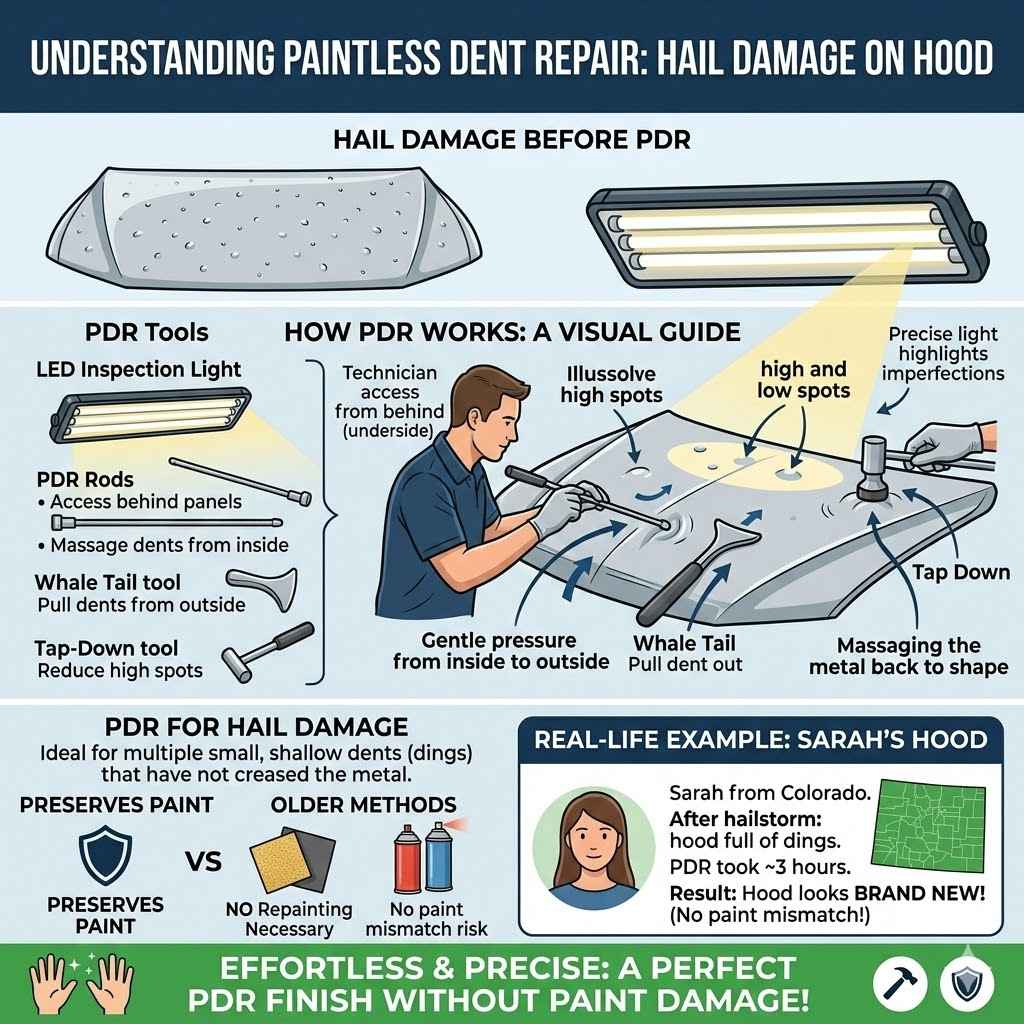
The tools used in PDR are designed to be precise. They include rods, levers, and special lights. These lights help the technician see the dent’s shape clearly.
They can then apply just the right amount of pressure. This avoids stressing the metal or cracking the paint. It requires a lot of skill and practice.
PDR works best on dents that haven’t creased the metal. It also works better on areas where the metal isn’t too stressed. For a car hood that has many small dents from hail, PDR is ideal.
It can often fix all the small dents in one go. This makes it a very efficient repair method.
How PDR Works on a Hail Damaged Hood
When hail hits a car hood, it creates many small, shallow dents. These are often called “dings.” Because the impact is usually not strong enough to crack the paint, the metal is just pushed inward. This is where PDR shines.
The technician will access the back of the hood panel. They use specialized tools to gently push the metal outwards from the inside. This process is called “massaging” the dent out.
For hail damage, a technician might use a tool called a “whale tail” or a “tap-down tool.” A whale tail is used to carefully pull the dent out from the outside. A tap-down tool is used to gently tap down any high spots that might appear as the dent is being removed. The goal is to make the surface perfectly smooth again.
Real-life Example: Sarah lives in Colorado, a state known for frequent hailstorms. After a bad storm, her car hood looked like it had been peppered with tiny dimples. A PDR technician spent about three hours on her car.
They used their tools to push out each small dent from behind. Sarah’s hood looked brand new afterwards, and she didn’t have to worry about mismatched paint colors from a repaint.
A key aspect is using the right lighting. Special LED or fluorescent lights are used to show the high and low spots on the metal. This helps the technician see exactly where to work.
It’s like having a spotlight on the damage. This precision is what allows PDR to restore the panel’s original form without paint damage. This level of detail is crucial for a perfect finish.
Key Tools Used in Paintless Dent Repair
The effectiveness of Paintless Dent Repair relies heavily on the specialized tools used. These tools are designed to manipulate metal with extreme precision. They allow technicians to work from the backside of the panel, gently coaxing the metal back into its original shape.
Without these tools, PDR would not be possible.
One common set of tools includes various metal rods. These rods come in different lengths and shapes. They have specially designed tips.
These tips are used to push the dent out from behind. The technician carefully inserts the rod through existing access holes in the car’s structure. They then use the rod to apply controlled pressure to the underside of the dented metal.
Another important tool is the tap-down or knockdown tool. As the metal is pushed out, sometimes the area around the dent can become slightly raised. This high spot needs to be gently tapped down to match the surrounding panel.
The tap-down tool allows for very precise control over this process.
Specialized lights are also essential. These lights create reflections on the metal surface. By observing these reflections, the technician can see the exact contours of the dent.
They can identify high spots and low spots with great accuracy. This visual feedback is critical for achieving a flawless repair.
Finally, there are glue-pulling systems. These systems are used when access to the back of the panel is difficult. A special tab is glued to the outside of the dent.
Then, a PDR puller tool is used to gently pull the tab and the dented metal outwards. Once the dent is mostly removed, the glue is removed, and any remaining imperfections are addressed with other tools.
When is Paintless Dent Repair Suitable?
Paintless Dent Repair is not a magic bullet for every type of damage. It works best under specific conditions. For hail damage on a car hood, these conditions are often met.
Understanding these limitations helps set realistic expectations.
The most important factor is the paint. PDR requires that the paint is not cracked, chipped, or severely scratched. If the paint is damaged, traditional body repair methods involving filling and repainting will likely be necessary.
Hail damage typically does not break the paint, making it a good candidate for PDR.
The depth and sharpness of the dent also matter. Very sharp, creased dents, or dents with deep scratches are harder to fix with PDR. They might leave a slight imperfection or require extensive work.
Small to medium-sized shallow dents, like those from hail, are ideal.
The location of the dent is another consideration. Dents on body lines or edges of panels can be more challenging. The metal in these areas is often stressed.
However, experienced PDR technicians can often still repair dents in these areas.
Sample Scenario: Imagine your car is hit by a light hailstorm. You inspect your hood and notice dozens of small, shallow dents. The paint looks perfect.
This is a classic case where PDR would be highly effective. An experienced technician could likely restore your hood to its original condition.
Conversely, if a large, heavy object fell on your hood and created a sharp, deep crease, PDR might not be the best option. The metal would be too severely stretched or creased. In such a case, a body shop would likely need to perform traditional repairs.
The Process of Paintless Dent Repair for Hail Damage
Fixing a hail-damaged car hood using Paintless Dent Repair involves a systematic approach. It requires patience and skill from the technician. The process ensures that the dent is removed as gently as possible, preserving the original paint.
This methodical approach is key to achieving excellent results.
Initial Assessment and Preparation
Before any work begins, the technician will carefully inspect the hail damage. They need to assess the size, depth, and location of each dent. They will also check the condition of the paint.
This step is crucial because it determines if PDR is the right method. It also helps the technician plan their approach.
The car is usually cleaned thoroughly. This is important because dirt or debris can scratch the paint during the repair process. Once clean, the technician will often use specialized lighting to highlight the dents.
This makes it easier to see the full extent of the damage.
For a hail-damaged hood, there might be hundreds of small dents. The technician might mark them or simply work methodically across the panel. This preparation phase sets the stage for a successful repair.
It ensures that the technician has a clear understanding of the damage before they start working.
Example Statistic: According to industry reports, PDR can successfully repair up to 90% of all hail-related dents on vehicle bodies, provided the paint remains intact.
Accessing the Dent From Behind
The core of PDR involves working from the backside of the metal panel. For most car hoods, there are access points. These might be through existing holes in the hood structure or by carefully removing internal components.
The technician needs to get their specialized tools behind the dented area.
Sometimes, the technician might need to remove headlights, hood latches, or other parts to gain better access. This is done carefully to avoid any damage to these components. The goal is to create a clear path for their PDR tools.
Once access is achieved, the technician will position their tools. They will use rods or levers to apply gentle, controlled pressure. This pressure is applied to the underside of the dent.
They work slowly, often making small pushes at a time. The technician watches the surface of the hood from the front, using their lights, to see the dent disappear.
This step requires a lot of feel and experience. Pushing too hard or in the wrong spot can create new high spots or even damage the metal. It’s a delicate balance of pressure and finesse.
Using PDR Tools for Dent Removal
With access secured, the technician begins the actual dent removal. This is where the specialized PDR tools come into play. For hail damage, this often involves a combination of techniques.
The technician might use a metal rod to push the dent out from behind. They will carefully manipulate the rod, applying pressure. As the dent starts to rise, the technician watches the reflections under their light.
They adjust their pressure and angle as needed.
If a high spot appears on the surface, the technician will use a tap-down tool. This tool gently taps the high spot to level it with the surrounding metal. This back-and-forth process of pushing and tapping is repeated until the dent is no longer visible.
For dents that are difficult to reach or are on a sharp body line, a glue-pulling system might be used. A special tab is glued to the dent’s surface. A puller tool is then attached to the tab.
This tool gently pulls the dented metal outwards. After the dent is mostly removed, the glue is dissolved and cleaned off. Any remaining minor imperfections are then refined with other tools.
Refining and Finishing
Once the main dents are removed, the technician moves to the refinement stage. Even with careful work, there might be very subtle imperfections left. These are called “low spots” or minor unevenness.
The technician will use their specialized lights to scan the entire repaired area. They look for any remaining distortions in the reflections. They will use their tools to make tiny adjustments.
This might involve very light tapping or minor pushes.
The goal is to make the surface as smooth and seamless as possible. It should look like the dent was never there. This final stage requires extreme precision.
It’s what separates a good PDR job from a great one.
Case Study: A car owner brought in their vehicle after a severe hailstorm. The hood was covered in hundreds of small dents. The PDR technician spent over six hours on the hood alone.
They systematically worked across the panel, using a combination of rod work and tapping. The final result was a hood that looked factory-perfect, with no trace of the hail damage. The owner saved a significant amount of money compared to traditional body shop repairs.
The area is then cleaned one last time. This ensures no residue from the tools or cleaning agents is left behind. The owner can then see the perfect finish of their restored hood.
Benefits of Choosing Paintless Dent Repair for Hail Damage
Opting for Paintless Dent Repair for hail damage on your car’s hood offers several distinct advantages. These benefits make it a popular and practical choice for many car owners. It’s not just about fixing the dents; it’s about preserving your vehicle’s overall condition.
Preserving Original Paint and Value
One of the biggest benefits of PDR is that it keeps your car’s original factory paint. Repainting a car, especially a hood, can be a complex process. It involves color matching, which can be difficult.
Even the best repaint might not perfectly match the original paint. This can affect the car’s appearance and resale value.
With PDR, the original paint is untouched. This means the integrity of the factory finish is maintained. A car with its original paint is generally more desirable to buyers.
It suggests the car has been well-cared for. This can lead to a higher resale price compared to a car that has been repainted.
Example Statistic: Studies suggest that vehicles with original paint finishes can retain up to 10-15% more value than those that have undergone repainting due to damage.
For a hail-damaged hood, where the paint is usually intact, PDR is the ideal solution. It allows you to restore the hood’s appearance without compromising its original factory finish. This is a win-win situation for the car owner.
Cost-Effectiveness and Speed
Compared to traditional body shop repairs, PDR is often significantly more affordable. Traditional methods involve filling dents, sanding, priming, and repainting. These steps require more labor, materials, and time.
PDR, on the other hand, focuses solely on manipulating the metal.
This means fewer materials are used, and the labor is often less intensive for minor to moderate hail damage. The time savings are also substantial. While a traditional repair might take days or even weeks, PDR can often be completed in a matter of hours or a few days, depending on the severity of the hail damage.
For car owners facing widespread hail damage, the cost savings can be immense. Imagine hundreds of small dents on a hood. Repainting the entire hood would be very expensive.
PDR can fix all those dents efficiently, keeping the costs much lower.
Sample Scenario: John’s car was hit by a hailstorm, leaving his hood with numerous small dents. He got quotes from two body shops for repainting the hood, which came in at over $1000. He then contacted a PDR specialist who assessed the damage and quoted $400.
John chose PDR and was thrilled with the results, saving over $600 and getting his car back the same day.
The speed of repair is also a major advantage. Many PDR shops can repair a hail-damaged hood within a day. This means less time without your vehicle, which is a great convenience.
Environmental Benefits
Paintless Dent Repair is also a more environmentally friendly option. Traditional body shop repairs involve the use of paints, primers, solvents, and other chemicals. These can release volatile organic compounds (VOCs) into the atmosphere.
VOCs contribute to air pollution and can be harmful to human health.
PDR, however, does not involve any painting or chemical use. The process is purely mechanical. It focuses on reshaping the metal.
This means there are no VOC emissions. It also reduces waste, as no disposable materials like sandpaper or filler are needed for the dent removal itself.
By choosing PDR, you are opting for a repair method that has a lower environmental impact. This is an increasingly important consideration for many consumers. It aligns with a desire to make more sustainable choices.
Table: Comparison of Repair Methods
| Feature | Paintless Dent Repair (PDR) | Traditional Body Shop Repair |
|---|---|---|
| Paint Involvement | None | Repainting Required |
| Cost | Lower | Higher |
| Time | Faster | Slower |
| Environmental | Eco-friendly, no VOCs | Uses chemicals, VOCs |
| Value Retention | Higher | Lower (if repainted) |
The table clearly shows why PDR is often preferred for hail damage. It’s a cleaner, faster, and often cheaper way to fix your car.
DIY vs. Professional Paintless Dent Repair
While the concept of Paintless Dent Repair for hail damage might sound simple, attempting it as a DIY project can be challenging. There are kits available for consumers, but they often fall short of professional results. Understanding the difference is key to a successful repair.
Challenges of DIY Paintless Dent Repair
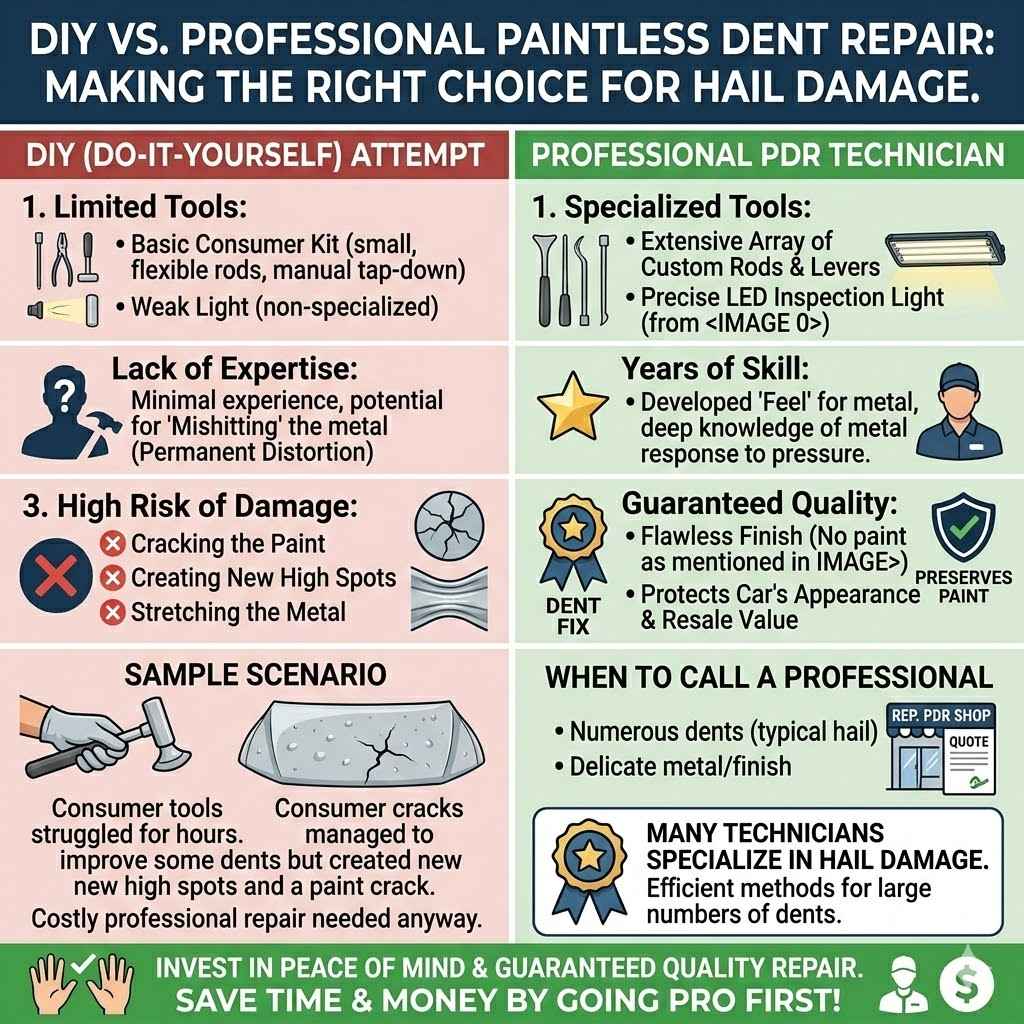
One of the main challenges with DIY PDR is the lack of specialized tools. Professional technicians use a wide array of custom-made rods, levers, and lighting systems. These tools are designed for precision and control, allowing them to work on delicate metal.
Consumer-grade PDR kits often have simpler tools that lack the finesse required. Trying to force a dent out with the wrong tool can easily lead to more damage. This includes cracking the paint, creating new high spots, or stretching the metal.
The metal has memory, and mishitting it can cause permanent distortion.
Another significant hurdle is the skill and experience required. A professional PDR technician spends years honing their craft. They develop a feel for the metal and an eye for detail.
They understand how metal responds to pressure. This knowledge is gained through countless hours of practice.
Sample Scenario: A car owner bought a PDR kit online to fix hail dents on their hood. After several hours of struggling, they managed to slightly improve some dents but created new high spots and even a small crack in the paint. They ended up having to take their car to a professional PDR technician anyway, who had to fix the damage they caused, costing more than if they had gone to a professional initially.
The lighting used in professional PDR is also crucial. Special lights create reflections that highlight imperfections. Without this, it’s very difficult to see exactly where to push or tap.
DIY kits often provide basic lights that are not as effective.
When to Call a Professional Technician
For minor, shallow dents in an inconspicuous area, a DIY kit might offer some limited success. However, for typical hail damage, which often involves numerous dents spread across a large area like a car hood, professional help is highly recommended. This is especially true if you value your car’s appearance and resale value.
A professional PDR technician has the experience and the right tools to handle the job effectively. They can assess the damage accurately and determine the best approach. They know how to work with different types of metal and paint finishes.
If your car has been hit by a significant hailstorm, it’s wise to get a quote from a reputable PDR shop. They can evaluate the damage to your hood and give you an honest assessment of whether PDR is suitable. They can also provide an estimate for the repair cost and time.
Many PDR technicians specialize in hail damage. They have developed efficient methods for handling large numbers of dents quickly and effectively. Their expertise ensures a high-quality repair that restores your hood to its original condition without affecting the paint.
Choosing a professional means you are investing in a guaranteed quality repair. It saves you the frustration and potential further damage that can come with DIY attempts. The peace of mind knowing your car is in expert hands is invaluable.
Frequently Asked Questions
Question: Can all hail dents be repaired with PDR?
Answer: Most hail dents can be repaired with PDR, as long as the paint is not cracked or damaged. Very sharp, creased dents or extremely large dents may require traditional body shop methods.
Question: How long does it take to repair a hail-damaged hood using PDR?
Answer: The time varies greatly depending on the number and severity of the dents. A light hail damage repair on a hood might take a few hours, while severe damage could take a day or two.
Question: Does PDR affect my car’s warranty?
Answer: Generally, PDR does not affect your car’s warranty. Since it preserves the original paint, it is considered a non-invasive repair method. It is always a good idea to check your specific warranty details.
Question: Is PDR more expensive than traditional repairs?
Answer: For hail damage, PDR is typically less expensive than traditional repairs because it avoids the costs associated with repainting and extensive bodywork.
Question: Can I fix hail dents myself with a kit?
Answer: While some minor dents might be partially improved with DIY kits, it’s generally not recommended for widespread hail damage. Professional technicians have specialized tools and extensive experience for the best results.
Conclusion
Paintless Dent Repair for hail damage on your car hood is a smart, effective solution. It preserves your car’s original paint and value. PDR is typically faster and more affordable than traditional body shop repairs.
Professionals use specialized tools and techniques for a seamless finish. While DIY kits exist, the expertise of a trained technician is usually needed for the best results on hail damage.