Tire Pressure Monitoring System Review: Is It Worth It?
An aftermarket TPMS is worth it if your vehicle lacks factory monitoring, you tow, haul heavy loads, or want per-tire live data. For a normal factory-equipped commuter car, it is usually redundant. Ignore low pressure or bad readings, and you can lose fuel economy, tire life, braking margin, or even a tire. This guide weighs TPMS by use case and explains when the extra cost is justified.
Verdict

The strongest case is for trailers, RVs, and tow rigs. Factory TPMS often stops short there, because many systems warn only after a tire is already well below target, and many do not show each tire’s actual pressure. A direct aftermarket system gives you live readings, temperature data, and alarms before the problem becomes a roadside event.
Specs at a glance
| Spec | VEVOR RV TPMS |
|---|---|
| Monitor scope | Up to 22 tires |
| Sensors included | 6 external sensors |
| Pressure support | 0-199 PSI |
| Alarm modes | 7 alarm modes |
| Signal support | 1 signal booster |
| Sensor type | Waterproof external sensors |
Who it
This system makes sense if you need direct, live tire data rather than a dashboard warning light. It fits RVs, long trailers, tow vehicles, and owners who want pressure and temperature visible on demand instead of waiting for a factory warning.
Factory TPMS is often enough for a 2008-and-newer U.S. passenger car used only for daily commuting. Those systems are mandatory on new U.S. passenger vehicles, but many only warn when pressure is already significantly low. They often do not show each tire’s actual pressure.
What works
Real-time pressure and temperature data are the main reason to buy direct TPMS. Pressure loss rarely happens in a tidy way, and heat buildup matters on trailers, tow rigs, and heavily loaded vehicles. A system that watches both numbers gives you more context than a simple warning lamp.
Alarm flexibility is another advantage. Common aftermarket systems offer low-pressure, high-pressure, rapid-leak, high-temperature, sensor-battery-low, and signal-loss alerts. Some models let you set custom pressure thresholds or automatically learn a reference pressure, then warn around that baseline.
Display quality matters more than many buyers expect. A color LCD with adaptive backlight is easier to read in bright sun or at night, and split-screen cycling helps when the vehicle has more than four monitored positions. Many monitors use solar charging with USB backup or a plug-in 12V connection.
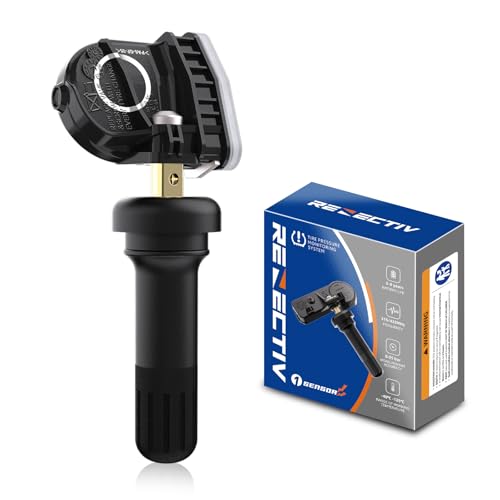
External sensors are usually valve-stem mounted, which keeps installation straightforward and avoids tire removal. Many are rated IP67 waterproof, and battery life varies by model. Some are closer to 2 years, while others are rated for 5-8 years. Sensor low-battery alerts help you plan replacement instead of finding out during a trip.
Say your SUV tows a 28-foot camper and one rear tire starts losing 4 to 5 PSI over a few hours. A factory system may stay quiet until the tire is already well below target. A direct TPMS can flag the slow leak earlier and show which wheel is drifting.
What does not?
Factory systems that hide per-tire readings are the biggest limitation. They can satisfy the legal requirement, yet still leave you guessing about which tire is soft, how far it has drifted, and whether a slow leak is getting worse. That is a real gap for towing and long trips.
Short-range setups are also a poor fit for long trailers. Signal loss becomes more likely as vehicle length grows, especially on motorhomes and long tow combinations. For rigs longer than about 36 feet, a trailer TPMS repeater is often the safer choice.
PSI range is another hard limit. Many passenger-car and light-truck TPMS systems are commonly reported to top out around 87 PSI. That can work for normal road vehicles, but it is not enough for some RV, motorhome, and heavy-duty applications. If the display cannot read your normal operating pressure, it is the wrong system.
A common first-timer mistake is buying a system for a cargo trailer with 65 PSI tires and then choosing a model that only reads to 87 PSI without checking the alarm setup. That may still work, but only if the display range matches the actual tire spec and the sensor range leaves enough headroom.
Alternatives
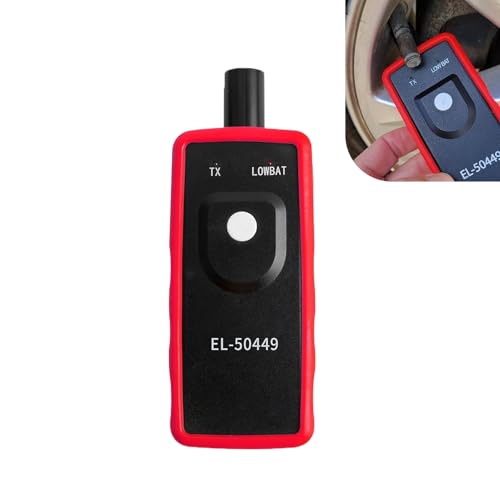
Titwaye’s EL-50449-style relearn tool is not a TPMS monitor, but it is useful if you need to reset sensors after tire rotation or clear a false warning on many cars, trucks, and SUVs. The drawback is obvious: it does not give live pressure, temperature, or trailer coverage. It is a reset tool, not a monitoring system.

MOCATEC’s GM-specific EL-50448 relearn tool fits Chevrolet, GMC, Cadillac, and Buick owners who need a low-cost reset device. It is narrowly aimed at GM compatibility, which is its strength and its limit. It can help after service work, but it does not replace live TPMS data or solve trailer signal range.
Should you buy it?
Buy aftermarket TPMS if you need more than a warning light. That means a trailer, RV, tow rig, older vehicle without TPMS, or a setup where you want actual pressure and temperature in front of you while driving. In those cases, the extra cost can be easier to justify than a damaged tire or a missed leak.
If you drive a newer commuter car with factory TPMS and do not tow, carry unusual loads, or fight chronic pressure loss, you can usually keep the factory system. It is already standard on every new U.S. passenger vehicle sold since 2008, and for simple daily use that is often enough.
TPMS decision matrix
| Product | Badge | Best for | Price | ||
|---|---|---|---|---|---|
|
VEVOR RV Tire Pressure Monitoring System Monitor up to 22VEVOR | Our pick | RV TPMS · 22 Tires · Real-Time | $121.24
Price as of 19 Oct 2026
|
View |
|
2026 Version EL-50448 GM TPMS Relearn Tool Chevy TPMSMOCATEC | Budget pick | GM TPMS Relearn · 2026 Version · Tool | $8.77
Price as of 19 Oct 2026
|
View |
|
Titwaye TPMS Relearn Reset Tool, Tire Pressure SensorTitwaye | Also great | Universal TPMS Relearn · EL-50449 · Black | $9.79
Price as of 19 Oct 2026
|
View |
| Scenario | Aftermarket worth it? | Minimum PSI range needed | Need repeater? | Likely total setup cost |
|---|---|---|---|---|
| Factory TPMS commuter car | No, usually redundant | 0-87 PSI is enough for most passenger tires | No | $0 if factory system works |
| Older vehicle without TPMS | Yes | 0-87 PSI for most cars and light trucks | No | About $60-$150 for a monitor and sensors |
| Towing SUV or truck | Yes, if you tow often | 0-144 PSI for many tow and LT setups | Sometimes, if the trailer is long | About $100-$250 with extra sensors |
| RV or trailer | Yes | 0-144 PSI, or up to 210 PSI for heavy motorhomes | Often, for rigs longer than about 36 feet | About $150-$400+ with repeater and more sensors |
What does a TPMS actually monitor besides tire pressure?
Direct aftermarket TPMS often monitors tire temperature, signal status, and sensor battery condition in addition to pressure. That matters because heat can warn you about drag, underinflation, or load stress before the tire loses enough air to trip a simple low-pressure warning.
Most systems also monitor alarm states, not just a live number. The useful ones let you set low-pressure, high-pressure, rapid-leak, high-temperature, sensor-battery-low, and signal-loss alerts. Some models also use automatic reference-pressure setup, which makes setup easier after inflation or tire rotation.
Factory TPMS is different. Many systems on U.S. passenger vehicles only alert when pressure is significantly low, and many do not show individual tire pressures. That makes them better than nothing, but less useful for diagnosing a slow leak or tracking a tire on a trailer.
Do you need aftermarket TPMS if your car already has factory TPMS?

For most commuter cars, no. If your vehicle already has factory TPMS and you do not tow or haul heavy loads, the factory system is usually enough for basic warning duty. It is standard on every new U.S. passenger vehicle sold since 2008, so the baseline protection is already there.
You do want aftermarket TPMS if you need live per-tire data, if your factory display only gives a warning after a tire is already very low, or if you regularly change load conditions. The extra hardware starts to earn its keep when the dash light alone is not enough information.
Common factory systems are indirect or limited direct designs, and both can miss the real story until the tire is already in trouble. Aftermarket direct sensors put actual pressure at the wheel, which is why they are preferred for trailers, RVs, and towing.
Cars and SUVs
For cars and light SUVs, choose an aftermarket TPMS only if you want live readings, you have chronic slow leaks, or you use the vehicle for towing. A compact monitor with a 0-87 PSI range is usually enough for normal passenger tires.
Trucks and tow rigs
Tow vehicles need more range headroom. Many light-truck applications are fine with 0-144 PSI support, especially if you want room for higher cold inflation pressures under load. External valve-stem sensors are the standard choice here, and the display should allow custom alarms.
RVs and trailers
RVs and trailers need the most planning. Heavy motorhomes may need 210 PSI support, long trailers often need a repeater, and coverage can rise to 12 tires on some systems or even 26 tires on RV-focused units. That is where aftermarket TPMS is most clearly worth the money.
Which TPMS works best for RVs and trailers?
For RVs and trailers, choose a direct aftermarket system with enough sensor count, enough PSI range, and a signal booster or repeater if the rig is long. That is the segment where factory TPMS is least helpful, because it rarely covers a trailer and often cannot show tire-by-tire data anyway.
The VEVOR unit is built around this use case, with up to 22 tires, 6 sensors, 7 alarm modes, and a signal booster. By comparison, the Tymate TM12 supports up to 12 tires across four zones, and the EEZTire TPMS6ATC goes much farther with up to 26 tires and 210 PSI support.
Choose the system around the trailer or coach first, then the tow vehicle. A monitor that cannot cover the tires you actually need to watch is the wrong buy, even if it looks feature-rich on paper.
How accurate are aftermarket tire pressure monitoring systems?
Accuracy varies by model, but direct sensor systems are generally better suited to tire-by-tire monitoring than factory systems that only infer a problem. One listed example claims ±1.5 PSI or ±3°F, which is the kind of spec buyers should look for when comparing models.
Accuracy can still drift in real use if the sensor is removed during inflation, installed poorly, or used outside its pressure range. Temperature swings matter too, because pressure changes with heat. That is not a defect unique to TPMS; it is how tire physics works.
The key is to judge the system by what it can read consistently, not by a marketing headline. A unit that shows the wrong pressure range for your truck or trailer is effectively inaccurate for your use case, even if the sensor itself is technically precise.
Do solar-powered TPMS monitors work reliably?
Yes, if the monitor includes a backup charging path and the vehicle sees enough daylight. Solar-powered TPMS monitors can work well for everyday driving, but they should not be treated as solar-only devices. A USB backup charge is the safer setup.
The better approach is to treat solar as convenience, not as the sole power source. The Tymate TM2, for example, uses a solar-charged monitor with USB charging backup, which is the right kind of redundancy. Plug-in 12V monitors are still the more predictable choice for some owners.
Parking habits matter. A shaded windshield, covered storage, or long periods off the road can make a solar-only unit less dependable. If the vehicle sits indoors often, choose a model with USB backup or a dedicated 12V power option.
What PSI range should I choose for my vehicle?
Pick the range around your real cold inflation pressure, then leave room above it. Many passenger cars and light trucks fit within 0-87 PSI, while towing and heavier-duty applications often need 0-144 PSI. Heavy motorhomes can require support up to 210 PSI.
If your tires run close to the system ceiling, do not buy that system. A monitor that maxes out at 87 PSI is a bad match for a trailer tire that needs higher pressure or a heavy-duty setup that runs well above passenger-car values.
For mixed-use rigs, match the highest-pressure tire you need to watch, not the lowest. That is especially important when a tow vehicle and trailer use different tire classes, because one monitor may need to cover both.
Will I need a repeater for a long trailer TPMS?
Probably, if the rig is longer than about 36 feet. A repeater extends signal range and reduces dropouts between the trailer sensors and the cab monitor. That matters on long trailers and motorhomes, where distance and body structure can interfere with transmission.
If your trailer is shorter and the monitor is mounted close to the tow vehicle, you may not need one. But once the setup stretches into motorhome or long fifth-wheel territory, the repeater becomes cheap insurance against signal loss.
Budget for it early. A repeater adds cost, but it also closes one of the most common failure points in long-rig monitoring. On a large RV setup, that cost is easier to justify than missing a sensor because the signal never reaches the display.
Frequently asked questions
Is a tire pressure monitoring system worth it for my car?
For a normal factory-equipped commuter car, usually not. The factory system already provides basic warning coverage, and every new U.S. passenger vehicle sold since 2008 has one. Aftermarket TPMS becomes worth it when you want live per-tire data, tow, or carry loads that push tire pressures higher.
Products related to this article
Sponsored / affiliate links. As an Amazon Associate I earn from qualifying purchases. I may earn additional commission from eligible campaigns.