Should You Add Coolant While Car Is Running: Essential Safety
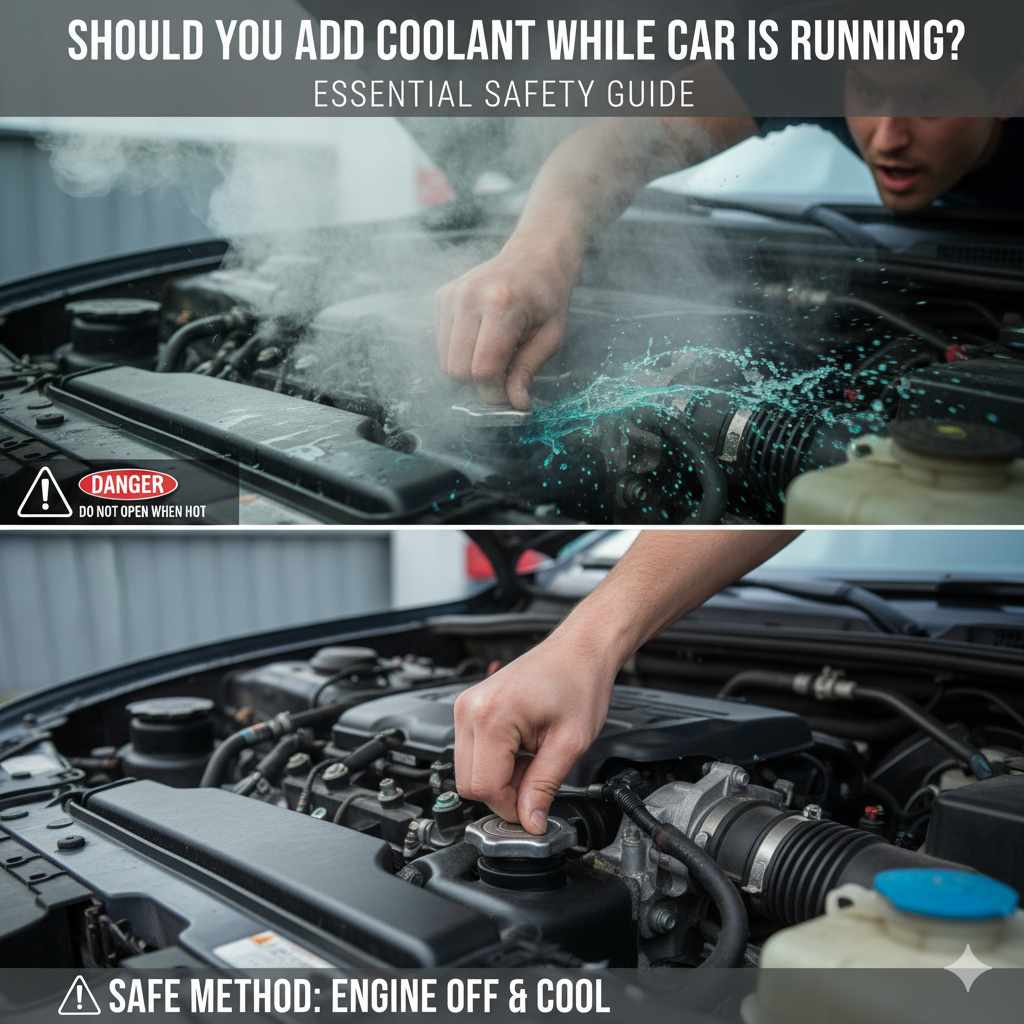
No, you should never add coolant while your car is running. Doing so is extremely dangerous due to high pressure and extreme heat. Always wait for the engine to cool down completely before opening the coolant reservoir or radiator cap.
It’s a common worry: your car’s temperature gauge nudges into the red zone, or a dashboard warning light flashes. Your first thought might be, “I need to add coolant!” But then comes the crucial question: can you do it while the engine is still on? Many folks wonder if topping off coolant is an emergency fix that requires immediate action, even if the engine is running. This can be a confusing and even dangerous situation if you’re unsure. But don’t worry, understanding this simple car care task is easier than you think. We’re here to walk you through exactly why you shouldn’t add coolant when your car is running and the safe way to do it. Let’s get your car running cool and you feeling confident!
Why You Should NEVER Add Coolant While Your Car Is Running
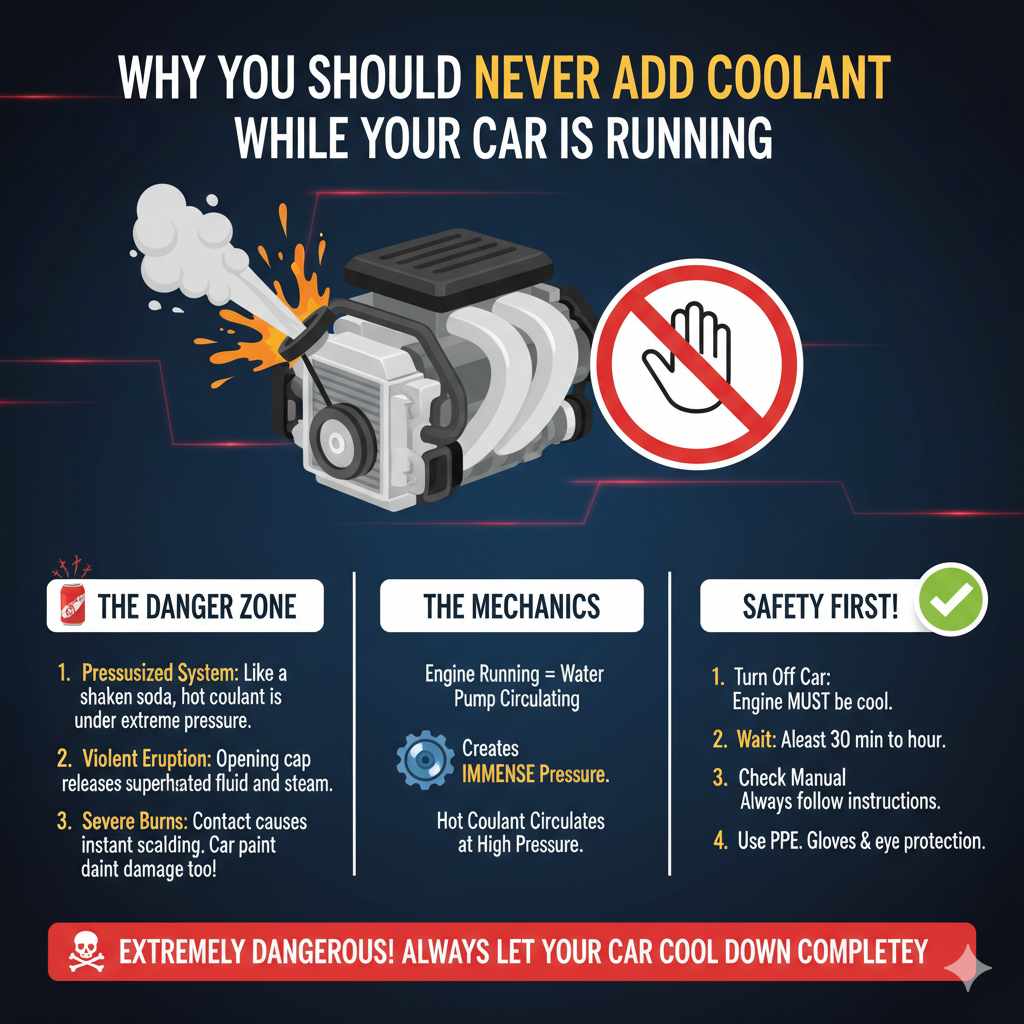
Adding coolant to a hot, running engine is a recipe for disaster, plain and simple. The cooling system in your car is a pressurized environment, much like a sealed bottle of soda. When the engine is warm, that pressure builds up significantly.
Imagine opening a shaken can of soda. The pressurized liquid and gas explode out. Your car’s cooling system operates under similar principles, but with much hotter and more corrosive fluid. The system is designed to keep the engine temperature stable, and this involves circulating hot coolant at high pressure.
When the engine is running, the water pump is actively circulating the coolant throughout the engine block, radiator, and hoses. This circulation creates considerable pressure within the system. If you were to attempt to open the radiator cap or the coolant reservoir cap under these conditions, the superheated, pressurized coolant could violently erupt. This isn’t just a minor spill; it’s a forceful expulsion of extremely hot liquid that can cause severe burns, damage your vehicle’s paint, and create a dangerous mess.
Furthermore, the extreme temperature of the coolant can cause instant and severe scalding if it comes into contact with your skin. The steam generated can be just as dangerous. Safety has to be the absolute top priority when dealing with your car’s cooling system. We’ll cover the safe steps shortly, but the most important takeaway is: always let your car cool down completely.
Understanding Your Car’s Cooling System
Before we dive into the “how-to,” it’s helpful to understand what the cooling system does and why coolant is so important. Your car’s engine generates a tremendous amount of heat during operation. Without an effective cooling system, this heat would quickly cause engine components to overheat, warp, and fail catastrophically.
The Role of Coolant
Coolant, often referred to as antifreeze, is a special fluid designed to do two main jobs:
Prevent Freezing: In cold weather, the coolant lowers the freezing point of the water in the system, preventing it from turning into ice and damaging the engine block or radiator.
Prevent Boiling: In hot weather, the coolant raises the boiling point of the water, preventing it from boiling over and losing its effectiveness. It also absorbs heat from the engine and transfers it to the air through the radiator.
Most coolants are a mixture of ethylene glycol or propylene glycol and water. The 50/50 mix is common for excellent protection against both freezing and boiling in a wide range of temperatures. Some manufacturers recommend specific coolant types (like OAT, HOAT, PHOAT), so it’s always best to check your owner’s manual.
Key Components of the Cooling System
To understand why pressure and heat are such issues, let’s look at the main parts:
Radiator: This is a heat exchanger, typically at the front of your car, where hot coolant flows through small tubes. Air passing through the radiator fins cools the coolant.
Water Pump: Driven by the engine’s belt system, this pump circulates the coolant through the engine, hoses, and radiator.
Thermostat: This is a valve that regulates coolant flow. It stays closed when the engine is cold to help it warm up faster, and opens when the engine reaches its optimal operating temperature to allow coolant to flow to the radiator.
Hoses: These rubber or silicone tubes connect the various components, allowing coolant to travel between them.
Coolant Reservoir (or Expansion Tank): This plastic tank stores excess coolant. As the coolant heats up and expands, it flows into the reservoir. As it cools and contracts, it’s drawn back into the system. This allows the system to maintain its optimal fluid level without constantly needing manual adjustments.
Radiator Cap: This isn’t just a simple lid. The radiator cap is a pressure-relief valve. It seals the system and is designed to open at a specific pressure, allowing excess pressure to be released into the reservoir, or preventing the system from exceeding a dangerous pressure level.
When your engine is running, all these components are working in harmony. The water pump is pushing hot fluid, the thermostat is regulating flow, and the system is under pressure to maintain its working temperature. This is why disturbing it while in operation is so risky.
The Dangers Involved in Adding Coolant While Running
Let’s break down the specific risks so you understand why “engine off and cool” is the golden rule.
1. Scalding Burns from Pressurized Hot Coolant
This is the most immediate and severe danger. The coolant in a hot engine can reach temperatures well over 200°F (93°C). Combined with the system’s pressure, opening the wrong part of the system can cause this incredibly hot fluid to spray outwards with considerable force. This can cause deep, painful burns to your hands, arms, face, and eyes. Even a small splash of superheated coolant can cause significant injury.
2. Steam Burns
Even if the liquid coolant doesn’t spray directly onto you, the high temperature creates steam. If you open a cap that releases pressure, clouds of scalding steam can erupt, causing severe burns to skin and eyes. Steam can reach even higher temperatures than the liquid coolant itself.
3. Damage to the Cooling System Components
Sudden temperature changes or introducing cold liquid into a hot, pressurized system can potentially shock and damage certain cooling system components like seals, hoses, or even the radiator itself. While less common than burns, it’s an unnecessary risk to your vehicle.
4. Inaccurate Fill Level
When the engine is hot, the coolant is expanded. This means the reservoir might appear fuller than it is when cold. Adding coolant based on a hot, expanded level can lead to overfilling once the engine cools down, which can also cause issues.
The Safe Way to Check and Add Coolant
Now that we understand the “why not,” let’s focus on the crucial “how to.” This process is straightforward and ensures your safety and your car’s well-being.
Step 1: Ensure the Engine is Completely Cool
This is the most critical step. You need to allow your car to sit for at least 30 minutes to an hour after being driven. The longer, the better, especially on a very hot day or if the car was driven for a long time. The engine and all its components, including the cooling system, need to cool down to a safe handling temperature. If you can comfortably touch most engine components without burning yourself, it’s likely cool enough, but waiting is always the safest bet.
Step 2: Locate the Coolant Reservoir
In most modern cars, you won’t be adding coolant directly to the radiator. Instead, you’ll use the translucent plastic coolant reservoir, also called an expansion tank or overflow tank. It usually has a cap with a symbol indicating coolant or a thermometer. Refer to your car’s owner’s manual if you can’t find it. It’s typically a tank located near the front of the engine bay, often on the driver’s or passenger’s side.
Step 3: Check the Coolant Level
Look at the side of the coolant reservoir. There are usually markings for “MIN” or “LOW” and “MAX” or “FULL.” Your coolant level should be between these two marks when the engine is cold. If the level is at or below the “MIN” line, it’s time to add coolant.
Step 4: Prepare to Add Coolant (If Needed)
If the coolant level is low, you’ll need the correct type of coolant. Always check your owner’s manual for the specific type recommended for your vehicle. Using the wrong type can cause corrosion and damage your cooling system. You can purchase pre-mixed coolant (a 50/50 solution of coolant and distilled water) or concentrate that you will need to mix with distilled water yourself. Using distilled water is important because tap water contains minerals that can cause deposits and corrosion in your cooling system.
You will also need:
- A funnel (preferably one designed for coolant).
- Gloves (coolant can be irritating to skin).
- Safety glasses (to protect your eyes from potential splashes).
- A clean container for any old coolant disposal.
For more guidance on coolant types, the U.S. Environmental Protection Agency (EPA) provides resources on hazardous waste disposal, which includes advice on automotive fluids. You can find information on their website by searching for “EPA coolant disposal.”
Step 5: Add the Coolant Safely
Once the engine is completely cool and you have the correct coolant and tools:
- Carefully unscrew the cap on the coolant reservoir. It should be easy to open since the system is not pressurized.
- Insert a funnel into the reservoir opening.
- Slowly pour the correct coolant mixture into the reservoir until it reaches the “MAX” or “FULL” line. Do not overfill.
- Remove the funnel and securely screw the cap back onto the reservoir.
Step 6: Run the Engine and Re-check
Start the engine and let it run for a few minutes, keeping an eye on the temperature gauge. As the engine warms up, the thermostat will open, and the coolant will circulate. You can turn on the heater to maximum temperature for a few minutes. This helps to circulate coolant through the heater core and can help “burp” any air out of the system. Once the engine has reached normal operating temperature and then cools down again, re-check the coolant level in the reservoir. You might need to add a bit more coolant if the level drops slightly as air is purged from the system.
What if the Coolant is Low?
If you find yourself consistently needing to add small amounts of coolant, this is a sign that your cooling system might have a leak. While adding coolant is an immediate fix to prevent overheating, it’s not a long-term solution for a leak.
Possible signs of a coolant leak include:
- Puddles of coolant (often green, pink, orange, or blue) under your car when it’s parked.
- A sweet smell coming from your engine compartment, even when the engine is off.
- Visible signs of coolant drips or stains on hoses, the radiator, or around the engine.
- A consistently low coolant level in the reservoir.
If you suspect a leak, it’s important to have your car inspected by a qualified mechanic. Small leaks can sometimes be repaired affordably, but neglecting them can lead to more serious and expensive engine damage. You can find further information on identifying automotive leaks on sites like NHTSA.gov (National Highway Traffic Safety Administration).
When to Seek Professional Help
While checking and topping off coolant is a task many car owners can handle, there are times when it’s best to call in the experts.
Signs You Need a Mechanic Immediately:
- The temperature gauge shoots into the red zone rapidly, and you suspect a major issue.
- You see steam billowing from under the hood.
- You can’t locate the coolant reservoir or are unsure about the type of coolant to use.
- You suspect a significant leak and are uncomfortable diagnosing it.
- You’ve added coolant, but the car is still overheating.
- You notice oil in your coolant or coolant in your oil (this is a serious sign of internal engine damage, often a blown head gasket).
A professional mechanic has the tools and expertise to accurately diagnose cooling system problems and perform repairs safely and effectively. They can pressure test the system to find leaks, inspect components, and ensure your car’s cooling system is functioning optimally.
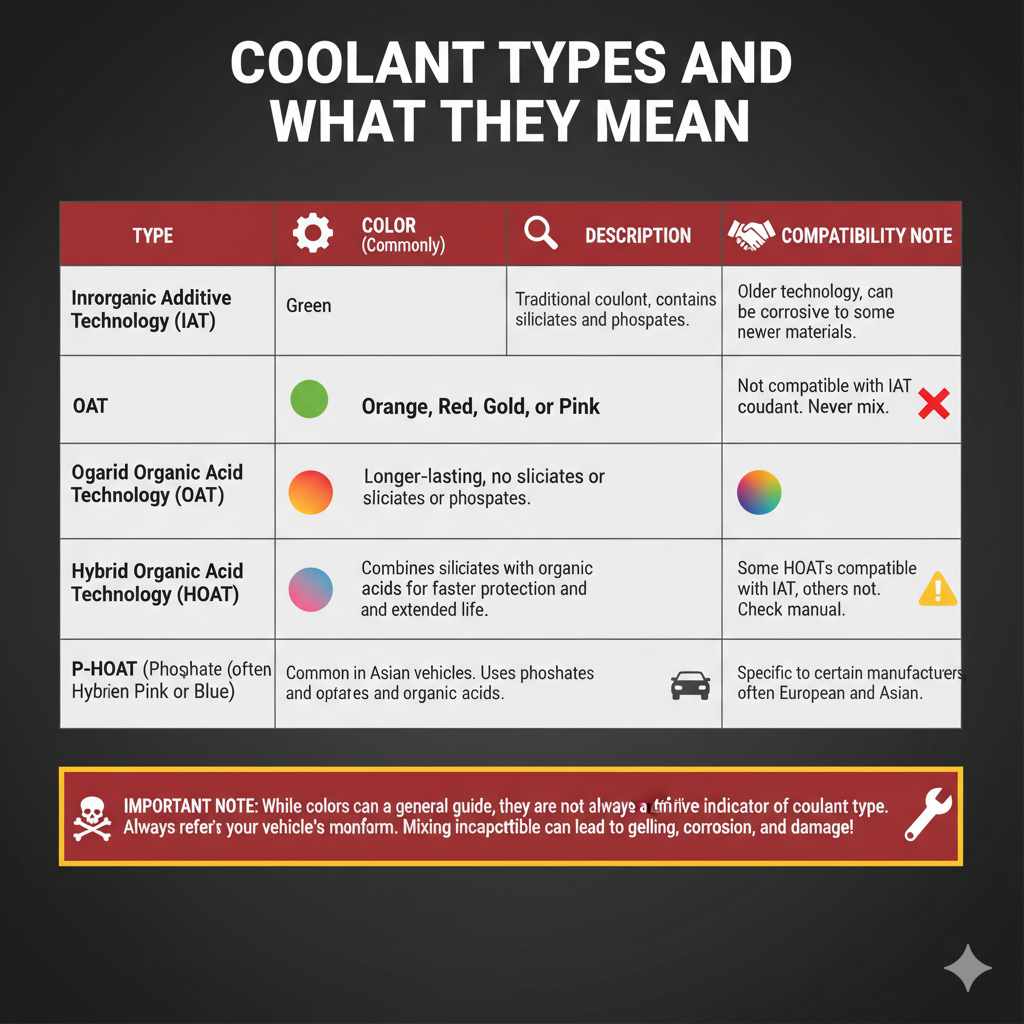
Coolant Types and What They Mean
The world of coolant can seem a bit confusing with all the different colors and acronyms. Here’s a quick breakdown to help you understand:
Coolants are generally categorized by their additive technology.
| Type | Color (Commonly) | Description | Compatibility Note |
|---|---|---|---|
| Inorganic Additive Technology (IAT) | Green | Traditional coolant, contains silicates and phosphates. | Older technology, can be corrosive to some newer materials. |
| Organic Acid Technology (OAT) | Orange, Red, or Pink | Longer-lasting, no silicates or phosphates. | Not compatible with IAT coolant. Never mix. |
| Hybrid Organic Acid Technology (HOAT) | Yellow, Orange, Gold, or Blue | Combines silicates with organic acids for faster protection and extended life. | Some HOAT coolants are compatible with IAT, others are not. Check manual. |
| P-HOAT (Phosphate Hybrid Organic Acid Technology) | Various (often Pink or Blue) | Common in Asian vehicles. Uses phosphates and organic acids. | Specific to certain manufacturers, often European and Asian. |
Important Note: While colors can be a general guide, they are not always a definitive indicator of coolant type. Always refer to your vehicle’s owner’s manual to confirm the exact type of coolant recommended. Mixing incompatible coolants can lead to gelling, corrosion, and reduced cooling efficiency, potentially causing significant damage.
Frequently Asked Questions (FAQ)
Q1: How long does it take for a car’s engine to cool down enough to add coolant?
A1: It’s best to wait at least 30 minutes to an hour after driving. On very hot days or after extended use, waiting even longer provides an extra margin of safety. The engine should feel cool to the touch in most areas.
Q2: Can I use tap water instead of distilled water or pre-mixed coolant?
A2: No, it’s strongly advised against using tap water. Tap water contains minerals that can cause scale buildup and corrosion within your cooling system over time, reducing its efficiency and lifespan. Always use distilled water or a pre-mixed 50/50 coolant solution.
Q3: What happens if I overfill the coolant reservoir?
A3: Overfilling can cause the excess coolant to be expelled from the system as it heats up and expands. This can lead to coolant loss, potentially creating low levels later or making a mess under your car. It can also indicate an issue.
Q4: Is it okay to just add water to the coolant if I’m only low by a little bit?
A4: In a true emergency, adding plain water can help prevent overheating in the short term, but it will dilute the antifreeze properties of your coolant. This reduces its boiling point and freezing protection, making it less effective. It’s best to top up with the correct coolant mixture as soon as possible to restore proper protection.
Q5: My car is running hot, but the coolant level looks fine. What could be wrong?
A5: If your coolant level is adequate but the car is still overheating, the problem could be with the thermostat not opening, a faulty water pump, a clogged radiator, an airlock in the system, a malfunctioning fan, or a leak somewhere you haven’t detected. It’s best to have this checked by a mechanic.
Q6: Why is the coolant colored? Is it just for show?
A6: The color is not just for aesthetics. It helps identify specific additive technologies and makes leaks easier to spot. However, as mentioned, colors can vary and are not always a foolproof indicator of type, so always consult your owner’s manual.
Q7: How often should I check my coolant level?
A7: It’s a good practice to check your coolant level at least once a month, or before long trips. This quick check can help you catch potential problems before they become serious.
Conclusion
Understanding your car’s cooling system and how to maintain it is a key part of being a responsible car owner. The absolute most important rule to remember is that you should never add coolant while your car is running. The risks of severe burns, steam exposure, and potential damage to your vehicle are far too great. Always prioritize safety by waiting for the engine to cool down completely before checking or adding any coolant.
By following the simple steps outlined in this guide—allowing the engine to cool, locating the reservoir, checking the level, using the correct coolant, and adding it carefully—you can confidently perform this essential maintenance task yourself.