Tint Ticket vs Fix-It Ticket
A tint ticket is a correctable citation only if the notice or your state law marks it as fixable; otherwise, it is a standard fine and may carry points or a court date. Ignore the wrong type and fees can stack, a hearing can follow, or you can get another citation after paying the first one. This guide shows how to tell which citation you have and the cheapest legal path to fix, dismiss, or fight it.
| Factor | Tint Ticket | Fix-It Ticket | Winner |
|---|---|---|---|
| What it usually is | Often an equipment citation for illegal window tint; state handling varies. | A correctable version of a tint citation, when the notice or state law allows cure. | Fix-It Ticket |
| Typical money path | Often the ticket fine plus possible court costs, and sometimes repeat-offense exposure. | Usually the fine is reduced or dismissed after correction, plus a small dismissal fee. | Fix-It Ticket |
| Effort to clear | May require a hearing, exemption proof, or full payment if not correctable. | Usually needs proof of correction and payment of the dismissal fee. | Fix-It Ticket |
| Best fit | Use when the citation is not marked correctable, or you have a strong challenge. | Use when you can fix the film quickly and the notice gives a cure path. | Tie |
Tint citation decision matrix
| Citation type | Common state handling | Correction deadline | Dismissal fee | Removal or re-tint cost | Best evidence | Red-flag cases |
|---|---|---|---|---|---|---|
| Correctable tint citation | Usually a fix-it path after you remove or replace the film. | Often 14 to 30 days; many states allow 30 to 60 days. | Usually $10 to $25. | Varies by vehicle and shop; get a written estimate. | Shop receipt, officer sign-off, or inspection-station stamp. | Repeat offense, missed deadline, or a state that limits cure options. |
| Standard tint ticket | Usually treated as an equipment violation with a set fine or court date. | Often none for cure; respond by the citation deadline. | May not apply. | Same as above if you choose to correct first. | Tint-meter reading, citation language, photos, and any exemption paper. | Front side windows below the legal VLT, windshield tint, or repeat stops. |
| Inspection-failure tint citation | Common in annual-inspection states such as New York, Pennsylvania, Virginia, Massachusetts, and New Hampshire. | Set by the inspection system or renewal block. | Often tied to inspection recheck rules. | Varies by shop and whether you remove or replace film. | Repair invoice, inspection recheck record, and corrected window reading if available. | Registration renewal blocked until compliance is shown. |
| Repeat or severe tint offense | Can bring higher fines, fewer cure options, and in some states misdemeanor treatment. | Usually shorter or unavailable. | May be higher than the first citation. | Same correction cost, plus possible court cost. | Any exemption, repair record, and proof the new tint meets the limit. | Pattern of violations, refusal to correct, or a state that escalates repeat cases. |
What kind of citation did you get?
Read the notice first. Illegal tint is usually an equipment violation, not a moving violation, but state handling varies, and some notices are marked correctable while others are not. The ticket itself should tell you whether you owe a fine, need a hearing, or can cure the problem within a set window.
What the ticket language should say
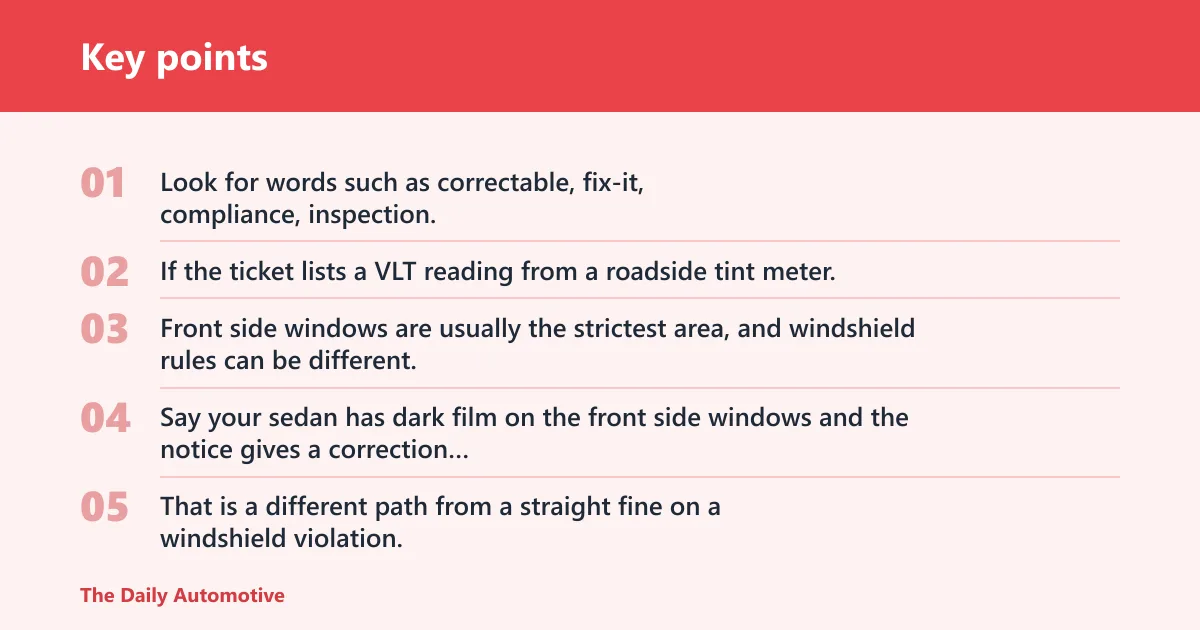
Look for words such as correctable, fix-it, compliance, inspection, or proof of correction. If the ticket lists a VLT reading from a roadside tint meter, that reading is often the key evidence the officer used. Front side windows are usually the strictest area, and windshield rules can be different.
Say your sedan has dark film on the front side windows and the notice gives a correction option. That is a different path from a straight fine on a windshield violation, because the state may allow removal and dismissal only for one of those. The citation language controls the cheapest next step.
Why some states call it fixable and others do not
Some states treat tint as a simple equipment issue that can be corrected, while others treat the same problem as an inspection failure or a standard offense. In annual-inspection states, a tint failure can block registration renewal until the window film is brought into compliance. In other states, paying the ticket does not clear the tint problem itself.
How a fix-it ticket works
A fix-it ticket usually gives you a deadline, proof requirements, and a small dismissal fee after you correct the violation. Typical correction deadlines are 14 to 30 days, though many states allow 30 to 60 days. Miss the deadline and the case can cost more or lose the cure option.
How to clear it
- Read the citation and note the deadline.
- Remove the illegal film or re-tint to the legal VLT.
- Keep the shop receipt or other proof of correction.
- Get officer sign-off, a DMV or inspection-station stamp, or another form your state accepts.
- Pay the dismissal fee if your state requires one.
Proof of correction does not always mean a fresh meter reading. Many jurisdictions accept a shop receipt, an officer sign-off, or an inspection-station stamp. California formally recognizes tint corrections as correctable violations under Vehicle Code section 40610, and Texas is listed with a 10-day correction window and a $10 dismissal fee.
What happens if you miss the deadline
Missing the deadline can raise the penalty to 2 to 5 times the original fine in some states, but that is not a universal rule. More often, the missed deadline means the case stops being easy to dismiss and can move to a standard fine, extra court cost, or a separate compliance problem.
Can you fight a tint ticket?
Yes, if the tint-meter reading was borderline, the meter was not calibrated, the vehicle qualifies for an exemption, or the state applied the wrong standard to your vehicle type. A challenge makes the most sense when you have paperwork or photos that question the reading, not just a dislike of the ticket.
Why the meter reading matters
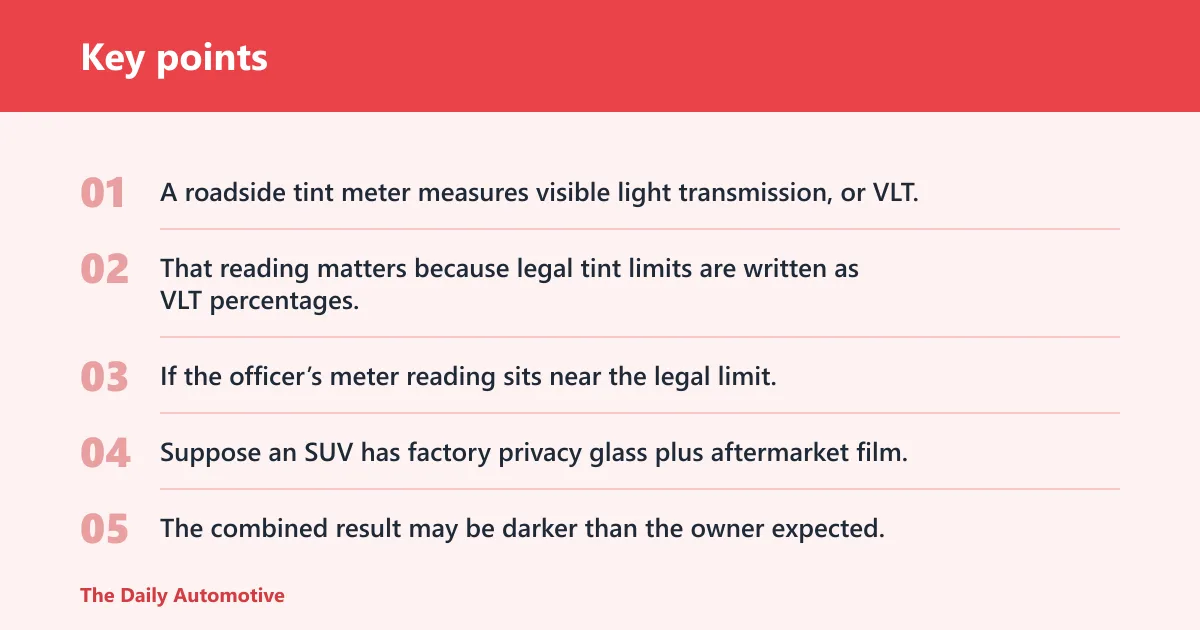
A roadside tint meter measures visible light transmission, or VLT, which is the percentage of light that passes through the glass and film. That reading matters because legal tint limits are written as VLT percentages, and front side windows are commonly the strictest. If the officer’s meter reading sits near the legal limit, calibration or tolerance can matter.
Suppose an SUV has factory privacy glass plus aftermarket film. The combined result may be darker than the owner expected, and a roadside meter can read it below the legal limit even if the film alone seemed mild. In that situation, a challenge usually turns on the citation language, the vehicle class, and any exemption paper.
When a challenge makes sense
Fight the citation if you have a medical exemption, the officer used the wrong vehicle category, or the meter reading appears inconsistent with the paperwork. The best defense is specific: a copy of the exemption, the legal VLT rule for your state, or evidence that the tint was corrected before the hearing. A vague claim that the tint “did not look that dark” rarely helps.
How much will it cost?
For a first offense, tint fines usually range from $25 to $275 depending on state, and license points are usually zero for tint violations in most states. Your total cost can be lower if the ticket is correctable, or much higher if you need a hearing, miss the deadline, or face repeat-offense treatment.
Removal only
If you only remove the film, your out-of-pocket cost is the removal bill plus any dismissal fee or court cost. That path is often cheapest when the existing tint is already close to the legal limit and you do not want to re-tint. It is also the cleanest option when the state wants proof of correction fast.
Removal plus legal re-tint
If you want the car tinted again, expect removal plus a compliant re-tint at legal VLT. That costs more than removal alone, but it avoids a second stop for the same problem. Ask the shop for a receipt that clearly shows the correction work, since that can help if the officer or court wants proof.
Repeat offense exposure
Repeat stops can change the math. Some states raise the fine, reduce correctable options, or treat severe repeat cases as misdemeanors. If you already received one tint citation, do not assume the next one will be handled the same way.
Inspection and registration problems
Some states treat illegal tint as an inspection failure, not just a roadside citation. That matters in annual-inspection states such as New York, Pennsylvania, Virginia, Massachusetts, and New Hampshire, because the car may not clear renewal until the tint issue is corrected. In citation-payment states, paying the fine alone may still leave the vehicle noncompliant.
Why payment is not the same as compliance
Payment closes the ticket. It does not always legalize the glass. If the state wants proof of correction, you still need the shop receipt, inspection stamp, or officer sign-off before the issue is done.
Choose Fix-It Ticket if…
Choose Fix-It Ticket if the notice is marked correctable, your state gives a cure path, and you can remove or replace the film before the deadline. It is usually the cheapest compliant route because the dismissal fee is often small and the citation can be closed with proof of correction.
Choose Tint ticket if…
Choose Tint Ticket if the notice is not fixable, the state uses an inspection-failure process, or you have a real challenge based on VLT, calibration, vehicle class, or exemption status. If the ticket is a straight equipment case, compare the fine against the cost of correction, then decide whether to pay, cure, or fight.
Frequently asked questions
Can you fight a window tint ticket?
Yes, but the strongest cases are narrow: a borderline VLT reading, a meter issue, the wrong vehicle-class rule, or a valid exemption. A clean challenge needs paperwork or photos, not just disagreement with the stop. If the notice is correctable, many drivers save money by curing it first and only fighting when the facts support it.
How much does a tint ticket cost?
Typical first-offense fines range from $25 to $275 depending on state. A correctable citation can also add a dismissal fee, usually $10 to $25, plus any removal or re-tint bill. If you miss the deadline or the case becomes a repeat offense, the total can rise quickly.
What is a fix it ticket?
A fix-it ticket is a correctable citation. For tint, that usually means you must remove or replace the illegal film, show proof of correction, and pay a small dismissal fee within the deadline. It is not a separate problem from the tint ticket; it is the cure path for some tint citations.
How does a fix it ticket work?
You correct the violation, gather proof, and submit it before the deadline. Accepted proof can include a shop receipt, officer sign-off, or an inspection-station stamp, depending on the state. Many states use 14 to 30 days for the cure window, though some allow more time.
Do tint tickets affect insurance?
Usually little, if it is a one-off equipment citation with no crash, no points, and no court finding. The picture changes if the case becomes a repeat offense, a misdemeanor, or a court outcome that your insurer treats as a recordable violation. Check your policy if the citation is going to court.
Products related to this article
Sponsored / affiliate links. As an Amazon Associate I earn from qualifying purchases. I may earn additional commission from eligible campaigns.