Video Recording Devices for Cars: The Dash Cam Buying Guide
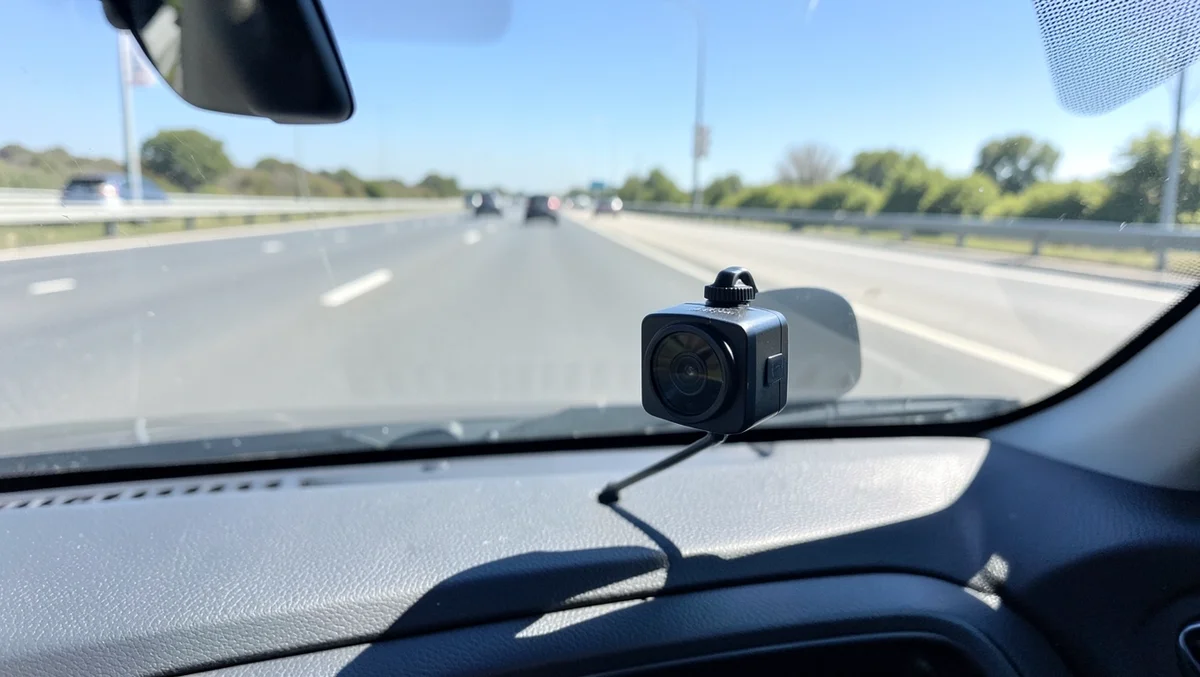
Video recording devices for cars are dash cams: small cameras mounted near the windshield or rear window that continuously record what happens on the road. They give you footage to back up an insurance claim, contest a ticket, or prove who was at fault after a crash, and many models also watch over your car while it’s parked.
Most drivers who search for a “video recording device for a car” are really looking for a dash cam, not a general security camera. The best ones record in at least 1080p, keep working automatically through loop recording, and switch on a parking mode when the car is turned off so a hit-and-run or break-in doesn’t go undocumented.
What to Look for in a Car Video Recording Device
Not every dash cam on the market is worth mounting on your windshield. Before you buy, check the model against these core features:
- Resolution: 1080p is the minimum for readable license plates; 2K/2.5K and 4K models capture more detail, which matters most for footage used in an insurance dispute.
- Night vision: A wide aperture lens and a dedicated low-light sensor make a real difference after dark, when most disputed footage actually needs to hold up.
- Loop recording: The camera keeps recording and automatically overwrites its oldest footage once the memory card fills up, so you never have to manually clear space.
- G-sensor: Detects a sudden impact and automatically locks that clip so loop recording can’t overwrite it before you’ve had a chance to save it.
- Parking mode: Keeps recording (or triggers on motion/impact) while the car is off, which is what actually catches hit-and-runs and break-ins — usually requires a separate hardwire kit.
- Storage and app support: Look at the maximum supported SD card size and whether a Wi-Fi app lets you pull clips to your phone without removing the card.
Solid All-Round Pick
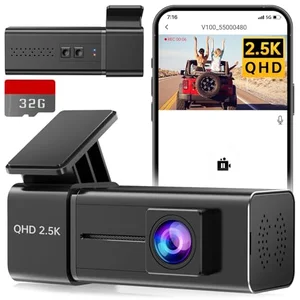 |
E-YEEGER V100 2.5K WiFi Dash Cam – $45.99 Checks every box above at a budget price: 2.5K resolution, a G-sensor, loop recording, and a phone app, with a 32GB card already included.
|
Is It Legal to Record With a Dash Cam?
Dash cams themselves are legal to own and use in every US state, but two details around them are governed by state law and are not the same everywhere:
- Windshield mounting position: Many states restrict where on the windshield any device can be mounted so it doesn’t block the driver’s view, often limiting it to a small area low in a corner. Rules and enforcement differ by state, so check your own state’s vehicle code (or just mount low, behind the rear-view mirror) before you pick a spot.
- Audio recording consent: Video is generally fine to record everywhere, but audio recording laws vary. Most states only require one party (which can be you, the driver) to consent, but roughly a dozen states require all parties in the recording to consent. If you’re unsure which rule applies where you drive, the simplest fix is turning off the microphone in your dash cam’s settings.
Because of that state-by-state variation, treat any specific rule you read online — including this one — as a starting point, not a guarantee, and confirm it against your own state’s current law before you rely on it.
Dash Cam vs. Hidden Camera Detector: Not the Same Device
A dash cam records your own drive. A hidden camera detector is a different tool entirely: a handheld scanner that sweeps for radio-frequency or infrared signals to find someone else’s hidden camera or GPS tracker, typically used in a rental car, a hotel room, or a rideshare. If you’re worried a vehicle has been fitted with a tracker rather than looking to record your own trips, see our guide on how to check for a tracking device on your car instead of shopping for a dash cam.
Frequently Asked Questions
What Is the Best Video Recording Device for a Car?
For most drivers, a dash cam with at least 1080p resolution, night vision, loop recording, and a G-sensor covers the essentials. The E-YEEGER V100 2.5K WiFi dash cam featured above is a solid budget-friendly example: it records at 2.5K, includes a 32GB card, and adds Wi-Fi app control for pulling clips to your phone.
Why Use a Dash Cam In Your Car?
A dash cam gives you an independent record of what actually happened during a collision, which can settle a fault dispute much faster than two conflicting stories. Models with a parking mode also watch over your car while it’s parked, which is useful for documenting hit-and-runs, break-ins, or vandalism you wouldn’t otherwise catch on camera.
Can a Hidden Camera Detector Find a GPS Tracker?
Yes. Most hidden camera detectors scan for the same wireless signals used by covert cameras, listening devices, and GPS trackers, so a single device can flag several kinds of surveillance equipment. They work by radio-frequency and, on some models, infrared/magnetic scanning, but this is a separate tool from a dash cam and does not record video itself.
How Does a G-Sensor In a Dash Cam Work?
A G-Sensor detects sudden changes in motion, like the impact of a collision or hard braking, and automatically flags the current clip as “protected” so the camera’s loop recording can’t overwrite it. That locked clip stays saved until you manually delete it, which is what preserves footage of an accident even if you don’t grab the memory card right away.
Do I Need a Hardwire Kit for 24/7 Parking Mode?
Usually, yes. Most dash cams, including the E-YEEGER V100, need a separate hardwire kit connected to the car’s fuse box to power true 24/7 parking surveillance, since running it off the cigarette lighter socket alone would drain the battery. A hardwire kit is typically sold separately and installed by tapping into a fuse that’s only powered when needed, so parking mode doesn’t leave your car unable to start.
Conclusion
A video recording device for a car is, in practice, a dash cam: pick one with the resolution, night vision, loop recording, and G-sensor that fit how you actually drive, and add a hardwire kit if you want it watching your car while it’s parked, too.
If low-light footage is your top priority, our guide to the best dash cams with night vision for cars compares picks built specifically for driving after dark. And remember: if what you actually need is to find someone else’s hidden camera or tracker rather than record your own drive, that’s a hidden camera detector, not a dash cam.
Products related to this article
Sponsored / affiliate links. As an Amazon Associate I earn from qualifying purchases. I may earn additional commission from eligible campaigns.