What Happens to Your Car Loan If Your Car Is Totaled?
If your car is totaled, the insurer generally pays the lender first, up to the car’s actual cash value, and you may owe any shortfall. Miss the payoff order, and you can end up making monthly payments on a wrecked car or carrying a balance after the claim closes. This guide explains who gets paid, when gap insurance applies, and which fees it may still leave behind.
What a total loss means
An insurer usually treats a car as a total loss when repair costs would exceed the vehicle’s value. That trigger is not the same in every state or policy, and some states use a percentage threshold insurers apply when deciding whether to repair or total the car. The key point is simple: the claim turns on value, not what you paid for it.
Why ACV drives the settlement
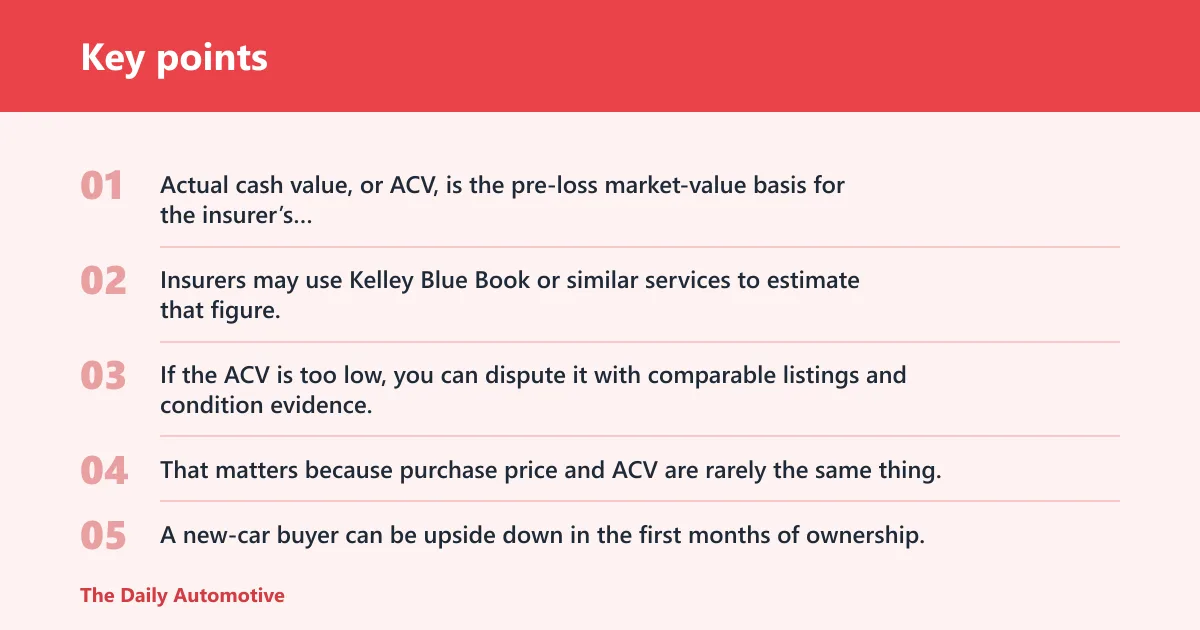
Actual cash value, or ACV, is the pre-loss market-value basis for the insurer’s settlement. Insurers may use Kelley Blue Book or similar services to estimate that figure, then adjust for mileage, condition, options, and local market data. If the ACV is too low, you can dispute it with comparable listings and condition evidence.
That matters because purchase price and ACV are rarely the same thing. A new-car buyer can be upside down in the first months of ownership, while a used-car buyer can still owe more than the car is worth if the loan term is long.
When you can dispute the valuation
If the report misses options, recent repairs, tire condition, or clean-condition comparables, ask for the valuation breakdown in writing. Bring back comparable vehicles with the same trim, mileage band, and region. A valuation fight is most useful before the insurer issues the final payment, not after the file closes.
How the payout is calculated
The settlement usually starts with ACV, then the deductible comes out before the first-party check is issued. If you keep the car, the insurer also subtracts salvage value from the claim check. After that, the lender payoff is applied if the lender is listed as loss payee. The result is the amount that either clears the loan or leaves a balance behind.
Where the lender payoff fits
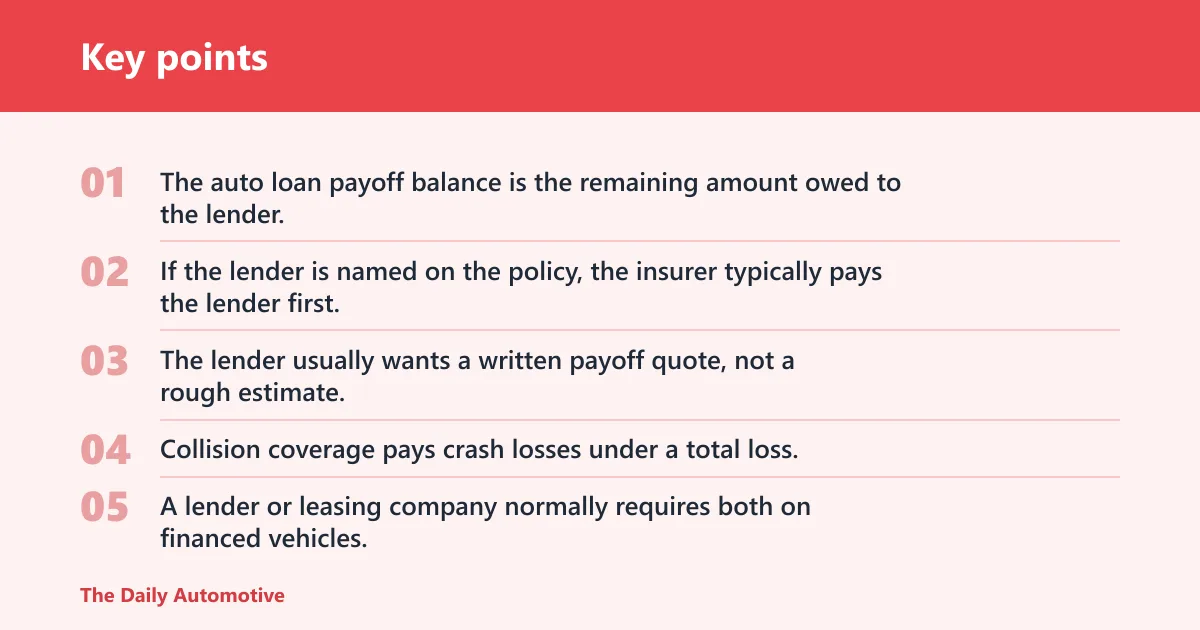
The auto loan payoff balance is the remaining amount owed to the lender, and it can exceed the insurance settlement. If the lender is named on the policy, the insurer typically pays the lender first. The lender usually wants a written payoff quote, not a rough estimate, because daily interest can change the amount due.
Collision coverage pays crash losses under a total loss, while comprehensive coverage pays non-collision total losses. A lender or leasing company normally requires both on financed vehicles. If the vehicle is paid off, comprehensive and collision coverage are optional.
How the deductible changes the math
The deductible reduces the first-party settlement before the payoff is satisfied. That means the deductible can still matter even when gap coverage exists. Gap insurance may cover the difference between the insurance payout and the remaining loan balance, but it may not cover deductibles, late fees, or past-due payments.
Say your ACV is $18,000, your deductible is $1,000, and the lender payoff quote is $19,200. The insurer’s settlement is not enough to wipe out the loan. If you do not have gap coverage, you still owe the difference after the insurer pays what it can.
What happens to your car loan if your car is totaled?

If the settlement fully covers the loan payoff, the lender closes the account after it receives the check. If the payout is lower than the payoff, you remain responsible for the difference unless gap insurance applies. The loan does not disappear just because the car is gone.
When the payout covers the loan
When the ACV settlement is high enough to cover the payoff after the deductible, the lender gets paid in full and the account should close once the payment clears. Keep the final zero-balance confirmation. It matters if the lender posts interest or fees after the claim.
When you still owe money after settlement
A borrower remains responsible for a difference if the insurance payout is less than the loan balance. That leftover amount can survive the total-loss claim, and it may be due even after the insurer sends money to the lender. The insurance claim and the loan contract are separate obligations.
Suppose the insurer values the car at $12,500, the deductible is $500, and the loan payoff is $14,000. The insurer’s payment will not fully cover the note. Without gap coverage, the borrower still owes the shortage after the claim is settled.
How past-due payments and fees can stay attached
Gap insurance covers the difference between the insurance payout and the remaining loan balance, but it may not cover past-due payments, late fees, or other contract charges. If the loan was already behind, ask the lender whether those charges are included in the payoff quote or will be billed separately.
Will gap insurance cover the shortfall?
Gap insurance usually helps when the loan balance is higher than the ACV settlement. It is most valuable early in the loan term, when depreciation can outrun principal reduction. It can protect you from a balance that the insurer will not erase on its own, but it is not a blanket refund for every charge tied to the loan.
What gap insurance usually covers
Gap coverage is designed to fill the shortage between the insurer’s payout and the lender payoff. If the claim is clean and the balance difference is the only problem, gap can prevent a leftover loan bill. That is the core use case.
What gap insurance may leave behind
Gap insurance may leave you with the deductible, and it may leave behind late fees or past-due payments depending on the policy language. Read the contract closely. The insurer’s settlement and the gap claim are not the same thing, and each can have different exclusions.
When gap coverage matters most
Gap matters most when the car depreciates faster than the loan balance shrinks. That is common in the first part of a long loan term or after a small down payment. If the note is already near the car’s value, gap may have little or no role.
Can you keep a totaled car?
Yes, sometimes you can keep a totaled car, but the settlement changes. If you keep the vehicle, the insurer subtracts the salvage value from the claim check. The car may still be drivable if the damage is cosmetic or nonstructural, but title and registration rules can become more complicated.
What salvage title means
The insurer typically takes possession of the vehicle after settlement and issues a salvage title. A salvage title can limit insurance options and reduce resale value. Many buyers and lenders treat it as a major red flag because it signals a total-loss history.
What changes if you repair and retitle it
Repairing a totaled car yourself may require applying for a rebuilt title. A rebuilt title is what many states require before a repaired total-loss car can be legally driven again. Even then, rebuilt vehicles usually bring lower resale value and can be harder to insure or finance later.
Why lenders care if you still owe money
If there is still a loan on the car, the lender may care about the vehicle’s title status because it affects collateral value. In practice, you may need the lender’s approval to keep the car, and the payoff math can get messy if the salvage deduction and outstanding balance both remain in play.
Loan payoff worksheet
Use this worksheet to see the money chain in one place. Collect the insurer ACV offer, your deductible, the lender payoff quote, and any remaining balance after those numbers are applied. Ask for every figure in writing.
| Insurer ACV offer | Deductible | Lender payoff quote | Remaining balance |
|---|---|---|---|
| $18,400 | $500 | $19,250 | $1,350 owed without gap coverage |
| $12,900 | $1,000 | $13,000 | $1,100 owed without gap coverage |
| $21,000 | $1,000 | $20,500 | Loan paid, deductible still applies to the settlement |
How to read the worksheet
If the insurer’s ACV offer is lower than the lender payoff quote, the shortfall is the gap. If gap coverage applies, it may cover that shortage. If you keep the car, subtract salvage value before you judge the final check, because the retained vehicle reduces the cash settlement.
| Scenario | Who pays what | What may still be owed |
|---|---|---|
| No gap coverage | Insurer pays ACV less deductible, then sends the payoff to the lender | Any remaining loan balance, plus possible past-due payments and fees |
| Gap coverage | Insurer pays the ACV claim, and gap pays the shortage to the lender if covered | Deductible, late fees, and past-due amounts may still remain |
| Owner keeps car | Insurer reduces the settlement by salvage value | Loan balance may still need to be paid, and title steps may follow |
What to do before the claim closes
Move quickly. Total-loss claims commonly take anywhere from two to six weeks, and delays can come from missing payoff data or title paperwork. The faster you get the numbers, the less likely you are to miss a deadline or accept a low valuation by default.
- Contact the insurer and lender right away.
- Ask for the payoff quote in writing.
- Request the valuation report and review the comps.
- Check whether the deductible, late fees, or past-due payments are being excluded.
- Decide whether to accept the total loss, dispute the ACV, or keep the car.
A common first-timer mistake is assuming the insurer’s check and the lender’s payoff are the same number. They are not. The settlement is based on ACV, while the loan still follows the contract balance until the lender says the account is closed.
Frequently asked questions
What happens when your car is totaled and you still owe money?
You can still owe the lender after the insurance claim finishes. The insurer pays the ACV settlement, minus the deductible, and any shortfall remains your responsibility unless gap coverage covers it. Past-due payments and fees may also survive the claim.
Do I still have to make car payments after a total loss?
Yes, until the lender confirms the loan is paid off or formally adjusted. Do not stop payments just because the car was declared a total loss. If the claim is still open, missed payments can turn into late fees that may not be covered by gap insurance.
Will gap insurance cover the difference if my loan is higher than the payout?
Usually, yes, gap insurance covers the difference between the insurance payout and the remaining loan balance. It does not always cover the deductible, and it may not cover late fees or past-due amounts. Check the policy language before you assume the whole balance disappears.
Can I keep a totaled car if I still owe on it?
Sometimes, but the lender may need to approve it, and the settlement will usually be reduced by salvage value. You may also face salvage-title or rebuilt-title steps before the car can be driven legally again. That route can leave you with both repair costs and a loan.
How is a totaled car’s payout calculated?
The insurer starts with the vehicle’s actual cash value, subtracts the deductible, and may subtract salvage value if you keep the car. Then the lender payoff is applied. If the payoff is higher than the insurer’s number, the remaining balance becomes your problem unless gap coverage applies.
Products related to this article
Sponsored / affiliate links. As an Amazon Associate I earn from qualifying purchases. I may earn additional commission from eligible campaigns.