Can You Trade in a Car You Still Owe Money on?
Yes, you can trade in a car with a loan. The dealer pays the lender at closing, and if the trade-in value is lower than the payoff amount, the shortfall becomes negative equity unless you pay it now. Get the payoff quote first, because the exact number decides whether the deal leaves you ahead, even, or upside-down. This guide covers the math, the paperwork, and the points that tell you if trading now makes sense.
How dealers payoff your loan and handle the lien at closing
Yes. Trading in a car that still has a loan balance is possible because the dealer can pay off the lender as part of the transaction. The key issue is the lien: the lender still has a legal claim on the vehicle until the payoff amount is satisfied and the title can be released.
The trade only works cleanly when the numbers line up. If the dealer’s appraisal is higher than your payoff amount, you have positive equity. If the payoff amount is higher, you have negative equity, also called upside-down or underwater.
How the lender gets paid at closing
At closing, the dealer usually sends the payoff to the auto loan lender and handles the title payoff steps. That is why the payoff amount matters more than your monthly payment or the remaining balance shown on a statement. The payoff figure can include owed interest, and it may be slightly higher than the balance you expect.
A dealer may take over the loan and pay it off in a trade-in, but the timing has to match the lender’s payoff quote and lien release process. If the quote expires before payment lands, the dealer may need a fresh figure.
Why the lien matters
Until the lien is cleared, you do not fully control the title. That does not stop a trade-in, but it does add steps. The lender must provide the amount needed to satisfy the loan in full, and the dealer has to remit payment correctly so the title can be released.
How do you compare payoff amount and trade-in value?
Start by comparing two numbers: the payoff amount and the vehicle’s realistic trade-in value. The payoff amount is the exact amount needed to satisfy the auto loan in full. The trade-in value is the dealer-appraised value of the vehicle, which can vary by condition and demand. Final value is negotiable.
How to request a payoff quote
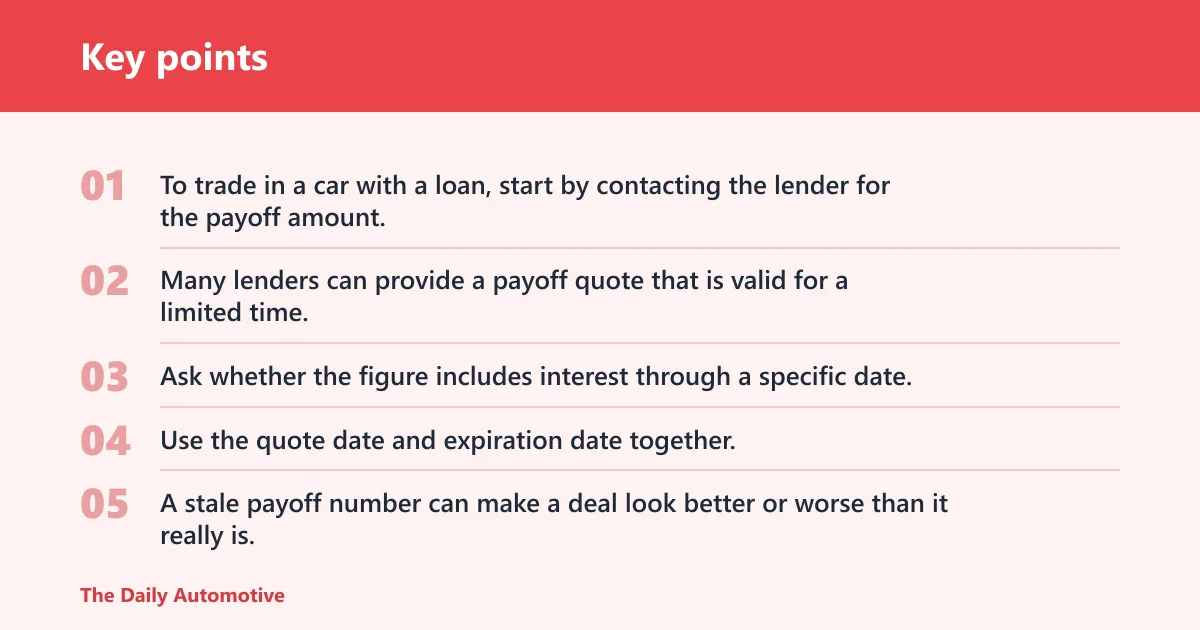
To trade in a car with a loan, start by contacting the lender for the payoff amount. Many lenders can provide a payoff quote that is valid for a limited time, and some dealers ask for a 10-day payoff amount. Ask whether the figure includes interest through a specific date.
Use the quote date and expiration date together. A stale payoff number can make a deal look better or worse than it really is.
How dealers estimate trade-in value
Dealers appraise the vehicle on the lot or use an online estimate before finalizing a number. Pricing guides such as Kelley Blue Book and Edmunds are common estimate sources, but the dealer’s real offer still depends on condition, mileage, tire wear, accident history, trim, demand, and how much reconditioning it needs.
That means the first number is not the last number. The final trade-in price is negotiable, and the deal can move if the vehicle has extra wear or if a similar model is in short supply.
Trade-in worksheet
| Payoff amount | Realistic trade-in value | Resulting equity |
|---|---|---|
| $18,400 | $20,000 | +$1,600 positive equity |
| $18,400 | $18,400 | $0 break-even |
| $18,400 | $16,900 | -$1,500 negative equity |
| $18,400 | $12,000 | -$6,400 large negative equity |
Outcome chart by equity level
| Equity level | What it means | Safest next move |
|---|---|---|
| Positive equity | Trade-in value exceeds payoff amount | Use the surplus to reduce the next car’s price or down payment |
| Break-even | Trade-in value equals payoff amount | Proceed only if the new deal still fits your budget |
| Small negative equity | Owed balance is slightly above trade-in value | Pay the gap in cash if possible; otherwise compare payment impact carefully |
| Large negative equity | Shortfall is large enough to distort the next loan | Usually wait, pay down the loan, or keep the car longer |
How to calculate equity
Subtract the payoff amount from the realistic trade-in value. A positive result means positive equity. A negative result means negative equity. If the number is close to zero, small appraisal changes can flip the deal one way or the other.
Say your payoff quote is $18,400 and the dealer offers $19,000. Your positive equity is $600. That $600 can reduce the price of the next car the same way a down payment does.
What if your trade-in is worth less than you owe?
If your trade-in is worth less than you owe, you have negative equity. You can cover the gap with cash or, in some deals, roll it into the new car loan. That second option is possible, but it raises the amount financed and often increases the monthly payment.
Cash to cover the gap
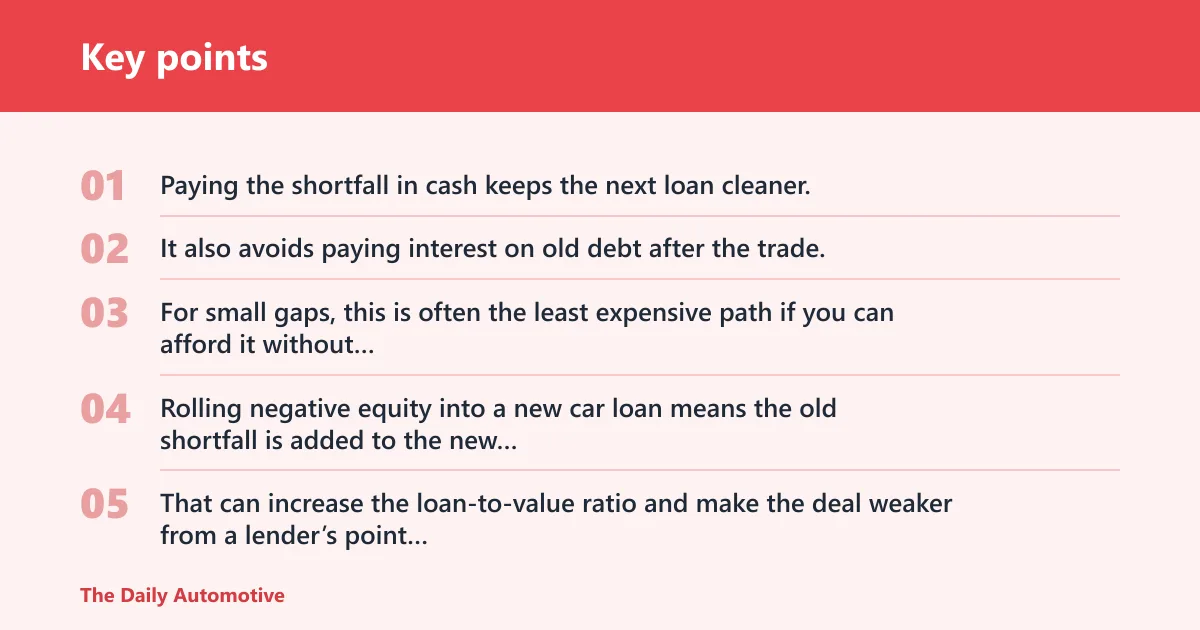
Paying the shortfall in cash keeps the next loan cleaner. It also avoids paying interest on old debt after the trade. For small gaps, this is often the least expensive path if you can afford it without draining your emergency fund.
Rolling the shortfall into a new loan
Rolling negative equity into a new car loan means the old shortfall is added to the new financing. That can increase the loan-to-value ratio and make the deal weaker from a lender’s point of view. It can also leave you upside-down again from day one.
Denison Motors warns that rolling a large negative balance raises your payment. That is the central problem: the new loan is larger even if the replacement car is cheaper.
Why the larger loan can cost more
The payment rises because the lender is financing the new car plus the unpaid gap. If the term stretches to keep the payment manageable, you may pay more total interest over time. A lower monthly payment is not a win if the balance is still too high for the vehicle’s value.
Picture a compact sedan that appraises for about $14,000 while the payoff is about $17,500. A dealer can still structure a deal, but the extra $3,500 has to be handled somewhere in the deal. If it goes into the new loan, the next car starts out carrying part of the old one.
Can you trade in a car you still owe money on for a cheaper car?
Yes, a cheaper car can help, but only if the equity math and payment change still make sense. A lower-price replacement can reduce the new loan size, which may offset some negative equity. It does not erase the old shortfall by itself.
If the trade-in is deeply underwater, the cheaper car may not be cheap enough. The new lender still sees the rolled-in balance, so approval terms and monthly payment can remain tight.
When a lower-price car helps
A cheaper vehicle works best when your negative equity is small and your new loan term is not stretched too far. In that case, the payment drop from the less expensive car may absorb part of the old balance without pushing the loan into a bad range.
When negative equity still follows you
If the shortfall is large, the replacement car may not fix the problem. You can still owe the old debt through the new loan. In that situation, waiting can be the better move, especially if a few more months of payments would shrink the gap.
Can you trade at another dealership or with bad credit?
Yes, you can trade in at a different dealership, and yes, you may still trade in with bad credit. The dealer can still work with your lender, but the payoff process depends on the lender, the lien release timing, and how the dealer handles the payoff. Bad credit mainly changes approval strength and payment size.
What changes when the dealer is different
The dealership does not own the payoff process. Your lender still has the lien, and the dealer still has to obtain the payoff amount, send payment, and wait for the title or lien release steps. A different dealership may also appraise the vehicle differently, which can change the equity math.
How credit affects approval and payment size
Bad credit can limit loan options, increase the rate, or shorten the list of lenders willing to approve a deal with rolled-in negative equity. That matters because a bigger amount financed plus a higher rate can push the payment beyond what looked manageable on paper.
A common first-timer mistake is assuming a trade-in approval means the whole deal is healthy. The approval only means someone is willing to finance it. That is not the same as getting a sound payment structure.
What paperwork and timing matter most?
The paperwork sequence matters because the payoff quote, dealer appraisal, purchase contract, and title or lien release all have to line up. The dealer’s payoff timing can change the final numbers if the quote expires before the lender receives payment. Bring the right documents so the deal can move without delays.
Payoff quote timing
Ask the lender for the payoff amount before you shop seriously. Confirm whether it is a 10-day payoff amount and whether interest continues to accrue after that window. If the quote changes before the dealer sends payment, the final settlement can shift.
That timing risk is why a trade-in is not finished the moment the dealer gives you a number. The quote, the contract, and the lender’s receipt date all need to stay aligned.
Purchase contract and lien release
The purchase contract should show how much is being applied to the trade-in, how much payoff the dealer is sending, and whether any negative equity is being paid in cash or added to the new loan. Keep an eye on the lien release process so the title can move cleanly after payoff.
What to bring before you shop
- Current lender name and account number
- Payoff quote dated for the planned trade-in window
- Vehicle registration and insurance information
- All keys, including spares
- Service records if available
- Loan payoff contact details for your lender
Denison Motors says to bring the vehicle, both keys, and service records if available. Those items help the dealer appraise the car and move the paperwork faster.
What is the decision threshold before you visit a dealership?
The cleanest decision point is simple: trade if the payoff amount is close to or below the realistic trade-in value, and the new payment still fits after taxes, fees, and any rolled-in balance. If the shortfall is large enough to make the new loan meaningfully bigger, waiting is usually the safer move.
The same source notes that keeping the current vehicle a few more months can be better. That advice is especially relevant when the gap is large, the payoff quote is moving, or the new loan would stretch too far for the car’s value.
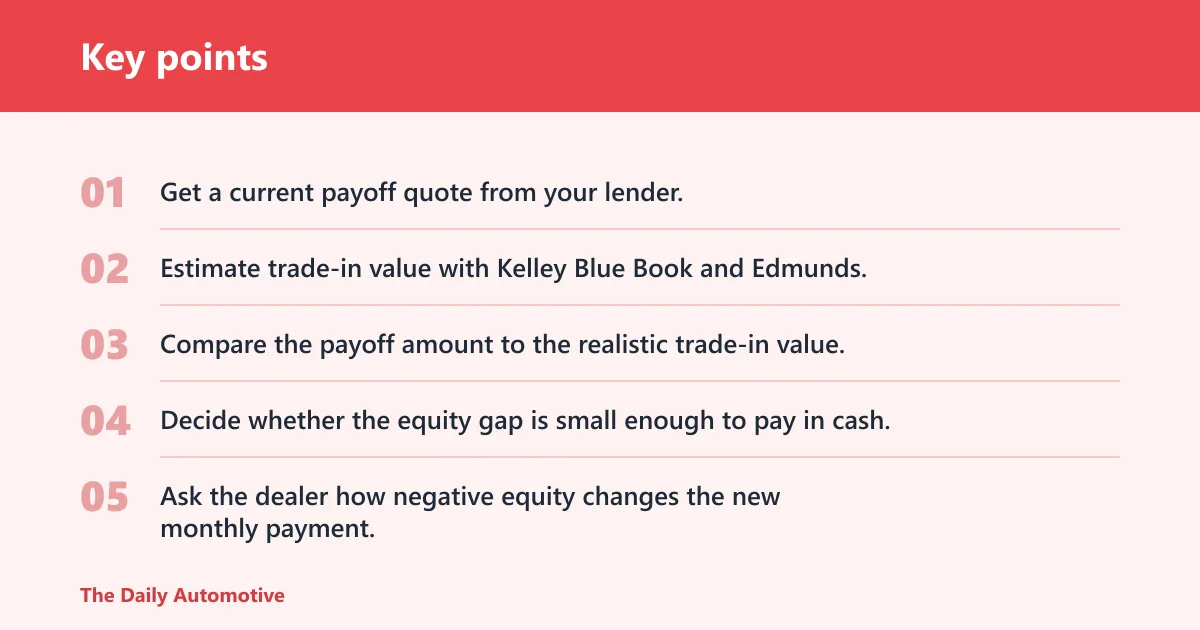
- Get a current payoff quote from your lender.
- Estimate trade-in value with Kelley Blue Book and Edmunds.
- Compare the payoff amount to the realistic trade-in value.
- Decide whether the equity gap is small enough to pay in cash.
- Ask the dealer how negative equity changes the new monthly payment.
- Review the purchase contract before signing.
If the trade-in value clearly covers the payoff, the deal is usually straightforward. If it does not, the real question is not whether you can trade. It is whether the next loan becomes too expensive for the vehicle you are getting.
Frequently asked questions
Can you trade in a car if you still owe money on the loan?
Yes. The dealer can pay off the lender as part of the trade, and the lender releases the lien once the payoff is satisfied. The main checkpoint is equity: if the car is worth less than the payoff amount, you must cover the shortfall or finance it into the next loan.
How do I find my payoff amount before trading in my car?
Contact your current auto loan lender and ask for a payoff quote. Ask whether it is a 10-day payoff amount and whether it includes any interest due through a specific date. Do not rely on the remaining balance on your last statement alone.
What happens if my trade-in is worth less than I owe?
You have negative equity. You can pay the difference in cash, or the dealer may roll that shortfall into the new loan if the lender approves the deal. Rolling the gap makes the new loan larger and can raise the monthly payment.
Can I roll negative equity into a new car loan?
Often, yes, but that does not make it smart by default. The new lender may approve the larger amount financed, yet the loan-to-value ratio gets worse and the payment usually rises. Large rolled-in balances can make the deal harder to qualify for.
How does positive equity work on a trade-in?
Positive equity means the vehicle is worth more than the payoff amount. The difference can reduce the price of the next car and can function like a down payment. That is the best-case trade-in outcome because it lowers the amount you still need to finance.
What paperwork do I need to trade in a car with a loan?
You need the lender payoff quote, the trade-in appraisal, the purchase contract, and the title or lien paperwork the dealer uses to complete the payoff. Bring the vehicle, both keys, and any service records you have, because those items can help the appraisal and speed the transaction.
Products related to this article
Sponsored / affiliate links. As an Amazon Associate I earn from qualifying purchases. I may earn additional commission from eligible campaigns.