What Counts as Excess Wear and Tear on a Leased Car?
Excess wear and tear on a leased car is damage beyond the lease contract’s normal-use limits. If it would fail the lender’s published turn-in standards, expect charges. Miss the cutoff, and small scuffs, tires, or wheel damage can turn into a bill at return. This guide explains the most common lease-end charges, what you can dispute, and how to document the car before turn-in.
This guide is part of our Car Dealer Money Guide: Negotiating, Financing, Leasing, Trading In and Selling series.
How lessor standards and NY law define chargeable damage
Excess wear and tear is damage that a lease contract treats as more than ordinary use. The lessor’s published return standards set the cutoff. If the car would fail that standard at inspection, the lessee can expect a lease-end charge invoice that lists the item, the damage, and the amount billed.
Normal wear versus chargeable damage
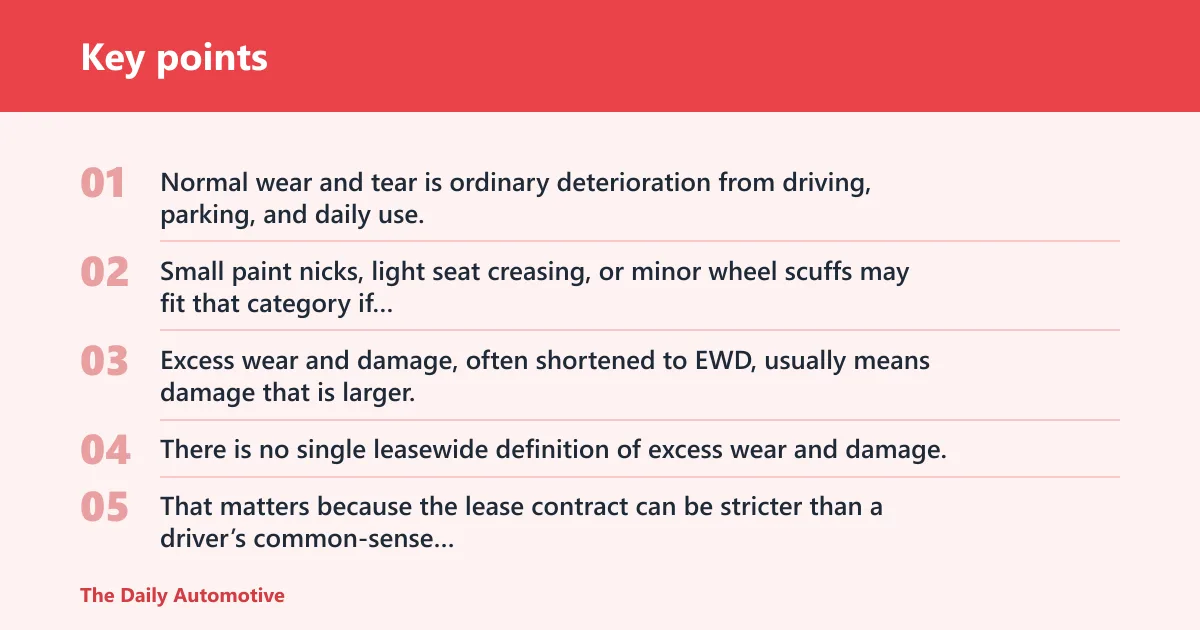
Normal wear and tear is ordinary deterioration from driving, parking, and daily use. Small paint nicks, light seat creasing, or minor wheel scuffs may fit that category if the lease standard allows them. Excess wear and damage, often shortened to EWD, usually means damage that is larger, deeper, more visible, unsafe, or outside the lease language.
There is no single leasewide definition of excess wear and damage. That matters because the lease contract can be stricter than a driver’s common-sense view of “reasonable use.” A scratch that seems minor to one inspector can still be billable if the contract sets a tight size limit or if the mark exposes metal, plastic, or underlying material.
Why the lease contract controls the standard
The lease return inspection is the basis for the bill. The inspector compares the car against the lessor’s wear-and-tear standards, not against a casual expectation of aging. That is why the same dent, chip, or stain can be acceptable on one lease and chargeable on another.
New York’s MVRLA covers leased vehicles leased in New York state. It applies to leases entered into after August 30, 1995, to leases longer than four months, and to vehicles used primarily for personal, family, or household purposes. For qualifying leases, it is part of the protection against unreasonable EWD charges. (NY)
How lessors define excess wear and damage
Typical EWD categories include damaged glass or tinted glass, damaged body panels, fenders, metalwork, lights, trim, or paint, plus missing equipment from delivery that was not replaced with equal-quality equipment. Missing wheel covers, a jack, or a wheel wrench can also be charged, along with missing or unsafe wheels or tires.
Say your rear bumper has about a 1-inch paint scrape on the corner. That may be treated as ordinary cosmetic wear if the lease standard allows small marks. Suppose the scrape is deep enough to expose primer and sits right on an edge that was not repaired. That is much more likely to be billed.
📊 The law covers leases entered into after August 30, 1995. Source: NY.
Paint, dents, and scratches
Small marks are often treated as normal wear when they stay within the lease’s size and depth limits. Once a scratch breaks through the finish, a dent distorts a panel, or the damage sits in a visible or repair-sensitive location, the lessor can treat it as billable body damage. Size, depth, and location all matter.
Small marks that are often treated as normal
Light surface scuffs and tiny chips can fall on the acceptable side if they do not reach the lease’s damage threshold. A scratch in a low-visibility area may be easier to argue than the same mark on a hood edge, door skin, or near a character line. The deeper the damage, the weaker the defense.
Damage size, location, and depth
Inspectors often care about whether the mark is shallow, whether metal or plastic is exposed, and whether the repair would require repainting or panel work. A shallow scuff may be arguable. A dent with a sharp crease usually is not. Edge damage, repeated hits in the same spot, and matching paint work that looks inconsistent can all draw charges.
A common mistake is thinking a shallow door ding or a tiny windshield chip will be ignored at lease-end. A 2-inch dent on a rear door can still be billable if the lease standard allows only smaller marks or if the dent sits where a body shop would need to repaint the panel. The invoice is usually about repair cost, not just visual annoyance.
Can the lessor charge for glass, tires, and wheels?
Yes, if the damage goes beyond the lease standard. Windshield chips, cracks, worn tread, uneven tire wear, curb rash, bent wheels, and missing wheel hardware are common return charges. Safety matters here. A cosmetic scuff is one thing; a tire with low tread or a cracked windshield that affects driving safety is another.
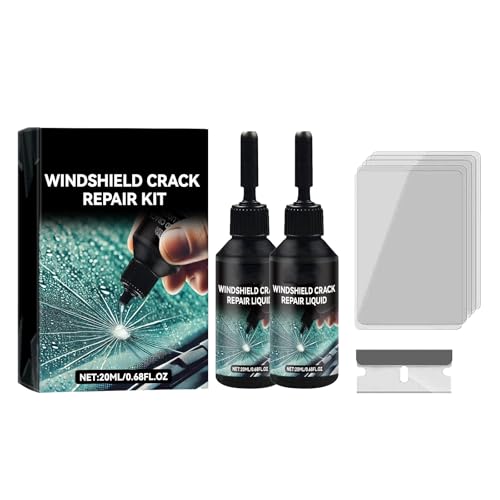
Windshield chips and cracks
Glass damage is one of the most disputed items at return. Small chips may be arguable if they are outside the driver’s view and repairable, but a crack that spreads, sits in the sightline, or weakens the glass can move from arguable to billable fast. EWD typically includes damaged glass or tinted glass.
Tread depth and uneven tire wear
Worn tires often trigger charges because the vehicle must be safe at return. The lessor can bill for missing or unsafe wheels or tires. Uneven wear can also matter if it points to neglected alignment, rotation, or replacement. A tire with a tread bar close to flush may look passable to a driver and still fail the turn-in standard.
Curb rash, bends, and wheel damage
Curb rash is one of the greyest grey areas. Light scuffing on the outer lip of a wheel may be acceptable on some leases and chargeable on others. A bent wheel, cracked rim, or missing wheel cover is easier to bill. Wheel damage that affects balance or safety is especially hard to dispute.
Interior damage, odor, and missing parts
Interior wear becomes chargeable when it goes beyond ordinary use or affects resale and safety. Stains, tears, burn marks, heavy odors, and missing equipment are common causes of a lease-end charge invoice. Repair quality matters too, because poor fixes can still count as damage if they do not meet the return standard.
Stains, tears, and burn marks
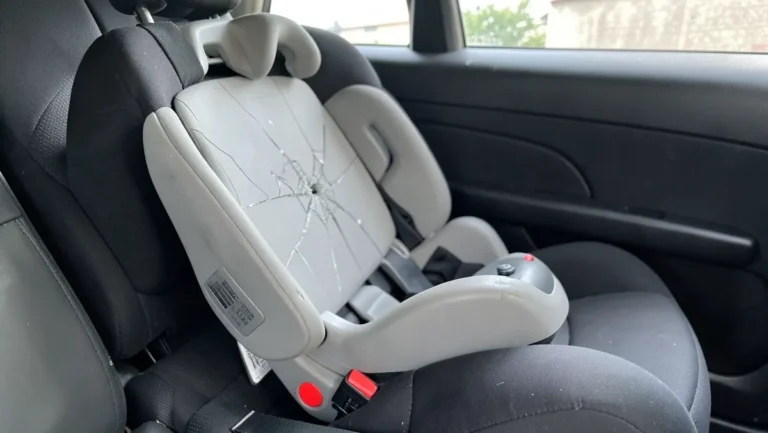
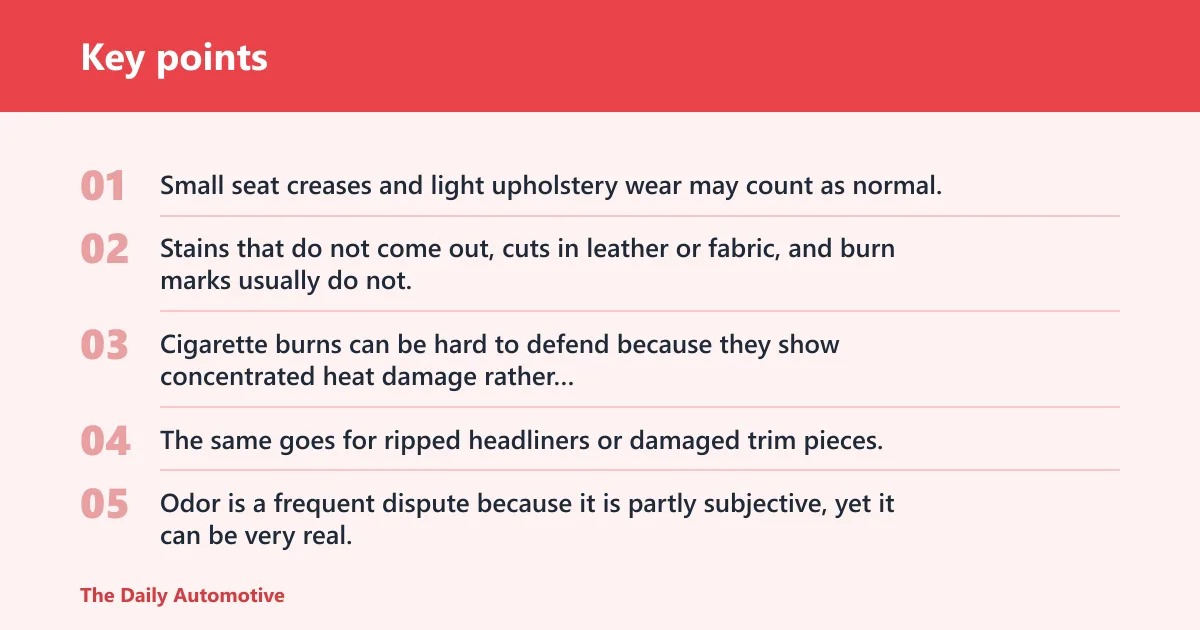
Small seat creases and light upholstery wear may count as normal. Stains that do not come out, cuts in leather or fabric, and burn marks usually do not. Cigarette burns can be hard to defend because they show concentrated heat damage rather than ordinary use. The same goes for ripped headliners or damaged trim pieces.
Smoke, pet, and mildew odor
Odor is a frequent dispute because it is partly subjective, yet it can be very real. Smoke smell, pet odor, and mildew odor often lead to charges when the car needs deep cleaning or deodorizing. A strong odor can also signal hidden damage, such as water intrusion or burned upholstery, which raises the bill.
Accessories and equipment that must be returned
Missing accessories can be billed even if the car still drives normally. That includes items delivered with the vehicle and not replaced with equal-quality equipment, plus wheel covers, a jack, and a wheel wrench. Aftermarket parts can create another problem if they are removed and the original parts are not returned, or if the replacement quality is lower than what the lease allows.
Picture a lease return where the car has one missing floor mat, a torn rear seat seam, and a stale smoke smell. The mat may be a small line item. The tear can become a body or trim charge. The odor may lead to a separate cleaning claim. Each item can be billed on its own if the inspector documents it.
Wear checklist
Use this checklist before you hand the car back. Treat it as a pass-or-charge guide, not a guarantee, because the lease language still controls the final call. Photograph every questionable item in good light, and keep repair receipts, service records, and any prior-condition evidence in one folder.
| Item | Usually acceptable | Likely chargeable |
|---|---|---|
| Paint | Small surface scuffs or chips with no exposed metal, plastic, or primer | Deep scratches, peeling, repainting needs, or exposed base material |
| Dents | Tiny dings that do not distort the panel or break the finish | Creases, sharp dents, or damage that needs bodywork |
| Glass | Minor chips outside the sightline if the lease allows repair-only damage | Cracks, spreading chips, tinted-glass damage, or damage in the driver’s view |
| Tires | Even wear with safe tread and no visible sidewall damage | Low tread, uneven wear, cuts, bubbles, or unsafe tires |
| Wheels | Light cosmetic scuffs that do not affect safety or balance | Curb rash with deep gouges, bends, cracks, or missing wheel covers |
| Interior | Light seat wear, minor creasing, or small marks that clean out fully | Tears, burns, permanent stains, broken trim, or damaged upholstery |
| Odor | No strong smoke, pet, or mildew smell after normal cleaning | Persistent odor that requires deodorizing or deeper interior work |
| Electronics | All factory systems work, including screens, audio, and cameras | Dead screens, broken controls, warning lights tied to damage, or missing modules |
| Accessories | All delivered items are present and equivalent replacements are installed | Missing mats, wheel tools, covers, cargo pieces, or original equipment |
| Repair documentation | Dated photos, invoices, and prior-condition records showing the car’s state | No proof, incomplete receipts, or repair work that does not match the damage claimed |
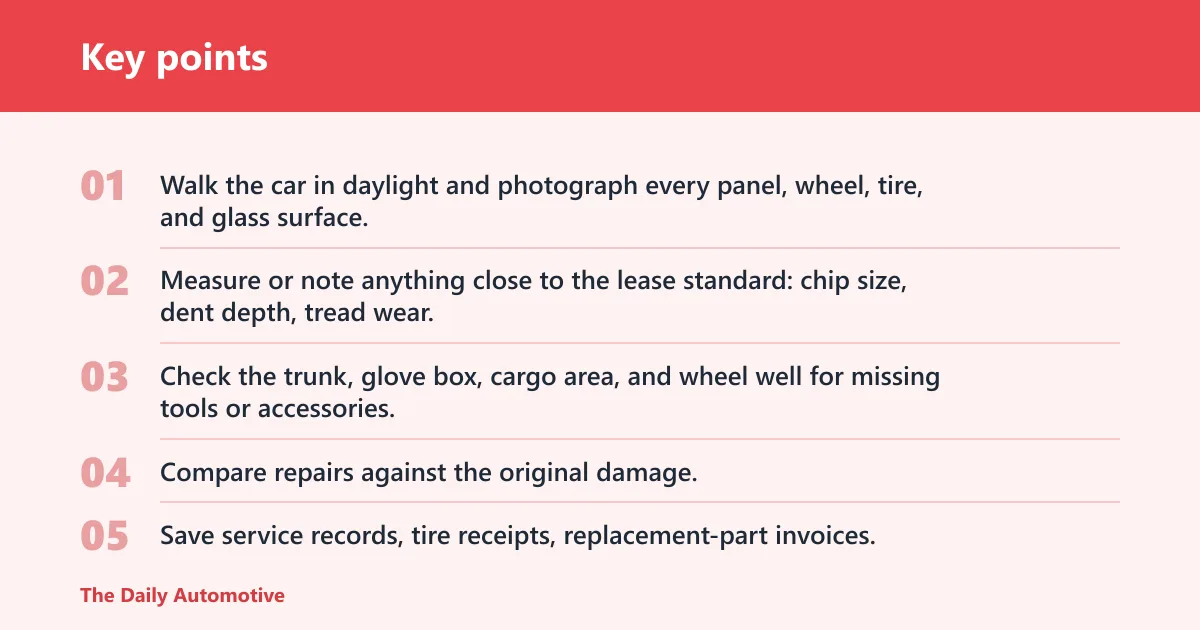
- Walk the car in daylight and photograph every panel, wheel, tire, and glass surface.
- Measure or note anything close to the lease standard: chip size, dent depth, tread wear, or odor strength.
- Check the trunk, glove box, cargo area, and wheel well for missing tools or accessories.
- Compare repairs against the original damage. Poor color match or rough bodywork can still trigger a charge.
- Save service records, tire receipts, replacement-part invoices, and any pre-return inspection report.
What happens during a lease return inspection?
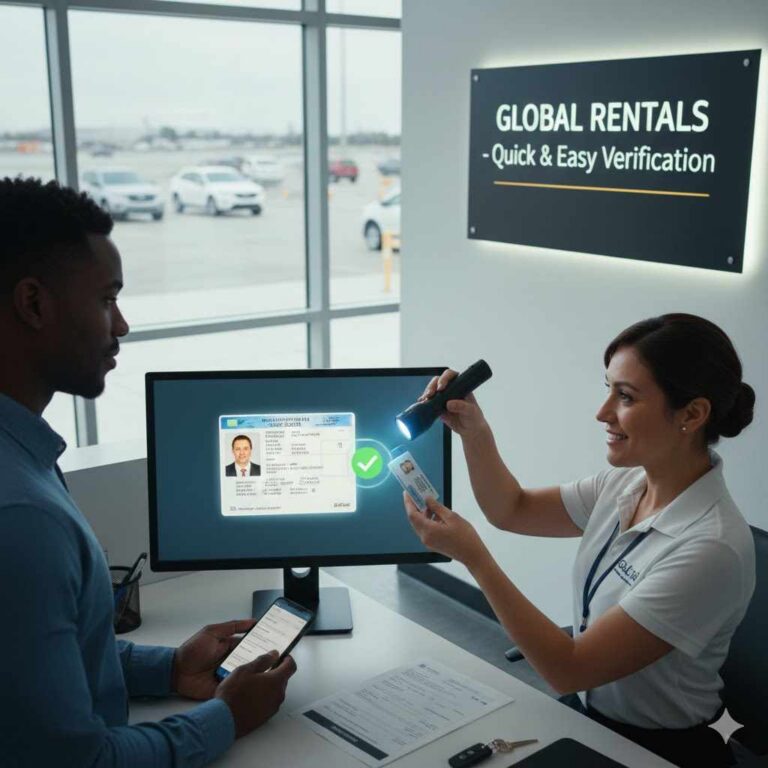
A lease return inspection is the lessor’s pre-return condition review. It is the step that turns visible damage into a lease-end charge invoice. The inspector records what exists, decides whether it exceeds the standard, and assigns a repair or claim amount. That paperwork is the starting point for any dispute.
Pre-return inspection steps
The inspector checks the exterior, interior, glass, tires, wheels, and equipment against the lease’s wear standards. Some inspections happen before the actual handoff, which gives the lessee time to fix smaller items. Others happen at turn-in. Either way, the report should show exactly what the lessor claims was wrong.
How inspectors document damage
Good documentation is specific. It should identify the item, the location, the size, and the type of damage. Photos, measurements, and repair notes matter because broad descriptions invite inflated charges. If the invoice says “left rear wheel damaged,” the lessee should ask for the image and repair basis behind that line item.
How the invoice is usually built
A lease-end charge invoice may combine several categories: body work, glass repair, wheel repair, tire replacement, interior cleaning, odor treatment, or missing equipment. It may also use a repair estimate or claim amount rather than the exact shop invoice. That makes the line items worth checking one by one.
How to challenge an excessive charge
You can dispute an EWD charge when the damage does not exist, is not excessive, or is billed too high. The strongest challenges use photos, prior-condition records, repair receipts, and any inspection notes that show the car met the standard. Arbitration for EWD disputes can be simpler, faster, and cheaper than court.
Evidence that helps most
Start with dated photos taken before return, especially shots that show the whole panel and close-ups with scale. Add repair invoices, alignment or tire records, and any proof that a part was already replaced with equal-quality equipment. If the lessee has a pre-return inspection report, that can be powerful evidence against a later invoice.
Repair estimates, photos, and service records
Service records help prove maintenance, while repair receipts help prove the car was fixed before turn-in. For disputes over wheel rash, glass chips, or interior stains, good photos can show that the damage was small, preexisting, or repaired properly. If the lessor values a mark as a full replacement, the lessee should ask why repair was not enough.
Arbitration for EWD disputes and when it matters
The lease-end dispute process can challenge whether damage exists, whether the damage is excessive, and how much the lessee should pay. In New York, qualifying lessees under the MVRLA may have a statutory path to challenge unreasonable EWD charges. Arbitration does not guarantee a win, but it can be a practical route when the invoice looks inflated.
What if the leasing company says the damage is excessive? Ask for the inspection photos, the exact lease standard used, and the repair basis for each line item. If the claim includes a tire or wheel charge, check whether the issue was cosmetic or safety-related. If it includes odor, ask what evidence supports the amount billed.
Frequently asked questions
What is considered excess wear and tear on a leased car?
Excess wear and tear is damage that goes beyond the lease’s normal-use standard. That can include deep scratches, dents, cracked glass, unsafe tires, damaged wheels, stained interiors, strong odors, and missing equipment. The lease contract and return standards control the final call, not a general idea of ordinary use.
What damage do lease companies charge for at lease-end?
Lease companies commonly charge for body damage, glass damage, tire wear, wheel rash or bends, interior tears or stains, odor removal, missing accessories, and poor repairs that do not meet the return standard. Charges often appear as itemized line items on a lease-end charge invoice, sometimes tied to estimates.
Can a dealer charge for scratches, dents, or curb rash on a lease?
Yes, but only if the damage exceeds the lease standard. A tiny scratch may be acceptable, while a deep scratch, crease, or sharp dent is more likely to be billed. Curb rash can also be charged if it is deep, widespread, or affects the wheel’s condition or safety.
Do I have to pay for windshield cracks on a leased car?
Often yes, if the crack goes beyond repairable cosmetic damage or sits in the driver’s view. Small chips may be arguable, especially if repairable and outside the sightline. Damaged glass is commonly listed as EWD, so keep photos and ask for the exact reason the glass claim was made.
How can I avoid excess wear and tear charges when returning a lease?
Inspect the car before turn-in, repair clear damage early, and document everything with photos and receipts. Check tires, wheels, glass, trim, and accessories first, since those items often trigger bills. Keep maintenance records and any prior-condition report in case the lessor later claims the damage was worse than it was.
Can I dispute end-of-lease wear and tear charges?
Yes. You can dispute whether the damage exists, whether it is excessive, and whether the amount billed is reasonable. Start with the inspection photos and the lease standard, then gather repair records and prior-condition evidence. Arbitration may be available in some cases, including qualifying New York leases under the MVRLA.
Products related to this article
Sponsored / affiliate links. As an Amazon Associate I earn from qualifying purchases. I may earn additional commission from eligible campaigns.